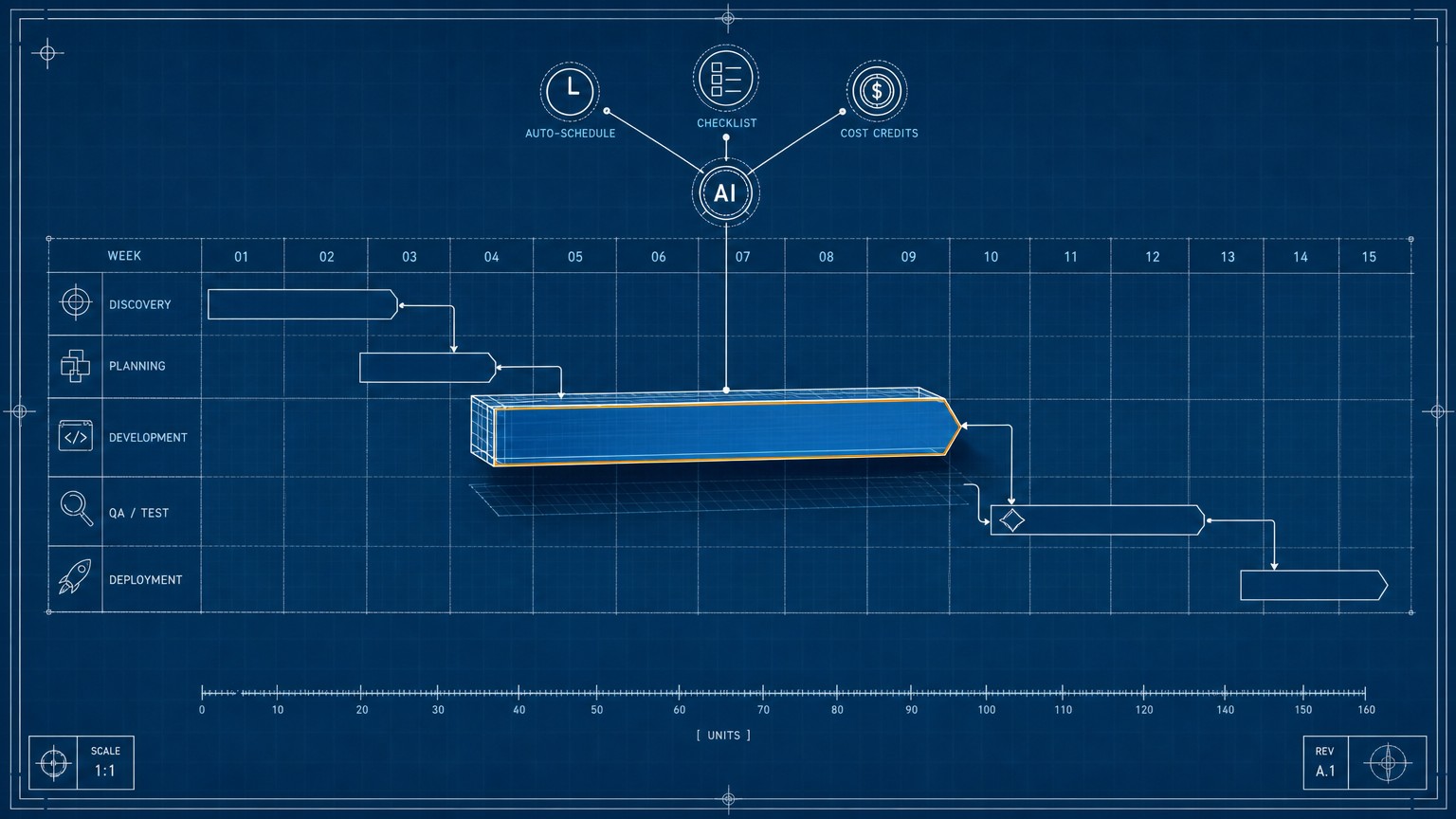
Apollo 42% vs Clay 78%: Stack Math for Cold Outbound
A working-stack breakdown for founders and growth leads running B2B cold outbound in 2026. Compares the Apollo-only $99 starter setup against the Apollo + Clay + Smartlead stack at roughly $350 to $700 a month, with real per-tool pricing,…




Apollo costs $99 a month and ships 42% match rates on cold lists; Clay costs $149 plus credits and ships 78%. Once you do the math on cost per booked meeting, the gap stops being theoretical.
The Apollo-only $99 stack and what it actually books
Apollo Professional is $99 per user per month with unlimited email credits and a built-in sequencer. That's the starter setup most B2B founders run when they first turn on outbound: one tool, one login, no glue code, no ops headcount required. You query the database, build a sequence, hit send. Apollo handles enrichment, sending, and reply tracking inside one tab.
The catch is match rate. Apollo's database is large but single-sourced – when you pull a list of 10,000 cold ICP contacts, you get verified email addresses for roughly 42% of them. The rest are bounces, role-account guesses, or "unverified" rows that tank your deliverability the moment you send to them. That 42% number lines up with third-party comparisons across cold lists, not warm in-database accounts where Apollo's numbers look much better.
Run the funnel math at typical 2026 B2B outbound rates:
- 10,000 emails sent
- 42% match rate → 4,200 deliverable
- 65% inbox placement (Apollo's shared-domain reputation footprint is the ceiling here) → 2,730 inboxed
- 1% reply rate → 27 replies
- 30% positive-to-meeting conversion → ~8 meetings per 10K sends
Cost-per-meeting on the Apollo-only stack lands between $190 and $260 once you load in list-research time, sender labor, and the $99 subscription itself. The stack cost alone is misleadingly low. The hidden cost is the 58% of your list you paid to email and then watched bounce.
This is the right stack pre-PMF, when your addressable account list is under 5,000, when you're sending under 2,000 emails a day, and when founder-led sales means the founder is doing the sending. Below those thresholds, stacking tools is a tax with no return. Above them, the per-meeting math flips and Apollo-only starts losing money.
Why Clay's waterfall enrichment doubles match rate
Clay starts at $149 per month for the Starter plan, and the real cost climbs from there as Claygent research credits stack. The cheap version of Clay is not the version that produces 78% match rates – that one runs $250 to $400 a month for a serious GTM team. Clay's pricing page lists the tiers, but the credit consumption determines your real bill.
The mechanic that earns the price is waterfall enrichment. Instead of querying one data source, Clay chains 150+ providers per record – first hit wins, lowest-cost provider runs first, expensive providers fire only when cheaper ones miss. You feed Clay a list of 1,000 prospects, and it walks each row through the waterfall until it finds a verified email, a phone number, or whatever field you asked for. The result on cold ICP lists is roughly 78% match rate against Apollo's ~42%.
Clay does not send email. This is the part operators miss the first time. Clay is a data-and-workflow layer that produces a clean, enriched list, which you then export to a sender – most commonly Smartlead or Instantly. If you buy Clay and try to send from Gmail or your work inbox, your domain reputation collapses inside two weeks.
The variable cost is real. Enriching 1,000 contacts with Claygent personalization (LinkedIn scrape, recent news, custom AI-written line) adds $80 to $150 in credits on top of your subscription. At 4,000 enriched contacts a month, you're paying $400 to $700 all-in for the Clay layer alone.
Where Clay loses: tiny lists under 500 contacts a month, brand-new outbound teams without an ops-literate operator, and deals where ACV is too small to absorb $400+ in monthly tooling. Clay is not a starter tool. It's a tool you add when list quality has become the bottleneck and you can prove it by watching match rate fall under 35% on Apollo-sourced lists.
Smartlead is the deliverability layer the Apollo stack hides
The third slot in the stack is the part most founders skip – and it's the one that doubles the meeting count without changing the list.
Smartlead Basic runs $39 a month for 2,000 active leads, 6,000 emails per month, unlimited mailbox accounts, and unlimited warm-up across the pool. The Pro tier at $94 a month moves you to 30,000 active leads and 150,000 emails per month. That pricing is on the Smartlead pricing page and it has held flat through 2025-2026.
The reason Smartlead exists as a separate slot from Apollo: domain reputation. When you send from Apollo's native infrastructure, you're sharing a sending footprint with thousands of other Apollo accounts, and the spam filters know it. Your inbox placement caps around 35% on cold sends. Smartlead splits volume across unlimited mailbox accounts that you own, runs continuous warm-up across the pool so each inbox stays warm, and rotates sends across the mailboxes to keep per-inbox volume below the daily threshold spam filters watch for.
The mailbox-per-day rule of thumb is 30 to 50 cold emails per inbox. If you want to send 2,000 emails a day, you need 40 to 70 mailbox accounts running in parallel – which Smartlead supports inside a single subscription. Apollo's native sending does not.
The placement lift is real. That alone doubles the meeting count on the same list, the same copy, the same offer.
Smartlead alternatives exist – Instantly at $37 entry, Salesforge, EmailBison – and they all do roughly the same job. The point is that the slot matters more than the brand. If you're running cold outbound at any real volume in 2026 and you don't have a dedicated sending layer, your ceiling is whatever your shared-infrastructure provider lets you reach. That ceiling is low.
The full $350-700 stack, priced out by team stage
The real question is not "Apollo or Clay" – it's "which slots do I need at my stage?" Here's the math, tier by tier.
Solo founder, under 500 sends per week. Apollo Professional $99 + Smartlead Basic $39 = $138/month. Skip Clay entirely. Your list is small enough that you can research accounts manually, and the $250+/month Clay layer would be a tax with no return. The slot you cannot skip even at this stage is Smartlead – without it, your domain reputation caps the funnel before list quality ever becomes the bottleneck.
Two-person GTM team, 5,000 sends per week. Apollo $99 + Smartlead Pro $94 + Clay Starter $149 + ~$80 in monthly Clay credits = $422/month. This is the first tier where Clay pays back. At 20,000 monthly sends, the difference between a 42% match rate and a 78% match rate is roughly 7,200 more deliverable contacts per month – enough to lift meetings booked from ~16 to ~30 at typical conversion rates. The Clay layer costs $229 incremental and produces ~14 incremental meetings. That's $16 per added meeting, which any B2B motion above $5K ACV absorbs without thinking.
Series A team, 2,000 sends per day. Apollo $99 + Smartlead Pro $94 + Clay Pro $349 + ~$200 monthly credits = $742/month. Stack cost per meeting drops to about $10. Fully loaded with list-research and sender labor, you're at $70-90 per booked meeting – which is the range where outbound starts beating paid acquisition for most B2B SaaS at $30K+ ACV.
The Apollo-Clay-Smartlead combination is the working stack you see referenced across operator threads on r/coldemail in 2026. It's not the only valid stack – some teams swap Apollo for ZoomInfo or Cognism once contract spend justifies the move, and some teams swap Smartlead for Instantly or EmailBison. But the three-slot shape is consistent: a database, an enrichment layer, a sending layer.
The replace-Apollo question comes up around $2K MRR of Apollo spend, when ZoomInfo or Cognism contracts start penciling. Until then, Apollo is the cheaper database and the migration cost isn't worth it.
When the upgrade does NOT pay back
The default failure mode is buying all three tools on day one. Don't.
Total addressable list under 5,000 contacts: enrichment ROI collapses because the list is small enough to research manually in a week. Clay's value is throughput on lists you couldn't otherwise process. On 500 contacts, throughput is not the bottleneck.
Deal size under $5K ACV: a $400/month stack is 8% of one deal. That math doesn't work for SMB sales motions where you need 20+ deals a month to keep CAC payback reasonable. SMB outbound runs on volume and lower tooling cost; the Apollo-only stack at $138 is the right floor.
Team without a GTM ops person: Clay tables require maintenance. Routing logic, field mapping, credit budgets, deduplication against your CRM – none of this runs itself. If nobody on the team owns it, Clay credit burn climbs past $400/month with no booking lift, because you're enriching the wrong lists.
The replacement signal that tells you to drop Clay: when sales does not need more than 100 verified phone numbers a month and your match rate on Apollo-only lists is above 50%. At that point, you're paying for capability you're not using.
Where Clay-only flops hardest: teams that buy Clay, see the 78% match rate, get excited, and then send the enriched list from Gmail. Domain reputation collapses inside two weeks, the lift disappears, and they blame Clay. Clay does not send email. This is in the docs. People skip it anyway.
The right sequence is staged. Apollo first, week 1. Smartlead in week 4 when sending volume starts approaching 50 per day per inbox. Clay in week 8 when list quality is provably the funnel cap – meaning your match rate on new Apollo lists has fallen below 35% and you can show the trend.
The 14-Day GEO Playbook
The companion piece on inbound: how citation share on Reddit, Perplexity, and ChatGPT changes the budget math once outbound stabilizes.
Cost-per-meeting math, end to end
There is one number that decides whether your stack is working. Track it weekly. Everything else is noise.
Cost per booked meeting = (stack cost + list cost + sender labor) ÷ meetings booked.
Apollo-only: $138/month stack ÷ ~32 meetings = ~$4.30 stack cost per meeting. But the fully loaded number – including the labor cost of working through a 58%-bounce list and the time spent re-researching contacts Apollo flagged as verified but weren't – lands at $190 to $260 per meeting. The stack-cost line item is misleadingly low because the inefficiency is in labor, not subscriptions.
Apollo + Smartlead + Clay: $742/month stack ÷ ~72 meetings = ~$10 stack cost per meeting. Fully loaded with list-research labor (now lower, because Clay does the enrichment work), you land at $70 to $90 per meeting.
The inflection point is around 50 booked meetings a month. Below that, Apollo-only beats the stacked setup on fully-loaded cost because the fixed cost of Clay doesn't amortize. Above 50, the stacked setup wins on every dimension – cost per meeting, sender labor, list quality, and deliverability ceiling.
This is the single number to track. Tools come and go. Apollo will keep raising prices, Clay will keep adding features, Smartlead will get a competitor that wins on warm-up algorithms. The number rewards stacks that work and exposes ones that don't, regardless of which brands occupy the slots.
The replacement signals that tell you to switch tiers
Replacement signals beat opinion. Track them weekly, change the stack monthly. Opinions about which tool is "better" produce arguments. Signals produce decisions.
Tier-up signal: add Clay. Apollo enrichment match rate falls below 35% on new lists for three weeks running. List quality is the bottleneck. Adding the Clay waterfall is the only intervention that moves it.
Tier-up signal: add Smartlead. Open rates drop below 30% across your sending mailboxes. Deliverability is the bottleneck. Adding a dedicated sending layer with warm-up and rotation is the only intervention that moves it.
Tier-down signal: drop Clay. Credit burn over $400/month with no booking lift versus the prior month. You're enriching lists that don't convert – usually because the ICP filter upstream is wrong, not because Clay is failing. Drop the credit spend, fix the filter, re-add later.
Tier-down signal: pause Smartlead. Mailbox count climbing past 100 with replies flat. Domain reputation is shot across the pool. Pause sending, run a 30-day warm-up cycle, and rebuild from a smaller mailbox base.
The reason these signals work is they measure the bottleneck, not the tool. A 35% match rate doesn't mean Apollo is bad – it means your list is at the wrong stage of the funnel for single-source enrichment. A 30% open rate doesn't mean Apollo's sender is bad – it means you've outgrown shared infrastructure.
What's the actual difference between Clay and Apollo?
Apollo is an all-in-one prospecting and sending platform – database, enrichment, sequencer, all in one tool. Clay is a data enrichment and workflow layer that does not send email. They occupy different slots in the stack. The question isn't which is better, it's which slot you're solving for.
Is Clay better than Apollo?
For data quality on cold lists, yes – roughly 78% match rate versus Apollo's ~42% because Clay's waterfall chains 150+ providers. For speed-to-first-send and as a single-tool starter, Apollo wins because Clay doesn't send email and adds ops overhead.
Who is Apollo's biggest competitor?
Depends on the slot. For prospecting databases: ZoomInfo and Cognism. For enrichment: Clay. For sending: Smartlead and Instantly. Apollo competes in all three slots at once but loses in each individual slot to a specialist.
Is there anything better than Apollo as a single tool?
Not at the $99 tier. The "better than Apollo" answer is always a stack – Clay + Smartlead + a database – which beats Apollo on cost per booked meeting once you're booking more than 50 meetings a month. Below that volume, Apollo's simplicity wins.
Can I use Clay without Smartlead or Instantly?
You can, but you shouldn't. Clay produces enriched lists that need a dedicated sending infrastructure to deliver well. Sending Clay-enriched lists from Gmail or shared infrastructure collapses your domain reputation inside two weeks.
Jun 2, 2026