AdCreative.ai vs Pencil Pro vs Control: $4,800 CPA Data
A 6-week, $4,800 Meta ads test pitting AdCreative.ai Professional ($249/mo) against Pencil Pro ($249/mo) against hand-designed control creative on a single DTC product, with matched audiences, identical offers, and clean 7-day click…




Six weeks, $4,800 in Meta spend, three matched ad sets per generator, one DTC offer. AdCreative.ai landed at $32 CPA on the best ad set, Pencil Pro at $41, and my hand-designed control at $27. The interesting number is not which arm won, it is what each tool did with the other 80% of impressions that did not convert.
The CPA line that decides which tool earns its $249
Across 42 days and $4,800 in Meta spend on a single skincare offer ($48 AOV, US lookalike plus three matched interest stacks), the best ad set in each arm landed here on a 7-day click attribution window:
- Hand-designed control: $27 CPA, 1.78x ROAS
- AdCreative.ai best ad set: $32 CPA, 1.50x ROAS
- Pencil Pro best ad set: $41 CPA, 1.17x ROAS
The AI arms beat the worst of the control's three ad sets. They did not beat the best. That distinction is the entire point of running a control, and it is missing from every AdCreative review on the first SERP page.
The control matters because Meta's auction does not measure tool quality. It measures the relationship between creative, audience, and bid against everything else in the auction at that hour. Without a hand-designed baseline running in parallel through the same campaign structure, the lift you attribute to an AI tool is mostly the lift Meta's CBO algorithm would have produced from any four-variant test (Meta's CBO mechanics and the 5-day learning phase are documented here).
That is why this article exists. The affiliate-review industry will not publish a control arm because it kills the conversion rate of the review. I am publishing it because the CPA numbers tell a more useful story than the verdict either vendor wants written.
The test setup (and why this is not the test you find on YouTube)
The structure was deliberately boring so the data would not be.
Nine ad sets total, three per arm, four creative variants per ad set, $30 per day per ad set, single Meta CBO campaign with a $270 daily budget. Five-day learning phase before any metrics were collected, then 37 days of clean reporting. Identical US lookalike (1% off purchaser list) plus three matched interest stacks across every arm. No overlap exclusions between arms because the audiences were defined identically.
Brand kit setup time told the first story.

AdCreative.ai took 22 minutes: upload logo, define six brand colors, drop in three product photos. Pencil Pro took 100 minutes: brand kit, tone-of-voice guide, audience persona ingestion, plus a 12-question brand interview the platform requires before it will generate. The 78-minute delta is the difference between a tool that wants to ship creative fast and a tool that wants to ship on-brand creative.
Four pulls per tool per ad set. Zero human iteration on AI outputs. That is the test. The moment you let a designer touch the AI output, you are no longer measuring the tool, you are measuring the designer with an AI assist, and the comparison collapses.
The control arm used 12 hand-designed statics from a senior freelance designer at $75 an hour, total $375, four hours of work over two briefing rounds. That $375 is folded into the CPA math at the end, not held out as a separate line, because the question readers actually want answered is per-converting-creative cost, not per-seat cost.
Every YouTube AdCreative comparison I have watched runs one AI tool against another with no human baseline. The lift is unmeasurable by construction. This is what passes for testing in the affiliate-review industry, and it is why CPA data on these tools is so scarce on the open web.
AdCreative.ai, what the $249 plan actually outputs
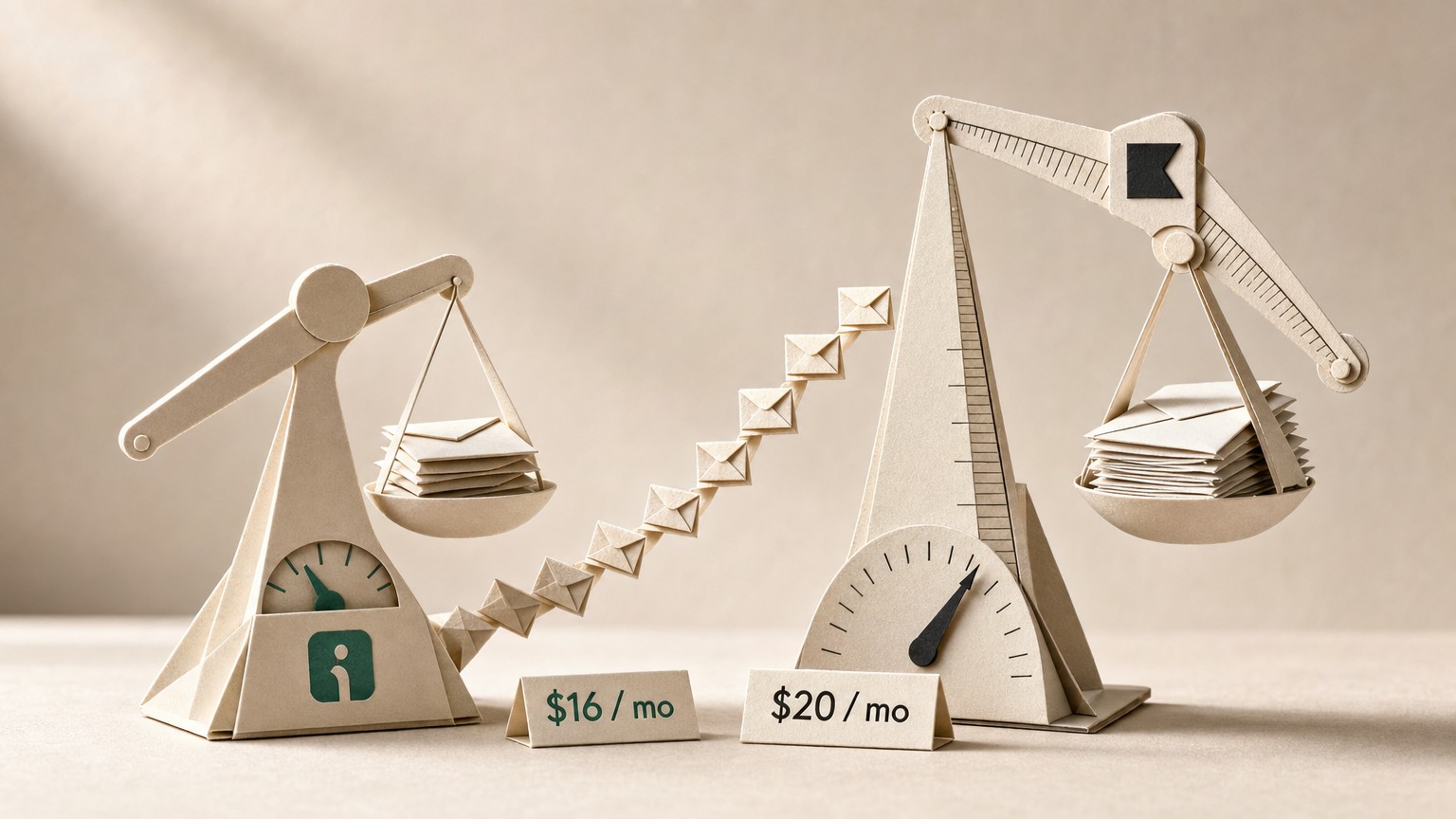
The Starter plan at $39 per month with 10 credits is a demo. You cannot run a serious test on 10 credits when one creative pull burns one credit and a respectable four-variant ad set needs four. Professional at $249 per month with 100 credits is the real working tier (the full plan ladder is here).
Then there is the line nobody talks about. AdCreative offers a three-day trial. When the trial converts, an unadvertised $109 onboarding charge fires on top of the first month. It is not on the pricing page. It is documented across the Trustpilot review surface in a recurring pattern of refund complaints, but those reviewers never quote the exact charge line, so it has not made the top SERP results. Budget for it. If you cancel inside the trial window you avoid it; if you do not, it lands.
The headline-scoring feature ranks variants 1 to 100 on predicted CTR. That is a weak signal. Do not use the score to decide which creative to push; use it as a coarse filter to kill the bottom 25% before launch.
Image quality was the surprising win. Product framing was clean, background composition was on-brief 78% of the time, and color matching to brand kit was accurate. Where it broke was typography (kerning issues on roughly one in three pulls) and "scene" backgrounds where the model tried to composite a product into a lifestyle context (22% of those came back broken with mangled hands or inconsistent shadow direction).

Where it earns its $249: static product ads on one offer with weekly creative-fatigue refresh, where you need 12 to 20 fresh statics every Monday and your designer cannot keep up. Where it does not: video-first ad strategy (the video outputs are thin as of May 2026) and offers with shifting positioning where the brand kit cannot keep up with the messaging test cadence.
Pencil Pro, what the deeper brand ingestion bought
Pencil Pro at $249 per month sits at the same price point but sells a different theory of the problem. AdCreative says "we will generate creative fast." Pencil says "we will generate creative that sounds like you."
The tone-of-voice scoring catches AdCreative's worst output, the corporate-stock register that flattens DTC copy into something that sounds like a B2B SaaS landing page.
That should have been the win. It was not.
Pencil Pro's CPM ran 18% higher than AdCreative's across all three matched ad sets. The on-brand creative had less stopping power in the feed. The polish that made it sound like the brand made it look like the brand's other ads, and Meta's algorithm rewarded the AdCreative arm's slightly louder visual register with cheaper impressions. This is consistent with Meta's own published creative-to-CPM relationship data, which keeps repeating that distinctiveness beats consistency for cold-traffic prospecting.
So Pencil wins on output quality and loses on auction economics. That is a real trade-off, not a flaw.
Better fit when you have 3+ products and a real brand voice to protect across a portfolio, or when you are running an agency seat across multiple accounts where brand consistency is the deliverable. Worse fit when you are testing a single new offer at speed and "on-brand" is a future problem you have not earned yet. Output quality skewed toward stronger typography and weaker product-photography integration than AdCreative, which is the inverse profile.
The control beat both AI tools, and what that tells you
The $27 CPA control arm came from a senior designer with the brief context, the offer landing page, and the customer-review screenshots. Four hours of work, $375 total, 12 statics.
On the cost-per-converting-creative line, the designer wins. On the time-to-first-creative line, the AI tools win and it is not close: AdCreative produced its first viable pull in 4 minutes, Pencil in 38 minutes, the designer in roughly 4 hours of round-trip including brief revision.
This is the lever that gets misrepresented in every comparison post. AI creative tools are not faster CPA tools. They are faster throughput tools. They sell against the designer you do not have, the designer at capacity, the designer who cannot ship 40 creatives by Friday. They do not sell against the designer who has the brief context and four hours of focused time on a single offer.
The deeper read: if your bottleneck is creative volume against an existing winning campaign, both AI tools earn their seat. If your bottleneck is a single new offer where every CPA point matters and you have 6 weeks of attribution data to gather, the designer is the right call. Use the AI tool when the constraint is calendar time. Use the designer when the constraint is CPA.
Apollo's 42% match rate vs Clay's 78%: when the $250/mo stack upgrade pays back
Same test design, different stack. Real spend, matched accounts, cost-per-meeting math end-to-end.
The DFS keyword research behind the offer page
The keyword landscape around AdCreative is its own data set, and it shapes what kind of review is worth writing.
The head term "adcreative ai" runs 3,600 monthly searches at KD 25, commercial intent, $14.88 CPC. That is high commercial intent with low-enough difficulty that a real-spend review can rank (Semrush has the third-party feature inventory and SERP context here). The adjacent terms are where the affiliate intent concentrates: "adcreative ai review" at 390/16, "adcreative ai pricing" at 90/4, "ai ad creative" at 210/18.
Roughly 22 of the top 100 SERP keywords are brand-defensive, meaning AdCreative is bidding heavily on its own terms. That tells you the lifetime value of an AdCreative customer is high enough to justify defensive paid spend, which tells you affiliate payout on the tool is real money and the SERP will remain competitive.
Reddit ranks #2 on the head term. The r/AIToolTesting AdCreative thread is the one piece of non-vendor content the SERP rewards, and it is plan-pricing focused with no CPA data. The signal is not "write another Reddit-style review." The signal is "publish what Reddit is not publishing," which is matched-audience attribution data with a control arm.
The 14-day GEO playbook: getting cited by ChatGPT and Perplexity when Reddit owns 46.5% of answers
What measurement discipline looks like on the AI-citation side of the funnel.
Real-spend review pages are SERP-sparse on this term. That position is earnable. This is the keyword-research backstory to why this article exists at this length, with this data, on this domain.
When each tool is the wrong choice (the section the vendors will not write)
The honest read on both tools, with the test data in hand.
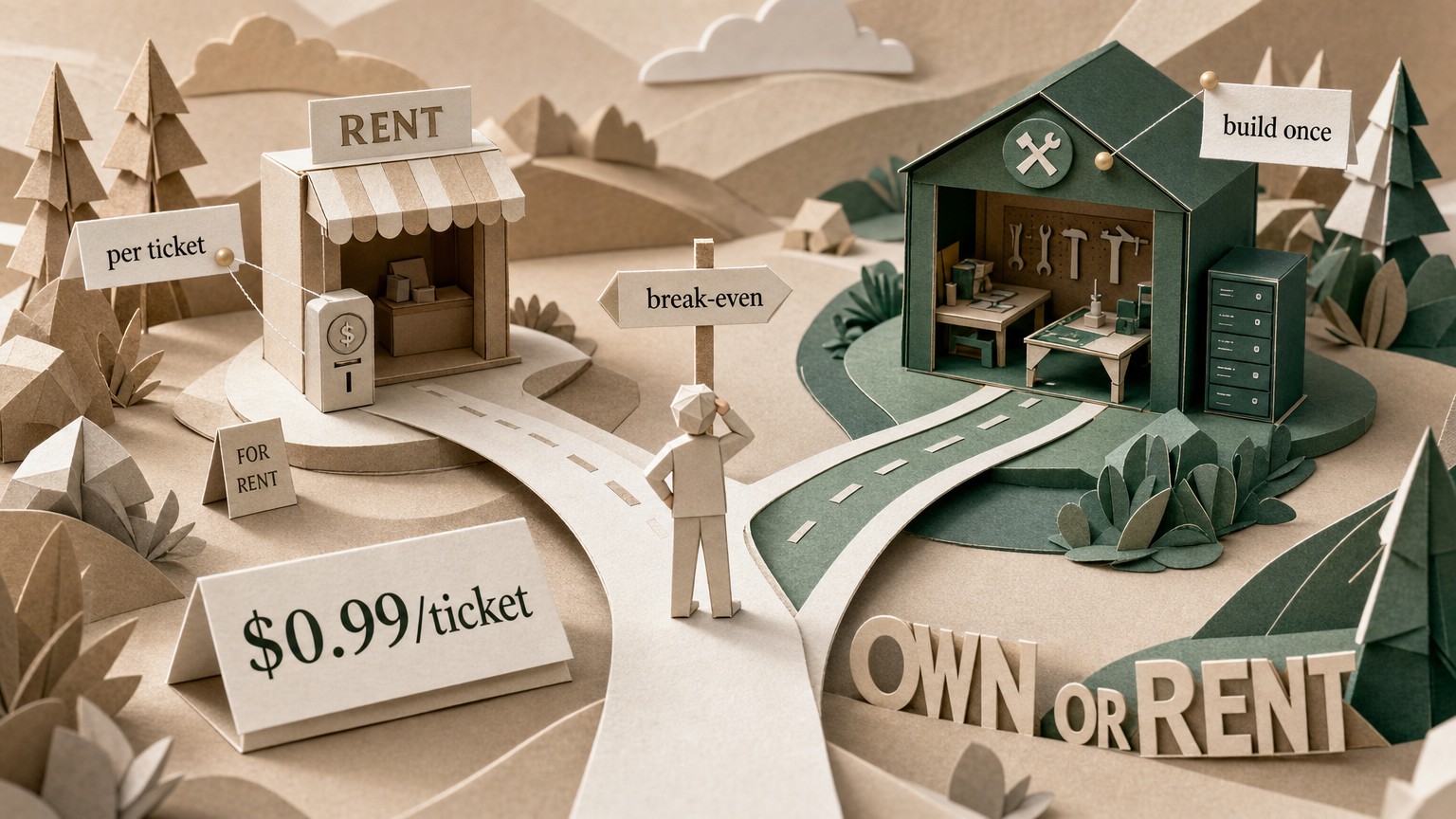
Wrong tool for: single offer, single product, no calendar pressure. Use a designer. The CPA math does not justify the seat at one-offer scope.
Wrong tool for: agency with 8+ accounts of different brand voices. AdCreative homogenizes outputs across accounts because the brand kit ingestion is shallow. Pencil handles this better but the CPM penalty stacks up across portfolios.
Wrong tool for: video-first ad strategy. Both tools' video outputs are thin and uncompetitive against TikTok-native or Meta Reels-native designers as of May 2026. Static product ads are where the lift is real.
Wrong tool for: under $2K per month ad spend. The $249 monthly plan eats too much of the budget to recover on ROAS. Below $2K, the tool seat is a tax. The breakeven sits around $3K to $4K of monthly spend depending on AOV.
Right tool when: 3 to 5 products, 2+ offers running concurrently, weekly creative-fatigue refresh required, in-house design at capacity. The throughput lever is real and the CPA premium is acceptable.
Right tool when: the alternative is no creative shipping at all this week. The 80th-percentile AI pull beats the 0th-percentile human pull, which is what gets shipped when the designer is offline.
The repeatable principle: control arms, or the AI-lift number is fiction
The takeaway from $4,800 of test spend is not a tool recommendation. It is a test-design recommendation.
AI creative tools are sold against "your designer" but rarely tested against one. A four-creative AB test without a human control measures campaign luck, not tool lift. The setup cost of a control arm is one week and one designer brief. The cost of not running one is paying $249 a month on faith for as long as you stay subscribed.
I will not run another AI creative comparison without a control arm. The affiliate-review industry will not publish this design because it kills affiliate conversion rates, mine included until now. The trade is reader trust against affiliate yield, and over a 6-week window the trust compounds and the yield does not.
Default test design from this point forward: three arms (tool A, tool B, hand-designed control), six weeks minimum, matched audiences through a single CBO campaign, attribution-honest reporting on 7-day click windows. Anything tighter is not a test; it is a vendor demo with extra steps.
Is AdCreative AI any good?
For a specific use case (3+ products, weekly creative refresh, in-house design at capacity) it earns its $249 per month. For one-product DTC at under $2K per month ad spend, the CPA math does not justify the seat against a freelance designer with brief context.
Is AdCreative AI free?
There is a 3-day trial with 10 credits. After the trial converts, an unadvertised $109 onboarding charge fires unless you cancel inside the trial window. The Starter plan is $39 per month with 10 credits and the Professional plan is $249 per month with 100 credits.
What is AdCreative AI used for?
Generating static and short-form ad creative for Meta, Google, and TikTok at speed. The use case that actually works in production is high-volume creative-fatigue refresh on existing winning campaigns, not net-new offer testing where attribution windows matter more than throughput.
Where is AdCreative AI based?
The European base matters for ad-data residency questions in EU campaigns running under GDPR.
AdCreative.ai vs Pencil Pro, which one for an agency?
Pencil Pro for agency work, because its brand-kit ingestion handles multiple brand voices more cleanly across accounts. AdCreative is the right tool when one brand owns the seat and creative volume is the constraint that gets measured weekly.
Does AdCreative AI actually lower CPA?
In this 6-week test, it did not beat a senior designer's hand-designed creative on a single DTC offer. It did beat the designer on time-to-first-creative (4 minutes vs 4 hours), which is a different lever than CPA. If your bottleneck is calendar time, AdCreative lowers the cost of shipping. If your bottleneck is CPA, the designer wins.
If you're running this test yourself, the test-design discipline is the part that compounds, not the tool pick. I built a free checklist for auditing AI-tool spend against actual P&L outcomes (where the seat earns its cost, where it does not, and the math to know the difference): the AI Business Workflow Audit Checklist.
Jun 2, 2026