Claude Code Remote Control
Set up Claude Code Remote Control from CLI, VS Code or Desktop, connect your phone or browser, and fix documented login and connection failures.
Published
 By Omid Saffari


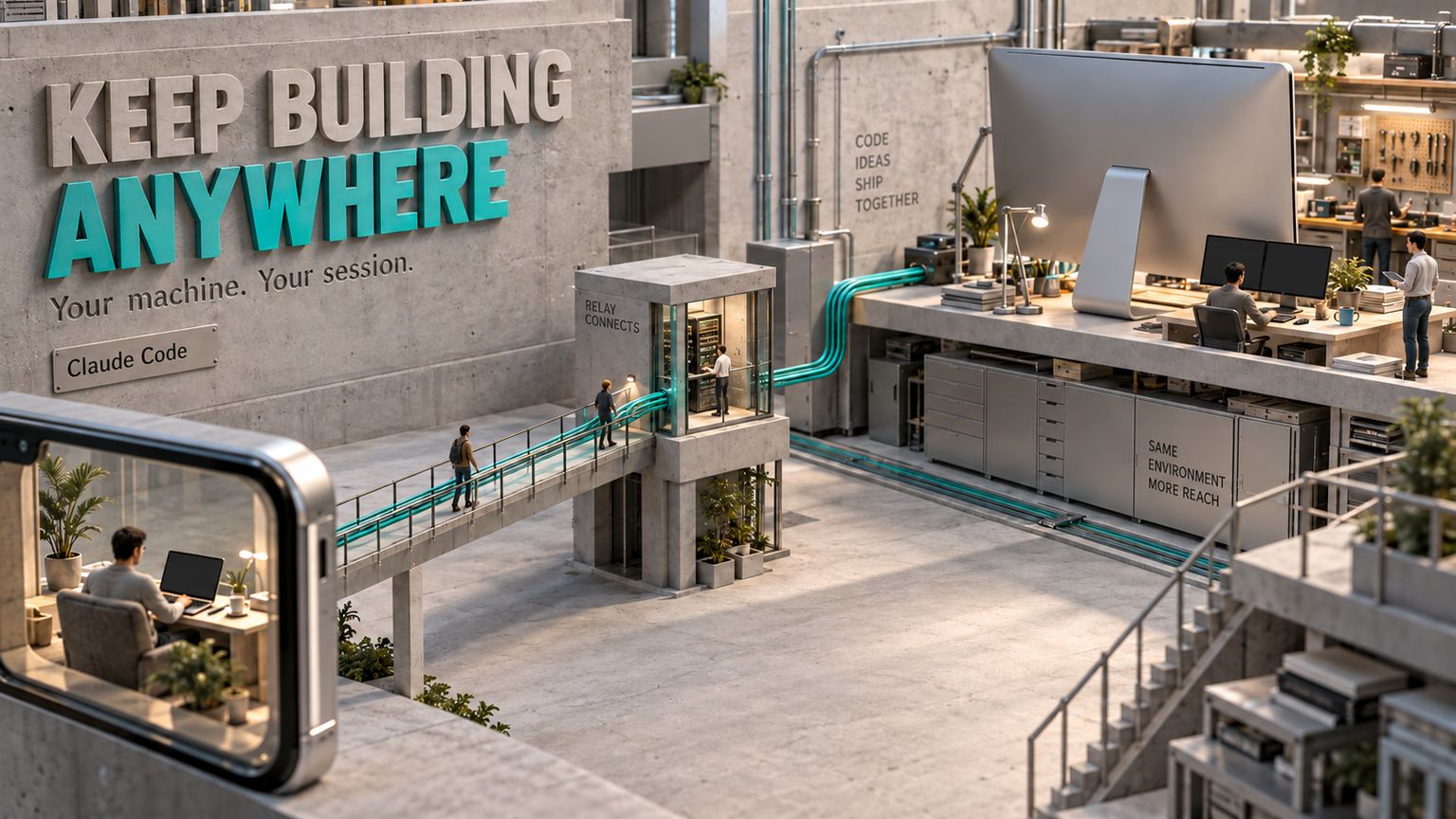
Claude Code Remote Control lets you keep a coding task moving from your phone or another browser while your desk machine does the work. You can leave the terminal, answer Claude and continue using the same local project without moving it into a cloud environment. The practical requirement: your computer and its Claude Code process must keep running.
For a session you already have open, start with /remote-control. For a fresh terminal conversation, use claude --remote-control. Use claude remote-control when you want a server waiting for remote work. These are different starting points for the same local-execution model. Anthropic's Remote Control guide documents all three.
Who Can Use Claude Code Remote Control?
The eligibility wording is “available on Pro, Max, Team, and Enterprise plans. API keys are not supported.” On Team and Enterprise, “an Owner must first enable the Remote Control toggle” in Claude Code admin settings. That organization toggle is off by default. Source: requirements.
Sign in to your Claude account before starting: run claude, then /login. Paying for API usage does not satisfy this requirement, and a saved subscription login can be overridden by another configured credential. The troubleshooting section below covers that distinction.
Remote Control also requires a direct Anthropic API connection. Amazon Bedrock, Google Cloud's Agent Platform and Microsoft Foundry are unsupported, as are a custom ANTHROPIC_BASE_URL pointing away from api.anthropic.com and signing in through an enterprise Claude apps gateway. Source: connection requirements.
For plan costs, see Claude Code pricing. Remote access changes where you can supervise a task; it does not move its execution off the machine you already use.
Choose Your Starting Point
The quickest setup depends on whether you are starting a task or continuing one.
The first three rows are the CLI's three invocation modes. VS Code and Desktop provide their own entry points. Source: startup modes.
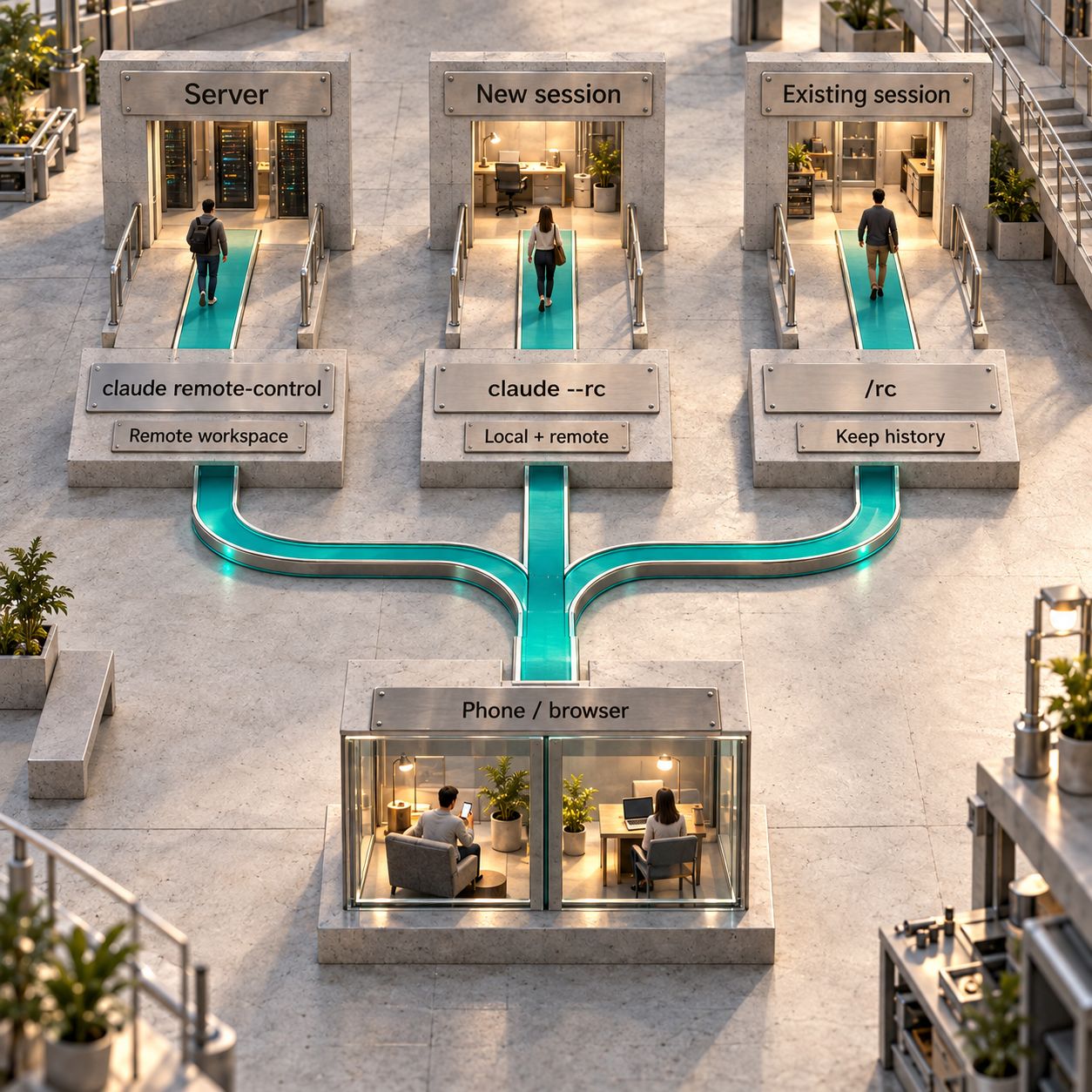
Start a Server in Your Project Directory
Run this from the directory containing the project you want to work on:
claude remote-controlAccept the one-time Remote Control confirmation when it appears. The process then waits for connections and prints the session URL. Press the spacebar to show its QR code. Keep that terminal running.
Server mode provides a place to monitor connections and tool activity. Choose the interactive mode below if you also want to type prompts in that terminal. Add --name "My Project" after remote-control when you want a recognizable name in the remote session list. Source: server startup.
Start a New Interactive Session
Use claude --remote-control or its shorter form, claude --rc. You can continue typing locally while the same session is reachable from your phone or browser. A name can follow the flag, as in claude --remote-control "My Project".
This is a useful default for a developer who starts at a desk and leaves midway through a task. Source: interactive startup.
Connect an Existing Conversation
Inside the session, enter /remote-control or /rc. Accept the enablement dialog if this is your first connection. The conversation history carries over. In the CLI, /remote-control My Project also assigns a session name.
Once connected, the terminal can show an /rc active indicator. Run /remote-control again to open the status panel containing the URL, QR code and disconnect control. Disconnecting there leaves the local conversation running. A narrow terminal can hide the indicator. Source: connection status.
Start From VS Code or Desktop
In the Claude Code VS Code extension, type /remote-control or /rc into the prompt box. The footer indicator opens the connected session, and the conversation also receives its URL. This command does not accept a session-name argument or display a QR code in VS Code. Run it again to disconnect.
In Claude Desktop, use the same command in a local session in the Code tab. Find the connected session at claude.ai/code; repeat the command to disconnect. Desktop also exposes a session-level Remote Control switch. Sources: app entry points, Desktop controls.
Accept Workspace Trust on the Desk Machine
Workspace trust is a separate decision from signing in or allowing Remote Control for your organization. It concerns the directory Claude Code is about to use.
When server mode encounters an untrusted directory, it explains what trusting the directory enables and asks you to confirm. Accepting saves that choice, except for your home directory, where it asks again on every run.
The prompt needs a real terminal. If standard input or output is redirected, Claude Code cannot ask and exits with a workspace-trust error. The documented remedies are to run claude in that directory and accept trust first, or start claude remote-control directly in a terminal and answer the prompt there. Source: workspace-trust error.
Connect From a Phone or Another Browser
Open the session URL to reach it directly in a browser. Alternatively, visit claude.ai/code and select the session by name.
On a phone, use the official Claude app for iOS or Android, signed in to your Claude account. Tap Code to find the session list. An online Remote Control session has a computer icon and green status dot. You can also scan the session QR code to open it in the app. Source: connecting devices.
A practical first check is to send a small follow-up from the phone while the desk session is still in front of you. That lets you confirm you selected the intended conversation before walking away.
You can send prompts from either surface. Connected devices also display ongoing subagents, which are helper agents working within the session, and background workflows. Stopping one remotely stops that task on the desk machine. Source: device behavior.
What Stays Local, and What Travels Through Anthropic?
Your computer remains the workshop. The phone and browser provide another set of controls for it.
The local filesystem, tools, project configuration and MCP servers remain available. MCP servers are connections that give Claude access to additional tools or data. You do not have to recreate that local setup in a separate cloud environment just to continue the session remotely. Source: local environment.
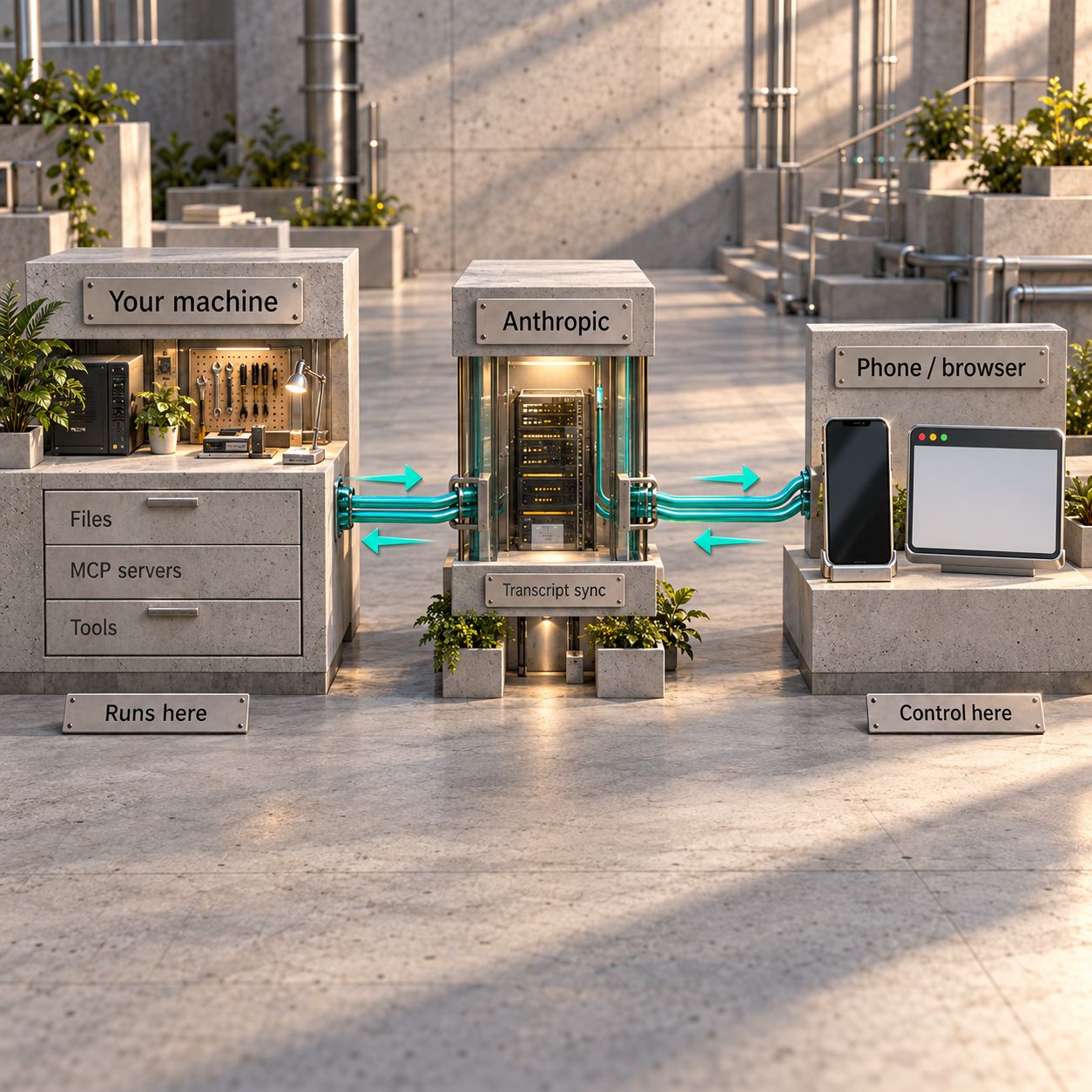
Local execution does not mean all session data stays local. Anthropic stores the transcript, including your messages, Claude's responses and tool activity, to synchronize devices and support reconnection. The connection uses outbound HTTPS over TLS and short-lived credentials; it opens no inbound ports on your computer. Source: connection and security.
Organizations using Zero Data Retention or the HIPAA configuration cannot enable Remote Control. The disableRemoteControl setting can also block the feature. Source: access restrictions.
Workspace Trust and Trusted Devices Are Different
Workspace trust approves a directory on the executing machine. Trusted Devices is an optional, beta access requirement for devices viewing or steering sessions.
When that requirement is enabled, each device must enroll, and its authentication must be no more than 18 hours old. A biometric or passkey confirmation can refresh access. On Team and Enterprise, an Owner enables this separate requirement under Organization settings > Capabilities > Remote sessions. It is distinct from the Remote Control enablement toggle. Source: Trusted Devices.
Make Remote Access and Notifications Routine
For recurring use, you can enable automatic connection instead of entering the command for each session:
- CLI: open
/configand turn on Enable Remote Control for all sessions. - VS Code: find that setting in the command menu's Settings section.
- Desktop: use Settings > Claude Code > Connect new sessions to Remote Control.
The underlying remoteControlAtStartup setting can enable auto-connect from user or managed settings. A repository's project or local settings can disable it, but cannot enable it for everyone opening that repository. Auto-connect uses your own account. Sources: startup setting, VS Code settings, Desktop settings.
For phone notifications, install the Claude app, use the same account and organization as your terminal, and grant the operating system's notification permission. In the terminal's /config, enable Push when Claude decides, Push when actions required, or both. Claude chooses when to send proactive pushes; you can ask it to notify you when a task finishes, but there is no per-event configuration. Source: mobile notifications.
Troubleshoot the Specific Failure
Start with the reason Claude Code prints. An interactive session can continue working locally even when its Remote Control connection fails, so a working terminal alone does not prove that remote access is active.
No Eligible Login, or Another Credential Takes Precedence
Run claude auth login and choose the claude.ai sign-in option. If the error identifies ANTHROPIC_API_KEY or ANTHROPIC_AUTH_TOKEN, remove that credential from wherever it is configured, including the shell environment or a settings file's env block. If it names apiKeyHelper, remove that setting.
A token from claude setup-token or CLAUDE_CODE_OAUTH_TOKEN also cannot establish Remote Control: those tokens are limited to model requests. Use claude auth login for the required login scope. Sources: authentication failures, token limitations.
Without an eligible login, claude remote-control exits. By contrast, claude --remote-control starts the local interactive session and then displays a remote-access failure notification. Source: login requirements.
Environment Variables Disable Feature-Flag Checks
Feature flags are the availability checks Claude Code uses to decide whether the feature can run. The remedy depends on the variable named in the error:
The version in that last row applies specifically to those telemetry-variable configurations. It is not a general minimum-version claim for Remote Control. Source: feature-flag troubleshooting.
A Gateway or Different API Endpoint Is in Use
An enterprise Claude apps gateway sign-in is unsupported for Remote Control. So are the third-party API providers listed earlier.
If the error names a variable routing an otherwise eligible claude.ai session away from Anthropic, such as a custom ANTHROPIC_BASE_URL, the documented remedy is to unset the named variable, remove it from settings env if present there, and restart the session. Source: endpoint requirements and errors.
An Organization or Account Check Fails
For an organization-policy block, check whether an Owner has enabled Remote Control. A device policy using disableRemoteControl is a separate possible cause. If you moved to Pro or Max but Claude Code still uses an old organization login, /status shows the plan and organization; claude auth logout followed by claude auth login refreshes your sign-in.
For outdated account eligibility after a plan change, the docs also prescribe logging out and back in, updating an old Claude Code version, and using claude doctor to identify the failing check. If policy could not be fetched, restore network access and retry; the doctor's organization-policy result explains persistent failures. Source: account and policy troubleshooting.
Remote Credential Fetching Fails
Use the server's documented diagnostic command:
claude remote-control --verboseThe listed causes are missing claude.ai authentication, a network or proxy blocking the outbound Anthropic API request on port 443, or an earlier session-creation failure. For that last case, check that the subscription is active. The in-session /remote-control command does not accept --verbose. Source: credential-fetch troubleshooting.
Keep the Machine Running, and Know How to Reconnect
Closing the terminal, quitting Desktop or VS Code, or stopping the Claude Code process makes its session unavailable remotely. Brief sleep or network interruptions can reconnect when the machine returns, but prolonged network failure behaves differently by mode:
- Server mode: after roughly 10 minutes without network access, the server exits. Start
claude remote-controlagain. - Interactive mode: local work can continue while Claude Code retries and reconnects when connectivity returns.
Some commands, including /plugin and /resume, still require the local CLI. Remote access does not reproduce every terminal interaction. Source: limitations.
If you stopped a server normally, restarting it in the same directory can bring its sessions back for about four hours. This assumes you were not running another server in that directory and did not use --no-create-session-in-dir. After that window, start a new session.
For an interactive conversation, use claude --continue or claude --resume; if remote reconnection fails, run /remote-control inside it. Source: resuming sessions.
Remote Control or a Cloud Session?
Choose Remote Control when the valuable thing is the environment already on your desk machine. Choose a cloud session when you want execution in cloud infrastructure.
Both can appear at claude.ai/code, so that address alone does not tell you where the work is executing. Sources: documented comparison, cloud sessions.
Each interactive Claude Code process supports one remote session. Server mode can handle multiple local sessions. Its default same-dir mode shares the working directory, creating a risk of conflicting edits; --spawn worktree gives on-demand sessions separate Git worktrees, which are separate working copies within a repository. The initially created session still uses the current directory. Source: server options.
Dispatch is a separate mobile-to-Desktop task-delegation option; this guide covers continuing Claude Code sessions. For the broader comparison, including third-party remotes, see AI coding agents with mobile remote control.
Five Workflows Worth Trying
These are practical suggestions based on the documented controls, ranked by how directly they help a developer keep existing work moving:
- A developer halfway through a fix: enable
/rc, then answer the next question from a phone without restarting the conversation. - A founder waiting on tests: request a completion notification and use the mobile session to choose the next task after reviewing the result.
- A developer using local MCP tools: continue the same project remotely without rebuilding its tool connections elsewhere.
- A developer reviewing work from another computer: open the session URL in that browser and send feedback to the running desk session.
- A founder reporting a visual problem: attach a photo or file from the phone to give the existing session more context.
The payoff is less interruption between a running task and your next decision. There is no need to invent an hourly savings figure: the first useful measure is whether you can finish one real handoff without returning to the desk. The underlying sync, attachments and local-tool behavior are documented in Remote Control.
For your next workday, connect one existing project with /remote-control, open it on your phone while still at your desk, and send one follow-up. Once that works, decide whether auto-connect and notifications fit your routine. If you are still establishing the local workflow, start with how to use Claude Code.
If you want help putting coding agents into a reliable team workflow, see AI production systems.
- Published
- Category
- Build
- Language
Cursor Remote Control
Set up Cursor Remote Control on iPhone, pair your laptop, keep local agents reachable, and compare cloud agents, Claude Code and Codex.Oct 9, 2026Build
Firecrawl Pricing 2026: What Your Pages Cost
Firecrawl plans and credit packs verified October 2026. Calculate JSON extraction, failed pages and weekly crawl bills at your volume.Oct 9, 2026Build
Claude Code vs GitHub Copilot 2026
Claude Code vs GitHub Copilot: current plans, usage limits, models, team controls, one-seat and ten-seat costs, and when to use both.Oct 8, 2026Build
LangGraph vs CrewAI
Compare LangGraph and CrewAI on the same approval workflow, state, memory, MCP, observability and current hosted-platform prices.Oct 7, 2026Build
How to Build MCP Server
Build an order lookup MCP server with Python, test it in Inspector, connect Claude Code and Cursor, then add HTTP auth and hosting.Oct 7, 2026Build
Gumloop vs n8n (Verified October 2026)
Gumloop vs n8n: current pricing, credits vs executions, self-hosting and the same AI lead workflow, with a verdict for each builder.Oct 7, 2026Build
AI Agent Frameworks in 2026: LangGraph, CrewAI, OpenAI Agents SDK, Claude Agent SDK, Mastra and Google ADK (Compared)
Compare eight AI agent frameworks by language, state, MCP, approvals and current hosted prices. Pick the right runtime for production.Oct 7, 2026Build