Claude Code vs Codex Cost for Teams
Claude Code and Codex tie at $20 per seat. Compare normalized overage costs, limits, crossover points, and switching economics for engineering teams.
Published Updated
 By Omid Saffari



Claude Code and Codex both start at a $20 monthly equivalent per annual team seat. For most teams, Codex is the better cost choice when frontier-model usage spills past the subscription: the same normalized workload costs $11 on Sol and $20 on Fable 5 before discounts, while Claude Code remains compelling for Sonnet-heavy teams and established local workflows.
Which One Should Your Team Pick?
Pick Codex if your developers regularly need the frontier model, you expect paid usage beyond the included allowance, or you want desktop, CLI, IDE, web, and mobile access under the same Business seat. The base seat is not cheaper, but the costly part of the bill is: Sol comes out 45% below Fable 5 for the identical token workload used in this comparison.
Pick Claude Code if most work can stay on Sonnet 5, your team depends on JetBrains or an established Claude terminal workflow, or you can fully use Anthropic's discounted usage bundles. Sonnet's introductory rate beats Terra through August 31, 2026, and the largest fully used bundle preserves a narrow Sonnet advantage after that date.
Do not switch yet if the projected savings cannot repay migration within your planning horizon. A tool that is cheaper per token can still be more expensive per accepted pull request once configuration work, rework, and developer retraining enter the bill.
The workload row is not a vague "typical task." It is exactly 1 million uncached input tokens plus 0.2 million output tokens, priced at the live rates checked on August 9, 2026. That fixed denominator is what makes the comparison useful.
If you also need the product and workflow differences outside team economics, the broader Codex vs Claude Code comparison covers that decision. This page stays focused on the budget line.
The $20 Seat Tie Hides Two Different Bills
At the entry tier, there is no price winner. A 10-person team on annual billing costs $200 per month equivalent, or $2,400 per year, with either vendor. Monthly billing raises either Standard team to $250 per month.
The plans diverge after that starting point.
Claude Code: Standard, Premium, Then Usage Credits
Claude Code comes with every Claude Team seat. Anthropic's current Team documentation lists Standard at $20 per member monthly equivalent on annual billing or $25 month to month. Premium costs $100 on annual billing or $125 monthly.
Premium is not simply a faster Standard seat. It provides 5 times Standard usage, separates the all-model and Sonnet weekly limits, and includes Fable 5 within a defined portion of the weekly allowance. Standard users can keep working with usage credits after their included limit, but Fable 5 is charged from the first token on Standard as of July 20, 2026. Anthropic lets an organization set both organization-level and user-level monthly extra-usage controls.
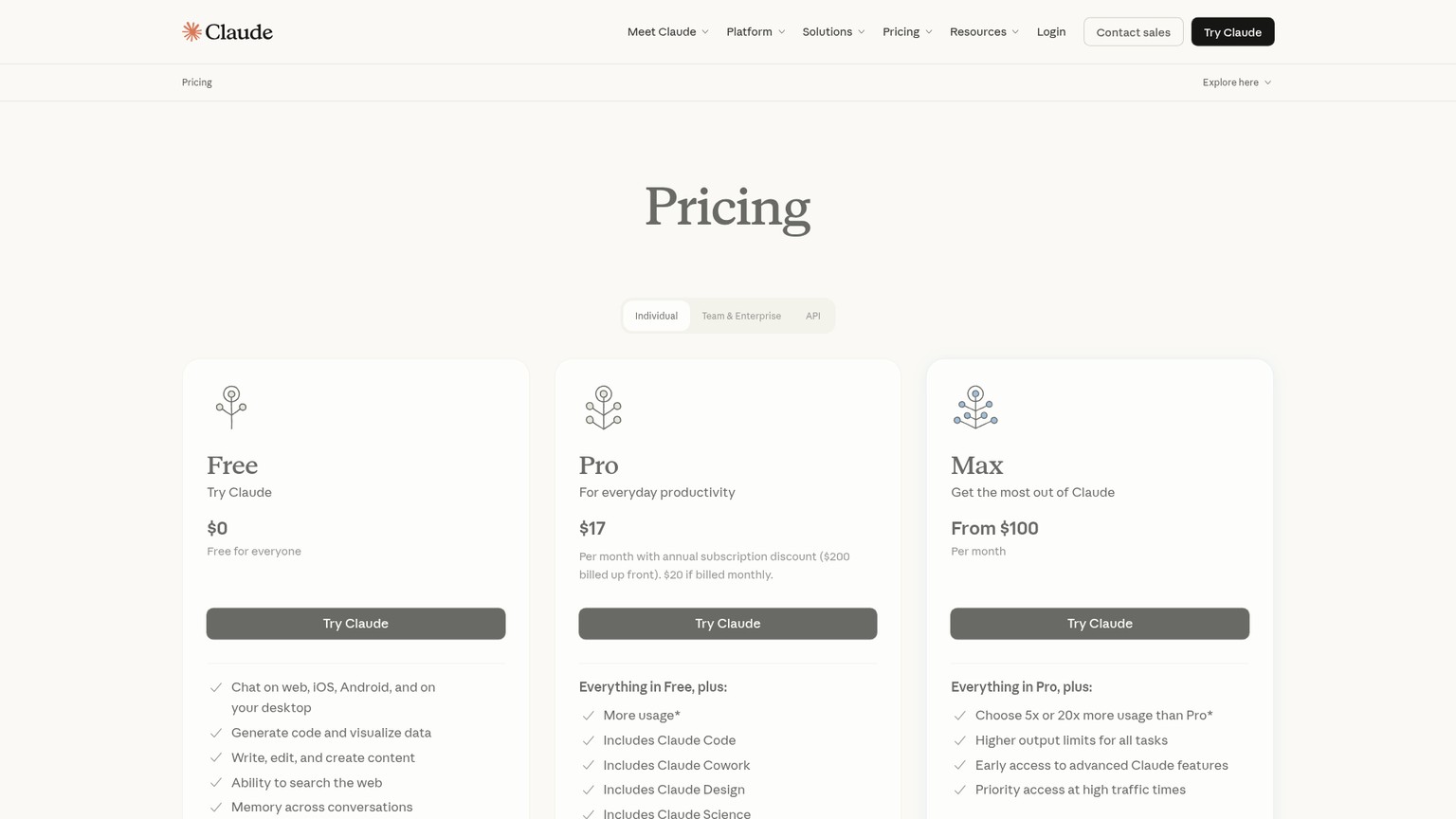
That makes Premium a targeted seat, not the obvious default. Eight annual Standard seats plus two annual Premium seats cost $360 per month equivalent, or $4,320 per year. Moving all 10 people to Premium raises the annual equivalent to $1,000 per month, or $12,000 per year. The right mix depends on how many developers need Fable 5 often enough to consume the extra allowance.
Codex: Business Seat, Then Shared Credits
OpenAI Codex is included with a ChatGPT Business seat, also priced at $20 per user monthly equivalent on annual billing or $25 monthly. The seat covers ChatGPT and Codex, with SAML SSO, MFA, admin controls, and no training on business data by default.
Once included Codex limits are reached, developers can draw from the workspace's shared credits. OpenAI does document Codex-only usage seats with no fixed fee, but that route is grandfathered: new Business workspaces, and workspaces that had not enabled those seats by June 24, 2026, cannot add them. A new buyer should budget for the full Business seat.
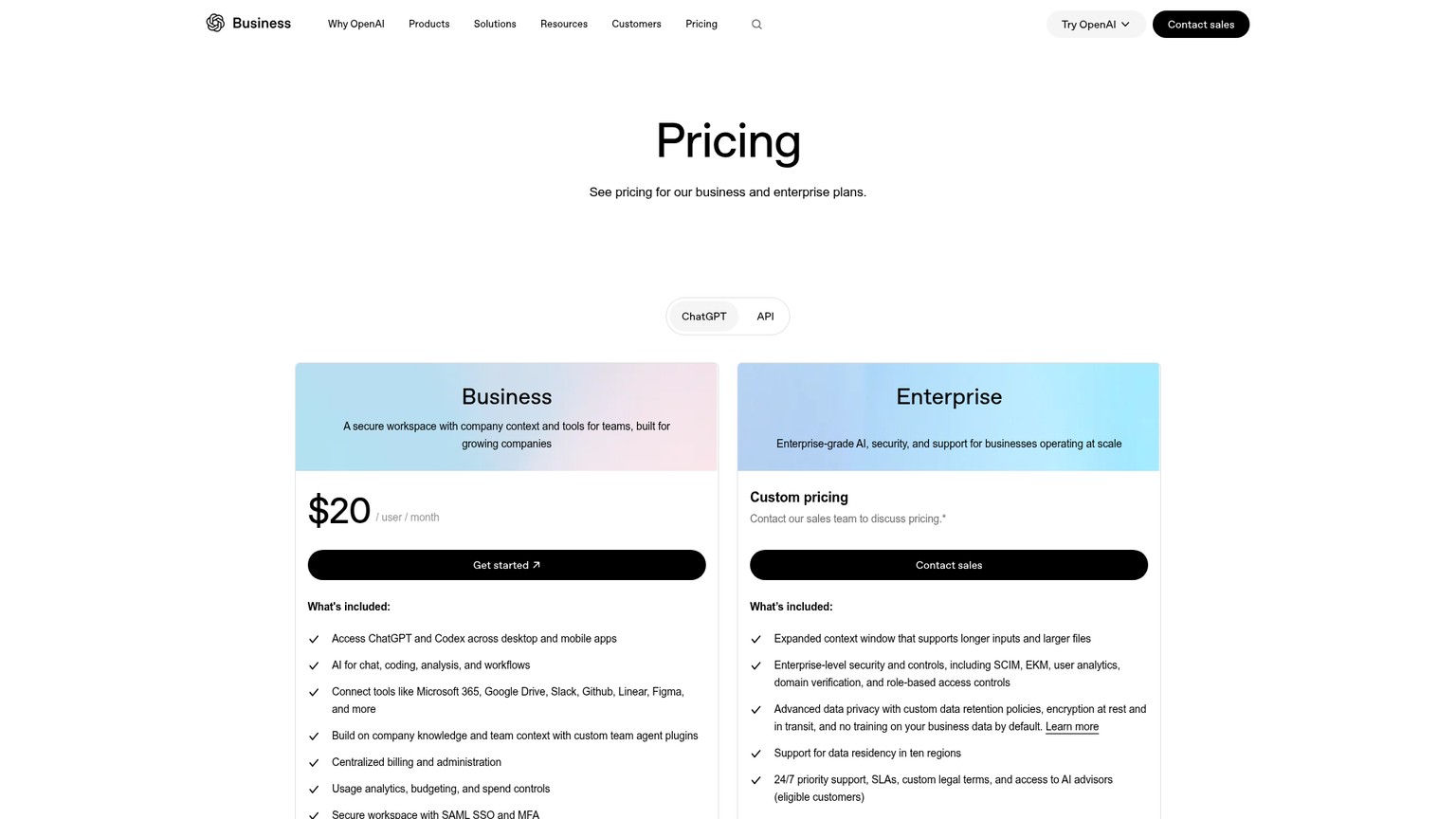
This is good value when developers also use ChatGPT. It is a less elegant purchase when the only requirement is a coding agent, because the current entry point bundles both products. The ChatGPT review is the useful companion if that broader bundle affects the decision.
The Same Workload Costs $4, $4.40, $11, or $20
Subscription limits cannot be normalized cleanly because neither vendor publishes the included allowance as a fixed token quantity. Paid overflow can. The planning unit here is:
1 normalized workload unit = 1 million uncached input tokens + 0.2 million output tokens.
That 5:1 input-to-output ratio is an explicit scenario, not a claim about every repository or coding session. Replace it with your own logs before procurement. It is still much better than comparing a Claude weekly limit with a Codex five-hour message window as if those units were equivalent.
At the per-1,000-token level, the balanced paths are close. The Claude API rates put Sonnet 5 at $0.002 for input and $0.010 for output through August 31. Terra costs $0.002 for input and $0.012 for output. After the Sonnet promotion, Sonnet moves to $0.003 input and $0.015 output.
The frontier paths are not close. Fable 5 costs $0.010 per 1,000 input tokens and $0.050 per 1,000 output tokens. Sol's credit-equivalent rate is $0.005 input and $0.030 output. The Codex dollar conversion is derived, not printed as a slogan by OpenAI: Sol, Terra, and Luna all map their Codex credit rates to the matching API dollar rates at 25 credits per $1.
Apply those rates to the same unit:
- Sonnet 5 through August 31: $2 input + $2 output = $4.
- Terra: $2 input + $2.40 output = $4.40.
- Sonnet 5 after August 31: $3 input + $3 output = $6.
- Fable 5: $10 input + $10 output = $20.
- Sol: $5 input + $6 output = $11.

The balanced-model winner flips with the calendar. Sonnet is 9.1% cheaper than Terra during the introductory window. After August 31, Terra is 26.7% cheaper than Sonnet at standard rates.
Anthropic's usage bundles can change that second result. A fully used $1,000 face-value bundle costs $700, a 30% discount. It lowers Sonnet's post-promotion unit to $4.20, which is 4.5% below Terra's $4.40. That advantage requires paying upfront, using the whole bundle, and staying within the Team organization's $3,000 monthly discounted-bundle cap. Smaller bundles provide smaller discounts.
The frontier result survives the same test. A 30% bundle reduces Fable 5 from $20 to $14 per unit. Sol remains 21.4% cheaper at $11. Without a bundle, Sol is 45% cheaper.
There is no honest "per image" line in this coding-agent comparison. These overflow paths meter text tokens, and manufacturing an image unit would create a product neither team plan sells. The useful denominators are per 1,000 tokens, per matched workload, and per seat-month at your measured usage.
Included Usage Is the Comparison Nobody Can Finish Exactly
Claude and OpenAI describe included use in different, non-convertible units.
Claude Team applies per-member weekly limits. Standard provides 1.25 times Pro's per-session usage and one weekly all-model limit. Premium provides 6.25 times Pro, or 5 times Standard, with separate all-model and Sonnet weekly limits.
Codex Business publishes local message ranges per five-hour window: 10 to 100 for Sol, 25 to 200 for Terra, and 250 to 2,000 for Luna. OpenAI warns that additional weekly limits may apply, and says GPT-5.6 messages commonly average 5 to 40 credits depending on context and task complexity.
OpenAI's own planning estimate is unusually candid: average Codex use runs roughly $100 to $200 per developer per month, with wide variation. Treat that as a vendor budget range, not a promise. Anthropic does not publish a directly comparable average on the Team pages used here.
This limitation changes procurement. Ask both vendors for workspace-level export data during a pilot, then compare accepted work per dollar. Do not forecast from message counts alone.
When Claude Premium Pays for Itself
The important Claude crossover changed on July 20, 2026. Premium now includes Fable 5 use up to 50% of its weekly limit at no extra charge. Standard bills Fable 5 through usage credits from the first token.
On annual pricing, Premium costs $80 more per member per month than Standard. At Fable's $20 normalized-unit rate, that gap equals 4 workload units, or 4 million input plus 0.8 million output tokens. If a developer's Fable work fits inside Premium's included allowance, Premium can beat Standard once Standard would otherwise spend more than $80 on it.
Bundles move the threshold. With the maximum 30% discount fully used, $80 buys $114.29 in face-value Fable usage. That equals about 5.714 workload units, or 5.714 million input plus 1.143 million output tokens.

The final clause matters. Anthropic expresses Premium capacity as relative weekly limits, not a token bucket. A developer can cross the calculated dollar threshold and still fail to fit all work inside the included Fable allowance. That is why the safest Team configuration is usually Standard for most members and Premium only for the few whose measured Fable demand clears the crossover.
The Claude review provides the broader product context. For this cost decision, the rule is simpler: Premium is an allowance purchase. Buy it for measured Fable demand, not as a status tier.
Cost Per Pull Request Matters More Than Cost Per Token
Token cost is an input. Accepted work is the outcome.
A 2026 study of tens of thousands of Microsoft engineers estimated that early adopters of Claude Code and GitHub Copilot CLI merged about 24% more pull requests over four months. That is meaningful evidence that coding agents can alter throughput at organizational scale.
It is not evidence that Claude Code beats Codex. The study did not run that head-to-head, and its authors explicitly treat merged pull requests as a proxy rather than direct business value. More pull requests can include smaller changes, more review load, or more rework.
For a team comparison, track three things together: accepted pull requests, rework hours, and paid usage. If one agent produces more drafts but also creates more review and correction work, its lower token rate may not survive contact with payroll. Conversely, a pricier model can be the cheaper choice when it resolves difficult work with fewer loops.
What Switching Really Costs
Migration is not just installing a different CLI. The team must recheck repository instructions, permission policies, local integrations, review conventions, model defaults, spend caps, and audit expectations. Developers then need enough repeated work to stop paying a context-switching penalty.
Consider an editable 10-developer migration budget:
- 2 hours per developer for setup and workflow adaptation: 20 hours.
- 8 hours for platform and administration work.
- 12 hours for technical evaluation and rollout decisions.
- Total: 40 hours. At a $100 loaded engineering rate, the migration costs $4,000.
Now price a heavy frontier scenario at 10 normalized units per developer each month. That is 10 million input plus 2 million output tokens per person. To keep the comparison conservative, assume every Codex Sol unit is paid even though some work may fit inside the Business allowance.
Claude Standard plus unbundled Fable costs $220 per developer monthly equivalent, or $2,200 for 10 developers. Business plus Sol costs $130 per developer, or $1,300 for the group. The $900 monthly gap repays a $4,000 migration in about 4.4 months.
If the Claude team fully uses 30% bundles, its cost falls to $1,600. Codex then saves $300 per month, stretching the migration payback to 13.3 months. That is a different decision. A company with a 12-month planning horizon should not fund that switch on cost alone.
Who Should Not Switch
- A Sonnet-heavy Claude team: the temporary $4 unit is already below Terra, and a fully used large bundle can keep post-promotion Sonnet slightly cheaper.
- A Premium team whose Fable work fits the included cap: the paid-overflow comparison overstates what that team will spend.
- A workflow with deep local investment: JetBrains setup, repository conventions, approvals, and team habits can make a narrow token saving irrelevant.
- A team without usage exports: if you cannot separate included work, paid overflow, accepted output, and rework, you do not yet have a switch case.
Codex has broader client coverage and can surface local and cloud activity through its Compliance API for eligible enterprise controls. Claude Code has strong terminal coverage plus direct VS Code-fork and JetBrains integrations. Neither capability list makes migration free. The environment your developers already use is an economic asset.
The Monday Move: Run a Capped Shadow Budget
Do not negotiate a full rollout from public price pages. Start with a small, bounded comparison on Monday.
Pick the cohort
Choose 3 engineers whose work represents frontend, backend, and platform tasks. Keep their existing agent available so the pilot does not block delivery.
Fix the work queue
Give each tool the same 10 issue-shaped tasks over 5 business days. Use real backlog work, but keep task scope comparable enough that review effort can be judged.
Cap the overflow
Set a $100 paid-usage ceiling per tool. The cap forces the pilot to reveal whether one workflow burns budget through long context, retries, or unnecessary frontier-model use.
Record accepted value
Track accepted pull requests, rework hours, and credit or API-equivalent cost. Keep included subscription use separate from paid overflow wherever the admin exports allow it.
At the end, route work instead of declaring a universal champion. If frontier work dominates and output quality is comparable, Codex has the stronger budget case. If Sonnet handles most work and Claude's workflow reduces rework, Claude Code can win. If the answer changes by task, a mixed deployment is more rational than forcing every developer through the same model.
Frequently Asked Questions
Is Claude Code cheaper than Codex for teams?
The annual Standard seats tie at $20 per member monthly equivalent, and monthly seats tie at $25. For paid overflow, Sonnet 5 is cheaper than Terra through August 31, 2026; Terra wins after the promotion at standard rates, while Sol remains cheaper than Fable 5 even after Anthropic's maximum bundle discount.
How do Claude Code and Codex usage limits differ?
Claude Team uses per-member weekly limits expressed relative to Pro. Codex Business publishes model-dependent local message ranges in five-hour windows and may also apply weekly limits. Neither vendor publishes a fixed token quantity for the subscription allowance, so the two limit systems cannot be converted exactly from the public pages.
Is Claude Code better than Codex for a team?
Claude Code is the better fit for Sonnet-heavy teams and established terminal or JetBrains workflows. Codex is the stronger cost choice for regular frontier-model overflow and offers broader client reach across desktop, CLI, IDE, web, and iOS. The winner should be confirmed against accepted work and rework, not token price alone.
Can a team use Claude Code and Codex together?
Yes. The subscriptions do not require an exclusive deployment. A team can run a capped side-by-side pilot, keep one agent for established workflows, or route frontier-heavy work to the lower-cost path without forcing an immediate full migration.
Bottom Line
If you want a one-page way to map seats, overflow, and migration costs before renewal, get the AI Business Workflow Audit Checklist.
- Last Updated
- Category
- Build
- Language

Firecrawl Pricing 2026: What Your Pages Cost
Firecrawl plans and credit packs verified October 2026. Calculate JSON extraction, failed pages and weekly crawl bills at your volume.Oct 9, 2026Build
Claude Code vs GitHub Copilot 2026
Claude Code vs GitHub Copilot: current plans, usage limits, models, team controls, one-seat and ten-seat costs, and when to use both.Oct 8, 2026Build
LangGraph vs CrewAI
Compare LangGraph and CrewAI on the same approval workflow, state, memory, MCP, observability and current hosted-platform prices.Oct 7, 2026Build
How to Build MCP Server
Build an order lookup MCP server with Python, test it in Inspector, connect Claude Code and Cursor, then add HTTP auth and hosting.Oct 7, 2026Build
Gumloop vs n8n (Verified October 2026)
Gumloop vs n8n: current pricing, credits vs executions, self-hosting and the same AI lead workflow, with a verdict for each builder.Oct 7, 2026Build
AI Agent Frameworks in 2026: LangGraph, CrewAI, OpenAI Agents SDK, Claude Agent SDK, Mastra and Google ADK (Compared)
Compare eight AI agent frameworks by language, state, MCP, approvals and current hosted prices. Pick the right runtime for production.Oct 7, 2026Build
Codex Cloud
Set up a reusable Codex Cloud environment, keep coding tasks running with your laptop off, steer from your phone, and choose cloud or local CLI.Oct 7, 2026Build