Cursor Alternatives With Portable Model Access 2026
Compare Cline, Kilo Code, Zed, and OpenCode on model portability, live 2026 pricing, lock-in limits, migration costs, and the November 12 move.
Published
 By Omid Saffari
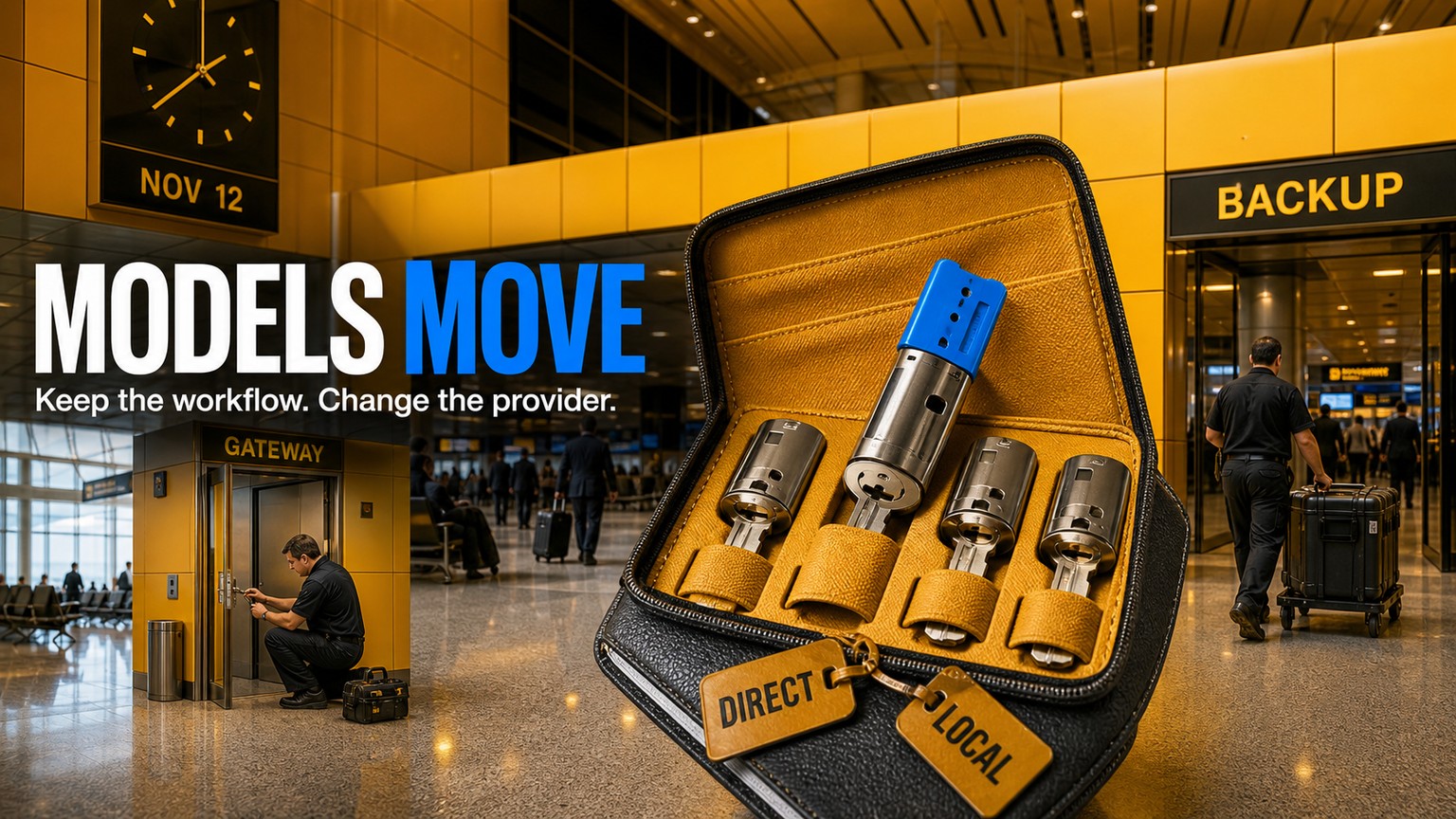
OpenAI's proposed November 12 cutoff turns model portability from a preference into a continuity plan: Cline is the best overall Cursor alternative because its free client can move among direct provider keys, gateways, and local models without changing editors. Kilo Code wins for governed teams, Zed for a full editor, and OpenCode for terminal-first builders.
The best Cursor alternative for portable model access
Cline is the best overall pick if your priority is keeping the coding client separate from the model supplier. It gives an individual developer a free, open-source VS Code client and lets the model connection come from OpenAI, Anthropic, Google, a cloud gateway, or a local server. If one provider changes access or price, the editor does not have to move with it.
Cursor is not scheduled to stop working on November 12. OpenAI's company news feed records its August 28, 2026 decision to wind down the contract supplying models directly to Cursor. The proposed November 12 cutoff, the fact that the final date is still unconfirmed, and the current transition routes are collected in this source-linked transition summary. Cursor could end access sooner, current OpenAI models would remain during the proposed transition, and future OpenAI models will not be provided under that contract.
That makes the decision narrower than “leave or stay.” Cursor can still use your own OpenAI key in local Chat and Agent, and the Codex IDE extension offers another direct route. The risk sits in the surfaces that cannot use your key: Cursor Tab, Auto, Cloud or Background Agents, Automations, Cursor CLI, and Cursor's API and SDK. If those are central to your workflow, a local Chat fallback does not preserve the product you bought.
Here is the shortlist, with prices verified from every vendor's live pages on August 30, 2026.
The choice flips on one question: what must remain stable when a model supplier changes? Keep VS Code stable and choose Cline. Keep team policy stable and choose Kilo Code. Replace the whole editor with a model-agnostic one and choose Zed. Keep the terminal and configuration stable and choose OpenCode.
For a wider view of coding UX, autonomy, and privacy, the earlier ten-tool Cursor alternatives map still does that job. This page answers the narrower post-cutoff question: which client leaves you with a credible second provider path?
Portable model access is a four-layer chain
A large model picker is not portability. Portable access means you can change the credential, endpoint, provider, or policy layer without replacing the coding client or losing the workflow around it.
The four layers are:
- Client: the editor, extension, terminal, or desktop surface where the agent works.
- Credential: a provider API key, cloud identity, subscription login, or local endpoint that you control.
- Provider route: direct OpenAI or Anthropic, Bedrock or Vertex, a multi-model gateway, or a local server such as Ollama.
- Policy: the organization rules that limit providers, models, spend, data handling, and who can change the configuration.
A tool is strongly portable when those layers can move independently. A tool is weakly portable when it displays several model names but every request still depends on one vendor's contract and routing. The distinction matters because the OpenAI and Cursor change affects a wholesale supply agreement, while a direct OpenAI API key is a separate account and billing route.
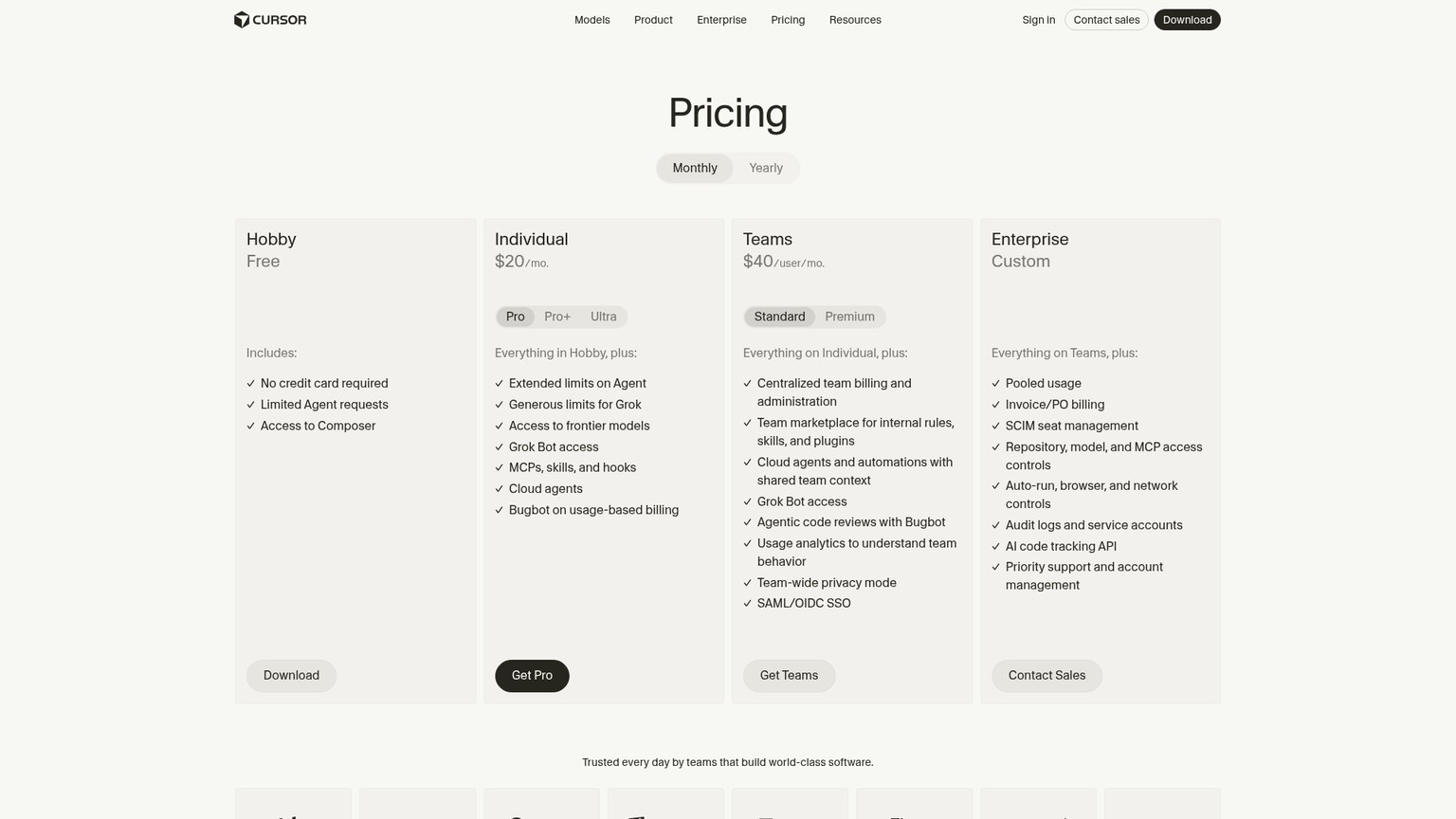
The budget changes with the architecture. Cursor's current tiers are Hobby at $0, India-only Start at ₹649/month, Pro at $20/month, Pro+ at $60/month, Ultra at $200/month, Teams Standard at $40/user/month, Teams Premium at $120/user/month, and Enterprise at custom pricing. A ten-person group on Pro has a $200 monthly base, or $2,400 a year. Ten Teams Standard seats have a $400 monthly base, or $4,800 a year.
Moving to a free or cheaper client does not make model work free. It changes the budget from a bundled seat into a client line plus a separate inference line. That is the seat-to-inference swap: you gain provider leverage and clearer model costs, but you inherit key management, spend caps, and the work of deciding which provider is allowed.

The diagram is platform price, not total cost. Ten Kilo Teams seats are $150 per month, ten Zed Business seats are $300, and ten Cursor Teams Standard seats are $400. Kilo's $250 monthly difference becomes $3,000 a year, but inference and any cloud agent compute sit on top. Zed's $100 monthly difference becomes $1,200 a year, but Business includes no fixed AI credit. A procurement comparison that ignores those second lines will understate the new bill.
1. Cline: best overall for keeping VS Code
Cline is the strongest default because it changes the model layer without forcing an editor migration. It is an open-source agent for VS Code and CLI that can use a direct provider key, Cline's at-cost inference route, a cloud gateway, or a local model. The individual client is free, so a solo technical founder can pilot the architecture without adding another seat. Its wall appears when a company needs centralized controls, because those live in a custom-priced Enterprise plan.
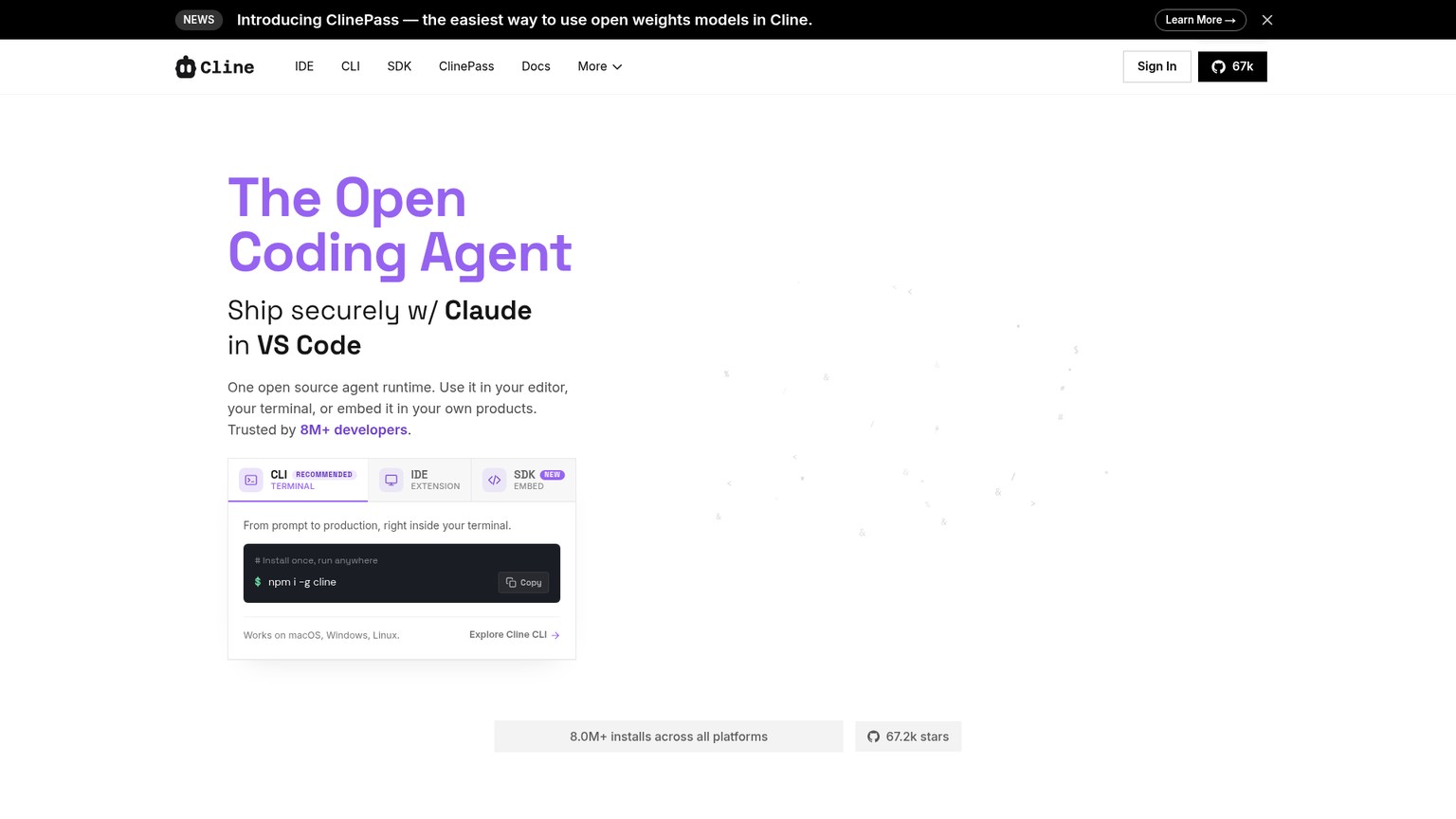
Best for: Individual developers and small technical groups that want to keep VS Code while separating the model account from the client.
Standout: Direct keys, gateways, and local Ollama or LM Studio can sit behind the same client.
Pricing: Open Source is free for individual developers; Enterprise is custom. Model inference is separate.
Free trial: The individual product is already free; the public page does not quote an Enterprise trial.
Why Cline ranks first
Cline's advantage is not the number of names in its model menu. It is the range of credential paths. Its live documentation lists direct routes for OpenAI, Anthropic, Google, DeepSeek, and others; enterprise cloud routes such as AWS Bedrock and Google Vertex; gateways such as OpenRouter and Vercel AI Gateway; and local servers through Ollama or LM Studio. The current Cline pricing page also makes the commercial boundary clear: the open-source client carries no individual subscription, while Enterprise adds JetBrains, centralized billing, role controls, provider limits, SSO, audit logs, and support.
That makes Cline a practical fit for a developer who wants to keep the VS Code extension ecosystem and change only the agent panel. Consider a funded founder with three repositories and two provider accounts. The founder can use a strong model for architecture, a cheaper model for repetitive edits, and a local model for code that should not leave the machine. The client stays put while the routing decision changes by task.
Cline's authorization documentation says BYOK credentials are stored in the operating system's credential manager and sent only to the chosen provider, not logged or transmitted to Cline. That is a meaningful control boundary. It is still your responsibility to verify the selected provider's retention, region, and training terms, because keeping a key out of Cline does not change what the model vendor does with a request.
The wall: the free client is not a team control plane
The free route transfers three jobs to you: model selection, provider billing, and key hygiene. Cline can auto-approve actions, so a loose provider cap can turn an apparently free client into an unpredictable inference bill. A team also needs an answer for shared rules and provider restrictions. Cline sells those controls through Enterprise, but the public price is custom, which prevents a clean self-serve team total.
For a mid-market CTO, that is the decision rule. If a custom Enterprise conversation is acceptable and Cline's client-side architecture is the priority, keep it on the shortlist. If the team needs a published per-seat policy layer this week, Kilo Code is easier to budget.
Install Cline beside Cursor
Keep Cursor installed and add Cline to VS Code. Import no secrets yet. Open the same non-sensitive repository in both clients so rollback remains one click away.
Choose the credential path first
Select a direct provider key when contract ownership matters, a gateway when one policy endpoint should front several providers, or Ollama or LM Studio when the model must stay local. Do not start with whichever model name is at the top of the menu.
Set the provider cap before auto-approve
Create a separate project key, apply a hard monthly limit in the provider account, and keep auto-approve off for the first production-shaped task. The editor price is $0; the inference account is where the financial limit belongs.
Prove the fallback
Run one representative ticket, record cost and review time, then switch to the secondary provider and repeat. Portability is proven only when the second route can finish useful work, not when its name appears in a dropdown.
- Free individual client with no mandatory seat subscription
- Direct, gateway, subscription, and local-model routes
- Keeps the familiar VS Code workflow
- Credentials stay in the operating system credential manager under the documented BYOK path
- Team governance and JetBrains support require custom-priced Enterprise
- Inference spend is variable and owned by the buyer
- Provider flexibility creates more setup and policy work
2. Kilo Code: best for a team that needs published governance pricing
Kilo Code is the best team pick because it publishes a $15/user/month policy layer and keeps inference separable. Its individual client is free, Teams adds shared BYOK, analytics, shared agent modes, data controls, and centralized billing, and Enterprise adds a private gateway option plus model and provider restrictions. The product can use local models, direct credentials through its Gateway, or Kilo's managed catalog. Its wall is billing complexity: platform, inference, purchased-credit fees, and cloud compute are separate lines.
Best for: Teams that want a published seat price, shared provider credentials, and a path to stricter enterprise controls.
Standout: Shared BYOK at Teams and a shared private-gateway BYOK route at Enterprise.
Pricing: Individual $0; Teams $15/user/month; Enterprise custom. Optional Kilo Pass tiers are $19, $49, and $199 per month.
Free trial: 14-day Enterprise trial.
Why Kilo wins governed portability
Kilo separates three purchases. The platform is free for an individual, $15 per user for Teams, or custom for Enterprise. Inference can be free or local, billed through your own keys, paid through Kilo Gateway at provider rates, or bundled through Kilo Pass. Cloud compute is metered independently when an agent runs away from the local machine.
That separation is useful for a ten-developer product group with an existing Bedrock or OpenAI agreement. The team can centralize the provider key and adoption controls without asking every developer to maintain a personal billing account. Kilo's BYOK documentation lists OpenAI, Anthropic, AWS Bedrock, Google AI Studio, DeepSeek, Mistral, Z.ai, and several subscription-specific routes. The pricing page lists 500+ models across 60+ providers in the wider Gateway catalog and permits local Ollama or LM Studio.
The ten-seat platform math is unusually clear. Kilo Teams is $150 per month versus $400 for Cursor Teams Standard, a difference of $250 per month or $3,000 per year before inference. That is not pure savings if the Cursor allowance had been covering useful model usage. It is budget that moves from the seat line into a provider account you can measure and renegotiate.
The wall: the gateway becomes part of the trust boundary
Kilo BYOK through Kilo Gateway routes the request using your provider key. That buys shared administration and product-wide features, but the gateway is an intermediary that security must evaluate. Cline's documented direct client-to-provider path is cleaner when avoiding another routing layer matters more than team reporting.
Kilo's published pricing also needs to be read all the way down. Gateway access starts at $0 plus exact provider-rate usage, and credit purchases carry a 5% processing fee. Kilo Pass has Starter at $19, Pro at $49, and Expert at $199 per month. Cloud Agent Docker and Small are $0.60 an hour, Standard and Gas Town are $1.20 an hour, and Code Review is $0.33 an hour, with inference charged separately. These are useful options, but they make a one-line “$15 per seat” total incomplete.
- Published $15/user/month Teams tier
- Shared BYOK, team management, reporting, and data controls
- Broad managed catalog plus local-model routes
- Enterprise can limit models and providers and use a shared private gateway
- BYOK through the Gateway adds an intermediary to review
- Platform, inference, credit fees, and cloud compute are separate budget lines
- Enterprise pricing remains custom
3. Zed: best full-editor replacement
Zed is the best choice when you want the editor itself to be independent of one model supplier. Its Personal plan is free and permits unlimited use with your own keys or external agents; Pro adds hosted models for $10 per month; Business adds organization controls for $30 per seat. Zed documents five access paths: hosted models, direct API access, an existing subscription, a gateway, and a local model. Its wall is the size of the change: you are adopting a different editor, and Business does not yet include SSO, SAML, or SCIM.
Best for: Builders willing to replace Cursor with a model-agnostic editor rather than add an extension to VS Code.
Standout: Direct keys, subscriptions, gateways, local models, and external agents are first-class access paths.
Pricing: Personal $0; Pro $10/month with $5 of tokens; Business $30/seat/month with no fixed AI credit.
Free trial: Two-week Pro trial with $20 of token credits; no Business trial.
Why Zed is more than a BYOK checkbox
Zed treats model access as a set of independent paths. Its provider documentation sends direct API accounts to one setup, existing ChatGPT or Claude subscriptions to another, Bedrock or OpenRouter-style gateways to another, and local or self-hosted models to their own route. External agents keep their own authentication, which prevents the editor account from becoming the only credential authority.
That design fits a senior builder who wants a fast editor for line-by-line work and several interchangeable agents for larger jobs. On Zed's current pricing page, Personal keeps the editor and BYOK route at $0. Pro costs $10 per month, includes $5 of hosted token credit, and bills usage beyond that at provider list price plus 10%. Business costs $30 per seat, adds model policy, data-governance controls, role controls, and unified spend visibility, but bundles no fixed AI credit.
At ten individual Pro subscriptions, the base is $100 per month and the included hosted credit totals $50. Ten Cursor Pro seats cost $200 per month. That is a $100 platform difference, but it is not a team-governance comparison. At the organization layer, ten Zed Business seats are $300 per month versus $400 for Cursor Teams Standard, a $100 monthly or $1,200 annual difference before model usage.
The wall: editor migration and an incomplete enterprise checklist
Choosing Zed means moving shortcuts, extensions, collaboration habits, and project setup into another editor. That can be worthwhile if the editor is the long-lived layer you want to protect, but it is more operational change than installing Cline or Kilo inside an existing IDE.
The current Zed pricing page also says SSO, SAML, and SCIM are planned rather than available. Business admins can restrict hosted models and lock data-sharing settings, but a company whose identity checklist requires those protocols should not treat Business as complete. Cline Enterprise or Kilo Enterprise is the more credible procurement path until Zed closes that gap.
- Free Personal route with unlimited BYOK or external-agent use
- Five documented model-access paths
- $10 Pro and $30 Business have transparent base prices
- Business can control model and data-sharing policy
- Requires a full editor migration
- Hosted usage adds 10% to provider list price after included credit
- Business has no included AI credit and no free trial
- SSO, SAML, and SCIM are not available yet
4. OpenCode: best terminal-first option
OpenCode is the best terminal-first alternative because its free open-source client supports 75+ providers and local models. It also has a desktop app and IDE extension, but its clearest advantage is a configuration you can carry between shells and repositories. Provider credentials are added with a connect flow, while a custom base URL can point the client at an internal gateway or compatible endpoint. Its wall is ownership: credentials, configuration, provider quirks, and local security all become your job.
Best for: Terminal-first builders and platform teams that want a custom endpoint or internal model gateway.
Standout: 75+ providers, local models, custom base URLs, and provider allow or deny lists.
Pricing: Open-source client $0; OpenCode Go $10/month; Zen pay-as-you-go; Enterprise custom per seat.
Free trial: The client is free; no separate Go or Enterprise trial is listed on the cited pages.
Why OpenCode is the cleanest client for a gateway
OpenCode's provider documentation exposes the plumbing instead of hiding it. You can change the base URL for a provider, whitelist approved models, blacklist a model that procurement has rejected, and run local models. That makes it a useful front end for an internal gateway because the client does not need to know whether the endpoint behind one URL is OpenAI, a cloud broker, or a self-hosted compatible service.
A platform team can therefore keep one approved OpenCode configuration in source control, point developers at a central endpoint, and change the upstream model later. That is stronger portability than giving every developer five personal keys. The client remains stable, the gateway carries authentication and policy, and the model supplier can change behind the route.
OpenCode itself is free. Optional OpenCode Go costs $10 per month and publishes usage-value limits of $12 per five hours, $30 per week, and $60 per month. Zen is pay-as-you-go across its published model list. Enterprise is custom per-seat pricing, and OpenCode says it does not charge for tokens when the organization supplies its own LLM gateway.
The wall: a portable config is still an operational asset
OpenCode stores provider credentials at ~/.local/share/opencode/auth.json. That location is convenient for a local developer and an item for endpoint security to govern. A laptop backup, support bundle, or misconfigured permission should not become a credential export path. An internal gateway can reduce key sprawl, but then the gateway needs uptime, logging, and incident ownership.
Provider breadth also does not guarantee equal agent behavior. Tool calling, context limits, prompt caching, and compatible endpoint details differ. The right pilot is not “does it connect?” It is whether the secondary route completes the same repository task with acceptable review time and cost.
- Free open-source client across terminal, desktop, and IDE surfaces
- 75+ providers plus local-model support
- Custom base URL and model allow or deny lists
- Optional $10 subscription without making it mandatory
- Local credentials and config need security ownership
- Enterprise pricing is custom
- Model and provider behavior can differ behind a compatible interface
Who should pick what
Pick Cline when preserving VS Code matters most. It is the shortest move from Cursor for an individual because the editor and provider can change independently. The decision flips to Kilo when shared keys, published team pricing, and reporting matter more than the most direct credential path.
Pick Kilo Code when ten or more people need one policy. Its $15 Teams tier gives the budget owner a known platform number and centralizes BYOK. The decision flips to Cline when another gateway in the request path is unacceptable, or to OpenCode when an internal gateway already exists and the terminal is the standard surface.
Pick Zed when the editor is the layer you want to own for years. It has the broadest set of model-access categories in a complete editor. The decision flips away when SSO or SCIM is mandatory now, or when the cost of moving extensions and habits exceeds the benefit.
Pick OpenCode when the terminal and a policy endpoint are already normal. It is the most natural client for a platform team that can support one central gateway. The decision flips to Cline when developers need VS Code's graphical workflow or to Kilo when the company wants a commercial team console without operating the routing layer.
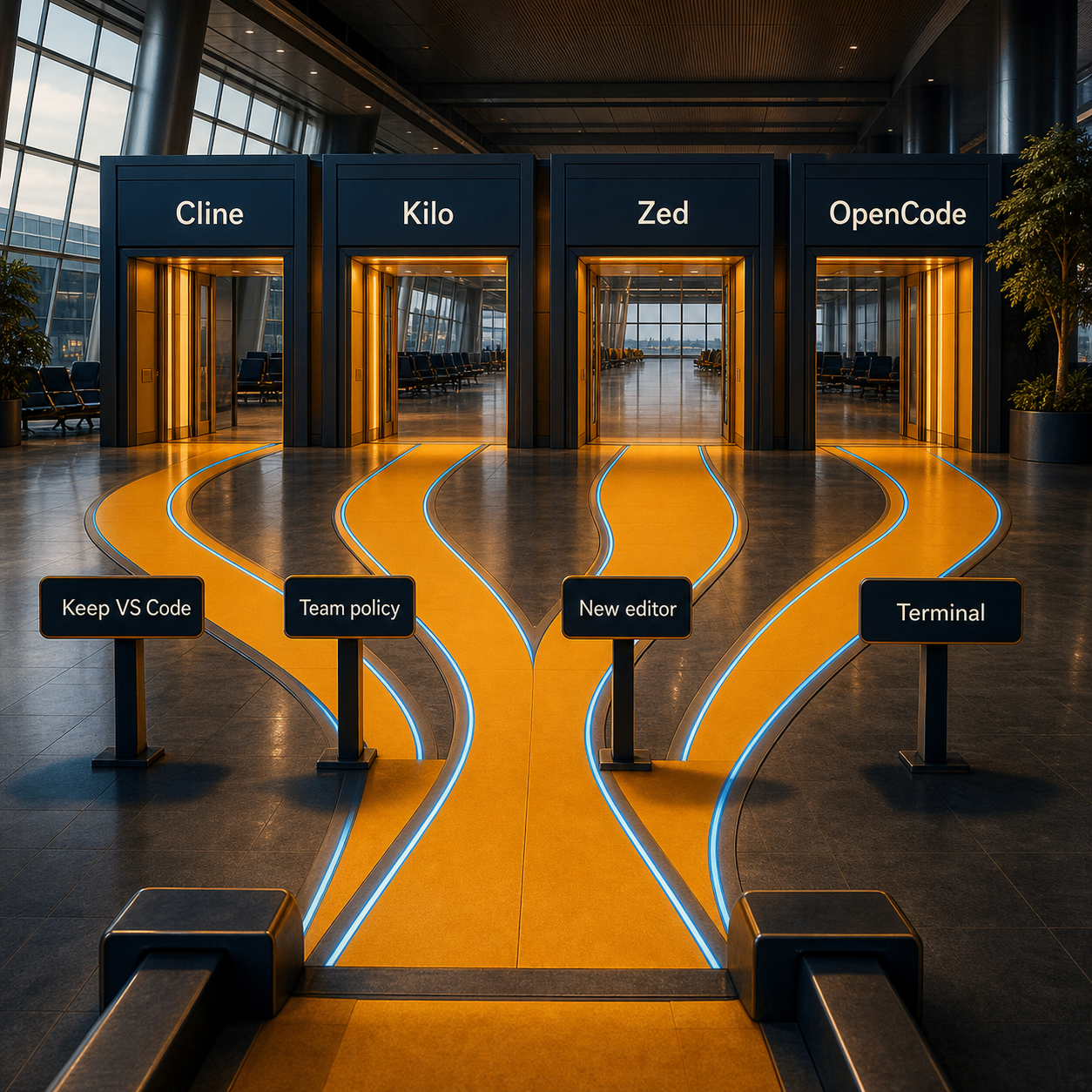
The shortest rule is: individual plus VS Code, Cline; team policy, Kilo; new editor, Zed; terminal gateway, OpenCode. If none of those constraints is strong, keep Cursor for now and add a direct-key fallback. OpenAI's date is proposed, not final, and a rushed migration can create more risk than the contract change.
Where Plesk honestly fits
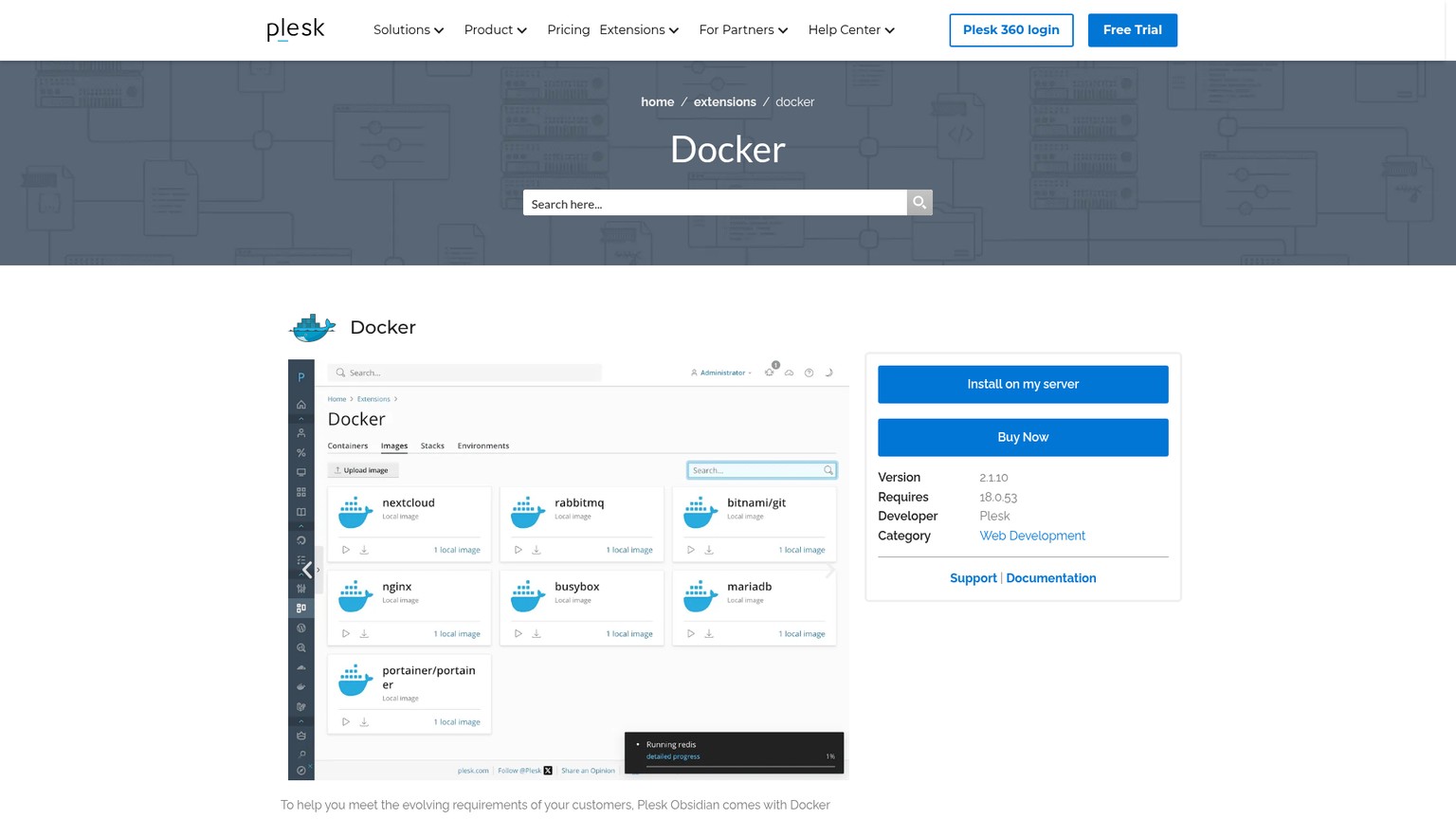
Plesk is an active partner, but it is not a Cursor alternative and is not ranked as one. It belongs beneath a self-hosted setup when a small team wants a visual control layer for a Dockerized gateway, proxy, or supporting service. Its Docker extension can deploy local or remote containers and run Docker Compose from the panel. It does not supply a coding agent or remove the need for a model provider.
Best for: A small operator-managed server running a gateway or supporting service beside one of the four clients.
Standout: Docker and Docker Compose management in the Plesk panel, including a remote node.
Pricing: VPS yearly pricing currently displays Web Admin at €12.04/month, Web Pro at €18.29/month, and Web Host at €31.38/month; VAT may apply. The Docker extension is free with Plesk.
Free trial: Confirm at checkout; the cited pricing page does not publish a trial for these VPS licenses.
The Docker extension page lists version 2.1.10, requires Plesk 18.0.53, and supports custom images, local or remote containers, and Compose stacks. The live pricing page lists Web Admin for up to 10 domains, Web Pro for up to 30, and Web Host for unlimited domains. It also exposes an older lower-price block with expired 2025 offer language, so the current first block and checkout are the defensible numbers.
Use Plesk for the surrounding service, not for model inference unless the underlying server is sized for it. A typical VPS can host a lightweight proxy or orchestration API. Running a large local coding model is a different hardware purchase, usually involving substantial memory or GPU capacity that the Plesk license does not provide.
- Docker extension is free with an active Plesk license
- Can manage local or remote containers and Compose stacks
- Gives a small operator a visual deployment and server surface
- Not a coding agent or model provider
- License, server, and model costs remain separate
- Public pricing markup contains an older duplicated block, so checkout needs verification
The Monday migration move
Do not cancel Cursor on Monday. Build and prove one fallback by Friday. The proposed cutoff is more than two months away, but future OpenAI models are already outside the supply promise. A parallel pilot preserves productivity while the contract date and Cursor response settle.
Monday: map the dependent surfaces
List where each developer uses OpenAI inside Cursor: local Chat, Agent, Tab, Auto, Cloud or Background Agents, Automations, CLI, API, and SDK. Mark local Chat and Agent as BYOK-capable; mark the remaining surfaces as Cursor-routed under OpenAI's current guidance.
Tuesday: separate credentials from the client
Create an organization-owned provider project or approved gateway instead of asking developers to reuse personal keys. Apply a spend cap, name the billing owner, and document the retention and region settings for that route.
Wednesday: run one production-shaped ticket
Install the chosen alternative beside Cursor and use a repository with representative tests, tools, and context. Record completion cost, review time, failed tool calls, and what configuration had to move. Do not use a toy prompt as the acceptance test.
Thursday: force the second route
Switch provider, gateway, or local endpoint and repeat the ticket class. The fallback fails the portability test if the secondary model cannot call the required tools, read enough context, or stay within the review budget.
Friday: set the rollback date
Keep Cursor active while the team fixes configuration gaps. Choose a decision date well before November 12, record which workflows stay in Cursor, and move only the users whose fallback has passed. The Monday move is a one-repository pilot, not an estate-wide migration.
For teams comparing a managed terminal agent against Cursor rather than seeking provider portability, the Claude Code versus Cursor guide covers that different decision. The Codex, Claude Code, and Cursor comparison is useful when model ownership is less important than the agent workflow.
How these were picked
A product had to pass a stricter test than “offers several models.” Every ranked client needed a current vendor page documenting more than one provider route and a credible way to keep the client while changing the model connection.
The order turns on five criteria:
- Credential ownership: Can the buyer use a direct key, subscription, gateway identity, or local endpoint it controls?
- Endpoint portability: Can the client point to another provider or compatible base URL without waiting for a vendor integration?
- Surface coverage: Does that route power the useful coding workflow, or only one local chat panel?
- Team policy: Can an administrator limit models, share credentials, cap spend, and audit use?
- Full cost: What do the platform, inference, processing, and compute lines cost separately?
Pricing and capabilities were verified against the vendors' live pages on August 30, 2026. This was a source and cost analysis, not hands-on product testing. The four-tool count is deliberate: Cline, Kilo Code, Zed, and OpenCode each pass the access test through a different operating model. Adding products that only bundle a model menu would increase the count and weaken the decision.
The ones to avoid for this specific job
Avoid Continue for a new standard. The official Continue repository is read-only and says it is no longer actively maintained. Its final 2.0.0 release remains available under Apache 2.0, which may be useful as source material or a temporary local tool, but a static codebase is the wrong foundation for a model-access contingency that must keep up with provider changes.
Avoid treating Cursor's model picker as the fallback. Cursor remains capable, and local Chat and Agent can use an OpenAI API key. The dependency remains in Tab, Auto, Cloud or Background Agents, Automations, CLI, API, and SDK. If those features matter, staying on Cursor without a second client preserves the same contract exposure.
Avoid a managed-only configuration inside any winning tool. Cline Provider, Kilo Gateway, Zed-hosted models, and OpenCode Go can all simplify setup. They do not prove portability by themselves. Add and validate a second direct, gateway, subscription, or local route before calling the migration complete.
Avoid choosing a local model only to make the invoice read $0. Local inference moves cost into hardware, setup, latency, and maintenance. Use it when data control or offline operation earns that work, not as a cosmetic way to hide inference from the software budget.
Frequently asked questions
What is the best open-source Cursor alternative?
Cline is the best open-source choice if you want to stay in VS Code and switch among provider keys, gateways, or local models. OpenCode is the better open-source pick for a terminal-first workflow or an internal gateway with a custom base URL.
Is there a free Cursor AI alternative?
Yes. Cline is free for individual developers, Kilo Code has a $0 Individual plan, Zed Personal is $0 with your own keys or external agents, and OpenCode's client is free. “Free” covers the client; cloud model inference may still be billed by the provider.
Which Cursor IDE alternative supports local models?
Cline documents Ollama and LM Studio, Kilo Code supports Ollama and LM Studio, Zed has a local-model access path, and OpenCode supports local models among its 75+ providers. Pick by editor and governance needs, then verify the local model can handle the tools and context your repository requires.
The short version
Get the AI Business Workflow Audit Checklist by joining the newsletter, then use its dependency review to run the one-repository migration pilot next Monday.
- Published
- Category
- Build
- Language

Firecrawl Pricing 2026: What Your Pages Cost
Firecrawl plans and credit packs verified October 2026. Calculate JSON extraction, failed pages and weekly crawl bills at your volume.Oct 9, 2026Build
Claude Code vs GitHub Copilot 2026
Claude Code vs GitHub Copilot: current plans, usage limits, models, team controls, one-seat and ten-seat costs, and when to use both.Oct 8, 2026Build
LangGraph vs CrewAI
Compare LangGraph and CrewAI on the same approval workflow, state, memory, MCP, observability and current hosted-platform prices.Oct 7, 2026Build
How to Build MCP Server
Build an order lookup MCP server with Python, test it in Inspector, connect Claude Code and Cursor, then add HTTP auth and hosting.Oct 7, 2026Build
Gumloop vs n8n (Verified October 2026)
Gumloop vs n8n: current pricing, credits vs executions, self-hosting and the same AI lead workflow, with a verdict for each builder.Oct 7, 2026Build
AI Agent Frameworks in 2026: LangGraph, CrewAI, OpenAI Agents SDK, Claude Agent SDK, Mastra and Google ADK (Compared)
Compare eight AI agent frameworks by language, state, MCP, approvals and current hosted prices. Pick the right runtime for production.Oct 7, 2026Build
Codex Cloud
Set up a reusable Codex Cloud environment, keep coding tasks running with your laptop off, steer from your phone, and choose cloud or local CLI.Oct 7, 2026Build