Dubai Legal AI Stack: 68% Less Review, AED 9,500/Month
A workflow-mode playbook for the managing partner of a 10-25 lawyer UAE boutique who has watched Harvey AI, Vincent AI, and Lexis+ Protégé pricing drift past USD 1,000 per seat per month and concluded — correctly — that the enterprise…
Published Updated
 By Omid Saffari

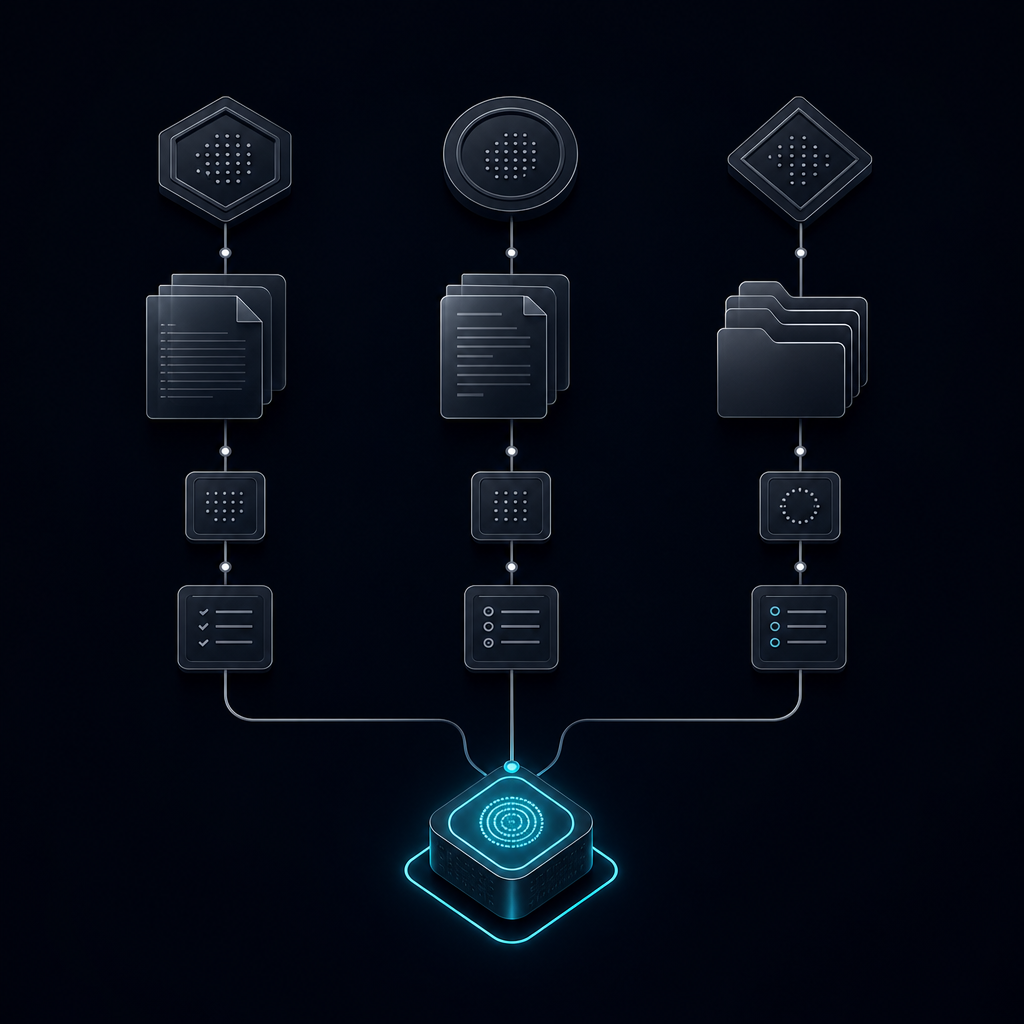
A 12-lawyer Dubai boutique I worked with this quarter was quoted USD 158,000 a year for Harvey AI's enterprise tier – that is roughly three full-time paralegal salaries to license a single tool. We built the same workflow on AED 9,500 a month using SpineLegal, Azure OpenAI in the UAE region, and a thin custom orchestration layer, and cut document review time on M&A due diligence files by 68%.
The pricing reality nobody publishes
Harvey AI's enterprise tier sits between USD 50,000 and USD 200,000 per year for small firms, with per-seat rates of USD 1,000 to USD 1,200 per lawyer per month now standard for any meaningful rollout. For a 12-lawyer Dubai boutique, that is USD 158,400 a year for one tool – roughly three Emirati paralegal salaries.
Vincent AI by vLex is the more honest mid-market option. It starts at USD 399 per user per month and covers 110+ jurisdictions, including the UK and EU, which makes it a better fit for cross-border work. For the same 12-lawyer firm, that is still USD 57,000 a year.
The pattern is clear: the Gulf mid-market is being priced like an Am Law 100 firm. The partners I talk to have noticed. One managing partner described his last Harvey demo as "watching someone quote me on a Gulfstream when I asked about a Camry."
Khaleej Times reported earlier this year that UAE firms running AI document review are cutting review time by roughly 70%. The outcome is real. The price tag is what is wrong. A 12-lawyer boutique does not need an enterprise platform with 200 pre-built workflows; it needs three workflows that work, run on UAE-resident infrastructure, and pass a regulator's audit on a Tuesday morning.
That is the workflow below.
The DPIA you have to file before any of this matters
Before a single client document touches a language model, the firm files a Data Protection Impact Assessment. This is not optional and it is not a formality.
UAE PDPL Article 22 (Federal Decree-Law 45 of 2021) requires a DPIA before any high-risk automated processing. Feeding client documents to a large language model is, by any reasonable reading of the law, exactly that. Full PDPL compliance is required by 1 January 2027. The law is in force from 1 January 2026 with a 12-month transition window. Boutiques starting the work now have runway. Boutiques starting after September 2026 do not.
For DIFC-licensed firms, there is a second layer. DIFC Regulation 10 enforcement begins in 2026, adding requirements specific to autonomous and semi-autonomous systems. The onshore PDPL and the DIFC regime do not contradict each other, but the DIFC framework is more prescriptive on audit logging and human-review checkpoints. A boutique that scopes its DPIA against DIFC Regulation 10 from day one – even if the firm is not DIFC-licensed – produces a stronger onshore filing at no extra cost.
The DPIA itself names:
- The lawful basis for processing under PDPL Article 5
- Data residency (UAE-only, end-to-end)
- Retention periods, matter-by-matter
- The model provider and the contractual data-handling commitments
- The human-in-the-loop checkpoint at every stage where AI output influences a billable deliverable
- A documented Data Subject Right to Object procedure under Article 25
- The named Data Protection Officer responsible for the workflow
For a boutique, this is one week of partner time. Not a six-month consulting engagement. The template is short, the law is plain, and the regulator is not looking for prose – the regulator is looking for a defensible decision trail.
The stack: SpineLegal + Azure OpenAI (UAE region) + a thin orchestration layer
The build is three layers. None of them are exotic.
SpineLegal is the practice-management layer. It runs entirely on Azure Middle East infrastructure for full PDPL data residency, with auditable AI activity logs aligned to DIFC and ADGM governance. It handles matters, billing, document storage, and the firm's standard AI drafting features. It is not the AI brain – it is the system of record that the AI brain reads from and writes to. It runs natively in Arabic with right-to-left layout and a separate Arabic client portal, which is non-negotiable in this market.
Azure OpenAI Service in the UAE North region (Dubai) is the inference layer. GPT-4-class models, same data residency guarantee, customer-held encryption key option. The customer-managed key matters because it satisfies the "the firm controls the keys to its own client data" question that every managing partner asks within five minutes of the first conversation.
The orchestration layer is the piece nobody writes about because vendors do not sell it. It is a roughly 600-line TypeScript worker that handles four jobs:
- Matter-scoped document ingestion – a document tagged to Matter 2026-118 cannot be retrieved by a prompt running against Matter 2026-204
- Role-based access – partner, associate, paralegal, and external counsel see different document sets
- Redaction of privileged content before any external call – names, financial figures, and identified privileged-communication markers are tokenised on the way out and reconstituted on the way back
- A full audit log shipped to a separate Azure Storage account that the firm's DPO controls, not the orchestration host
Cost breakdown for a 12-lawyer firm at steady state:
That is AED 114,000 a year. Against Harvey's USD 158,000 (AED 580,000) or Vincent's USD 57,000 (AED 209,000), the math does not require a spreadsheet.
A note on the bilingual question. SpineLegal handles Arabic-language matters at the practice layer. The orchestration worker routes Arabic source documents to GPT-4o, which is stronger in Arabic legal terminology than its predecessors, and routes English to whatever model the firm prefers.
30/60/90 deployment plan
The timeline below is for a partner who is actively engaged. Six months is realistic. Three is not.
Weeks 1–2: DPIA filed
The firm's DPO files the Data Protection Impact Assessment. The partner picks one named pilot matter type – M&A due diligence is the highest-impact start because document volume is large and the work is repetitive enough to measure cleanly.
Weeks 3–4: Tenant provisioned
The SpineLegal tenant is provisioned on Azure UAE North. One senior associate is named the in-firm prompt librarian – this is a real role, not a side task. The first 50 historical documents are loaded as the retrieval corpus.
Weeks 5–6: Parallel run
First live matter runs in parallel with the human-only baseline. The point is not to save time yet. The point is to measure the gap between AI output and what the partner would sign off on. Two associates do the comparison; the partner reviews both sides.
Weeks 7–8: First measurable win
At the 30-day mark, the first matter-level result lands. At the Dubai boutique this article is built on, this was a USD 12M cross-border share-purchase agreement where document review dropped from 47 partner-attributable hours to 15.
Weeks 9–10: Contract review added
The workflow expands to contract review – the second-easiest task because the scope is narrower than due diligence and the templates are already in the firm's knowledge base.
Weeks 11–12: Conflict checks (60 days)
Conflict-check automation against the firm's matter history. This is where SpineLegal earns its keep over a pure custom build – the matter graph is already structured.
Weeks 13–16: Three matter types at full confidence (90 days)
The firm runs three matter types on the workflow without parallel human baselines. Measured outcome at the Dubai boutique: 68% reduction in document-review hours across M&A and corporate-commercial work. No measurable change in court-facing or advisory work – and that is the right result, not a gap to close.
The DIFC Regulation 10 sandbox accelerator program is worth a separate conversation if the firm wants regulator-facing validation before going to clients with the change. That is a different timeline and a different scope, but a partner planning to compete for DIFC mandates in 2027 should know it exists.
The three tasks where it pays – and the three where it burns billable hours
This is the most useful conversation to have with the partner before anything is provisioned.
Pays for itself:
- M&A and corporate-commercial document review. High volume, repetitive, AI scores well on UAE-style civil-law contracts. This is the 68% number.
- Contract drafting from templates. First-pass output, partner edits to taste.
- Conflict checks against the firm's own historical matter database. Narrow, structured, low hallucination risk because the model is retrieving against a closed corpus, not generating against open knowledge.
Burns billable hours:
- Court submissions and pleadings. DIFC Courts issued AI-use guidelines in 2026 requiring disclosure and verification. The time spent fact-checking AI-drafted submissions exceeds the time saved drafting them. The base models hallucinate citations regularly enough that a partner will not sign without a full manual review – at which point the time saving is gone.
- Client advisory work. The partner's judgment is the deliverable. Clients pay for it explicitly. Automating around it misreads what the client bought.
- Anything cross-jurisdictional unless Vincent AI is in the stack. Base models hallucinate on UAE civil-law nuance regularly, and on cross-border deal structures they hallucinate confidently. If the firm's matter mix is leaning international, the Vincent AI tier is the realistic premium swap – but for a domestically focused boutique it is unnecessary.
The honest split: roughly 55% of a corporate-commercial boutique's billable hours touch tasks in the first category. Roughly 30% touch tasks in the second. The remaining 15% is overhead the AI does not reach. This is not a "replace the associates" workflow. It is a "your associates ship 60% more matter-work per week" workflow. The associates I have spoken to like it once they trust the audit trail – which usually takes about three weeks.
The risk of waiting until the DPIA deadline forces it
1 January 2027 is the hard PDPL deadline. The firms that file their DPIA in December 2026 are filing under pressure, with their first matter already in the system, which is the wrong order. Audit trails built retrospectively are not audit trails.
Vincent AI, Lexis+ Protégé, and Harvey are all running enterprise-deal pipelines through the Gulf right now. Partner-tier procurement cycles are 9 to 12 months and the slots fill. The boutique that starts now files the DPIA, scopes the stack carefully, runs a clean pilot, and has 12 months of audit logs by the time DIFC Regulation 10 has teeth. The boutique that starts in Q4 2026 will make hasty vendor decisions under deadline pressure – which is how a 12-lawyer firm ends up signing a USD 158,000 Harvey contract that it does not need.
This is not a panic article. It is a calendar article. The cost of one more quarter of waiting is not the AED 9,500 a month. It is the optionality on which stack you choose, and whether you choose it with a regulator's deadline behind you or in front of you.
The work is concrete, the price is known, the deadline is published. The missing piece is a partner deciding it is time.
Does Harvey AI work for a 12-lawyer Dubai boutique?
It works technically, but at USD 158K+ per year it is priced for firms with 100+ lawyers. The Vincent AI tier or a SpineLegal + Azure OpenAI build are the realistic options at this firm size.
Is Azure OpenAI Service available in the UAE for legal data?
Yes – Azure OpenAI runs in the UAE North region (Dubai) with full data residency, customer-managed encryption keys, and audit logging that satisfies PDPL Article 22 DPIA requirements.
What does a PDPL Article 22 DPIA actually require for a law firm running AI?
A description of the processing, the lawful basis, identification of high-risk processing, residency and retention rules, the human-in-the-loop checkpoint, and a documented Data Subject Right to Object procedure under Article 25.
Do I need to worry about DIFC Regulation 10 if my firm is not DIFC-licensed?
Only directly if you are DIFC-licensed. But it is the most prescriptive standard in the UAE on autonomous-system data protection, and your onshore PDPL DPIA will be stronger if it mirrors Regulation 10's structure.
How long until a boutique sees ROI from this stack?
Six to eight weeks to the first measurable matter-level reduction, 90 days to a workflow you trust across three matter types, twelve months to full audit-trail confidence.
Related operator briefs
The AED 18,000 UAE e-invoicing stack for a 35-person trading SMB
The peer compliance-deadline playbook: Peppol PINT-AE, October 30 2026, and the operator math for a mid-sized Gulf business.
An Abu Dhabi dental group cut no-shows 38% on an AED 14,500 recall stack
The same regulator-first deployment pattern in a different vertical – DOH Responsible AI Standard and ADHICS V2.0.
- Last Updated
- Category
- Growth
- Language

Beehiiv Pricing: Annual Costs by List Size
Beehiiv pricing verified October 2026: annual bills at 1k, 10k, 50k and 100k subscribers, plan features, October changes and paid newsletter fees.Oct 9, 2026Growth
Pipedrive Pricing: Plans, Add-ons and Team Costs
Current Pipedrive seat and add-on prices, annual vs monthly budgets for 3 and 10 users, AI features, and when Premium costs less.Oct 8, 2026Growth
Lemlist Pricing: Seats, Credits and Sending Costs
Lemlist pricing by month, quarter and year, including credits, mailboxes and add-ons. See founder, sales team and agency bills plus alternatives.Oct 8, 2026Growth
Tidio Alternatives
Compare seven Tidio alternatives by support job, current pricing and billing unit. See who should switch, what migration costs and when Tidio wins.Oct 7, 2026Growth
Vista Social Pricing: What Your Profiles and Team Cost
Vista Social starts at $99/month. Compare annual prices, profile and user limits, AI features, add-ons, three bills and cheaper options.Oct 7, 2026Growth
Unbounce Pricing 2026: Plans, Visitor Limits and Testing
Unbounce starts at $29/month. Compare all six plans, annual rates, visitor and domain limits, A/B testing, Smart Traffic and the cheapest fit.Oct 7, 2026Growth
Best AI Ad Generator in 2026: AdCreative.ai, Atria, Creatify & Arcads (Compared)
Choose AI ad tools by job: static ads, UGC-style video or creative research. Compare current maker pricing, credit units and free entry.Oct 6, 2026Growth