Granola AI Review
Granola reviewed for business meetings: bot-free notes, current pricing, templates, recipes, consent, platform limits and who should choose an alternative.
Published
 By Omid Saffari
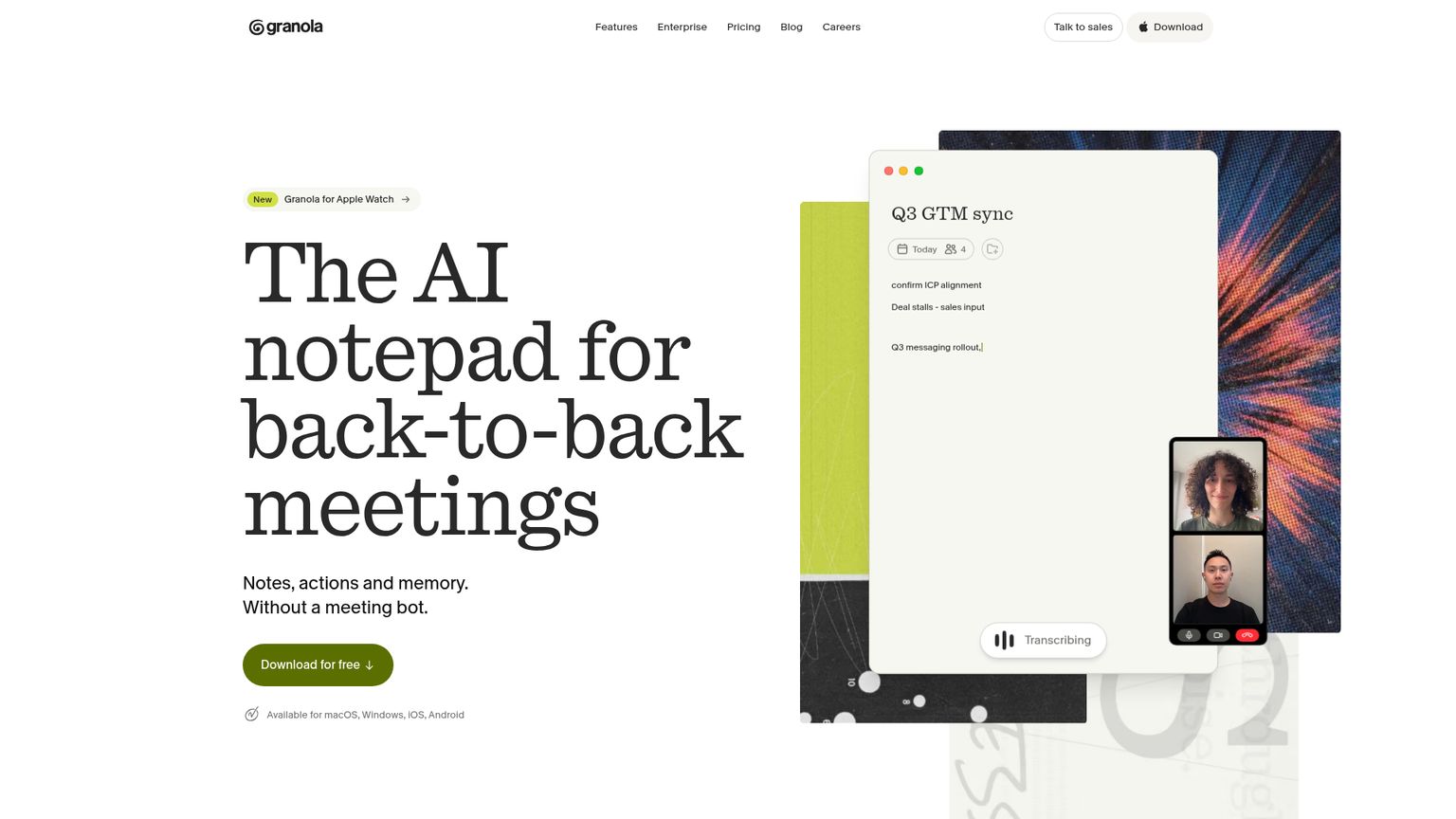
 GranolaThe AI notepad for back-to-back meetings - notes, actions and memory, without a meeting bot
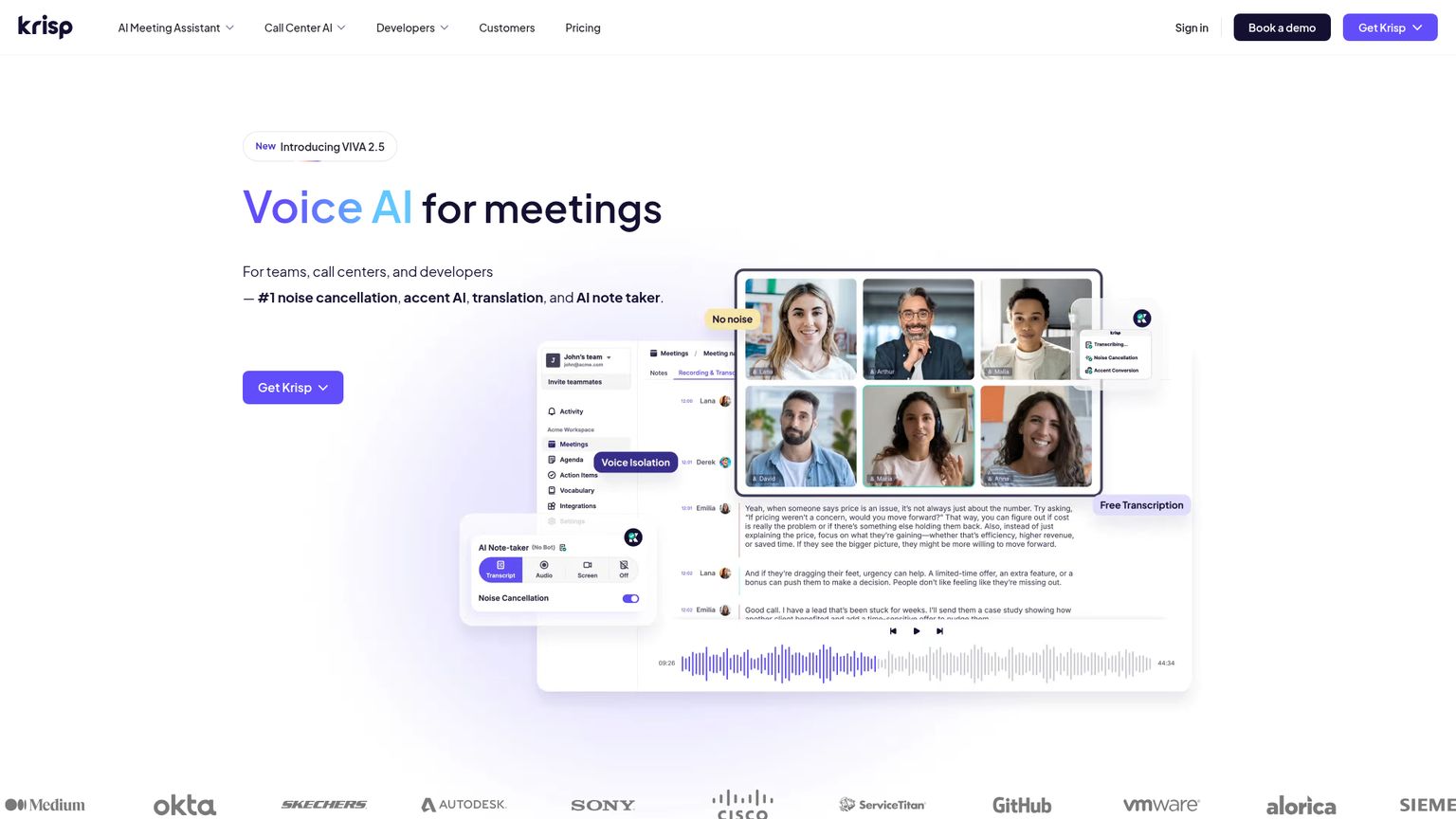
 KrispClear calls, smarter meetings—powered by #1 noise cancellation. Krisp brings Voice AI with an AI Note Taker, Accent
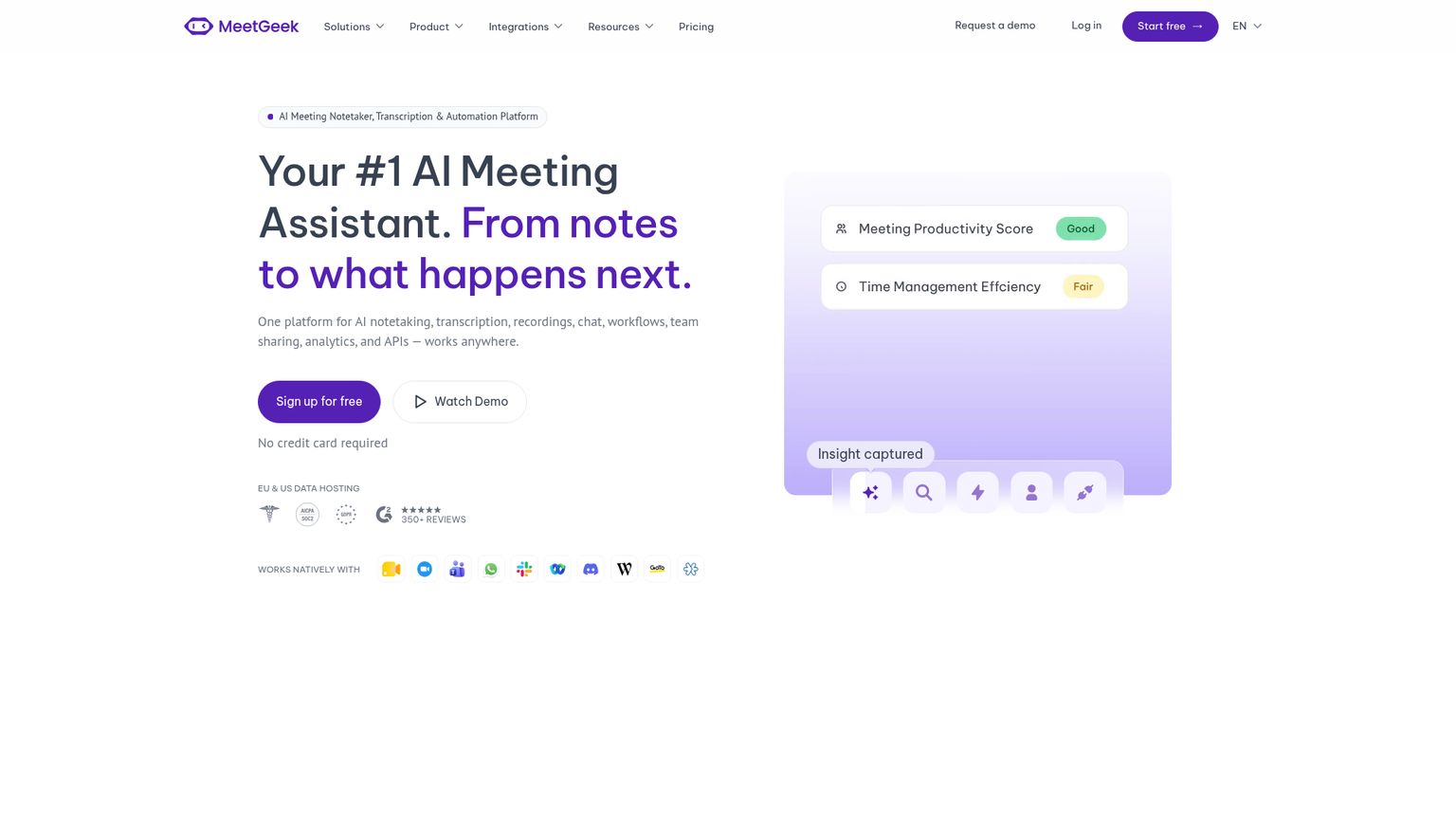
 MeetGeekMeeting recorder that writes the notes and action items
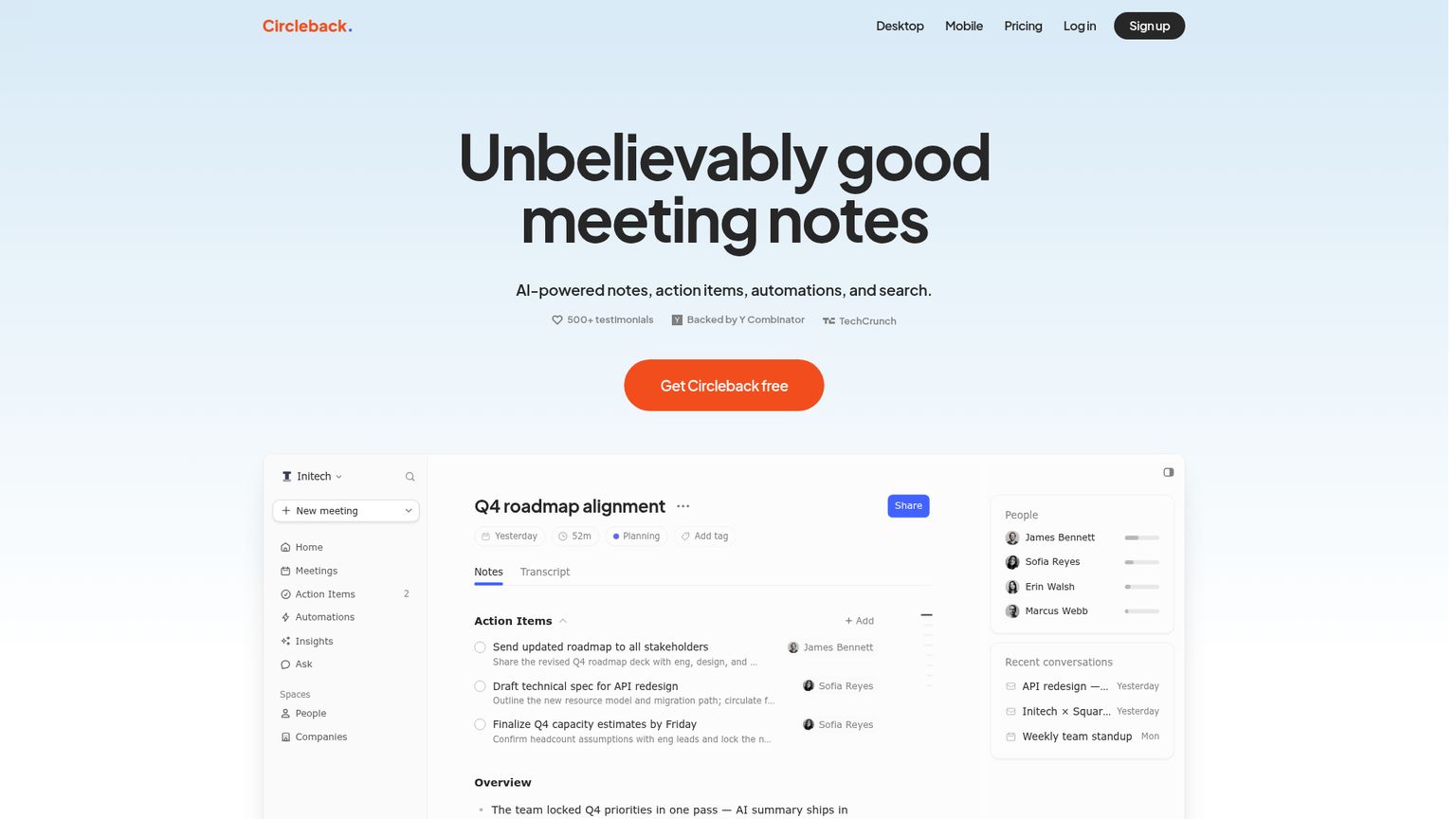
 CirclebackAI meeting notes, action items, automations and search
- CClaap

Granola is a strong choice for business meetings when you want useful notes without a bot joining, and can review the output yourself. The Granola AI review verdict: start with Basic at $0, then pay $14 per user per month for Business when you need an ongoing client history or integrations; choose another tool when recordings, noise removal, or sales coaching drive the purchase.
Pricing and product documentation verified on 10 October 2026. This is a documentation-based evaluation, not a hands-on accuracy test. The judgment turns on capture reliability, control over the final notes, follow-up work, and the limits of the archive. Granola's prices below come exclusively from its live pricing page.
How Does Granola AI Work?
Granola is a meeting notepad that uses a transcript to expand the points you write during a conversation. On a computer, it captures your microphone and system audio without adding a participant to the call; you can write brief reminders while listening, then review the resulting notes afterward. The useful distinction is that your notes tell the system what matters to you. Capture happens through your device, but that does not mean the AI processing stays on it. Granola sends audio to a transcription provider, and its desktop workflow does not retain a recording you can replay. Granola's transcription documentation explains that boundary.
Who Should Use Granola, and Who Should Skip It?
Granola fits people who attend their own meetings and want to leave with a useful working document. It is especially appealing when inviting a recording bot would add friction, but you are willing to manage transcription and explain its use to participants.
For a founder, the job is remembering what changed across customer conversations: the objection that keeps returning, the prospect who needs a security review, or the decision that should influence next week's roadmap. For a salesperson, it is converting discovery into an accurate follow-up. For a consultant, it is keeping the client's agreed scope separate from ideas that were merely discussed.
All three benefit from the same habit: write the important distinction yourself, then let Granola fill in supporting context. None should buy it on the assumption that a polished summary is an approved record of commitments.
Some tool links may be affiliate links. The recommendations follow the workflow each product supports.
Annual figures are monthly equivalents where explicitly labeled, not month-to-month prices. The Granola alternatives guide expands the shortlist.
Pick Krisp when the sound itself is the problem
Krisp AI Meeting Assistant combines bot-free transcription and notes with noise cancellation. That is a stronger fit for a consultant calling from shared offices, or a salesperson whose calls are regularly disrupted by background sound. Granola's capture workflow documents audio-device setup, but buying a notepad is not the same decision as buying clearer calls. Krisp's product page describes its audio and note-taking features.
Krisp Core's monthly price is $16 per user, with an $8 monthly equivalent when billed annually. Its premium trial lasts 7 days, and Core's storage allowance is 10 GB. If you only want editable notes and do not need those audio features, Granola Basic is the simpler starting point. Krisp pricing
Pick MeetGeek when you need recordings or existing files
MeetGeek supports bot-based and bot-free capture, plus uploads of audio or video files. It fits an operator who needs to revisit source recordings or bring existing material into the meeting archive. Those are different requirements from Granola's live note-taking workflow. MeetGeek's product page describes the capture options.
The free Basic plan includes 3 hours of transcription per month, 3 months of transcript storage, and 1 month of audio storage. That makes it a small evaluation allowance for someone in back-to-back calls, rather than a complete free replacement for a busy workday. Check paid allowances against your meeting volume before moving an archive. MeetGeek pricing
Pick Circleback when the handoff is the bottleneck
Circleback is a meeting assistant whose automations can share meeting information, generate custom insights, and update other applications. Its public examples include creating issues in Linear, a task-tracking app, and updating customer records. That is worth evaluating when the recurring failure is that nobody transfers the decision into the place where work gets assigned. Circleback's product page
Circleback Free includes limited automations and 30-day meeting and recording history. Pro, displayed at $15 per user per month, adds unlimited meeting history, a year of recording storage, and automations with its integrations. A free account therefore does not establish that your intended automation will be available without upgrading. Choose it for the handoff you can validate, rather than assuming every extracted action should become a task. Circleback pricing
Pick Claap when you manage sales performance
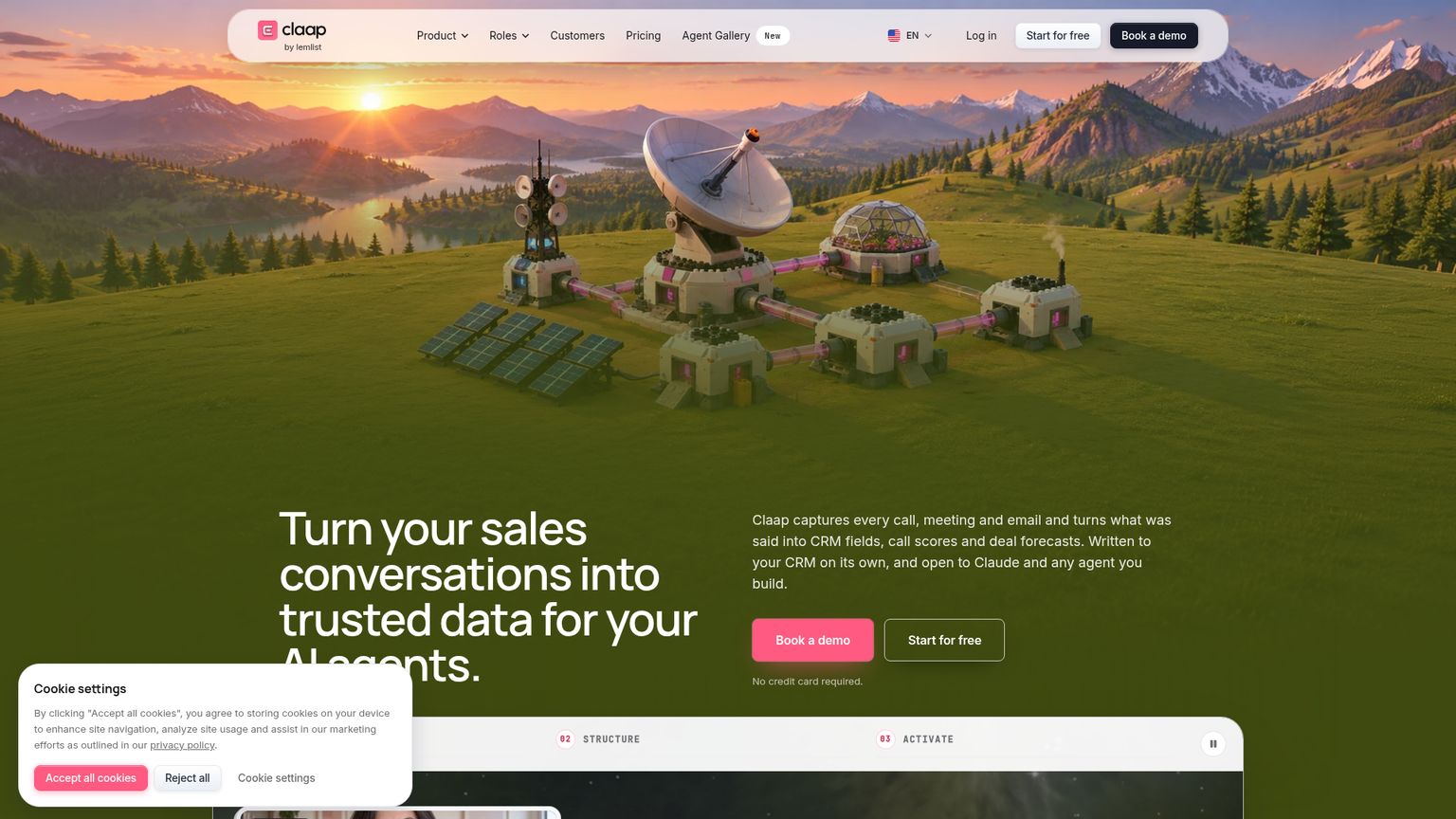
Claap is a sales conversation platform that fills customer relationship management, or CRM, fields and scores calls against a sales methodology. Its fit is the sales leader who needs consistent qualification data and coaching across representatives. A personal meeting notebook does not answer that management problem by itself. Claap's product page
The relevant Business plan is $75 per license per month on monthly billing, or $60 per month billed annually, and includes CRM Auto-Complete and AI Coaching. Basic is free but limited to 10 videos per user and 300 total minutes. For a solo consultant who only needs a reliable follow-up draft, that paid sales-management scope is difficult to justify. Claap pricing
If you are moving from a meeting recorder, also read Otter AI alternatives. Start with what you need to keep after the call: a note, a recording, an assigned task, or a coached sales conversation.
Bot-Free Capture: Keep the Call Natural, Keep Control of the Audio
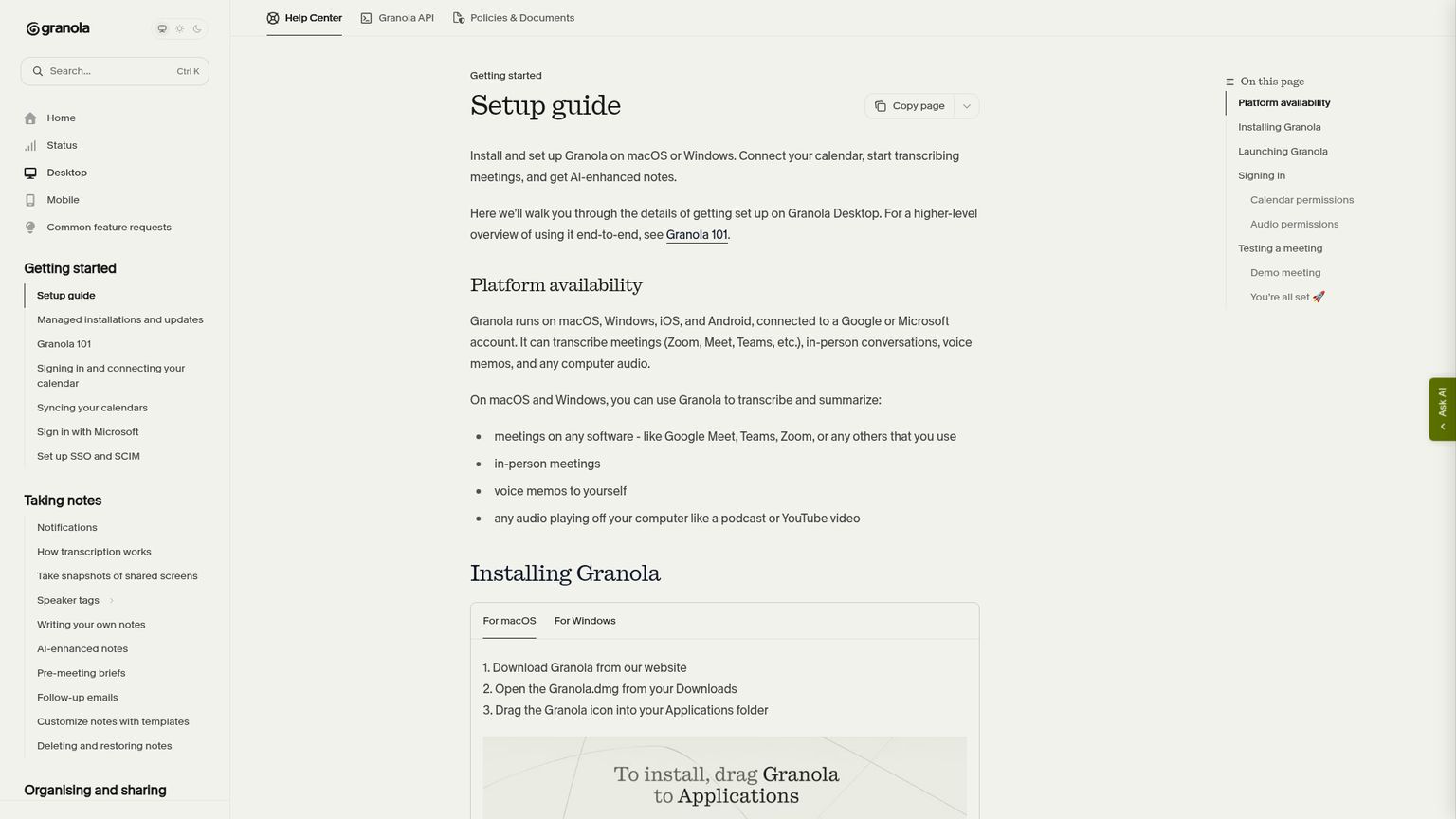
Granola's desktop capture is useful when clients choose different meeting software. Its setup guide supports macOS and Windows, with audio from tools such as Zoom, Google Meet and Microsoft Teams. The common connection is the sound on your computer, so the client does not need to adopt your note-taking system. Granola setup guide
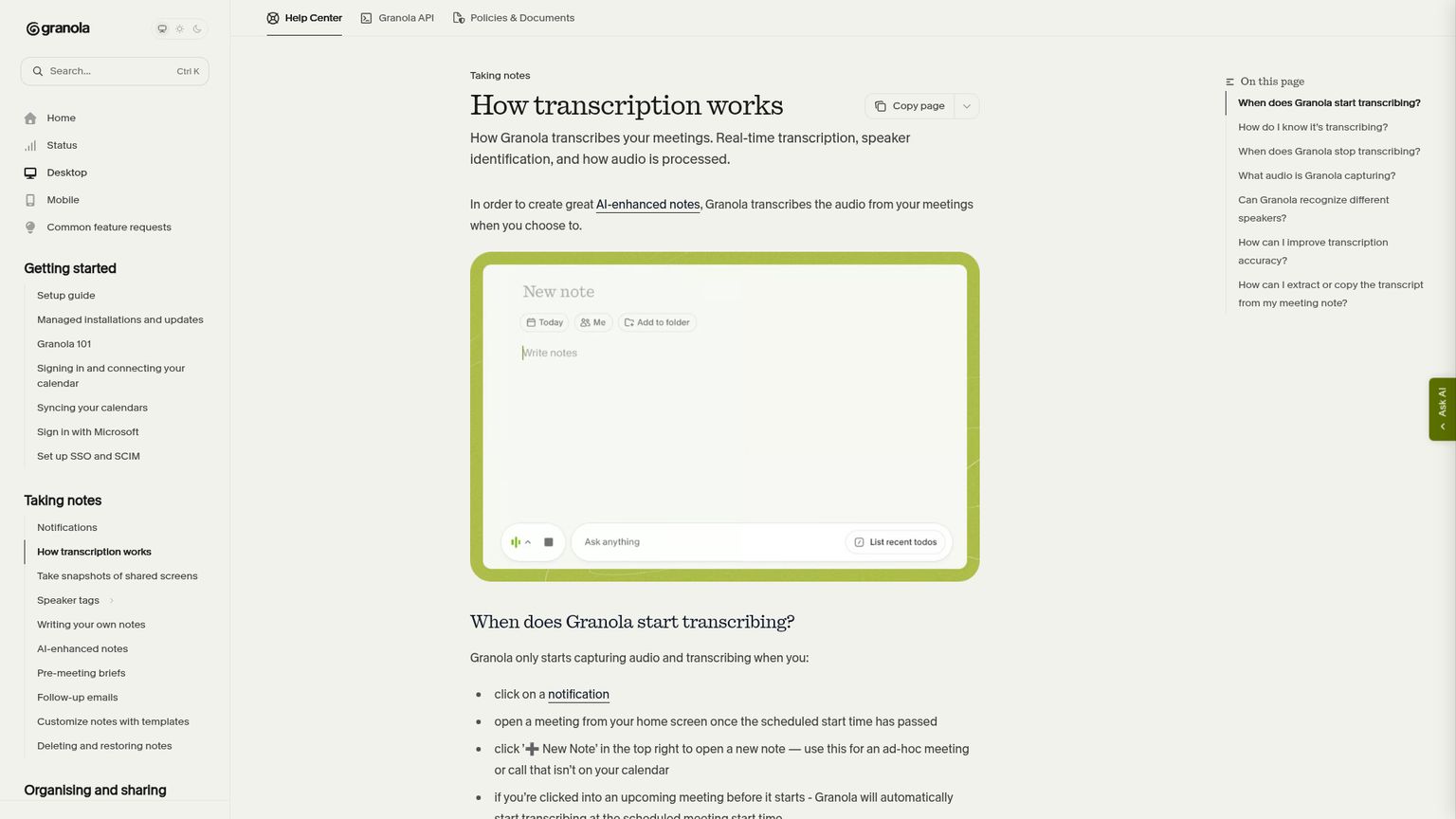
The tradeoff is that capture becomes your responsibility. Granola says transcription begins when you open the relevant meeting note, start a new note, or act on a notification. If you open an upcoming meeting's note ahead of time, it can begin at the scheduled start. Having the app installed and a meeting on your calendar is not enough by itself. How transcription works
Consider a consultant moving from a video discovery call to an unscheduled follow-up. A calendar-linked note suits the first conversation; a new note suits the second. The operational habit is to check that the transcript is moving, then explicitly stop at the boundary. A missing start loses context. A missing stop can carry the next conversation into the wrong client record.
Does Granola AI Work With Headphones?
Granola captures system audio as well as your microphone on desktop, so the remote speakers do not have to play out loud for capture. Its documentation recommends appropriate headset use and checking audio devices. The useful check is whether the live transcript contains both sides of the call, not whether your laptop speakers are audible. Granola transcription guidance
Mobile is different. A connected Bluetooth device can become the active microphone even when it is badly positioned to hear an in-person discussion. Granola recommends disconnecting that device if you want to use the phone's built-in microphone. This matters when you finish a headset call and then put your phone on a conference table. Mobile transcription guidance
Platforms: desktop, phones, Apple Watch and the browser
Granola supports macOS, Windows, iOS and Android. The current setup guide specifies macOS 14 minimum. The presence of an app on each platform does not mean each one captures the same conversations. Desktop setup
On iPhone and Android, Granola is designed for in-person conversations. The mobile apps cannot capture audio from virtual meeting apps running on the same phone. Mobile Granola Chat is available on iPhone, but not Android or iPad. Templates and integration sharing require the desktop app; mobile notes can be used there after syncing. Apple Watch is also supported with an iPhone and watchOS 11 or later. Granola's mobile guide
Phone-call capture is narrower again: outbound calls through Granola's iOS dialer, with the United States and Canada among the supported countries. It does not support inbound calls or Android phone-call capture. A salesperson whose day revolves around incoming mobile calls should treat that as a purchasing constraint. Granola phone calls
The browser at notes.granola.ai is for viewing and editing existing notes. It cannot capture or transcribe meetings. A browser login therefore does not replace installing the appropriate app. Granola transcription documentation
How to Use Granola AI
Granola's setup is straightforward, but the first useful check should resemble your actual client call.
Connect the account you use for work
Install the desktop app and sign in with the Google or Microsoft account attached to your meeting calendar. Follow the calendar permissions in Granola's setup guide.
Enable and check the audio path
On macOS, grant microphone and system-audio access. Granola says Windows permissions are granted automatically during setup. Use your normal meeting headset and confirm both sides appear in the live transcript.
Open a note and establish consent
Use the calendar meeting or start a new note for an unscheduled conversation. Follow Granola's consent guidance and your organization's rules before transcribing other people.
Write what could be misunderstood
Capture decisions, conditions and unresolved questions in your own words. At the end, stop transcription, check the resulting note, and open a separate note for the next call.
These steps follow the official setup and capture documentation. They are a suggested adoption workflow, not a report of a test performed for this review.
Your Notes Give Granola a Priority List
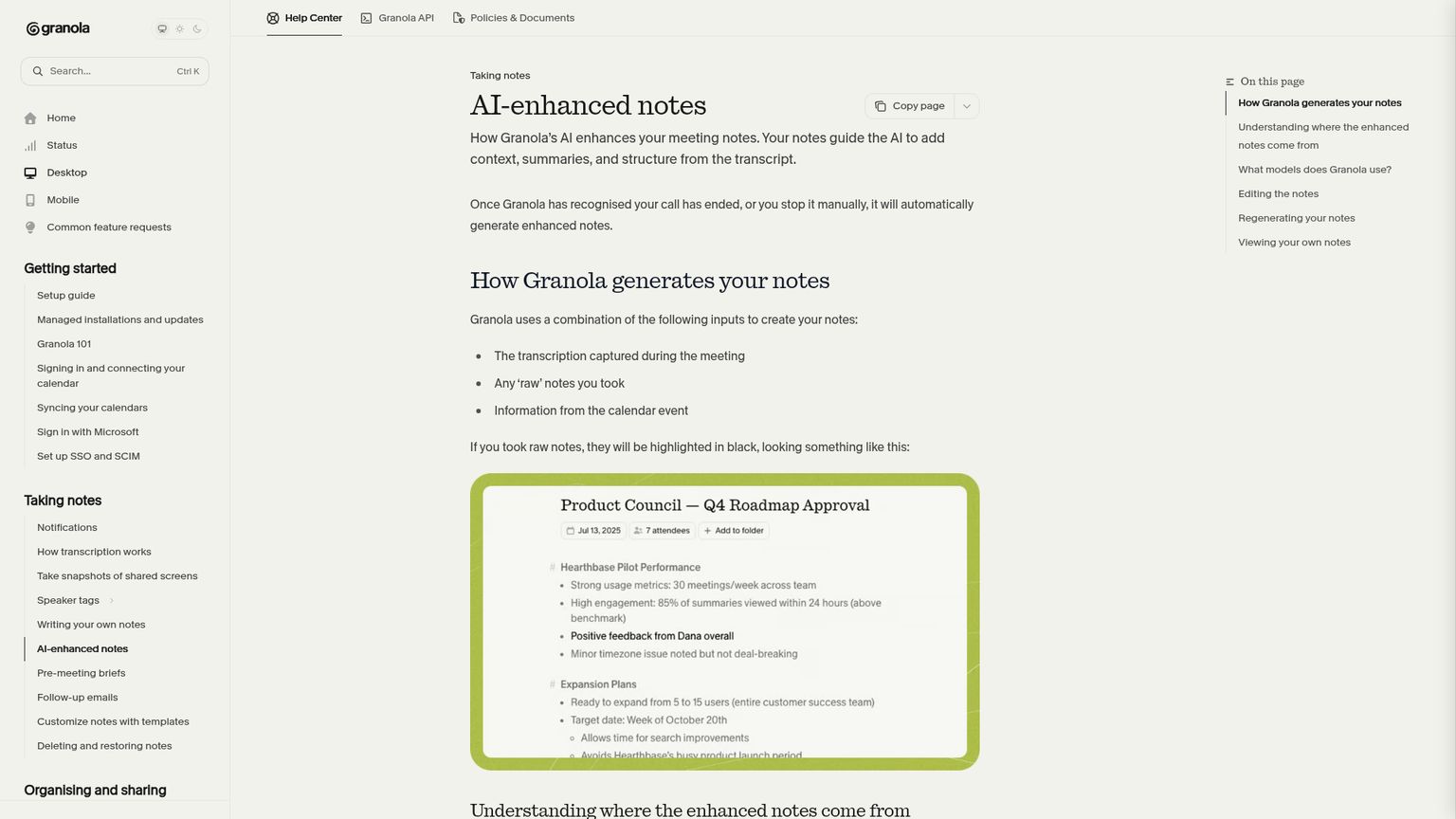
Granola's strongest product choice is combining your raw notes with the transcript and calendar context. The resulting document has a human signal about what mattered, rather than relying entirely on a generic summary. Granola's help page says your raw notes are highlighted in black, and a magnifying-glass control lets you inspect where an enhanced point came from. AI-enhanced notes
For a sales discovery call, a useful raw note might be:
Budget is unconfirmed. Security review must happen before a pilot. Send the architecture document; do not promise a launch date.
This is an illustrative note, not output generated in a test. Its value is the distinction between interest and commitment. A pleasant conversation can contain plenty of enthusiasm while leaving budget, ownership and timing unsettled.
After enhancement, check whether those distinctions survive. Did an unresolved question become a decision? Did “send information” become “start implementation”? Is an action assigned to the person who accepted it? These checks matter more than whether the paragraph reads elegantly.
Granola lets you edit the enhanced notes directly, revise the raw notes and regenerate, or ask chat to rewrite a section. Its documentation also says corrections to one meeting do not influence how future meetings are generated. If you keep making the same structural edit, put the requirement into a template instead. Editing and regenerating notes
For a founder doing customer discovery, use the same discipline to separate a customer's stated problem from your proposed solution. “Reporting takes too long” and “customer asked for our planned dashboard” are different claims. Your note should preserve that difference before it becomes a roadmap input.
For a consultant, separate an agreed deliverable from a possible extension. The meeting note can become the starting point for a scope document, but the act of generating it does not make the client agree to it. Granola earns its place if reviewing that document is faster and more reliable than reconstructing the conversation from fragments.
Templates Make Repeated Meetings Comparable
Granola templates define the structure of the enhanced note. They are useful when every discovery call, customer interview or project review needs the same kinds of answers. On desktop, typing a slash in the meeting notes opens the template menu; after enhancement, the Enhanced dropdown lets you choose another format and regenerate. Granola templates
A practical sales template could ask for the customer's current process, the problem they described, the decision-maker, unresolved conditions and the next action. A consulting template could ask for agreed scope, exclusions, dependencies and decisions still awaiting approval.
Write the instruction that stops the most expensive misunderstanding:
Separate confirmed decisions from suggestions. If an owner, date or budget was not stated, label it unconfirmed. Keep client commitments separate from our proposed next steps.
This is a suggested template instruction, not a guarantee that every generated note will obey it. Review the fields where a mistake would affect a promise, project plan or customer record.
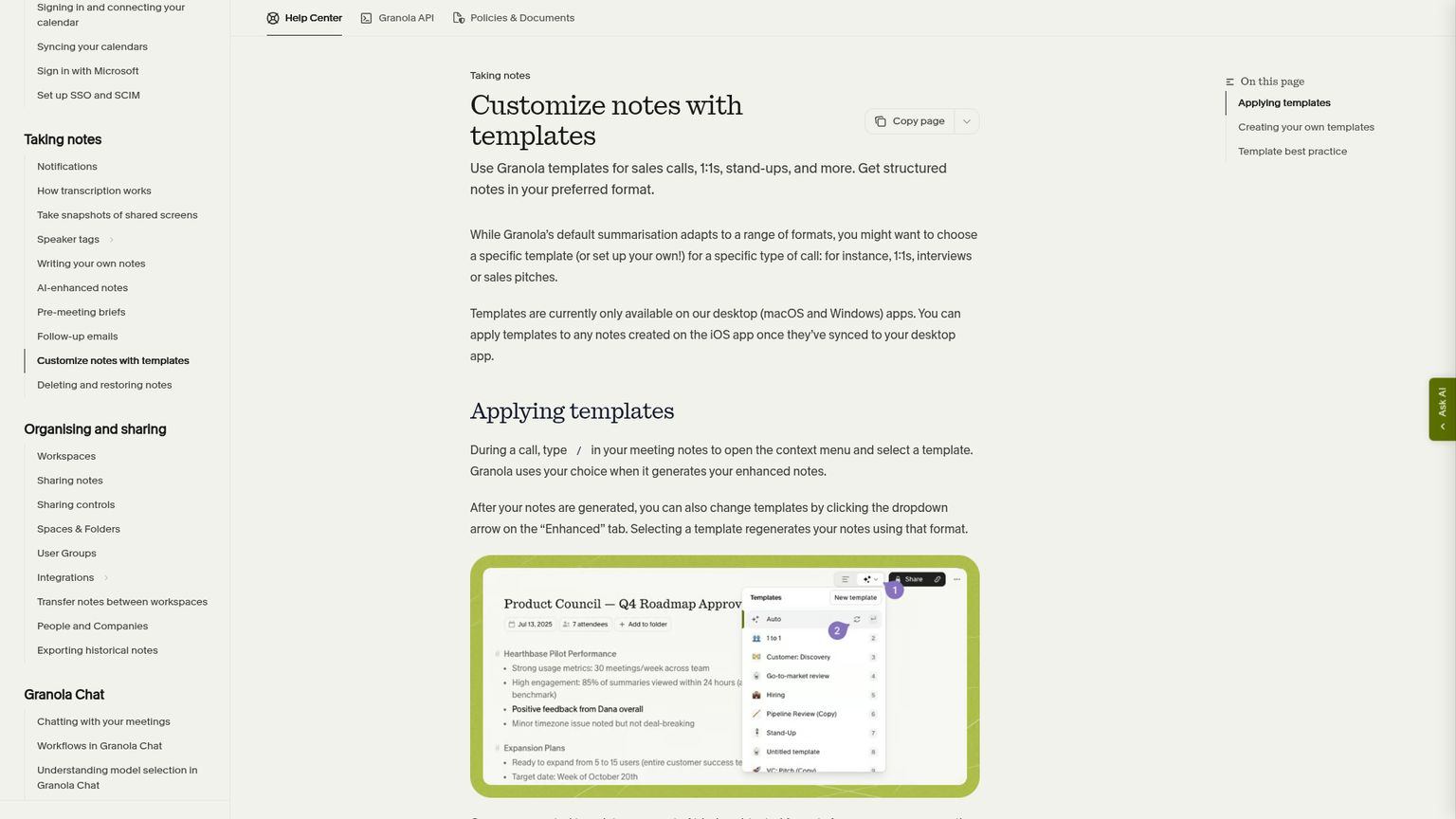
The payoff is comparability. A founder can inspect the same unresolved-purchase-condition section across interviews. A consultant can hand a colleague a consistent project review without asking them to decode a different note format each time.
There are concrete limits. Templates are created and applied on desktop, including when the original note came from mobile. Organization sharing requires a company email domain. Granola says users on different domains do not see each other's organization-shared templates merely because they belong to the same workspace. That matters for a consultancy working alongside a client's employees. Template availability and sharing
Start with the fields you make decisions from. A long template that demands an answer to every possible qualification question can make missing information harder to spot. A short template with explicit unknowns is more useful than a full-looking document that needs every line rechecked.
Recipes Turn Meeting Notes Into Work You Can Review
Granola recipes are reusable prompts in chat. A template determines the shape of your notes; a recipe asks a repeatable question of meeting material or produces another draft from it. You access recipes by typing a slash in chat or opening the recipes area. Granola recipes
For a consultant, a useful single-meeting recipe might be:
Draft a client follow-up with confirmed decisions, what we owe, what the client owes, and unresolved questions. Include a due date only when it was explicitly agreed. Do not introduce new commitments.
For a founder, a multiple-meeting recipe might ask:
Group the purchase blockers described in these selected customer conversations. Separate direct customer statements from interpretation. Identify the meeting behind each finding and flag conflicting evidence.
These are proposed prompts, not observed outputs. Their strength is that they ask for something you can inspect: a decision, its source and the uncertainty around it.
Granola makes single-meeting and multiple-meeting recipes separate types. A recipe created for one context does not automatically appear in the other; create or remix a second version if both are needed. Chat itself can use a single meeting, a folder, selected meetings or the broader home context. Recipe types and chat scope
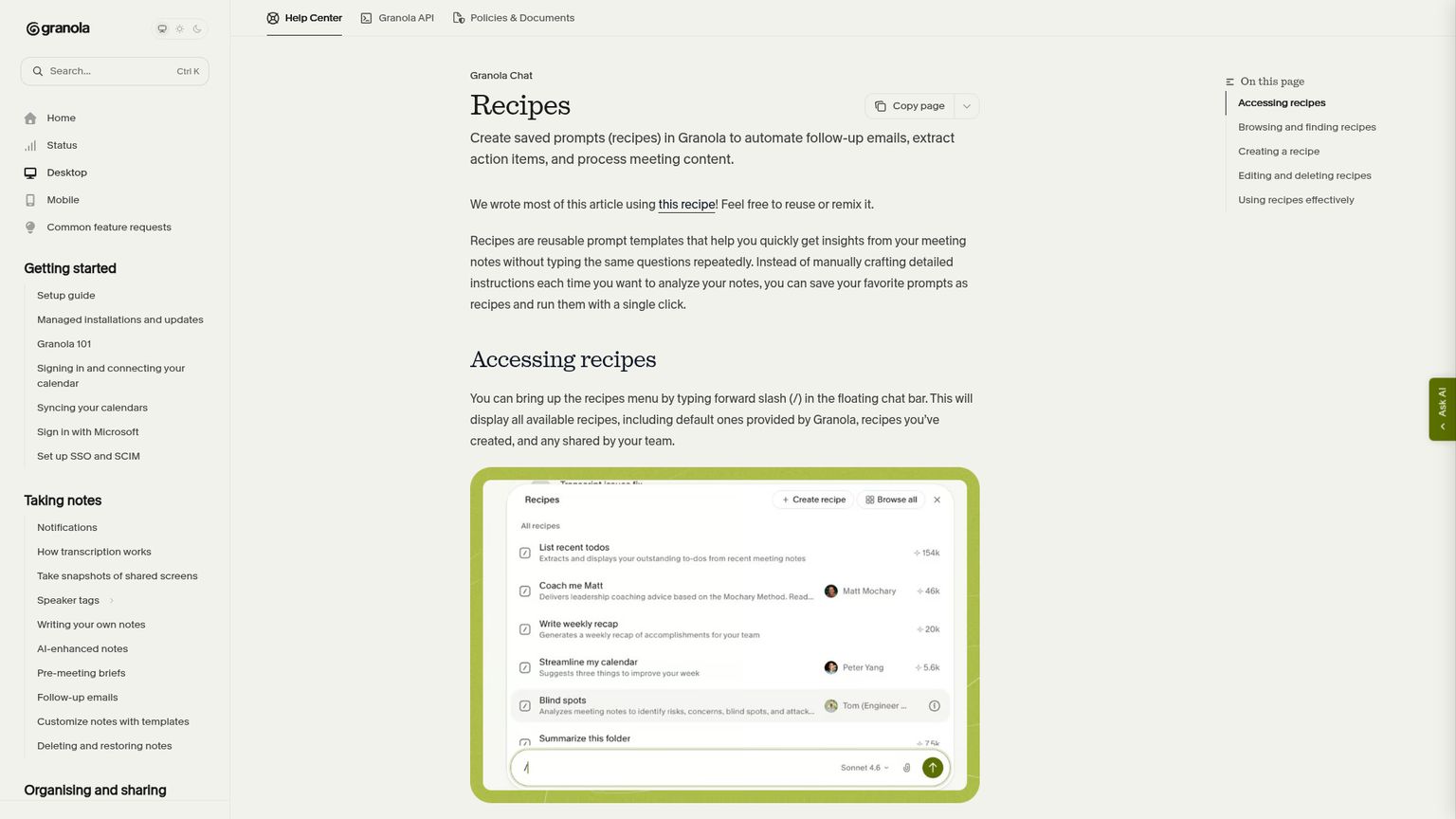
The recipe limitation: no dynamic variables
Granola explicitly documents recipes as static prompts without variables or dynamic content substitution. A recipe is not a mail-merge workflow that automatically swaps in a customer-specific rubric. If different engagements need different instructions, write separate recipes or provide the relevant context yourself. Recipe limitations
This distinction matters to a consultant handling different service lines. A discovery call for a product strategy engagement and an implementation checkpoint do not need the same follow-up. Reusing a convenient prompt is only helpful if its assumptions still fit the meeting.
It also changes how you evaluate time saved. Generating a draft is one step. Checking commitments, selecting the right recipient and putting the approved result into the right system remain part of the work.
Sending useful notes to HubSpot
Granola's HubSpot integration can associate a meeting note with contacts, companies or deals. You can also enable folder-based sharing so newly added notes sync to the relevant records. The documented setup is in Settings > Connectors, and requires a Google Workspace or Microsoft 365 account; personal Gmail and Outlook.com accounts are not supported. Granola's HubSpot guide
There are two migration catches. Enabling a folder integration does not retroactively sync the notes already inside it. And automatic matching uses attendee email addresses: if matching records are missing, Granola says no data is created.
For a salesperson, prove the handoff with a known contact before trusting a folder of customer calls. Check that the right record received the right note and that an internal discussion did not land on a client-facing workflow. Paying for an integration is not evidence that your account structure and contact data are ready for it.
API access for a custom workflow
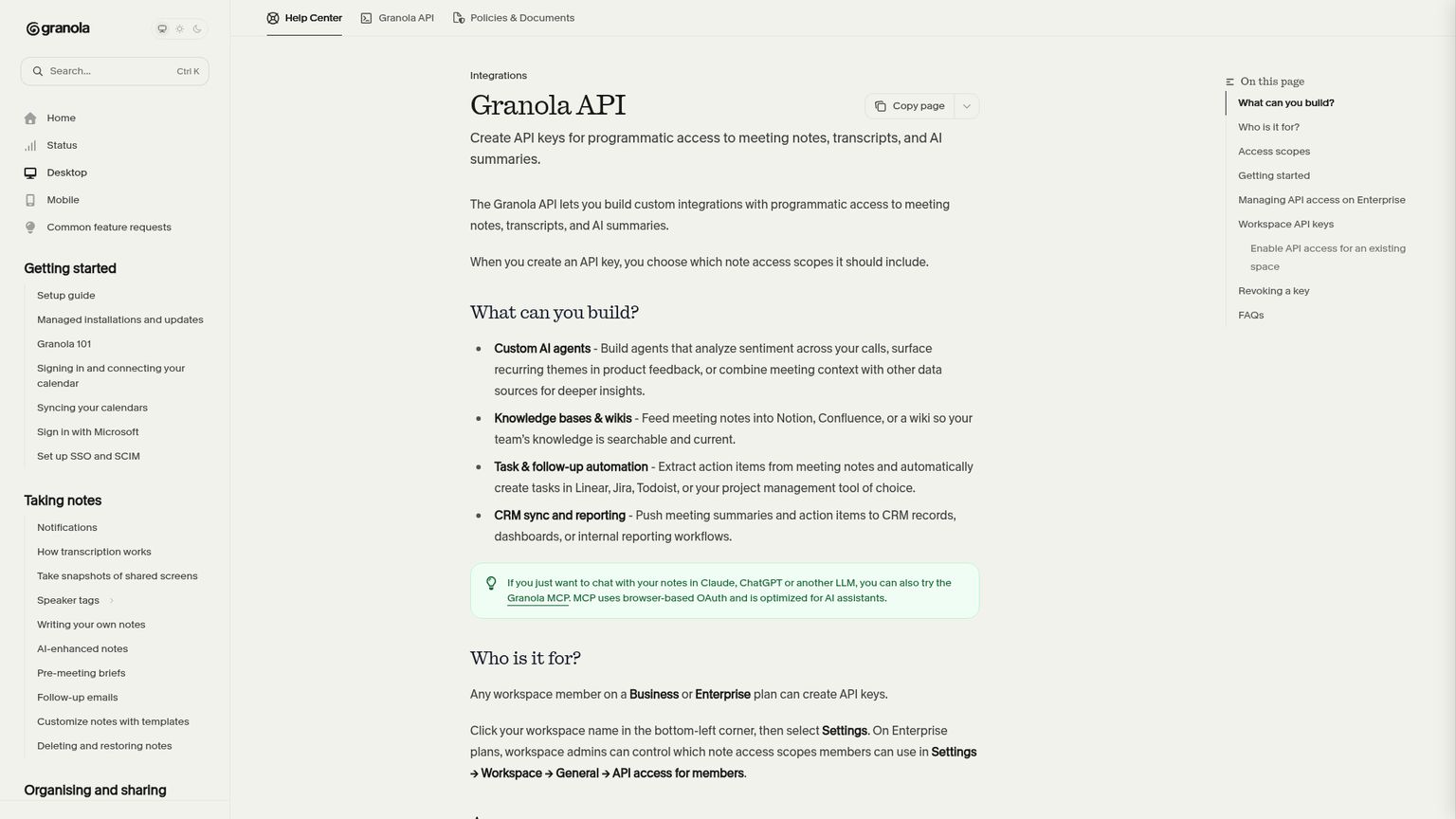
Granola's API, an interface for software to retrieve meeting data, is available on Business and Enterprise. It exposes notes, transcripts and summaries through access scopes. “Public notes” means notes visible within the workspace, not publicly accessible on the internet. Workspace keys cannot read private material that has not been explicitly shared for that access. Granola API guide
A technical founder could use this to build a reviewed handoff into an internal task system. The implementation still needs rules for duplicate tasks, access and human approval. Begin with a deliberately small set of shared notes; adding API access should not silently redefine which client conversations become available to other systems.
Granola AI Pricing
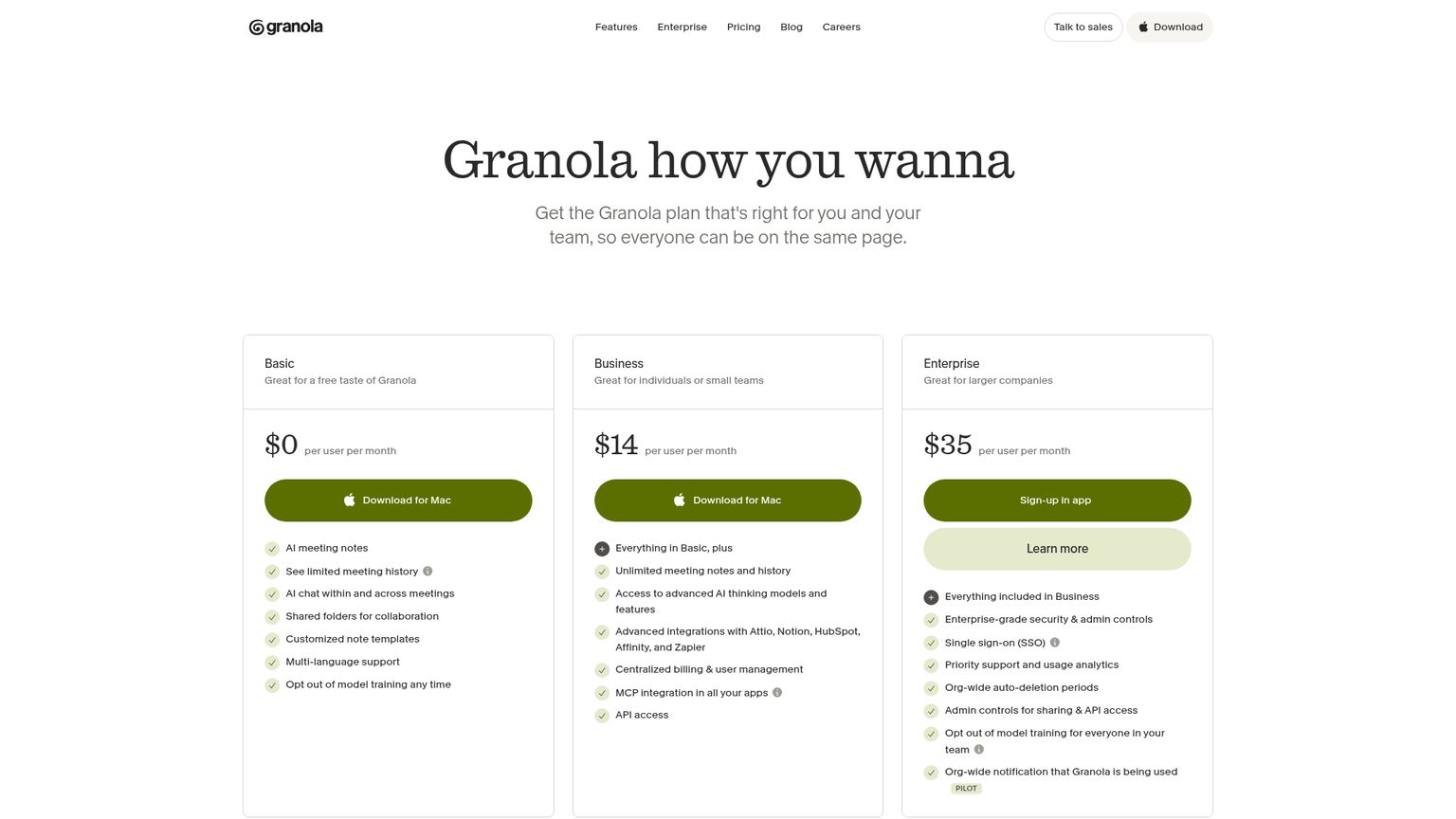
Granola lists Basic at $0, Business at $14, and Enterprise at $35 per user per month, verified on 10 October 2026. These are the displayed rates on granola.ai/pricing. The comparison table on that page specifies Basic's 30 days of meeting history.
Source for every price and plan inclusion in the table: Granola's current pricing page. For more plan economics, see Granola pricing.
Is Granola AI Free?
Granola Basic is $0 per user per month and includes the central note-taking workflow, templates and recipes. The reason a working professional may outgrow it is the 30-day meeting-history window, plus paid integrations and advanced features. Granola pricing
A founder evaluating recent interviews can start there. A consultant who needs to ask what a client agreed several months ago has a different requirement. Do not confuse a useful free evaluation with an adequate long-term client archive. Also, “30 days of history” is a plan-access limit, not a statement that the underlying data is automatically deleted on that date.
Business is the practical upgrade for a continuing archive or connections to other work tools. Enterprise's additional controls should be tied to a requirement: SSO centralizes sign-in, while SCIM automates user and group provisioning. These are administrative capabilities, not a promise that an individual summary becomes more accurate.
HIPAA needs an extra distinction. Granola's help page says Enterprise customers must contact sales about enabling HIPAA and signing a Business Associate Agreement, or BAA. Basic and Business do not provide that support. The Enterprise feature listing is not a reason to assume an unconfigured workspace is ready for protected health information. Granola's HIPAA guidance
What does one completed follow-up cost?
The useful denominator is the number of reviewed, usable outputs, not the number of times transcription starts.
Using the $14 Business price, a person completing 20 useful meeting follow-ups in a month pays $0.70 per follow-up in subscription cost. At 40, it is $0.35; at 80, approximately $0.18. These are calculations, not usage results, and assume each counted meeting produces a follow-up you actually use. Price input
If your review reveals missed decisions, wrong owners or extra cleanup, include that effort. A cheap generated note is not cheap if it takes longer to repair than your previous process.
Seats multiply the decision. Five Business users cost $70 per month; five Enterprise users cost $175, a $105 monthly difference. Ten Business users cost $140. Enterprise's premium is $21 per user per month, so budget it against the controls the organization needs. Granola price inputs
Granola's Limitations Matter Most Between Calls
Granola has specific boundaries that affect busy professionals more than a feature checklist suggests. The most consequential ones concern separating conversations, checking what was said, and controlling where the information goes.
Back-to-back calls can merge
Granola says a meeting app may keep the microphone active when you move directly between calls. That can prevent it detecting the end of the first meeting and merge the conversations into one transcript. Its documented remedy is to manually stop between meetings. Granola's back-to-back guidance
For a consultant, the consequence is bigger than a messy title: two clients' discussions can end up in the same note before you share it. Make stopping and opening the next note part of switching calls, just as you check which document you are about to present.
No retained recording to resolve a disputed sentence
Granola's desktop workflow does not save an audio or video recording for playback. It also does not accept prerecorded audio uploads for transcription. If you need to revisit tone, verify a disputed statement against the original audio, or process a library of recorded interviews, choose a tool built for that requirement. Granola's audio limitations
Source inspection inside the notes helps you compare a summary with the transcript. It cannot turn a text transcript back into the original recording.
System audio is broader than your meeting
Granola says it cannot isolate an individual application's audio: it captures the combined system stream, including unrelated audio even when routed through another output device. Close or mute unrelated playback before the meeting. Audio-capture scope
The difference matters if you listen to training material while waiting for a client, or keep another communication app playing in the background. Bot-free capture reduces meeting-platform friction, but it also makes your computer's audio environment part of the note-taking setup.
Speaker tags have limits
Granola now supports named speaker tags for Google Meet, Zoom and Microsoft Teams on macOS and Windows. It is inaccurate to describe it simply as unable to label speakers. However, its documentation says it cannot distinguish individuals speaking through one shared meeting-room device, may struggle to attribute overlapping speech, and does not add tags retrospectively to older transcripts. Speaker-tag documentation
For a sales call with a buyer committee in one room, review action ownership yourself. A participant display name can identify the room's device without establishing which person accepted the task.
Consent remains your responsibility
Granola's help pages recommend obtaining consent before transcribing others, explaining that recording and transcription laws vary by region. They direct users to their own legal or IT teams when uncertain, and say customers remain responsible for determining the notice or consent required for their use case and jurisdiction. This applies to video calls, in-person conversations and phone calls. Granola's consent guidance and transparency guidance
Granola offers an automated meeting-chat message and a camera watermark when enabled. These are notification features; they do not decide which rules apply to your meeting. The help pages also recommend checking which meetings your organization permits you to transcribe and pausing if the conversation moves into sensitive material.
Use that guidance as part of the meeting routine. A missing bot in the participant list is not permission to transcribe without addressing consent. Speaker tags are separate again: Granola says they identify speakers but do not notify them. Speaker tags and notice
Is Granola AI Safe?
Granola provides controls you can assess, but bot-free capture does not establish that it fits every client's data requirements. Its security FAQ says data is stored on Amazon Web Services servers in the United States and encrypted in transit and at rest. That is cloud processing and storage, even though capture begins on your own device. Granola security and data FAQ
There are also two separate training questions. Granola says its provider agreements prohibit those providers from training on your data. Granola itself may use anonymized data to improve its services by default. Users can turn off Use my data to improve models for everyone in desktop Settings > Preferences. Enterprise workspaces are opted out by default, with administrator control. Models and training
The Android app does not currently expose that toggle; changing it on desktop or iOS applies across the account. That is an important onboarding step for a mixed-device firm, not a reason to assume every user saw the same settings.
Granola's help pages say notes are private unless shared. Desktop audio is not retained; mobile audio is temporarily cached and deleted after transcription completes. The remaining notes and transcripts still require decisions about access, sharing and retention. Granola's privacy explanation
Granola AI Review Verdict: Buy for the Follow-Up
Granola earns a recommendation for founders, salespeople and consultants who want a personal note-taking workflow across business calls and are willing to review the result. Its strongest combination is device-audio capture, your own emphasis, structured templates and reusable prompts. The value is a clearer next action after the meeting.
Choose Basic while you establish that this workflow fits. Choose Business when older client history, integrations or API access become necessary. Choose Enterprise when central identity and data controls are requirements for adoption.
Skip Granola when replayable source recordings, incoming mobile calls, or native sales coaching are essential. Shortlist Krisp for audio cleanup alongside notes, MeetGeek for recordings and imports, Circleback for post-meeting automation, and Claap for CRM fields and coaching. None wins every job.
A useful Monday pilot is five ordinary meetings, using the devices and meeting software you normally use. This is an adoption check, not an accuracy benchmark:
- Write a few decision-critical notes yourself and use the same template where the meeting type repeats.
- Verify that every meeting starts and ends in the correct note.
- Compare the enhanced decisions, owners and conditions with what you recorded yourself.
- Time the work from the end of the call to an approved follow-up or correctly filed customer note.
- Keep the tool only if that complete process improves, including correction and integration effort.
For back-to-back schedules, the decisive behavior is still human: end the first note, begin the next one, and review before sharing. If that fits how you work, Granola's note-first design is compelling. If you want a system that takes ownership of recording, evidence review or sales operations, evaluate those capabilities directly.
Frequently Asked Questions
Does granola ai cost money?
Granola Basic is $0 per user per month. Business is $14 and Enterprise is $35 per user per month, verified on 10 October 2026 against Granola's pricing page. Business adds unlimited history and integrations; Enterprise adds organizational controls.
Is granola AI better than copilot?
Granola is the clearer fit when you want your own note workflow across different meeting applications. Microsoft 365 Copilot, Microsoft's work assistant, can summarize discussion and suggest actions inside Teams; its post-meeting use depends on the meeting's transcription and organizational settings. Evaluate it first if your work is centered on eligible Teams meetings. This review does not establish an accuracy winner. Microsoft's meeting guidance
Who is behind granola ai?
Granola identifies Chris Pedregal as its cofounder and CEO on his official author profile.
Can I use granola AI for free?
Yes. Basic includes AI meeting notes, customized templates, recipes, shared folders and chat, with 30 days of meeting history. Use it to assess your normal meeting workflow before paying for longer history or integrations. Granola pricing
Is granola AI trustworthy?
Assess the data controls and the output separately. Granola documents private-by-default notes, provider training restrictions and user controls, but those do not establish that every generated decision or action item is correct. Review consequential notes and follow its consent guidance. Granola's privacy and consent explanation
What is the best AI note taker app?
For this reader, Granola is a strong choice for user-guided notes without a meeting bot. Krisp fits audio cleanup, MeetGeek fits a recording archive, Circleback fits automated handoffs, and Claap fits sales coaching. The best choice is the one that produces the outcome you need after the call.
Which is the safest note-taking app?
There is no defensible universal winner. Compare your organization's requirements for consent, processing location, retention, sharing, training and identity controls. Granola's security FAQ documents its approach; a feature list is not approval for every meeting.
What is the #1 AI app?
There is no single ranking that answers this meeting-notes decision. A general assistant, a meeting notebook and a sales coaching system solve different problems. Pick the output and constraints first, then compare products.
Can Chatgpt take meeting notes?
ChatGPT can help turn approved notes or a transcript into an internal recap, follow-up drafts and next steps, as OpenAI's sales workflow documentation describes. That is a documented way to process meeting material; confirm your capture workflow separately before treating it as a replacement for a dedicated meeting app.
Get the AI Tools Map for Business Owners to match the rest of your AI stack to the work you need done.
- Published
- Category
- AI
- Language
Fyxer Review
Fyxer reviewed through current pricing, help docs and public feedback: inbox sorting, drafts, meetings, privacy and who should pay for Pro or Team.Oct 9, 2026AI
GPT 6 Explained: Models, Release Dates, Access, and Prices
GPT-6 Astra, Sol, 6.1 Sol and Luna explained: release dates, ChatGPT plan access, Work and Codex availability, and verified API costs.Oct 9, 2026AI
Is ChatGPT Free? What You Get for $0
Yes. See what ChatGPT Free includes, its work limits, ads, account access, and when the $8 Go or $20 Plus plan is worth paying for.Oct 9, 2026AI
Gemini Enterprise: What It Is and When to Pilot
Gemini Enterprise explained for IT leads: Gemini agent availability, connectors, identity, spend caps, pricing and a 30-day Plus pilot.Oct 9, 2026AI
Marblism Review
Marblism's seven AI employees, current plans, shared-hour costs, dated public reviews and the jobs that still need human approval.Oct 9, 2026AI
Claude Haiku vs Sonnet
Haiku 5.5 vs Sonnet 5.5 for ticket classification, long summaries and coding subagents, with current API rates and three monthly budgets.Oct 8, 2026AI
Claude Haiku 5.5: Pricing and When to Switch
Claude Haiku 5.5 pricing, the 100K prompt threshold, and a monthly bill versus Haiku 4.5 and Sonnet 5.5. Which work should you move?Oct 8, 2026AI