Is Cursor Rollouts Free
Cursor Rollouts needs Teams or Enterprise. Understand the 10-day launch credits, roughly 50 or 500 changes, and the costs to check.
Published
 By Omid Saffari


Is Cursor Rollouts free? No: it is available only on Teams at $40 per user per month or Enterprise at custom pricing. Cursor's 10-day launch credits cover roughly 50 Teams changes or 500 Enterprise changes, but they do not create a free plan, and Cursor has not published the ongoing Rollouts unit price.
The clean way to price Rollouts is to separate access, trial usage, and ongoing usage. You pay for an eligible organization plan first. The launch credits temporarily absorb some Rollouts activity. What happens to the bill after those credits is the part Cursor's public pages still do not quantify.
Is Cursor Rollouts Free? No, the Credits Sit Behind a Paid Plan
Cursor Rollouts is a paid-plan feature with a temporary credit offer. Cursor's September 23 launch page lists only Teams and Enterprise as eligible. Hobby may cost $0 and Individual Pro may cost $20 per month, but neither is named as a Rollouts plan.
That distinction matters because a credit is not access. An eligible customer can use the credits to evaluate real changes without immediately paying the still-undisclosed Rollouts usage rate. A free Cursor user cannot use the same offer to access Rollouts.

The offer is also narrower than a conventional free trial. Cursor describes usage credits for the next 10 days, estimated to cover roughly 50 changes for Teams and 500 for Enterprise. It does not describe a new account trial, an open beta for Hobby users, or a permanent monthly allowance.

What Actually Changed on September 23
Rollouts adds a monitoring agent to the path from pull request to production. It reads a proposed change, drafts a monitoring plan, then checks deployment signals and reports whether each environment looks healthy, regressed, or inconclusive.
The monitoring plan is the useful part for builders. Cursor says the pull-request comment names the intended effect, identified risks, signals to inspect, and instrumentation gaps. A developer can edit that plan before the deployment. This turns the change itself into a testable operating hypothesis: what should move, what should stay stable, and which evidence could disprove the expected result.
After a deployment event, Rollouts checks logs, metrics, and traces. It treats environments separately, so a change can look healthy in staging and fail in production. If it suspects a regression, it can notify the author. Depending on configuration, it can also draft a revert pull request for review or hand the finding to a cloud agent for a fix.
The boundary is just as important as the capability. Rollouts does not merge a revert or roll production back on its own today. It prepares evidence and a proposed response for a human-controlled workflow. Feature-flag integration is also still described as coming soon.
This is not another code-generation feature. It moves Cursor into the expensive final mile where a team has already merged code and now needs to decide whether the release is behaving as intended.
Cursor Rollouts Pricing Has Three Layers
The price is incomplete unless all three layers stay separate. The seat fee buys eligibility. The launch credit pays for a temporary amount of usage. A continuing Rollouts charge may apply after that, but the public unit rate is missing.
These values were verified against Cursor's live pricing page, launch post, Automations documentation, and Teams dashboard documentation on September 24, 2026. That dated check found no stable price per monitored change, no precise credit-expiry timestamp or timezone, and no public statement saying whether Rollouts pauses, bills automatically, or asks for a separate opt-in after credits run out.
Cursor Rollouts Teams Access Starts at $40 Per User
A five-person team has a $200 monthly access floor before any Rollouts usage charge. Five Individual Pro subscriptions cost $100 per month at the current $20 rate. Moving the same five people to Teams Standard therefore adds $100 per month, or $1,200 across 12 months, before Rollouts usage enters the invoice.
At 10 people, Teams Standard costs $400 per month versus $200 for 10 Individual Pro subscriptions. The governance and feature premium is $200 per month, or $2,400 across 12 months. That premium also buys Teams administration, shared context, analytics, privacy controls, and SSO, so it should not be allocated entirely to Rollouts. It is still the minimum plan jump a buyer must model.
For the wider plan and usage-pool picture, the current Cursor pricing breakdown explains what the seat already buys. Rollouts adds a new reason to choose the organization tier, not a new published seat tier of its own.
Cursor Rollouts Credits Are Temporary
The 10-day credits are a test budget, not a contractual change allowance. Cursor says “roughly,” which makes 50 and 500 planning estimates rather than fixed entitlements.
Spread evenly, the Teams estimate is about five changes per day and the Enterprise estimate is about 50 per day. On a five-person Teams account, 50 changes would be roughly 10 per seat if activity were evenly distributed. Real deployment volume is rarely even, so use the organization total, not the per-seat illustration, when selecting a pilot.
The useful question is whether that volume covers representative work. A team that deploys several services continuously could consume the estimated Teams credit quickly. A team that ships occasionally might finish the 10-day window without testing enough regressions, noisy signals, or instrumentation gaps to judge the product.
Cursor Rollouts Free Trial: What the Offer Is
The Rollouts offer behaves like a usage-credit window for existing eligible customers, not a free plan trial. That means an authorized Teams or Enterprise administrator should treat the dashboard as the commercial source of truth before enabling it broadly.
Cursor's general Automations billing documentation says automations create cloud agents and are billed according to cloud-agent usage. That context does not establish a Rollouts price per change. The product launch uses changes to describe the credit estimate, while the billing documentation uses cloud-agent usage. Until the dashboard or contract maps those units, converting 50 changes into dollars would be invented precision.

What Rollouts Means for Builders, Operators, and Buyers
The same feature creates a different decision for the person writing code, the person carrying the pager, and the person approving the contract. Rollouts is useful only when those three views meet.
Builders get an editable deployment hypothesis
A builder gets a monitoring plan attached to the pull request before production. That is useful when a change has a measurable intended effect, such as reducing latency on one path without increasing errors elsewhere. The builder can correct the proposed signals and risks while the change is still fresh.
The limit is that a plausible plan is not proof. Tests still verify code behavior before deployment. Rollouts watches selected production evidence after deployment. It does not make an untested change safe, and an “inconclusive” result is a valid outcome when the evidence cannot support a verdict.
Operators still own the telemetry wall
An operator gets a change-aware reader for existing observability data, not a replacement for observability. Cursor requires source control, deploy events, and a telemetry provider. Its launch page names Origin or GitHub for source control, a continuous-delivery system for deploy events, and Datadog plus other telemetry providers for signals.
Weak instrumentation remains the wall. Rollouts can identify gaps in the monitoring plan, but it cannot reconstruct a business metric that was never emitted or a trace that was never collected. An early practitioner question asks whether it detects silent metric gaps beyond risks suggested by the diff. Cursor's public launch material does not make that broader guarantee.
Buyers are purchasing access and a data path
A buyer must approve more than a bot. Rollouts needs permission to read code changes, deployment events, logs, metrics, and traces. That connection surface deserves the same security review as any production observability integration.
The economic decision is also organization-wide. Teams creates the lowest published access path, while Enterprise adds a custom contract. The deeper Cursor review covers the product's general fit, and the enterprise Cursor versus Claude Code comparison covers the governance choice surrounding a broader rollout.
Who Should Act Now, Who Should Wait, and Who Is Unaffected
Act now only if the launch credits can test a workflow you already operate. A good candidate is already on Teams or Enterprise, deploys observable services often enough to produce representative changes, and has one owner who can edit plans, judge verdicts, and inspect the bill.
Use the credit window now when all of these are true:
- Your source control, deployment system, and telemetry provider can be connected within the approved security boundary.
- The service already has logs, metrics, or traces tied to release health.
- A named operator can review inconclusive and regression verdicts.
- An administrator can set a monthly team spending limit in the Cursor Teams dashboard.
Wait when the setup would test plumbing instead of Rollouts. If deploy events are unreliable, telemetry lacks service ownership, or no one can judge whether the monitoring plan is correct, the credit window will produce activity without a decision. Fix those inputs first.
Wait as well if procurement needs a stable unit price before any variable charge can be approved. The missing public rate is not a small footnote for a high-deploy-volume organization. Ask Cursor to put the billing unit, post-credit behavior, and expiry in writing.
You are unaffected if you use Hobby or Individual, build locally without production deployments, or rarely ship a service with observable runtime behavior. Rollouts does not make the free editor less useful. It simply does not change your current workflow.
What's Overhyped About Cursor Rollouts
Rollouts is a reviewer of production evidence, not an autonomous site-reliability engineer. Three inflated readings should be removed from the buying decision.
First, it is not an automatic rollback engine. Cursor says it may open a revert pull request or hand a finding to a cloud agent, depending on configuration. It also says Rollouts does not merge or roll back on its own today. Human review remains in the critical path.
Second, it is not an observability platform. It reads logs, metrics, and traces from connected systems. If the relevant signal is absent, delayed, mislabeled, or disconnected from the deployment event, the output can be inconclusive or misleading. The pre-deployment gap warning may expose that problem earlier, but it does not manufacture the missing evidence.
Third, the roughly 50 and 500 change figures are not a permanent included allowance. They describe launch credits over a 10-day offer. Cursor has not published a stable ongoing rate, so no buyer can yet calculate a defensible cost per healthy verdict, regression caught, or change monitored from the public pages alone.
That does not make Rollouts empty. The valuable proposition is narrower: it binds a code change to an editable monitoring plan, watches the named evidence by environment, and returns a reviewable verdict. Judge that loop, not the fantasy of self-running production.
The Monday Move: Run a Bounded Credit Test
Use the offer to answer one procurement question: does Rollouts produce enough trustworthy deployment decisions to justify its access and usage cost? A broad enablement cannot answer that cleanly.
Record the commercial boundary
In an already authorized team dashboard, capture plan eligibility, the visible credit balance, the exact expiry, the metering unit, the post-credit action, and the monthly spending limit. If any field is absent, ask Cursor support before relying on an assumption.
Choose representative changes
Select a small set that spans a normal feature, a performance-sensitive path, and a change with known monitoring weakness. Do not seed a production failure merely to make the demo interesting.
Edit every monitoring plan
Compare the proposed risks, intended effects, signals, and gaps with what the service owner expects. Record what had to be corrected. A plan that sounds polished but misses the decisive signal is not useful.
Score the verdicts
For each deployment, record verdict latency, false alarms, inconclusive outcomes, useful instrumentation gaps, and any regression the existing alerting stack missed. These are evaluation fields, not results claimed here.
Price the next change
Before the credits end, use the dashboard or a written vendor answer to calculate the continuing cost. Expand only if the workflow value and billing unit are both clear.
The Monday move is deliberately bounded. It turns free launch usage into evidence without mistaking sponsored credits for a permanent price.
Cursor Rollouts FAQ
Is Cursor actually free?
Cursor has a free Hobby plan, but Cursor Rollouts is not included in the eligibility published at launch. Rollouts requires Teams at $40 per user per month or Enterprise at custom pricing.
Is Cursor 100% free?
No. Cursor offers a free editor tier and several paid tiers. Rollouts is listed only for Teams and Enterprise, and its launch credits do not turn it into a permanent free feature.
How much does Cursor actually cost?
Cursor lists Hobby at $0, Individual Pro at $20 per month, Teams Standard at $40 per user per month, and Enterprise at custom pricing. Rollouts also has an ongoing usage component whose public unit rate was not published when checked on September 24, 2026.
Is Cursor AI free or pro?
Both free and paid Cursor plans exist. The relevant distinction for Rollouts is different: the launch lists Teams and Enterprise, not Hobby or Individual Pro.
Is Cursor owned by Elon Musk?
Not personally. Cursor says it has been officially acquired by SpaceX. Corporate ownership does not change the published Rollouts requirement of Teams or Enterprise.
Is Cursor better than ChatGPT?
They solve different jobs. Cursor Rollouts monitors software changes through deployment, while ChatGPT is a general AI product. The Rollouts decision should turn on deployment evidence, integrations, access, and cost.
Why are people leaving ChatGPT?
That question is unrelated to Cursor Rollouts. Reasons for changing general AI products do not establish whether a deployment-monitoring agent fits an engineering team.
What are the 5 things you shouldn't tell ChatGPT?
That question is unrelated to Rollouts. As a general security rule, do not send credentials, private keys, unredacted personal data, confidential company data, or proprietary code to a service unless your organization has approved the data boundary.
Why pay $20 for ChatGPT?
A ChatGPT subscription does not buy Cursor Rollouts. The lowest published Rollouts access path is Cursor Teams at $40 per user per month, followed by any continuing Rollouts usage charge.
Does Cursor have a free trial?
Cursor's Rollouts launch offer is a 10-day usage-credit window for eligible Teams and Enterprise customers. It is not described as a Rollouts trial for Hobby or Individual users, and the precise expiry timestamp is not public.
Get the next operator-grade AI and build brief in the newsletter.
- Published
- Category
- Build
- Language

LLM as a Judge: Reliable Daily Evals for Agents
Build a reliable LLM judge with example prompts, human calibration, bias checks and daily evals using Promptfoo, DeepEval, Langfuse or LangSmith.Oct 15, 2026Build
KV Cache Explained: Prefill, Decode and Prompt Caching
Understand KV cache in LLM inference, prefill vs decode, memory growth and prompt caching across Anthropic, OpenAI, Google and vLLM.Oct 15, 2026Build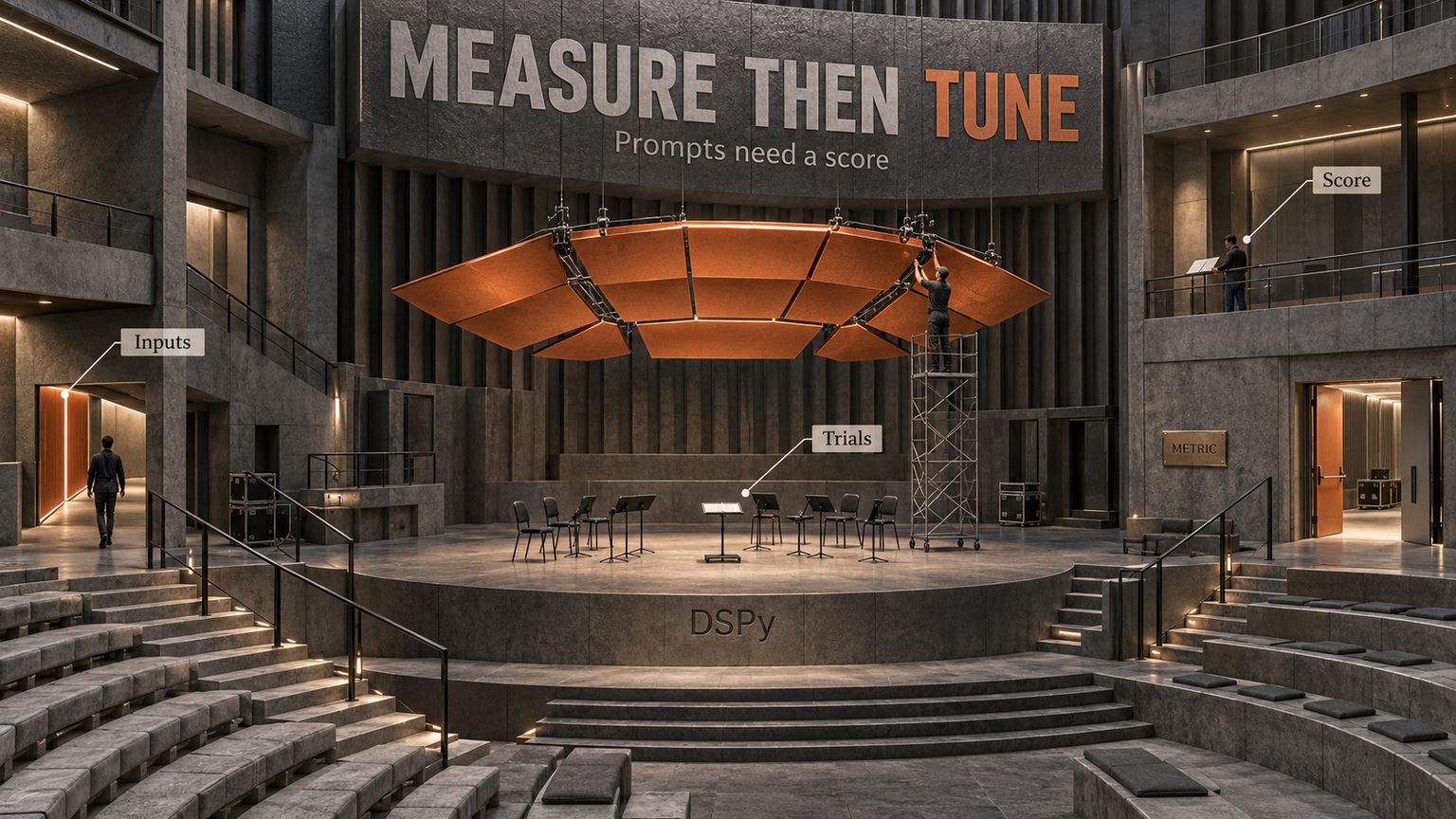
DSPy Explained: Signatures, Modules and Prompt Optimization
Understand DSPy signatures, modules and optimizers, try the current docs example, and decide when measured prompt optimization is worth the work.Oct 15, 2026Build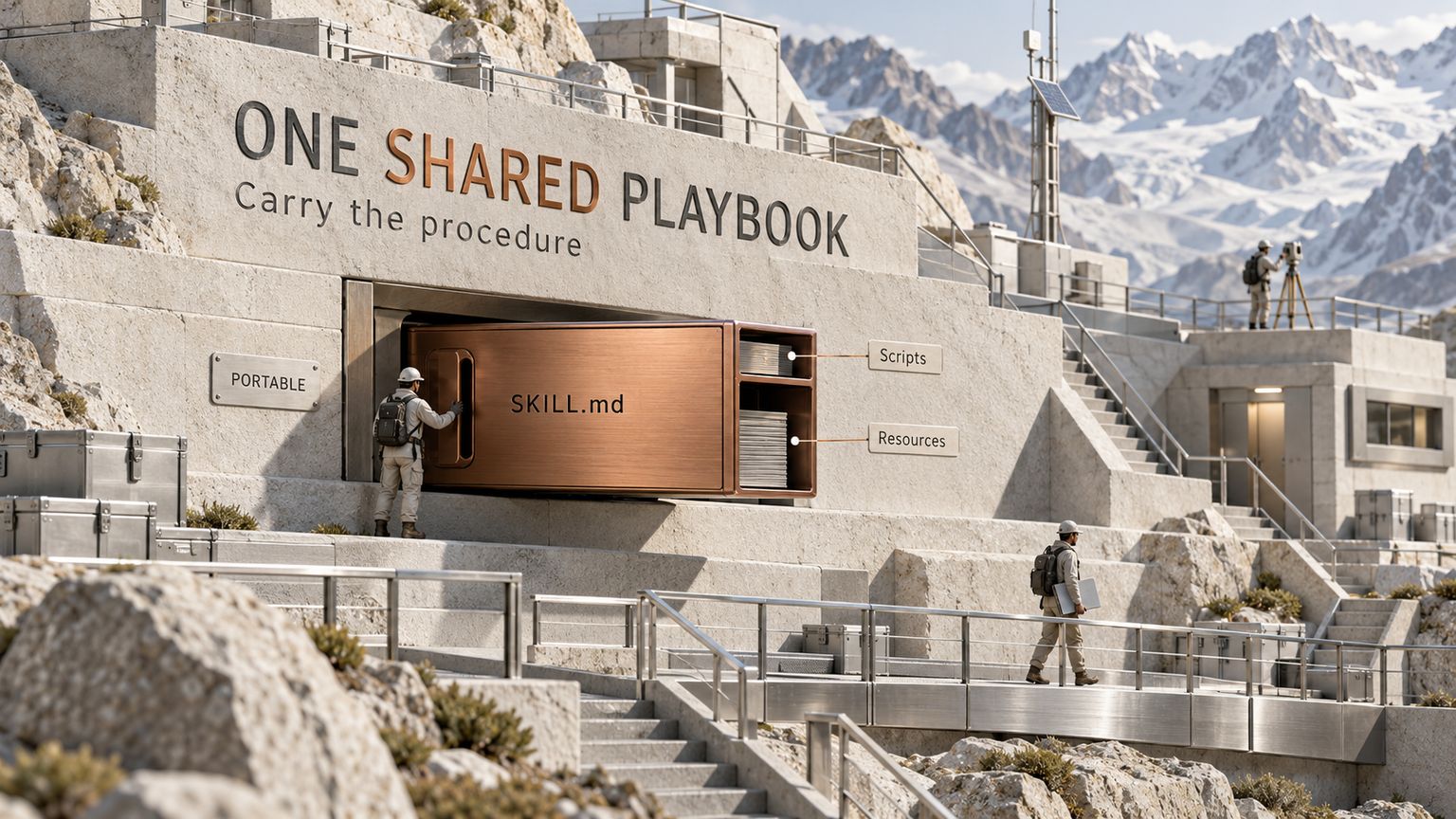
Agent Skills: How One Folder Works Across AI Tools
Agent Skills explained: the SKILL.md standard, verified tool support, a portable weekly-report example, context overhead and security boundaries.Oct 15, 2026Build
Best Embedding Models in 2026: Gemini, OpenAI, Voyage, Cohere, Qwen and BGE Compared
Compare Gemini, OpenAI, Voyage, Cohere and open embedding models by retrieval fit, languages, deployment and migration work.Oct 15, 2026Build
LangSmith vs Langfuse
Compare LangSmith and Langfuse for tracing, evaluations, datasets, prompts and self-hosting. Choose by framework fit and operational ownership.Oct 14, 2026Build
OpenAI AgentKit: Shutdown Dates and Migration Guide
What survives AgentKit, what shuts down, and how to migrate Agent Builder, ChatKit backends, evals, and prompt objects before the 2026 deadlines.Oct 14, 2026Build