Kit Pricing (2026): Free to 10,000, Then $169
Kit is free to 10,000 subscribers, then its Creator tier can jump to $169. See every 2026 plan, annual savings, hidden fees, and the decision math.
Published Updated
 By Omid Saffari

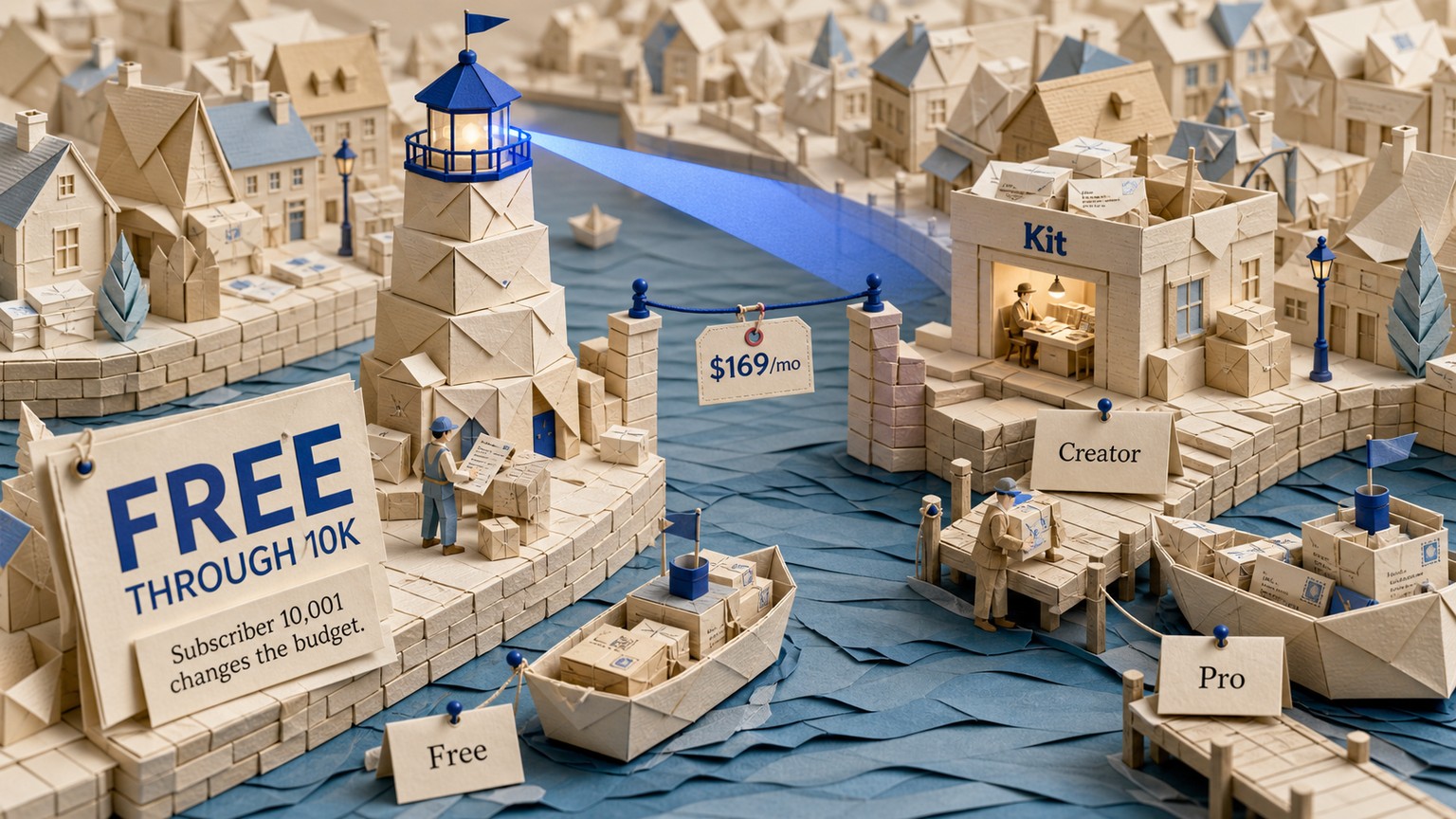
Kit is free through 10,000 active subscribers, but subscriber 10,001 can move a creator straight to the $169-per-month Creator tier. Creator and Pro start at $39 and $79 for smaller lists, yet the free-to-paid cliff, not the entry card, is the budget number to plan around.
Kit pricing at a glance
Kit has three public plans: Newsletter at $0, Creator from $39 monthly, and Pro from $79 monthly. The live Kit pricing page is the source of record because both paid plans rise with active subscriber count.
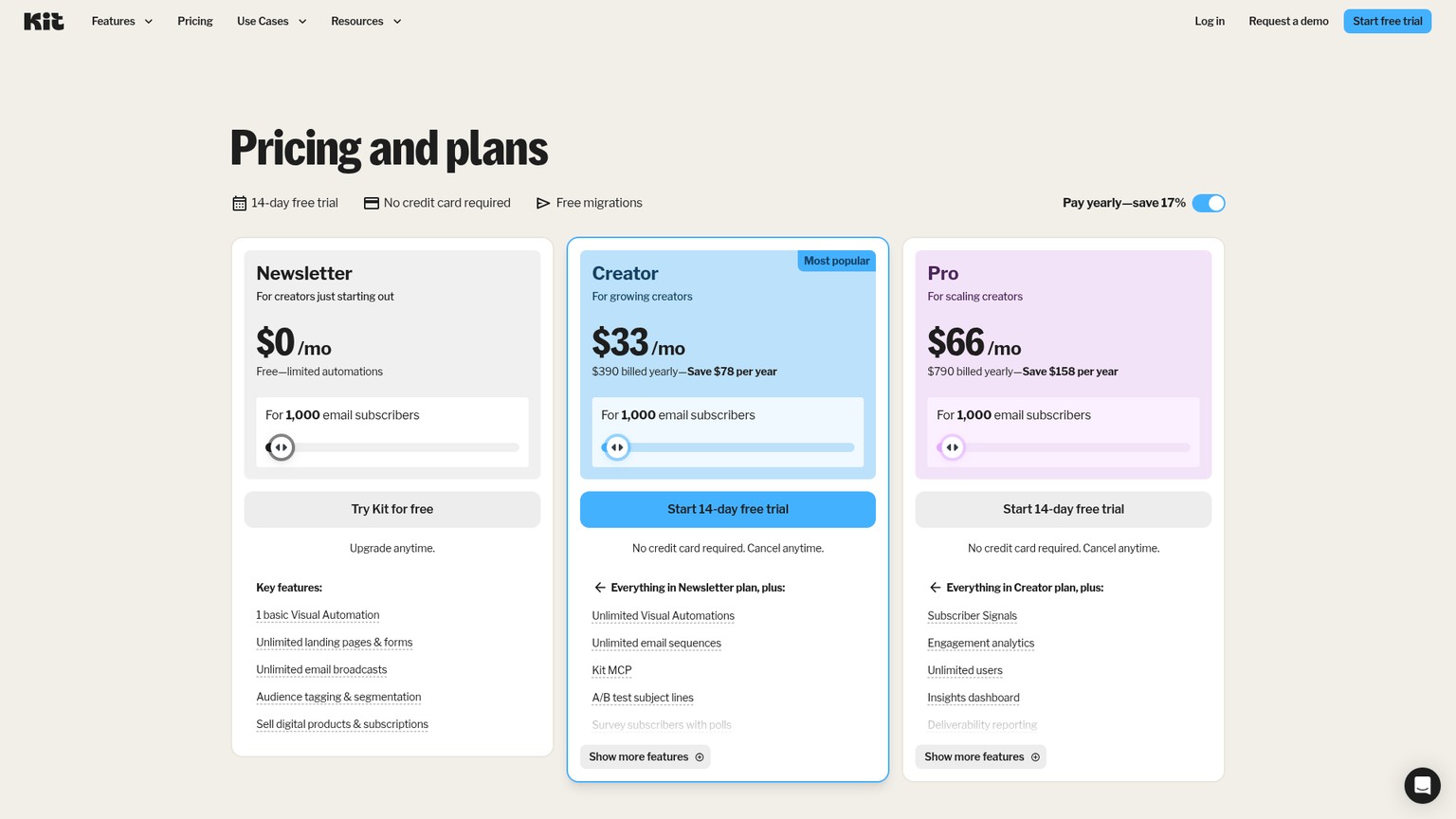
Verified against Kit's live pricing page, production price data, and billing help center on August 11, 2026. Prices are in US dollars before applicable sales tax. Yearly prices are paid upfront, and Kit gives 12 months for the price of 10.
The blunt verdict is that Newsletter is enough for more creators than the paid cards suggest. It supports 10,000 active subscribers and unlimited email sends. Pay for Creator when the business needs more than one automation, integrations, RSS campaigns, or its own branding. Pay for Pro only when the referral system, three or more users, collaborative editing, or its deeper audience analytics has a named job.
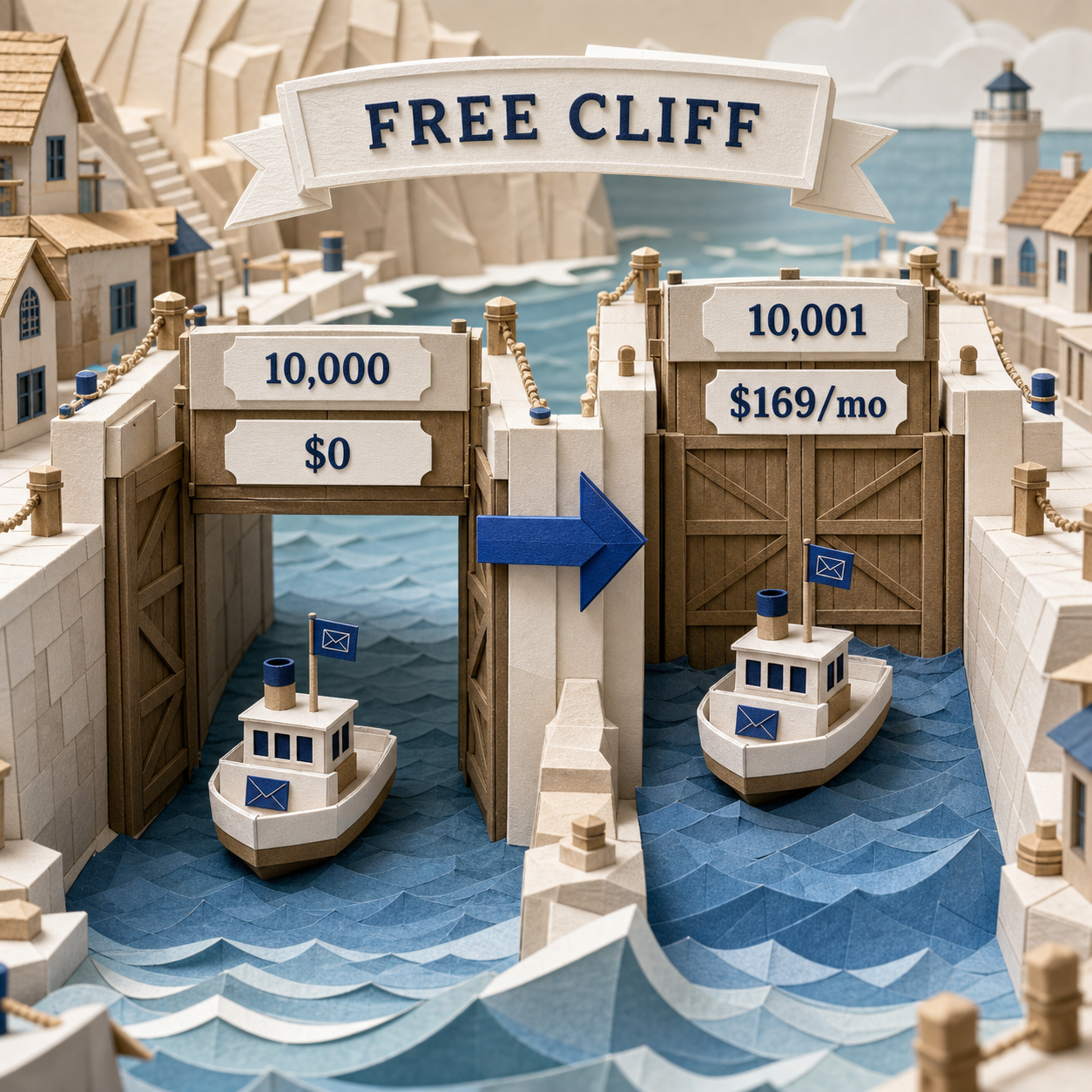
That cliff changes the planning question. A creator with 9,200 subscribers should not budget from the $39 entry card. They should decide whether the next 801 subscribers are worth a $169 monthly software line, whether list cleaning can delay the jump, and which paid features will earn back the bill.
Kit bills active subscribers, then moves paid accounts up automatically
Kit charges for active confirmed subscribers, not lists, tags, segments, or email volume. Ten broadcasts to the same 5,000 active people do not create an extra Kit sending fee, and unsubscribed contacts do not belong in the paid count.
This is friendly billing for a high-frequency publisher. A B2B newsletter sending every weekday pays the same Kit subscription as one sending twice a month at the same active-list size. The workload changes; the base platform bill does not.
Paid subscriber bands do change the bill. If a Creator account passes its current cap, Kit automatically moves it to the next band. The upgrade is prorated. A monthly customer sees the adjustment with the next bill, while an annual customer can be charged the difference immediately.
Moving down is less automatic. Kit's pricing FAQ says a customer who cleans the list should contact support for an adjustment. Its current billing guide also documents scheduling a lower subscriber tier under Account & Billing, effective on the next billing date. Those instructions describe different routes, but the operating rule is the same: deleting inactive contacts does not itself lower the invoice. Confirm the downgrade before renewal.
For a list at 10,400, removing 500 inactive contacts can do more than improve deliverability. It can restore eligibility for the free Newsletter plan, subject to its feature limits, and avoid a $169 monthly Creator bill. That makes list hygiene a budget control, not just an email-quality chore.
Which Kit plan should you choose?
Choose the lowest plan whose workflow limit you will hit this quarter. Subscriber count sets the price band, but the automation, team, and monetization requirements decide which plan you need inside that band.
Newsletter: the best default until one automation stops being enough
Kit Newsletter costs $0 for up to 10,000 active, unique subscribers. It includes unlimited forms, landing pages, broadcasts, digital products, and subscriptions, plus audience tags and segments. The automation allowance is one basic Visual Automation with one email sequence.
That is enough for a solo consultant who publishes a weekly email, delivers one lead magnet, and sends one welcome sequence. It is also enough for a new paid newsletter that sells subscriptions without a complex funnel. The platform does not start charging merely because the creator earns revenue, although Kit's commerce transaction fee still applies.
The hidden exchange is control. Kit keeps one managed Recommendation slot enabled on Newsletter, and any Paid Recommendation earnings from that slot go to Kit. Free also lacks the unlimited automations, full integration set, RSS campaigns, brand removal, and recommendation flexibility available on Creator.
Who never needs to pay: a solo publisher under 10,000 active subscribers who needs one welcome flow, sends broadcasts manually, accepts Kit branding and the managed Recommendation slot, and does not require a multi-step product funnel. For that operator, upgrading for a nicer plan label is wasted budget.
Creator: the working-business plan
Kit Creator starts at $39 monthly for up to 1,000 subscribers or $390 paid yearly. It removes Kit branding and adds unlimited Visual Automations, unlimited email sequences, apps and integrations, RSS campaigns, subject-line A/B tests, polls, Kit MCP, and support for two users.
Creator is the right plan for a course seller with separate welcome, launch, customer-onboarding, and re-engagement flows. One basic automation cannot carry those jobs cleanly. The upgrade earns its place when it replaces manual tagging, missed follow-up, or a second automation tool.
Do not buy Creator only because a list passed 1,000. Newsletter remains free through 10,000. A 2,000-person weekly newsletter with one welcome sequence can still pay $0, while a 400-person product business with five automated funnels may rationally pay $39.
The wall is team access and advanced analysis. Creator includes two users. A publisher with an editor, growth lead, and operations assistant already has three people competing for two seats, which makes Pro the cleaner operational choice even before subscriber math changes.
Pro: buy the operating leverage, not the badge
Kit Pro starts at $79 monthly for up to 1,000 subscribers or $790 paid yearly. It adds unlimited users, collaborative editing, full engagement analytics, engagement scoring, Subscriber Signals, advanced A/B testing of subject lines and content, Facebook Custom Audiences, edit-links-after-send, and the SparkLoop newsletter referral system.
Pro is defensible for a creator company where three people work in email every week, or where a referral program is already part of the growth model. It is much harder to defend for a solo operator who only wants a more detailed dashboard. At 10,000 subscribers, Pro costs $189 monthly, $50 more than Creator. The extra reporting needs to change a campaign or save work, not merely exist.
Kit values its included SparkLoop plan at $99 per month. On monthly billing, that one inclusion covers Pro's $40 premium at 1,000 subscribers and its $80 premium at 25,000. At 35,000, the Pro premium reaches $104, so SparkLoop alone no longer closes the gap. Other Pro features must supply the remaining value.
On annual Kit billing, the same threshold moves. Pro costs $1,040 more than Creator per year at 35,000 subscribers, still below $1,188 for 12 months of a $99 tool. At 45,000, the annual Pro premium reaches $1,280, so buying a separate $99 referral product would be $92 cheaper if every other Pro feature were worth zero.
The subscriber ladder rewards scale but punishes the first paid jump
Kit's paid price per 1,000 subscribers falls as a list grows. Creator costs $39 per 1,000 at a 1,000-person list, $13.90 per 1,000 at 10,000, $7.96 at 25,000, and $7.58 at 50,000. With annual billing, those monthly equivalents fall to $32.50, $11.58, $6.63, and $6.32 per 1,000.
The useful monthly Creator breakpoints are $39 through 1,000 subscribers, $59 through 3,000, $89 through 5,000, $119 through 8,000, $139 through 10,000, $169 through 15,000, $189 through 20,000, and $199 through 25,000. It then rises to $259 through 35,000, $319 through 45,000, $379 through 55,000, and $619 through 95,000. The public ladder continues to $2,499 through 500,000, with a custom conversation above that count.
Pro follows the same subscriber bands at a premium: $79 through 1,000, $99 through 3,000, $139 through 5,000, $169 through 8,000, $189 through 10,000, $249 through 15,000, $269 through 20,000, and $279 through 25,000. It reaches $363 through 35,000, $447 through 45,000, $519 through 55,000, $807 through 95,000, and $2,799 through 500,000.
Annual invoices are simple even when the displayed monthly equivalent is rounded: multiply the monthly tier price by 10. Creator at 10,000 is therefore $1,390 for the year, while Creator at 10,001 is $1,690. Pro at those same bands is $1,890 and $2,490.
The per-campaign math makes the software line easier to judge. A 10,000-subscriber creator sending four weekly campaigns allocates $34.75 of a $139 monthly Creator bill to each campaign, or about $0.003475 per recipient. Annual billing reduces that allocation to $28.96 per campaign.
Now connect the bill to a business outcome. If a digital product contributes $50 after fulfillment and payment costs, the $139 Creator invoice needs three incremental sales per month to cover itself. Pro at $189 needs four. If the automations cannot plausibly create or protect those sales, the business is paying for complexity rather than leverage.

Annual billing saves two months and locks the budget for a year
Kit annual billing is exactly 12 months for the price of 10. At the 1,000-subscriber tier, Creator falls from $468 across 12 monthly payments to $390 upfront, saving $78. Pro falls from $948 to $790, saving $158.
The same rule scales with the list. Creator at 10,000 costs $1,668 across a year of monthly payments or $1,390 upfront. Creator at the 10,001-to-15,000 band costs $2,028 across monthly payments or $1,690 upfront.
Annual wins once the account will remain paid for more than 10 months, but it also moves growth risk forward. A creator at 9,800 subscribers who expects to clean the list, change platforms, or simplify the funnel should not prepay merely to capture a discount. A cheaper unused year is still an expensive decision.
Kit allows a switch from annual to monthly only when the annual cycle ends. Its refund policy covers funds paid within the previous 30 days on monthly and annual plans, but it does not refund or prorate older annual payments. The discount window and the refund window are different commitments.
Hidden Kit costs sit in upgrades, commerce, and monetization
Kit does not charge extra for sends, tags, segments, or public API calls. The less obvious costs come from subscriber growth, taxes, annual commitment, and revenue features.
Automatic paid-tier upgrades
A campaign that pushes a paid account past its subscriber cap can trigger the next tier and a prorated adjustment. The email keeps sending, which is operationally helpful, but the budget moves without waiting for a manual approval. Put subscriber thresholds into the campaign forecast before a large giveaway or partner swap.
Downgrades after list cleaning
A smaller list does not automatically produce a smaller bill. Schedule the downgrade in Account & Billing or confirm the support route before the next renewal. The savings arrive on the next eligible billing date, not on the day contacts are removed.
Sales tax and card verification
Kit adds sales tax where the billing jurisdiction requires it. A $39 plan can therefore close above $39. Adding or changing a card can also create a temporary $1 Stripe verification charge, which Kit says disappears within seven days.
Product and subscription sales
Kit charges 3.5% plus $0.30 per transaction when a creator sells a digital product, subscription, or tip through Kit. That fee includes card processing and applies even on Newsletter. A $100 sale therefore carries a $3.80 platform-and-processing cost before the creator's own fulfillment costs.
Recommendations and sponsorships
Paid Recommendations deduct a 20% service fee plus a 3.5% transaction fee, 23.5% total. Kit Newsletter Sponsorships also charge 23.5% of ad revenue. A quoted $1,000 sponsorship therefore leaves $765 before taxes and other business costs.
Free Newsletter carries a separate monetization tradeoff: one Kit-managed Recommendation slot remains enabled, and its earnings go to Kit. That is not a cash charge on the invoice, but it is inventory the creator does not control.
API versus app pricing
Kit includes API access across Newsletter, Creator, and Pro and does not publish a separate per-call API tariff. The API is therefore not a cheaper parallel product. It operates inside the same subscriber count, plan features, and account rules.
Kit versus beehiiv, MailerLite, and Substack on price
Kit is the price winner for a simple free list up to 10,000. The decision changes when a buyer needs richer automations, newsletter-growth features, team seats, or a paid-publication business model.
beehiiv: pay more at 1,000 for a newsletter-growth system
beehiiv costs $0 on Launch through 2,500 subscribers, while Scale at the 1,000-subscriber tier costs $49 monthly or $517 yearly, displayed as $43 per month. That makes Scale $10 more than Kit Creator monthly and $127 more per year at the same 1,000-person count.
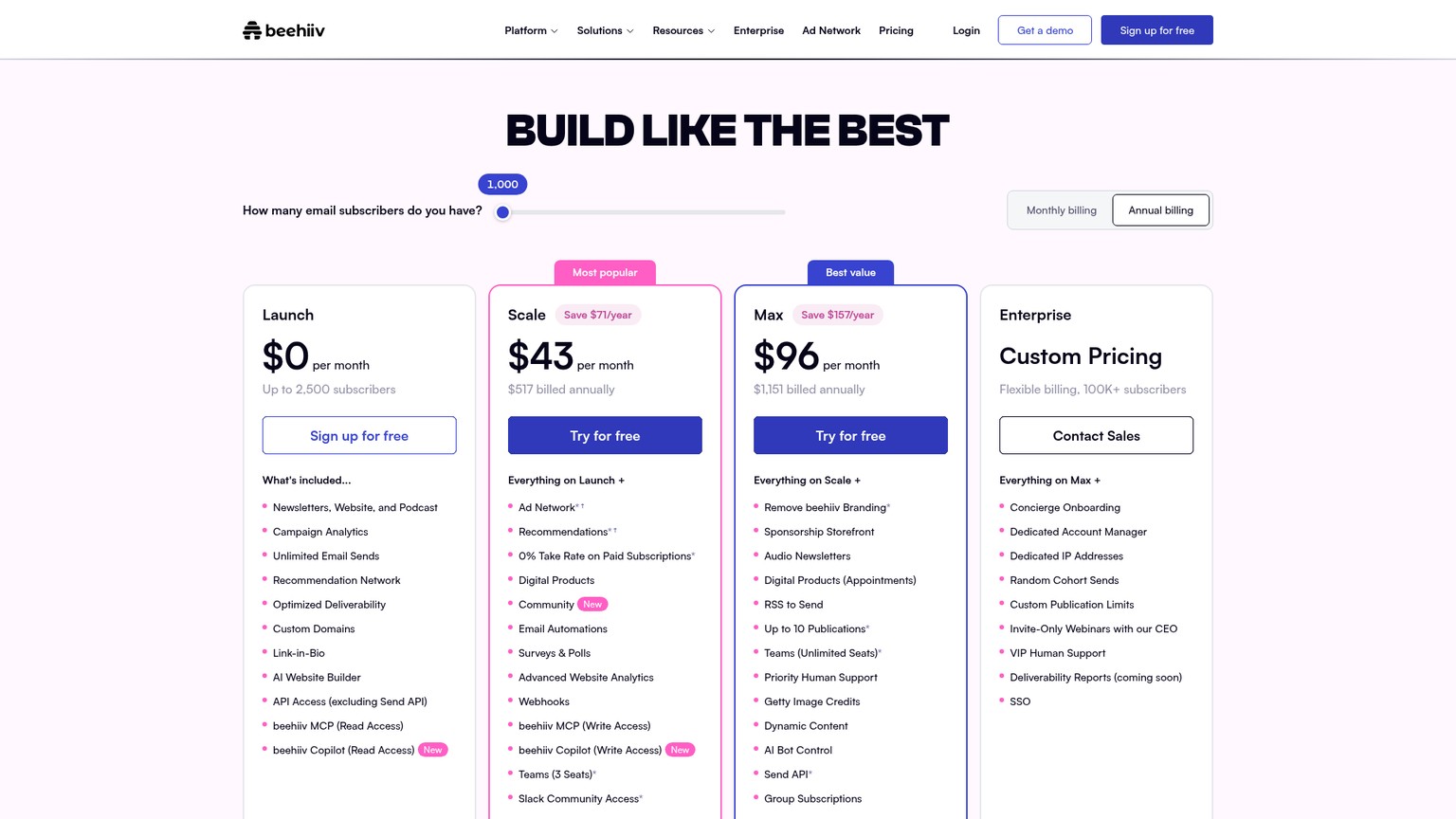
The extra spend can make sense when newsletter growth and monetization are the core operating job. beehiiv Scale includes its recommendation and ad-network ecosystem, while Kit Creator leans harder into tagging, sequences, and creator-product workflows. Choose beehiiv when acquiring and monetizing newsletter readers is the bottleneck. Choose Kit when the list feeds courses, services, products, or several tagged funnels.
beehiiv paid prices also scale with active subscribers and support up to 100,000 before Enterprise. Its $43 annual-equivalent entry is not a flat price for every list size.
MailerLite: materially cheaper automation for a conventional small business
MailerLite Comfort costs $19 monthly or $17.10 yearly at 1,000 subscribers. Power costs $39 monthly or $35.10 yearly and includes unlimited monthly emails and unlimited user seats.
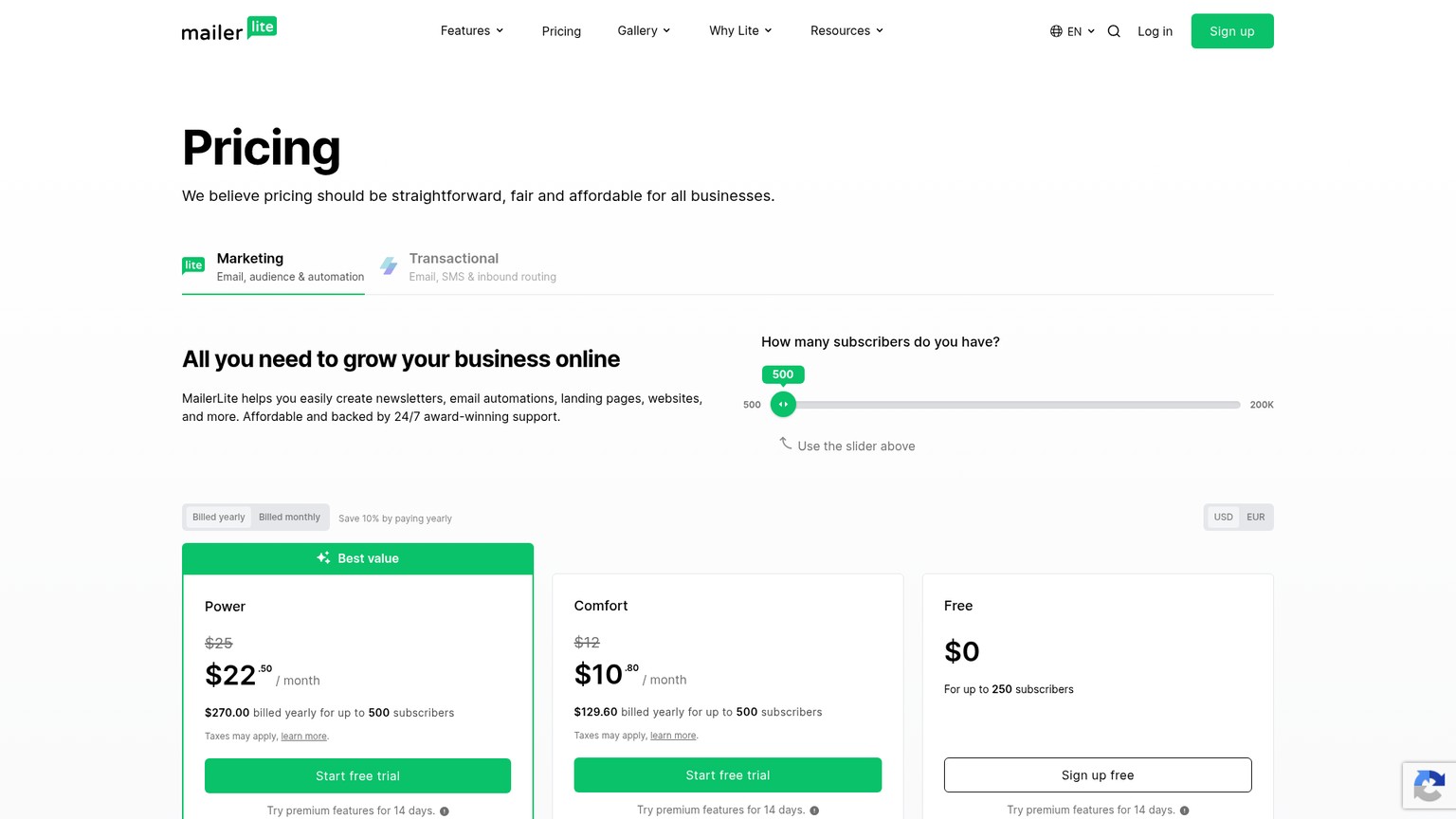
At 10,000 subscribers, MailerLite Comfort is $89 monthly and Power is $129. Kit Creator is $139 at that same count. A local-services business sending four newsletters and a few appointment follow-ups can save $50 per month with Comfort, provided its 100,000-email monthly allowance and automation limits are enough.
The annual comparison is tighter at the higher plan. MailerLite Power costs $1,393.20 per year at 10,000 subscribers, while Kit Creator costs $1,390. The invoices are nearly identical, so the feature fit decides: choose MailerLite Power for unlimited seats and a conventional marketing stack, or Kit Creator for Creator Network access and creator-first product funnels.
Substack: zero subscription cost, then a revenue percentage
Substack charges no publishing subscription regardless of subscriber count. The cost appears when a publication turns on paid subscriptions: Substack takes 10%, while Stripe charges 2.9% plus $0.30 per card payment and a 0.7% recurring-billing fee.
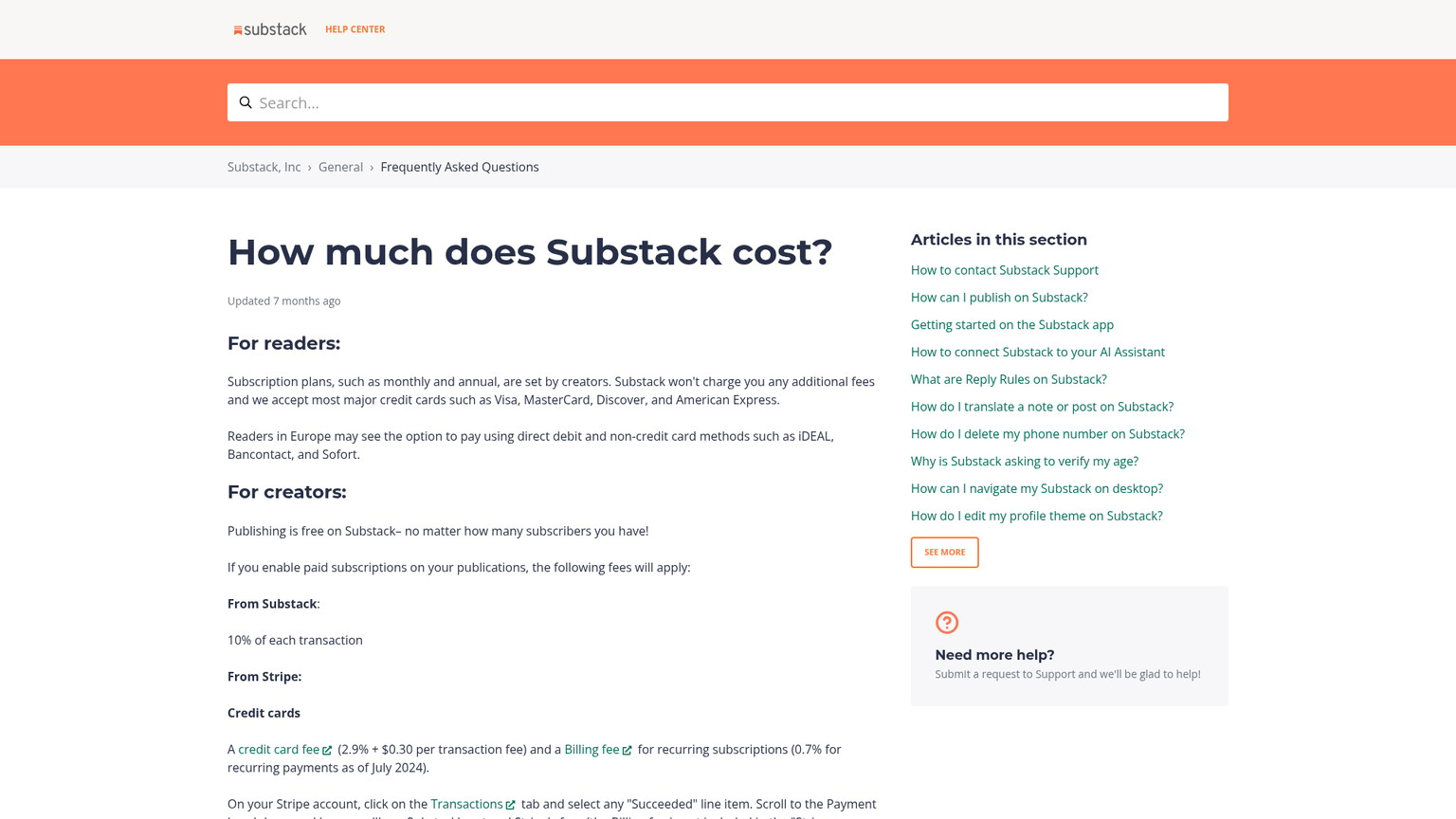
Kit commerce costs 3.5% plus $0.30 instead. Ignoring differences in transaction mix, the percentage gap is 10.1 points. At roughly $1,376.24 in monthly paid-subscription revenue, that fee difference reaches $139, equal to Kit Creator at 10,000 subscribers. Below that revenue, Substack's lack of a fixed software bill can be attractive. Above it, Kit's lower transaction percentage can outweigh the subscription.
That arithmetic does not price Substack's discovery network or community surface. Use Substack when the publication itself is the product and its network is a primary acquisition channel. Use Kit when email is an owned operating system for several offers. The broader email marketing software comparison covers the category beyond these three price models.
The explicit decision rule is simple: Kit for creator funnels and a generous free list, beehiiv for newsletter growth, MailerLite for low-cost conventional automation, and Substack for a publication that prefers revenue share to fixed software cost.
Who should buy Kit and who should skip it?
Kit is worth paying for when email runs a creator business, not merely a newsletter. A course creator with multiple offers can use Creator's tags, sequences, and unlimited automations to move one subscriber through different product journeys. A small publishing team can justify Pro when several people collaborate and referral growth is already budgeted.
Skip a paid Kit plan when Newsletter's one automation handles the job, when a local business can run the same lifecycle in MailerLite for less, or when a paid publication gets meaningful acquisition from Substack's network. Also delay the upgrade when a 10,000-plus list includes enough inactive contacts to return below the free cap after a responsible re-engagement and cleanup.
The adjacent Kit review and creator-economics analysis covers product fit beyond this current price card. Its older price references should not be used for a 2026 budget; the live figures in this page replace them.
- Newsletter supports up to 10,000 active subscribers, unlimited broadcasts, and one working automation for $0.
- Creator packages unlimited automations, sequences, integrations, RSS, and brand removal without a send meter.
- Annual billing is a clear 12 months for the price of 10.
- Pro can replace a separate referral-system bill and removes the two-user ceiling.
- The move from 10,000 free subscribers to 10,001 can create a $169 monthly Creator bill.
- Paid accounts upgrade subscriber bands automatically, while lower counts do not automatically lower the bill.
- Free Newsletter gives one managed Recommendation slot and its earnings to Kit.
- Commerce, Paid Recommendations, sponsorships, sales tax, and annual commitment sit outside the headline subscription.
The Monday move: price the next subscriber before the next campaign
Run this check next week before buying annual, launching a list-growth campaign, or approving a Kit renewal. The output should be one subscriber band, one plan requirement, and one revenue hurdle.
Count active subscribers
Use Kit's active confirmed count, then mark the next live threshold. Pay special attention to 10,000, where Newsletter ends, and to the cap on the current paid band.
Name the workflow floor
Write down how many automations, sequences, users, integrations, and referral features the next quarter genuinely needs. One basic flow points to Newsletter; unlimited workflows point to Creator; three-plus users or an active referral program can point to Pro.
Model the next growth event
Add the expected subscribers from a giveaway, launch, paid campaign, or recommendation swap. Price the post-campaign count, not today's count, and include any prorated paid-tier upgrade.
Add the non-subscription fees
Estimate sales tax, 3.5% plus $0.30 commerce costs, and 23.5% Recommendation or sponsorship fees where those revenue features apply.
Set the outcome hurdle
Divide the monthly total by contribution margin per sale. At 10,000 subscribers and $50 contribution margin, Creator needs three incremental sales and Pro needs four. Stay monthly until the workflow owns that result.
The budget sentence should read: "Kit will cost us X at Y active subscribers, and this workflow must create Z sales or save Z hours each month." If one variable is blank, do not prepay the year.
Frequently asked questions
Is Kit free?
Yes. Kit Newsletter costs $0 for up to 10,000 active, unique subscribers and includes unlimited sends, forms, landing pages, digital products, and subscriptions. It is limited to one basic Visual Automation with one email sequence and keeps one Kit-managed Recommendation slot enabled.
Who never needs to pay for Kit?
A solo creator can stay on Newsletter indefinitely while the list remains at or below 10,000 active subscribers and one basic automation, one sequence, Kit branding, and the managed Recommendation slot are acceptable. Revenue alone does not force an upgrade, although commerce transaction fees still apply.
What happens when Kit passes 10,000 subscribers?
A Newsletter user must upgrade to keep sending. At 10,001 subscribers, the current paid band covers up to 15,000 and costs $169 monthly for Creator or $249 for Pro.
Does Kit offer a student discount?
Kit did not advertise a student discount on its live pricing or billing pages when verified on August 11, 2026. Students can use Newsletter at $0 while they remain within its subscriber and workflow limits; ask Kit support before budgeting around any unpublished eligibility.
What is Kit's refund policy?
Kit offers a 30-day refund window on monthly and annual plans. It does not refund or prorate payments made more than 30 days before the request, and the pricing page says an approved refund can take 3 to 5 days to appear.
Does Kit have an annual discount?
Yes. Annual billing gives 12 months for the price of 10 and is paid upfront. At 1,000 subscribers, Creator costs $390 yearly instead of $468 across 12 monthly payments, while Pro costs $790 instead of $948.
Did Kit pricing change?
Yes. Kit says its 2025 update was its first price increase in 12 years. Existing customers moved to the new pricing on their first billing cycle after October 15, 2025, which is why older $29 Creator references are stale.
Does Kit charge for API use?
Kit includes API access on Newsletter, Creator, and Pro and does not publish a separate per-call price. Subscriber count, plan features, commerce fees, and any external infrastructure still determine the full operating cost.
Use the AI Business Workflow Audit Checklist to decide whether Kit deserves a paid line item.
- Last Updated
- Category
- Growth
- Language
Beehiiv Review
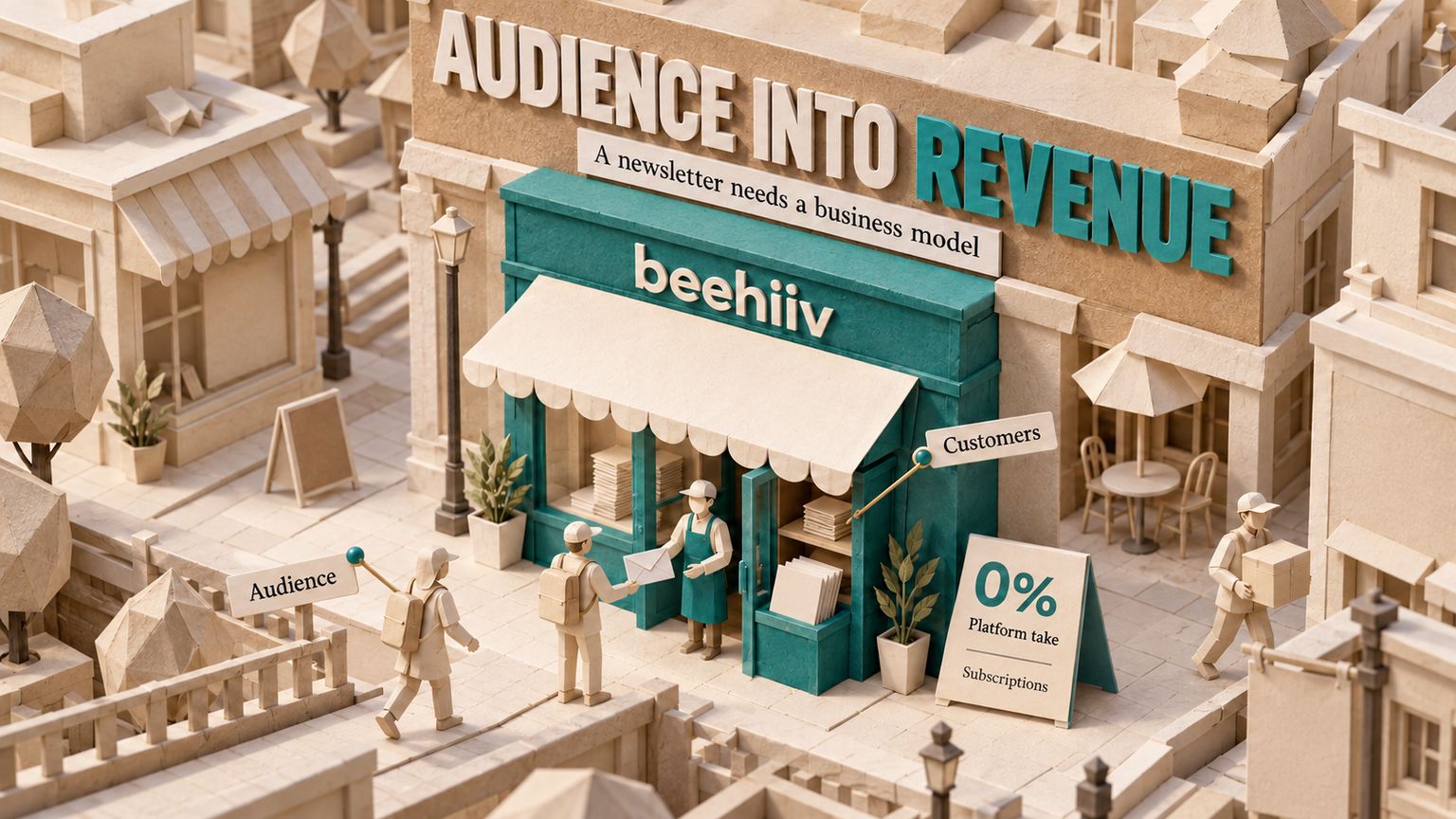
Beehiiv reviewed for business newsletters: current pricing, growth, monetization, AI, MCP, analytics and the costs that change the buying decision.Oct 10, 2026Growth
Trainual Review
Trainual review for SOPs and onboarding: AI drafting, knowledge search, read-only MCP, quote-only plans, implementation and who should skip it.Oct 10, 2026Growth
SocialBee Review
SocialBee review of evergreen scheduling, AI Copilot and client workspaces, with all six plans, add-on costs, and Buffer and Later comparisons.Oct 10, 2026Growth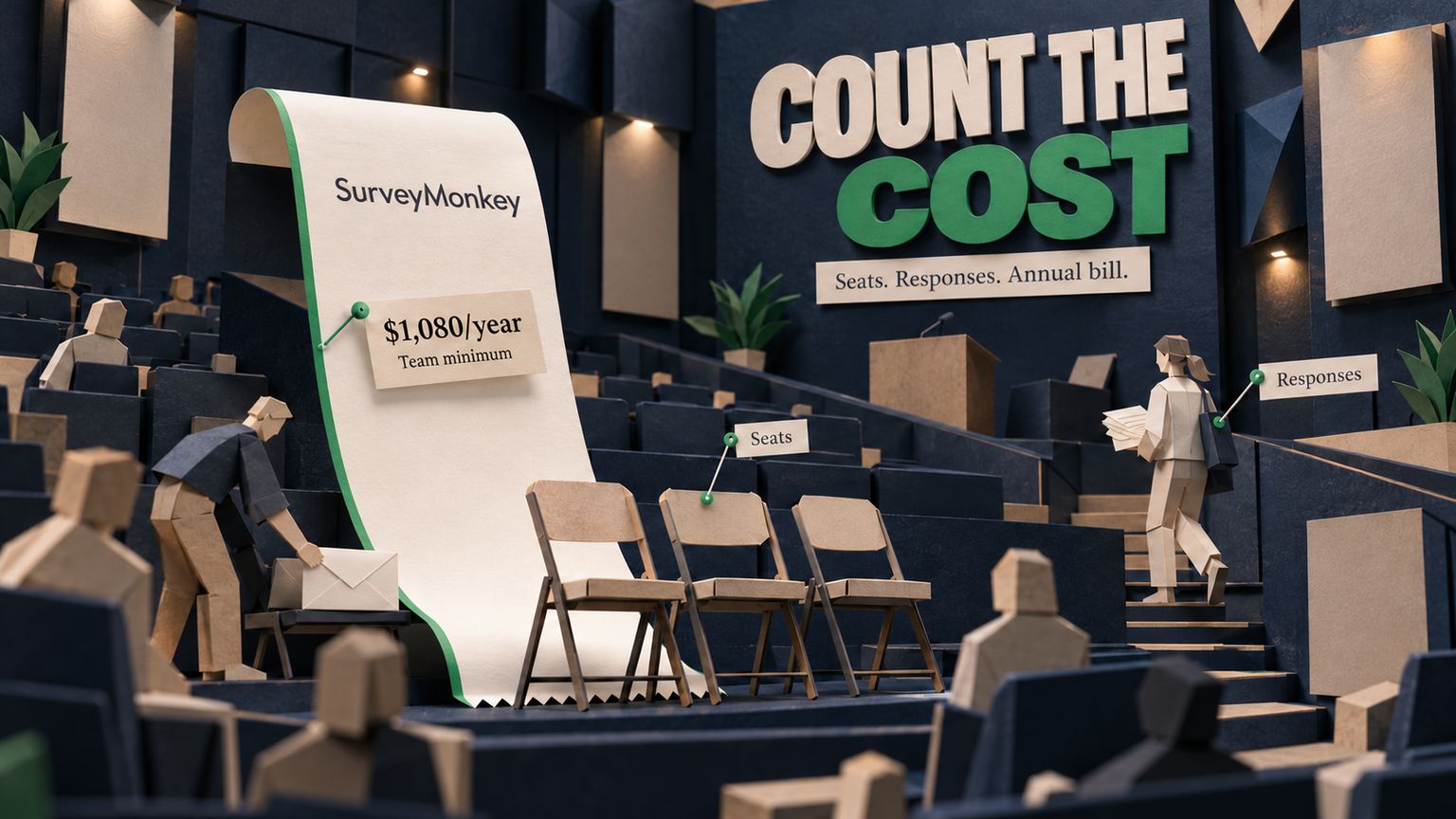
SurveyMonkey Pricing: Plans, Response Caps and Annual Bills
SurveyMonkey prices, response caps and AI limits, with annual bills for one person and three-seat teams. See when overages change the best plan.Oct 10, 2026Growth
ActiveCampaign Alternatives: GetResponse, Kit and More
Compare ActiveCampaign alternatives at 2,500, 10,000 and 25,000 contacts, with vendor prices, workflow trade-offs and a migration checklist.Oct 9, 2026Growth
CallRail Alternatives: WhatConverts and More Compared
Compare six CallRail alternatives by vendor pricing, usage fees, AI and reporting. Includes WhatConverts cost math and a pre-switch checklist.Oct 9, 2026Growth
Monday.com Pricing: Seat Buckets and the Yearly Bill
Calculate monday.com Work Management costs for 5, 12 and 40 people, including seat buckets, annual vs monthly billing and AI credit charges.Oct 9, 2026Growth