Muse Code Alternatives
Compare seven Muse Code alternatives by workflow, every live pricing tier, free access, team cost, and the wall each tool hits. Verified August 2026.
Published Updated
 By Omid Saffari






Muse Code is a beta with no separate public price on Meta's launch page. The cheapest credible paid replacement starts at $10 per month, while the closest terminal-to-terminal substitute costs $20 per month. If Monday's decision is about a budget you can approve, start with Claude Code for the closest fit, Codex for the broadest workflow, or GitHub Copilot for the lowest fixed paid seat.
Muse Code alternatives at a glance
The best Muse Code alternative depends less on which model wins a benchmark and more on where you want the agent to live. Claude Code is the cleanest swap for a terminal-first workflow. Codex makes more sense when local work, cloud tasks, code review, and mobile access need to share one system. GitHub Copilot is the cost pick when GitHub is already the center of the development process.
Prices below were verified against live vendor pages on August 10, 2026. A free plan is not the same as a paid-plan trial, and a $0 software shell can still incur model charges.
The ranking is deliberately practical:
- Claude Code is the nearest workflow match and the top overall pick.
- OpenAI Codex wins when one coding agent needs to span more than the terminal.
- GitHub Copilot is the lowest-cost paid option and the easiest organizational fit for GitHub-heavy teams.
- Cursor is the better choice when the editor, not the shell, is the daily command center.
- Antigravity CLI is the current free Google route, replacing the stale consumer Gemini CLI recommendation.
- Aider is the flexible open-source option for people comfortable managing model access.
- T3 Code is a useful orchestration layer, but it is not a model subscription.
What you are replacing when you leave Muse Code
Muse Code is more than a command-line chat box. Meta describes the beta as a terminal coding agent powered by Muse Spark 1.2 that can plan a change, write code, and validate the result across a large repository. Its persistent background agents stay active through the session instead of being created for one small task at a time. A local event log records model calls, tools, approvals, and edits so a failed run can resume from the same state.
Muse Code also bundles three unusually clear controls: /plan creates an approval-gated plan, /grill challenges that plan, and /goal keeps the agent working toward a defined outcome. Meta's most ambitious published example ran for more than 1,000 tool calls over as long as 24 hours, although that is Meta's own kernel-optimization case study rather than an independent product comparison.
Muse Code is a beta, and that status creates two procurement gaps. Meta's public install instruction names macOS and Linux, with no native Windows path on the launch page. More importantly, the same page publishes no separate Muse Code tier, monthly price, included quota, or overage rate. A founder can explore that beta; a ten-person engineering manager cannot turn an unnamed future price into an approved annual line item.
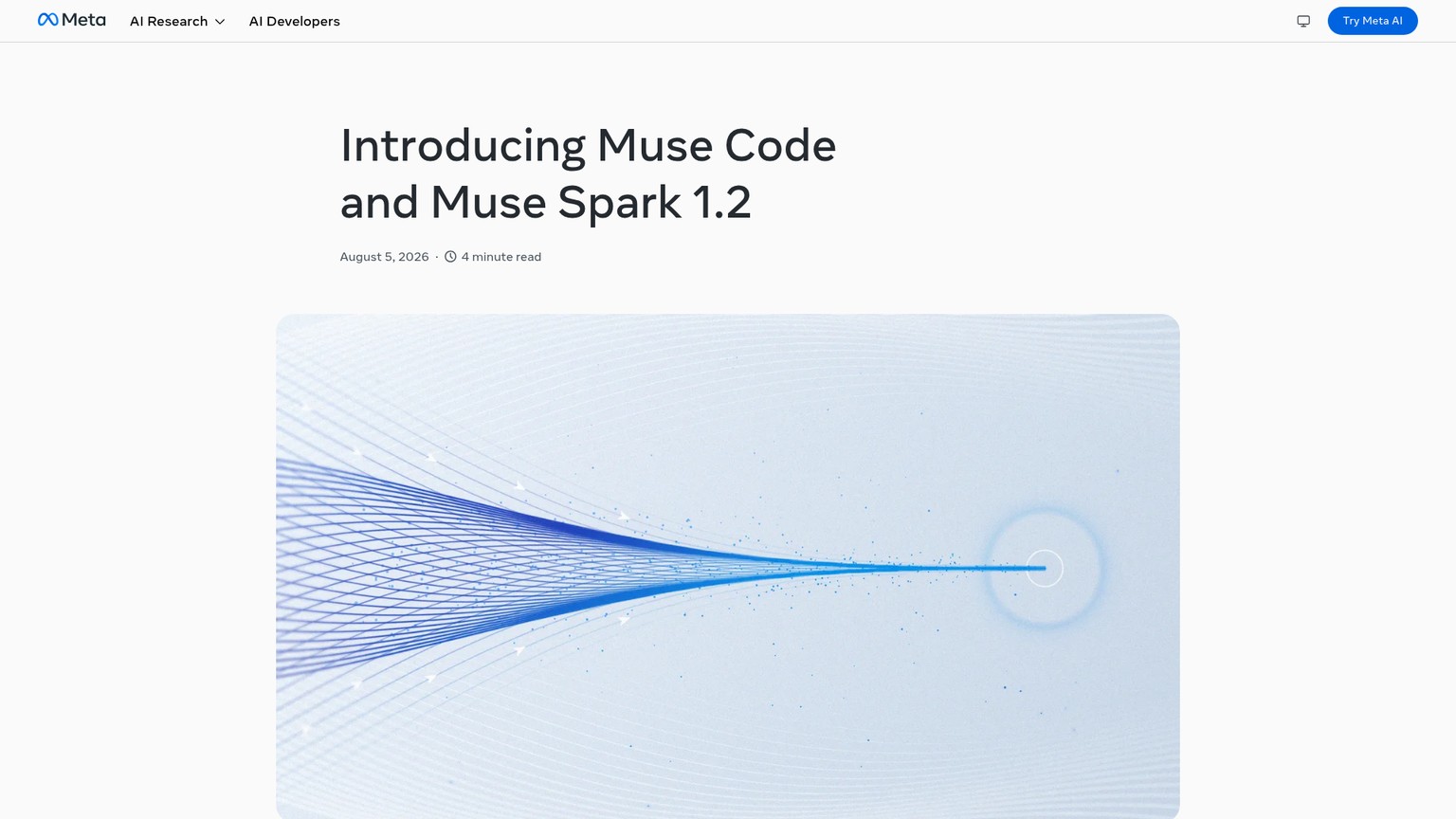
The Muse Code setup guide explains the new agent on its own terms. For an alternatives decision, preserve four things from that baseline: terminal flow, a visible approval boundary, recovery after a failed long task, and a price you can defend before the tool becomes habitual.
That last requirement changes the ranking. A free beta can be inexpensive today and expensive to unwind later if its eventual commercial plan, operating-system support, or team controls do not fit. The best replacement is the one whose workflow and ceiling are legible now.
1. Claude Code: best direct terminal replacement
Claude Code is the closest direct Muse Code alternative because the terminal remains the primary workspace, while web, desktop, IDE, Slack, and CI surfaces are available when the task needs to travel. It also has documented native installation paths for macOS, Linux, WSL, Windows PowerShell, Windows CMD, and WinGet. That makes it the easiest answer for a Windows-first developer who cannot use Meta's published Muse Code install path.
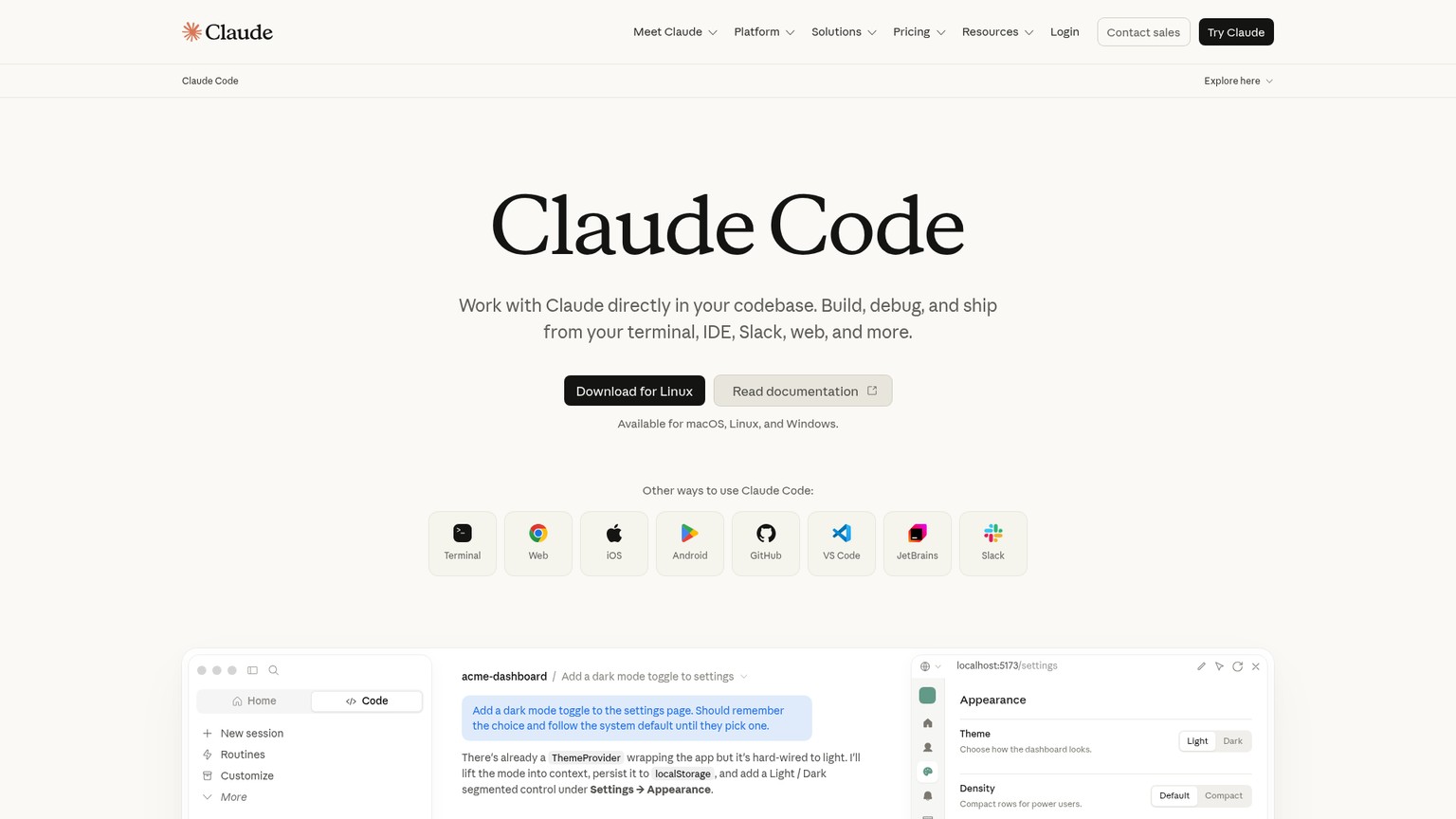
The fit is strongest for a senior builder who wants to open a repository, discuss a change, inspect the proposed work, and keep Git close. Claude Code can also move into VS Code or JetBrains, but it does not force an editor migration. The wall is commercial rather than conceptual: Claude Code requires Pro, Max, Team, Enterprise, Claude Console, or a supported cloud provider. Claude's $0 consumer tier does not include Claude Code.
Anthropic's complete live subscription ladder is:
- Free: $0, without Claude Code.
- Pro: $20 monthly or $200 billed annually, shown as $17 per month after the annual discount.
- Max 5x: $100 monthly.
- Max 20x: $200 monthly.
- Team Standard: $20 per seat per month billed annually, or $25 monthly.
- Team Premium: $100 per seat per month billed annually, or $125 monthly.
- Enterprise: sales-assisted, with no public fixed price.
Those are subscription entry prices, not an unlimited-use promise. Anthropic applies usage limits and lets paid-plan customers continue with usage credits at standard API rates. The practical consequence is simple: Pro is a sensible pilot budget, but a long-running agent workload needs usage monitoring before a company standardizes on it.
Best for: A terminal-first replacement with native Windows, macOS, and Linux support
Standout: The closest surface match to Muse Code, with additional IDE, web, Slack, and CI paths
Pricing: Pro $20 monthly or $200 annually; Max $100 or $200 monthly; Team $20/$25 Standard or $100/$125 Premium per seat; Enterprise custom
Free trial: No advertised Claude Code trial
- Native terminal workflow without an editor migration
- Documented install paths for Windows, macOS, Linux, and WSL
- The same product can extend into web, desktop, VS Code, JetBrains, Slack, and CI
- The $200 annual Pro option gives a single builder a lower effective monthly price than the other $20 individual plans
- No $0 Claude Code tier
- Subscription limits can turn into usage-credit spend on sustained workloads
- Team Premium jumps from $20 to $100 per seat per month on annual billing
A clean one-repository Claude Code pilot
Choose the smallest honest plan
Use Pro for one builder, Team Standard when central administration is required, or a Console account when the work must be metered as API usage. Do not buy Max before a Pro pilot shows that its included usage is the limiting factor.
Install on the developer's actual operating system
On macOS, Linux, or WSL, Anthropic documents
curl -fsSL https://claude.ai/install.sh | bash. On Windows PowerShell, it documentsirm https://claude.ai/install.ps1 | iex.Start inside one representative repository
Change into the repository, run
claude, and begin with a bounded issue whose acceptance criteria already exist. A good pilot has tests, a reviewable diff, and a clear stop condition.Review the workflow, not just the final code
Record how often the agent needed steering, whether approvals were understandable, whether tests exposed mistakes, and whether the final diff was easy to review. Those signals predict operating cost better than one impressive completion.
2. OpenAI Codex: best blended local and cloud workflow
OpenAI Codex is the strongest alternative when "coding agent" means more than a terminal session. On Plus, Codex spans the web, CLI, IDE extension, iOS, cloud integrations, automated code review, and Slack. A builder can start locally, delegate a cloud task, and review work without requiring every job to stay attached to one shell.
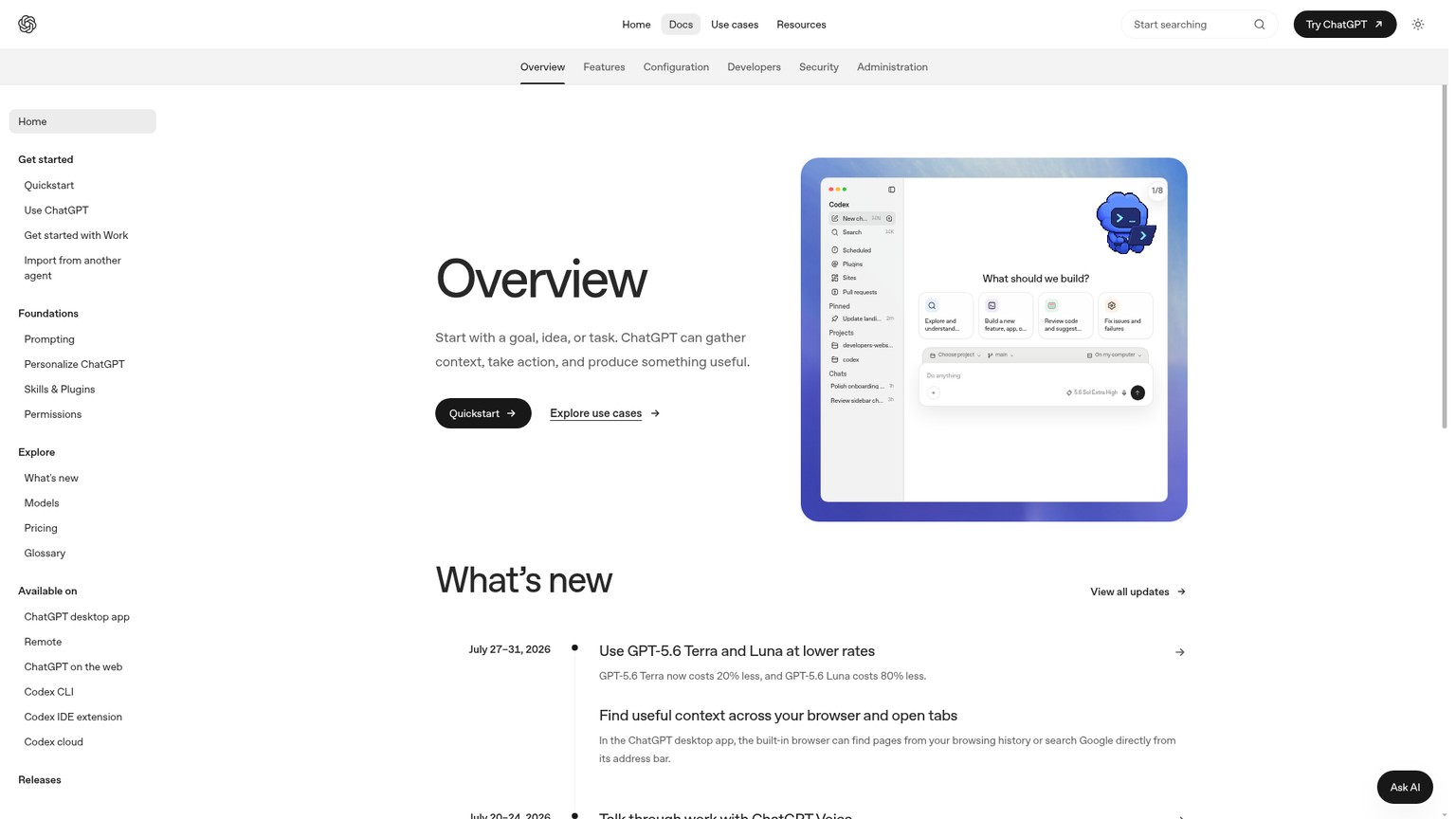
That surface breadth is the differentiator. Muse Code's restart-safe terminal runtime is attractive for one long task; Codex is a better organizational choice when the task queue and review loop matter as much as the interactive session. It is also the only top-two pick with a hosted $0 entry plan.
The complete current Codex plan ladder is:
- Free: $0 for quick coding tasks.
- Go: $8 monthly for lightweight coding tasks.
- Plus: $20 monthly, including web, CLI, IDE, iOS, cloud code review, Slack, and the GPT-5.6 model family.
- Pro 5x: $100 monthly.
- Pro 20x: $200 monthly.
- Business: $20 per user per month billed annually for two or more users, or $25 monthly.
- Enterprise and Edu: contact sales.
- API key: usage-based access in CLI, SDK, and IDE, without Codex cloud features.
The wall is metering. OpenAI moved most Codex plans to token-based credits on April 2, 2026. Its current rate card says a typical GPT-5.6 Sol task may use 5 to 40 credits, and OpenAI's own planning guidance puts average Codex cost around $100 to $200 per developer per month with wide variation from models, parallel instances, automation, and fast mode. Plus still makes sense as the starting line, but it is not a reliable heavy-use ceiling.
Best for: Builders and teams that need local work, cloud delegation, review, and mobile access
Standout: The broadest first-party set of coding-agent surfaces in this list
Pricing: Free $0; Go $8; Plus $20; Pro $100 or $200; Business $20 annual/$25 monthly per user; Enterprise/Edu custom; API usage-based
Free trial: A permanent Free plan
- $0 hosted entry plan and an $8 intermediate plan
- Local CLI, IDE, cloud, code-review, Slack, web, and iOS workflows under one product
- Business price matches Claude Team Standard on annual billing
- API-key mode gives automation buyers a separately metered route
- Credit consumption varies with tokens, reasoning, model, automation, and parallel work
- The API-key route omits cloud features
- Heavy use can move far beyond the $20 Plus sticker price
The deeper Codex, Claude Code, and Cursor comparison is useful when the shortlist has already narrowed to those three. For this decision, Codex wins whenever a pull-request queue or remote task matters more than terminal purity.
3. GitHub Copilot: lowest predictable paid seat
GitHub Copilot is the price leader for a paid individual plan and the most natural Muse Code alternative for a team whose issues, repositories, reviews, and policies already live in GitHub. Copilot Pro is $10 per month, half the monthly entry price of Claude Code, Codex Plus, Cursor Pro, or Google AI Pro.
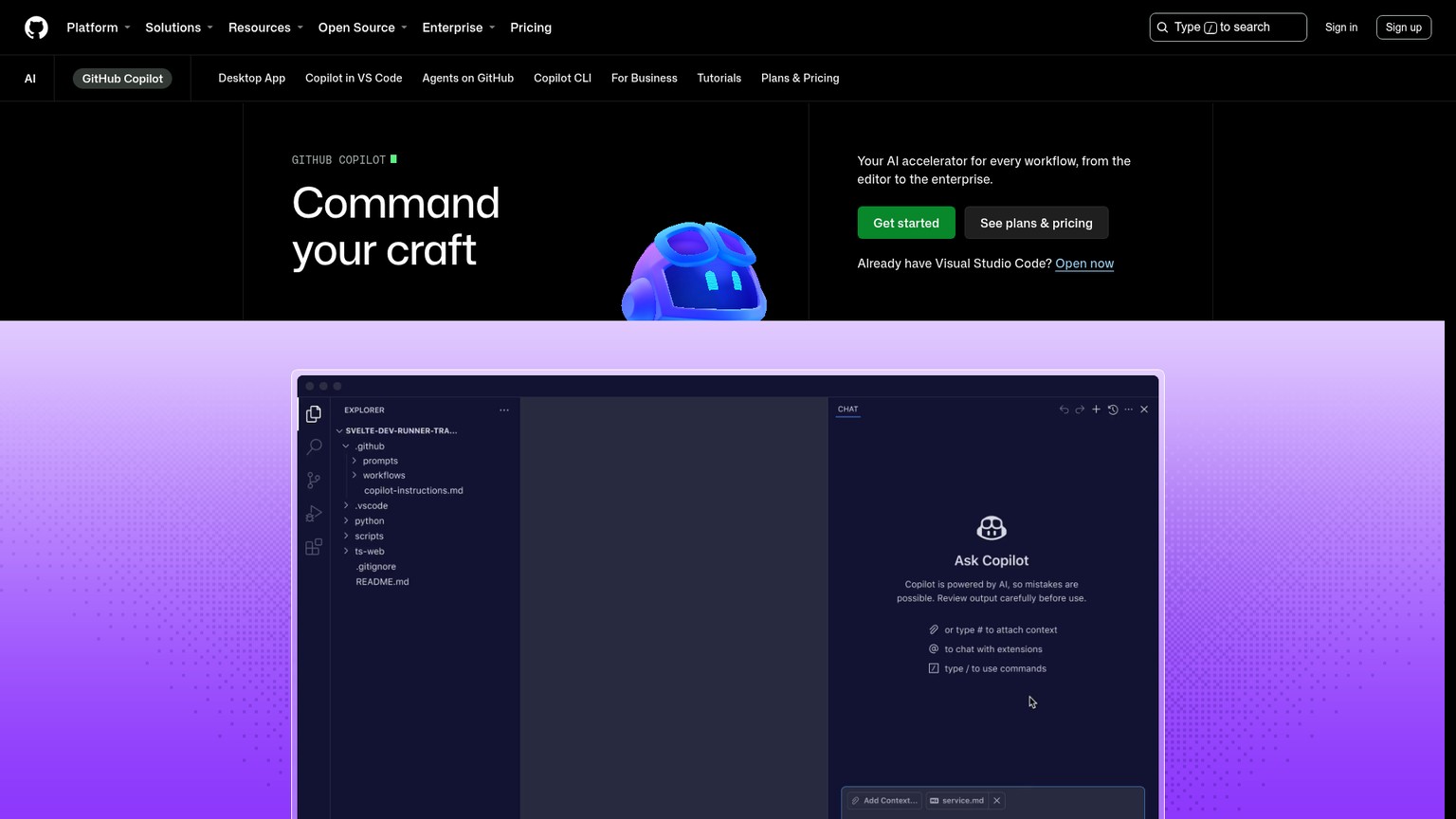
The product is no longer limited to inline completions. The Free plan includes Copilot CLI, while Pro adds cloud agent, code review, model selection, third-party Claude Code and Codex access, unlimited paid-plan code completions, and $15 in monthly AI credits. GitHub also supports a wide spread of surfaces, including GitHub itself, VS Code, Visual Studio, Xcode, JetBrains IDEs, Neovim, Eclipse, Raycast, SQL Server Management Studio, and Zed.
Every current Copilot tier is:
- Free: $0, with 2,000 completions per month and Copilot CLI.
- Student: free for eligible students.
- Pro: $10 monthly.
- Pro Plus: $39 monthly.
- Max: $100 monthly.
- Business: $19 per granted seat per month.
- Enterprise: $39 per granted seat per month.
The named wall is AI credits. Agent mode, chat, code review, the cloud agent, CLI, and apps draw credits, while code completions remain unlimited on paid plans. Pro includes $15 of credits, Pro Plus includes $70, and Max includes $200. Extra use is charged at $0.01 per credit, so an agent-heavy workflow can exceed the seat price even when completions remain unlimited.
Best for: GitHub-centered teams and cost-conscious individual developers
Standout: The lowest fixed paid seat, with CLI, agent, review, and repository workflow together
Pricing: Free $0; Student free; Pro $10; Pro Plus $39; Max $100; Business $19/seat; Enterprise $39/seat
Free trial: A permanent Free plan
- Lowest paid individual entry at $10 per month
- Lowest standard team seat in this comparison at $19 per month
- Native fit with GitHub issues, repositories, reviews, and policies
- Free tier includes both completions and Copilot CLI
- Agent, review, chat, and CLI usage draw AI credits
- The $10 seat is not a hard ceiling once paid usage is enabled
- The strongest value assumes GitHub is already the team's system of record
4. Cursor: best editor-first alternative
Cursor is the Muse Code alternative for people who want the agent inside the editor rather than beside it. Agent, Cloud Agents, unlimited tab completions on paid individual plans, Bugbot, and access to multiple model providers make it a fuller coding workspace than a terminal-only agent.
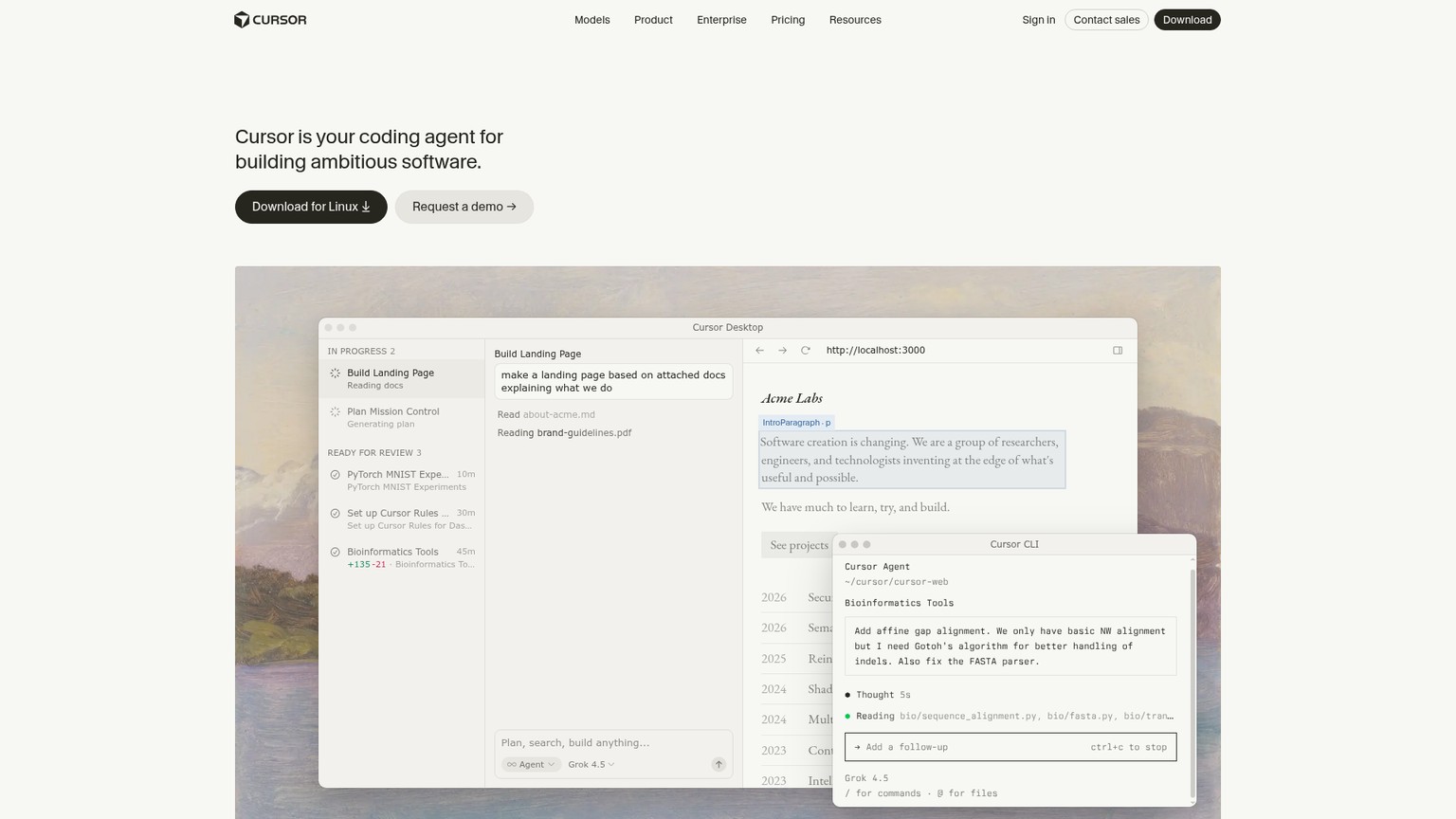
That convenience comes with a different switching cost. Adopting Cursor means adopting the editor as part of the workflow. For someone who lives in shell tools and an existing editor setup, Claude Code or Aider asks for less change. For a founder who wants code navigation, inline editing, model access, and cloud work gathered in one place, Cursor can remove more context switching than Muse Code.
Cursor's complete current ladder is:
- Hobby: free, no card required, with limited Agent requests.
- Start: INR 649 per month including tax, available only in India.
- Pro: $20 monthly, including $20 of third-party model usage.
- Pro Plus: $60 monthly, including $70 of third-party model usage.
- Ultra: $200 monthly, including $400 of third-party model usage.
- Teams Standard: $40 per user per month.
- Teams Premium: $120 per user per month, with 5x the Standard Agent limits.
- Enterprise: custom pricing.
The wall is visible in Cursor's own usage guidance. It says limited Agent users often stay within the $20 included amount, but daily Agent users typically spend $60 to $100 per month and power users running multiple agents or automations often spend $200 or more. The $20 Pro card is a valid starting point; it is not the likely steady-state budget for a daily autonomous workflow.
Best for: Developers who want the coding agent embedded in a full editor
Standout: Editor, Agent, Cloud Agents, tab completion, and model pools in one surface
Pricing: Hobby $0; Start INR 649 in India; Pro $20; Pro Plus $60; Ultra $200; Teams $40/$120 per user; Enterprise custom
Free trial: A permanent Hobby plan; no paid trial advertised
- Free Hobby route without a credit card
- Paid individual tiers combine editor features, Agent, Cloud Agents, Bugbot, and model usage
- Clear upgrade path from a limited agent to daily and power-user tiers
- Multiple model providers reduce dependence on one model family
- Requires an editor migration to get the main benefit
- Cursor's own guidance puts daily Agent use above the $20 Pro sticker
- Teams Standard at $40 per seat costs more than twice Copilot Business
5. Antigravity CLI: best free multi-agent alternative
Antigravity CLI is now Google's current terminal-first agent for individual developers, and its $0 plan is the most generous-looking hosted entry in this shortlist. The CLI can run concurrent subagents, expose them through an /agents panel, configure permissions, and connect plugins, MCP servers, skills, and hooks. That makes it much closer to Muse Code's persistent-agent ambition than the old autocomplete view of Google coding tools.
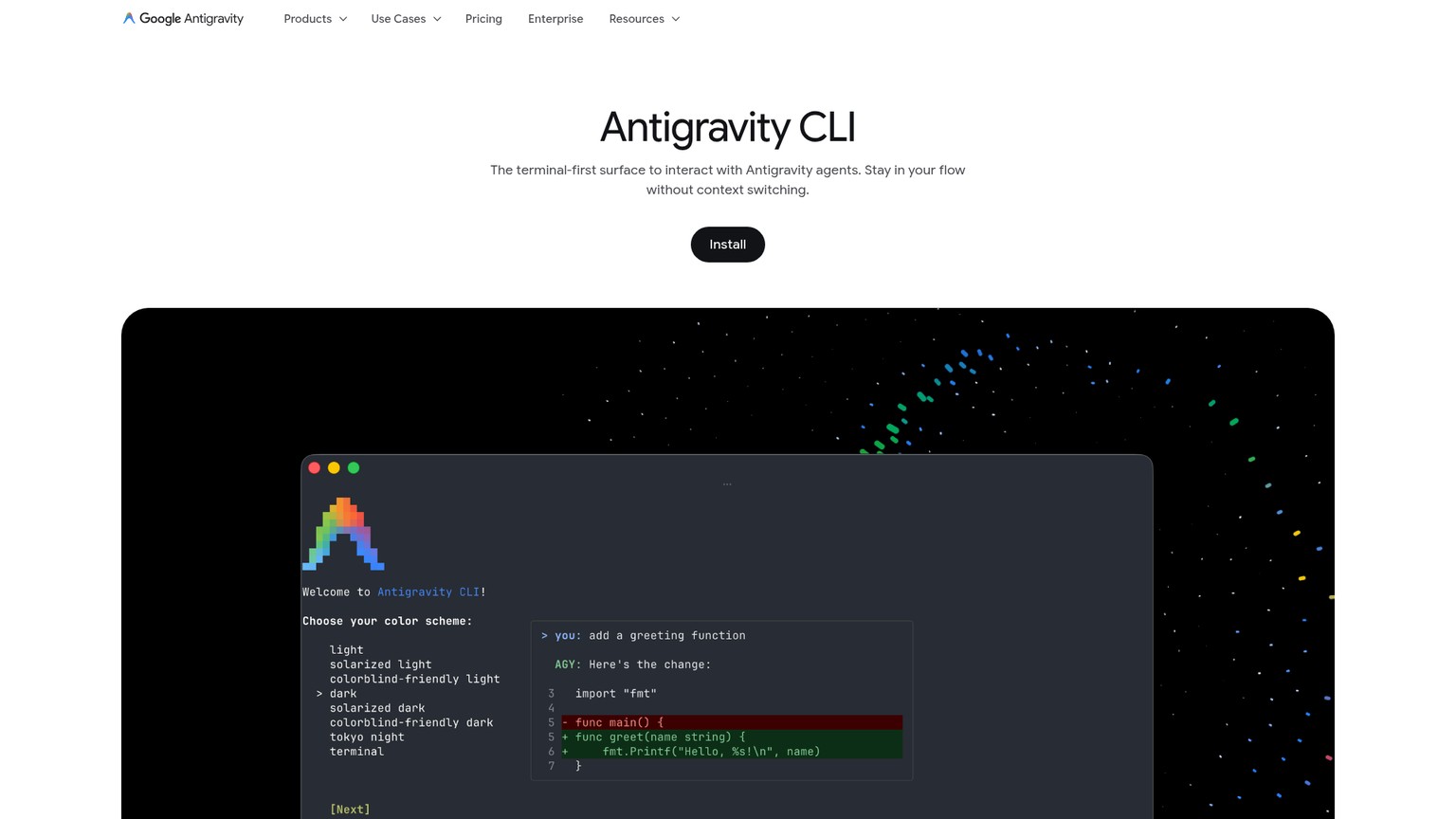
The current distinction matters. Google's release notes say that, starting June 18, 2026, Gemini Code Assist IDE Extensions and Gemini CLI stopped serving requests for individual, Google AI Pro, and Google AI Ultra tiers. Google directs those affected users to Antigravity and Antigravity CLI. Gemini CLI continues to appear in alternatives lists, but it is no longer the correct consumer-plan recommendation.
Antigravity's complete current plan ladder is:
- Individual: $0 monthly, with unlimited tab completions, unlimited command requests, and basic weekly rate limits.
- Google AI Pro: $20 monthly.
- Google AI Ultra 5x: $100 monthly.
- Google AI Ultra 20x: $200 monthly.
- Organization: available through Google Cloud with consumption-based API pricing.
The free plan is a meaningful pilot, not proof that sustained work has no cost. It carries weekly rate limits, while paid tiers increase capacity and the organization route becomes consumption-based. Antigravity is the right zero-dollar first test when a builder wants terminal subagents without supplying an API key. It is a weaker procurement answer than Copilot, Claude, or Codex when centralized per-seat pricing is the priority.
Best for: A free hosted multi-agent terminal pilot in the Google ecosystem
Standout: Concurrent subagents and configurable agent controls on a $0 individual plan
Pricing: Individual $0; Google AI Pro $20; Ultra 5x $100; Ultra 20x $200; Organization usage-based
Free trial: A permanent Individual plan
- $0 hosted individual plan with command requests and tab completions
- Concurrent subagents and a terminal monitor
- Plugins, MCP, skills, hooks, and permission configuration
- A current migration path for former consumer Gemini CLI users
- Free access has weekly rate limits
- Organization pricing is consumption-based rather than a simple public seat price
- A June platform migration makes old setup advice easy to misapply
6. Aider: best open-source terminal shell
Aider is the most flexible open-source Muse Code alternative in the terminal. The application is available under the Apache 2.0 license, works inside a local Git repository, builds a repository map for context, and can connect to OpenAI, Anthropic, Gemini, DeepSeek, Ollama, OpenRouter, GitHub Copilot, cloud platforms, and other OpenAI-compatible APIs.
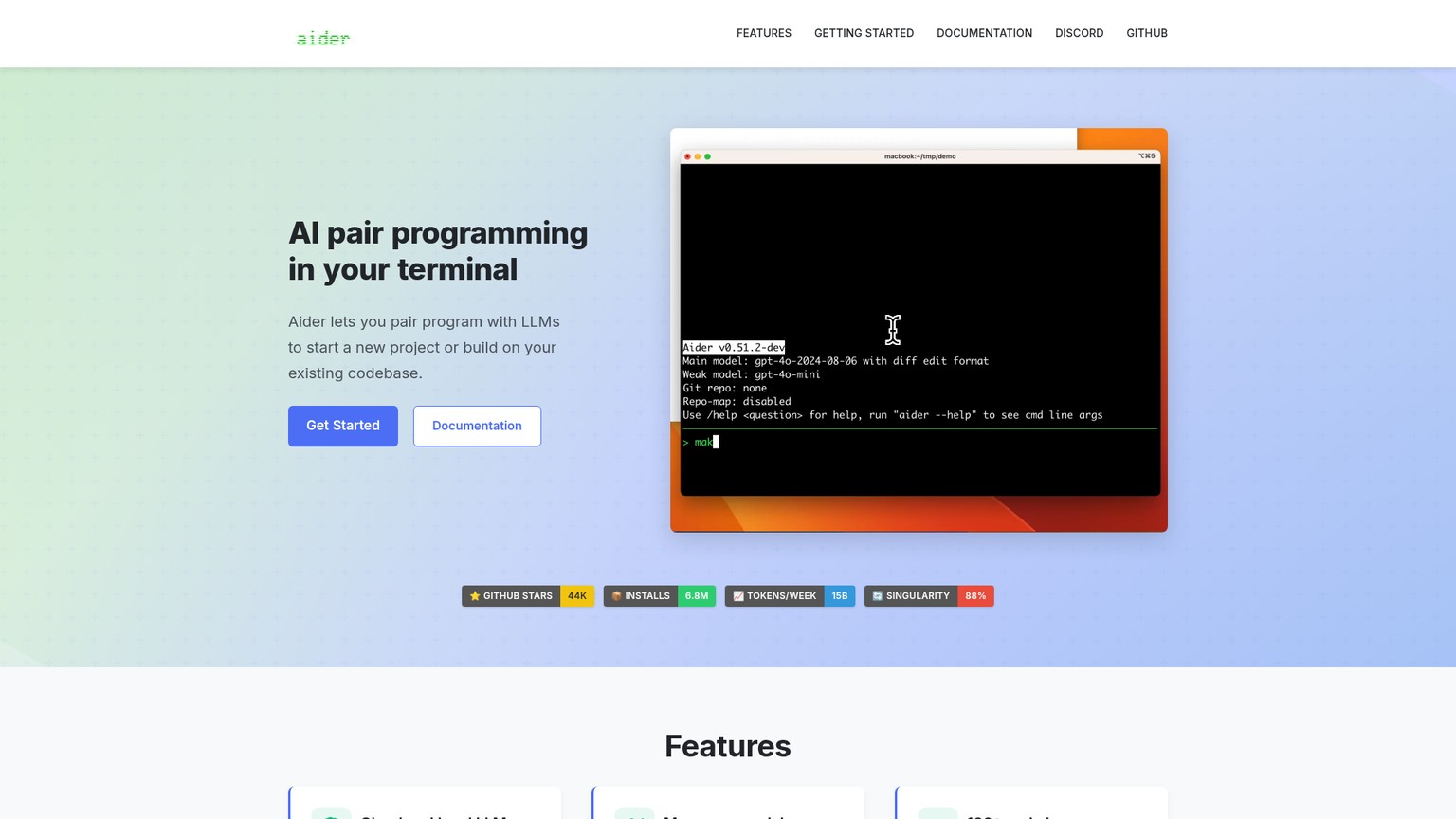
The appeal is control. Aider can automatically work with Git changes, run linting and tests, and respond through an editor file-watching workflow as well as the terminal. A builder can keep the shell and model provider separate, including a local-model route through Ollama. That separation is useful when portability matters more than a polished hosted control plane.
It also creates the wall. Aider's $0 price covers the software, not the intelligence behind it. You supply a local model, API key, GitHub Copilot access, or another provider. The monthly bill can therefore be $0 for the shell and still be substantial for the workload. There is no single Aider tier to approve and no included quota that makes providers directly comparable.
Best for: Builders who want an open-source terminal workflow and control over model access
Standout: Apache-licensed shell with broad provider support, Git integration, repository mapping, linting, and tests
Pricing: $0 software; local compute, API, or provider subscription charged separately
Free trial: Not needed; the application is free
- Free and open source under Apache 2.0
- Works with many hosted providers and local models
- Tight Git, repository-map, lint, and test workflow
- Does not force an editor or model-provider migration
- No hosted model usage is included
- Provider setup and spend control remain the user's responsibility
- The operating experience is less unified than a first-party agent subscription
7. T3 Code: best control plane for subscriptions you already own
T3 Code is the best choice when the problem is agent sprawl rather than model access. It is a free, MIT-licensed control plane that connects Claude Code, Codex, OpenCode, Cursor, and Grok in one surface. T3 Code does not resell tokens or create a new quota; it uses credentials and subscriptions you already hold.
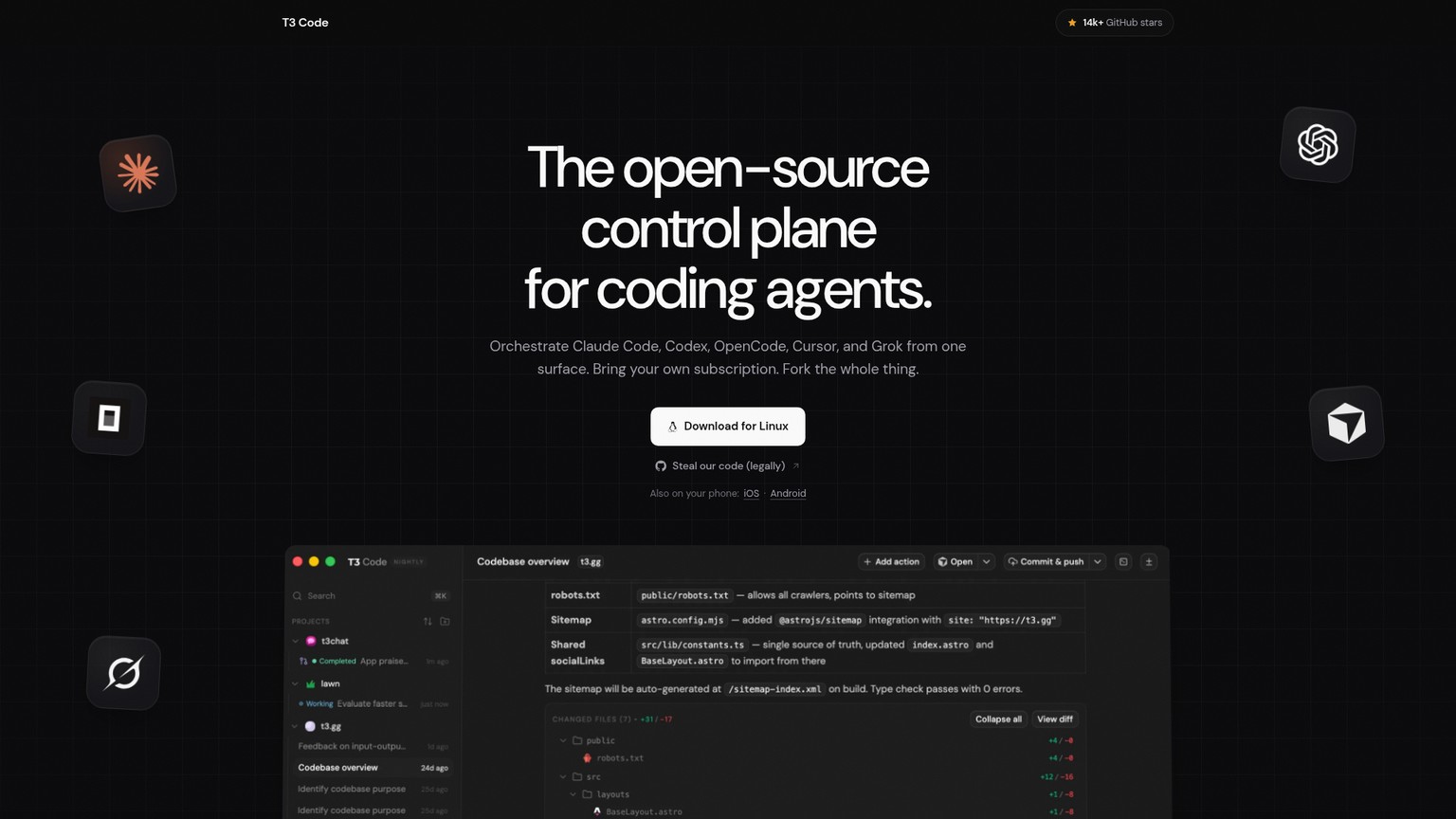
That distinction keeps the ranking honest. T3 Code is not a cheaper Claude Code or Codex model. It is an interface above those systems. Its useful workflow features include switching models during a thread, writing each agent thread to its own branch, reviewing a diff, and committing, pushing, and opening a pull request from the control plane. Linux, Windows, iOS, and Android routes are published.
For an individual already paying for Codex and Claude Code, T3 Code can reduce the friction of juggling their interfaces at no additional software price. For a new buyer with no harness subscription, its starting budget is not $0. It is the price of whichever underlying agent the buyer connects.
Best for: Developers who already own multiple coding-agent subscriptions
Standout: One free control surface for switching harnesses and moving an agent branch into a pull request
Pricing: $0 software; connected Claude Code, Codex, OpenCode, Cursor, or Grok access charged separately
Free trial: Not needed; the application is free
- Free and open source under the MIT license
- Connects several established coding-agent harnesses
- Model switching can happen within a thread
- Branch-per-thread and one-button pull-request workflow keep review visible
- Adds no model usage or quota of its own
- Requires at least one underlying subscription or credential
- Adds another orchestration layer that a single-agent user may not need
Who should pick what?
Start from the expensive part of the switch: the habit and review process the team must change.
Pick Claude Code when the terminal is non-negotiable, native Windows support matters, and one agent should remain close to the repository. It is the cleanest Muse Code replacement because the interaction model changes least.
Pick Codex when work needs to move. A local CLI, cloud task, pull-request review, Slack handoff, web session, and iOS check can belong to the same product. That breadth is worth more than terminal purity for a distributed team.
Pick GitHub Copilot when the budget owner wants the smallest paid seat and GitHub already holds the work. The choice flips away from Copilot when agent-credit consumption, not code completion, is the dominant workload.
Pick Cursor when the editor is the product. Its advantage disappears for someone unwilling to migrate daily editing habits, and it grows for someone who wants Agent, code navigation, inline changes, and cloud work in one environment.
Pick Antigravity CLI for a $0 hosted multi-agent pilot. Choose it over Aider when you want Google to host the model access; choose Aider when provider portability or local models matter more.
Pick T3 Code only after at least one underlying harness already earns its place. It is the answer to "how do I manage these agents?", not "which model access should I buy?"
The choice flips on one explicit rule: buy the lowest tier that preserves the team's review path, then expand only after usage data shows the tier is the wall. A sophisticated agent with an unclear diff and an unbounded meter is worse for a business than a slightly less ambitious agent with a repeatable pull-request handoff.

The Monday move
Use one representative repository and two alternatives, not seven simultaneous trials. Give each the same bounded issue, acceptance criteria, tests, and permission boundary. Then record four signals:
- How much steering the task needed
- Whether the proposed changes and approvals were understandable
- Whether the tests exposed failure before review
- Whether the final diff was small enough to review with confidence
Run the first candidate on its smallest honest tier. Keep a fixed stop point for credits or API spend. At the end of the week, choose the workflow that produced the clearest reviewed change per dollar, not the one that generated the largest amount of code.
The ten-seat budget changes the ranking
Individual pricing can hide the organizational decision. Normalize the standard team plans across ten seats and 12 months, before overages:
- GitHub Copilot Business: $2,280
- Claude Team Standard, annual billing: $2,400
- Codex Business, annual billing: $2,400
- Cursor Teams Standard: $4,800
Copilot, Claude, and Codex land within $120 of one another for ten standard seats. Cursor costs $2,520 more than Copilot Business at that size. That premium can still make sense when the editor replaces enough separate workflow, but it should be justified as an editor-and-agent decision, not as equivalent seat pricing.

Antigravity does not belong in this seat comparison because its organization route is consumption-based through Google Cloud. Aider and T3 Code do not belong because their $0 shell price excludes the underlying model or harness. Mixing those with fixed seats would create a precise-looking comparison of different cost objects.
How these alternatives were picked
These tools were priced and analyzed against live product, pricing, documentation, and release pages. They were not subscribed to or run through a fabricated benchmark for this article. The ranking uses five criteria that affect a purchase after launch-week excitement fades:
- Workflow fit: terminal, editor, cloud, review, or control plane
- Current availability: a recommendation must work for the named buyer now
- Budget legibility: all public tiers, the included access, and the next cost wall
- Review control: a path from agent work to an inspectable change
- Distinct reason to choose it: each product must solve a decision the others do not
Seven alternatives made the cut because each has a current, documented role. Products were left out when they duplicated one of these workflows without a clearer price or buyer, required a narrow cloud stack that the query did not imply, or lacked enough current first-party detail to support a dependable recommendation.
This method favors evidence over adjectives. It also explains why a $0 tool can rank below a $20 tool: the unpaid shell may transfer setup, provider management, and variable spend back to the buyer.
The ones to avoid for this job
Consumer Gemini CLI
Avoid consumer Gemini CLI as the basis of a new individual rollout. Google says it stopped serving requests for the individual, Google AI Pro, and Google AI Ultra tiers on June 18, 2026 and directs affected users to Antigravity and Antigravity CLI. The enterprise and API story is separate, but an individual comparing Muse Code alternatives should use the current Antigravity path.
Cursor Pro Plus for light terminal-only work
Avoid Cursor Pro Plus at $60 per month when the work remains light and terminal-first. Cursor positions higher usage around daily Agent work, and its own guidance places daily Agent users at $60 to $100 per month. A light shell workflow belongs on Claude Pro, Codex Plus, Copilot Pro, Aider, or Cursor's lower tiers before it belongs on Pro Plus.
T3 Code without an underlying subscription
Avoid treating T3 Code as a $0 model substitute. It brings subscriptions together and adds no quota. A buyer with no Claude Code, Codex, OpenCode, Cursor, or Grok access still has to choose and fund one of those harnesses.
Muse Code for a Windows-first approved rollout, for now
Avoid making Muse Code the standard for a Windows-first team or a procurement process that requires a named annual ceiling. Meta's public launch instructions cover macOS and Linux, and the launch page does not publish a separate price or quota. The beta can still be explored where it fits; the organization-wide commitment should wait for those two gaps to close.
The broader Claude Code alternatives list covers more edge cases. For a Muse Code decision, these are the avoid rules that most directly protect the workflow and budget.
Frequently asked questions
How much does Muse Code cost?
Meta's Muse Code launch page does not publish a separate monthly price, tier, included quota, or overage rate as of August 10, 2026. That makes the beta hard to normalize against subscriptions with fixed public prices.
What are the best terminal AI coding agent alternatives to Muse Code?
Claude Code is the closest direct terminal replacement. Codex is better when the workflow must also include cloud tasks and review, Antigravity CLI is the strongest current free hosted route, and Aider is the best open-source shell for choosing your own provider.
What environments does Muse Code support?
Meta's public Muse Code install section names macOS and Linux. It does not publish a native Windows install path on the launch page. Claude Code has documented Windows, macOS, Linux, and WSL installation paths, while T3 Code publishes Windows and Linux downloads.
What are the best free Muse Code alternatives?
Codex Free and Antigravity Individual provide hosted entry plans at $0. Cursor Hobby and Copilot Free offer limited free access. Aider and T3 Code are free software, but Aider needs model access and T3 Code needs an existing coding-agent harness.
Download the AI business workflow audit checklist to turn this shortlist into a one-week coding-agent pilot.
- Last Updated
- Category
- Build
- Language

Firecrawl Pricing 2026: What Your Pages Cost
Firecrawl plans and credit packs verified October 2026. Calculate JSON extraction, failed pages and weekly crawl bills at your volume.Oct 9, 2026Build
Claude Code vs GitHub Copilot 2026
Claude Code vs GitHub Copilot: current plans, usage limits, models, team controls, one-seat and ten-seat costs, and when to use both.Oct 8, 2026Build
LangGraph vs CrewAI
Compare LangGraph and CrewAI on the same approval workflow, state, memory, MCP, observability and current hosted-platform prices.Oct 7, 2026Build
How to Build MCP Server
Build an order lookup MCP server with Python, test it in Inspector, connect Claude Code and Cursor, then add HTTP auth and hosting.Oct 7, 2026Build
Gumloop vs n8n (Verified October 2026)
Gumloop vs n8n: current pricing, credits vs executions, self-hosting and the same AI lead workflow, with a verdict for each builder.Oct 7, 2026Build
AI Agent Frameworks in 2026: LangGraph, CrewAI, OpenAI Agents SDK, Claude Agent SDK, Mastra and Google ADK (Compared)
Compare eight AI agent frameworks by language, state, MCP, approvals and current hosted prices. Pick the right runtime for production.Oct 7, 2026Build
Codex Cloud
Set up a reusable Codex Cloud environment, keep coding tasks running with your laptop off, steer from your phone, and choose cloud or local CLI.Oct 7, 2026Build