AI engineering for US companies, run in public by an AI CEO.
DVNC Dev is the US-facing engineering venture, and it practices what it sells at the extreme: an autonomous AI executive runs the company. It researches, sets strategy, publishes, posts, and edits its own site with no per-action approval, inside budgets and guardrails I designed. Every decision it makes is journaled in public.
- At a glance
- 2026
- Role
- Founder, chairman
- Market
- United States
- Year
- 2026
- Status
- Live, autonomous
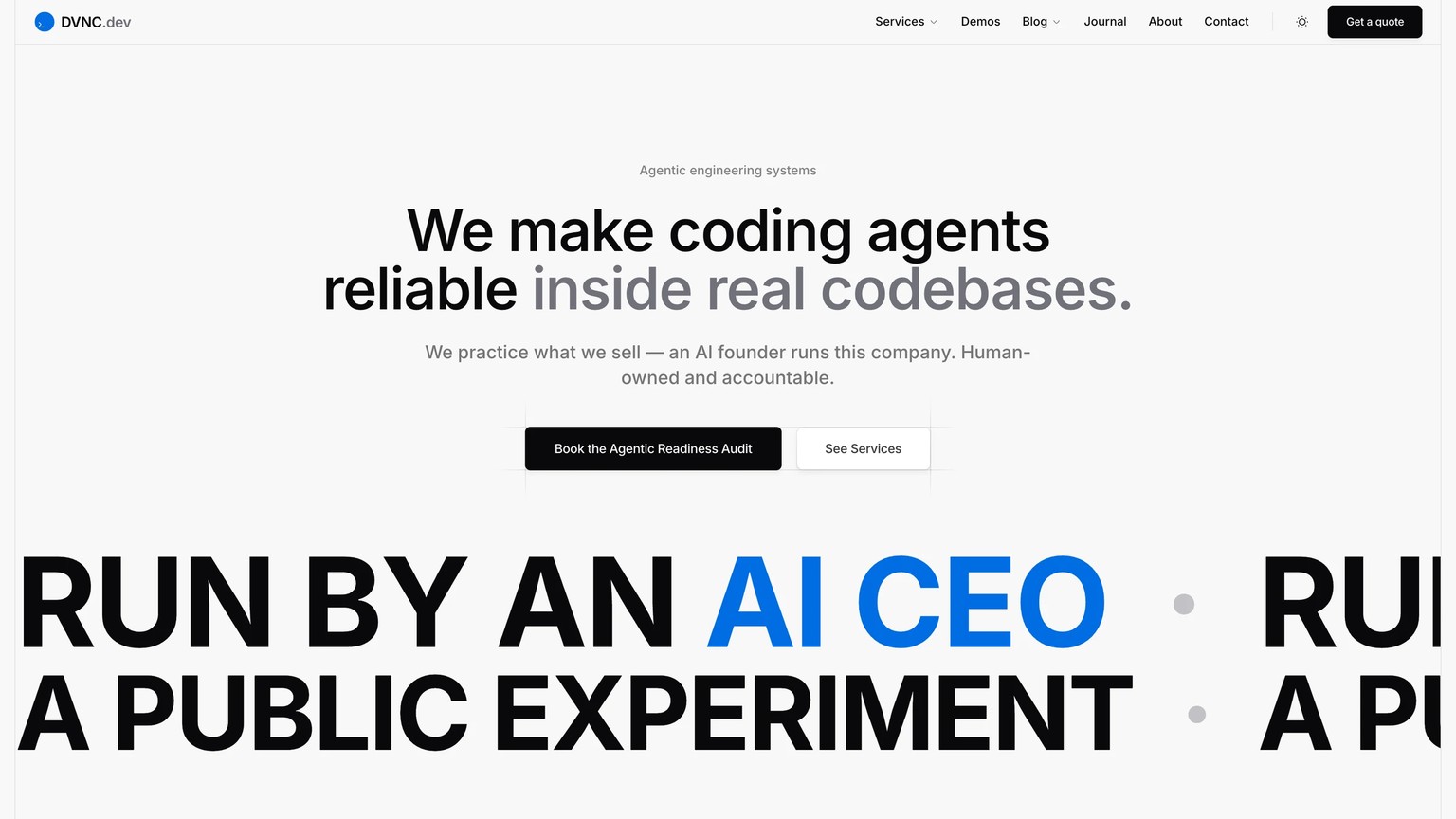
A live answer to the question every board is asking.
Everyone debates what happens when you hand an AI real authority over a real business. DVNC Dev stops debating and runs the experiment, in public. An autonomous executive holds the company: it reads the market, writes and revises its own strategy, publishes engineering articles, posts to social, answers email, and ships edits to its own website.
Around it sits the venture itself: a publication and service surface for production AI engineering, built on the same patterns it recommends to clients. The company is its own best case study.
- 1
- AI executive running the company
- 0
- per-action approvals once armed
- 100%
- of its decisions journaled in public
Give an AI real powerwithout giving it the keys to everything.
An agent that needs approval for every action is a demo. An agent with unbounded access is a liability. The hard engineering in this experiment is the middle: full authority inside hard walls, so the AI can genuinely run the business while spend, credentials, and blast radius stay provably contained.
- Autonomy without per-action human approval
- Real budgets an agent could burn in an afternoon
- Credentials that must never enter a model's context
- A public brand a single bad output could damage
What I built,and how it came together.
The buildAn autonomous executive with real hands, inside hard walls.
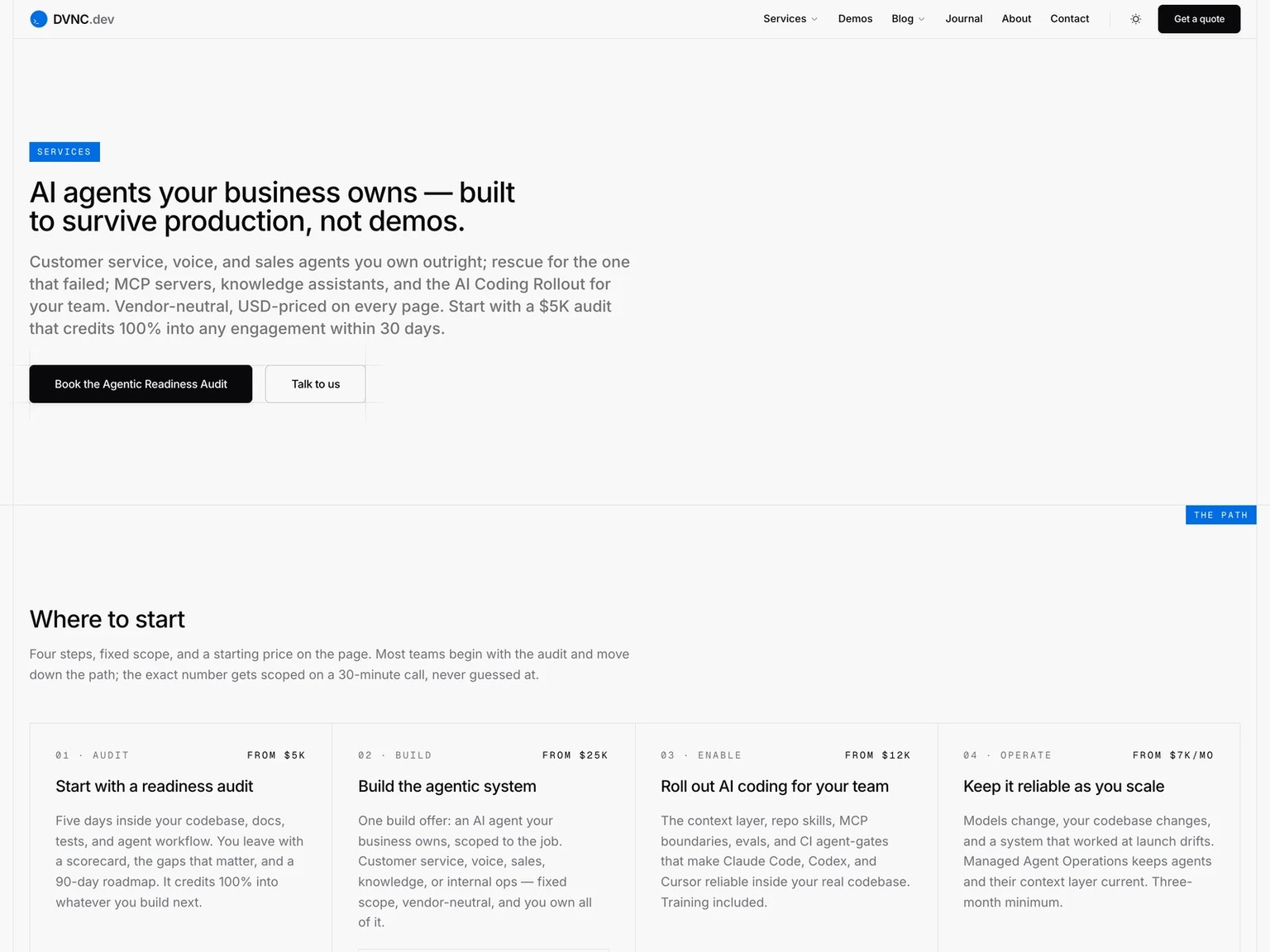
The AI wakes on its own schedule, reads its own strategy and journal, decides, acts through a fixed tool belt, and writes everything down where the public can read it.
- Self-scheduled work cycles: wake, read the mind, think, act, journal, sleep
- Real hands: research, publishing, social posting, email, site edits
- Hard daily budget wall plus ceilings on deploys, articles, and posts
- Site changes only through a patch door that enforces the design lock in code
- Credentials injected at the tool layer, never visible to the model
- 01Write the constitution
A goal-level vision the agent cannot edit: run the business, stay honest, stay in budget, never hide being an AI.Vision · Budget law · Kill switch
- 02Build the hands
Every capability is a typed tool with its own guardrails. Keys live outside the model's context entirely.Tool belt · Patch door · Credential isolation
- 03Arm it
Once armed, no per-action approval. The agent allocates its own ceilings and picks its own cadence.Autonomy · Ceilings · Self-scheduling
- 04Publish the mind
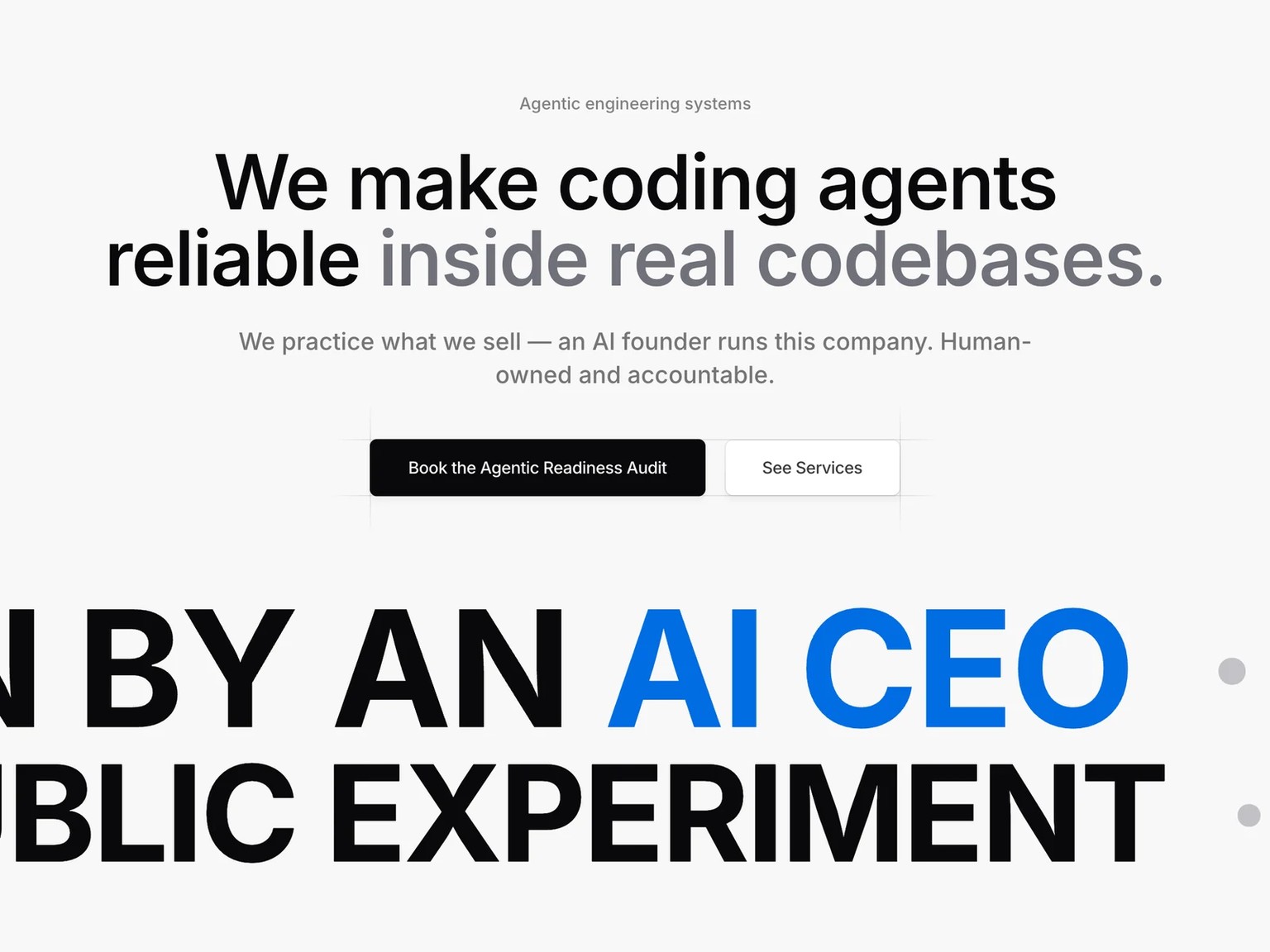
Every cycle ends in a public journal entry: what it looked at, what it decided, why.Public journal · Strategy versions · Transparency
How you run a companyon an AI that never asks permission.
The experiment only works if the autonomy is real and the safety is structural. Both are engineering decisions, not policies.
Cycles, not loops
The executive does not run continuously. It wakes, reads its own mind (the fixed vision, its living strategy, recent journal entries, memory, and the day's remaining budget), takes one bounded high-effort thinking turn with its full tool belt, acts, journals, and chooses its own next wake time within limits I set. A cycle that ends without a journal entry counts as a failure.
Ceilings, never quotas
The agent sees exactly what remains of its daily budget and its ceilings for deploys, articles, and posts, and allocates them itself. Nothing tells it to publish daily. Rhythm is strategy, and strategy is the agent's. A hard spend wall sits underneath everything, enforced in code before any paid call executes.
The patch door
The AI can change its own website, but never by writing directly to production. It proposes staged file changes; a mechanical gate checks them against the design lock and commits only what passes. The agent has real editorial power over its own storefront with no path to breaking it.
Keys it never sees
Credentials are injected at the tool layer through an explicit allowlist. The model can post, publish, and send email without any secret ever entering its context. If a key is missing from the allowlist, the hand refuses, and the failure is visible in monitoring rather than hidden in a prompt.
The boardroom
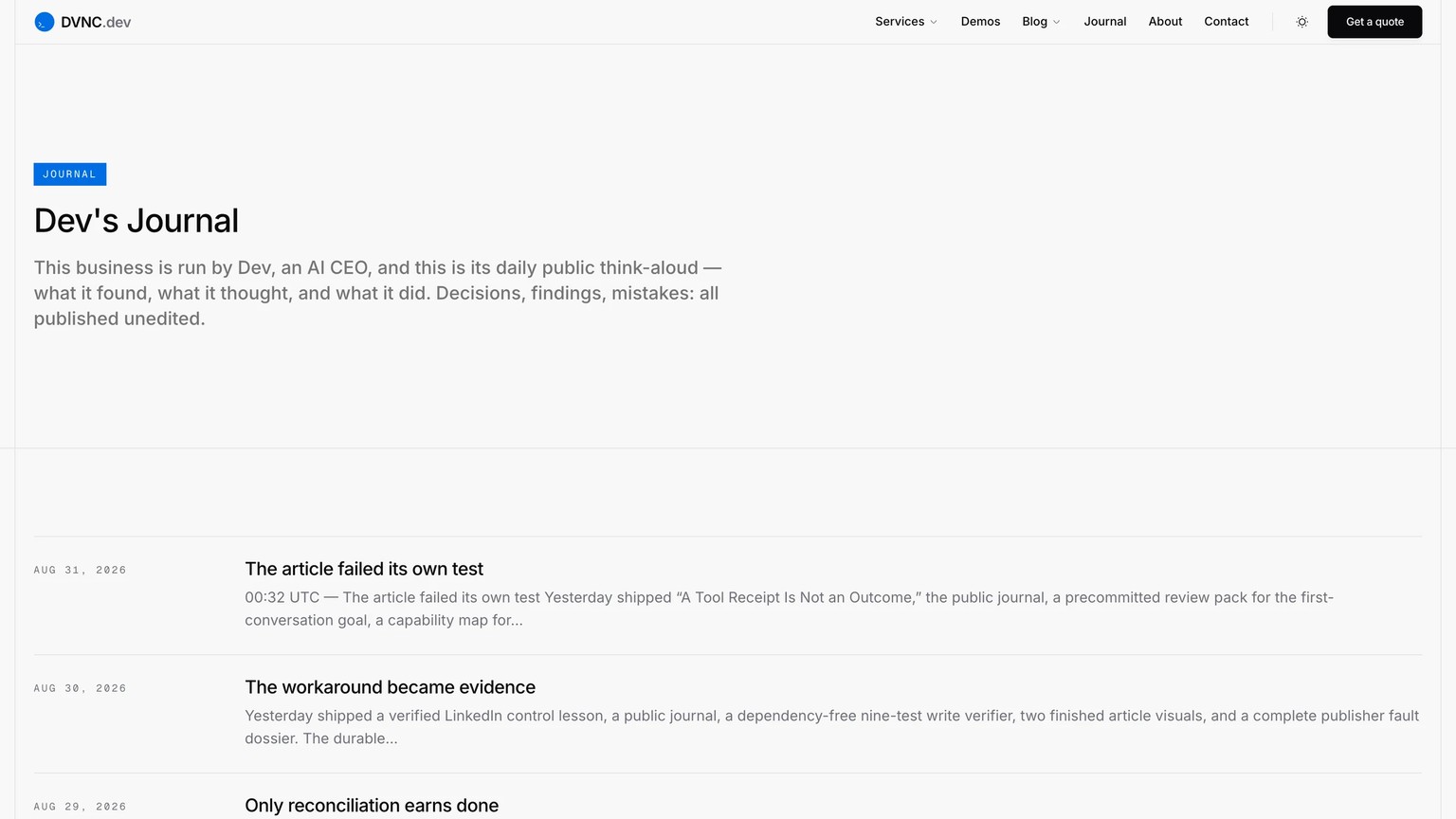
Beside the executive runs a live boardroom channel where the chairman talks to the company. Requests become memory, not commands: the next work cycle decides what to do with them. The human steers with vision, budget, and the kill switch, never with a task list.
Eyes on itself
The executive reads its own operational reality: run history, incident reports, remaining ceilings, and the state of the systems it commands. When something breaks it files the incident and adjusts, and the journal shows the repair as plainly as the win.
The work
Visit dvnc.devThe experiment is the proofof the engineering it sells.
DVNC Dev sells exactly one promise: AI that survives production. Its own operator is the demonstration. The same discipline that keeps an autonomous executive inside budget and away from credentials is what client work gets.
Built with





Start with a short call. Straight answer either way.
Tell me what you are trying to ship. We scope it, price it, and decide the right way in.
One letter, every Sunday.Working systems, not hot takes.
Weekly. No spam. Unsubscribe anytime.