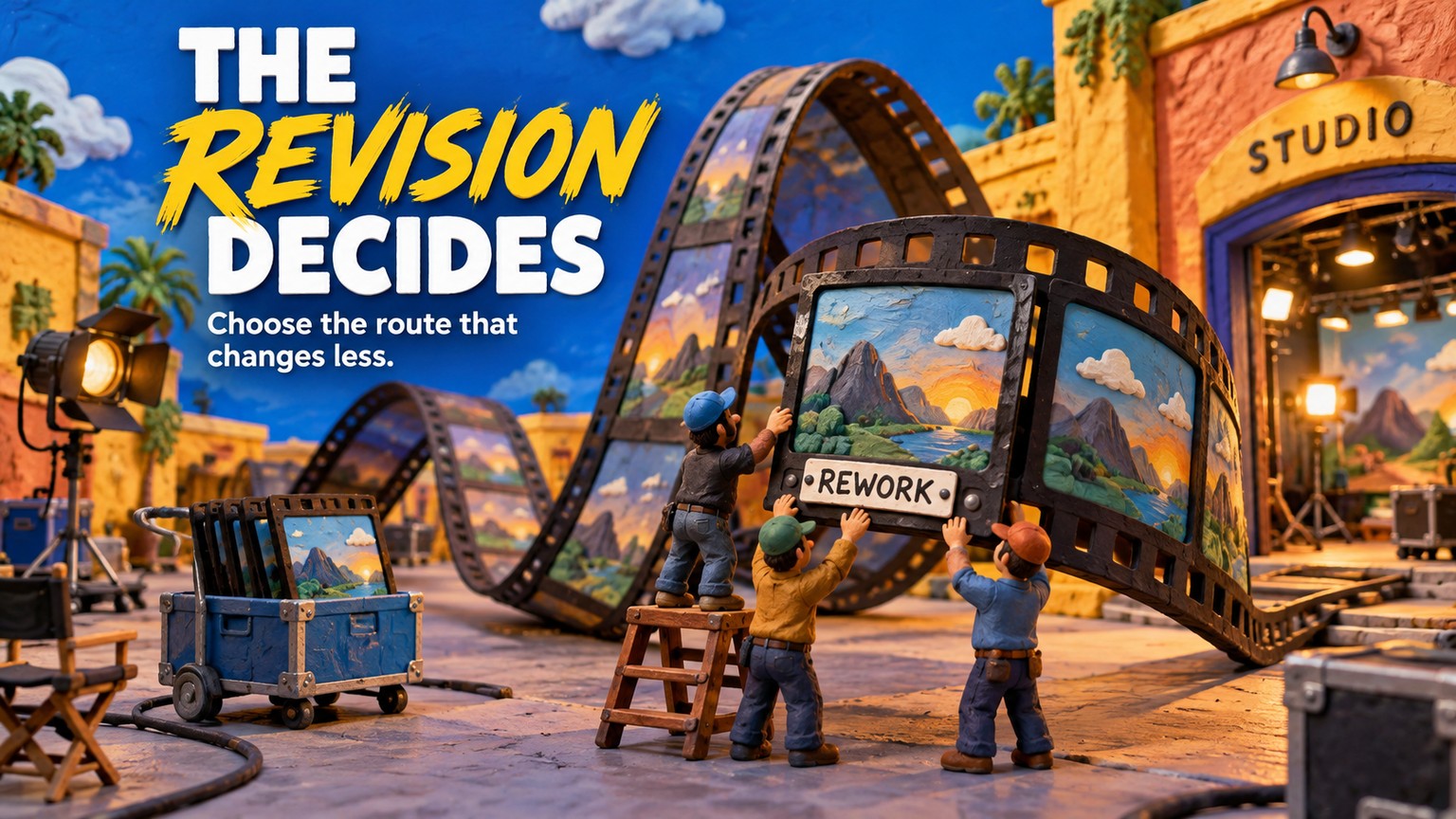
Best AI Image Editing Models for Brand Consistency 2026
Eight AI image editing models ranked for brand consistency, with live pricing, edit-loop limits, and a Monday workflow for choosing one.
Published
 By Omid Saffari


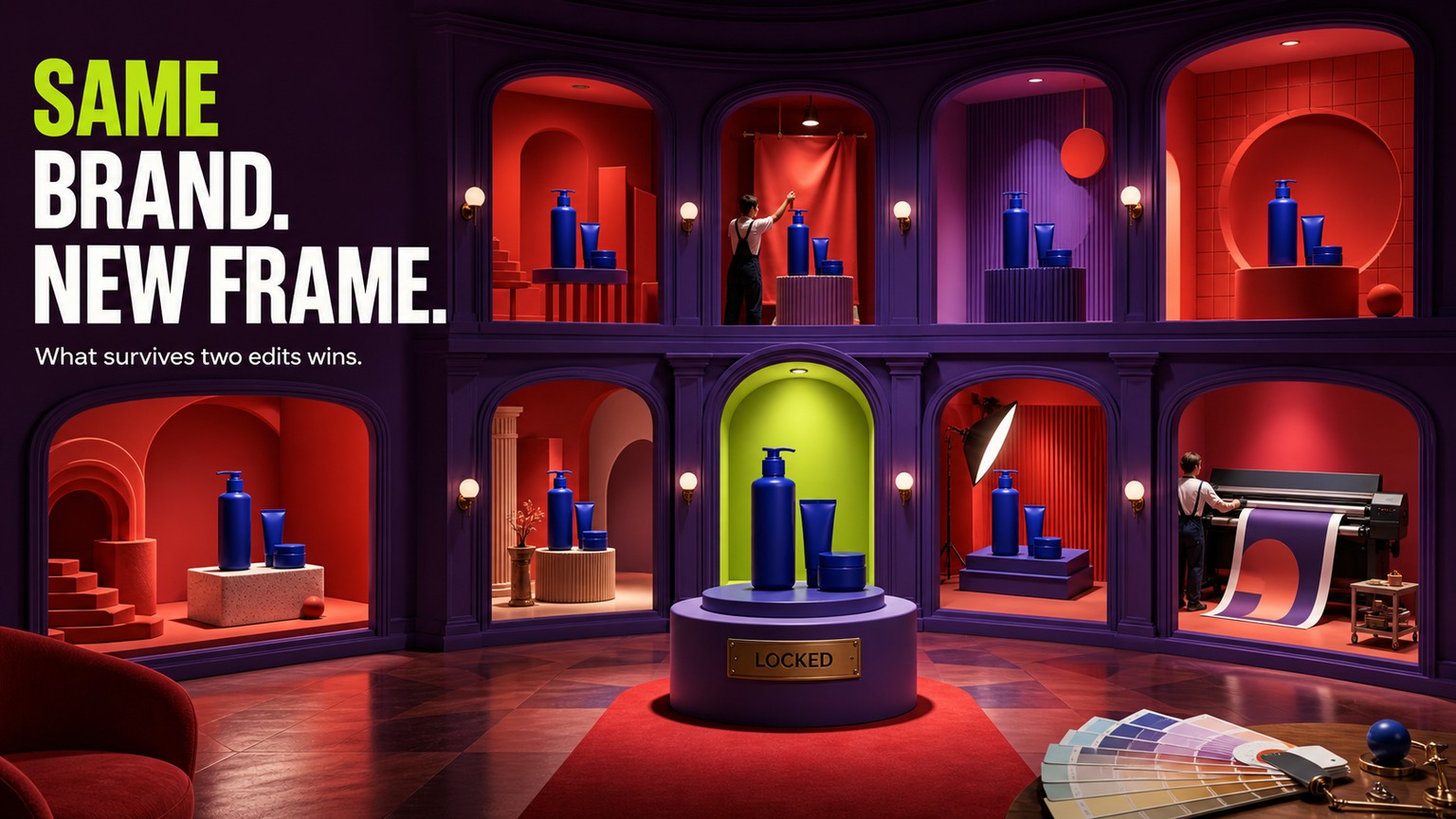
The shortlist for Best AI Image Editing Models for Brand Consistency 2026 starts with Adobe Firefly for a trained house style, Recraft for editable design systems, and Midjourney V8.2 for art-directed campaign worlds. At a $75 hourly design-cost assumption, one 20-minute repair costs $25, so the cheapest model loses as soon as it forces one extra cleanup loop.
All prices, versions, and capabilities below were verified against the vendors' live pages on August 31, 2026. This is a pricing-and-workflow comparison, not a claim that eight products were exercised in a studio test.
Best AI Image Editing Models for Brand Consistency 2026: The Shortlist
Adobe Firefly ranks first because a reusable model trained on approved brand assets is a stronger consistency system than a prompt that happens to work twice. Recraft ranks second because its editable vector path gives designers control after generation. Midjourney V8.2 ranks third because its new edit model finally brings its art direction into a reference-led workflow, but an August 29 quality update also shows how quickly that workflow is still changing.
Starting price is a poor ranking signal by itself. Brand consistency fails in expensive ways: the product cap changes shape, the character's face drifts, a packaging line is misspelled, or a local edit repaints the entire frame. The model that creates the cheapest image can still create the most expensive approval process.
For a broader creation-first market view, use the AI image generator comparison. This ranking is narrower. Every model here must edit an existing visual or use references to keep important elements stable.
What Image Editing AI Models Must Preserve
These editing models earn a place in brand work only when they preserve the parts the brief says are locked. A strong first frame is useful for exploration. A consistent campaign system survives revision.
Five things can be locked:
- Subject identity: the product silhouette, label placement, character face, wardrobe details, or distinctive object geometry.
- Palette: approved colors and their relative use, not merely a similar mood.
- Typography: the words, hierarchy, spelling, and position of type.
- Composition: the relationship between product, copy, props, and negative space.
- Untouched regions: pixels outside the requested change should not quietly soften, restyle, or move.
A raster image is a grid of pixels. A vector image stores shapes as editable paths. That difference matters after the AI step: a raster poster may look finished but force a repaint when the headline changes, while a vector illustration can be recolored and reshaped without regenerating the whole asset.
Consider one fictional product brief. The first frame shows a cobalt reusable bottle, a fixed white label, a warm retail set, and a short launch headline. The first edit moves the bottle into a rainy storefront while locking the bottle, cap, label, and palette. The second edit changes the crop and headline while preserving the approved product and the new environment.
The model passes only if the locked elements survive both changes. That is the two-edit rule. It separates reference compliance from luck: one attractive output proves taste; two clean revisions prove whether the model can join a production loop.
How These Models Were Picked
The ranking turns on production fit, not sample-gallery beauty. Each model was checked against five criteria: reference control, untouched-region preservation, brand-system control, editable handoff, and current cost.
Reference control asks whether the model can use one or more images with distinct jobs. Brand-system control asks whether a team can lock a house style, exact color behavior, typography, or a reusable model. Editable handoff asks whether the result remains workable after generation through vectors, layers, masks, or a dependable local edit path. Cost includes subscriptions, API rates, and the design time consumed by repair.
Models were cut when they offered generation without a current editing or reference workflow. Wrappers were also cut when they exposed another vendor's model without adding a distinct brand-control layer. A platform can still be excellent for ideation and fail this narrower buying decision.
The first-party proof in this comparison is dated verification and normalized cost analysis. It does not borrow a fictional test bench. The vendors' documented limits remain visible, including Adobe's public-beta status, OpenAI's imprecise selections, Midjourney's fast-follow quality update, and Seedream's own admission that pixel-level consistency still has room to improve.
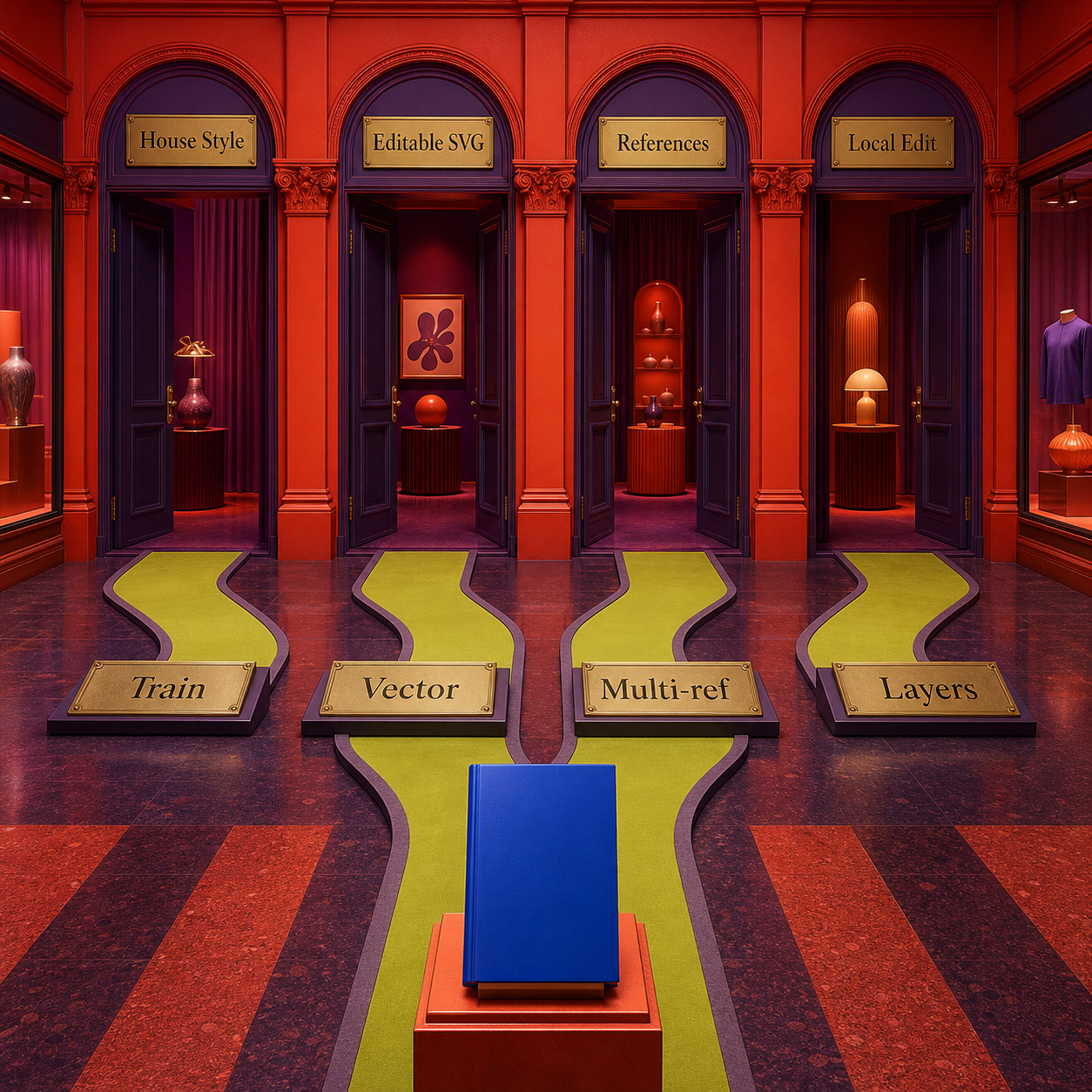
1. Adobe Firefly Image Model 5 + Custom Models
Adobe Firefly Image Model 5, paired with Firefly Custom Models, is the best overall choice for a brand that wants a reusable house style instead of a reusable prompt.
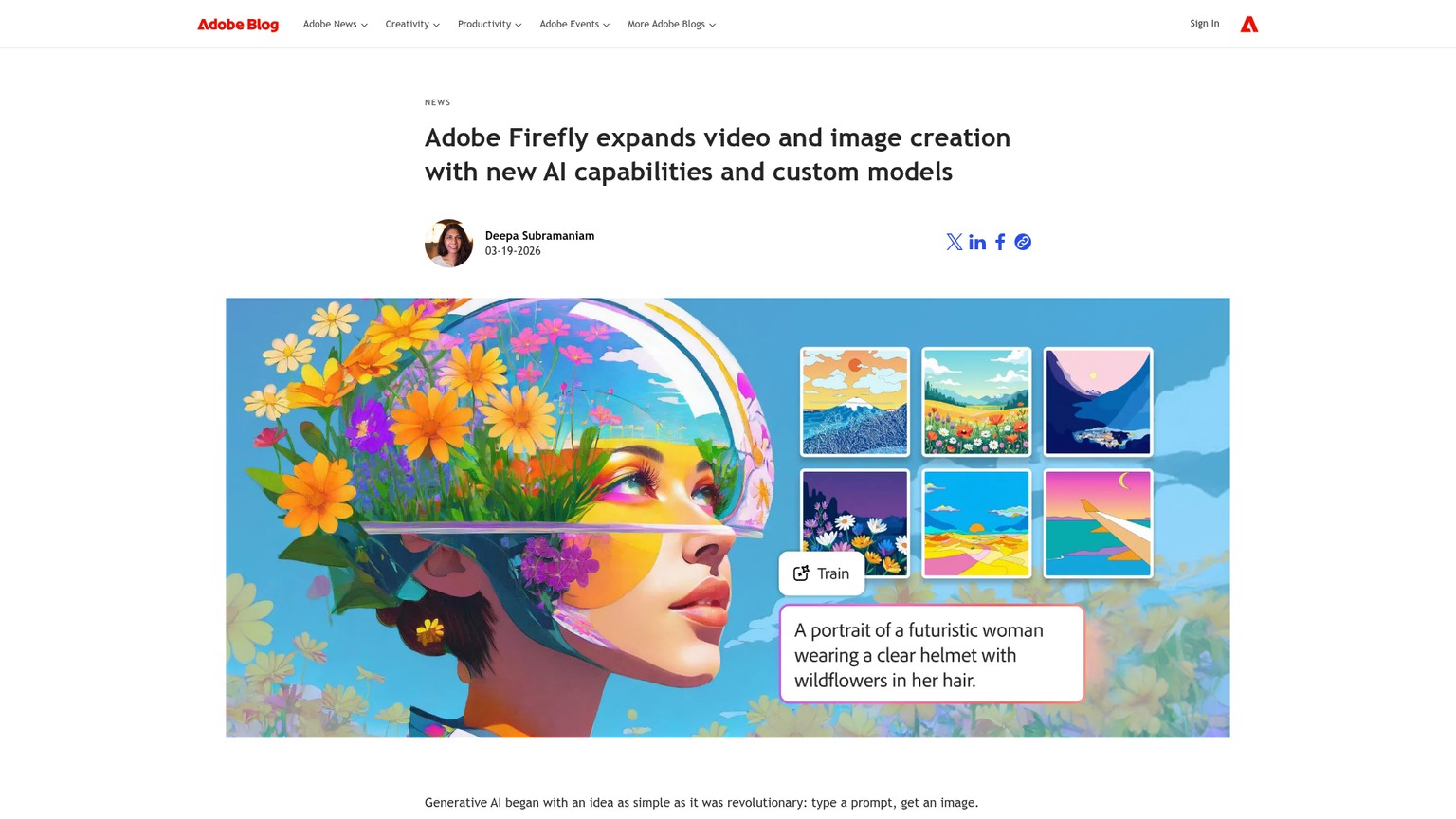
The difference is structural. Adobe says Custom Models train on a team's own images to capture an illustration style, character, or photographic look. The trained model can preserve stroke weight, color palette, lighting, and character features, and Adobe says those custom models are private by default. That is closer to a brand asset than a reference image pasted into each new prompt. Adobe's Custom Models announcement also says Firefly carries more than 30 models and that Firefly Image Model 5 is generally available.
The catch is equally important: Custom Models remain a public beta optimized for ideation in character, illustration, and photographic styles. A creative director can use the system to narrow exploration around an approved look. A regulated packaging workflow should still keep final typography, claims, and product geometry under conventional review.
Best for: Enterprises and agencies with an approved visual archive and repeat campaign volume.
Standout: A private reusable model trained on the brand's own style, character, or photography.
Pricing: Standard is $9.99/month for 2,000 credits; Pro is $19.99/month for 4,000; Pro Plus is regularly $49.99/month, currently $34.97 for the first year, for 10,000; Premium is regularly $199.99/month, currently $139.91 for the first year, for 50,000. The two promotions were live through October 21, 2026 when verified. Adobe Firefly plans
Free trial: A limited free version exists. Standard, Pro, and Pro Plus showed trial links; Premium did not.
- Trains on approved brand imagery rather than relying only on prose.
- Preserves style-level details such as palette, stroke weight, lighting, and character features.
- Keeps custom models private by default.
- Sits beside Adobe's professional editing environment and a large model catalog.
- Custom Models are still a public beta optimized for ideation.
- The consumer plan price does not by itself prove Custom Model entitlement for every organization.
- A trained look does not remove the need to inspect claims, labels, and product geometry.
A Reproducible Adobe Firefly Brand Workflow
The top pick works best when the brief distinguishes what can change from what cannot.
Prepare only approved source material
Remove outdated campaigns, mixed art directions, accidental watermarks, and assets whose licensing is unclear. The training set should represent one visual system, not the brand's entire historical archive.
Train the house style
Create the Custom Model around the approved illustration, character, or photographic direction. Name it by campaign system rather than by a temporary channel so the team can reuse it across briefs.
Generate the locked first frame
Use Firefly Image Model 5 and state the immutable product, character, palette, and type requirements before describing the scene. Keep final legal copy outside the generated image until approval.
Run the two-edit rule
Make one environmental change and then one layout or copy change. Compare the locked elements after each revision. A drifted label or character is a failed workflow even when the frame becomes prettier.
Hand off an approved source
Store the approved visual beside its references, prompt, model name, and revision note. The next designer should be able to reopen the decision rather than reverse-engineer a lucky output.
2. Recraft V4.1
Recraft V4.1 is the best choice when consistency must survive into an editable design file, especially for vectors, logos, illustrations, palette work, and product mockups.
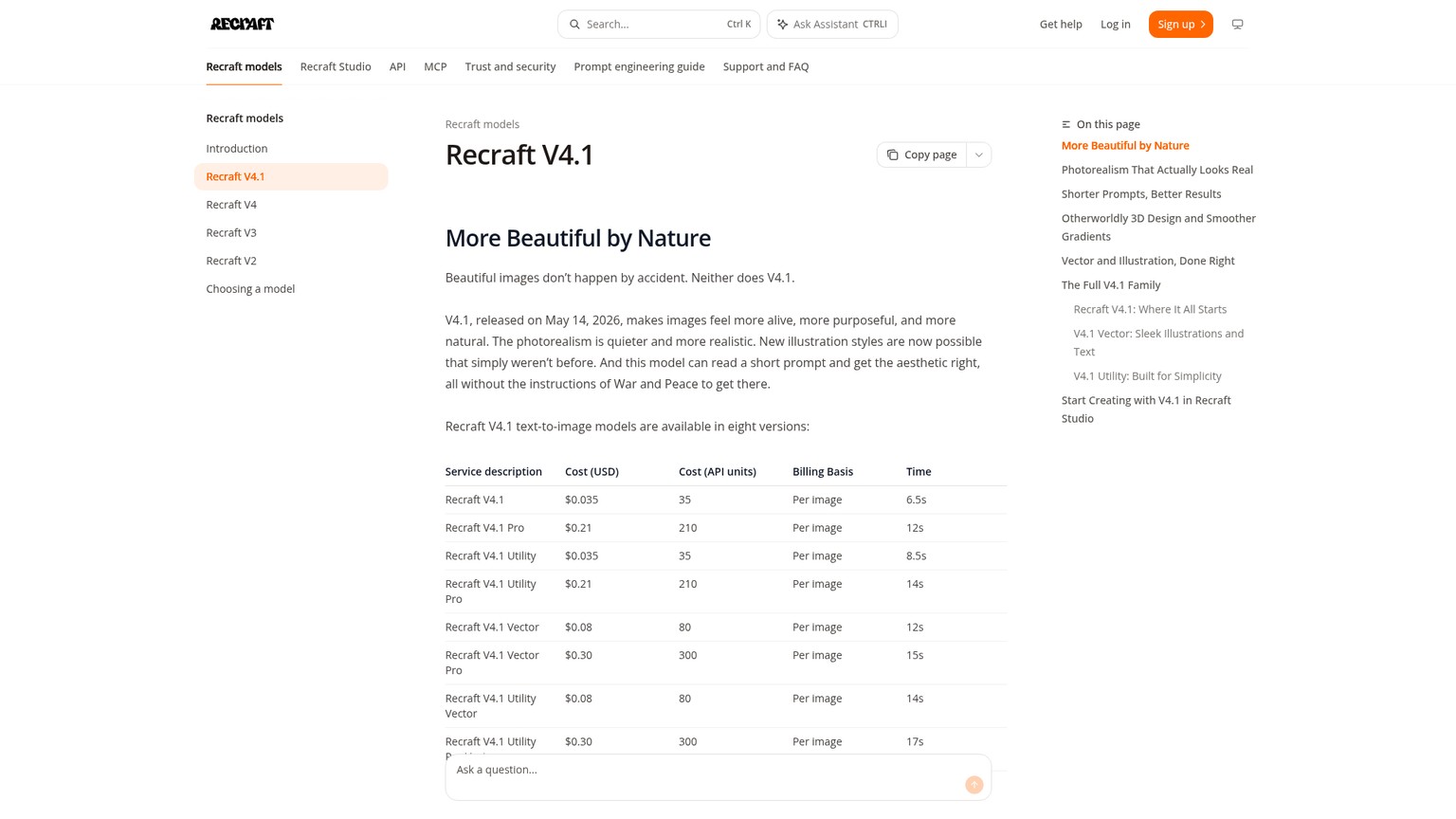
Recraft treats vector output as a production route rather than a cosmetic export. Its Vector variants generate editable paths, while Utility variants favor predictable front-facing composition and flat lighting for mockups and product shots. That distinction is useful: the expressive model can explore a campaign world, and Utility can hold a catalog item steady without adding drama the brief never requested. Recraft's V4.1 documentation says every V4.1 variant can be tried on every plan type, including Free.
The editing menu is equally practical. Raster image-to-image, inpainting, background replacement, background generation, and style creation each cost $0.044. The vector equivalents cost $0.088. Recraft also supports palette recoloring, outpainting, prompt editing, and same-canvas production tools. That is a stronger handoff than a beautiful flat file when a designer must move an anchor point, change a spot color, or update a lockup after approval.
Best for: Design teams that need editable SVG assets, controlled palettes, product mockups, and a conventional handoff after generation.
Standout: Separate expressive, Utility, Pro, and Vector paths inside one model family.
Pricing: V4.1 and Utility cost $0.035/image; Pro and Utility Pro cost $0.21; Vector and Utility Vector cost $0.08; Vector Pro and Utility Pro Vector cost $0.30. Raster edit operations listed above cost $0.044 and vector edit operations cost $0.088. Recraft API pricing
Free trial: The Free plan can evaluate V4.1, but Recraft says Free-plan outputs are public, owned by Recraft, and not licensed for commercial use.
- Produces editable vector paths for brand graphics and illustration.
- Offers restrained Utility variants when predictable composition matters more than visual surprise.
- Gives each edit operation a clear per-image rate.
- Keeps generation and production edits on one design canvas.
- The Free route is unsuitable for paid brand work.
- Choosing among eight V4.1 variants adds routing overhead.
- A vector handoff solves editability, not automatic identity preservation across every scene.
Recraft should outrank Firefly when the team's pain begins after approval. If the brand look is already clear and the recurring job is updating labels, colors, or layout components, editable vectors can be more valuable than a trained aesthetic model. Firefly regains the lead when the core problem is teaching the system what the brand looks like across a large image archive.
3. Midjourney V8.2
Midjourney V8.2 is the strongest art-direction choice in the ranking, but its August edit releases make it a controlled pilot rather than the only repository for a brand system.
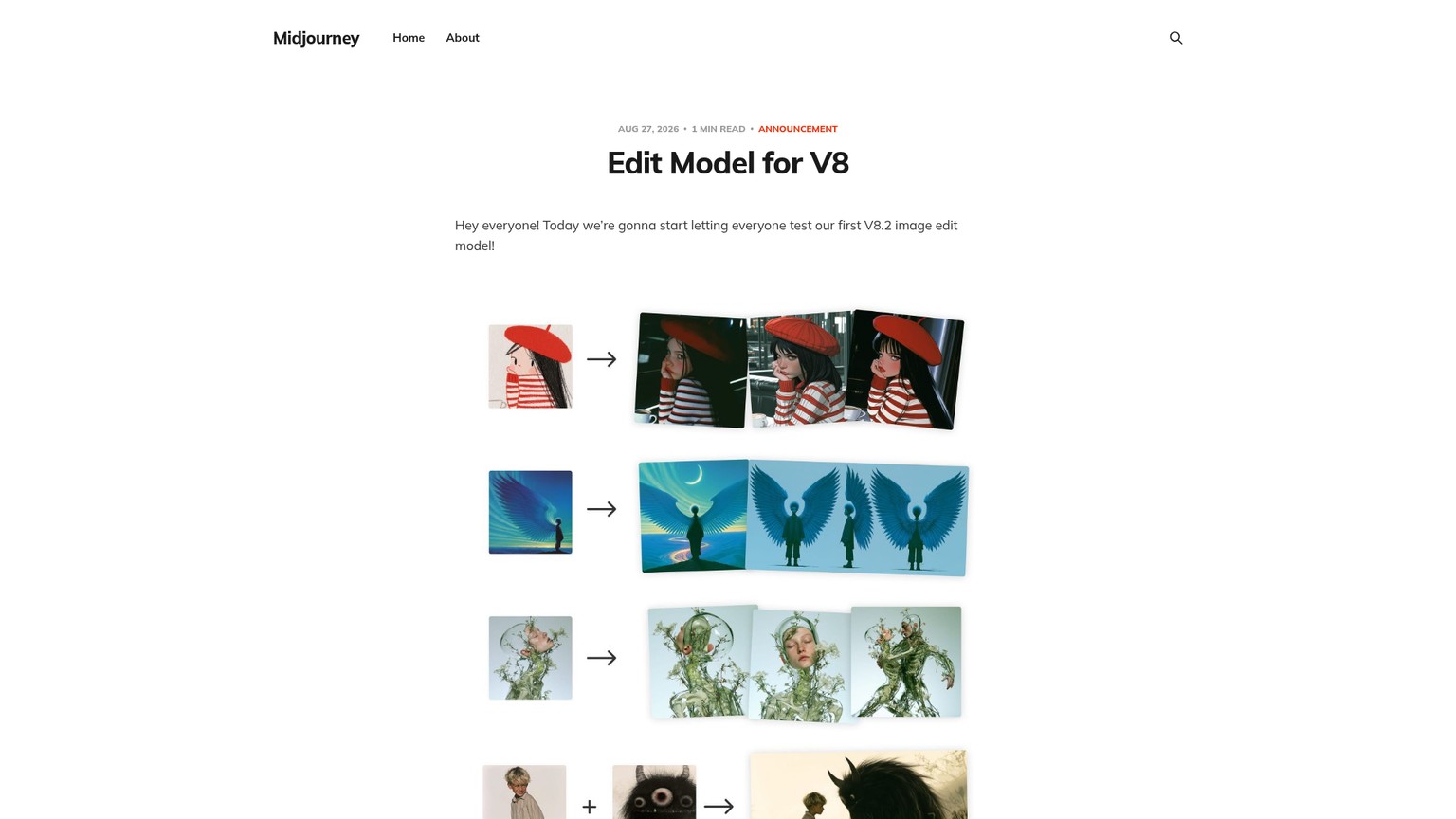
Midjourney released its first V8.2 edit model on August 27, 2026. It supports instruction-led edits, up to four image references, inpainting, outpainting, personalization, moodboards, and style references. Two days later, Midjourney updated the edit model for better image quality and asked people who had experienced issues in the prior 24 hours to try again. The business consequence is simple: re-run rejected V8.2 edit jobs after the August 29 update, but keep approval checkpoints because the path is still receiving fast-follow changes. Midjourney's edit quality update
Four references make the new model more useful for brand work than a single mood image. Give each reference one job: a product reference, a character reference, a lighting or material reference, and an art-direction reference. If two images compete for the same role, the model has to average a conflict the brief should have resolved.
Moodboards and personalization remain Midjourney's advantage. They can encode a visual preference that is hard to reduce to adjectives. The wall is production control. Midjourney can create a compelling raster campaign world, but Recraft is the safer call when the output must become editable vector artwork, and Adobe is the safer system when the brand needs a private trained model. The existing Midjourney V8.2 workflow guide covers the mechanics in more detail.
Best for: Campaign concepts, editorial worlds, mood-led art direction, and brands whose visual language matters more than deterministic layout.
Standout: Up to four references combined with personalization, moodboards, and style references.
Pricing: Basic is $10/month or $96/year with 3.3 fast GPU hours; Standard is $30/month or $288/year with 15 fast hours and unlimited Relax images; Pro is $60/month or $576/year with 30 fast hours, unlimited Relax images and SD video, and Stealth Mode; Mega is $120/month or $1,152/year with 60 fast hours and the same privacy mode. Extra GPU time costs $4/hour on every tier. Midjourney plan comparison
Free trial: No free plan or trial was listed on the current four-plan page.
- Strong default art direction and a distinctive visual point of view.
- New V8.2 editing accepts four references and supports local and canvas edits.
- Moodboards and personalization can carry a coherent aesthetic across exploration.
- Standard and higher plans include unlimited Relax image generation.
- The V8.2 edit path required a quality update two days after its broad test release.
- Raster output is not an editable vector design system.
- Stealth Mode starts at Pro, not Basic or Standard.
- Companies above $1 million in annual gross revenue must use Pro or Mega for commercial work.
The Standard plan costs $20 more per month than Basic. At the $75/hour assumption, 16 avoided repair minutes cover that gap. The more important plan break is privacy and company eligibility: a brand that needs Stealth Mode, or exceeds Midjourney's revenue threshold, should budget from Pro rather than treating Basic as the relevant comparison.
4. Ideogram 4.0
Ideogram 4.0 is the best model here for typography-led brand assets and controlled layout, especially when an organization wants open weights and the option to fine-tune behind its own infrastructure.
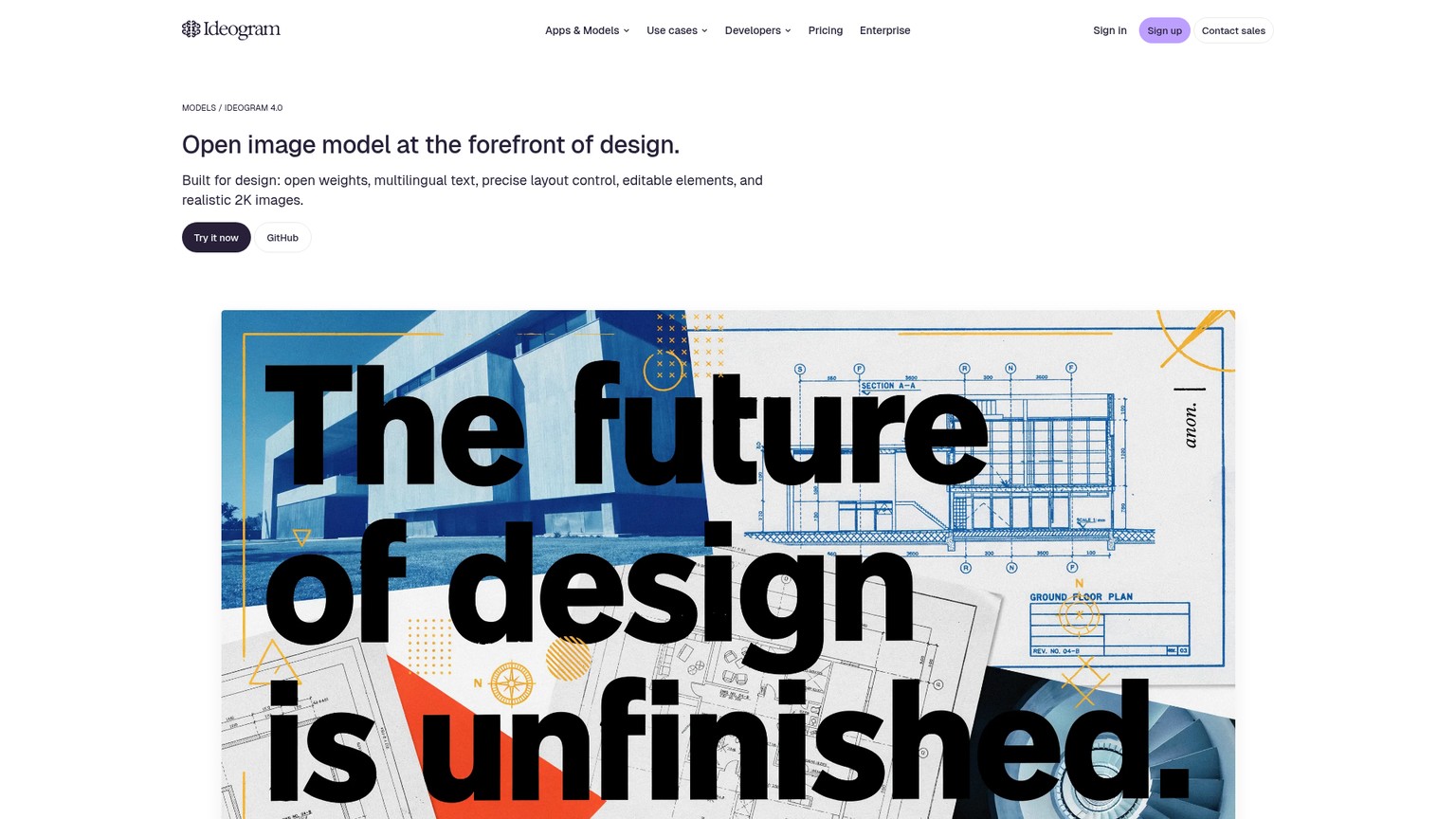
Ideogram 4.0 combines multilingual text, bounding-box layout control, realistic 2K output, and downloadable weights. Bounding boxes matter because "put the headline on the left" becomes a spatial constraint rather than a suggestion the model may reinterpret. For packaging, signage, posters, and ad layouts, correct words in the correct region are part of brand consistency, not a finishing detail. Ideogram 4.0 also permits fine-tuning, with commercial deployment governed by a separate license.
The editable-output story needs precise wording. Background removal and a tool that extracts text into separate editable layers were shipping when verified. Alpha channels and editable text layers directly from model inference were described as coming in the next 4.0 release. A procurement decision should value the shipped tools and treat native layered inference as roadmap, not as a current deliverable.
Best for: Posters, packaging concepts, localized headlines, signage, controlled compositions, and organizations that want to fine-tune an open-weight model.
Standout: Multilingual type plus bounding-box placement control.
Pricing: Hosted API access costs $0.03/image for Turbo, $0.06 for Default, and $0.10 for Quality. No subscription is required.
Free trial: The weights are downloadable, but commercial deployment requires the appropriate license; the hosted API is paid per image.
- Strong typography and precise placement for text-led brand work.
- Open weights support private deployment and brand fine-tuning.
- Hosted API has three simple per-image quality tiers.
- Existing tools can remove backgrounds and separate text for later editing.
- Native layered inference was roadmap, not shipped capability, when verified.
- Self-hosting adds infrastructure and licensing work.
- Text and layout strength do not automatically preserve a photographed product through repeated edits.
Ideogram jumps above Midjourney when the headline, label, or layout grid is the fragile brand element. Midjourney stays ahead when the buyer needs a richer visual world and can finish typography conventionally. Recraft stays ahead when that type and artwork must leave the model as truly editable vector geometry.
5. OpenAI GPT Image 2
OpenAI GPT Image 2 is the best conversational editor in the ranking: it turns a creative director's change request into a sequence of visual revisions without forcing the team to learn model-specific parameter syntax.
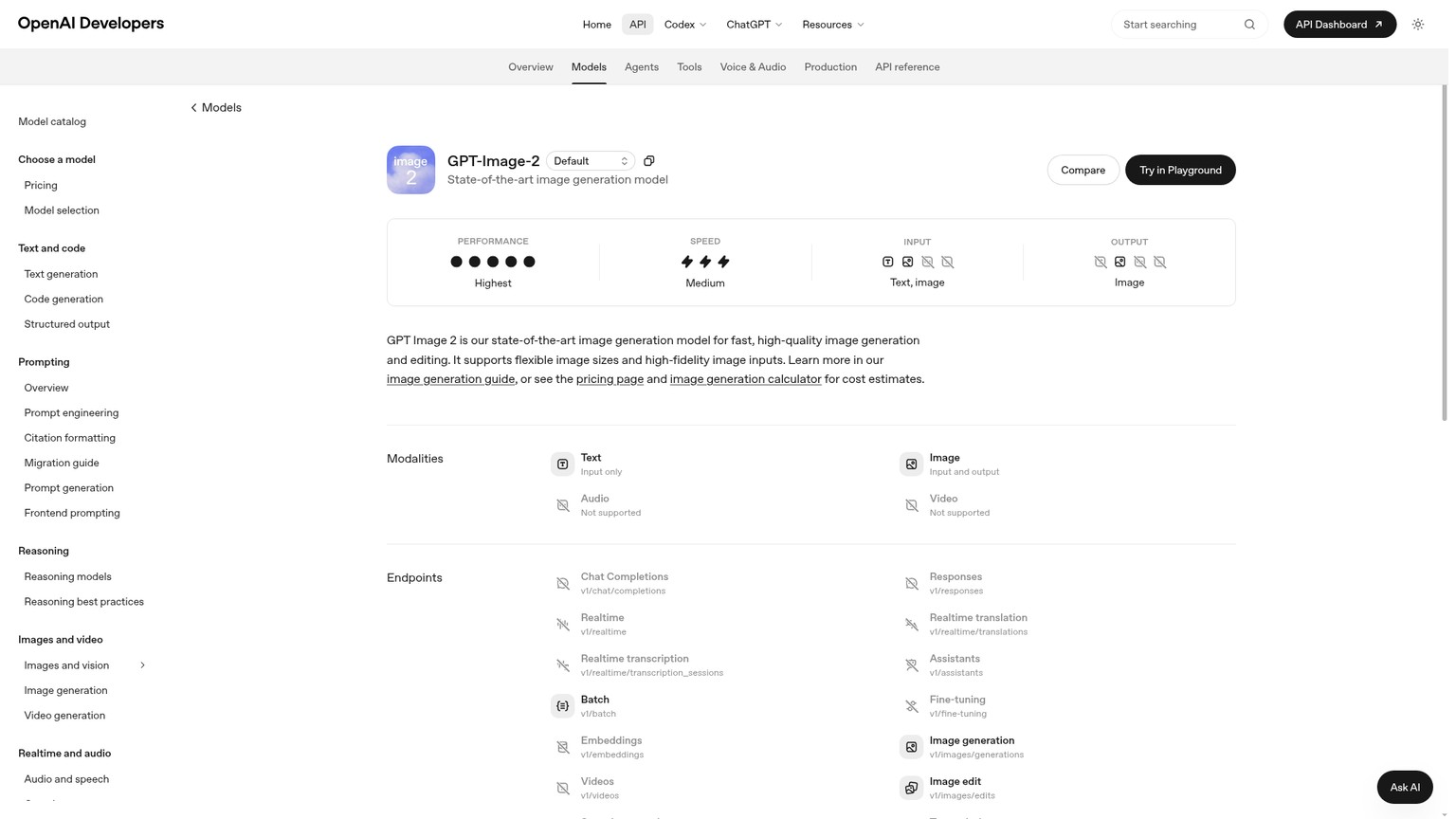
The model supports high-fidelity image inputs, flexible output sizes, and a dedicated image-edit endpoint. OpenAI also exposes the fixed gpt-image-2-2026-04-21 snapshot, which matters for production. A pinned snapshot prevents a silent model update from changing the behavior of an approved automation halfway through a campaign. GPT Image 2 model documentation
The consumer route is useful for nontechnical review. ChatGPT Images 2.0 is available across ChatGPT tiers, and an editor can highlight a region or describe a change in conversation. OpenAI documents the limit plainly: selections are not always precise, and the edit may extend beyond the highlighted area. That makes the ChatGPT editor excellent for broad revisions and weaker for a one-pixel-sensitive retouch.
Best for: Teams that express revisions in natural language, product workflows already using OpenAI, and automations that need a pinned model snapshot.
Standout: Conversational revision plus a fixed production snapshot.
Pricing: Standard API rates per 1 million tokens are $8 image input, $2 cached image input, $30 image output, $5 text input, and $1.25 cached text input. Batch rates are $4, $1, $15, $2.50, and $0.625 respectively. OpenAI image pricing
Free trial: ChatGPT Images 2.0 is available on all ChatGPT tiers; Images with thinking is limited to Plus, Pro, and Business at verification.
- Natural-language editing fits how stakeholders already deliver feedback.
- A fixed API snapshot supports repeatable production behavior.
- High-fidelity image inputs and flexible sizes cover a broad set of asset formats.
- Batch pricing halves the listed standard token rates.
- Region selections can spill beyond the intended area.
- Token pricing is harder to budget per approved image than a flat per-output rate.
- There is no brand-specific fine-tuning claim on the current GPT Image 2 model page.
GPT Image 2 beats Nano Banana 2 when the workflow is conversation-led and the team values a pinned OpenAI endpoint. Nano Banana 2 beats it when throughput and a simple resolution-based image-output estimate are the stronger purchasing constraints.
6. Google Nano Banana 2
Google Nano Banana 2, the Gemini 3.1 Flash Image model, is the best high-throughput route for reference-led editing when speed, subject consistency, and predictable output bands matter more than training a private house style.
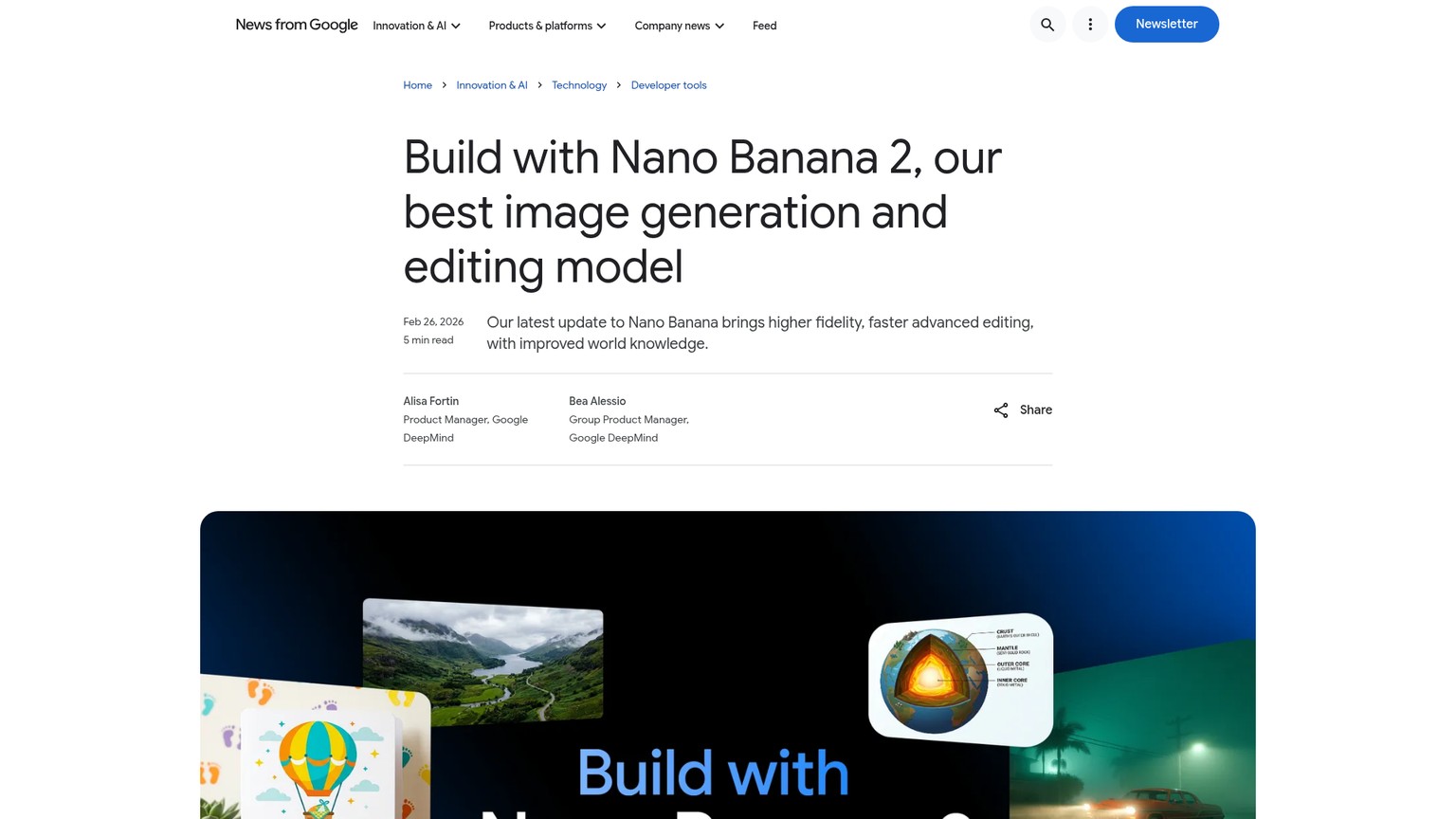
Google launched Nano Banana 2 on February 26, 2026 with faster advanced editing, improved world knowledge, and stronger text rendering. Google also positions it around subject consistency and precise instruction following. That combination fits catalog variants, localized social assets, and repeated scene changes around a known person or product. Google's Nano Banana 2 developer announcement
This is still a reference-led general model, not a private trained brand system. It can hold a subject steady and follow a complex edit, but a team should keep an external brand sheet for exact palette, type, logo clearance, and approved product angles. Subject consistency is one layer of brand consistency.
Best for: High-volume image variants, fast multi-turn edits, localized campaign assets, and teams already building on Gemini.
Standout: Strong speed-to-quality balance with clear resolution-based output equivalents.
Pricing: Standard rates are $0.50 per 1 million input tokens and $60 per 1 million image output tokens, equivalent to $0.045 at 0.5K, $0.067 at 1K, $0.101 at 2K, and $0.151 at 4K. Batch rates are $0.25 and $30, equivalent to $0.022, $0.034, $0.050, and $0.076 for the same sizes. Gemini API pricing
Free trial: The API requires a paid key and lists no free tier for this model. Google AI Studio can be used for testing.
- Designed for fast interactive generation and editing.
- Strong subject consistency and instruction following.
- Standard and Batch prices map cleanly to common output sizes.
- Optional web and image grounding can supply current visual context.
- API access is paid only for Nano Banana 2.
- Reference consistency is not the same as a trained proprietary house style.
- Grounding can add search charges after the shared monthly allowance.
Nano Banana 2 is the practical default for a team that needs many sensible edits quickly and can enforce the brand system outside the model. It moves below Ideogram when typography and placement are central, and below GPT Image 2 when conversational review and a pinned snapshot matter more than resolution-band pricing.
7. Black Forest Labs FLUX.2
Black Forest Labs FLUX.2 is the best programmable multi-reference family for teams that want exact color control, several reference roles, and a choice between low-cost volume and a pinned production endpoint.
FLUX.2 can combine references while maintaining identity across complex scenes, and its max, pro, and flex variants accept up to eight images through the API and ten in the playground. Klein accepts four. That lets a technical creative team separate product, person, pose, material, and art-direction references instead of compressing the whole brief into one collage. FLUX.2 overview
The fixed flux-2-pro endpoint is the quiet production advantage. Black Forest Labs says it will not change, while preview endpoints receive the newest improvements. Use the fixed route once a workflow has passed approval; use preview while exploring whether new quality gains are worth another validation round.
Best for: API-led creative systems, product variants, multi-reference scenes, exact color work, and teams that need a pinned endpoint.
Standout: Up to eight API references, exact color control, and distinct cost-quality variants.
Pricing: Editing starts at $0.014 for klein 4B, $0.015 for klein 9B, $0.045 for pro, $0.07 for max, and $0.05 for flex. Dev is local-only with no hosted API. The dedicated live pricing page overrules an older $0.06 flex figure still shown on the overview. FLUX pricing
Free trial: Klein 4B has Apache 2.0 open weights; dev is local and noncommercial. Other hosted variants are paid.
- Many references can carry separate identity, pose, material, and style roles.
- Exact color controls suit product and brand variation work.
- A fixed pro endpoint supports reproducibility after approval.
- The family scales from low-cost klein to high-quality max.
- The family requires a routing decision instead of one universal model.
- Dev and klein 9B carry licensing limits that must be checked before commercial deployment.
- The technically strongest route may be less comfortable for a nontechnical creative reviewer.
FLUX.2 should move above Nano Banana 2 when the team needs many explicit references and reproducible endpoints. It should move below Recraft when the result must be editable vector artwork, and below Adobe when a private trained house style is the central asset.
8. ByteDance Seedream 5.0 Pro
ByteDance Seedream 5.0 Pro is the best specialist for region-marked edits, color-and-material replacement, and layer decomposition, but it ranks eighth because ByteDance still acknowledges room to improve pixel-level editing consistency.

Seedream 5.0 Pro can take point, lasso, box, and sketch guidance, then combine those controls with color replacement, material replacement, multiple source images, and separated output layers. ByteDance's own example accepts Hex colors or external swatches, a useful detail when "make it green" is too vague for a brand palette. The model can also separate a poster into more than ten independent layers, including type, subject, background, and decorations. Seedream 5.0 Pro release
The limitation comes from the same source. ByteDance says finer text rendering and pixel-level editing consistency still have room to improve. That does not cancel the model's control surface. It defines the right job: use Seedream when a designer needs to point at where a change belongs and recover movable parts, then inspect the lock after every operation.
Best for: Region-specific edits, annotated creative review, material and palette replacement, localized layouts, and layer recovery.
Standout: Spatial markup plus layer decomposition in one model family.
Pricing: API output is $0.045 at 2.61 million pixels or below and $0.09 above; the first input image is free and each additional input costs $0.003. Layer decomposition is $0.0225 per returned layer at or below the threshold and $0.045 above. First-purchase packages are Starter at $6.99 for 310 images, regularly $13.99; Professional at $24.99 for 800, regularly $35.99; and Team at $49.99 for 1,555, regularly $69.99. Packages expire after 30 days. BytePlus pricing
Free trial: No general free tier was listed; a paid first-purchase offer was live.
- Accepts precise spatial markup rather than relying only on prose.
- Supports Hex colors, external swatches, and material replacement.
- Can separate a finished poster into movable layers.
- Per-output API pricing is easy to estimate.
- ByteDance says pixel-level consistency and finer text still need improvement.
- Layer decomposition bills each returned layer.
- First-purchase packages expire after 30 days.
Seedream moves higher when reviewers already communicate with boxes, sketches, swatches, and layer requests. It stays below FLUX.2 for a pinned multi-reference API, below Recraft for native vector production, and below Ideogram when reliable headline layout is the defining requirement.
The Brand-Consistency Budget Line
The buying decision flips when repair time exceeds the model-price difference. The calculation here uses an explicit $75/hour fully loaded design-labor assumption, equal to $1.25 per minute. Replace it with the team's own number before procurement.
At that assumption, eight minutes cost $10, 20 minutes cost $25, and 40 minutes cost $50. That makes several apparently large software differences small:
- The Firefly Pro upgrade over Standard equals eight repair minutes.
- The Midjourney Standard upgrade over Basic equals 16 repair minutes.
- The difference between 1,000 FLUX.2 pro and max edits equals one 20-minute repair.
- Nano Banana 2 Batch saves about $33 on 1,000 1K outputs, equal to roughly 26 minutes of repair.
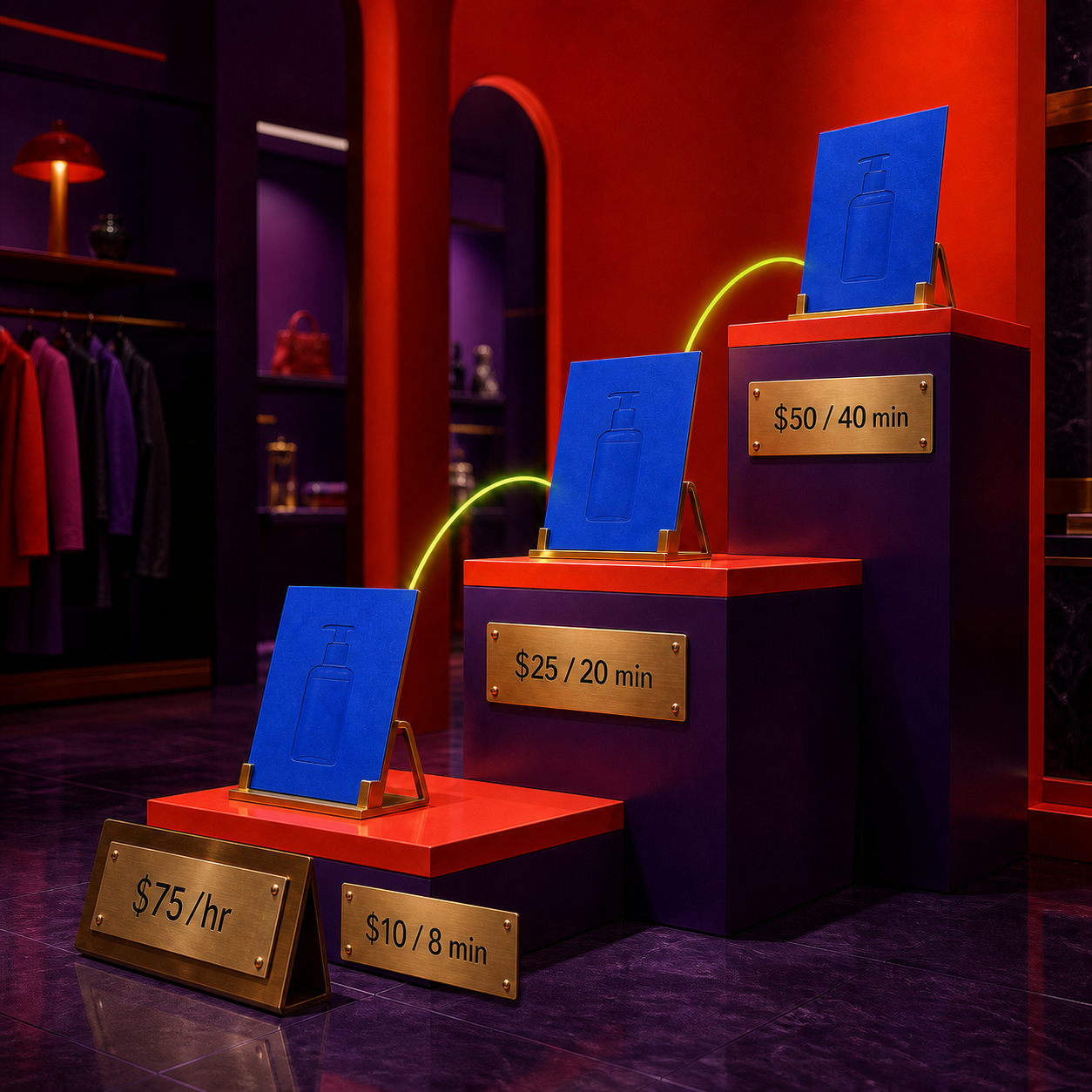
This does not mean every team should buy the highest tier. It means a cheaper tier must be evaluated against the labor it creates. The useful unit is cost per approved asset, even when approval rate cannot be known before a controlled pilot.
Use three ledger lines during that pilot: model spend, repair minutes, and approval outcome. Do not blend generation time with review time. A fast model that produces more rejected variants can look productive while increasing the queue a creative director must inspect.
The strongest budget move is routing. Use low-cost or batch modes for exploration, a higher-fidelity route for approved candidates, and conventional editing for locked legal copy. A single expensive model used for every stage can waste money just as easily as a cheap model that creates rework.
Who Should Pick What
Pick Adobe Firefly when the company owns a coherent archive and wants the house style to become a reusable private model. The choice flips to Recraft when the brand look is known but the recurring pain is editable vector production, palette changes, or clean product mockups.
Pick Midjourney V8.2 when the creative director is buying art direction. Its moodboards, personalization, and new four-reference edit path make it the strongest visual-world builder here. The choice flips to Ideogram when typography, packaging copy, and spatial layout carry more brand risk than atmosphere.
Pick GPT Image 2 when stakeholders work in conversational change requests and the production team wants a pinned OpenAI snapshot. The choice flips to Nano Banana 2 when the job is a large scheduled run and the buyer values simple resolution bands plus Batch economics.
Pick FLUX.2 when a technical team needs several reference roles, exact color control, and a fixed API endpoint. The choice flips to Seedream 5.0 Pro when the review artifact is a marked-up image and the designer needs boxes, sketches, swatches, or separated layers to define the change.
No model should own every stage by default. A credible small stack often has two layers: one model for exploration and one production path for the fragile asset. Midjourney plus Recraft is a sensible art-direction-to-vector route. Firefly Custom Models plus conventional Photoshop review is a sensible house-style route. Nano Banana 2 or FLUX.2 plus a brand asset validator is a sensible API route.
The explicit decision rule is this: choose the cheapest route that passes the two-edit rule and leaves the next designer an editable or reproducible artifact. If two routes pass, choose the lower cost. If neither passes, the category is still mood-board-only for that brief.
The Ones to Avoid
Avoid Recraft Free for client or commercial brand work. Recraft says those outputs are public, owned by Recraft, and not commercially licensed. The Free plan is an evaluation surface, not a clever procurement strategy.
Avoid Midjourney Basic or Standard for a company above $1 million in annual gross revenue. Midjourney's own plan terms require Pro or Mega for that commercial use, and Stealth Mode also begins at Pro. Comparing the wrong tier produces a false budget.
Avoid Ideogram 4.0 if the purchase depends on native layered inference shipping today. Background removal and separate text-layer extraction were available, but alpha channels and editable text layers directly from inference were still described as coming in a later 4.0 release.
Avoid the ChatGPT selection editor for surgical isolation without inspection. OpenAI warns that highlighted regions are not always precise and edits may extend beyond them. It is a strong conversational editor, not a guarantee that untouched pixels stay untouched.
Avoid FLUX.2 dev or noncommercial weight paths in a paid campaign without a license review. Low infrastructure cost does not create commercial rights.
Avoid any general generator whose sales page shows beautiful references but does not document image editing, reusable references, fine-tuning, or an editable handoff. A style prompt is not a brand system, and a hero frame is not a campaign workflow.
The Monday Move
On Monday, choose one approved brand asset with a visible product, a known palette, a short headline, and enough negative space to make composition matter. Write two lists: locked elements and allowed changes. Keep the brief identical across the two most plausible models from this ranking.
Generate or load the first frame, then request one environmental edit. Approve or reject the lock before making the second request. Next, change the crop or headline without reopening the first edit. Record model cost, repair minutes, and whether the asset remains usable after each step.
On Tuesday, give the outputs to the designer who would inherit the work. Ask whether the file, layers, vectors, references, prompt, and model version are sufficient to continue without recreating the decision. A result that only its original operator can rescue is not a scalable brand asset.
On Friday, keep one route only if it passes both edits and the handoff. Upgrade a plan when avoided repair time covers the difference. Cancel the model when its best output still needs a manual rebuild to become the approved asset.
Frequently Asked Questions
Which AI model is best for editing images?
Adobe Firefly is best when the brand has enough approved material to train a reusable Custom Model. Recraft V4.1 is better when the output must remain editable as vector artwork, while Midjourney V8.2 is better for art-directed raster campaign worlds.
Which is the best AI for photo editing?
For reference-led photo changes at scale, Nano Banana 2 offers the clearest speed and resolution pricing. For region-marked retouching and material changes, Seedream 5.0 Pro offers more explicit spatial controls. For photography-first generation rather than editing, use the dedicated realistic AI image generator comparison.
Which AI can edit existing images?
All eight ranked choices offer an edit path. The controls differ: Firefly and Recraft connect generation with conventional editing tools, Midjourney accepts four references plus local edits, GPT Image 2 and Nano Banana 2 accept conversational instructions, FLUX.2 accepts several references, and Seedream accepts spatial markup and layer requests.
Can ChatGPT edit an image?
Yes. ChatGPT Images 2.0 can edit an uploaded or generated image through a selection or a conversational request. OpenAI notes that selection highlights are not always precise and the edit may extend beyond the selected region, so inspect locked brand elements after every change.
Which AI is free to edit images?
ChatGPT Images is available on the ChatGPT Free tier, and Recraft lets people evaluate V4.1 on its Free plan. Recraft's Free outputs are public, owned by Recraft, and not licensed for commercial work. FLUX.2 also has local weight options with different licenses. Free access and commercial clearance are separate questions.
best ai for consistent characters
Adobe Firefly Custom Models are the strongest system in this ranking for a repeat branded character because they train on approved source images. Ideogram 4.0 is attractive when fine-tuning and private deployment matter, while Midjourney V8.2, FLUX.2, and Nano Banana 2 offer lighter reference-led routes.
best ai image generator for consistent characters
Choose a model with reusable references or fine-tuning, then test the same character through two successive changes. A face that survives one new scene is promising; identity, wardrobe details, palette, and composition surviving the next edit is the stronger buying proof.
Get the AI Business Workflow Audit Checklist
Use the free AI Business Workflow Audit Checklist to find the approval, handoff, and repair steps worth fixing before adding another image-model subscription.
- Published
- Category
- Design
- Language
Claude Design Is Now Free: Pricing and Business Uses
Claude Design is included on Free. See current plan prices, shared usage limits, exports, setup steps and where prototypes need engineering.Oct 10, 2026Design
Beautiful AI Review
Beautiful.ai review: Smart Slide guardrails, current pricing, Team seat ambiguity, AI features, export limits and when Gamma is the better fit.Oct 10, 2026Design
Nano Banana 2.1 Explained: Pricing, Changes, and When to Switch
Nano Banana 2.1 cuts 1K and 2K image costs about in half. Compare monthly budgets, verify the migration, and decide when Pro earns its premium.Oct 8, 2026Design
ElevenLabs Alternatives: Murf, MAI-Voice-2, OpenAI TTS and Cartesia (Verified October 2026)
Compare ElevenLabs, Murf, MAI-Voice-2, OpenAI, Cartesia, Google and Speechify by studio or API job, with verified prices and switching costs.Oct 4, 2026Design
Higgsfield API Pricing
Price Higgsfield API video and image jobs, separate API dollars from app credits, and check top-ups, expiry and cashback before scaling.Sep 27, 2026Design
Is Gemini Live Avatar Free
Check Gemini Live Avatar access, Enterprise API charges and custom-avatar limits before budgeting a customer-facing video agent.Sep 27, 2026Design
Gemini 3.8 Flash TTS Pricing
Price Gemini 3.8 Flash TTS by audio minute, compare Flash-Lite and service tiers, and budget the January 2027 increase.Sep 24, 2026Design