Best AI Music Video Generators
Compare six AI music video generators by song sync, shot control, current pricing, and the cost of turning a three-minute track into a finished edit.
Published Updated
 By Omid Saffari



Freebeat is the best AI music video generator for finishing a whole song with the least editing; Neural Frames is the better buy when you want transparent per-minute pricing and control. Seedance 2.5 can now generate up to 30 seconds at once, cutting a three-minute video's theoretical source-shot count from 36 five-second clips to six before retries.
The best AI music video generators at a glance
The right winner depends on the deliverable. Freebeat wins when you need the software to listen to the song and return a complete edit. Neural Frames wins when you want the same full-song automation with a visible storyboard, deeper controls, and a calculator that reveals the likely render bill. Kaiber is strongest when you already have visual assets and want them cut to a beat. Runway, Kling AI, and Pika are clip generators: choose them when you want to direct individual shots and are willing to assemble the timeline yourself.
Every price below was verified against the vendor's live page on 10 August 2026. Promotional prices are labeled separately from renewal or list prices.
The decision rule is blunt: if success means a finished three-minute edit, start with Freebeat, Neural Frames, or Kaiber. If success means three memorable hero shots, start with Runway, Kling, or Pika. A beautiful five-second clip is not a music-video workflow until something plans, times, and assembles the other 175 seconds.

Seedance 2.5 changes the shot-count bill
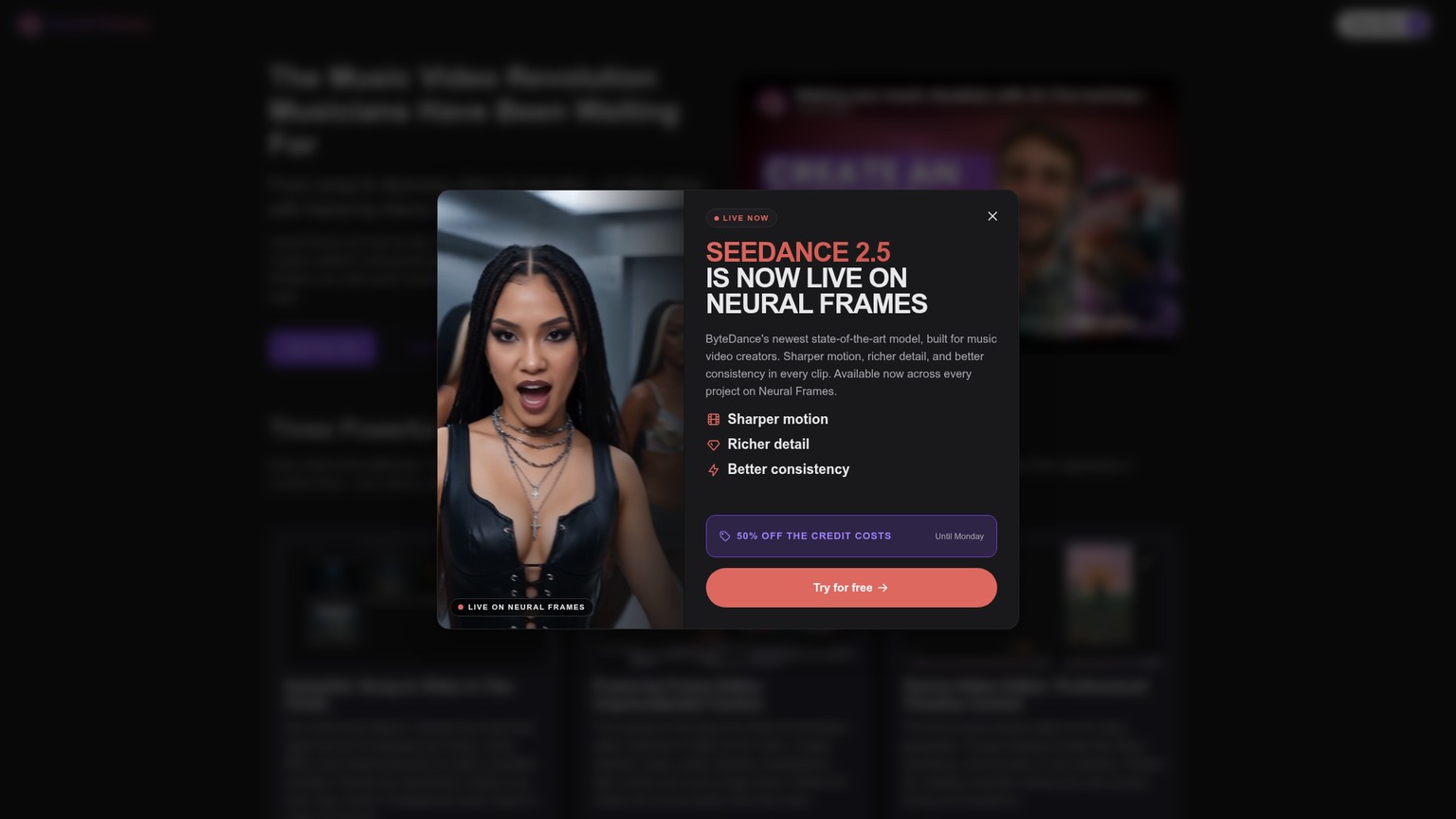
Seedance 2.5 matters because its 30-second generation ceiling reduces the number of source clips a full song needs, not because another model name appeared in a menu. For a three-minute track, a five-second workflow requires 36 clips before a single retry. Ten-second clips reduce that to 18. Thirty-second clips reduce it to six.
That is the shot-count bill: every source clip carries a prompt, reference choice, generation, review, possible retry, placement, transition, and color-matching decision. Moving from 36 clips to six removes 30 of those units, an 83.3% reduction before re-renders. Freebeat now lists Seedance 2.5 across every plan and advertises up to 30 seconds in one generation. Neural Frames also lists the model inside its current Autopilot calculator.
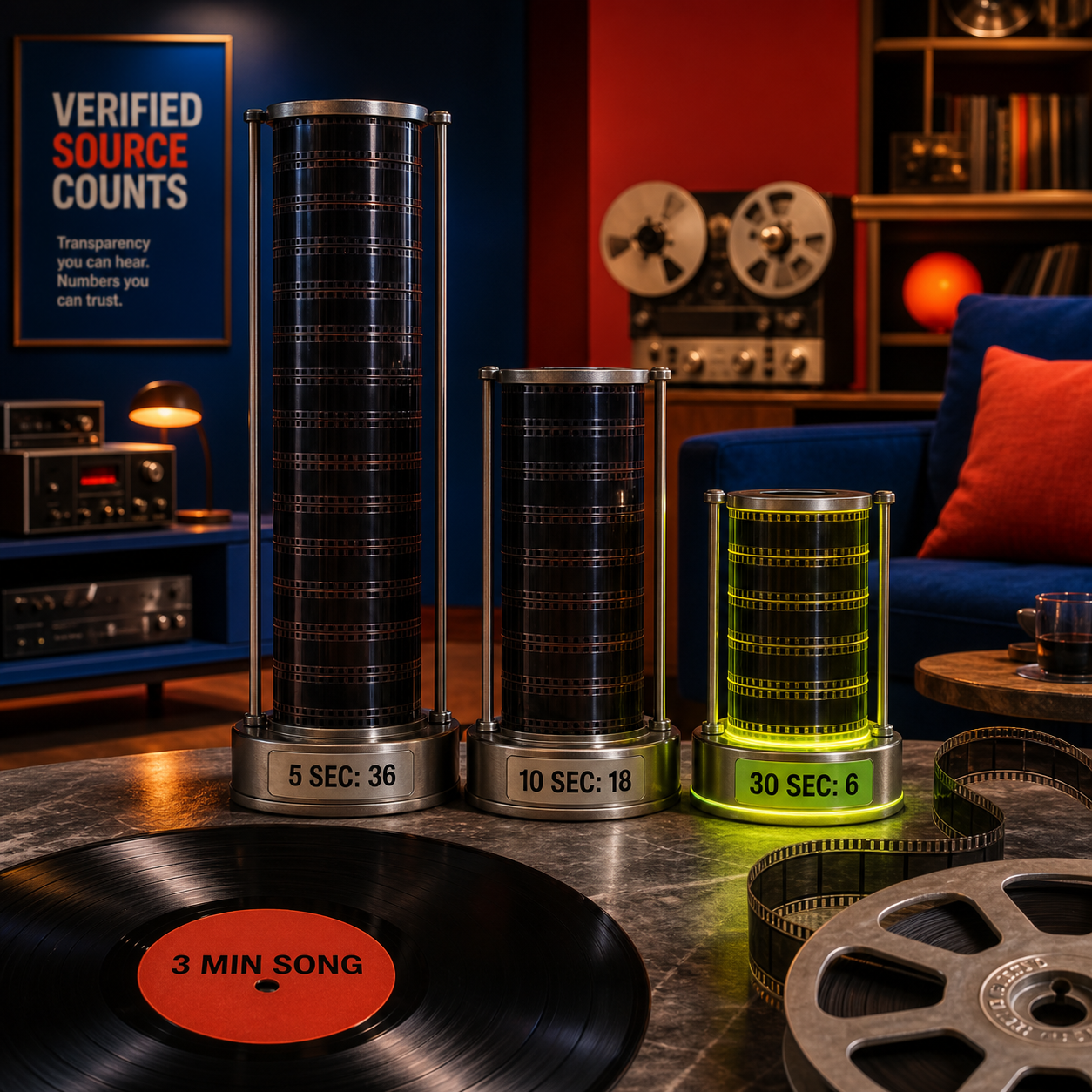
Longer is not automatically better. A 30-second generation that loses the performer at second 12 or misses the chorus change is more expensive to reject than a bad five-second shot. The business consequence is therefore a workflow change: use long generations for sequences with stable art direction, and keep short clips for moments where timing, movement, or identity has to be exact.
The model also does not erase the platform decision. Freebeat makes the new duration useful by wrapping it in a music-video agent. Neural Frames makes it measurable through a per-minute calculator and editable storyboard. Runway exposes Seedance inside a broader production suite. A raw model can lower shot count while still leaving you with the full editing job.
How these six were picked
The ranking turns on five criteria: whether the tool understands a whole song, how much control it gives after the first pass, what one usable coverage pass costs, whether a performer or visual language can survive across cuts, and whether the output is ready for the platforms where music is released.
This is a priced-and-analyzed comparison, not a fabricated hands-on test. The tier names, limits, model availability, trial terms, and generation rates come from each vendor's live pages. The cost examples use a three-minute song so that credit systems become comparable enough to make a buying decision.
The same evaluation brief applies to every tool: a three-minute single with a quiet verse, a large chorus, a bridge, one recurring performer, a 16:9 YouTube master, and a vertical social cut. The first pass has to put visual change at the musical change, preserve the performer, and leave enough resolution for both crops. A tool that can make one attractive image move but cannot support that sequence belongs in the hero-shot group, not at the top of a full-song ranking.
Six products made the final list because each earns a place for a different job. General creative suites that only duplicate a stronger finalist were cut.
1. Freebeat: best overall for a finished song with minimal editing
Freebeat is the best overall AI music video generator because it starts with the song, offers dedicated music-video modes, and now gives every paid tier access to Seedance 2.5. It is the clearest pick for an independent artist who needs a release asset, not a folder of clips.
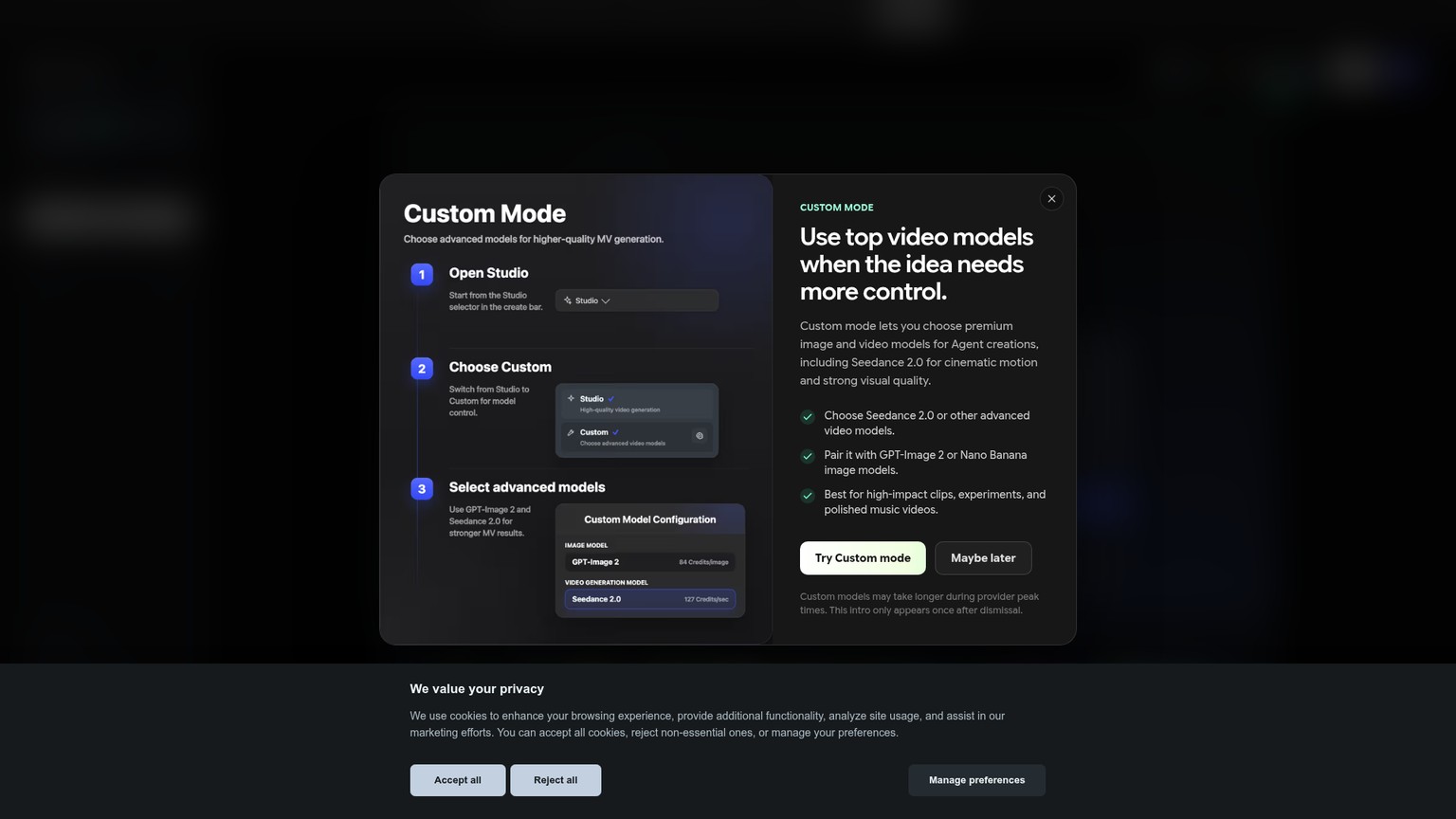
The interface accepts MP3, WAV, FLAC, and AAC files or a supported music URL. Its visible modes include Music Video, Dance Video, Realtime Music Video, Photo Karaoke, and Onbeat Effects, with 16:9, 9:16, and 1:1 controls. That product shape matters: you give it the music first, choose the deliverable, then let the agent construct an edit around the track.
For the evaluation brief, start with the chorus rather than the full three minutes. A first automated pass can prove whether the visual identity, caption treatment, and chorus timing are credible. If the performer drifts or the visual peak lands before the musical peak, change the references and direction on the short excerpt. The after state is not merely a sharper clip. It is a direction you can safely extend across the full song without spending the plan on a bad concept.
Best for: Independent artists who want the shortest path from uploaded song to finished music video
Standout: Whole-song agent workflow plus Seedance 2.5 generations up to 30 seconds
Pricing: Basic $6.99/week list, Pro $34.99/month list, Ultimate $49.99/month list, Creator $249/month list
Free trial: A free entry path is visible, but the live page does not state a fixed full-song allowance
Freebeat's current sale cuts Basic to $4.99/week, Pro to $26.99/month, Ultimate to $39.99/month, and Creator to $199/month. Those are promotional prices, not the durable budget. Basic supplies 1,990 credits per week and tops out at 720p. Pro supplies 10,000 credits per month and also tops out at 720p. Ultimate supplies 19,000 credits per month and reaches 1080p. Creator supplies 95,000 credits per month and also reaches 1080p.
The important limitation is not hidden in a missing feature. It is hidden in the unit. Freebeat publishes plan credits and examples for other models, but it does not publish a fixed credit cost for one finished full-song music video. A $34.99 Pro subscription is therefore a seat price, not a project quote. Treat the chorus test as the quote.
A practical Freebeat setup for the top pick
Cut a representative 30-second chorus
Export the busiest chorus as its own WAV or MP3. The section should include the performer, the strongest rhythmic change, and the visual idea you expect the full video to carry.
Choose Music Video and the final master ratio
Use Music Video rather than an effects mode. Set 16:9 for the YouTube master first. A clean master can be reframed later; trying to solve horizontal and vertical composition in the same first pass weakens both.
Start at 720p
Use the lower-cost draft resolution while the direction is unsettled. Check identity, rhythm, captions, and whether the chorus receives the strongest visual beat.
Change references before buying more credits
If the concept misses, fix the image references and direction rather than asking the same setup for repeated variations. Repetition is not iteration when the underlying brief is wrong.
Extend the approved direction to the full track
Only after the chorus survives review should you generate the complete song. Use the same visual language, then export the 16:9 master and derive the vertical cut.
The craft bar is simple. A release-ready result keeps the recurring performer recognizable, places major cuts on musical changes, avoids accidental text inside generated imagery, and survives the vertical crop. If it only produces an attractive mood sequence, it is a visualizer, not a finished music video.
- Music-first workflow instead of manual clip assembly
- Seedance 2.5 access on every paid tier
- Generations up to 30 seconds reduce source-shot count
- Dedicated modes for music video, dance, karaoke, and beat effects
- Multiple aspect ratios and watermark removal on paid plans
- No published fixed cost for one finished full-song render
- Basic and Pro top out at 720p
- Basic bills weekly and auto-renews
- Promotional prices can obscure the normal plan cost
2. Neural Frames: best for control and transparent project cost
Neural Frames is the better buy when a complete song still needs an editable plan and a cost you can model before rendering. Its Autopilot analyzes lyrics, mood, BPM, and musical structure, creates a storyboard, and lets you adjust that plan before the expensive generation begins.
The platform gives you three distinct workflows. Autopilot handles the full song. The frame-by-frame editor behaves more like a visual instrument, with audio-reactive controls. The timeline text-to-video editor uses multiple models inside a sequence. Neural Frames also says its analysis can extract eight stems, so drums, bass, vocals, and other elements can drive different visual behavior.
That control makes it the strongest choice for an electronic producer, art director, or label operator who wants to inspect the structure instead of accepting a black-box edit. On the evaluation brief, the first storyboard might place a wide atmospheric shot across the chorus. The useful after state comes from moving the performer close-up into that slot before rendering. The intervention happens while the mistake is still a storyboard decision, not a paid video clip.
Best for: Full-song videos that need storyboard, stem, and timeline control
Standout: A live per-minute model calculator plus Autopilot and manual editors
Pricing: Knight $39/month, Ninja $99/month, Nirvana $299/month; annual effective prices are $26, $66, and $199/month
Free trial: Yes
Neural Frames lists Knight with 2,400 monthly credits, seven models, and 1080p upscaling, but no 4K. Neural Ninja includes 7,200 credits, ten models, and 4K upscaling. Neural Nirvana includes 24,000 credits, ten models, 4K, and priority upscaling. Annual billing costs $312, $792, and $2,388 respectively. Credits roll over while the subscription remains active, capped at 300% of the monthly allocation.
The live Seedance 2.5 calculator is the reason Neural Frames ranks above cheaper manual tools. One raw minute currently costs $24.38 on Knight, $20.63 on Ninja, or $18.69 on Nirvana with monthly billing. On annual billing, those values fall to $16.25, $13.75, and $12.44. Scene images may add a small amount.
For a three-minute song, the monthly-plan raw-duration math is $73.14 on Knight, $61.89 on Ninja, and $56.07 on Nirvana. Annual billing reduces those project values to $48.75, $41.25, and $37.32. Three minutes consumes 4,932 credits. Knight's 2,400-credit allocation cannot cover that pass; Ninja can and leaves 2,268 credits before scene-image costs.
The wall is still generative uncertainty. A calculator prices raw duration, not approved footage. Storyboard review reduces waste, but it cannot guarantee character continuity or a keeper on the first render. Neural Frames is transparent about the model cost; you still need a retry reserve.
- Full-song Autopilot with an editable storyboard
- Frame, timeline, and stem-reactive controls in the same product
- Seedance 2.5 cost published by minute and plan
- Credits roll over up to 300% while subscribed
- Failed generations do not consume credits
- Knight cannot fund one three-minute Seedance 2.5 pass
- 4K upscaling starts at Ninja
- Scene images can push the calculator estimate higher
- The useful plan begins at $99 month-to-month
3. Kaiber: best for beat-synced montage from your own visuals
Kaiber is the best fit when you already have stills, clips, cover art, or performance footage and want those assets turned into a beat-synced montage. Its advantage is not a single video model. It is the handoff between Canvas, Beat Sync, Editor, and one shared media library.
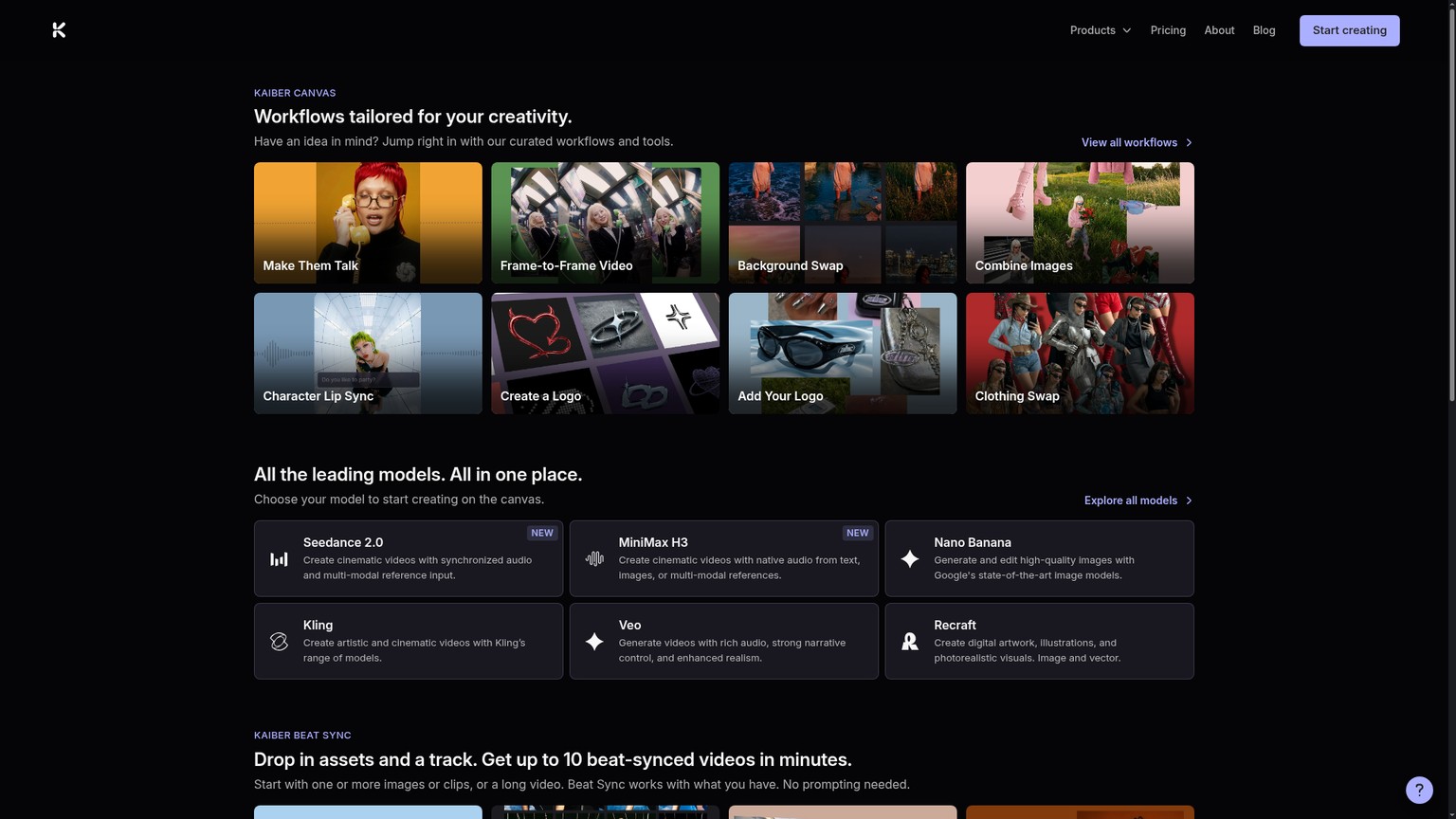
Beat Sync can animate uploaded images, make variations, auto-clip long footage, add lyrics or captions, and adjust sequence timing. Editor then joins the clips, audio, transitions, and text into the final deliverable. On the evaluation brief, the weak first pass is a repeating set of similar stills. The better second pass begins by adding a wide environment, a performer close-up, a texture insert, and a motion clip to the media library before Beat Sync cuts anything. Better source variety produces a better edit without asking a model to invent the entire visual language.
Best for: Musicians with existing art or footage who want fast rhythmic edits
Standout: Beat Sync, auto-clipping, and timeline finishing in connected workspaces
Pricing: Starter $10/month, Creator $29/month, Pro $99/month, Visionary custom
Free trial: No free trial; five days cost $5 and auto-convert to Creator Monthly
Kaiber lists Starter at $10/month or $8/month on annual billing, with 500 credits and one Canvas. It does not include Beat Sync, so it is not the relevant music-video plan. Creator is $29/month or $23/month annual, with 1,500 credits, commercial rights, unlimited timeline edits, Beat Sync batches up to two videos, and Auto-Clip Video. Pro is $99/month or $79/month annual, with 5,000 credits, unlimited Canvases and generations, and batches up to ten videos. Visionary provides unlimited credits and white-glove support at a custom price.
Kaiber's credits do not expire and roll over month to month. That makes the product friendlier to release cycles than plans that wipe an allocation every billing date. The cost wall is predictability: Kaiber says a generation's price changes by model, media type, and duration, with the exact credit cost shown beside the generation button. There is no public fixed three-minute project quote.
The five-day trial includes 500 credits and all three workspaces for $5. It converts to Creator Monthly after five days. Put the cancellation date beside the trial start before you upload the song, especially if the test is for one release rather than an ongoing content schedule.
- Strong workflow for reusing existing visual assets
- Beat Sync and Editor reduce handoffs
- Credits roll over and do not expire
- Creator includes commercial rights and unlimited timeline edits
- Pro supports batches up to ten videos
- Starter omits Beat Sync
- The trial is paid and auto-converts
- Public pricing does not reveal a fixed full-song credit cost
- Best results depend on bringing a varied source library
4. Runway: best manual production workflow
Runway is the best pick when you want to direct individual cinematic shots and finish them in the same production environment. It does not outrank the music-first tools for automation, but its current Studio can trim, stitch, reorder, and export the final video after the shots are generated.
This is the choice for a creative director who already thinks in a shot list. For the evaluation brief, build the chorus as a sequence: performer close-up, environment wide, motion insert, detail shot, return to performer. The first pass fails when every clip uses a different light or lens language. The correction is a shared reference set and shot grammar, then Studio handles the assembly. Runway gives you control, but the operator supplies the musical structure.
Best for: Art-directed hero shots assembled by someone comfortable with an edit
Standout: Broad model access plus Studio for trim, stitch, reorder, and export
Pricing: Free, Standard $15/month, Pro $35/month, Max $95/month, Enterprise custom
Free trial: Free plan with 125 one-time credits
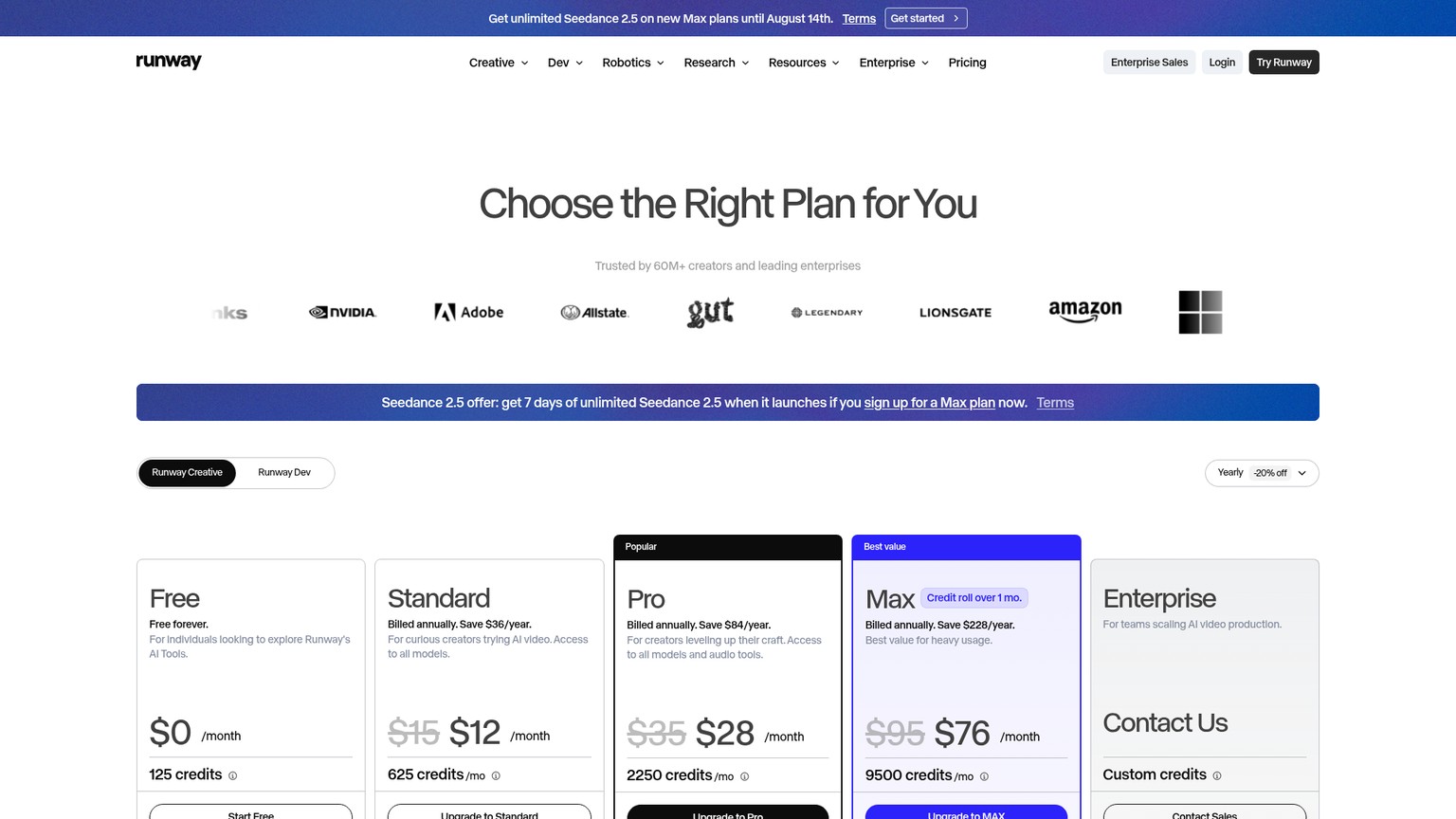
Runway's current plan table puts Standard at $12/month on annual billing with 625 credits, 4K upscaling, and no watermarks. Pro falls to $28/month annual and includes 2,250 credits, custom voices, and 500GB of storage. Max falls to $76/month annual and includes 9,500 credits plus one month of rollover. Enterprise adds custom credits, SSO, analytics, configurable teamspaces, onboarding, and priority support.
Gen-4.5 costs 12 credits per second. One raw 180-second coverage pass therefore costs 2,160 credits. That consumes 96% of Pro's monthly allocation before a single alternate take, rejected hand, continuity repair, or transition shot. Max can fund about 4.4 such raw passes, which is closer to the capacity a manually directed full song needs.
Runway is also advertising a time-limited Seedance 2.5 offer for new Max plans, shown through 14 August, with seven unlimited days when the model launches in the plan. Treat that as an acquisition bonus, not the basis for an annual commitment. The durable plan value is the 9,500-credit allocation and the finishing workflow.
For broader model and image-to-video choices, the AI video generator roundup and image-to-video comparison cover the general category. This ranking keeps Runway below the music-first products because a music video is an edit, not just a generation.
- Deep manual control over individual shots
- Studio joins generation and final assembly
- Access to multiple leading models in one workspace
- Max supports meaningful iteration volume and limited rollover
- Free credits can prove the interface before purchase
- No full-song structural planner comparable to Autopilot
- One raw three-minute Gen-4.5 pass consumes 96% of Pro
- Standard and Pro monthly credits do not roll over
- The operator still owns continuity and beat timing
5. Kling AI: best budget plan for manual clip volume
Kling AI is the budget manual option when you want a large number of standalone clips and will assemble them elsewhere. The paid plans add 1080p output, video extension, watermark removal, fast-track generation, and commercial rights; the free tier does not permit commercial use.
The strongest use case is a musician or editor who already has a defined shot list and needs many variations at a low entry price. It is not the right purchase when the brief says only, "make a music video from this song." On the evaluation brief, Kling can supply the performer, environment, and insert shots, but the editor still has to decide where the verse ends, where the chorus opens, and how every clip returns to the same visual world.
Best for: Manual shot production at a low starting price
Standout: Paid commercial rights, 1080p generation, extension, and high clip estimates
Pricing: Free; Standard $10 list; Pro $37 list; Premier $92 list; Ultra $180 list
Free trial: Free tier, but generated content is not for commercial use
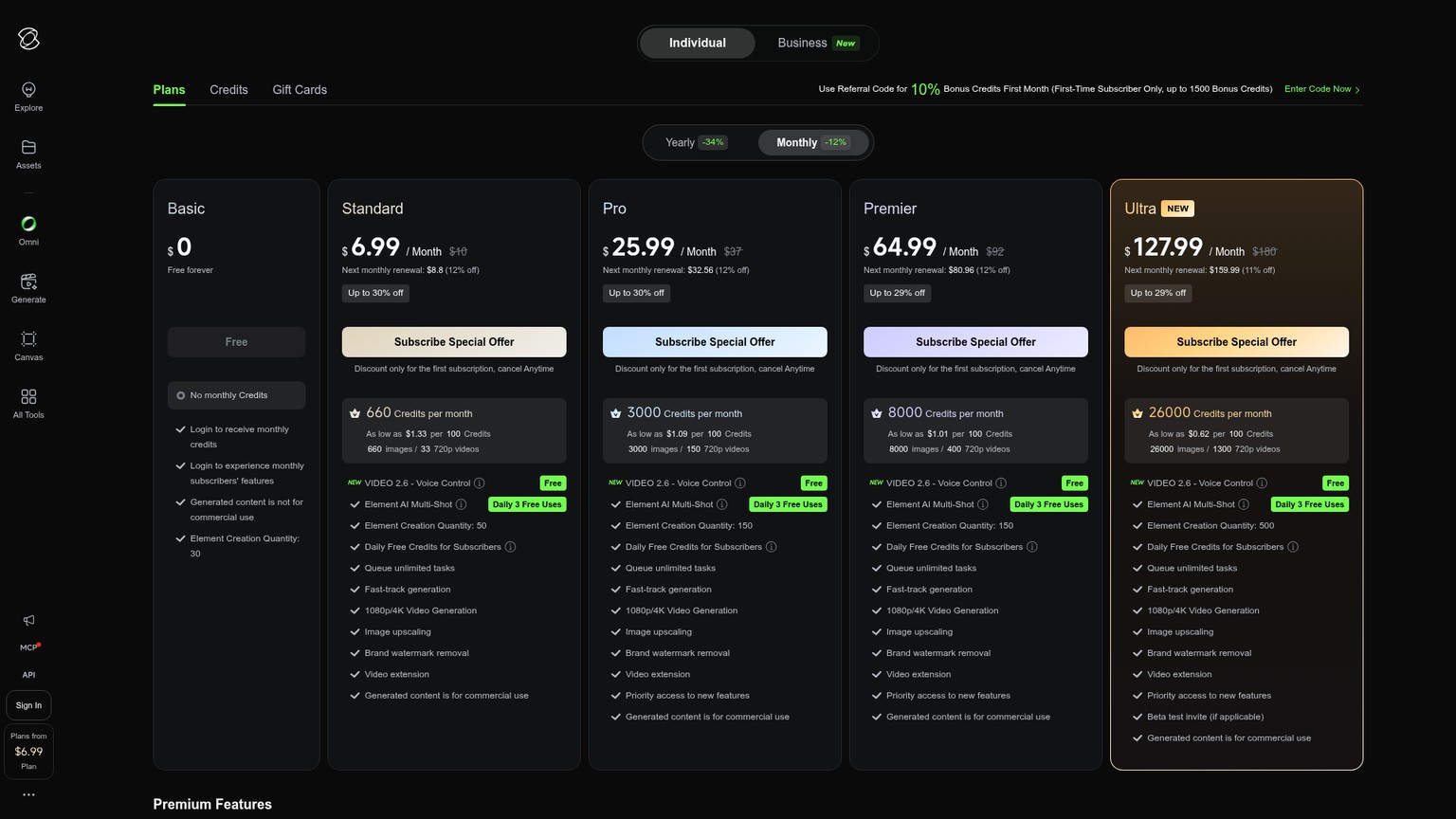
Kling's current membership page shows first-subscription offers of $6.99 for Standard, $25.99 for Pro, $64.99 for Premier, and $127.99 for Ultra. The next monthly renewals are $8.80, $32.56, $80.96, and $159.99. Those renewal figures belong in the budget, not the discounted first month.
Standard includes 660 credits and the vendor estimates 33 720p videos. Pro includes 3,000 credits and estimates 150 videos. Premier includes 8,000 credits and estimates 400. Ultra includes 26,000 credits and estimates 1,300. The separate annual gift-card path shows $79.20, $293.04, $728.64, and $1,429.99 for the four paid levels.
For a three-minute plan made from 36 five-second shots, the Standard estimate of 33 videos falls three clips short before retries. Pro's 150-video estimate covers four 36-shot passes with six estimated videos left. The exact model and settings still determine consumption, but that comparison identifies the first tier with a usable retry reserve.
The craft wall is continuity. Video extension helps a shot last longer, but extension is not the same as understanding a song or preserving one performer through an entire edit. Use consistent source images, a fixed palette, and repeated camera language. If that sounds like the work you hoped the software would remove, choose Freebeat or Neural Frames instead.
- Low promotional entry price
- Paid plans allow commercial use and remove watermarks
- 1080p and video extension are included on paid levels
- Pro supplies enough estimated clip volume for retrying a 36-shot plan
- Free output is not licensed for commercial use
- Promotional prices rise at renewal
- Standard falls short of a 36-shot plan before retries
- No whole-song analysis or automated final edit
6. Pika: best for performance inserts and effects
Pika is the best supporting tool for a music video that needs one memorable performance insert, transition, swap, or effect. It is not a full-song planner, and that is why it ranks sixth rather than pretending a collection of short effects is an edit.
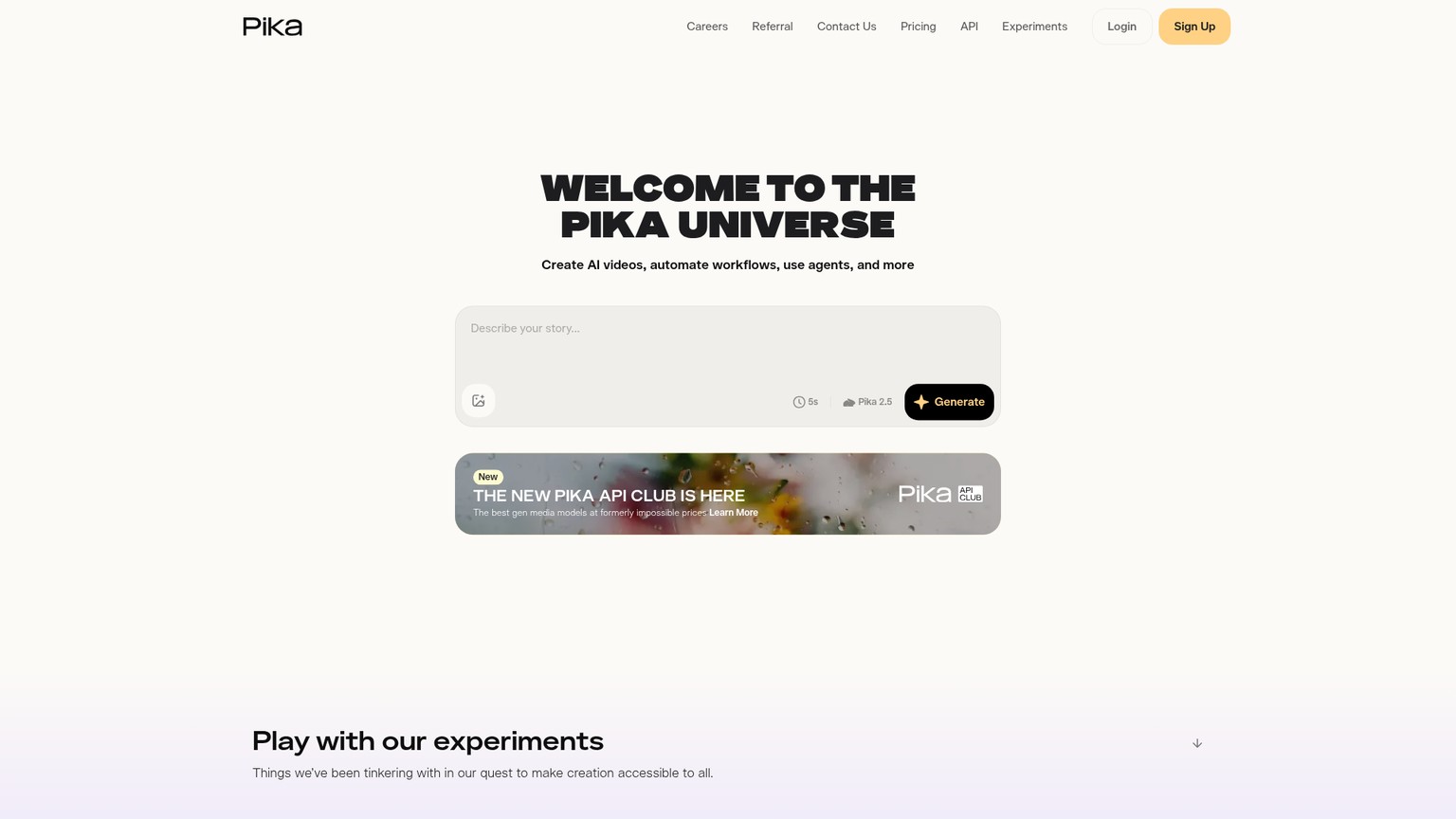
Pika 2.5 handles text-to-video and image-to-video, while Pikascenes, Pikadditions, Pikaswaps, Pikatwists, and Pikaffects create more specific transformations. Pikaframes supports sequences up to 25 seconds. Pikaformance accepts audio up to 30 seconds at 3 credits per second, which makes it useful for a chorus performance or lip-synced insert without turning it into a full-track system.
Best for: Chorus hooks, performance moments, and visual transformations inside a larger edit
Standout: Short-form effect tools and audio-driven Pikaformance clips
Pricing: Basic free, Standard $10/month, Pro $35/month, Fancy $95/month
Free trial: Free Basic tier with 80 monthly video credits
Pika's current pricing page gives Basic 80 credits, Pika 2.5 at 480p, watermark-free downloads, and commercial use. Standard includes 700 credits, all resolutions, the full main feature set, and fast generations. Pro includes 2,300 credits and faster generations. Fancy includes 6,000 credits and the fastest queue.
A five-second Pika 2.5 clip costs 20 credits at 720p or 40 credits at 1080p. Covering a three-minute song with 36 five-second clips therefore costs 720 credits at 720p or 1,440 credits at 1080p before retries. Standard's 700 credits miss even the 720p raw pass by 20 credits. Pro can cover either raw pass and leaves 860 credits after the 1080p version.
On the evaluation brief, the right Pika job is the chorus reveal, not the verse-to-bridge architecture. Start with a strong performer reference, build one 10- to 30-second moment, export it, and cut it into the main timeline. The after state is a distinctive focal beat inside a coherent video, rather than 36 unrelated effects fighting for attention.
- A genuinely usable free tier with commercial use
- Watermark-free downloads on every listed plan
- Distinct tools for scenes, additions, swaps, twists, and effects
- Pikaformance supports audio clips up to 30 seconds
- Pro can cover a raw three-minute 1080p shot plan
- Standard misses a 36-shot 720p coverage pass
- The product does not plan a full song's structure
- Effects can overwhelm the visual language when overused
- Full-song assembly still happens elsewhere
Who should pick what
Choose Freebeat if you have a song, a release date, and limited appetite for editing. It is the default recommendation because the product starts from the deliverable. Choose Neural Frames when the storyboard, stems, recurring character, or line-item render estimate matters more than the cheapest entry price. Choose Kaiber when your cover art, photography, performance footage, and existing clips are the raw material.
Choose Runway when you are directing shots and want the generation and finishing tools in one environment. Choose Kling AI when clip volume and low starting cost matter, and you already have an editor. Choose Pika when the timeline exists but needs a performance moment, visual transformation, or social-first hook.
The choice flips at one question: are you buying a finished edit or buying shots? Finished-edit buyers should pay for song understanding. Shot buyers should pay for control, consistency, and enough monthly capacity to retry. Mixing those goals is how a low subscription creates a high labor bill.
For the Seedance-specific model economics and moderation issues behind several of these platforms, the earlier Seedance 2.0 review is the useful companion. Seedance 2.5 reduces the source-shot burden, but the platform around the model still decides whether those shots become a video.
The ones to avoid for this job
Luma Dream Machine is the wrong buy for one-click full-song automation. Its current product covers general creative agents, clip stitching, captions, short-form ads, trailers, and podcast-to-video. It does not list full-song structure analysis or beat-synced music-video assembly. Luma can still make useful source footage, but at $30/month for Plus, $90 for Pro, and $300 for Ultra, it needs a different reason to be in the stack.
Kaiber Starter is the wrong Kaiber plan for a music-video buyer. It removes Beat Sync, the feature that gives Kaiber its place in this ranking. Pay for Creator or use the $5 trial to prove the workflow.
Kling Free is the wrong tier for a commercial release. The vendor explicitly bars commercial use on free output. A free generation that cannot legally ship beside a monetized song is a demo, not a production saving.
Avoid any Seedance-branded wrapper that will not state its model version, plan renewal, or per-generation cost before checkout. The model name does not make the billing transparent.
The Monday move
On Monday morning, export one 30-second chorus and four reference images: performer close-up, performer full-body, environment, and palette or texture. Write a four-point acceptance test before opening a tool: the performer stays recognizable, the visual peak lands on the chorus, the clip survives a 9:16 crop, and the output contains no accidental text or unusable anatomy.
Then choose one route. If the deadline is the priority, run the chorus through Freebeat's music-video path. If control and a visible budget are the priority, use Neural Frames. If you already have strong footage or art, spend $5 on Kaiber's five-day trial and set the cancellation reminder immediately. If the goal is only two or three hero shots, use the free allowances in Runway, Kling, or Pika before buying a month.
Do not evaluate the test by whether one frame looks impressive. Count keepers, note the credits consumed, and estimate the remaining source-shot count. Buy a full plan only when the chorus proves that the workflow can finish the edit. That is the consequence of Seedance 2.5: longer clips can shrink the work, but only a disciplined buying test turns the capability into a lower production bill.
Frequently asked questions
What is the best free AI music video generator?
Pika has the clearest recurring free allowance: Basic includes 80 monthly video credits, commercial use, and watermark-free downloads. It is best for a short hook or insert, not a full three-minute edit. Freebeat and Neural Frames expose free entry paths, but neither turns a full-song render into unlimited free production.
Can an AI music video generator make a video from an MP3?
Yes. Freebeat explicitly accepts MP3, WAV, FLAC, and AAC uploads or a supported music URL. Neural Frames and Kaiber also start their music-specific workflows from an uploaded song, then analyze or synchronize the visual plan around it.
Is there a free AI music video generator without a watermark?
Pika's free Basic tier explicitly includes watermark-free downloads and commercial use. Its 80 monthly credits are enough for several short 480p clips, but not the 720 credits required for a raw three-minute plan built from five-second 720p Pika 2.5 clips.
Before you commit a release budget to another creative tool, get the AI Business Workflow Audit Checklist.
- Last Updated
- Category
- Design
- Language

Beautiful AI Review
Beautiful.ai review: Smart Slide guardrails, current pricing, Team seat ambiguity, AI features, export limits and when Gamma is the better fit.Oct 10, 2026Design
Nano Banana 2.1 Explained: Pricing, Changes, and When to Switch
Nano Banana 2.1 cuts 1K and 2K image costs about in half. Compare monthly budgets, verify the migration, and decide when Pro earns its premium.Oct 8, 2026Design
ElevenLabs Alternatives: Murf, MAI-Voice-2, OpenAI TTS and Cartesia (Verified October 2026)
Compare ElevenLabs, Murf, MAI-Voice-2, OpenAI, Cartesia, Google and Speechify by studio or API job, with verified prices and switching costs.Oct 4, 2026Design
Higgsfield API Pricing
Price Higgsfield API video and image jobs, separate API dollars from app credits, and check top-ups, expiry and cashback before scaling.Sep 27, 2026Design
Is Gemini Live Avatar Free
Check Gemini Live Avatar access, Enterprise API charges and custom-avatar limits before budgeting a customer-facing video agent.Sep 27, 2026Design
Gemini 3.8 Flash TTS Pricing
Price Gemini 3.8 Flash TTS by audio minute, compare Flash-Lite and service tiers, and budget the January 2027 increase.Sep 24, 2026Design
ngram vs Demosmith
Compare ngram and Demosmith for product videos, browser capture, revisions and usable exports, with costs matched to the same job.Sep 19, 2026Design