Best AI Previsualization Tools for Video Production 2026
Eight AI previsualization tools ranked by workflow, live price, production limits, and the hours each must save to earn its seat in 2026.
Published
 By Omid Saffari


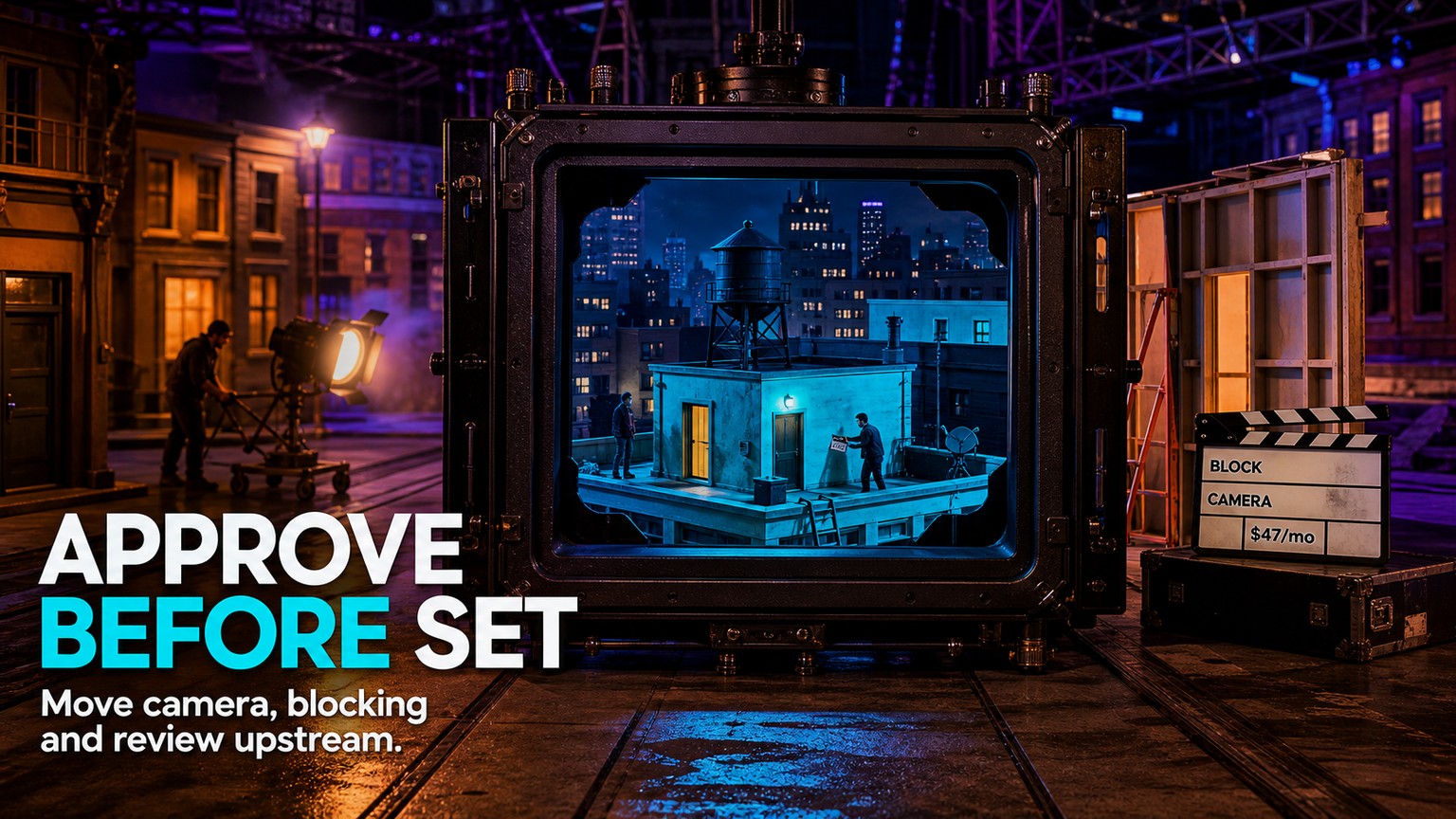
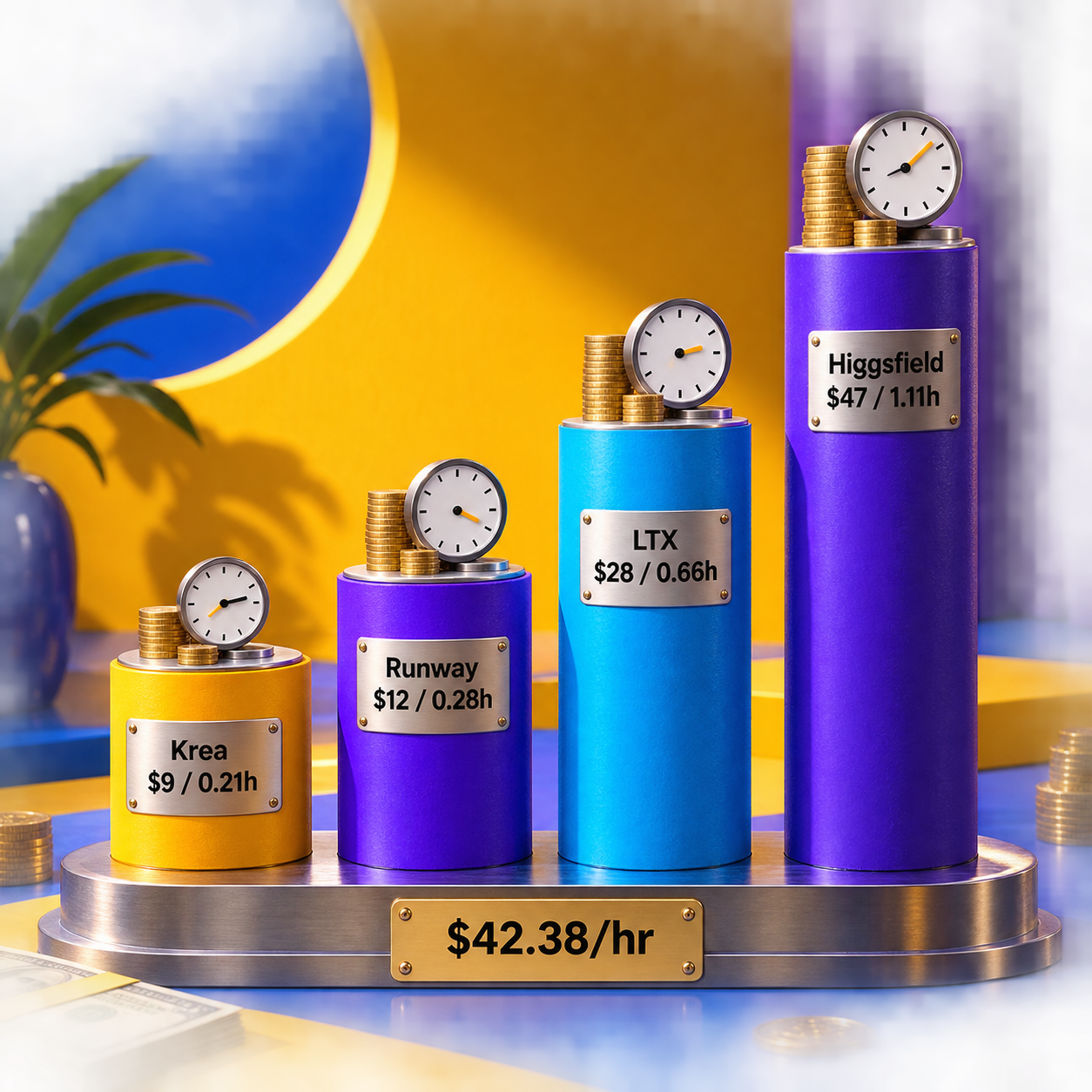
The best AI previsualization tools for video production 2026 are the ones that move a disagreement about camera, blocking, or continuity out of the shoot day. Higgsfield for Blender is the best overall pick: at its $47 annual-plan monthly rate, it covers its subscription after 1.11 saved staff-hours against the U.S. motion-picture industry's $42.38 average hourly wage.
Best AI Previsualization Tools for Video Production 2026: At a Glance
Previsualization, or previs, is a disposable version of a scene made to answer production questions before the expensive version begins. The useful output is not necessarily beautiful. It is an artifact that lets a director say, "move the camera," a producer say, "that setup adds a company move," or a client say, "version B is approved."
The rankings below are based on live product and pricing documentation verified on August 30, 2026. They are a documented comparison, not a claim that every product was exercised in a production. Starting price means the lowest public paid rate shown, while the free-trial column separates a time-limited trial from an ongoing free tier.
The short verdict: choose Higgsfield for Blender when camera and blocking must remain editable; LTX Studio when a script must become a coherent sequence; InVideo Agent when the target is a rough cut with narration and media; Boords when approval discipline matters more than generative video; and Runway or Krea when the open question is visual motion or look.
What Changed: Previsualization Can Now Stay Inside the 3D Scene
The expensive failure in previs is a beautiful frame that cannot answer a physical question. A still can sell a rooftop mood while hiding whether the camera can clear the parapet, how a character crosses the space, or which direction the key light should come from. When every revision starts as another flattened image, the team keeps reinterpreting the same scene instead of editing a shared object.
Higgsfield for Blender changes that handoff. Its Scene Builder creates objects, layout, and light as editable data in an open Blender file. The add-on sits over the 3D viewport and exposes Scene Builder, 3D Model, Character Animation, Image, Video, Camera, and Asset tabs. It supports Blender 4.2 through 5.1, can bring generated 3D results in as objects, and shows the credit price before generation.
That matters because an editable proxy is a decision surface. A proxy is a stand-in used to approve a decision, not a promise of final pixels. The director can alter a lens or camera path, the production designer can replace a generated prop with a measured model, and the producer can keep the same scene file attached to the approval history.
The consequence is a budget line. The U.S. Bureau of Labor Statistics reported average hourly earnings of $42.38 for all employees in motion picture and sound recording industries in June 2026, preliminary. Five people in a 90-minute review represent $317.85 in wage time before room, equipment, or opportunity cost. Saving 1.11 staff-hours covers Higgsfield Plus at its $47 annual-plan monthly rate. One prevented five-person review covers roughly 6.8 months of that subscription.
How These Tools Were Picked
The ranking turns on four production criteria.
- Decision fidelity: Does the output answer the actual open question, such as camera geometry, sequence continuity, motion, or stakeholder approval?
- Iteration cost: Can a team make the next revision without recreating every prior decision, and is generation spend visible before it happens?
- Handoff quality: Does the work leave the tool as an editable scene, structured storyboard, animatic, or reviewable artifact instead of an orphaned image?
- Approval fit: Can the next stakeholder understand, comment on, and approve the artifact without learning the creator's software?
Price, licensing, credits, plan limits, and named capabilities were checked on vendor-owned pages. A product lost places when the free tier barred commercial work, the plan page hid a meaningful extra cost, or its output solved only one slice of the job. Luma Dream Machine was cut from the ranked eight because it is strong for generated motion but its documented product does not provide screenplay breakdown, shot-list construction, or a client-approval workflow. That is a scope decision, not a quality judgment.
The central rule is simple: buy the layer that resolves the next expensive disagreement. A motion generator is overkill when the client only needs frame order. A storyboard workspace is insufficient when the cinematographer needs editable camera geometry.
The Eight Best AI Previsualization Tools, Ranked
1. Higgsfield for Blender: Best Overall
Higgsfield for Blender is the strongest overall choice because it keeps AI generation attached to an editable 3D scene rather than making every output a dead end.
For a 30-second rooftop spot, a director can use Scene Builder to establish the roof, bring in a Meshy 5 prop as an object, adjust the camera, and create a motion proxy with Seedance 2.5. The specific advantage is not that one model wins every beauty contest. It is that objects, layout, light, media, and generated assets remain connected to the open Blender file.
The wall is accuracy. AI-built geometry is a starting proxy, not a surveyed location, a lens grid, or a final VFX asset. A production still needs measured dimensions, clearance checks, and a cinematographer's judgment before treating a move as physically executable. Credit economics also follow the generation path: the add-on shows the price before a run, while advertised unlimited access applies on higgsfield.ai rather than across every interface.
Best for: Directors, previs artists, and small production teams resolving camera, blocking, and scene-layout questions
Standout: Scene Builder creates editable objects, layout, and light inside Blender 4.2 through 5.1
Pricing: Current plans: Free access tier with limited models and no included credits; Starter $19/month on the annual view with 270 credits; Plus $59 monthly or $47/month billed annually with 1,200 credits; Ultra $129 monthly or $99/month billed annually at the displayed 3,000-credit configuration, with 6,000- and 9,000-credit selectors; Team for 2 to 9 seats, Scale for 5 to 15 seats, and Enterprise with negotiated pricing
Free trial: No time-limited trial; the free access tier has no included credits
The Plus plan is the practical production floor when Seedance 2.5 matters because Starter excludes it. Individual subscription credits reset each billing cycle and do not roll over. Team and Scale are priced per seat in an interactive business view, but a stable public numeric quote was not exposed, so a buyer should price the exact seat count before standardizing the add-on.
- Keeps generated scene data editable in the open Blender file
- Combines seven planning and generation tabs in the 3D viewport
- Shows generation credit cost before a run
- Supports current image, video, and 3D options including Seedance 2.5 and Meshy 5
- Free access includes no credits
- Starter excludes Seedance 2.5
- AI geometry still needs measurement and production validation
- Individual credits do not roll over
The Same-Brief Before and After
Consider a hypothetical brief: a cyclist reaches a rooftop at dusk, crosses behind a product pedestal, then turns toward a low camera as city lights wake up. A still-first pass can establish color and wardrobe, but it leaves three things ambiguous: whether the cross hides the product, whether the low camera clears the roof edge, and whether the turn reads within the shot length.
The better pass keeps the same brief but turns each ambiguity into an editable decision. The rooftop becomes rough geometry, the pedestal becomes a replaceable object, the cyclist path becomes blocking, and the camera gets an explicit position. Only after those relationships work does the motion proxy earn generation spend. The result is ship-ready as an approval and handoff artifact, but mood-board-only as final imagery until real dimensions, art, light, and performance replace the proxies.
Build the decision space
Open the target file in Blender 4.2 through 5.1 and use Scene Builder to create the rooftop, pedestal, rough lighting, and layout. Keep the brief focused on spatial relationships rather than surface polish.
Replace the hero prop
Use the 3D Model tab with Meshy 5 for the pedestal or product proxy, then place and scale the resulting editable object. Treat its proportions as provisional until production supplies measured geometry.
Lock camera and blocking first
Set the low camera in the Camera tab, then adjust the character path until the cross no longer obscures the product. Generate a Seedance 2.5 motion proxy only after the camera and blocking answer the brief.
Hand off the scene, not only the clip
Use the Asset folder shortcut to collect generated files and save the Blender scene with clear camera, object, and version names. Send the proxy for review alongside the editable file so the next revision starts from approved geometry.
2. LTX Studio: Best for Script-to-Sequence Planning
LTX Studio is the best script-first option when a treatment or screenplay must become a coherent sequence before anyone worries about final pixels.
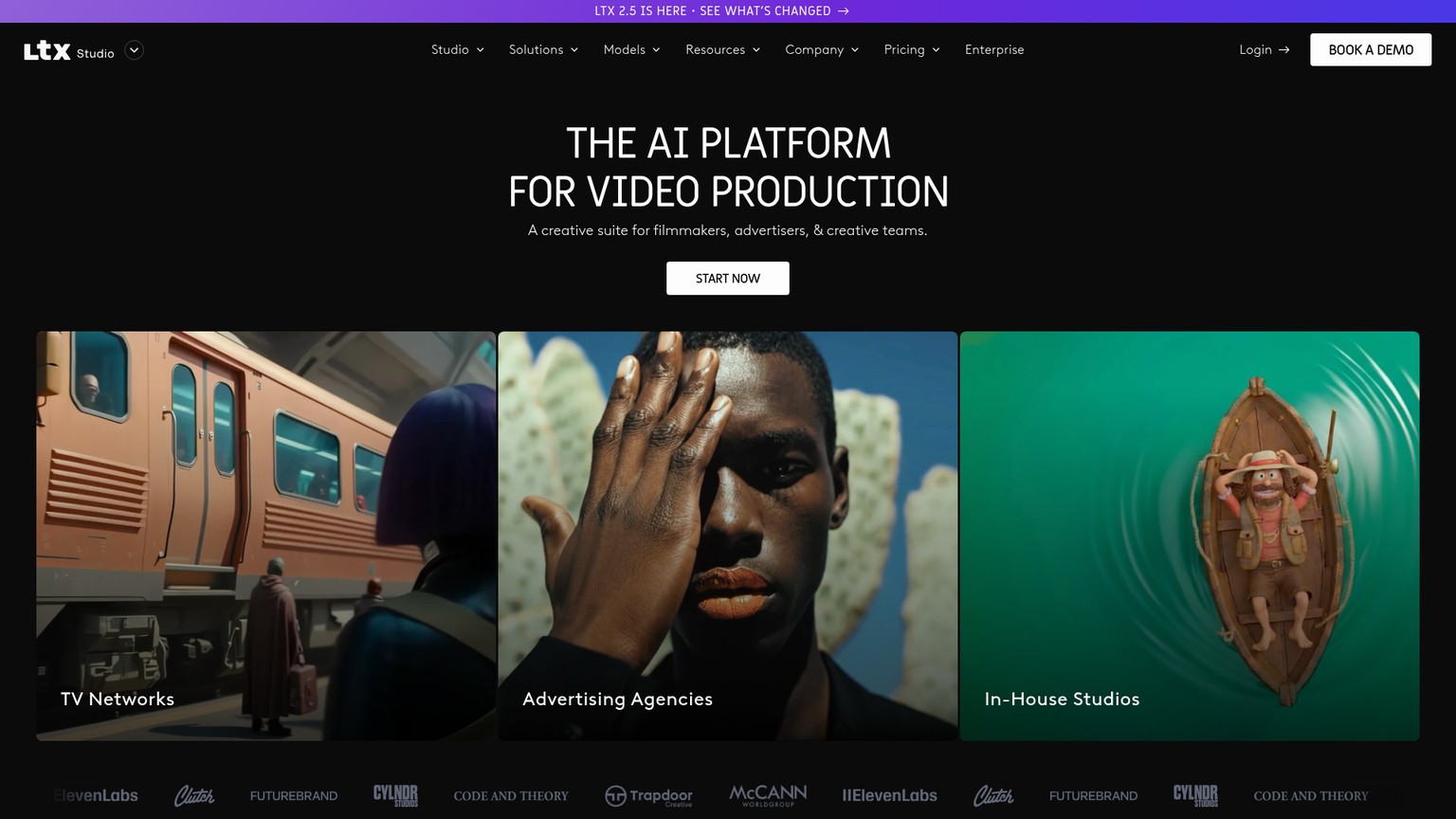
Its planning value comes from joining blank and AI storyboards, camera controls, consistent Elements, and pitch-deck output in one sequence-oriented workspace. A director developing a six-scene branded short can preserve a hero, prop, and visual world across boards, then use the sequence to expose continuity gaps before paying for high-fidelity motion.
The wall is licensing and collaboration. Free includes 800 one-time credits and capable planning tools, but it is personal use. Lite removes the watermark but still does not license business, marketing, sponsored, or paid client work. Commercial use begins at Standard, and the meaningful collaboration allowance appears on Pro with three collaborators per project.
Best for: Turning scripts and treatments into coherent visual sequences
Standout: AI Storyboards, consistent Elements, pitch decks, LTX-2.5, and camera controls in one planning layer
Pricing: Current plans: Free $0 with 800 one-time credits; Lite $15 monthly or $12/month billed annually with 8,000 credits; Standard $35 monthly or $28/month billed annually with 28,000 credits; Pro $125 monthly or $100/month billed annually with 110,000 credits and three collaborators per project; Enterprise custom with unlimited collaborators
Free trial: No time-limited trial; a free personal-use tier is available
The correct production comparison is not Free versus Standard on raw credits. It is personal-use output versus licensed client work. A freelance director can explore the workflow for $0, but a paid campaign should be budgeted from the $28 annual-rate Standard tier, where commercial rights, AI Storyboards, Elements, and Pitch Decks align.
- Connects script development, storyboards, camera choices, and sequence review
- Offers LTX-2.5 and advanced camera controls even on Free
- Standard adds commercial use and consistent Elements
- Pro supports three collaborators per project
- Free and Lite are not licensed for paid client or marketing work
- Commercial use raises the realistic starting point to Standard
- Pro is a sharp jump from $28 to $100 at annual monthly rates
3. InVideo Agent: Best for an Agent-Led Rough Cut
InVideo Agent is the best option here when the desired approval artifact is closer to a narrated rough cut than a board or 3D scene.
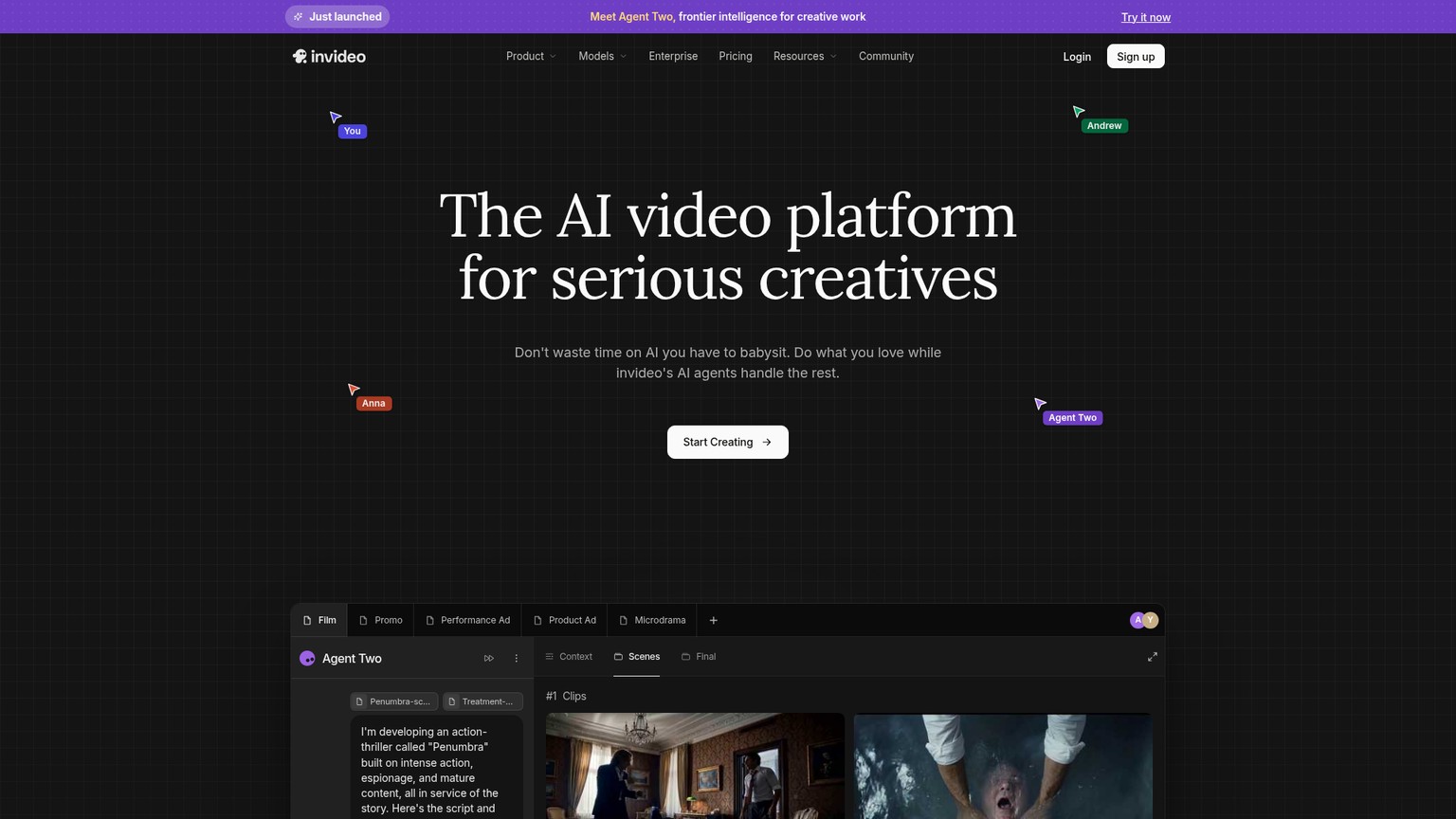
The agent retains project context, supports script writing, creates a shot-by-shot storyboard, exposes a timeline, and supports real-time multiplayer collaboration. That makes it useful for an internal marketing team turning a campaign idea into a reviewable sequence with voice, music, and generated or stock media. Access to more than 200 image, video, audio, and music models widens the output palette without requiring a separate subscription for each model.
The wall is variable credit spend. Different agents and media models consume different amounts, plan prices are far apart, and included credits do not roll over. The interface reports project usage and can ask before every generation, which should be enabled during previs so an exploratory loop does not silently become a production-sized bill.
Best for: Context-aware script, storyboard, voice, media, and rough-cut assembly
Standout: One agent-led project can move from idea to shot-by-shot sequence and timeline
Pricing: Current plans: Free with limited credits resetting Monday at 12 a.m. UTC; Plus $17/month billed $200 yearly with 75 credits and 20 GB; Max $85/month billed $1,000 yearly with 390 credits and 100 GB; Generative $170/month billed $2,000 yearly with 800 credits and 2 TB; Elite $900/month billed $10,800 yearly with 4,250 credits and 10 TB; Team and Enterprise custom
Free trial: No card is required for the ongoing free tier
Plus includes four avatars or voice clones, Max 16, Generative 40, and Elite 200. Those allowances matter to high-volume personalized video, but they should not decide a previs purchase unless synthetic presenters are actually in the brief. For ordinary production planning, the $17 Plus tier is the low-risk entry and the usage-control setting is more important than the avatar count.
- Carries project context from idea through storyboard and timeline
- Combines script, media, narration, and multiplayer review
- Includes access to more than 200 media models on paid plans
- Can require confirmation before each generation
- Credit cost varies by invoked agent and model
- Included paid credits do not roll over
- The jump from Plus to Max is $68/month at annual monthly rates
- A generated rough cut is less useful for exact 3D camera proof
4. Katalist: Best for Character-Consistent Storyboards
Katalist is the most focused pick for converting a screenplay into frames while keeping recurring characters recognizable across a longer sequence.
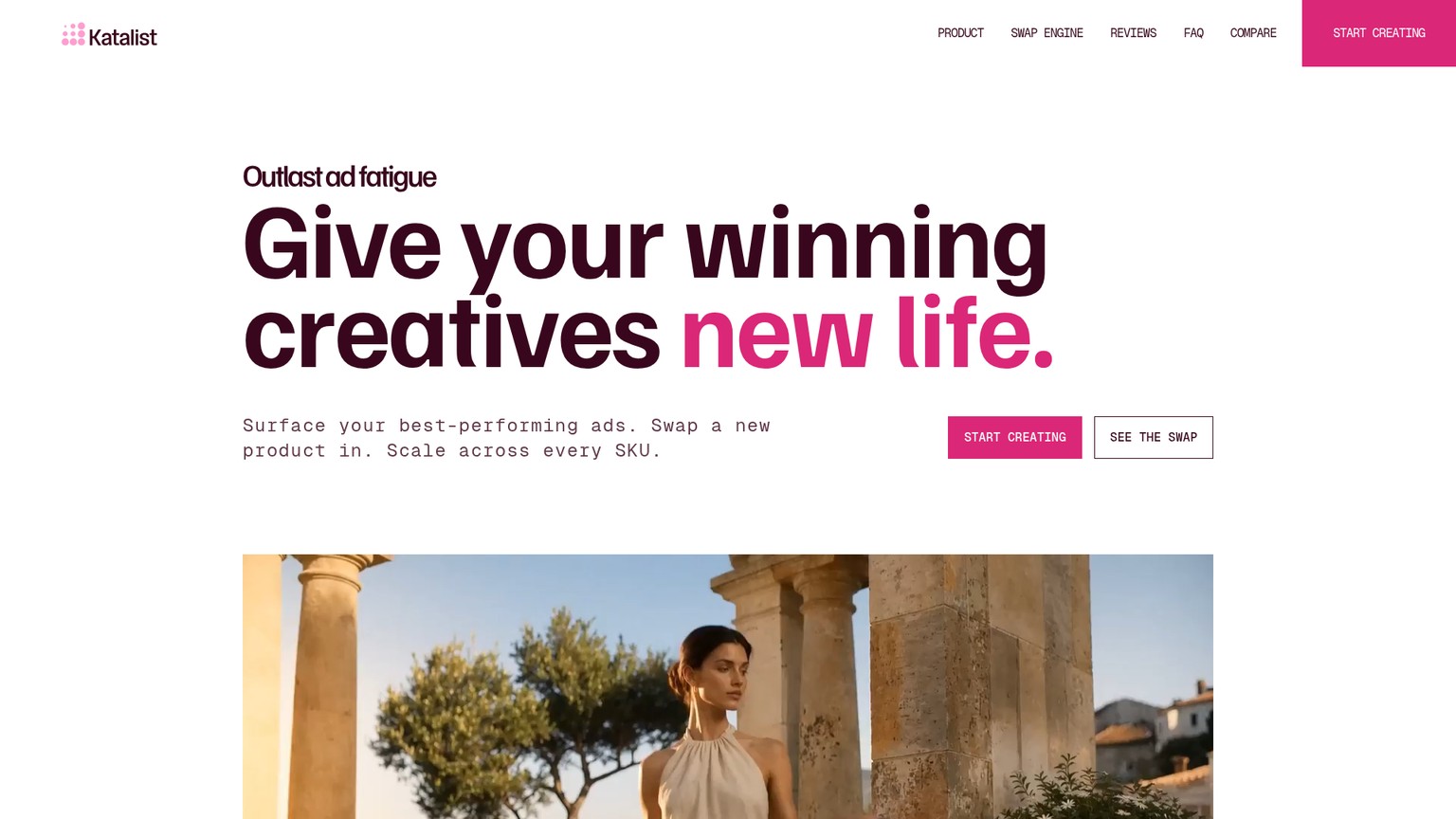
It combines an AI Script Assistant, consistent characters, voiceover, storyboard generation, and exports aimed at production handoff. A creative team boarding a dialogue-heavy spot can define its leads, generate the scene sequence, repair inconsistent frames, and move the result toward Adobe Premiere Pro on the Pro plan. The Unlimited tier adds real-time collaboration and room for more than 200 frames per project.
The wall is the pricing page itself. The monthly panel shows Essential at $19, Pro at $39, and Unlimited at $99. The annual panel shows Essential at $29/month billed $348 yearly, Pro at $31/month billed $374 yearly, and Unlimited at $79/month for two users billed $948 yearly. Essential appearing more expensive on the annual panel than on the monthly panel is internally inconsistent, and the stated $31 times 12 does not exactly equal the displayed $374 total. Verify the checkout total before approving a purchase order.
Best for: Screenplay breakdown and recurring-character continuity
Standout: Consistent characters, editable frames, voiceover, and production-oriented exports
Pricing: Current plans: Essential $19 monthly or a displayed $29/month billed $348 annually, with 200 image and 700 video credits; Pro $39 monthly or a displayed $31/month billed $374 annually, with 700 image and 1,500 video credits; Unlimited $99 monthly or $79/month for two users billed $948 annually, with unlimited image generations and 3,000 video credits on the monthly panel; Enterprise custom
Free trial: 7 days
Essential allows five projects and one custom character. Pro raises that to 20 projects and 10 custom characters and adds image editing plus Premiere integration. Unlimited removes project and character caps, adds collaboration, and supports ZIP, PowerPoint, and video export. Those are meaningful differences, but the inconsistent annual display means the checkout is part of the evaluation.
- Purpose-built path from script to storyboard and animatic
- Consistent-character controls suit dialogue and recurring cast
- Pro includes Premiere Pro integration
- Unlimited adds real-time collaboration and large boards
- Live annual and monthly displays are internally inconsistent
- Essential permits only one custom character
- Video credits remain metered even when Unlimited removes image limits
5. Boords: Best for Client Review and Approval
Boords is the strongest approval-first choice because its product is organized around scripts, storyboards, comments, version history, and animatics rather than around a single generation model.
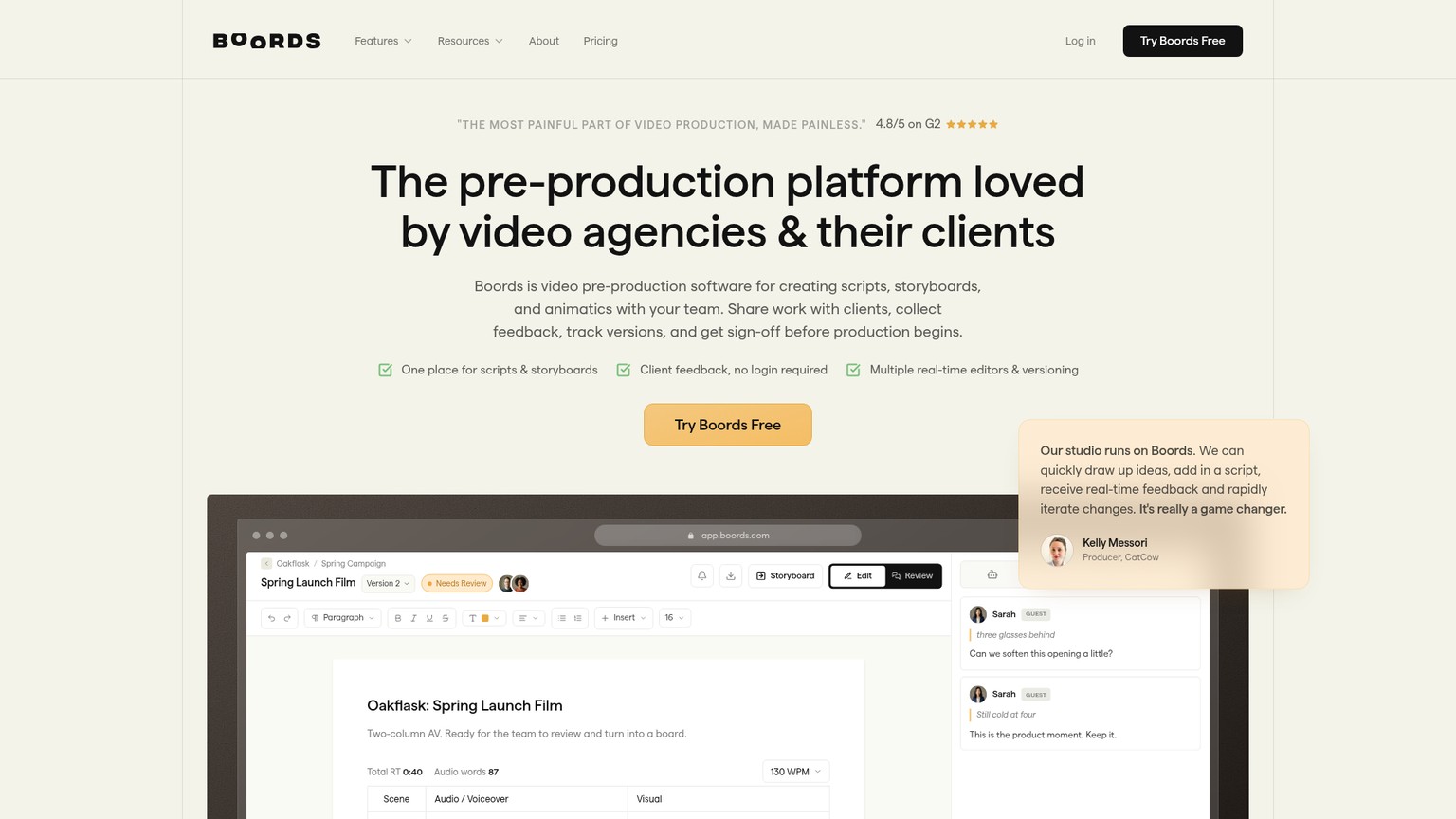
For an agency presenting three treatments, the important artifact is often not a generated clip. It is a board a client can understand, comment on, and approve without entering a 3D package. Boords turns scripts into boards, supports versioned review, and keeps the approval trail attached to the sequence. That reduces the expensive ambiguity of feedback such as "make it more dynamic" because comments can land on a specific frame and version.
The wall is motion fidelity. Its pricing page meters AI still images and lists an animatic editor, but it does not promise a high-fidelity generative-video allowance. Use it to settle frame order, timing, copy, and client sign-off, then move approved stills into a motion tool if movement itself remains open.
Best for: Agencies and production companies that need structured stakeholder review
Standout: Script-to-storyboard conversion, comments, versions, and animatic editing in one approval record
Pricing: Current plans: Solo $39 monthly or $26/month billed annually for one user and 250 AI images; Pro $75 monthly or $50/month billed annually for up to five users and 1,000 AI images; Team $125 monthly or $85/month billed annually for up to 10 users and 2,000 AI images; Agency $250 monthly or $165/month billed annually for up to 30 users and 3,000 AI images; Enterprise custom
Free trial: Yes, but the live pricing page does not state the duration
Enterprise adds custom seats and AI pools, SSO, onboarding, MSA and DPA support, and an audit-grade activity trail. That tier belongs to organizations whose procurement and approval controls are part of the production problem. A solo filmmaker should not pay for governance that no stakeholder requires.
- Makes client comments and version history first-class workflow objects
- Supports scripts, unlimited storyboards, and animatics
- Seat allowances are clear from Solo through Agency
- Enterprise covers security, contracting, and audit needs
- AI quotas cover still images, not a stated high-fidelity video pool
- Trial duration is not stated on the pricing page
- Solo is a one-user workspace, so collaboration begins at Pro
6. Storyboarder.ai: Best for Long Screenplay-to-Animatic Work
Storyboarder.ai is the most production-shaped script tool in the ranking when a screenplay, shot list, storyboard, and animatic need to stay connected.
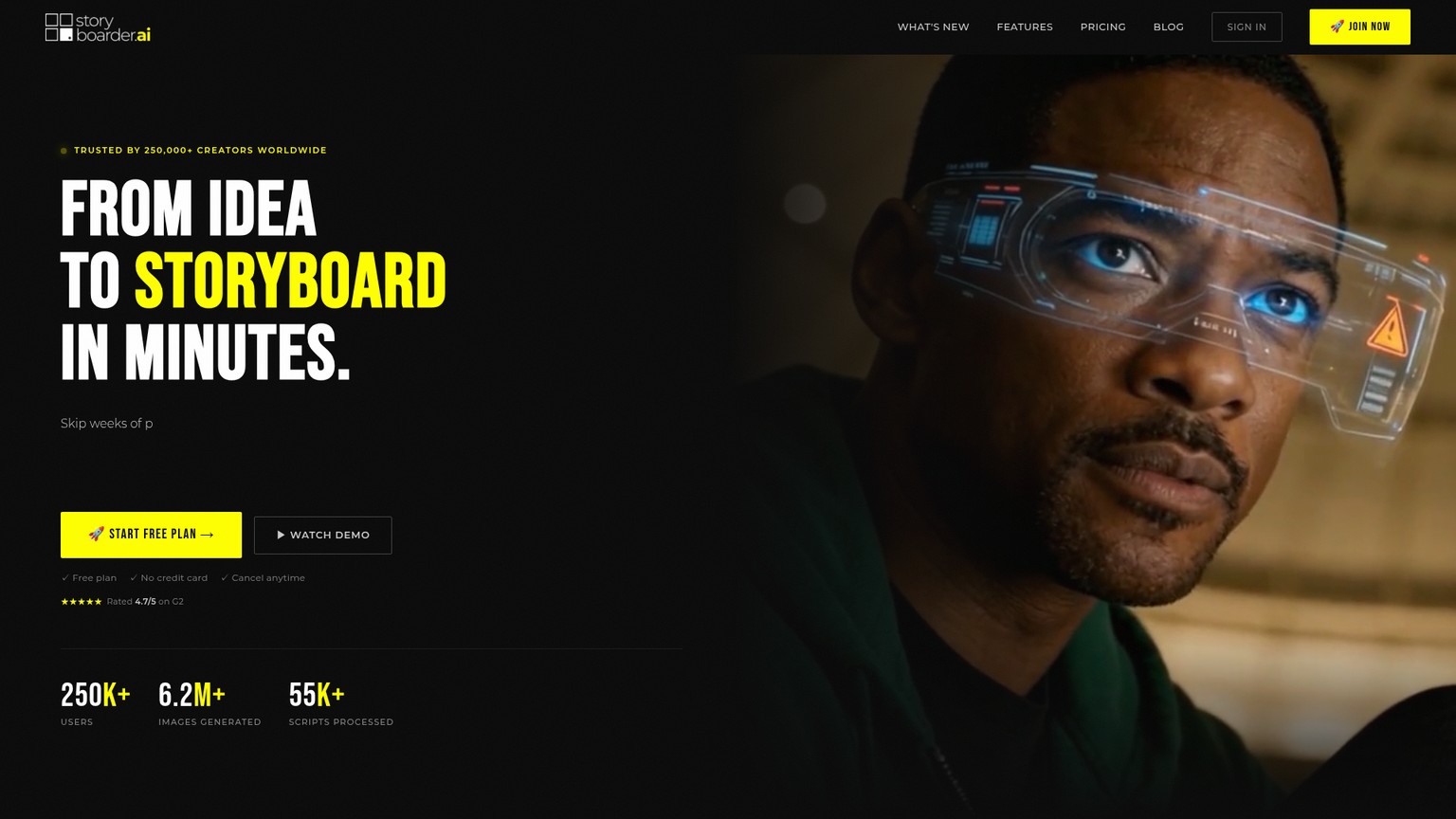
It accepts industry-standard screenplays and automates the chain into shots and boards. The Production Unlimited plan removes story-length, shot, and image-generation limits, which suits a studio processing longer-form material. The Trial tier is useful for checking the workflow, but nine shots per project, watermarked exports, and no commercial use keep it out of a real paid job.
The wall is price composition. Video is not included as a simple extension of the main plan: add-ons cost extra, and one-time top-ups create a second meter. The live promotion also ends August 31, 2026, so today's attractive annual-rate math may not survive tomorrow's checkout.
Best for: Longer scripts that must become structured shots, boards, and animatics
Standout: Connected screenplay, shot-list, storyboard, and animatic automation
Pricing: Current plans: Trial free with two projects, nine shots per project, and 30 images; Starter promotional $45 monthly or $35/month billed annually with five projects and 80 shots per project; Pro Unlimited promotional $99 monthly or $89/month billed annually with unlimited projects and 250 shots per project; Production Unlimited promotional $295 monthly or $225/month billed annually with unlimited story length and shots; Enterprise custom
Free trial: Free Trial tier, but exports are watermarked and commercial use is barred
The page shows crossed-out standard monthly rates of $69 for Starter, $149 for Pro Unlimited, and $399 for Production Unlimited. Video add-ons are separate at Core +$49, Full Suite +$119, Full Suite Max +$349, and Studio +$849 per month. One-time top-ups are $10, $20, $50, $200, or $500, with the page giving 128 credits as the $50 example. Budget the desired motion stage, not only the storyboard subscription.
- Joins screenplay import, shot list, storyboards, and animatics
- Trial makes the workflow inspectable before payment
- Higher tiers support long and high-shot-count stories
- Unlimited image generation begins on paid plans
- Trial is watermarked and non-commercial
- Video add-ons create a substantial second bill
- Promotional prices are marked to end August 31, 2026
- Starter still caps projects and shots
7. Runway: Best for Motion-First Exploration
Runway is the best motion-first choice when an approved image world must become several possible beats quickly.
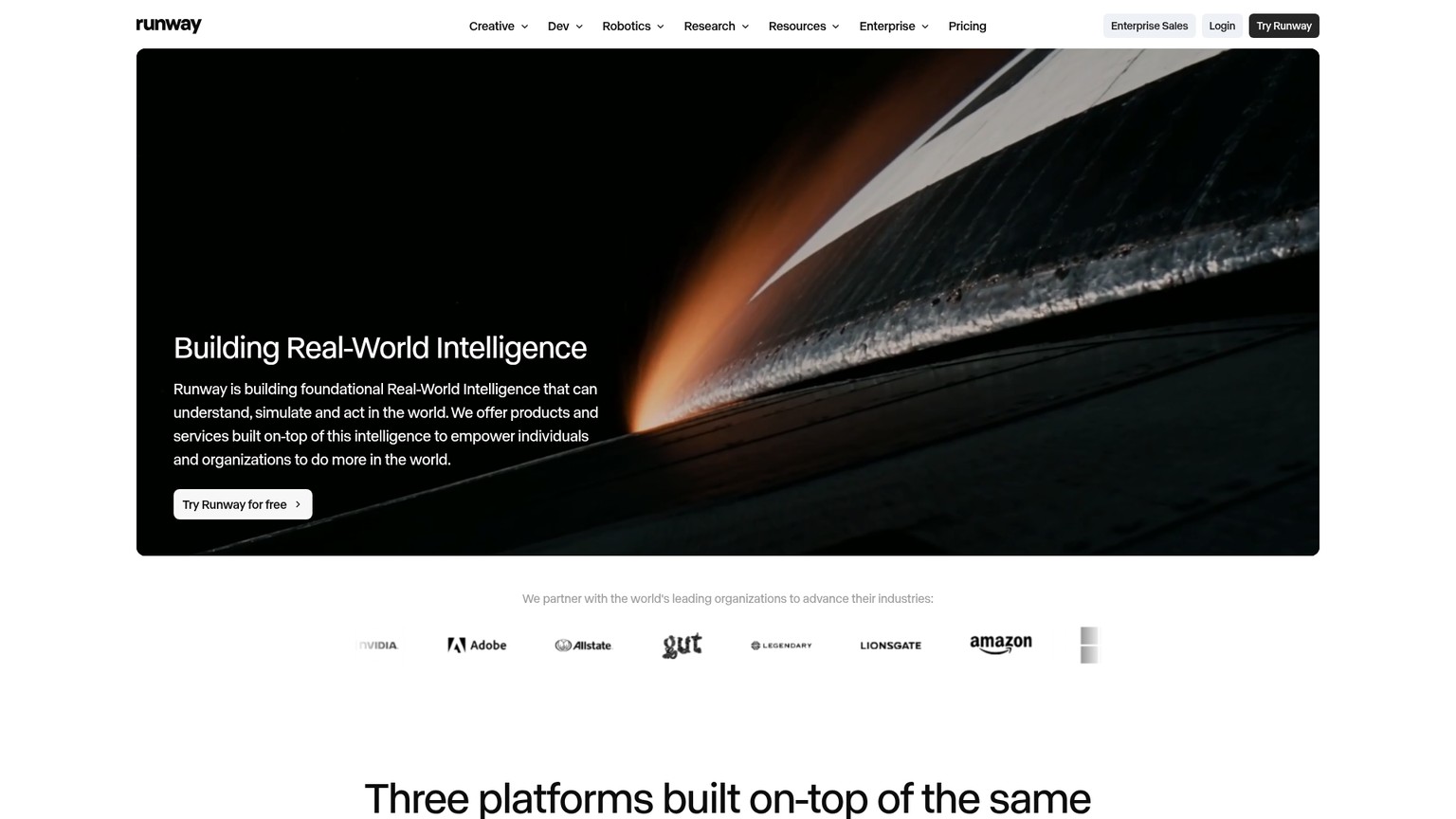
Story Panels accepts an image plus a prompt and returns two narrative panels, which is useful for extending one approved visual world into adjacent beats. A director can use it to test whether the hero enters before the product reveal or whether a reaction shot belongs between two planned frames. When a still has already won approval, the site's deeper comparisons of image-to-video generators and AI video generators help separate motion generation from the wider planning job.
The wall is structure. Story Panels is documented as a way to expand a visual into panels, not as screenplay breakdown, shot-list management, editable 3D geometry, or a client-approval record. It can make compelling adjacent frames while leaving the underlying camera or continuity problem unresolved.
Best for: Exploring motion and adjacent beats from an approved image
Standout: Story Panels creates two panels per run from an image and prompt
Pricing: Current plans: Free $0 with 125 one-time credits; Standard $15 monthly or $12/month billed annually with 625 monthly credits; Pro $35 monthly or $28/month billed annually with 2,250 credits; Max $95 monthly or $76/month billed annually with 9,500 credits and up to one month of rollover; Enterprise custom
Free trial: No time-limited trial; Free includes 125 one-time credits
A Story Panels run can cost up to 48 credits. At that maximum, Standard's 625 monthly credits fund 13 complete runs, or 26 panels, with one credit left. Legacy Unlimited is not a hidden bargain for new buyers: it stopped accepting new subscriptions June 1, 2026, and eligible legacy subscriptions move to Max after November 30, 2026.
- Fast way to turn one approved image into adjacent narrative beats
- Free credits allow a small workflow check
- Public paid tiers expose monthly credit allowances
- Max permits up to one month of unused-credit rollover
- Story Panels can cost up to 48 credits for only two panels
- It does not replace screenplay or approval workflow
- Free credits are one-time, not monthly
- Legacy Unlimited is unavailable to new subscribers
8. Krea: Best for Fast Look Development
Krea is the best low-cost look-development layer when a creative team needs to explore image, video, and 3D directions before committing to a sequence.
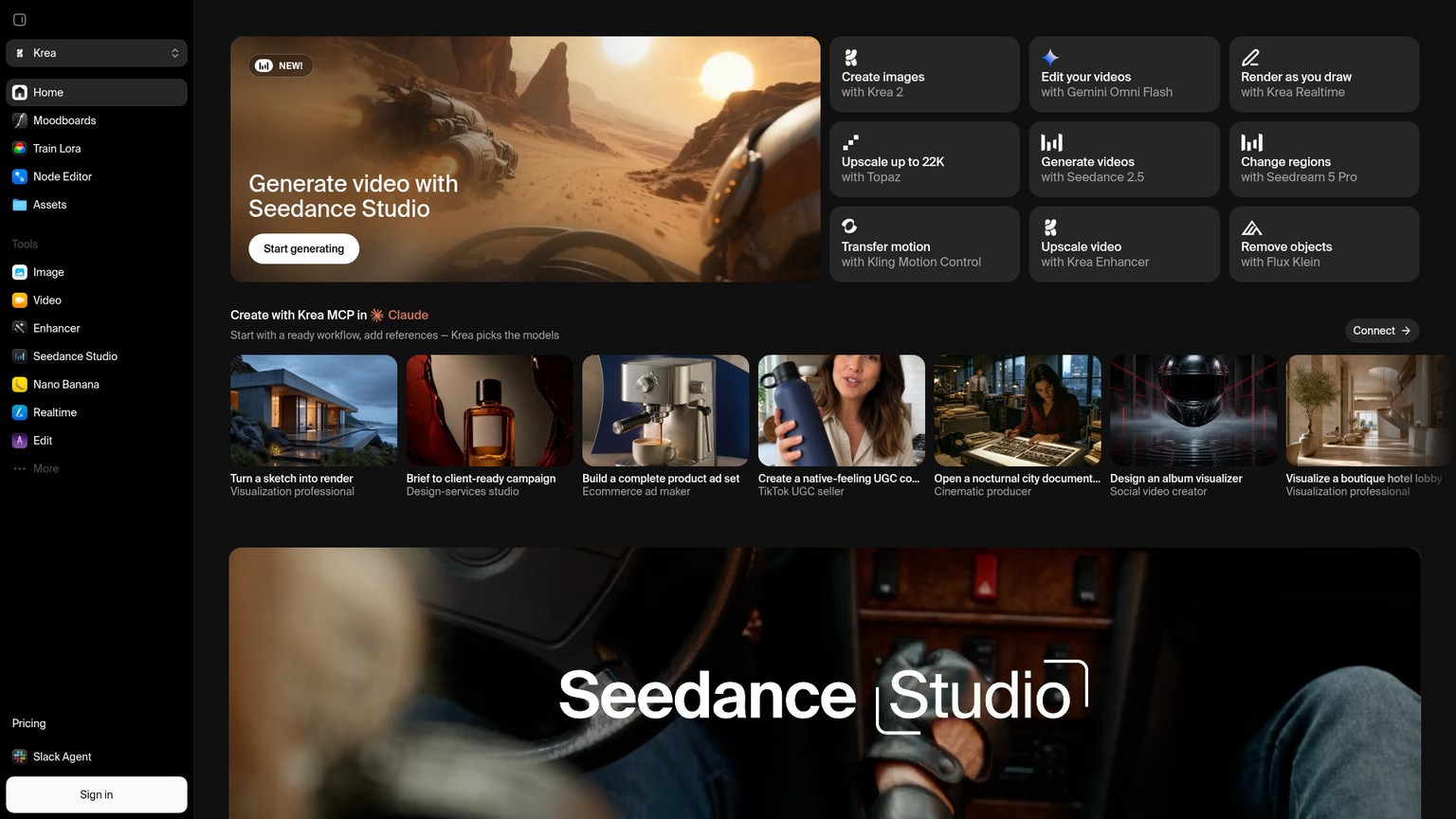
Its breadth makes it useful during the visual-language phase: a team can test environments, lighting directions, textures, motion ideas, and 3D references without buying the highest tier. Basic adds commercial licensing for $9, while Pro unlocks all video models plus Nodes and Apps automation. That combination is unusually accessible for a mood and look layer.
The wall is production structure. Krea's live product copy does not advertise screenplay breakdown, shot-list management, or client-approval workflow. A collection of strong images can still leave frame order, continuity, blocking, and sign-off unresolved. Krea belongs before or beside a structured planning tool, not in place of one when the sequence is complex.
Best for: Rapid visual-world, motion-look, and 3D-reference exploration
Standout: One workspace spans real-time image work, video, 3D, lipsync, and node-based automation
Pricing: Current plans: Free $0 with 100 compute units per day; Basic $9/month with 5,000 units and a commercial license; Pro $35/month with 20,000 units and all video models; Max $105/month with 60,000 units; Business $200/month with 80,000 units and up to 50 seats; Enterprise custom
Free trial: No time-limited trial; Free is an ongoing tier
Free limits image, video, 3D, and lipsync access. Basic provides full image, 3D, and lipsync models but only selected video models. Pro is the honest starting point when the desired comparison depends on the full video catalog. Business earns its price through seats, private Node Apps, roles, and model controls, not through a cheaper per-person creative plan.
- Lowest paid entry in the ranked set at $9/month
- Commercial licensing begins on Basic
- Covers image, video, 3D, lipsync, and real-time exploration
- Business supports up to 50 seats and private Node Apps
- No documented screenplay breakdown or shot-list workflow
- Basic includes only selected video models
- Attractive look frames can hide unresolved continuity and blocking
- Compute units are a separate usage model to learn
Where AI Filmmaking Tools Belong in a Production Budget
The subscription is rarely the largest number. The larger cost is unresolved decisions crossing into a room with more people, more expensive equipment, or less reversible work. A $9 look tool can waste money if it produces ten beautiful directions nobody can approve. A $47 scene tool can save money if it turns one camera argument into an editable file before the crew call.
Use three budget lines rather than one generic software bucket:
- Creative-direction approval: Krea, Katalist, LTX Studio, Boords, and Storyboarder.ai can make the visual world, sequence, or review artifact legible.
- Technical camera proof: Higgsfield for Blender earns this line when geometry, blocking, camera placement, or a handoff into 3D is the decision.
- Motion exploration and rough-cut spend: Runway and InVideo Agent earn this line when movement, timing, narration, or a reviewable cut is genuinely unresolved.
The purchase flips when the next stakeholder changes. A creative director can approve look frames. A client may need a board with comments. A cinematographer needs camera and spatial information. A producer needs the revision to leave a trace. Buying for the wrong stakeholder produces more media but not more certainty.
AI Tools for Filmmaking: The Three Artifacts to Approve
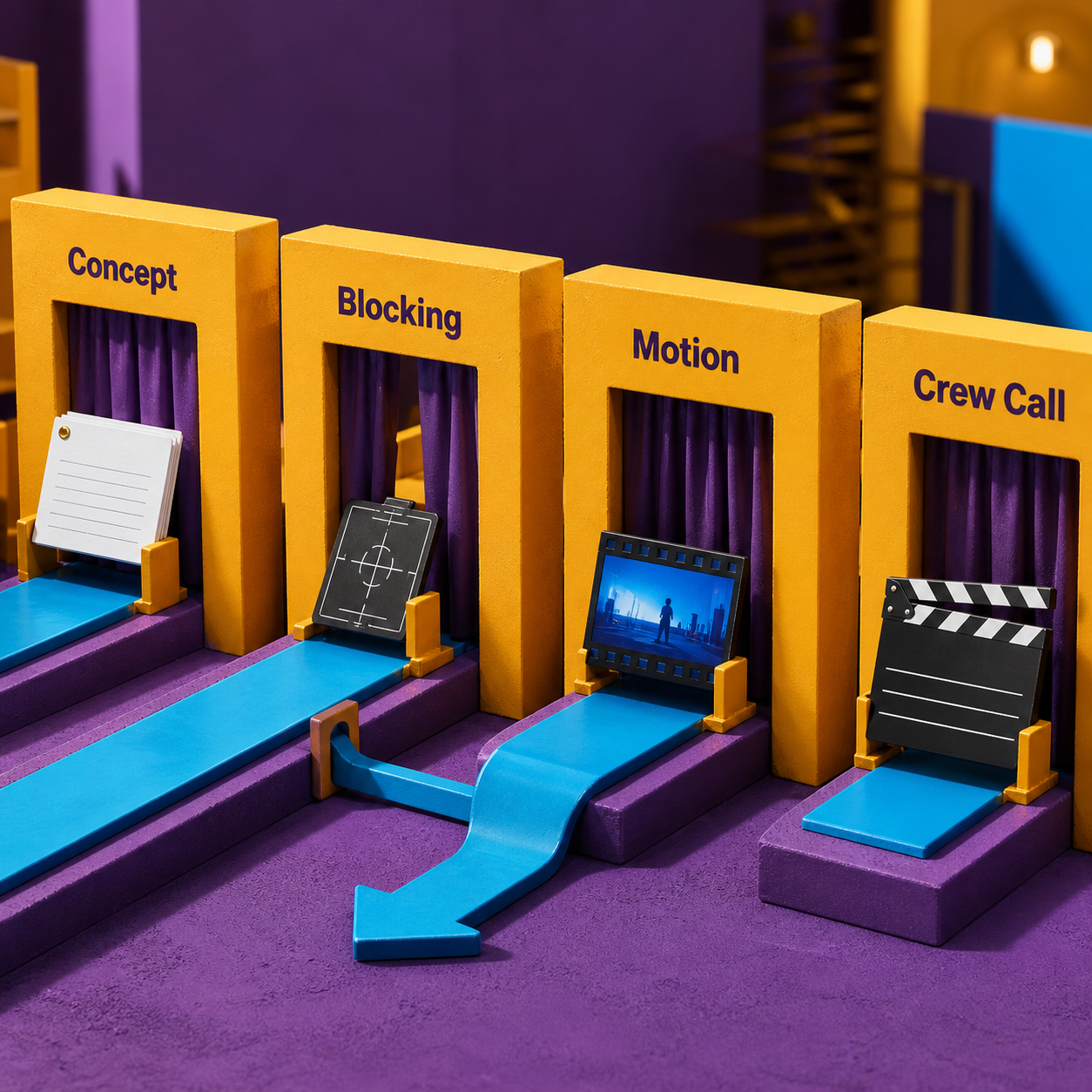
Approve a look artifact first: palette, location language, wardrobe, light, and reference motion. Then approve a plan artifact: frame order, blocking, camera intent, duration, and transitions. Finally approve a production artifact: the versioned board, animatic, rough cut, or editable scene that downstream crew can identify and reopen.
Skipping the middle artifact is the common mistake. The team jumps from mood board to generated video, then tries to infer a shot plan from the most attractive output. That reverses the workflow. Lock the decisions first and spend fidelity after.
How to Choose the Best AI Tools for Video Production
Start with the sentence that would end the next meeting.
If it is "the camera clears the set and the blocking works," choose Higgsfield for Blender. If it is "the script now reads as a coherent visual sequence," choose LTX Studio or Katalist. If it is "the client approved these frames and this timing," choose Boords or Storyboarder.ai. If it is "the movement and narration work as a cut," choose InVideo Agent. If it is "this approved frame can carry into adjacent motion beats," choose Runway. If it is "this is the right visual world," choose Krea.
Then test the artifact against four handoff questions:
- Can the next person reopen or review it without asking the creator to interpret it?
- Is the version that won approval identifiable?
- Can one disputed variable change without rebuilding everything else?
- Does the license permit the actual client or commercial use?
One "no" can reverse the ranking. LTX Free looks generous until the work becomes paid client work. Krea Basic looks inexpensive until the unresolved artifact is a shot list. Boords looks less cinematic until stakeholder comments are what keep reopening the job. The best tool is the one whose native output matches the approval that matters.
The Ones to Avoid
Avoid Luma Dream Machine as the standalone planning system. Its documented tools cover image-to-video, keyframe extensions, style references, camera controls, and Boards or Ideas organization. That makes it a capable motion environment. It does not advertise screenplay breakdown, shot-list creation, or client approval. At $29.99/month for the web Plus tier with commercial rights, it is sensible after the shot idea is clear, not as the only place where the shot idea lives.
Avoid Krea alone when script continuity is unresolved. It can discover the visual language quickly, but a broad image, video, and 3D workspace does not automatically preserve a screenplay's causality or produce an approval record. Pair it with LTX Studio, Katalist, Boords, or Storyboarder.ai when characters and beats must survive a long sequence.
Avoid Runway Story Panels alone when editable geometry is the question. Two persuasive panels can suggest a camera move without proving clearance, lens behavior, or blocking. Use Higgsfield for Blender or a conventional 3D previs process for the physical question, then use Runway for motion exploration.
Avoid generic one-shot video generation before the shot is approved. A high-fidelity clip is costly evidence for a vague decision. If the response to a rejected clip is "try another prompt," the workflow is generating lottery tickets rather than narrowing production risk.
None of these are bad products. They are expensive choices when assigned a job their native artifact cannot finish.
The Monday Move
Choose one unsettled scene on Monday morning. Write the unresolved decision in one sentence, such as "Does the product remain visible during the actor's cross?" Create three low-fidelity camera and blocking variants, not three finished ads. Select one motion proxy only after the spatial option wins.
On Tuesday, put the three variants in one approval meeting with the director, producer, and next downstream owner. Record which version wins, how many revisions it takes, and the aggregate minutes in the room. On Friday, compare that time with the selected plan's monthly break-even. If the workflow saves more time than its cost and leaves an artifact the next person can use, keep it. If it only creates prettier arguments, cancel it.
The Monday move is deliberately small. One scene reveals whether the tool moves a decision upstream without turning a software evaluation into its own production.
Frequently Asked Questions
What is the best AI tool for creating videos in 2026?
For previsualization, Higgsfield for Blender is the best overall choice because it combines editable 3D scene data with image, video, camera, and asset workflows. For finished video generation, choose from the wider market based on output quality, controls, licensing, and cost rather than assuming the strongest planning tool is also the strongest finishing tool.
Which AI tool is best for video production?
Higgsfield for Blender is best when camera and blocking are the hard questions. LTX Studio is better for turning a script into a sequence, Boords is better for client approval, and InVideo Agent is better when the target is a narrated rough cut. The correct choice follows the next artifact that must win approval.
Which AI tool is best for making videos?
Runway is the strongest motion-first option in this ranking, while InVideo Agent is better for assembling script, media, voice, and timeline into a rough cut. Making a compelling clip and planning a shoot are different jobs, so a final-video generator should not automatically own the previs workflow.
What are some good AI software tools for film production?
Higgsfield for Blender, LTX Studio, InVideo Agent, Katalist, Boords, Storyboarder.ai, Runway, and Krea each solve a distinct part of pre-production. A small stack usually combines one structured planning or approval tool with one layer for the hardest visual uncertainty.
What is the best AI tool for filmmaking?
Choose by the unresolved decision. Use Higgsfield for Blender for geometry and camera, LTX Studio or Katalist for script continuity, Boords for stakeholder approval, InVideo Agent for a rough cut, Runway for motion exploration, and Krea for look development.
What software is commonly used in film production?
Film production commonly uses separate systems for writing, storyboarding, scheduling, 3D previs, editing, visual effects, sound, and review. The products ranked here cover AI-assisted previsualization rather than replacing the full production stack. Their output should hand off cleanly to the conventional downstream system.
What is the best video production software for professionals?
No single product is best across accurate 3D previs, client approvals, editing, and final finishing. Professionals should choose the tool whose native artifact matches the next approval, verify commercial licensing, and keep measured geometry or final finishing in the appropriate specialist software.
What is the best app for film production?
The best app is the one that produces an artifact the next stakeholder can review and reuse. For a director that may be an editable scene; for a client, a versioned storyboard; for an editor, an animatic or rough cut. App breadth matters less than handoff fit.
What is the best free software for film production?
Free tiers from Higgsfield, LTX Studio, InVideo, Storyboarder.ai, Runway, and Krea are useful for evaluation, but their limits differ sharply. LTX Free and Storyboarder.ai Trial bar commercial use, Higgsfield includes no free credits, and Runway's 125 credits are one-time. Read the license before putting a free output into paid work.
Best ai previsualization tools for video production 2026 free
Start with the free tiers from Higgsfield, LTX Studio, InVideo, Storyboarder.ai, Runway, and Krea, then test one representative scene. Katalist offers a seven-day trial and Boords offers a trial of unstated duration. Free access is enough to inspect workflow, but it may not include commercial rights, useful credits, clean exports, or the model needed for the actual shot.
Get the AI Business Workflow Audit Checklist
Use the free AI Business Workflow Audit Checklist to identify the approval, handoff, and rework steps worth moving upstream before adding another AI subscription.
- Published
- Category
- Design
- Language

Beautiful AI Review
Beautiful.ai review: Smart Slide guardrails, current pricing, Team seat ambiguity, AI features, export limits and when Gamma is the better fit.Oct 10, 2026Design
Nano Banana 2.1 Explained: Pricing, Changes, and When to Switch
Nano Banana 2.1 cuts 1K and 2K image costs about in half. Compare monthly budgets, verify the migration, and decide when Pro earns its premium.Oct 8, 2026Design
ElevenLabs Alternatives: Murf, MAI-Voice-2, OpenAI TTS and Cartesia (Verified October 2026)
Compare ElevenLabs, Murf, MAI-Voice-2, OpenAI, Cartesia, Google and Speechify by studio or API job, with verified prices and switching costs.Oct 4, 2026Design
Higgsfield API Pricing
Price Higgsfield API video and image jobs, separate API dollars from app credits, and check top-ups, expiry and cashback before scaling.Sep 27, 2026Design
Is Gemini Live Avatar Free
Check Gemini Live Avatar access, Enterprise API charges and custom-avatar limits before budgeting a customer-facing video agent.Sep 27, 2026Design
Gemini 3.8 Flash TTS Pricing
Price Gemini 3.8 Flash TTS by audio minute, compare Flash-Lite and service tiers, and budget the January 2027 increase.Sep 24, 2026Design
ngram vs Demosmith
Compare ngram and Demosmith for product videos, browser capture, revisions and usable exports, with costs matched to the same job.Sep 19, 2026Design