Best Model-Agnostic Coding Agents 2026
Six model-agnostic coding agents ranked by model choice, workflow portability, current pricing, and the cost of switching providers in 2026.
Published
 By Omid Saffari



OpenCode leads the best model-agnostic coding agents 2026 shortlist for most technical teams, Cline wins inside VS Code, and Roomote is the strongest cloud option when you need reviewable pull requests. OpenAI's proposed November 12 cutoff for supplying models to Cursor turns model choice from a preference into a budget and workflow decision: a replacement must preserve the agent loop, not merely expose another model dropdown.
Best Model-Agnostic Coding Agents 2026: The Verdict
OpenCode is the best overall choice because it separates the coding workflow from both the model family and the inference endpoint. It supports more than 75 LLM providers, local models, and custom endpoints from the same open-source agent, while Cline provides the cleanest equivalent inside VS Code. Roomote wins when the job is no longer an interactive editor session and needs to end as a reviewed pull request with a live preview.
These prices and limits were verified against every vendor's live pages on September 1, 2026. “Starting price” means the agent or platform layer. Inference remains a separate bill unless a free or local model is used.
“Model-agnostic” is easy to overclaim. A product can show several models in a selector while keeping its autocomplete, cloud agents, context store, or automation layer tied to a vendor-controlled route. Provider count is useful, but it is not portability.
This filter deliberately produces six serious picks instead of a wall of names. If you want the strongest agent regardless of model independence, use the broader AI coding-agent ranking. If the ability to move between OpenAI, Anthropic, Google, open-weight models, a gateway, and local inference is a requirement, keep reading.
Why Model Choice Became a Business Continuity Issue
OpenAI's Cursor decision shows the exact risk a model dropdown can hide: the interface can stay installed while the model supply underneath it changes. OpenAI says it intends to wind down the contract that provides its models to Cursor after SpaceX acquired Cursor, with a proposed shutoff date of November 12, 2026. It also says future OpenAI models will not be supplied under that contract. The official termination date is not final, and Cursor may end access sooner.
OpenAI's official news feed lists the August 28 announcement and its source URL.
The obvious fallback is bring your own key, or BYOK, which means the customer supplies credentials and pays the model provider directly. That fallback is narrower than the label suggests. OpenAI's Cursor transition guidance says a personal OpenAI API key can power supported local Chat and Agent requests. It cannot power Cursor Tab or autocomplete, Auto, Cloud Agents, Background Agents, Automations, the Cursor CLI, or Cursor's API and SDK. A compatible gateway has the same surface limits.
The budget consequence is equally concrete. A ChatGPT subscription does not include OpenAI API usage, so the BYOK route creates a separate API bill. The Codex IDE extension can run inside Cursor as another route, but it is a separate agent experience rather than a replacement model inside every Cursor feature. A team that thought it bought one integrated workflow now has to inventory which work stays, which work moves, and which usage receives a second bill.
This is not an argument against Cursor. It is an argument for separating the agent harness, the software that reads files, calls tools, applies patches, runs commands, and presents approval gates, from the inference source that supplies the reasoning. A model-agnostic agent keeps that harness stable while models and providers move.
The durable budget has three lines:
- Agent or platform: the interface, execution loop, policy, collaboration, and governance layer.
- Inference: input, output, cache, or subscription charges for the selected model.
- Compute: sandboxes, cloud workspaces, browsers, build minutes, and preview environments.
A $0 open-source agent can still create a large inference bill. A $15 seat can still exclude model usage. A $49 cloud agent can still require the customer to bring an inference key. Those are different products on the purchase order, even when one vendor dashboard makes them look like a single service.
Best AI Coding Agents 2026: How These Six Were Picked
The six winners keep model choice operational, not decorative. No tool was exercised as a paid user in this run, so this is a live pricing and capability comparison, not a fabricated test. Each vendor's pricing, provider, deployment, and limitation pages were opened on September 1, 2026, then normalized against the same five criteria.
- Model-family replacement. The supported workflow can move between at least two competing model families.
- Endpoint replacement. The same agent can use direct APIs, a gateway, or a local or self-hosted endpoint without becoming a different product.
- Workflow continuity. Project rules, approval gates, tool access, and review artifacts survive the switch.
- Cost legibility. Platform, inference, and compute charges are distinguishable before purchase.
- Execution proof. The tool exposes a diff, commit, pull request, test, preview, or another artifact a reviewer can judge.
The ranking cuts products that offer several models only through a vendor-controlled route. It also cuts autocomplete-first assistants that do not own a meaningful task loop. Six tools leave enough room to explain the wall each buyer will hit: OpenCode's credential administration, Cline's paid team controls, Kilo's layered bill, Aider's terminal and two-request tradeoffs, OpenHands' deployment and model reliability demands, and Roomote's license and user-count cliff.
Depth matters because these tools solve different jobs. A terminal agent, a VS Code agent, and a cloud agent can all be model-agnostic without being substitutes. The right question is not “which supports the most models?” It is “which workflow do I need to keep when the model changes?”
1. OpenCode: Best Overall for a Portable Local Workflow
OpenCode is the best overall model-agnostic coding agent because its open-source harness stays the same across a terminal interface, desktop app, and IDE extension. A solo technical builder can start locally, connect two providers, and keep the same project instructions while choosing a different model per task. The wall is operational: more than 75 provider choices also mean credentials, model IDs, endpoint behavior, and spend controls become your responsibility.
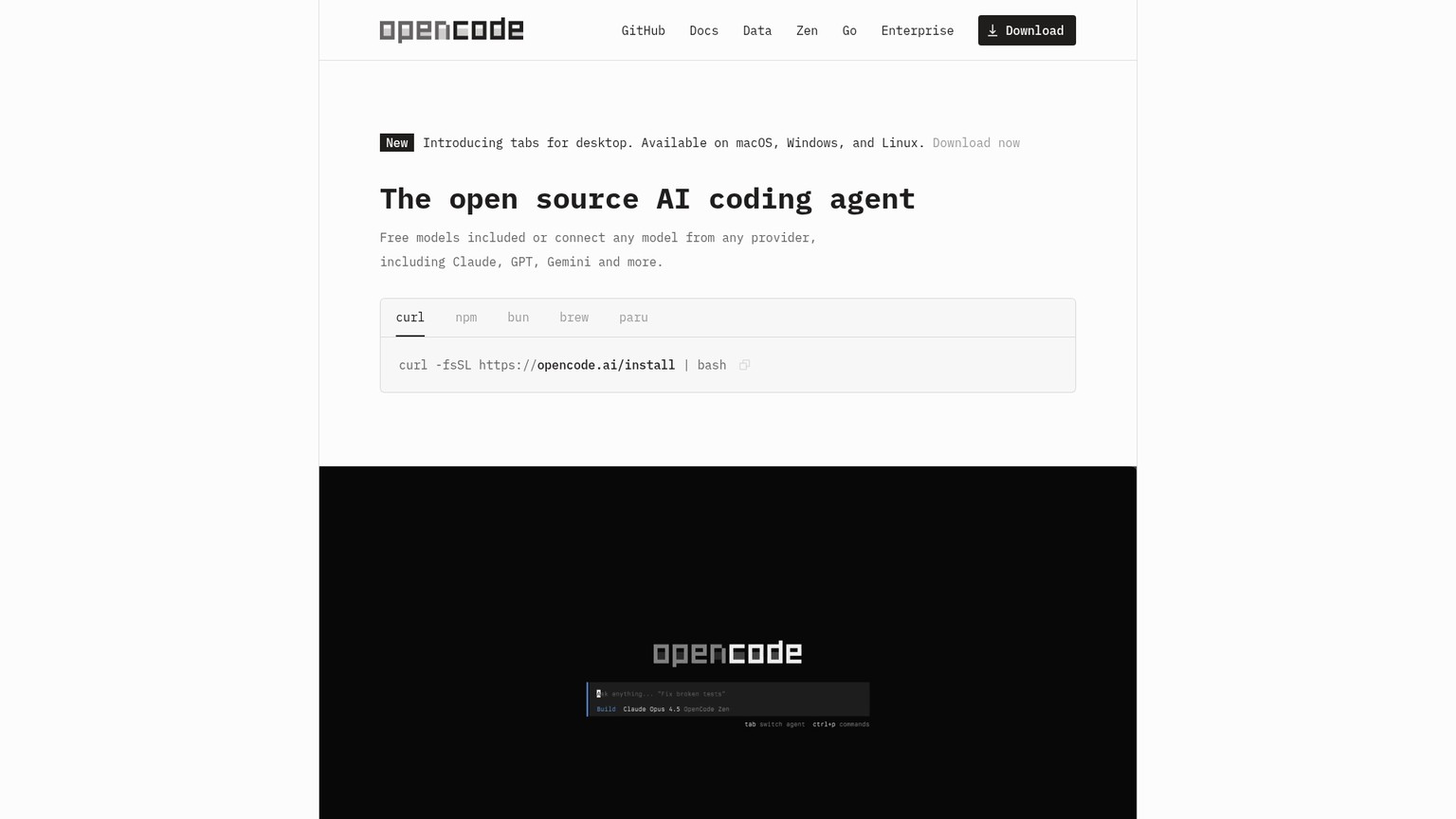
OpenCode uses AI SDK and Models.dev for its provider catalog, supports local models, and lets a buyer add a custom OpenAI-compatible endpoint. The optional OpenCode Zen gateway simplifies provider setup, but it is not required. The software starts at $0; Zen currently asks for a $20 pay-as-you-go balance and shows a $1.23 card-processing charge on that top-up, while saying model requests carry zero markup. OpenCode's provider documentation has the current connection paths.
The quotable verdict is simple: pick OpenCode when the harness is the asset you want to keep and the model is a replaceable input. Skip it when a nontechnical team needs centralized policy, shared budgets, and support bundled into one contract.
Best for: Technical teams that want one local agent across terminal, desktop, and IDE
Standout: 75+ providers, local models, and custom compatible endpoints in one open-source harness
Pricing: $0 software; provider usage extra; optional Zen starts with a $20 balance plus the displayed $1.23 card fee
Free trial: No trial needed; the software is open source
- More than 75 provider integrations plus local-model support
- Terminal, desktop, and IDE surfaces reduce interface lock-in
- Custom base URLs let teams keep an internal gateway or compatible endpoint
- Project initialization creates a reusable AGENTS.md instruction file
- Provider choice moves credential and billing administration onto the buyer
- Optional Zen still creates a gateway relationship and a separate credit balance
- Windows terminal users are steered toward WSL for the best experience
- Provider-specific tool calling can behave differently even when the interface is unchanged
A practical OpenCode switching drill
The fastest proof is not a benchmark. It is one bounded repository task executed through two independently billed endpoints while the project rules stay fixed.
Install the harness
Use OpenCode's documented installer,
curl -fsSL https://opencode.ai/install | bash, or one of its package-manager routes. On Windows, use WSL if terminal compatibility matters.Connect two independent providers
Run
/connectfor the primary provider and repeat it for a second provider or internal gateway. Independence means separate credentials or endpoints, not two model names behind the same mandatory router.Initialize the repository policy
Run
/init, review the generatedAGENTS.md, and commit the instructions you genuinely want every model to follow. Keep acceptance criteria in the repository instead of relying on a private chat memory.Replay one bounded change
Use
/modelsto select the primary model, request a small change with an objective test, then repeat through the backup endpoint. Compare the diff, test result, review effort, latency, and provider charge.Write the cutover rule
Record which endpoint becomes the backup, which model is approved there, and what feature loss is acceptable. If the second route cannot use the required tools, the drill failed even if it produced code.
For a funded founder, this is enough to protect a local build loop without buying a governance suite. For a platform team, OpenCode is better treated as the execution client behind an approved gateway and credential policy. The software's $0 price does not remove the work of distributing keys, restricting models, or auditing usage.
2. Cline: Best Model-Agnostic Agent in VS Code
Cline is the strongest pick for developers who want model independence without leaving VS Code. Its individual Open Source plan is free, includes the VS Code extension and CLI, and charges only for inference when a model is used. A developer can connect direct providers, choose from more than 30 documented additional providers, or use an OpenAI-compatible base URL for a local or hosted alternative.
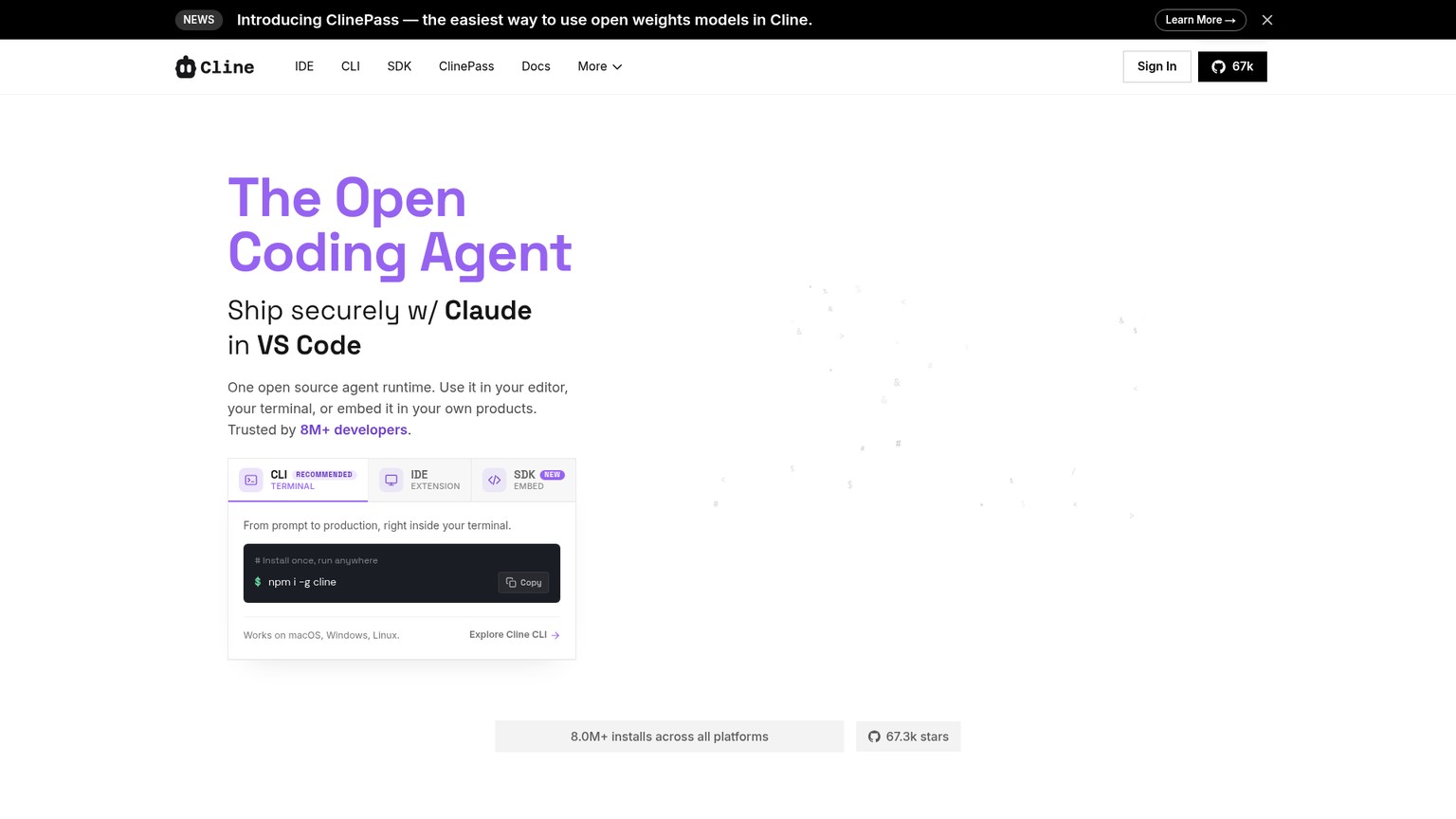
Cline fits the mid-market team that already standardizes editor workflows but does not want the model contract embedded in the editor license. Direct connections let existing AWS Bedrock, Google Vertex AI, Azure OpenAI, Anthropic, OpenAI, and compatible-endpoint agreements remain the inference layer. The agent handles the loop while the buyer keeps the provider relationship.
The real wall appears at team scale. JetBrains support, centralized billing, provider limits, SSO, SLA, team management, and role-based controls sit in the Enterprise tier with custom pricing. The free plan is excellent for individual developers; it is not a free substitute for an enterprise control plane. Cline's live pricing page makes that split explicit.
Best for: VS Code developers who want direct provider or gateway choice
Standout: Free individual agent with direct inference and compatible endpoints
Pricing: Free for individual developers; inference at cost or BYOK; Enterprise custom
Free trial: No trial needed for the free individual plan
- Free individual VS Code extension and CLI
- Direct provider and OpenAI-compatible endpoint support
- More than 30 documented additional provider integrations
- No subscription or seat fee on the individual plan
- JetBrains support is an Enterprise feature
- Central budgets and provider restrictions require custom-priced Enterprise
- Direct provider flexibility creates multiple credentials and invoices without a gateway
- Editor-centered work is less suitable than a cloud agent for unattended ticket queues
Choose Cline over OpenCode when VS Code is the workflow you refuse to change. Choose OpenCode when the terminal, desktop, and editor need to share one agent identity. A senior operator should ask one more question before rollout: if VS Code itself changes policy, can the CLI preserve the team's critical path? Cline includes that CLI, but the organization should rehearse it rather than assume it is equivalent.
3. Kilo Code: Best for Team Budgets and Provider Controls
Kilo Code is the best choice when model independence needs a budget owner, shared provider access, and a migration path from individual use to team governance. The individual platform is free, Teams costs $15 per user each month, and Enterprise is custom. Kilo documents more than 30 direct provider paths, while its managed Gateway advertises more than 500 models across more than 60 providers.
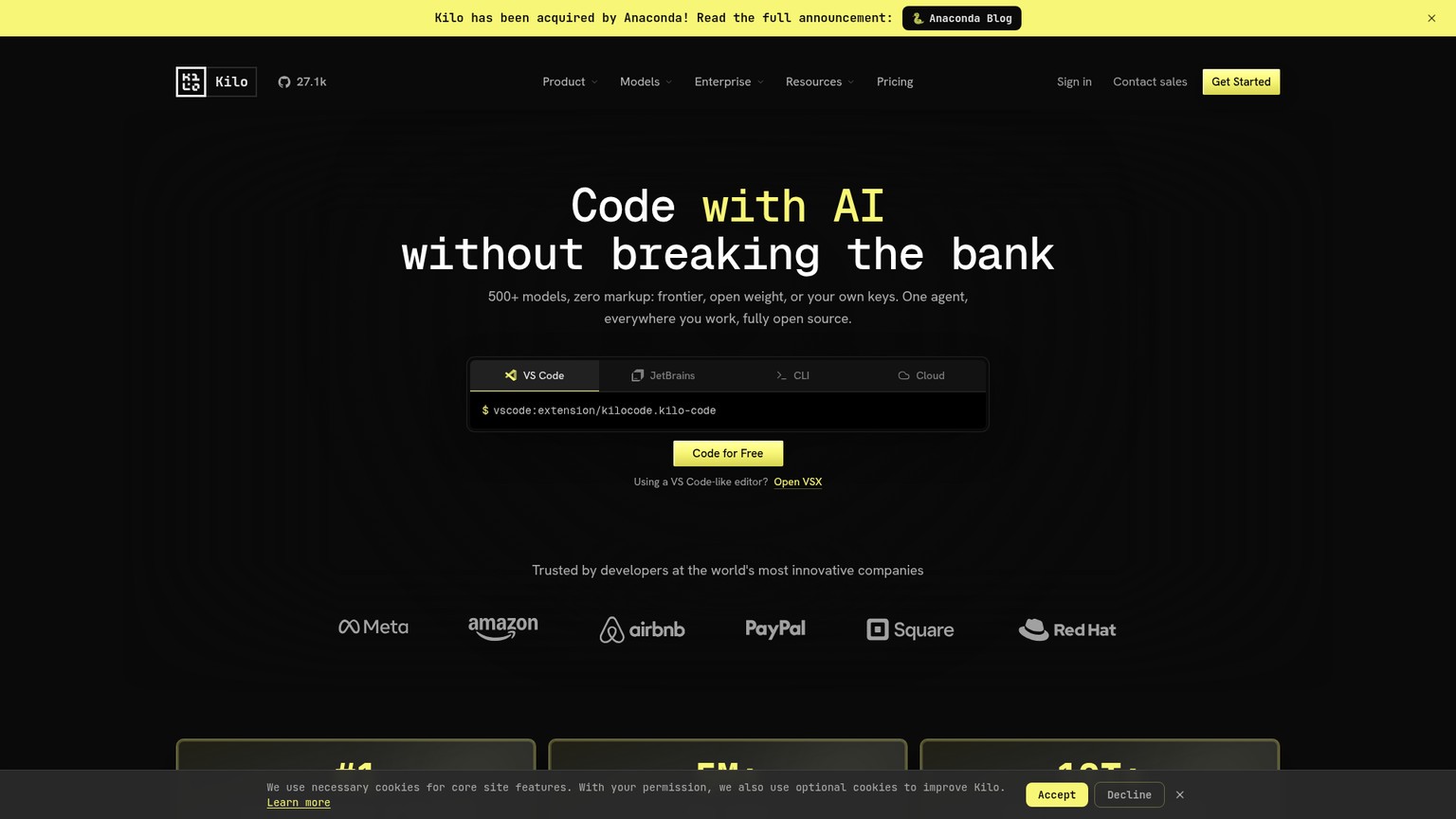
That breadth is useful, but Kilo is also the clearest example of why “price” is not one number. The platform plan, inference route, optional credit subscription, and cloud compute are separate. Teams does not include inference credits. BYOK can remove Kilo's model charge, but cloud-agent compute still applies when those features run.
As verified on Kilo's pricing page, the platform tiers are Free at $0, Teams at $15 per user per month, and Enterprise at a custom price. The optional Kilo Pass inference-credit tiers are Starter at $19 per month, Pro at $49, and Expert at $199. Kilo Gateway has no monthly subscription and passes through provider rates, while credit purchases carry a 5% processing fee. Cloud compute is $0.33 per hour for Code Review, $0.60 for Cloud Agent Docker or Small, and $1.20 for Cloud Agent Standard or Gas Town.
Best for: Teams that need shared BYOK, provider controls, budgets, and optional cloud agents
Standout: Free local tools can grow into $15 seats, a managed model gateway, and metered cloud execution
Pricing: Free individual; Teams $15/user/month; Enterprise custom; Kilo Pass $19, $49, or $199/month; cloud compute $0.33 to $1.20/hour; inference separate
Free trial: 14-day Enterprise trial
- Free VS Code, JetBrains, and CLI extensions for individuals
- Shared BYOK and centralized billing on Teams
- Managed gateway plus direct, local, and compatible provider options
- Published platform, inference, processing, and compute charges
- The layered bill is easy to underestimate if a buyer reads only the seat price
- Teams seats include no inference credits
- Credit purchases add a 5% processing fee
- Cloud-agent compute is charged separately from both the platform and model
Kilo wins when a team values visible cost controls more than the lowest possible software bill. A solo builder who already manages provider keys gets little from a $15 team seat. An engineering manager rolling out eight seats can justify $1,440 per year if shared BYOK, model restrictions, or reporting saves more administrative time than that platform charge.
For more detail on choosing the inference under any of these agents, the low-cost coding-model comparison separates cheap token rates from the models that can reliably edit code and call tools.
4. Aider: Best for Git-Native Terminal Editing
Aider is the best model-agnostic choice when Git history is the control surface. It is an Apache 2.0 open-source terminal agent that connects to most LLMs through direct providers, OpenRouter, local models, and OpenAI-compatible endpoints. Every edit is committed with a descriptive message by default, and /undo can reverse the last agent change.
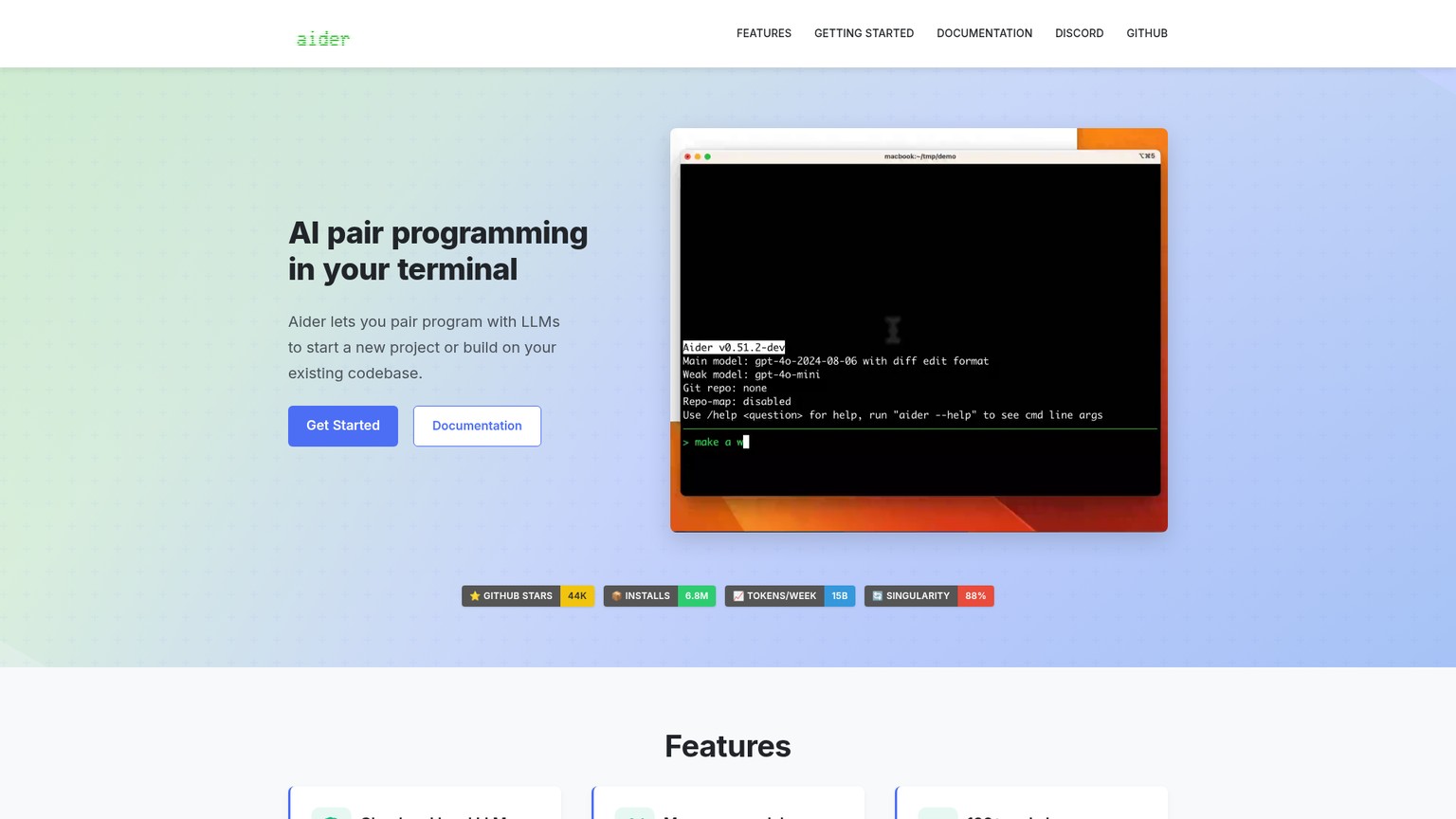
That makes Aider unusually legible for a solo technical builder or senior developer who wants the diff and commit history to remain the evidence. The workflow is intentionally narrower than a full cloud delegation platform. It does not sell a bundled team control plane, managed sandbox fleet, or review portal. You bring the repository, terminal, model route, and provider bill.
Aider's architect mode is both its standout and its cost wall. One model proposes the approach and a second editor model turns the proposal into file changes. The split can improve the shape of difficult edits, but Aider's own mode documentation says it makes two LLM requests, which can take longer and increase cost. Aider's FAQ confirms the agent is open source under Apache 2.0.
Best for: Git-first developers who want reviewable, reversible terminal edits
Standout: Automatic commits and instant undo across most provider and local-model routes
Pricing: $0 open-source software; model or gateway usage separate
Free trial: No trial needed
- Apache 2.0 open-source license
- Direct, gateway, local, and compatible model routes
- Automatic commits create a clean review and rollback trail
- Architect and editor roles can use different models
- Terminal-first interaction is a poor fit for nontechnical reviewers
- Architect mode doubles the number of model requests for that turn
- Weaker local models may generate text without producing valid edits
- Team governance and hosted execution must come from other layers
Aider is the best value when the team's existing Git discipline already supplies the approval process. It is the wrong place to start when product managers need to assign tickets from Slack, managers need shared spend caps, or reviewers need live application previews. The lack of a platform fee is valuable only if the missing platform is not a requirement.
5. OpenHands: Best Free Autonomous and Self-Hosted Option
OpenHands is the best free pick for a more autonomous agent that can run locally, in a hosted SaaS account, or in an enterprise environment. Its Open Source tier is free and includes a web GUI, terminal UI, CLI, Git integrations, and the agent. The Individual SaaS tier is also free, accepts BYOK or at-cost OpenHands model usage, and provides hosted access.
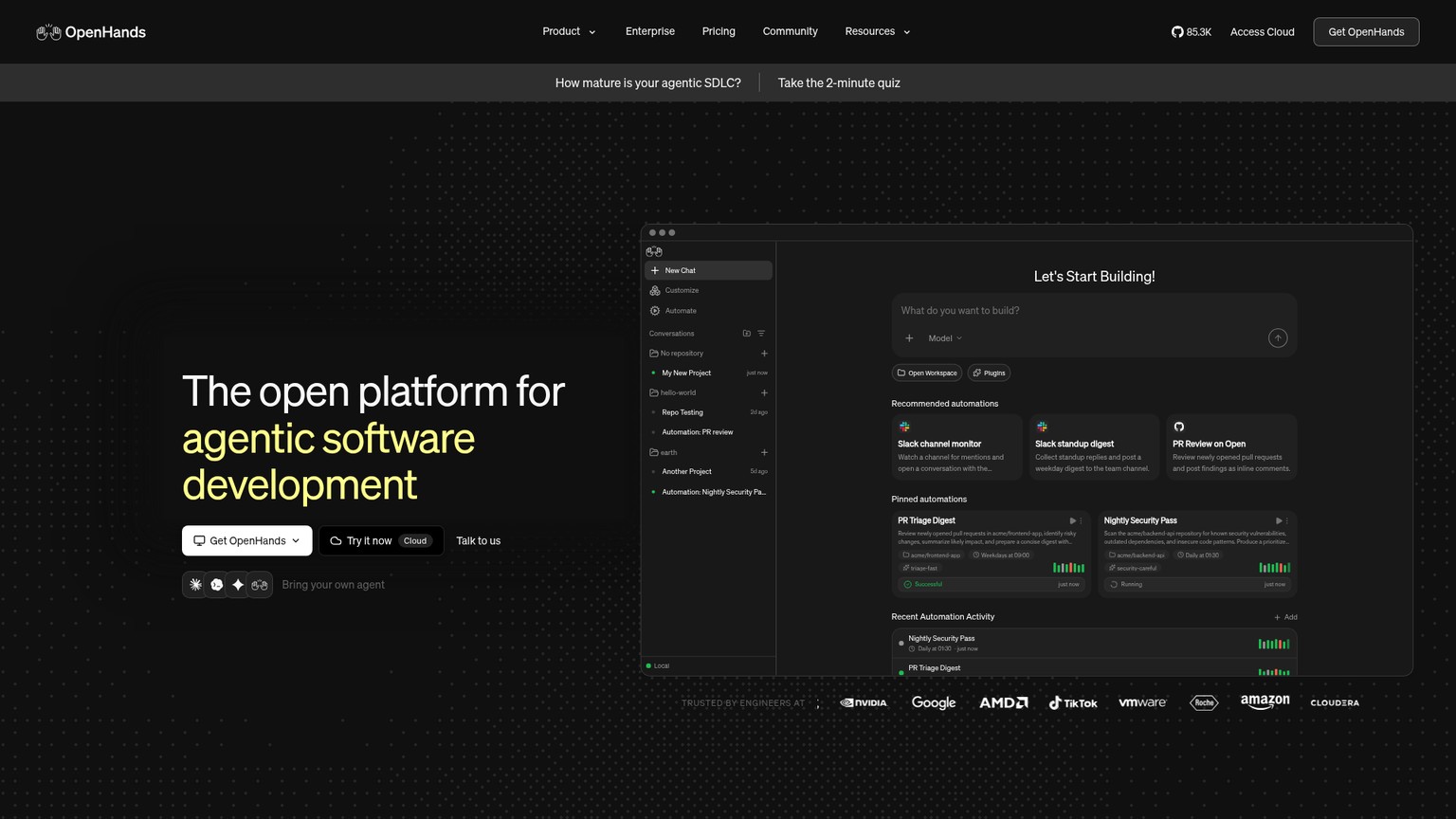
The distinction is important. Aider and OpenCode are strongest when a developer stays close to the local loop. OpenHands is the better fit when a founder or engineering team wants to hand off a bounded task through a more autonomous runtime without committing to a proprietary model. Its model layer can connect to any LLM supported by LiteLLM, including local and self-hosted paths.
The free hosted plan has a hard operational limit of 10 conversations per day. Enterprise is custom-priced and adds multi-user support, SAML or SSO, unlimited concurrent conversations per user, private VPC options, and support. OpenHands pricing says its managed model access is passed through at cost with no markup.
Best for: Autonomous tasks where local, hosted, and enterprise deployment options matter
Standout: Free local and hosted entry points with BYOK and LiteLLM-backed provider flexibility
Pricing: Open Source free; Individual SaaS free; Enterprise custom; inference at cost or BYOK
Free trial: Free tiers instead of a time-limited trial
- Free local agent and free Individual SaaS plan
- Any LiteLLM-supported model can be configured
- Local, hosted, and private deployment routes
- At-cost managed inference with no model markup
- Free Individual SaaS is capped at 10 conversations per day
- Enterprise collaboration and private VPC support are custom-priced
- Local and open-weight models can fail tool calls or return malformed JSON
- Self-hosting moves runtime updates and reliability onto the buyer
The craft bar here is execution reliability, not whether a local model can answer a coding question. OpenHands warns that open-weight and local models vary widely in tool use. Slow responses, poor outputs, and malformed JSON are signals to raise model capability or change endpoints. Model agnosticism gives you that exit, but it does not make weak models equally capable.
Choose OpenHands when the autonomous runtime is worth operating or when the free cloud limit matches a light workload. Choose Kilo when central budgets and ready-made team controls matter more. Choose Roomote when the output must arrive as a pull request with a separate review loop and preview.
6. Roomote: Best Portable Cloud Agent for Reviewable Pull Requests
Roomote is the best cloud option when the agent must work in an isolated environment, review its changes with another model, and return a pull request with a live preview. It is model-agnostic and BYOK, can run on Roomote Cloud or self-hosted, and keeps each deployment single tenant. That makes it closer to a portable engineering teammate than an editor extension.
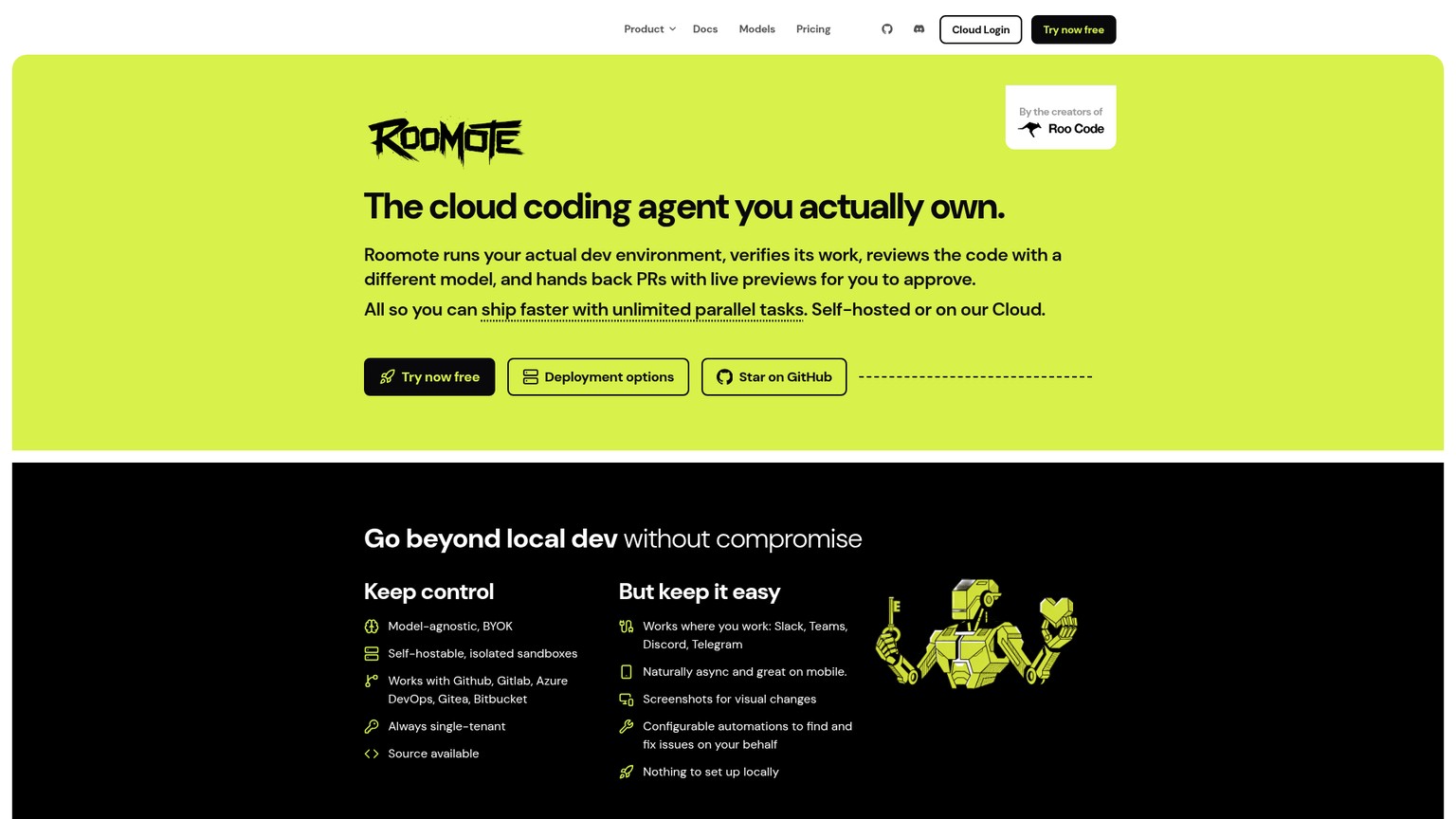
Roomote fits a mid-market CTO who wants reviewable asynchronous work without putting the inference contract and runtime in the same vendor box. It can connect to repository, issue, documentation, observability, and work-management systems. Its documented integration list includes monday.com, which is a useful handoff when engineering requests already enter through that system.
The pricing is simple until the eleventh user. Roomote's live pricing puts Cloud at $49 per month for up to 10 users, $249 for 11 to 50, $499 for 51 to 100, and custom pricing beyond 100. Cloud includes a seven-day trial with no credit card. Self-hosting is free up to 10 users, then $249 for 11 to 50, $499 for 51 to 100, and custom beyond 100.
Roomote is source-available rather than ordinary open source. Its Fair Core license moves releases to an Apache 2.0 future license, but it forbids offering a competing service and bypassing protected functionality beyond 10 users. That may be acceptable for an internal engineering tool; it is a bad fit for a vendor planning to repackage the platform.
Best for: Teams that need portable cloud execution, separate model review, and pull-request evidence
Standout: Single-tenant hosted or self-hosted runtime with live previews and a second-model review loop
Pricing: Cloud $49, $249, $499, or custom by user band; self-hosted free, $249, $499, or custom; inference key separate
Free trial: 7-day Roomote Cloud trial with no credit card; self-hosted is free up to 10 users
- Model-agnostic BYOK with hosted and self-hosted routes
- Single-tenant isolation in both deployment modes
- Pull requests, live previews, and a different-model review loop
- Integrations include Git hosts, observability tools, issue systems, and monday.com
- Source-available license restricts competing commercial use
- The user-count price jump is steep at 11 users
- Inference is not included in the platform price
- A shared cloud agent is heavier than a local tool for quick interactive edits
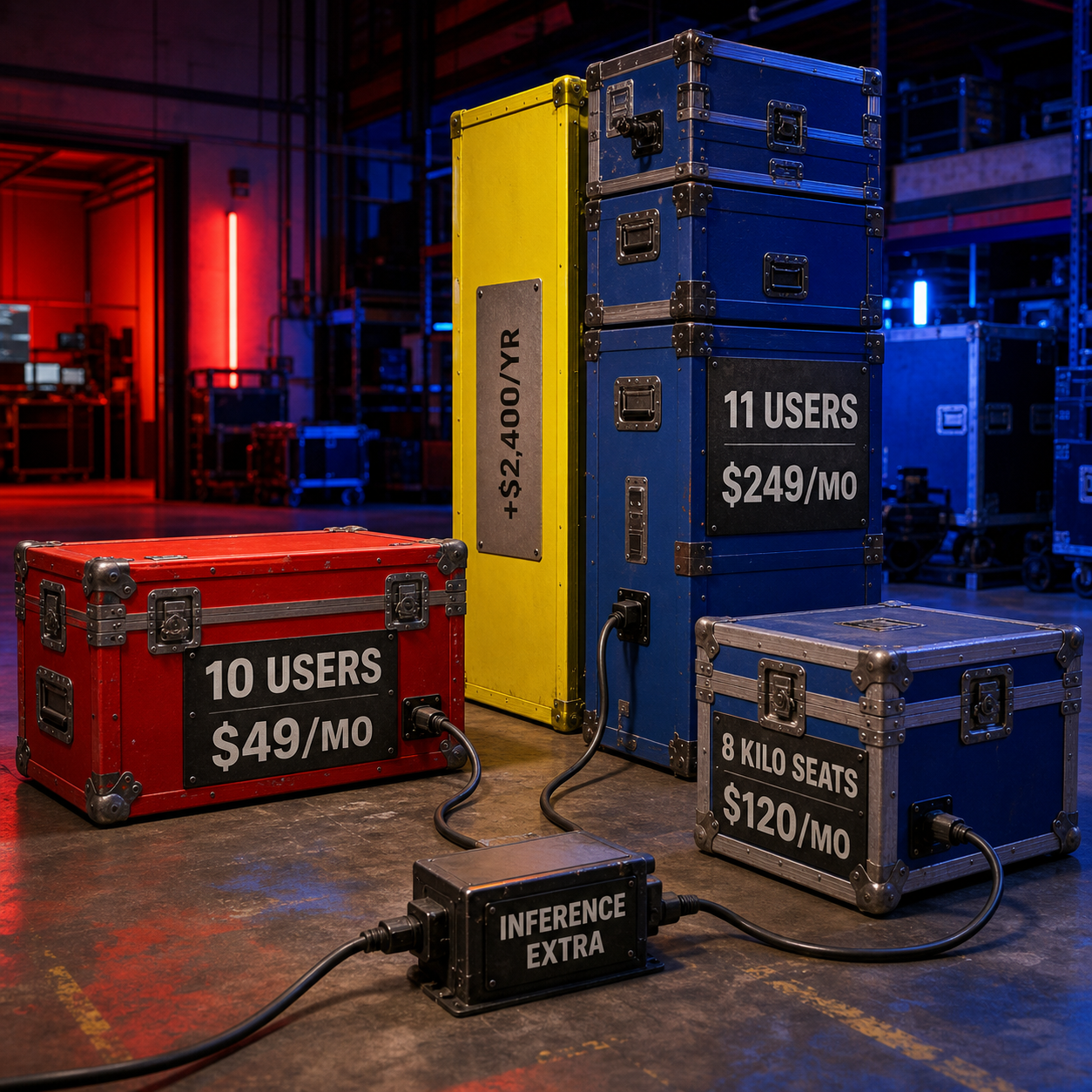
The price cliff changes the ranking. Roomote is unusually compelling for a cloud team of 10 because $49 per month covers the platform and deployment, with the buyer bringing inference. At 11, Kilo Teams costs $165 per month for seats before compute and inference, while Roomote Cloud jumps to $249. They are not equivalent products, but the difference is large enough to force a fresh workflow decision.
Who Should Pick What
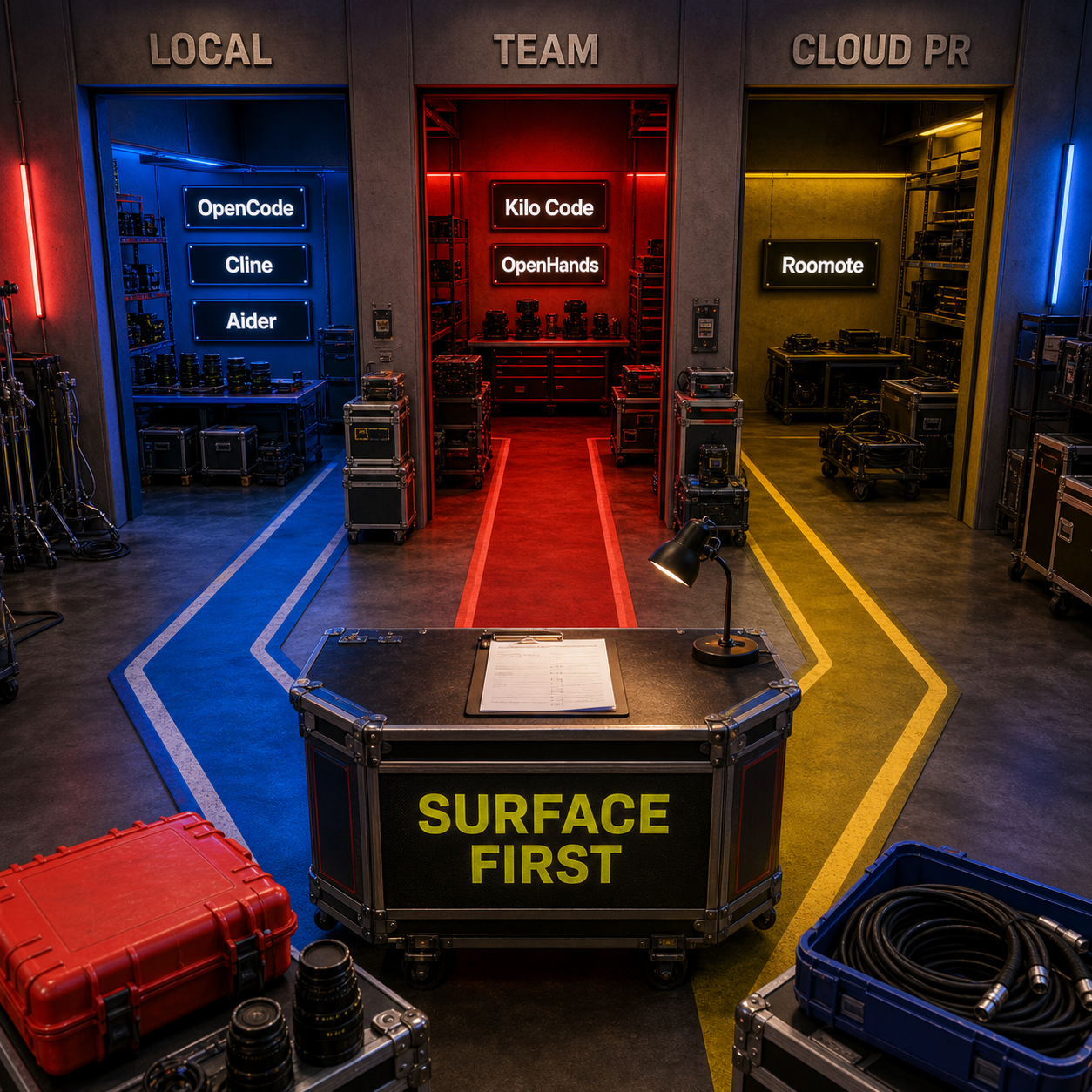
Pick the surface you need to preserve, then apply the two-switch test inside that surface. Model count breaks ties only after the execution workflow and cost stack fit.
- Terminal or mixed local surfaces: Pick OpenCode. It has the broadest provider reach and can keep terminal, desktop, and IDE use under one open-source harness.
- VS Code as the fixed workspace: Pick Cline. It keeps the editor loop familiar while inference can move between direct providers, gateways, and compatible endpoints.
- A governed rollout with shared budgets: Pick Kilo Code. The $15 seat is justified when shared BYOK, centralized billing, provider controls, or reporting saves more than the plan costs.
- Git history as the approval system: Pick Aider. Its automatic commits and undo path are a better fit than a dashboard when senior developers already review every diff.
- Free autonomous work or self-hosted experiments: Pick OpenHands. It offers the most complete $0 path from local agent to hosted Individual use.
- Asynchronous work that must end in a pull request and preview: Pick Roomote. Its separate review model and single-tenant deployment are worth the platform charge when review evidence is the product.
The decision rule that flips the winner is where the task ends. If it ends in your terminal, OpenCode wins. If it ends inside VS Code, Cline wins. If it ends in a team budget dashboard, Kilo wins. If it ends as a Git commit, Aider wins. If it ends in a free autonomous runtime, OpenHands wins. If it ends as a reviewed cloud pull request, Roomote wins.
There is one more budget filter. If your main concern is predictable weekly inference rather than the harness, compare the Claude Code alternatives for predictable usage. A cheap agent with an uncontrolled premium-model loop can cost more than a paid platform with enforced budgets.
The Ones to Avoid for Model Independence
Avoid any configuration whose fallback preserves chat while silently dropping the work that made the agent valuable. These products can be good choices in other rankings; they fail only when model independence is the requirement.
Cursor as a complete portability layer
Cursor supports a BYOK continuation for some local Chat and Agent requests, but OpenAI says that route does not cover Tab, autocomplete, Auto, Cloud or Background Agents, Automations, Cursor CLI, or Cursor's API and SDK. Do not call the whole workflow portable until the features your team uses have a supported second route.
OpenCode with Zen as the only endpoint
OpenCode itself is model-agnostic. A deployment that connects only OpenCode Zen recreates one endpoint dependency inside a portable harness. Connect and rehearse a direct provider, a second gateway, or an approved local endpoint before treating the configuration as resilient.
Aider architect mode for every cheap task
Aider's architect and editor split is useful for hard changes, but it makes two model requests. Using it for routine edits can increase latency and inference cost without buying a better outcome. Keep ordinary work in code mode and reserve the split for tasks whose planning quality repays the second call.
Roomote Cloud without checking the next user band
Roomote is attractive at 10 users and changes economics at 11. Do not approve it from the $49 headline if the team is about to grow. Price the $249 band, inference, and any self-hosting owner before signing off.
The Monday Move: Run One Provider-Exit Drill
Next Monday, prove one agent can survive a provider exit before moving the whole team. The output should be a working backup route, a reviewed patch, and a written cutover rule, not a spreadsheet of supported model names.
Inventory the workflow that would break
List the surfaces the team uses now: chat, edits, autocomplete, terminal, background tasks, cloud agents, automations, and APIs. Mark every surface whose alternate endpoint is undocumented.
Choose one bounded repository task
Use a bug fix or refactor with an objective test and a small review surface. Do not start with an architecture rewrite; the point is to validate the route, tools, and evidence.
Configure the second switch
Keep the agent and project rules fixed. Change both the model family and the inference endpoint. A different model behind the same mandatory gateway proves less than a direct or independently controlled backup.
Compare the complete outcome
Record whether the agent read the right files, called the required tools, produced a valid patch, passed the test, and stayed reviewable. Pull the provider charge and any platform or compute charge from their real dashboards.
Write the cutover and rollback rule
Name the approved backup model, endpoint, missing features, budget owner, credential owner, and trigger for returning to the primary route. Schedule the drill again when a provider, plan, or core agent surface changes.
OpenAI's proposed November 12 Cursor cutoff creates a deadline, but the drill is useful even if that date moves. Provider access, model quality, pricing, and terms can change independently. A rehearsed second route converts the change from an emergency migration into a normal operating decision.
Frequently Asked Questions
Which AI agent is best for coding in 2026?
OpenCode is the best model-agnostic default because it combines more than 75 providers, local models, and terminal, desktop, and IDE surfaces in one open-source harness. If model independence is not required, a first-party or integrated IDE agent may still win on polish or bundled features.
What are the trends in coding agents for 2026?
The important buying trends are provider portability, local or self-hosted inference, autonomous cloud execution, and separating platform, inference, and compute costs. OpenAI's proposed Cursor contract cutoff makes those architectural choices visible to nontechnical budget owners.
What is the best coding model in 2026?
No single model is best for every repository and task. A model-agnostic agent lets a team use a strong reasoning model for architecture, a cheaper model for routine edits, or a local model for approved private work without replacing the harness.
Best free AI coding agents 2026
OpenCode, Cline, Kilo Code, Aider, and local OpenHands all start with a $0 agent layer. “Free agent” does not always mean free usage: direct APIs, gateways, and cloud compute can still create separate charges.
Does model-agnostic mean the same as BYOK?
No. BYOK proves that a user can supply a credential for some requests. Model-agnostic operation also requires the important execution surfaces, project rules, tools, and review path to survive when both the model family and endpoint change.
Can Cursor still use OpenAI models after November 12, 2026?
OpenAI describes November 12 as a proposed cutoff, not a confirmed final date, and says Cursor may end access sooner. Its documented continuation options include a personal API key for supported local Chat and Agent requests, a separate Codex IDE extension, or a compatible gateway, each with feature and billing limits.
Audit the Workflow Before You Add Another Agent
Map the agent, inference, and compute layers before another subscription hides a duplicate bill. Get the AI Business Workflow Audit Checklist free.
- Published
- Category
- Build
- Language

CLAUDE.md: Write It Once, Start Every Session Right
Write a useful CLAUDE.md, scope project rules, and manage Claude Code auto memory with a 35-line starter and a monthly cleanup routine.Oct 11, 2026Build
Jev Alternatives in 2026: OpenAI, Microsoft, Clef, d1, Perplexity and Strands (Compared)
Compare Jev alternatives by job, maker-verified input pricing, licences and deployment: OpenAI, Microsoft, Clef, Liquid d1, Perplexity and Strands.Oct 11, 2026Build
OpenAI Decisions API
Use OpenAI Decisions API for ticket routing, labels, and action gates. Three guide requests, refusal handling, pricing, limits, and when to keep your LLM.Oct 11, 2026Build
Claude Code Remote Control
Set up Claude Code Remote Control from CLI, VS Code or Desktop, connect your phone or browser, and fix documented login and connection failures.Oct 9, 2026Build
Cursor Remote Control
Set up Cursor Remote Control on iPhone, pair your laptop, keep local agents reachable, and compare cloud agents, Claude Code and Codex.Oct 9, 2026Build
Firecrawl Pricing 2026: What Your Pages Cost
Firecrawl plans and credit packs verified October 2026. Calculate JSON extraction, failed pages and weekly crawl bills at your volume.Oct 9, 2026Build
Claude Code vs GitHub Copilot 2026
Claude Code vs GitHub Copilot: current plans, usage limits, models, team controls, one-seat and ten-seat costs, and when to use both.Oct 8, 2026Build