Claude Code Alternatives for Predictable Weekly Usage 2026
Seven Claude Code alternatives ranked by budget predictability, with live 2026 prices, hard-cap mechanics, and a September 14 migration plan.
Published
 By Omid Saffari



Claude Code Alternatives for Predictable Weekly Usage 2026 is a budget question, not a benchmark contest. Claude Code's announced September 14 weekly ceiling is 125 on an indexed scale where today's temporary allowance is 150, a 16.7% drop that Anthropic rounds to 17%. Kiro is the best replacement when the job is keeping Monday's coding queue inside a published capacity and spend line, while GitHub Copilot is the cleaner team choice.
Claude Code Alternatives for Predictable Weekly Usage 2026
Claude Code is still a capable coding agent. The reason to change is narrower: its usable weekly capacity is about to become harder to fit around the work you already scheduled.
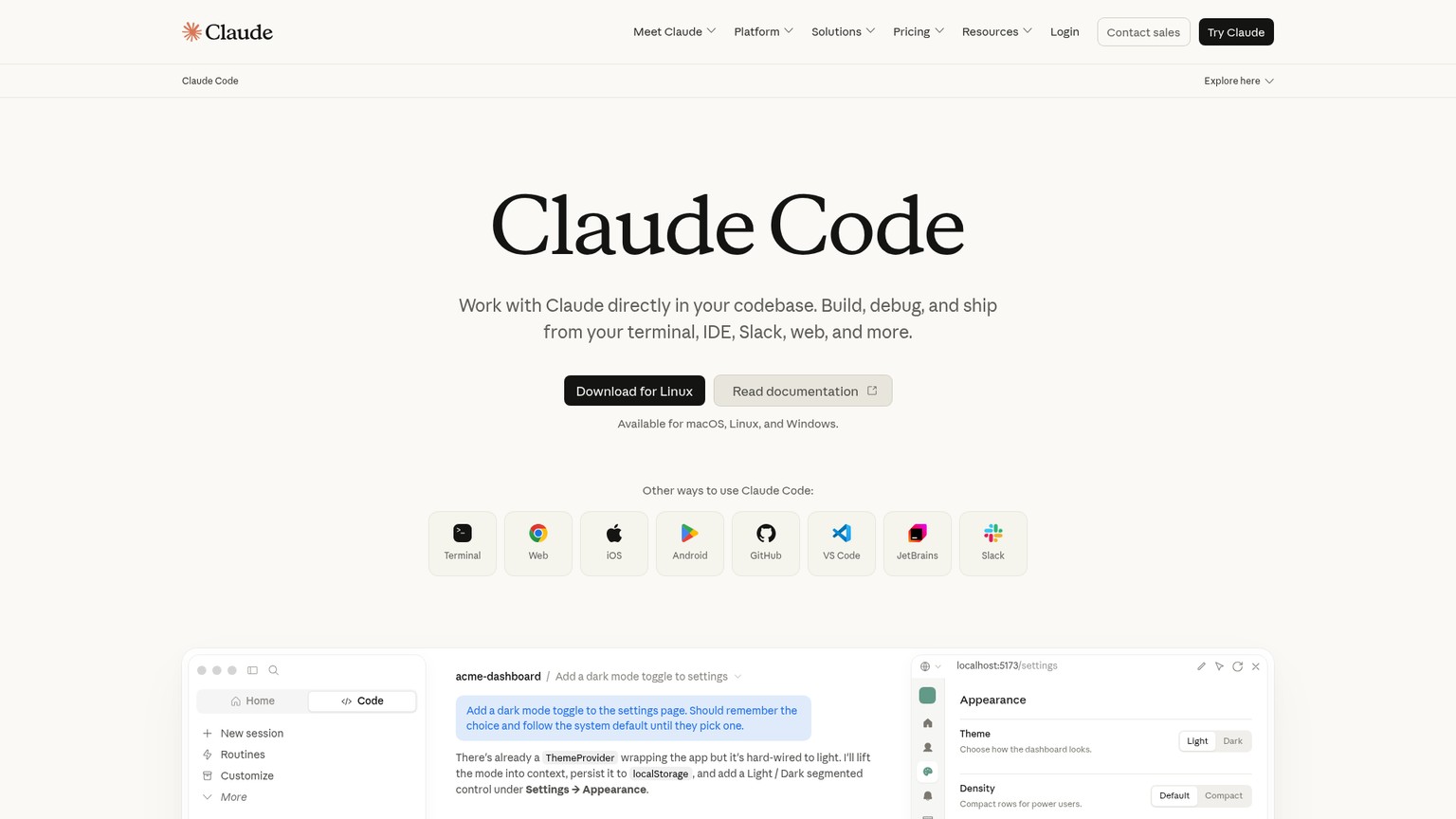
Anthropic's current promotion page says eligible Pro, Max, Team, and legacy seat-based Enterprise users have a temporary weekly allowance 50% above the standard level. It also says the promotion changes the weekly limit only, not the five-hour limit, and that /usage shows the allowance. The durable page still names August 31 as the end date, but Anthropic's August 29 announcement superseded that schedule: the boost now runs until September 14, when the permanent level becomes 25% above the old standard and 17% below what is available today. The announcement record and arithmetic were retrieved on August 30, while Anthropic's support page had not yet caught up.
The clean way to read the change is to index the old standard at 100. The temporary promotion makes today's ceiling 150. The announced permanent ceiling is 125. Divide 125 by 150 and you get 0.8333, so the new allowance is 83.3% of the current one, a 16.7% reduction rounded to 17%.
That is not a price cut. It is a capacity cut against the level your current habits were trained on. If a sprint already uses nearly all of today's allowance, moving the same queue into a ceiling that is one-sixth smaller creates one of three outcomes: work pauses, overage moves to an API bill, or lower-priority tasks move to another agent. The decision belongs in the sprint plan before it appears as a blocked terminal on Thursday.
Anthropic has not published absolute token counts for the before and after limits. That makes a promise like "this plan buys exactly this many pull requests" impossible. You can still budget the proportion: treat roughly one-sixth of today's Claude Code throughput as capacity that needs a new home.

The broader Claude Code alternatives guide is still the right reference when features, model choice, and interface fit decide the purchase. Here, the ranking is deliberately different. A tool moves up when it publishes the allowance, shows the reset, stops cleanly, and lets you control overflow.
Claude Code Pricing Plans Set the Baseline
Prices in this comparison were checked on August 30, 2026. On Claude's live pricing page, Free is $0. Pro is $17 per month with a $200 annual payment, or $20 when billed monthly, and it includes Claude Code. Max starts at $100 per month and offers a choice of 5x or 20x Pro usage. Team Standard is $20 per seat per month billed annually or $25 monthly, while Team Premium is $100 per seat per month billed annually or $125 monthly. Self-serve Enterprise is $20 per seat plus API-rate usage, and sales-assisted Enterprise is quoted.
The subscription prices did not fall with the announced allowance. That matters because predictable usage is not just "what will the invoice say?" It is also "how much planned work will that invoice reliably carry?" A fixed subscription with an unpublished absolute weekly ceiling answers the first question and leaves the second open.
Claude Code Alternatives at a Glance
All prices below are current USD list prices checked August 30, 2026, before tax unless the vendor states another currency or billing condition. "Free plan" means there is a real no-cost path, not that premium-model inference is free forever.
Kiro wins because its monthly credits are public, its add-ons have published prices, and the agent pauses when both pools are empty. GitHub Copilot comes second because its credit ladder and budget conversion are unusually explicit, though the flex portion can change. OpenCode comes third because a dollar ceiling can be cleaner than a request allowance, provided you account for Zen's automatic top-up behavior.
The bottom of the list is not a quality verdict. Cursor and OpenAI Codex expose useful meters and may be better coding environments for some teams. They rank lower for this query because the current public pages do not turn the plan price into a fixed amount of weekly work.
How These Were Picked
This is a priced-and-analyzed comparison, not a claim that seven tools were exercised on a private repository. Every plan, credit figure, reset rule, rollover condition, and capability below came from a vendor page retrieved on August 30, 2026. The verdict turns on five questions.
Is the included capacity published? A plan that says "more usage" is weaker for planning than one that says 1,000 credits. Credits do not make tasks identical, but they give finance and engineering a common unit.
What happens at zero? A hard pause is predictable. A prompt to buy more is manageable. Silent pay-as-you-go continuation is only predictable when a hard budget exists and is actually enabled.
Can overflow be bounded? A monthly dollar budget, a manual add-on pack, or a provider hard limit can cap downside. An automatic reload or one-time purchase outside the monthly cap can reopen it.
When does capacity reset, and does it roll over? A visible monthly reset is easier to schedule than an undisclosed weekly allowance. Rollover helps bursty work, but expiry still matters.
Can the model or provider change without replacing the agent? Model-independent agents let you move cheap mechanical work away from a premium model. That can preserve budget even when the task count stays the same.
There is one distinction worth carrying through the whole page: a visible meter is not a predictable ceiling. A dashboard can tell you that a task was expensive after it ran. A published allowance, cutoff, and overflow rule tell you whether it should run before it starts.
Best Claude Code Alternatives
The seven picks below go deeper than a longer catalog because the expensive detail is not whether an agent can edit code. It is how the tool behaves when the included allowance ends during real work.
1. Kiro: Best Overall for a Published Capacity Ceiling
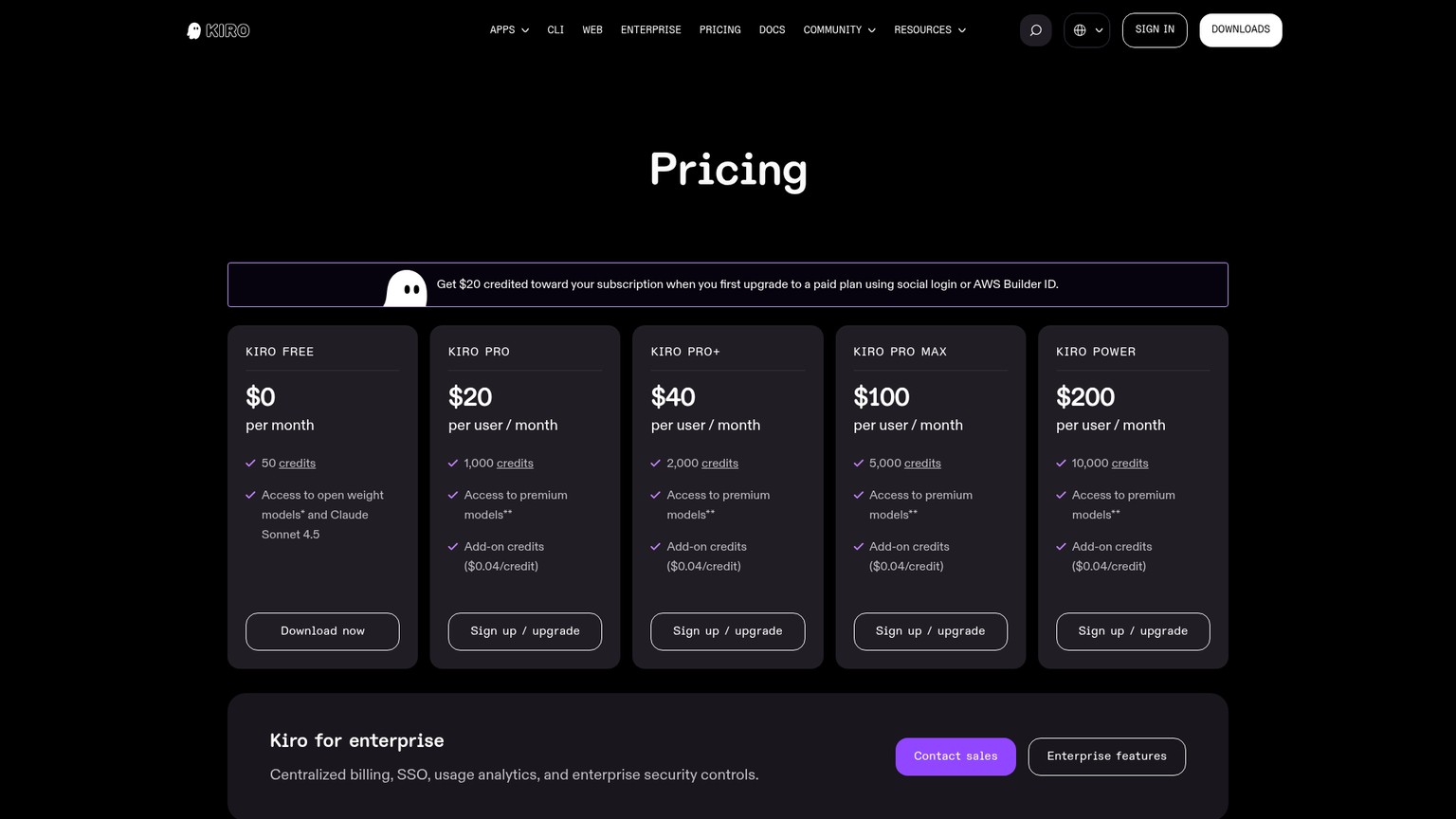
Kiro is the strongest replacement when the budget owner wants to see a number before the developer starts the week. Its monthly plan credits, add-on price, reset behavior, and stop condition are all published.
A practical use case is a small product team that wants one agent for IDE work, terminal work, web tasks, and approved development automation. One subscription works across Kiro IDE, Kiro CLI, Kiro on the web, Kiro Crew, and ACP-compatible IDEs. The team can assign routine implementation to the base credit pool, keep add-ons manual, and know that exhausted capacity pauses instead of silently becoming a larger invoice.
The wall is that a credit is a unit of work, not a fixed prompt. Simple prompts can cost less than one credit and complex spec tasks can cost more, so published credits do not equal a published number of completed tickets. Kiro still wins because the uncertainty is bounded by a known pool and a known stop.
Best for: Teams that value a published allowance and hard cutoff over maximum model freedom.
Standout: Plan credits are consumed first, add-ons second, and the agent pauses when both are gone.
Pricing: Free $0 with 50 credits; Pro $20/user/month with 1,000; Pro+ $40 with 2,000; Pro Max $100 with 5,000; Power $200 with 10,000; Enterprise is quoted. Paid add-ons cost $0.04 per credit.
Free trial: No timed trial is listed; the perpetual Free tier includes 50 credits.
The live Kiro pricing page says base plan credits reset at the start of the billing month and do not roll over. Add-on packs begin at $5 for 125 credits, top out at $100 per pack, and allow up to five packs at once. According to Kiro's add-on documentation, unused add-on credits roll month to month and expire 12 months after purchase.
That creates a useful two-pool policy. Treat plan credits as ordinary production capacity. Treat add-ons as a deliberate incident budget, not an invisible extension of the plan.
The per-seat boundary matters. Kiro says each developer needs a subscription, so a quiet developer's unused base credits do not become a shared reserve for the person running a large migration. Capacity planning should therefore happen by owner as well as by project. Give each seat a normal work class, then direct the exceptional job to the seat with an add-on approved for it.
The plan ladder also exposes the marginal cost. Pro includes 1,000 credits for $20, an effective recurring rate of $0.02 per credit before considering other subscription value. Add-ons cost $0.04 each. A team that repeatedly buys packs is paying twice the base allocation's effective credit rate, which is a signal to move up a tier or route that workload elsewhere. A one-off $20 pack during a release is sensible. The same pack every month is a badly sized base plan.
Choose the base tier from normal work
Use the smallest published credit pool that covers an ordinary month. Do not size it around a launch week, because that bakes burst capacity into every recurring invoice.
Split the pool into weekly envelopes
Reserve part of the monthly total before allocating four working envelopes. That reserve absorbs a long task without stealing the final week's capacity.
Keep add-ons manual
Decide who can purchase a pack and what event justifies it. Kiro's hard pause is an advantage only if a purchase remains an explicit decision.
Review the dashboard before planning
Kiro says usage updates at least every five minutes. Put the remaining balance beside the next sprint's task list, then move lower-value work before the pool reaches zero.
- Every public paid tier carries an exact monthly credit number.
- Exhausted plan and add-on pools trigger a pause.
- Add-on price, pack floor, pack ceiling, rollover, and expiry are published.
- One subscription spans IDE, CLI, web, and supported automation surfaces.
- Credits measure variable work, not a guaranteed task count.
- Base credits do not roll over.
- Add-ons cost twice the effective per-credit price of the Pro base allocation.
Verdict: Kiro does not eliminate usage uncertainty. It turns that uncertainty into a bounded pool with a visible exit, which is the more useful promise.
2. GitHub Copilot: Best for Explicit Credits Inside GitHub
GitHub Copilot is the best choice for a team that wants published monthly credits without introducing a separate coding environment. The allowance follows the same account across the IDE, GitHub.com, and Copilot CLI.
The paid ladder is unusually legible. GitHub's current individual billing page lists base credits, flex credits, and the total for each plan. One AI credit equals $0.01, so the overage budget and the usage meter speak the same language.
The wall is the flex allotment. GitHub says base credits never change, but the flex portion may change as model pricing and efficiency change. That makes the base the safe planning number and the flex portion bonus capacity, even though both appear in the current total.
Best for: Developers already centered on GitHub who want an explicit monthly credit ledger.
Standout: A $10 additional-use budget maps directly to 1,000 AI credits.
Pricing: Free $0; Pro $10/month with 1,500 total credits; Pro+ $39 with 7,000; Max $100 with 20,000.
Free trial: No timed trial is listed; Copilot Free is the no-cost path and includes 2,000 code completions per month.
Paid code completions and next-edit suggestions are unlimited and do not draw AI credits. Chat, Copilot CLI, cloud agent, Spaces, Spark, and third-party agents do. That boundary is valuable: predictable completion capacity stays separate from the agentic work that can expand across files and tools.
Included credits reset at midnight UTC on the first day of each calendar month and do not carry over. Once the pool is empty, a user can upgrade, set a dollar budget for more usage, or wait. For four individual Pro subscriptions, the recurring bill is $40 and each person receives 1,500 credits, 6,000 in aggregate but not one shared individual-plan pool.
The breakdown is useful for forecasting. Pro's current 1,500 total is 1,000 base and 500 flex. Pro+ is 3,900 base and 3,100 flex. Max is 10,000 base and 10,000 flex. Budget committed work against the base portion because GitHub says it never changes. Use flex for backlog, experiments, and release overflow because GitHub explicitly reserves the right to change it.
The calendar reset creates another operational wrinkle. Included credits reset on the first day of the month, not on each person's subscription anniversary. A team planning a release across month-end can deliberately use remaining current-month capacity for exploratory work, then start the expensive agent run after the reset. That is not rollover, and unused credits still disappear, but the shared date is visible enough to plan around.
Credit locality also matters for four individual seats. One person can exhaust 1,500 while another leaves most of the allowance unused. Do not describe 6,000 aggregate credits as a team pool. Assign the agent-heavy work to accounts intentionally or evaluate an organization plan with pooled billing controls instead of assuming the arithmetic creates sharing.
- Exact paid-plan totals are public.
- One credit has a fixed one-cent conversion.
- Additional usage can be bounded with a dollar budget.
- Paid code completions remain outside the credit meter.
- The flex part of the included allowance can change.
- Complex agent work consumes more credits than quick chat.
- Individual allowances are per account rather than one team pool.
Verdict: Plan around GitHub Copilot's base credits, treat flex as upside, and it becomes one of the cleanest mainstream answers to capacity planning.
3. Claude Code vs OpenCode: Best for a Provider-Level Ceiling
OpenCode is the best fit when the agent interface should stay stable while models and providers remain replaceable. It is an open-source agent for the terminal, IDE, and desktop, with support for more than 75 providers, local models, GitHub Copilot login, and ChatGPT Plus or Pro login.
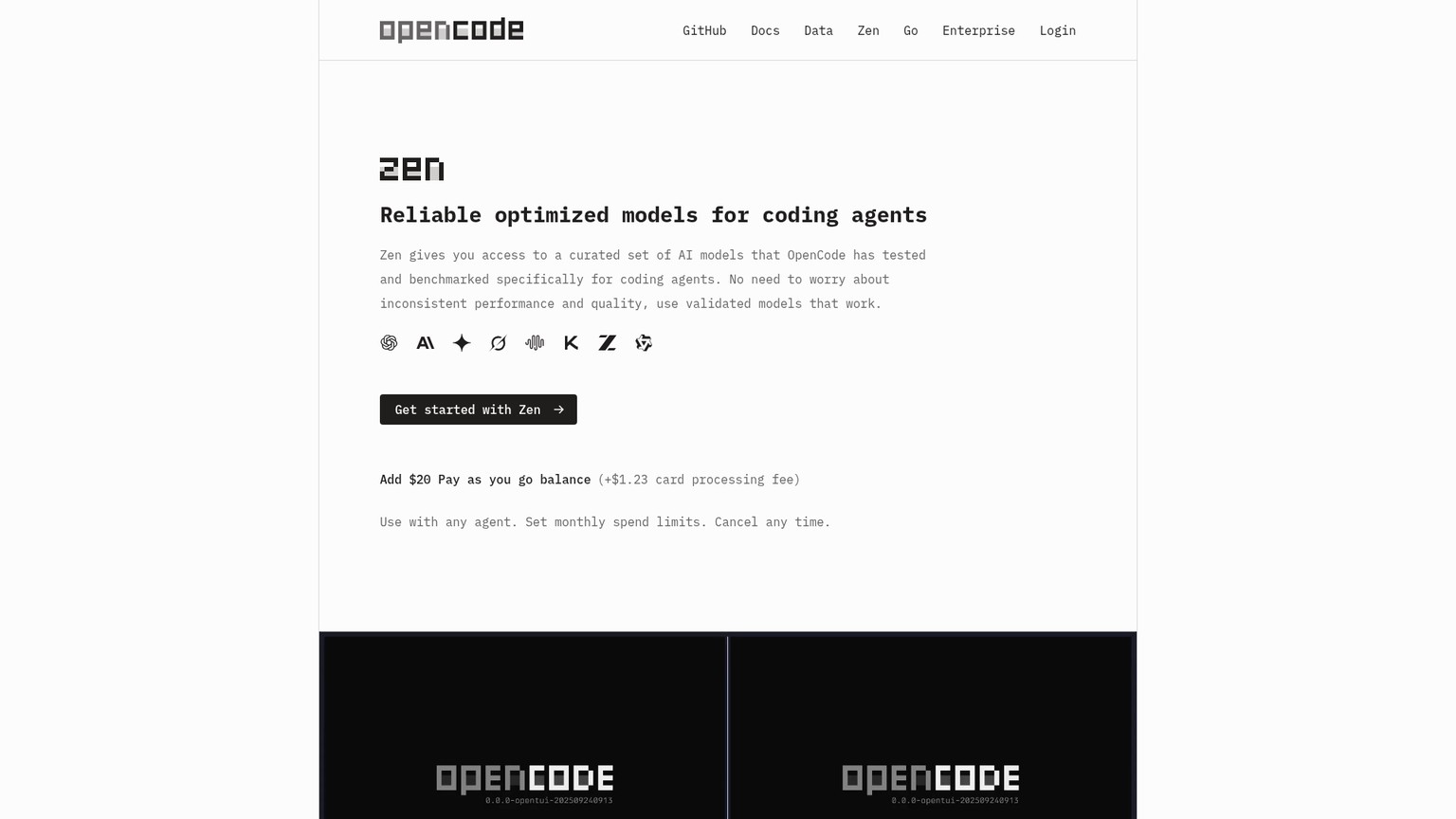
The predictable path is not a weekly request allowance. It is a dollar ceiling. OpenCode Zen begins with a $20 pay-as-you-go balance plus a $1.23 card-processing fee, charges per request with zero markup, and advertises monthly spend limits. Zen also works with agents other than OpenCode, so the provider layer can survive another interface change.
The wall is printed on the same page: when the balance reaches $5, Zen automatically adds $20. A starting balance is therefore not the same thing as a hard total unless the account's spend limit is configured to match the intended ceiling. The budget owner should verify that limit before calling the setup predictable.
Best for: Builders who want to route work across providers or local models without changing the coding workflow.
Standout: Monthly spend limits at the provider layer, with zero-markup per-request pricing.
Pricing: OpenCode publishes no agent subscription tier. Zen starts with a $20 balance plus a $1.23 processing fee; existing subscriptions, direct providers, free models, and local models are alternative paths.
Free trial: No timed Zen trial is listed; the agent is open source and can connect to non-Zen providers.
OpenCode beats Claude Code on model independence. Claude Code offers a coherent Anthropic experience, while OpenCode lets the operator separate cheap mechanical edits from expensive reasoning work. That can turn a weekly shortage into a routing problem instead of a complete migration.
The weekly plan is built from dollars, not prompts. Start with the approved monthly provider maximum, reserve an incident slice, then allocate the remainder across the working weeks. The number of requests will vary, but the cash exposure will not exceed the configured ceiling. That is often the more honest promise for a mixed-model agent because a small local-model refactor and a large frontier-model migration should not pretend to consume equivalent units.
Provider independence only helps if routing rules are simple enough to follow. A practical split is a lower-cost or local model for formatting, tests, and repetitive edits, with a premium model reserved for architecture, ambiguous debugging, and risky migrations. The rule should describe task classes, not model hype, so it survives the next provider change.
Existing GitHub Copilot and ChatGPT Plus or Pro logins can also supply model access. That may reduce a new bill, but it imports the limits of those subscriptions. If predictable spend is the goal, document whether each route draws from a fixed subscription, a Zen balance, a direct API budget, or local hardware. OpenCode is one interface; it is not one meter.
- Provider and model choice is broad, including local models.
- The same agent works in terminal, IDE, and desktop contexts.
- Zen publishes its starting balance, fee, top-up threshold, and top-up amount.
- A monthly spend limit is easier to reconcile with a budget than an undisclosed weekly token ceiling.
- Cost per completed task still depends on the selected model and context.
- Automatic top-up can defeat a casual interpretation of "prepaid."
- Provider flexibility adds setup and policy work.
Verdict: OpenCode is the right escape hatch when the durable asset is the workflow, not the model subscription. Set the spend ceiling first, then choose the model.
4. Aider: Best Lightweight BYOK Terminal Agent
Aider is the leanest choice for a terminal user who wants the coding agent separated from the model bill. It works with cloud and local LLMs, maps the repository, integrates with Git, and can lint and test after edits.
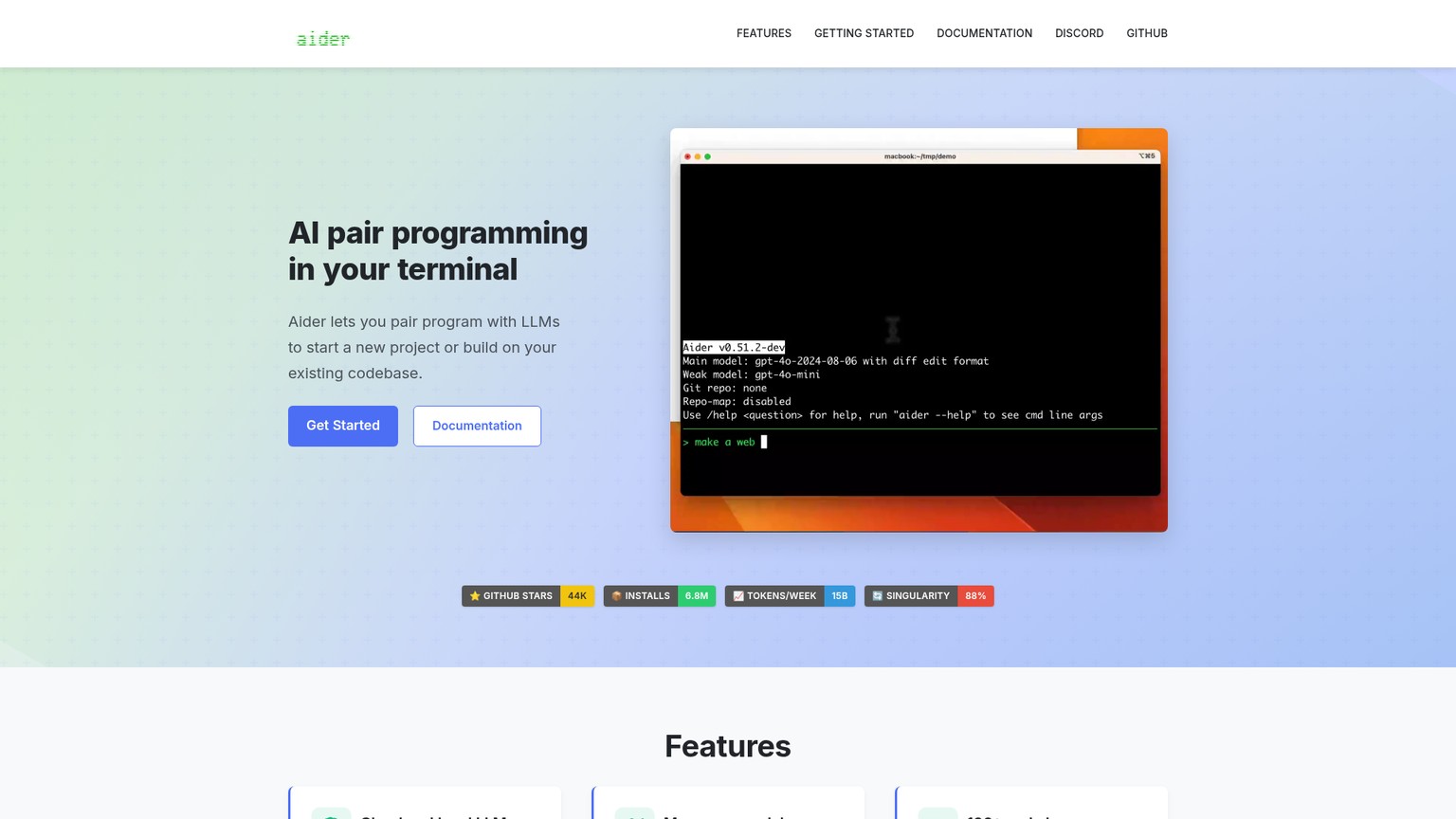
The predictable use case is a technical founder with several repositories and one provider account carrying a hard budget. Aider supplies the editing loop, while the provider supplies the price and ceiling. If cloud usage becomes too expensive, the same agent can point at a local model instead of forcing a new editor workflow.
The wall is that Aider itself does not publish a paid allowance or integrated dollar budget. Its /tokens command reports the current chat context, while /clear and /reset remove context that would otherwise keep growing. Those are useful consumption controls, but the actual financial stop belongs to the model provider.
Best for: Terminal-native developers comfortable owning provider configuration.
Standout: A small, provider-independent editing loop with repository mapping and local-model support.
Pricing: No paid Aider agent tier is published on the retrieved pages. Cloud-model charges come from the selected provider; local models move the model cost to the user's hardware.
Free trial: No timed trial applies to the agent; local-model use provides a no-per-request route.
Aider can connect through OpenRouter with an API key and provider-routing settings. That is useful when reliability, data handling, or a preferred vendor order matters. It also means the total system has two policy surfaces, Aider and the provider, so the ceiling must be documented where the money is actually charged.
Context discipline is the cheapest Aider control. Add only files needed for the task, inspect /tokens before a long request, and use /clear or /reset when the conversation has stopped earning the context it carries. That does not change a provider's unit price. It reduces the repeated input that makes an apparently small edit expensive.
The cleanest operating model has three layers. Aider owns edits, repository mapping, commits, linting, and tests. The provider account owns dollars and data policy. A short task-routing note says which model handles routine work and which one is allowed for difficult reasoning. When those layers are mixed into one undocumented shell setup, the tool is flexible but the budget is not auditable.
Local models are the true hard-ceiling option because no per-request model invoice exists. The trade is not zero cost. Hardware, electricity, setup, speed, and weaker output on the hardest tasks become the expense. Use local inference for repetitive, reviewable work and keep a metered cloud fallback for jobs where a weak edit would cost more to inspect than the model call.
- Broad cloud and local model compatibility.
- Context can be inspected and cleared from the terminal.
- Repository mapping, Git integration, linting, and testing keep the workflow focused on code work.
- No agent subscription ladder to outgrow.
- No first-party fixed usage pool or dollar cap is published.
- Cost visibility depends on the provider as well as Aider's token report.
- BYOK setup carries more operational responsibility than a bundled subscription.
Verdict: Aider is predictable when the provider account is predictable. Without that external hard limit, it is merely flexible.
5. Cline: Best for Per-Task Cost Visibility
Cline is the strongest option when the person doing the work needs to see cost at the task level, not just in an account dashboard. Each task tracks token use, estimated API cost, and execution time, with the estimate updating after every API request.
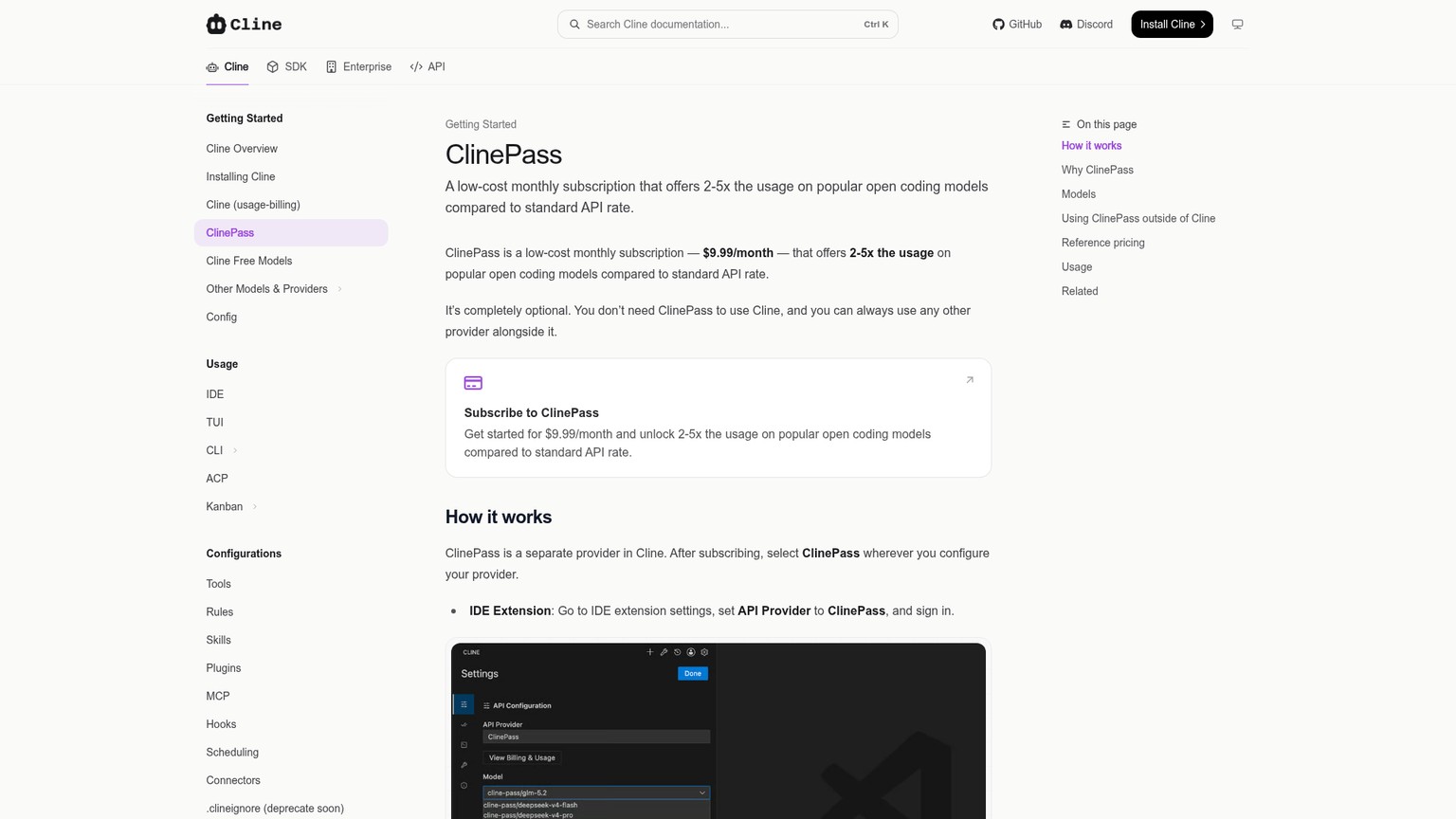
There are several ways to pay. Cline usage billing uses prepaid credits across more than 100 supported models and includes models tagged free. Direct API keys move billing to the provider. Local models remove the per-request model fee but require suitable hardware. ClinePass is a separate $9.99 monthly subscription for selected open coding models.
ClinePass sounds like the simple fixed-price answer, and for a light individual workflow it may be. The current ClinePass documentation says usage is governed by a rolling five-hour window, a weekly limit, and a monthly limit, but it does not publish the numeric quotas. A flat bill is predictable; completed capacity is not.
Best for: Developers who want a cost estimate attached to each agent task.
Standout: Task history records token usage, API cost, and runtime together.
Pricing: ClinePass is $9.99/month. Cline usage billing is prepaid pay as you go, direct keys inherit provider pricing, free-tagged models are available, and local models have no per-request model charge.
Free trial: No timed ClinePass trial is listed; free-tagged models and local models provide no-subscription routes.
For four people, ClinePass makes the recurring line $39.96 per month. That is attractive beside four $20 seats, but the missing quota numbers prevent a capacity comparison. Do not translate "2x to 5x standard API usage" into tasks per week. It is a vendor comparison to underlying API rates, not a published task allotment.
Cline is most useful when a team wants to build its own cost history. Because each task records tokens, estimated cost, and execution time, repeated work can be grouped into a practical range: dependency update, test expansion, small feature, or multi-file refactor. That internal history will be more useful than a generic prompt count because it reflects the repositories and models the team really uses. It is still an estimate until reconciled with the provider invoice.
The billing modes should not be mixed casually. ClinePass is a fixed subscription with undisclosed numeric quotas. Cline usage billing is a prepaid balance. Direct keys inherit another vendor's prices and limits. Local models replace metered calls with hardware. Name the active mode in the task template so someone reviewing cost does not mistake a provider charge for ClinePass capacity.
Local mode has a concrete wall. Cline's guidance lists 32 GB of RAM as the entry point for 4-bit models, 64 GB for better 8-bit quality, and 128 GB or more for cloud-competitive performance. It estimates 5 to 20 tokens per second on typical local hardware. That can be a sound fixed-cost lane for overnight or mechanical work, but it is not a free substitute for every interactive frontier-model task.
- Cost, tokens, and execution time are visible per task.
- A $9.99 subscription offers a low fixed entry point.
- Usage billing, direct providers, free models, and local models can coexist.
- The same provider choice is available in the IDE extension and CLI.
- ClinePass does not publish the numeric five-hour, weekly, or monthly quotas.
- Pay-as-you-go modes still need an external hard budget.
- Local models trade invoice certainty for hardware and speed constraints.
Verdict: Cline tells you what a task cost better than most agents. It does not yet tell a ClinePass buyer exactly how much weekly work the subscription will carry.
6. Cursor: Best IDE, Weaker Capacity Contract
Cursor is the best pick here for an IDE-first developer who accepts a less explicit capacity contract. Its Spending tab shows both included pools, remaining allowance, and on-demand charges in real time.
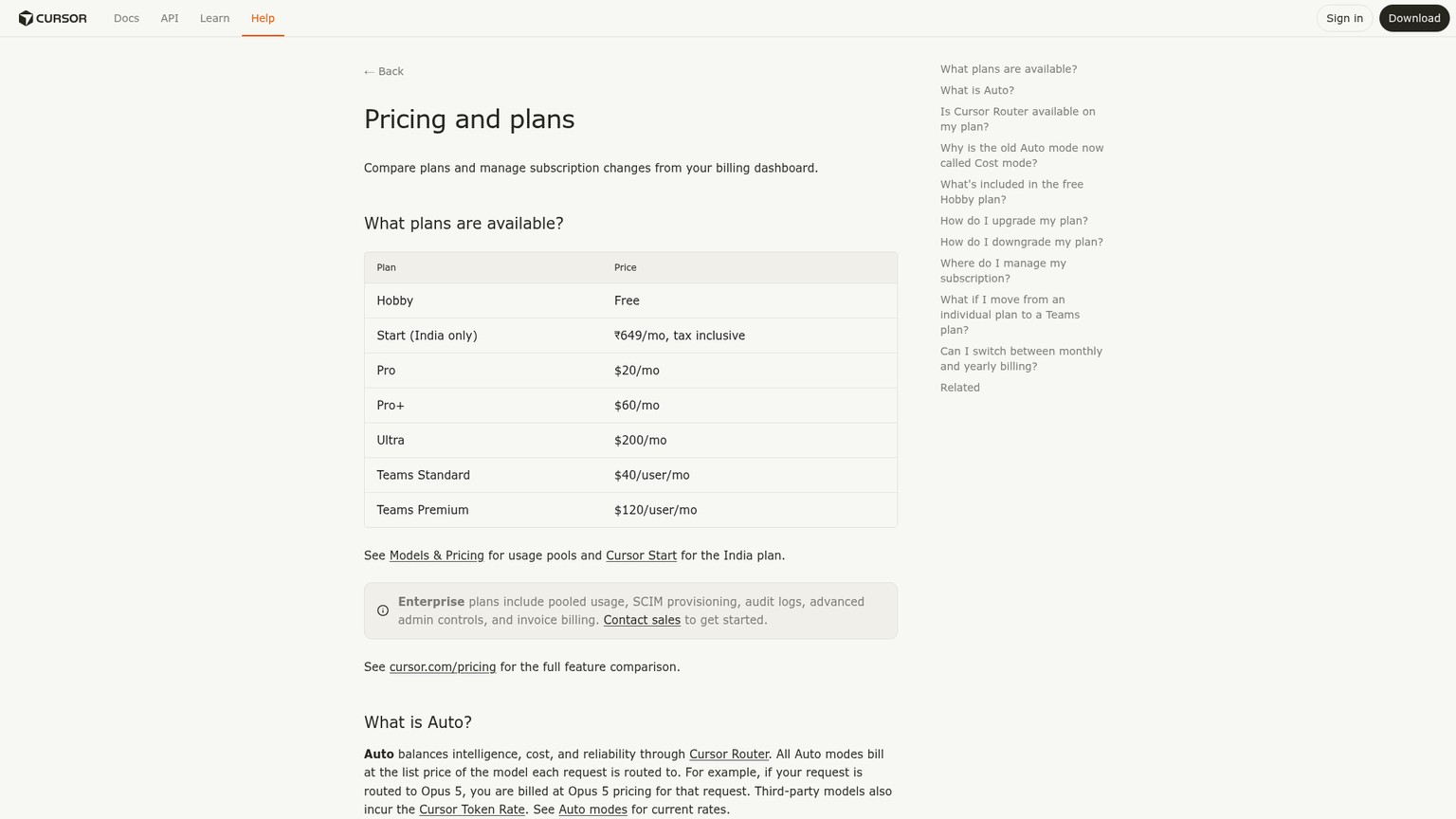
The current plan page lists Hobby as free, Start at ₹649 per month in India including tax, Pro at $20, Pro+ at $60, Ultra at $200, Teams Standard at $40 per user, Teams Premium at $120 per user, and Enterprise as quoted. Pro, Pro+, and Ultra include two monthly pools: one for Cursor Models and one for third-party Other Models.
The wall is that the retrieved public pricing and usage documentation do not state the numeric size of those pools. The dashboard can show your account's remaining allowance, but a buyer cannot convert the public plan price into a fixed amount of work before subscribing. Cursor Router also bills a routed model at its list price, with an added Cursor Token Rate on third-party models.
Best for: Teams that prioritize a polished IDE workflow and can manage usage from the live dashboard.
Standout: Real-time visibility across separate first-party and third-party model pools.
Pricing: Hobby free; Start ₹649/month in India; Pro $20; Pro+ $60; Ultra $200; Teams Standard $40/user; Teams Premium $120/user; Enterprise contact sales.
Free trial: No timed trial is listed; Hobby is the free plan.
Usage resets with the billing cycle and does not roll over. At the limit, the user can upgrade or enable on-demand billing at API rates. Four Pro seats therefore create a clear $80 recurring line, but the public pages do not disclose the corresponding pool size. That is exactly the difference between knowing the subscription cost and knowing the workload ceiling.
The two-pool design also affects routing. Cursor Models and third-party Other Models draw from separate allowances, so a team can exhaust one while the other remains. That is useful if the work is intentionally divided. It is confusing if developers switch models based only on output quality and discover late that they were spending the scarcer pool.
For a team, every member's usage resets at the same time on the team billing cycle. Use that shared date as a planning boundary. Review the Spending tab before sprint commitment, assign expensive agent work to a named pool, and delay enabling on-demand use until someone has approved the release budget. The dashboard is strong enough to operate this policy even though the public pricing page is not strong enough to forecast the included amount.
Plan upgrades are not the only answer to exhaustion. Moving routine edits to Composer or another included Cursor model may preserve the third-party pool, while a genuinely difficult task can justify on-demand premium-model use. The budget rule should name which task earns that exception. Otherwise "use the best model" becomes an uncontrolled cost policy.
- The Spending tab reports usage and on-demand charges in real time.
- Separate pools distinguish Cursor models from third-party models.
- Individual and team tier prices are public.
- On-demand use can keep a release moving after the included pool ends.
- Current public pages omit numeric pool allowances.
- Unused included usage does not roll over.
- Router and third-party token charges make task cost model-dependent.
Verdict: Cursor is easier to operate than to pre-budget. Pick it for the editor, then impose a spending policy around the meter.
7. OpenAI Codex: Best OpenAI Agent, Shared Allowance Caveat
OpenAI Codex is the most capable choice here for a builder already standardized on OpenAI's web, CLI, IDE, and mobile surfaces. It publishes useful five-hour message ranges, but its weekly capacity can still vary and the allowance is shared with other agentic features.
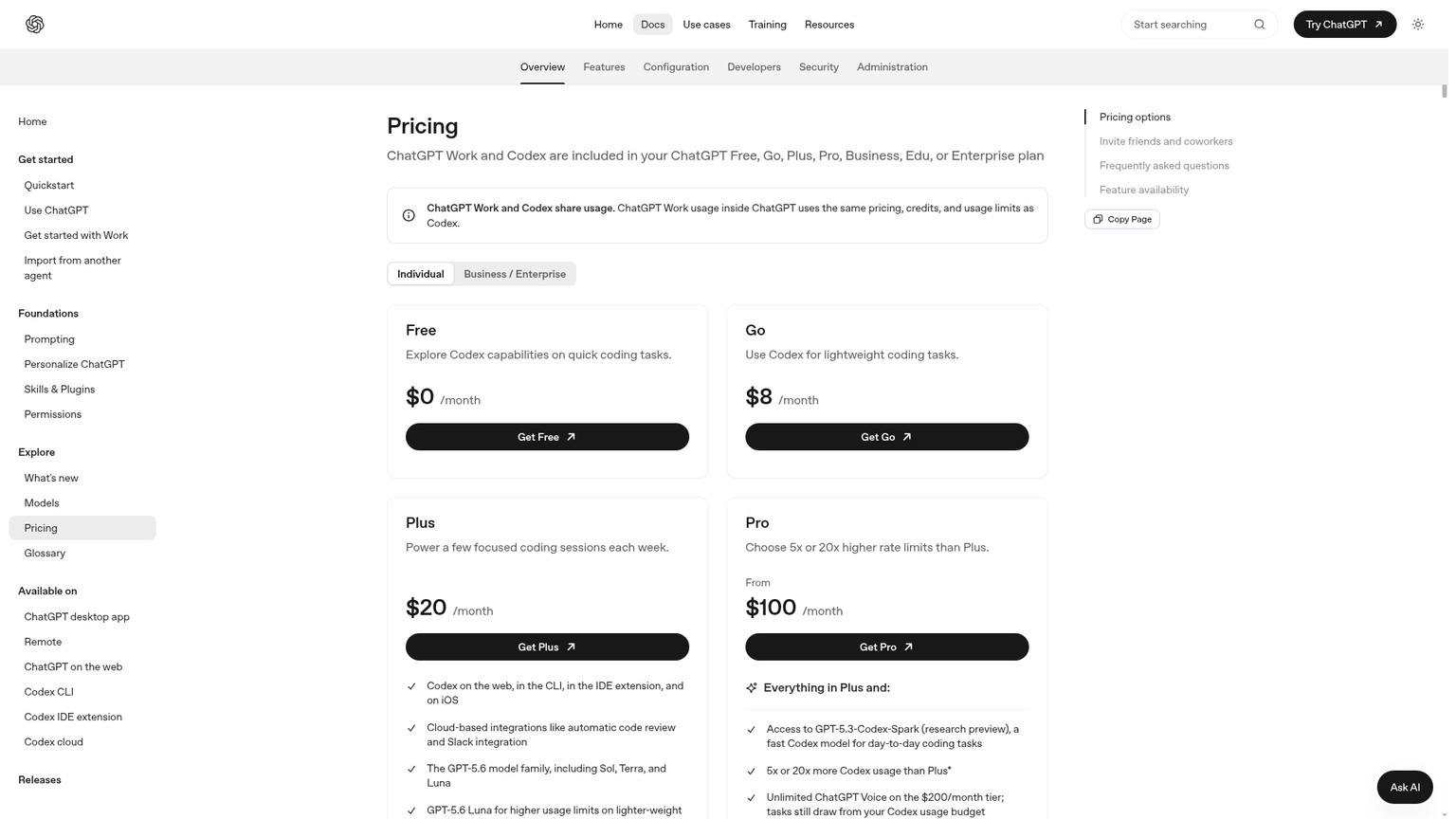
The current Codex pricing page lists Free at $0, Go at $8, Plus at $20, Pro 5x from $100, Pro 20x at $200, Business at $20 per user per month for at least two users billed annually or $25 monthly, Enterprise and Edu as quoted, and API Key as usage based. That is every public route, but only Plus and above get the full multi-surface feature set described on the page.
For local GPT-5.6 Sol messages, OpenAI estimates 10 to 100 per five-hour window on Plus, 50 to 500 on Pro 5x, 200 to 2,000 on Pro 20x, and 10 to 100 on Business. Those ranges are wide because model choice, task size, context, tools, retrieval, and caching change consumption. Cloud chats may use more allowance than local messages, and OpenAI says additional weekly limits may apply.
Best for: Builders who want one OpenAI agent across local, cloud, editor, and web work.
Standout: Published five-hour ranges and token credit rates provide more planning data than a generic "more usage" label.
Pricing: Free $0; Go $8; Plus $20; Pro 5x $100; Pro 20x $200; Business $20/user annually or $25 monthly; Enterprise/Edu quoted; API Key usage based.
Free trial: No timed trial is listed; Free provides limited Codex access.
The real limitation is pool ownership. Codex and ChatGPT Work share pricing, credits, and usage limits. Other supported agentic features on Plus and Pro can also draw from the same allowance. A coding lead can therefore consume less than planned even when the coding queue itself did not change.
After an included limit, Plus and Pro users can buy credits. Automatic reload can carry a maximum monthly spend, but OpenAI says that maximum does not govern one-time purchases. Purchased credits remain valid for 12 months and then expire. The current rate card prices GPT-5.6 Sol at 100 credits per one million input tokens, 10 for cached input, and 500 for output, with a typical message estimated at 5 to 30 credits.
Four Plus seats cost $80 per month. Each seat carries an estimated 10 to 100 local Sol messages per five-hour window, yet possible weekly limits and shared agentic use prevent that $80 from becoming a fixed weekly task count.
Model routing changes the capacity picture dramatically. On Plus, OpenAI estimates 25 to 200 local Terra messages and 250 to 2,000 Luna messages in the same five-hour window, compared with 10 to 100 for Sol. Pro 5x raises those ranges to 125 to 1,000 for Terra and 1,250 to 10,000 for Luna. Pro 20x raises them to 500 to 4,000 and 5,000 to 40,000. These are ranges, not guarantees, but they show why using Sol for every mechanical task is a budget decision rather than a quality default.
A sensible queue gives Sol ambiguous architecture and hard debugging, Terra routine production work, and Luna focused high-volume tasks. That policy uses the published model ladder to preserve the allowance. It also makes overage analysis more useful: a Sol-heavy week signals task complexity, while a Luna-heavy week that still reaches the limit signals volume.
Credits add a second forecast after the subscription pool. GPT-5.6 Sol is currently 100 credits per one million input tokens, 10 for cached input, and 500 for output. Terra is 50, 5, and 300. Luna is 5, 0.5, and 30. Output-heavy work is therefore much more expensive than cached context, and a request for exhaustive generated code can change the bill more than a concise request with reusable context.
For a deeper capability comparison, the Codex vs Claude Code vs Cursor guide covers where each workflow is strongest. For this narrower purchase, Codex loses points because a shared, variable allowance is harder to reserve for one engineering queue.
- One agent spans web, CLI, IDE, cloud, and mobile workflows.
- Five-hour message ranges are public by model and plan.
- Smaller GPT-5.6 models provide a clear way to stretch capacity.
- Credits can extend work after the included limit.
- The published message ranges are broad.
- Additional weekly limits may apply without a fixed public message count.
- Other agentic products can draw from the same allowance.
- One-time credit purchases sit outside the automatic-reload monthly maximum.
Verdict: Codex is transparent about the variables, but that is not the same as a fixed weekly contract. Buy it for the OpenAI workflow, not for a guaranteed number of tasks.
The broader best AI coding agents guide includes tools optimized for autonomy, review, and collaboration. They are not added here unless their current billing mechanics help answer the capacity question.
Claude Code Open Source Alternatives
OpenCode and Aider are the two serious open-source routes in this shortlist, but they solve predictability at a different layer from Kiro or GitHub Copilot. The agent is not the meter. The provider account, local hardware, or existing subscription is.
Choose OpenCode when provider switching, several interfaces, and a managed pay-as-you-go option matter. Zen adds a central balance and monthly spend limits, while the agent can still use direct and local providers. Choose Aider when the terminal loop should stay small and the provider policy can live outside the agent.
The decision flips on operational ownership. OpenCode gives the team more routing surface and a bundled provider option. Aider gives the individual less machinery. Neither should be called predictable until the provider budget, top-up behavior, and model-routing policy are written down.
Claude Code Free Alternatives
"Free" covers three different things in this category. Kiro and Cursor offer real free plans. GitHub Copilot Free adds 2,000 code completions per month and an undisclosed AI-credit allowance through automatic model selection. OpenAI offers limited Codex access on Free and Go. Cline exposes free-tagged models, while OpenCode and Aider can use local models or other no-cost provider routes.
None of those paths guarantees free frontier-model work at production volume. A free agent can still call a paid model. A free plan can still have an unpublished cap. A local model can eliminate the per-request invoice while moving cost into hardware, setup, and slower execution.
Use a free route to measure task shape, not to forecast the final budget. Record how much context routine tickets need and which tasks require a premium model, then price the paid path that will carry the normal week.
Claude Code CLI Alternatives
OpenCode, Aider, Kiro CLI, GitHub Copilot CLI, and OpenAI Codex CLI all keep work near the terminal, but the billing control comes from different places. Kiro ties the CLI to published subscription credits. GitHub Copilot CLI draws from explicit monthly AI credits. OpenCode and Aider inherit the selected provider's budget. Codex CLI draws from the ChatGPT plan's shared allowance or from API-key usage.
Pick the terminal interface after choosing the meter. If a hard stop is mandatory, Kiro has the cleanest first-party rule. If model portability matters, OpenCode or Aider wins. If the repository, pull request, and billing system already live in GitHub, Copilot removes more operational seams.
The IDE-first exception is Cursor. It belongs above these CLI tools only when editor ergonomics create enough value to justify managing an undisclosed public pool from the account dashboard.
How to Choose Among Alternatives to Claude Code
Start with the failure you cannot accept.
If the unacceptable failure is an unexpected invoice, choose a hard published pool or a provider-level dollar limit. Kiro is the cleanest bundled answer. OpenCode or Aider works when the provider account can enforce the stop.
If the unacceptable failure is a developer blocked in the middle of a release, choose published overflow. GitHub Copilot maps dollars to credits. Kiro sells manual packs and then pauses. Cursor and Codex continue through on-demand mechanisms, but they require tighter policy because task cost varies.
If the unacceptable failure is switching tools every time a model changes, choose a model-independent agent. OpenCode offers the broadest provider surface here, while Aider keeps it simpler.
If the unacceptable failure is leaving the team's existing workflow, choose GitHub Copilot for GitHub-centered work or Cursor for an IDE-centered workflow. The extra convenience may justify a less exact capacity forecast.

The explicit flip is simple: when a weekly task count must be guaranteed, no subscription with an unpublished weekly ceiling wins. Move to published monthly credits and allocate them by week, or move to pay as you go with a real hard dollar cap. When task quality matters more than guaranteed capacity, the ranking can reverse.
The Ones to Avoid for Predictable Usage
These are not bad products. They are poor fits when a known weekly ceiling is the requirement.
Avoid relying on Claude Code alone when the current queue has less than 17% headroom. The September 14 level is 83.3% of today's temporary ceiling. Without a second route, the existing queue is exposed to a predictable capacity drop.
Avoid treating ClinePass's fixed fee as a fixed amount of work. The $9.99 bill is clear, but the public page does not state the numeric five-hour, weekly, or monthly quotas. Use it when low price and task-level cost visibility matter, not when procurement needs a guaranteed weekly allocation.
Avoid enabling Cursor on-demand use without an explicit budget owner. The live dashboard is useful and the pools reset clearly, but the public allowance amounts are missing and routed model cost can vary. A meter with no stop policy becomes an after-action report.
Avoid reserving OpenAI Codex's whole plan allowance for coding if other agentic features use the same account. ChatGPT Work and supported agentic products can draw from the shared pool. Separate the account, use API-key billing with a provider budget, or accept that the coding allocation is not isolated.
Avoid calling a prepaid balance a cap while automatic reload is active. OpenCode Zen's page says a $20 refill happens at a $5 balance. Verify the monthly spend limit before the first task, because the wallet behavior and the budget policy are two different controls.
The Monday Move Before September 14
The new limit has been announced but has not started. That creates a short planning window with a straightforward move.
- Read the current Claude Code meter. Run
/usageand note the reset and remaining allowance. Do this at the same point in the week for a useful comparison. - Reserve 17% of the current ceiling. Treat that slice as unavailable after September 14. Do not wait to discover which ticket gets displaced.
- Route one complete work type, not random prompts. Move test generation, dependency updates, or low-risk refactors to the alternative. A clean boundary is easier to budget and evaluate than ad hoc overflow.
- Set the financial stop before connecting the repository. For Kiro, keep add-ons manual. For GitHub Copilot, set the additional-use budget. For OpenCode or Aider, configure the provider ceiling. For Cursor or Codex, name the owner of on-demand spend.
- Review after one full reset. Compare planned work, completed work, blocked work, and extra spend. Keep the second tool only if it absorbed a repeatable category of work, not merely a busy afternoon.
The goal is not a dramatic migration. It is a controlled overflow lane. If Claude Code continues to carry the hardest tasks and a cheaper capped agent absorbs predictable mechanical work, the mixed stack can be more resilient than either subscription alone.
Keep API Keys Out of the Budget Spreadsheet
1Password is the supporting tool that fits a BYOK stack without pretending to be a coding agent. Its op run command injects secrets into a subprocess as environment variables only for the process lifetime, which avoids hardcoding plaintext provider keys in a repository or shared script.
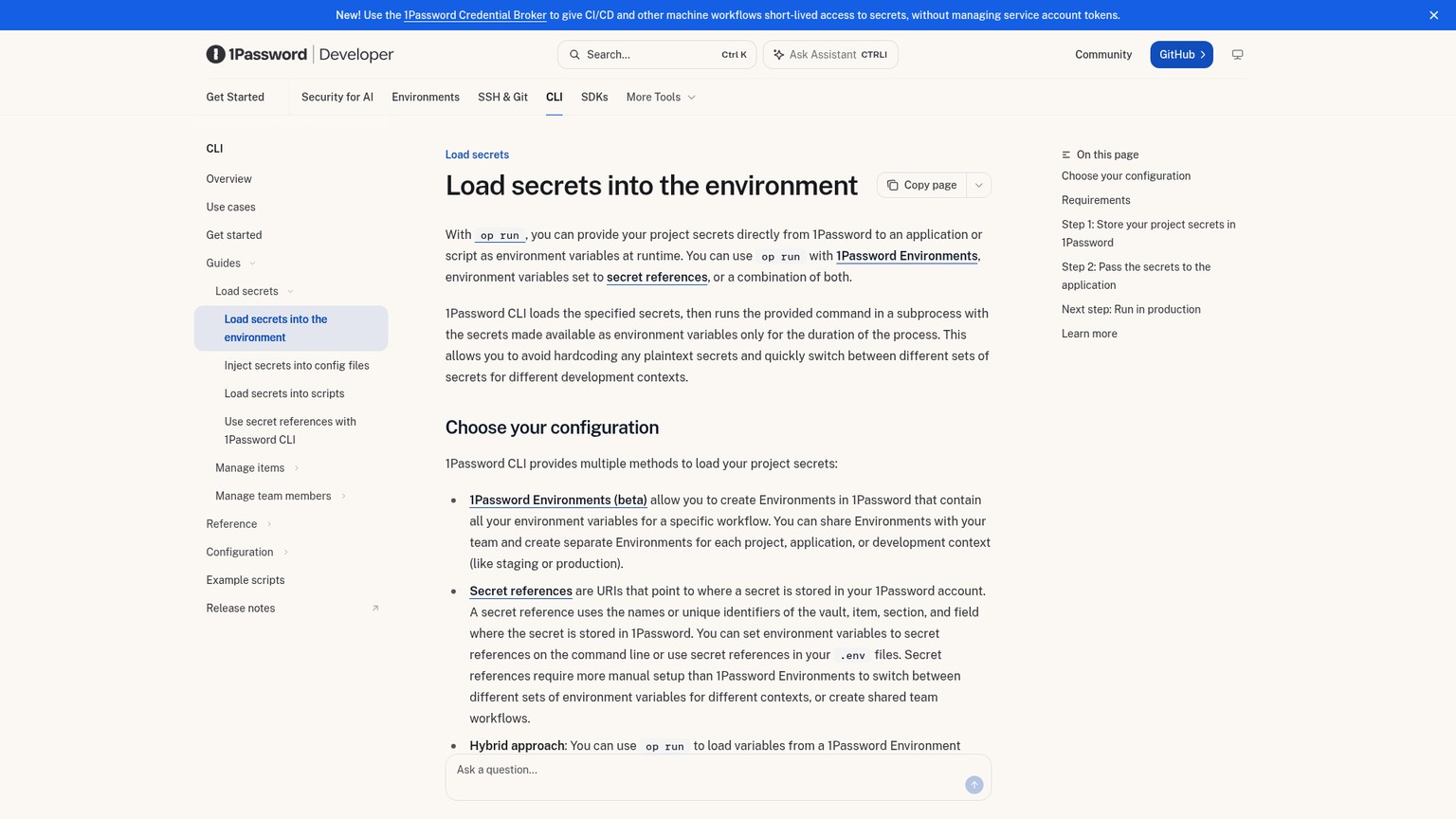
1Password's developer documentation also supports team-shared Environments and service accounts scoped to particular vaults or environments. That matters when OpenCode, Aider, or Cline can reach several providers: the least-privilege boundary should be as deliberate as the spend limit.
Do not put a provider key beside the monthly cap in a shared .env file and call the system governed. The budget controls money. Secret management controls who can spend it.
Frequently Asked Questions
Is there anything better than the Claude code?
Yes, for a specific requirement. Kiro is better when a published credit pool and hard pause matter more than Claude Code's integrated Anthropic workflow. GitHub Copilot is better when explicit monthly credits and GitHub integration decide the purchase.
Which Claude code tool is the best in 2026?
Kiro is the best choice in this comparison for predictable capacity because every public tier names its credits and exhausted capacity pauses. Claude Code can still be the better agent for a particular repository or task; this ranking is about the budget contract.
Is the Claude code good in 2026?
Claude Code remains well suited to complex agentic coding work. The current concern is not whether it can code, but whether a team that adapted to the temporary 50% weekly boost can absorb the announced 17% reduction from today's level on September 14.
What are some alternatives to Claude code for coding?
Kiro, GitHub Copilot, OpenCode, Aider, Cline, Cursor, and OpenAI Codex cover the main choices. Kiro and Copilot publish credits, OpenCode and Aider emphasize provider choice, Cline emphasizes task cost, Cursor emphasizes the IDE, and Codex emphasizes the OpenAI agent workflow.
Is Claude Code still the best coding agent?
There is no universal best. Claude Code can win on task quality and workflow fit, while Kiro wins this allowance comparison and OpenCode wins provider flexibility. The decision flips with the failure you need to prevent.
What is better for programming, codex or Claude code?
Claude Code is the clearer choice for an Anthropic-first terminal workflow. OpenAI Codex is the clearer choice for work spanning OpenAI's web, CLI, IDE, and cloud surfaces. Neither publishes one fixed weekly message number, so a strict capacity buyer should look higher in this ranking.
Which is more expensive, Claude Code or Codex?
The directly comparable personal subscriptions both start at $20 per month when billed monthly: Claude Pro includes Claude Code, and ChatGPT Plus expands Codex usage. Claude Max and OpenAI Pro both start at $100, while their higher-capacity structures and overflow billing differ.
Is Claude Code worth it for coding?
It is worth it when its task quality saves more time than the subscription and capacity constraint cost. If the weekly limit repeatedly displaces committed work, keep Claude Code for the hardest tasks and move a defined overflow category to a capped alternative.
Is Claude Code faster than Codex?
No durable public benchmark settles that across repositories, models, and task types. OpenAI itself says Codex consumption changes with context, model, tools, retrieval, and local versus cloud execution; the useful comparison is whether either agent completes your repeatable task inside its budget.
Want the same ceiling-first audit for the rest of your AI stack? Join the newsletter for the AI business workflow audit checklist.
- Published
- Category
- Build
- Language

Firecrawl Pricing 2026: What Your Pages Cost
Firecrawl plans and credit packs verified October 2026. Calculate JSON extraction, failed pages and weekly crawl bills at your volume.Oct 9, 2026Build
Claude Code vs GitHub Copilot 2026
Claude Code vs GitHub Copilot: current plans, usage limits, models, team controls, one-seat and ten-seat costs, and when to use both.Oct 8, 2026Build
LangGraph vs CrewAI
Compare LangGraph and CrewAI on the same approval workflow, state, memory, MCP, observability and current hosted-platform prices.Oct 7, 2026Build
How to Build MCP Server
Build an order lookup MCP server with Python, test it in Inspector, connect Claude Code and Cursor, then add HTTP auth and hosting.Oct 7, 2026Build
Gumloop vs n8n (Verified October 2026)
Gumloop vs n8n: current pricing, credits vs executions, self-hosting and the same AI lead workflow, with a verdict for each builder.Oct 7, 2026Build
AI Agent Frameworks in 2026: LangGraph, CrewAI, OpenAI Agents SDK, Claude Agent SDK, Mastra and Google ADK (Compared)
Compare eight AI agent frameworks by language, state, MCP, approvals and current hosted prices. Pick the right runtime for production.Oct 7, 2026Build
Codex Cloud
Set up a reusable Codex Cloud environment, keep coding tasks running with your laptop off, steer from your phone, and choose cloud or local CLI.Oct 7, 2026Build