Claude Code Pro vs Max for Weekly Agent Workloads 2026
Claude Code Pro vs Max for weekly agents, with live 2026 prices, September's 17% limit cut, overflow break-evens, and the plan to pick.
Published Updated
 By Omid Saffari

Claude Code Pro vs Max for weekly agent workloads 2026 comes down to one measured threshold: pick Pro at $20 if your current weekly meter stays below 60%, and pick Max 5x at $100 only when interruptions or usage credits cost more than the $80 upgrade. On September 14, the same agent queue will consume 20% more of its weekly allowance, so any workload already above 83.3% of today's boosted cap needs a smaller queue, paid overflow, or a higher tier.
Claude Code Pro vs Max for Weekly Agent Workloads 2026: Which Should You Pick?
Claude Code Pro is the right default for a solo builder who supervises one agent queue, clears context between jobs, and finishes most weeks with meaningful capacity left. Claude Code Max 5x is the better purchase when a Pro limit interrupts paid work or forces enough usage-credit spend to erase its $80 monthly premium. Max 20x is for an operator who already proved that 5x is too small, not someone buying insurance against a workload they have never measured.
Winner for lowest recurring cost: Pro. It includes Claude Code and Cowork, and its $20 invoice is one-fifth of Max 5x.
Winner for a measured upgrade: Max 5x. It is the sensible middle tier after Pro has produced observable interruptions, especially if Fable 5.1 usage is already creating a separate credit bill.
Winner for maximum session headroom: Max 20x. Anthropic publishes 20x Pro usage per five-hour session, four times Max 5x's published session allowance for twice its price.
Claude Code Pro is Anthropic's lowest individual paid plan with Claude Code included. Anthropic's live Pro page listed it at $20 per month in the US when verified on September 2, 2026; the annual option costs $200 upfront and is displayed as $17 per month on the pricing page.
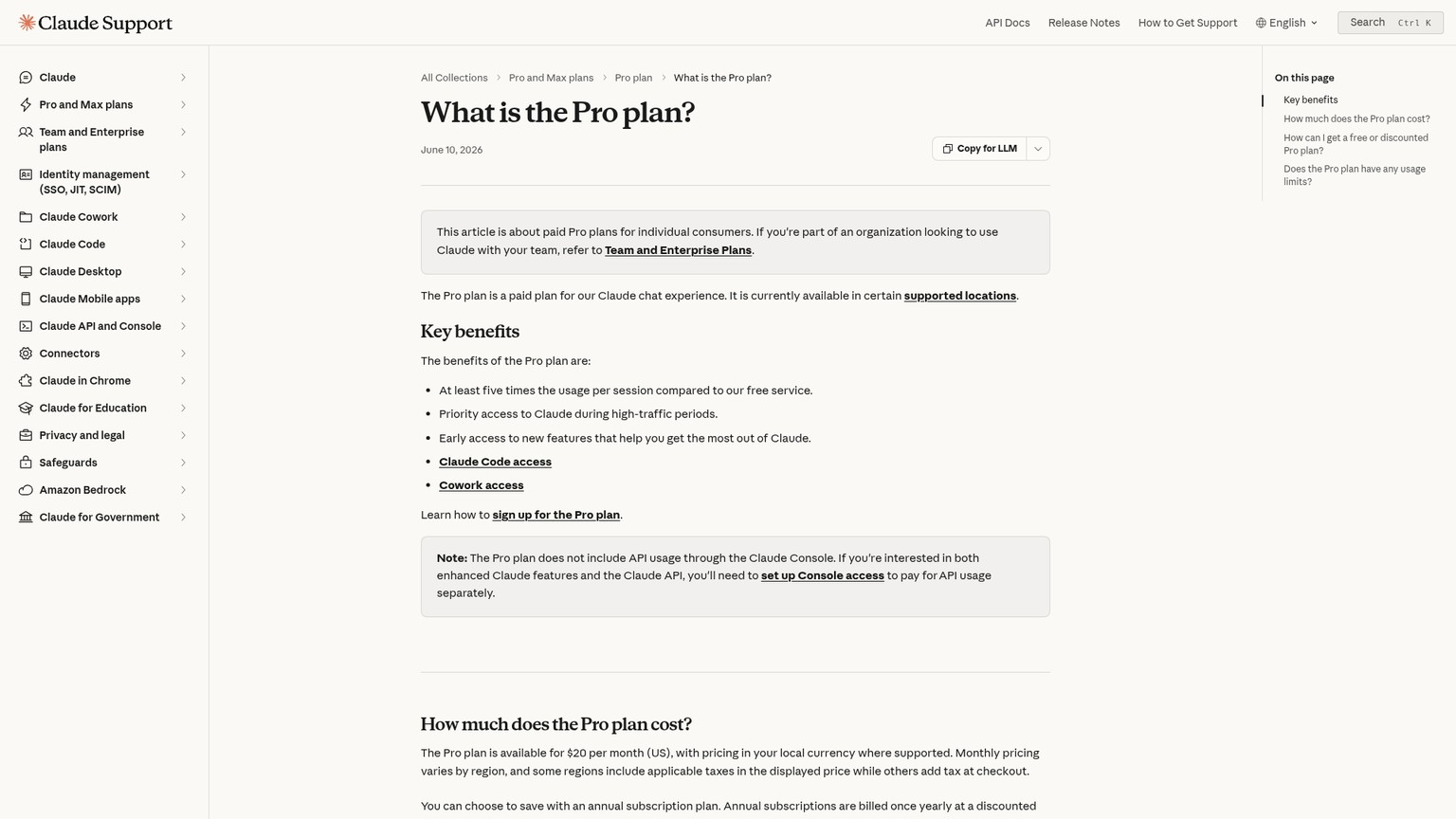
The Pro wall is capacity, not capability. You get the coding agent, but the five-hour and weekly meters can pause it, activity elsewhere in Claude can consume the same allowance, and Fable 5.1 starts on usage credits rather than the included plan pool.
Claude Code Max is the higher-capacity individual plan, sold as Max 5x for $100 per month and Max 20x for $200. It adds higher output limits, priority access, earlier feature access, and included Fable 5.1 use within a defined share of the plan's weekly allowance.
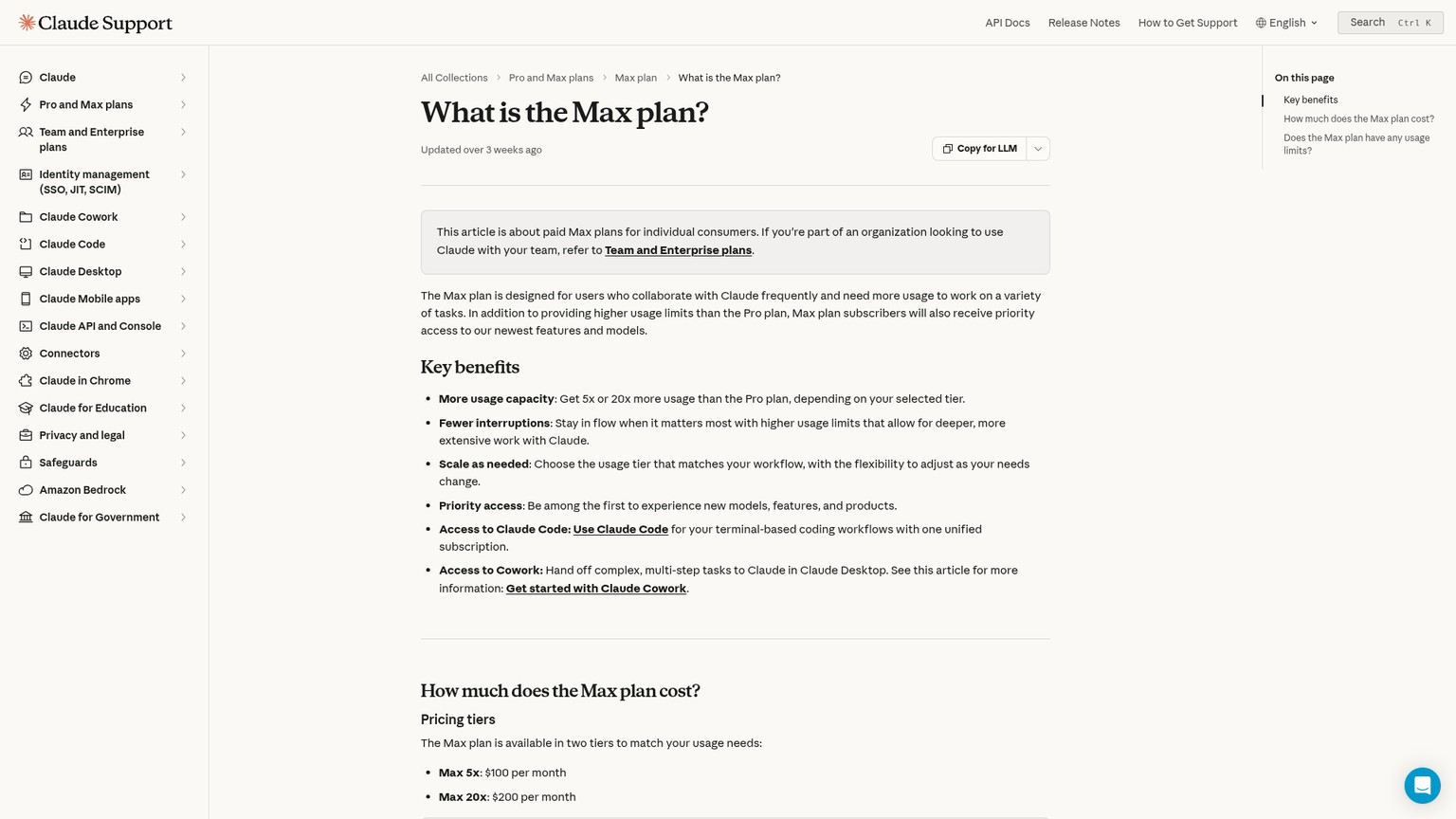
Max does not make an ordinary Sonnet coding answer inherently better. It buys room, output headroom, priority, and a different Fable 5.1 billing path. If Pro never interrupts the work you intended to ship, Max is mostly an invoice for idle capacity.
Why September 14 Makes the Same Subscription 20% More Expensive per Weekly Unit
The September change reduces current usable capacity by about one-sixth without reducing any subscription price. Anthropic's August 29 announcement says the temporary 50% weekly increase remains through September 13, then the standard Claude Code weekly limit becomes permanently 25% higher than the old baseline on September 14. Its follow-up calls the move a 17% reduction from the allowance available today.
Use an index because Anthropic does not publish absolute weekly tokens:
- Old standard capacity: 100
- Temporary capacity through September 13: 150
- Permanent capacity from September 14: 125
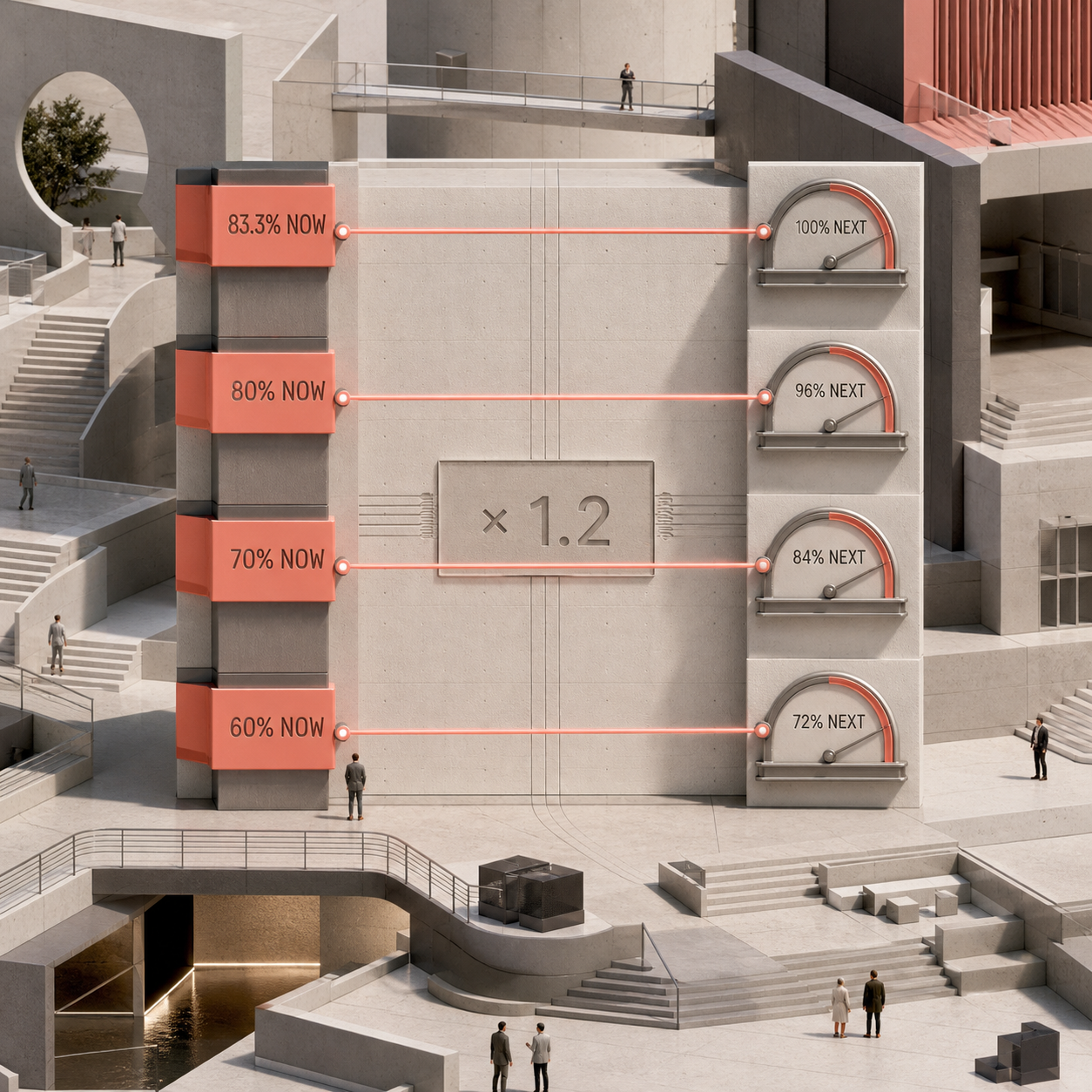
The new cap is 125 divided by 150, or 83.33% of the current cap. The loss is 16.67%, which Anthropic rounds to 17%.
The budget consequence runs in the other direction. A fixed subscription dollar now buys 125 capacity units instead of 150. Divide the old cost per unit by the new cost per unit and the factor is 150 divided by 125, or 1.2. The effective cost of an included weekly-capacity unit rises 20%.
That distinction matters. "A 17% capacity reduction" describes what disappears. "A 20% unit-cost increase" describes what the unchanged invoice buys after it disappears.
The operational threshold is the 83% warning line. If this week's queue consumes 60% of the temporary cap, the same work maps to 72% after September 14. A 70% week becomes 84%. An 80% week becomes 96%. A week above 83.33% no longer fits.
Anthropic's durable promotion page now confirms that the 50% weekly increase runs through September 13, 2026 and does not change five-hour limits. The official account announcement supplies the permanent September 14 baseline. Plan from the current /usage meter and both dated sources, not a remembered quota.
Claude Pro vs Max Limits: Max Wins Headroom, Nobody Wins Weekly Transparency
Max wins published five-hour headroom, but neither plan provides an absolute weekly capacity contract. Anthropic states that Max 5x provides five times Pro usage per session and Max 20x provides 20 times Pro usage per session. Both plans also have weekly limits, yet the vendor does not publish one token total, prompt count, or Pro-to-Max weekly multiplier a buyer can put into a sprint plan.
The essential limitation is this: 5x and 20x are published session multipliers, not permission to claim five or twenty times as many weekly pull requests. Conversation history, files, model selection, tools, and reasoning effort change consumption. Weekly caps sit on top of the five-hour window, and hitting either one can stop work.
Claude Pro vs Max for Claude Code
For Claude Code itself, Pro and Max run the same terminal and supported IDE workflow. Pro wins for occasional or supervised work because it provides the product at the lowest price. Max wins for sustained agent sessions because it raises the published session allowance and output headroom.
The shared pool complicates both plans. Anthropic's Claude Code plan guide says web, desktop, mobile, IDE, and Claude Code activity counts toward the same plan limits. A morning of research or Cowork can therefore reduce the capacity reserved for an afternoon coding agent even when the engineering queue did not change.
There is a second billing path hidden in the shell. If ANTHROPIC_API_KEY is active, Claude Code can authenticate through the API account instead of the Pro or Max subscription. That turns a fixed-plan session into metered API usage. Check the login path before diagnosing a plan as too small or treating an unexpected charge as plan overflow.
Winner for burst capacity: Max 20x. Its published five-hour multiplier is the largest.
Winner for a cheap supervised queue: Pro. It delivers Claude Code at $20 and leaves $80 to $180 per month available for other tooling or occasional overflow.
Winner for weekly transparency: neither. The dashboard shows an account's live status, but the public purchase pages do not turn either invoice into a guaranteed number of weekly agent tasks.
That means a plan decision must use your own meter. Read /usage at the same weekday and time for at least one full reset cycle. A generic message estimate cannot substitute for the repositories, context files, models, and correction loops in your queue.
Price: Pro Wins Until Overflow Clears the Crossover
Pro is cheaper for every workload that fits. Max becomes the financial winner only when its included capacity replaces a larger usage-credit bill or prevents work interruptions worth more than the upgrade.
Claude Max Plan Price
Pricing for both plans was verified against Anthropic's live pricing page and the plan-specific Help Center pages on September 2, 2026. Pro costs $20 monthly or $200 annually. Max 5x costs $100 monthly, and Max 20x costs $200 monthly.
There is a vendor-documentation conflict worth noticing before checkout. The generic pricing matrix currently lists monthly and annual billing for Max, while the plan-specific Max Help Center page says Max is currently monthly only. The plan-specific page is the clearer instruction, so budget Max as monthly unless the checkout for your account explicitly offers something else.
The published session math reveals what each price buys at full utilization:
- Pro: $20 divided by 1x equals $20 per Pro-equivalent session-capacity unit.
- Max 5x: $100 divided by 5x also equals $20 per unit.
- Max 20x: $200 divided by 20x equals $10 per unit.
Max 5x is linear headroom, not a session-level volume discount. Max 20x halves the full-utilization cost per published session unit, but only if the workload can use the room. None of this proves an equivalent weekly discount because Anthropic does not publish the weekly ratio.
The cleanest same-workload comparison uses Fable 5.1, Anthropic's model for long-running agents. On Max plans, Fable 5.1 is included for up to 50% of the regular weekly allowance, though it consumes that allowance faster than other models. On Pro, Fable 5.1 uses pay-as-you-go credits from the first request.
Since September 1, 2026, Claude Code 2.1.257 has made Fable 5.1 the default model behind its Fable selection. Fresh input and output remain $10 and $50 per million, but the cache-read rate fell from $1 to $0.25: ten reads of a stable 1M-token prefix now cost $2.50 instead of $10. The migration rules also reject forced tool_choice and edited thinking histories in affected custom API harnesses; ordinary Claude Code manages that state already.
At the live API rate of $10 per million input tokens and $50 per million output tokens, a stated 5:1 input-to-output mix costs $16.67 per million total tokens, or about $0.01667 per 1,000. Five million total Fable 5.1 tokens cost $83.33 in credits. That makes the same month:
- Pro plus Fable credits: $20 + $83.33 = $103.33
- Max 5x: $100, if the workload fits inside its included Fable slice
- Max 20x: $200
The Pro-to-Max-5x crossover is 4.8 million total Fable tokens per month at that mix, about 1.11 million per week using 4.33 weeks per month. Below it, Pro plus credits costs less. Above it, Max 5x costs less if its included allowance carries the work.
The assumptions matter. Input and output tokens have different prices, prompt caching can lower the bill, and the larger subscription must still contain the workload. Replace the 5:1 mix with your own logs before approving a recurring upgrade.
BenchLM offers a useful third-party cost scenario, not an observed subscription benchmark. It modeled 450,000 input and 450,000 output tokens per day for 30 days, totaling 13.5 million in each direction, and calculated $162 on Sonnet 5's then-live introductory rates and $405 on Opus 5. Those numbers show how dramatically model and output mix move an API bill. They do not reveal how many of those tokens Pro or Max includes.
For a broader view of every route, the Claude Code pricing guide covers subscriptions, teams, and API billing. The narrow rule here is simpler: compare the upgrade premium with measured overflow, not with the promise of "more."
Is Claude Max Worth It? Only When It Protects Paid Work
Claude Max is worth it when the next included unit has a job. A higher meter with no assigned queue is not resilience; it is unused inventory.
Pick Pro for a solo technical builder with a bounded queue. If the current boosted weekly reading peaks at 60%, the same work forecasts to about 72% after September 14. That leaves enough room for variance without paying five times the monthly price.
Pick Max 5x for a founder or senior operator whose Pro limit interrupts committed work. The proof is not a busy afternoon. It is repeated pauses, a Fable 5.1 or usage-credit bill above the crossover, or a weekly reading close to the 83% warning line before the lower cap arrives.
Pick Max 20x for a full-time agent operator only after 5x fails. The $100 step from Max 5x doubles the bill and quadruples the published session allowance. That is strong unit economics for sustained use and poor economics for an occasional migration sprint.

The decision rule can be written without guessing a task count:
- Forecast September utilization by multiplying the current weekly percentage by 1.2.
- Price the monthly interruptions at the value of the work they delay.
- Add actual usage-credit spend.
- Upgrade only when that combined cost is greater than the plan premium and the next tier is likely to fit.
Who should keep Pro? A builder who rarely sees a warning, a seasonal user with one large sprint, or anyone whose overflow can be routed to a hard-capped API budget for less than $80 in an ordinary month.
Who should skip straight to Max 5x? Someone with recurring daily agent work, included Fable 5.1 demand, and a measured Pro interruption pattern. Who should avoid Max 20x? Anyone unable to name the work that will consume more than Max 5x.
Switching From Pro to Max: The Migration Is Easy, the Lock-In Is Not
Switching plans does not require a new Claude account or moving chats, projects, and files. Anthropic prorates the higher tier for the remaining billing cycle, and unused annual Pro value can become account credit when the billing-address conditions are met. The practical migration is a billing change inside the same Claude account.
The cost is committing a variable workload to a larger fixed invoice. Max remains subject to a five-hour window, weekly limits, shared use across Claude surfaces, and an unpublished absolute allowance. Buying more room does not isolate a coding budget from Cowork, chat, or other account activity.
Max is also monthly-only according to the plan-specific Help Center page. Moving from annual Pro gives up the annual discount and creates a recurring $100 or $200 decision every month. That flexibility is useful for a release season, but it is not the same contract as a discounted annual plan.
Do not switch if your current problem is poor context hygiene. Anthropic's current Claude Code guide recommends /clear between unrelated tasks and /compact within a long one; it positions Sonnet for daily coding, Opus for complex reasoning, Haiku for simple work, and Fable 5.1 for the hardest, longest-running jobs. A larger plan multiplies a wasteful loop as readily as a productive one.
Do not switch an organization to individual Max accounts when the missing requirement is central billing, administration, security, or usage policy. That is a Team or Enterprise problem. Individual Max solves capacity for one account.
If the real need is a guaranteed overflow lane rather than a larger opaque weekly cap, compare the Claude Code alternatives for predictable weekly usage. The switching cost then includes model behavior, repository permissions, secret management, and workflow retraining, not just the subscription line.
The Monday Move Before September 14
Use next Monday to measure and assign the capacity that will disappear. The goal is one informed plan decision before the lower allowance reaches a live sprint.
Record the weekly meter at a fixed point
Run
/usagebefore the first large task and again at the same time near the end of the workday. Note the weekly percentage, reset time, active model, and whether chat or Cowork used the same account.Multiply the peak by 1.2
Treat a 70% peak as 84% after September 14 and an 80% peak as 96%. Anything above 83.33% needs a smaller queue, credits, Max, or a second route.
Put one price on overflow
Set a monthly usage-credit cap before the queue reaches zero. Compare the expected credit spend and interruption cost with the $80 Max 5x premium or the additional $100 for Max 20x.
Route one complete work class
Keep architecture and difficult debugging on Claude, then move a bounded category such as test generation, dependency updates, or formatting if the meter needs relief. Random prompt switching creates harder accounting.
Validate after one reset
Compare planned work, completed work, blocked time, and credits after the next full weekly reset. Keep the smallest tier that carried the committed queue.
That is the Monday move: turn a percentage announcement into a workload line, a dollar ceiling, and one owner before the terminal becomes the place where the decision is made.
Frequently Asked Questions
Is Claude Code still the best coding agent?
Claude Code remains a strong terminal agent, but no agent is best independent of repository, review workflow, and budget. The Claude Code review covers capability; for this purchase, the best plan is the smallest one that carries the measured queue.
What is the best Claude Code plugin in 2026?
There is no universal best plugin. Start with the built-in workflow and add only the integration required for the current task, because Anthropic says tools, connectors, files, and conversation history all consume context and usage.
Which Claude model is best for coding agent?
Anthropic positions Sonnet for daily coding, Opus for complex reasoning, Haiku for simple work, and Fable 5.1 for the hardest, longest-running jobs. Its documented opusplan mode uses Opus for planning and Sonnet for execution.
Is Claude Max better than Pro?
Max is better for sustained headroom, higher output limits, priority access, and included Fable 5.1 usage. Pro is better value while its limits do not interrupt paid work.
Is Claude Code Max worth it?
It is worth it when observed interruption time or usage-credit spend exceeds the premium. Max 5x adds $80 per month over monthly Pro; Max 20x adds $180.
What is the price difference between Claude Code Pro and Max?
Monthly Pro is $20, Max 5x is $100, and Max 20x is $200. The differences are $80 and $180 per month. Annual Pro costs $200 upfront, while the plan-specific Max page says Max is monthly only.
Is Claude Code Pro worth it?
Yes, when one supervised coding queue fits comfortably inside its five-hour and weekly limits. It includes Claude Code at $20 monthly, so it is the plan to outgrow with evidence rather than skip on a guess.
How much does a 20k Claude Code token cost?
Subscription usage has no fixed per-token price because Anthropic does not publish the included token pool. At the live API rates verified September 2, 20,000 input tokens cost $0.04 on Sonnet 5, $0.10 on Opus 5, or $0.20 on Fable 5.1; 20,000 output tokens cost $0.20, $0.50, or $1.00.
What is the best subscription for Claude Code?
Pro is the default for measured individual use. Max 5x is the next step after Pro interrupts paid work, and Max 20x is justified only after Max 5x proves too small.
is claude max 5x worth it
Max 5x is worth it when the extra $80 is below measured pause or credit costs and the larger included allowance carries the workload. It is not worth it when Pro finishes the week with room left.
claude free vs pro vs max
Free is for occasional Claude use. Pro is the lowest individual paid tier with Claude Code included, while Max adds 5x or 20x published session capacity plus higher output limits and different Fable 5.1 billing.
what is claude max plan
Claude Max is the monthly individual tier above Pro. Max 5x costs $100 and publishes five times Pro usage per session; Max 20x costs $200 and publishes 20 times Pro usage per session.
Want a one-page way to audit capacity, overflow, and ownership before you upgrade? Join the newsletter and get the AI business workflow audit checklist.
- Last Updated
- Category
- Build
- Language

Claude Code Remote Control
Set up Claude Code Remote Control from CLI, VS Code or Desktop, connect your phone or browser, and fix documented login and connection failures.Oct 9, 2026Build
Cursor Remote Control
Set up Cursor Remote Control on iPhone, pair your laptop, keep local agents reachable, and compare cloud agents, Claude Code and Codex.Oct 9, 2026Build
Firecrawl Pricing 2026: What Your Pages Cost
Firecrawl plans and credit packs verified October 2026. Calculate JSON extraction, failed pages and weekly crawl bills at your volume.Oct 9, 2026Build
Claude Code vs GitHub Copilot 2026
Claude Code vs GitHub Copilot: current plans, usage limits, models, team controls, one-seat and ten-seat costs, and when to use both.Oct 8, 2026Build
LangGraph vs CrewAI
Compare LangGraph and CrewAI on the same approval workflow, state, memory, MCP, observability and current hosted-platform prices.Oct 7, 2026Build
How to Build MCP Server
Build an order lookup MCP server with Python, test it in Inspector, connect Claude Code and Cursor, then add HTTP auth and hosting.Oct 7, 2026Build
Gumloop vs n8n (Verified October 2026)
Gumloop vs n8n: current pricing, credits vs executions, self-hosting and the same AI lead workflow, with a verdict for each builder.Oct 7, 2026Build