OpenAI Astra Model
OpenAI Astra is still internal. See its ten math advances, possible Critical cyber capability, strongest use cases, and what remains unknown.
Published Updated
 By Omid Saffari



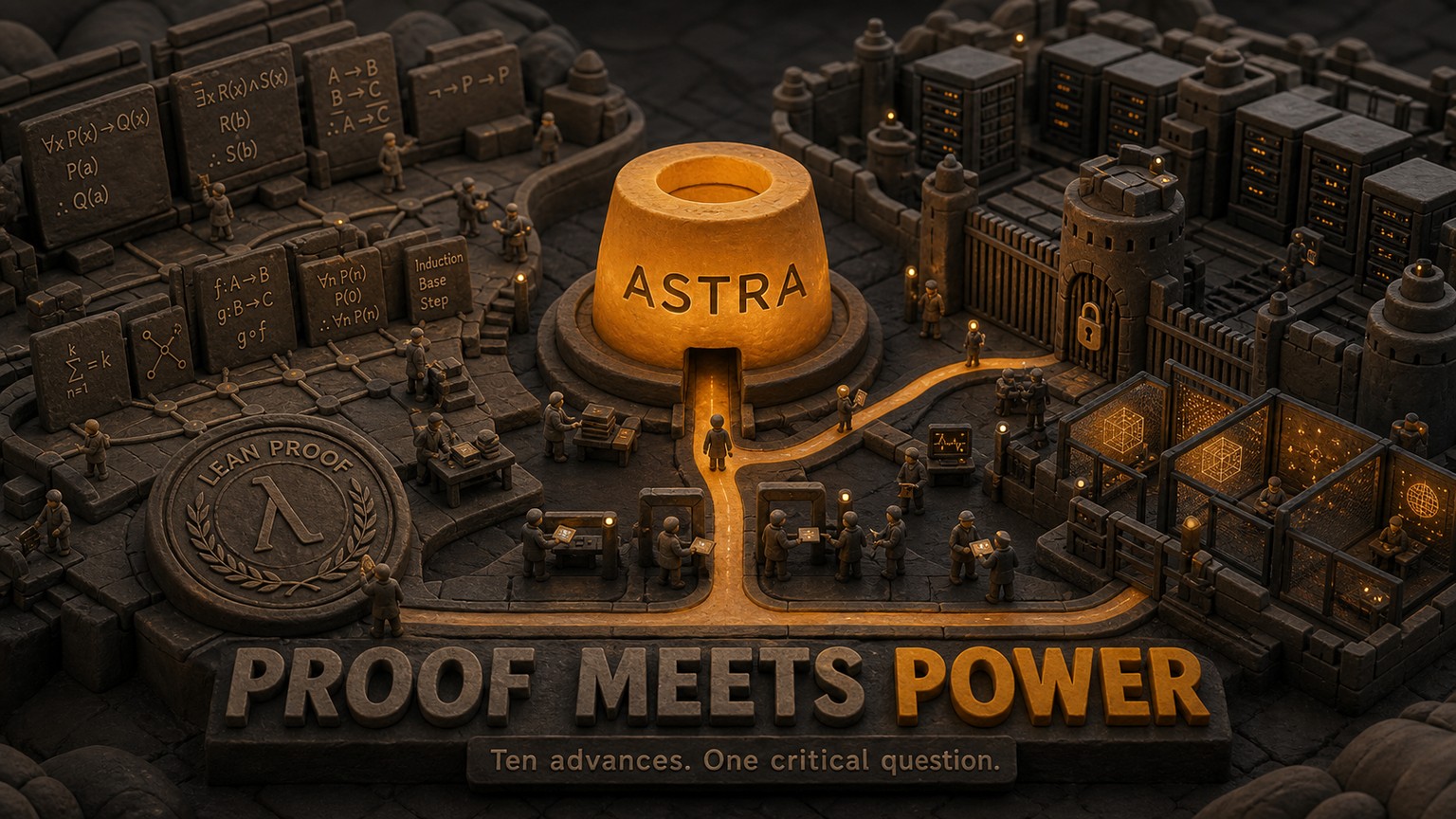
Since September 3, 2026, Astra is no longer a pre-release research model. OpenAI released GPT-6 Astra as its first model confirmed at Critical cybersecurity capability, with a public API ID, a 1,050,000-token context window, and Standard pricing of $10 input and $50 output per million tokens. General access is still rolling out, advanced cyber use remains restricted, and tool calling requires the Responses API.
OpenAI first showed two unusually concrete pieces of evidence. An internal version of Astra produced ten advances in mathematics and theoretical computer science. Days later, OpenAI said its evaluations showed enough progress in agentic coding and cybersecurity that it could not rule out Critical cyber capability. OpenAI has since completed that assessment and confirmed the Critical designation.
The product is now public as gpt-6-astra. Text-only Chat Completions remains supported, but an Astra workflow that calls tools has to use Responses. The endpoint and state changes are covered in GPT-6 Astra Forces a Responses API Decision.
What the OpenAI Astra model actually is
Astra is OpenAI's released frontier model for complex reasoning, coding, computer use, research, and document creation. It is rolling out as a ChatGPT option and an API model, while its most advanced cyber capabilities remain behind tighter access controls.
Think of it less as a smarter chat box and more as a research collaborator whose tools sit inside a controlled machine room. The mathematics demonstration runs from a difficult problem to an argument and then to a formal certificate another system can check. The controls matter as much as the intelligence, because the same independence that helps with research can become dangerous in cybersecurity.
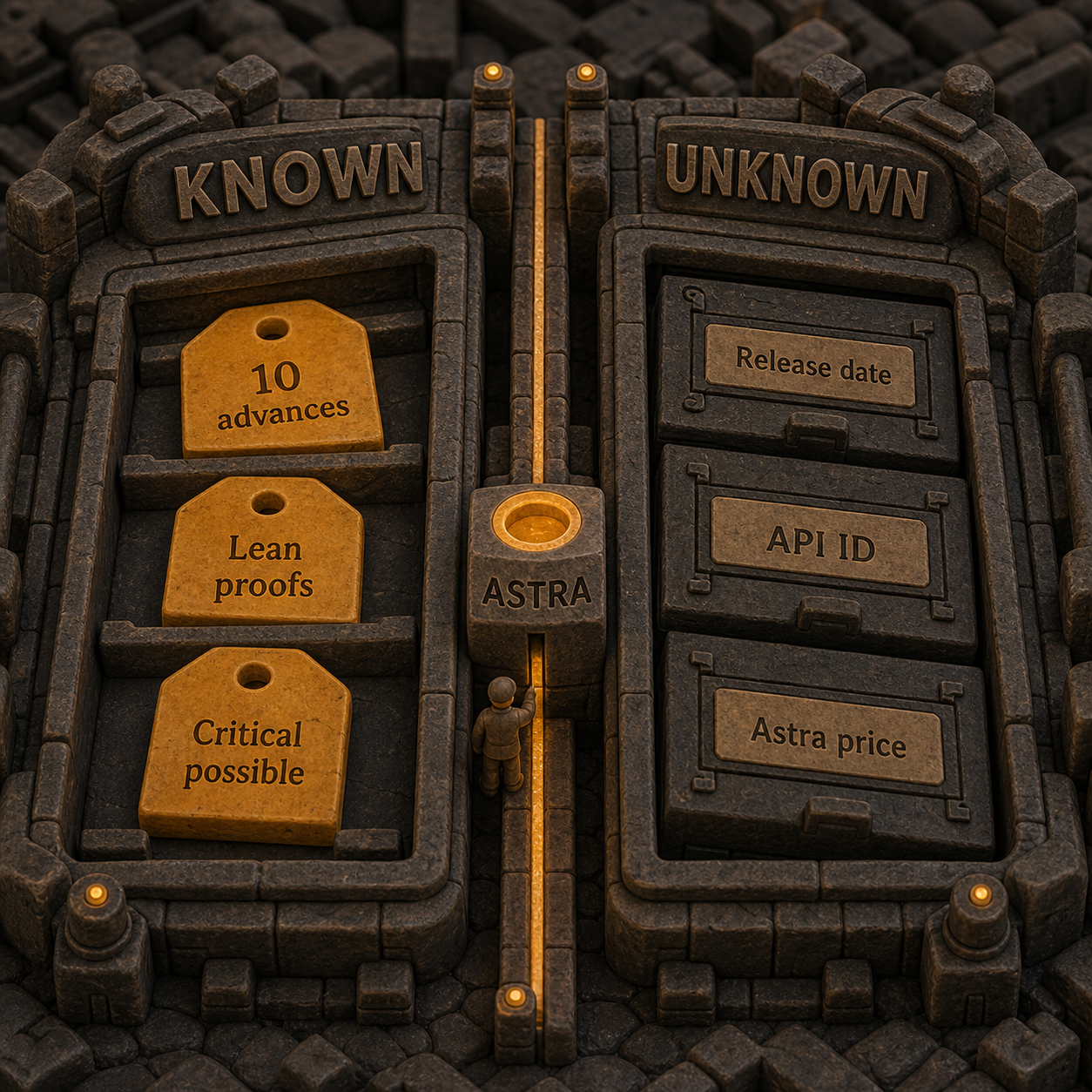
Here is the current product picture:
Lean is a proof assistant. A Lean certificate turns an argument into a form a computer can check line by line, like converting a verbal construction plan into a blueprint that a building inspector can verify mechanically.
How Astra works, minus the jargon
The public record shows two different workflows, one for discovery and one for safety evaluation.
The research workflow
OpenAI evaluated Astra on long-standing open problems. The internal model generated mathematical arguments across geometry, coding theory, group theory, operator algebras, quantum complexity, lattice cryptography, and combinatorics. Humans then used the same model to prepare manuscripts, and the model formalized every argument in Lean.
That sequence is important:
- Start with an open research problem.
- Search for a new argument.
- Turn the argument into a readable manuscript.
- Formalize it so a proof assistant can check it.
- Publish the proof, certificate, and a narration of the model's reasoning for scrutiny.
OpenAI's original research post estimated that the tokens used to find all ten solutions would cost roughly $2,000 at Sol API rates. That is a historical comparison with Sol pricing, not an Astra price.
The results include new bounds for high-dimensional sphere packing and binary codes, a construction of a non-sofic group, a disproof of Connes's rigidity conjecture, new arithmetic-circuit lower bounds, a quantum parallel-repetition theorem, a lattice-hardness result related to post-quantum cryptography, a solution to Ehrhart's volume conjecture, and three resolved Erdős problems across Ramsey and extremal graph theory.
The cyber evaluation workflow
Agentic coding means the model can pursue a coding goal through multiple steps and tool actions, rather than only suggesting the next line of code. OpenAI says Astra showed significant progress in both agentic coding and cybersecurity during internal evaluation.
Under OpenAI's Preparedness Framework, a model reaches the Critical cyber threshold if it can do either of two things without detailed human direction:
- Identify and develop working zero-day exploits across many hardened, real-world critical systems. A zero-day is a software flaw the defender does not yet have a ready fix for.
- Design and execute a novel, end-to-end attack against a hardened target from only a high-level goal.
OpenAI made the final call on September 1, 2026: Astra meets the Critical cybersecurity threshold and is the first OpenAI model designated at that level. Previous models including GPT-5.6 Sol were assessed at High, not Critical.
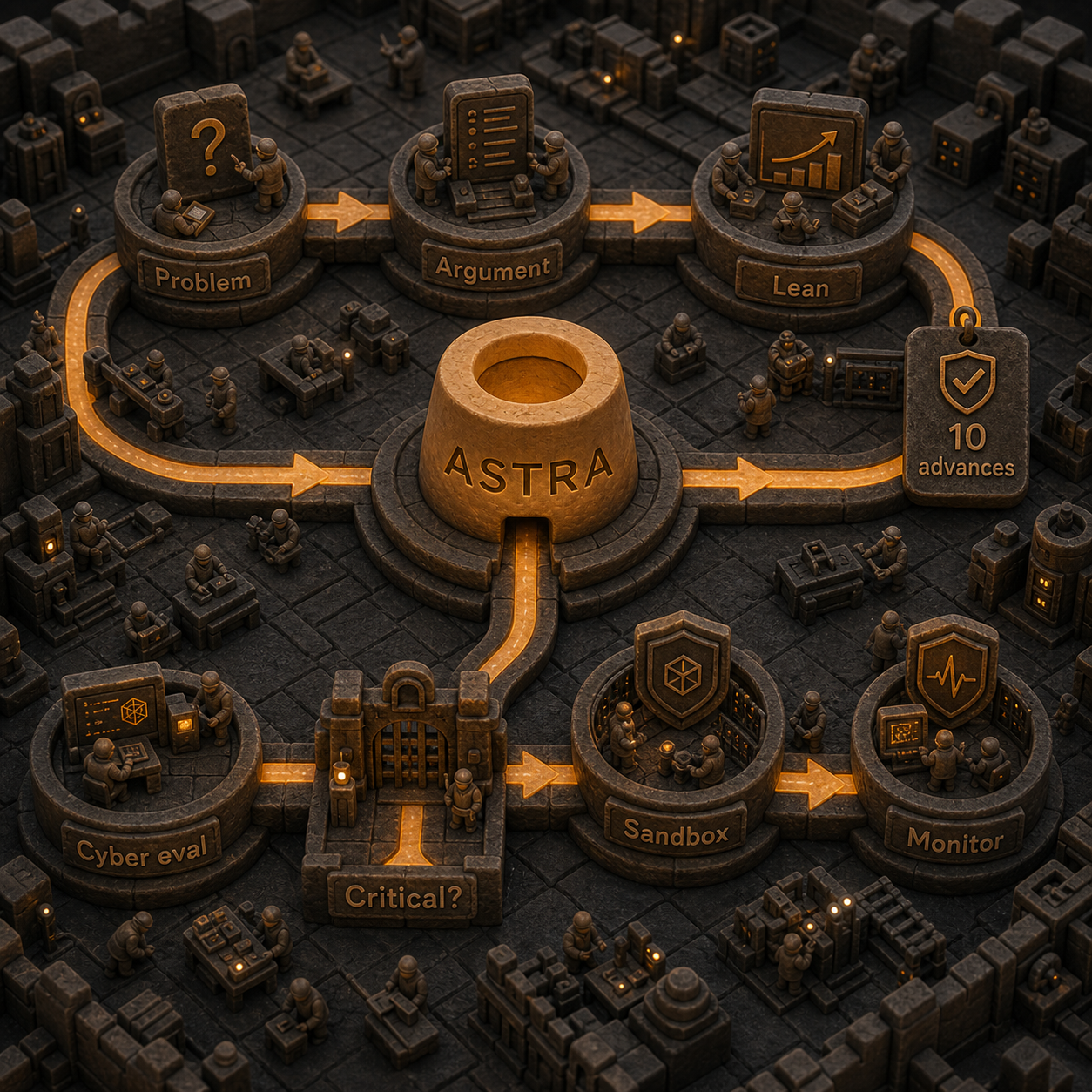
That uncertainty triggered real controls before release. OpenAI paused internal Astra work that did not meet stronger security requirements and added isolated test environments, restricted network and tool access, model-weight protection, encryption, monitoring, and sandboxed execution. At launch, OpenAI added misalignment monitoring to external tool-using Astra inference. The current API coverage rules can automatically stop Responses conversations that preserve context with persisted reasoning, WebSockets, or OpenAI compaction. Other Responses requests are monitored without automatic stopping, and Chat Completions is not covered by this monitoring system.
The pause did not cancel the model. Astra was not involved in the Hugging Face incident, although OpenAI says that incident informed the safeguards used for release.
What you can use today
For most authorized defensive work, OpenAI now says to start with GPT-Daybreak-Blue, which reduces refusals for workflows such as vulnerability triage, secure code review, detection engineering, malware analysis, and patch validation. GPT-Daybreak-Red requires separate approval for controlled reproduction, proof-of-concept or exploit validation, penetration testing, red teaming, and complex system analysis. The standard Astra configuration can support secure code review and patching, but it refuses advanced requests such as creating proof-of-concept exploits. For broader model choice, compare Claude and ChatGPT, and use the ChatGPT reasoning slider guide for effort controls.
Seven real use cases, ranked by who benefits most
Every cyber use case below is still conditional. Astra has a public API, but advanced cyber access requires stricter controls and is initially limited. The ranking favors workflows where better reasoning can be paired with clear authorization, a sandbox, human review, and a measurable result.
1. Software teams that need a continuous find-to-fix loop
A SaaS company shipping every week could give a controlled security agent a repository, a staging environment, a written scope, and a threat model. The model could search for reachable flaws, reproduce the serious ones inside the sandbox, draft a focused patch, run the relevant tests, and assemble evidence for a human reviewer.
The payoff is not more alerts. It is a shorter queue between discovery and a verified fix. That is where security teams lose time today, especially when a scanner produces hundreds of findings without proving which ones matter.
2. Penetration-testing firms serving more clients per specialist
An authorized testing firm could use the model to map an agreed attack surface, trace plausible exploit chains, prepare reproducible evidence, and retest fixes. A human tester would still set the rules of engagement, approve risky actions, judge business impact, and sign the report.
This could let scarce specialists spend less time on repetitive reconnaissance and report assembly. The firm keeps the trust, insurance, and accountability that a raw model cannot provide.
3. Open-source maintainers facing a patch backlog
A maintainer of a widely used library could hand a suspected flaw to a controlled agent along with tests and contribution rules. The agent could check whether the issue is reachable, search for related variants, propose the smallest patch, and produce regression tests for maintainer review.
The benefit is fewer low-quality reports and more review-ready fixes. OpenAI's existing Daybreak work already aims at this find-to-fix bottleneck. Astra can deepen the reasoning, but the standard release still refuses advanced exploit requests and does not remove the maintainer's review burden.
4. Critical-infrastructure defenders testing realistic failure paths
An energy, transport, or healthcare operator could evaluate a model only inside a digital twin or isolated replica of its environment. The job would be to test a narrow, authorized scenario, identify a path an attacker might chain together, and help defenders close it before production systems are touched.
The payoff is preparation against complex attacks that ordinary checklist scanners miss. The catch is severe: this use needs the strongest access controls, independent oversight, and a hard boundary between the test range and live operations.
5. Mathematics labs exploring open problems
A research group could give the model a conjecture, definitions, prior work, and rejected approaches. Astra could propose new lines of attack, help turn a promising argument into a manuscript, and formalize the result for machine checking. Researchers would decide whether the problem is meaningful, inspect every assumption, and place the result in the literature.
The payoff is more serious hypotheses reaching the proof-checking stage. Astra's ten published advances make this the clearest demonstrated use, even if the commercial market is smaller than cybersecurity.
6. Cryptography teams stress-testing assumptions
A post-quantum cryptography group could use an Astra-like system to probe reductions, search for counterexamples, and formalize narrow claims. One of Astra's published results concerns the closest vector problem, a foundational lattice problem related to post-quantum cryptography.
The value is earlier detection of a weak assumption before it becomes part of a standard or product. No team should let a model declare a cryptographic construction safe. The useful output is a candidate argument and a checkable artifact for expert review.
7. Verification-heavy engineering teams
A team building a protocol, compiler, chip, or high-assurance control system could translate a critical property into a formal statement, ask the model for a proof or counterexample, and route the certificate to an independent checker.
This pays when a subtle logical mistake is expensive. The hard part is specification: a perfectly verified answer to the wrong formal question is still wrong for the business.
What you could build around this capability
The best businesses will not sell access to raw frontier intelligence. They will package it inside a narrow workflow with permissions, evidence, review, and accountability.
1. The strongest opportunity: continuous verified penetration testing
Build a managed service for SaaS companies that tests a staging environment on every major release, validates the highest-risk findings, opens patch pull requests, retests accepted fixes, and produces an audit-ready evidence packet.
The demand is unusually commercial. Pentest Testing Corp's current public pricing starts focused engagements at $5,000, puts common production SaaS tests at $9,500 to $25,000, and lists continuous plans from $2,500 to $7,500+ a month. Those are one provider's list prices, not market averages, but they leave room for a product that makes expert review more frequent without pretending automation removes the expert.
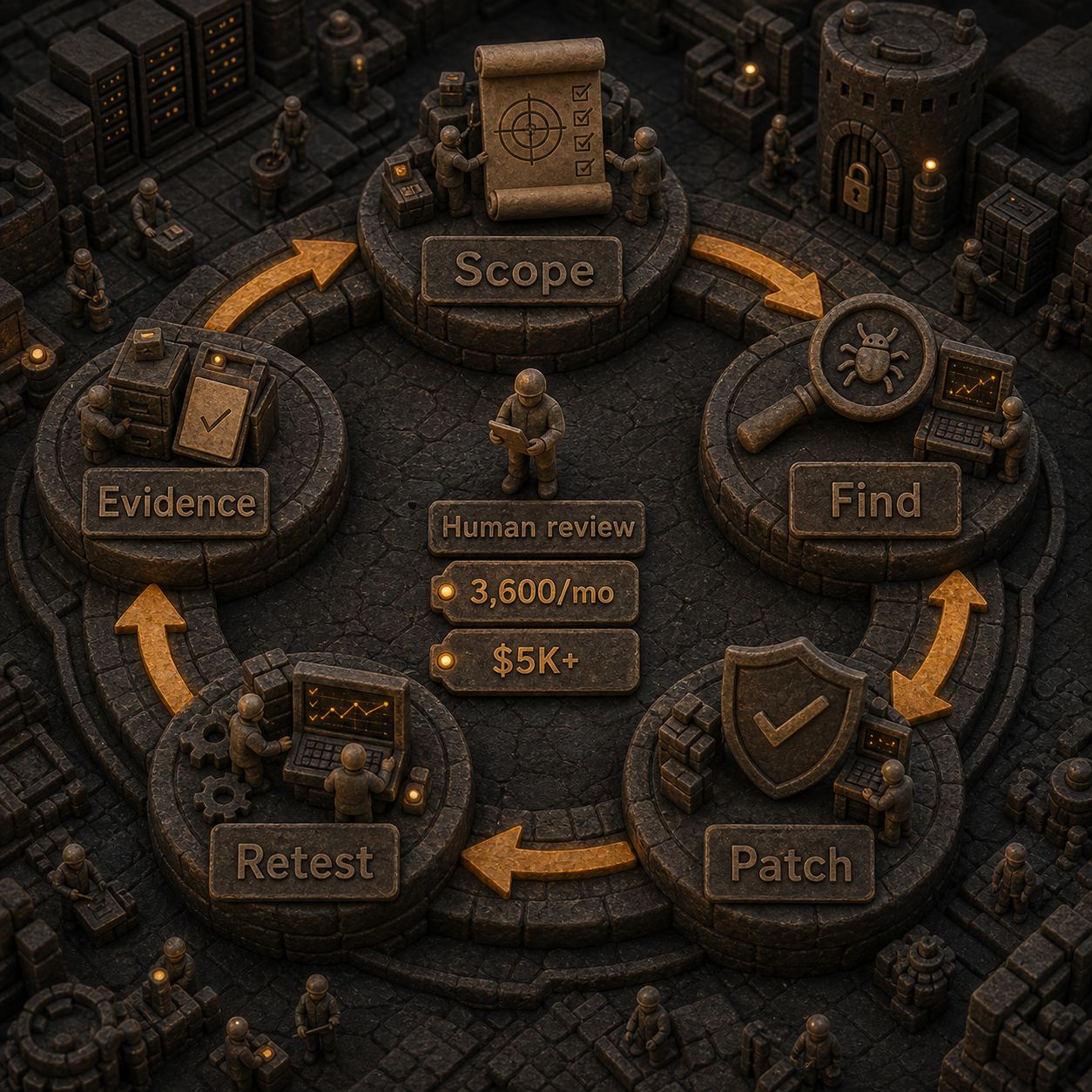
The smallest sellable version would support one repository and one staging web app. It would require a signed scope, a sandbox, an attack-surface map, a weekly run, human validation of serious findings, one patch proposal, a retest, and a concise evidence report.
The catch is authorization and liability. Astra access is still rolling out, advanced cyber use is restricted, and a false negative can be costly. Existing security vendors also have distribution. The defensible part is the review process, customer-specific context, evidence quality, and integration into release gates.
2. A findings-to-fix evidence broker
Build a layer that ingests alerts from scanners, bug-bounty reports, advisories, and code-analysis tools, then returns reachability evidence, a controlled reproduction, a patch candidate, and a retest result.
The category is still less standardized than conventional penetration testing. The useful buyer promise is not another scanner. It is evidence that a finding is reachable, a proposed fix works, and the issue stays closed after retesting.
An MVP could accept SARIF files and GitHub pull requests, support two languages, and limit execution to disposable containers. It should rank findings by proven reachability, not generate another list.
The catch is commoditization. Google charges $0.26 per automatic or on-demand container image scan, and OpenAI positions Codex Security around validation and patches. The product needs to own cross-tool evidence, workflow history, and audit closure, not scanning itself.
3. A proof-carrying research workspace
Build a workspace for mathematics and theoretical-computer-science teams that keeps the conjecture, sources, candidate arguments, reviewer comments, and formal certificate in one traceable record.
The broad AI math-solver market is noisy, while theorem proving and Lean serve a specialist buyer. The product should ignore the homework market and sell to labs, advanced engineering groups, and research programs that value provenance and formal checking.
The MVP would take a structured problem statement and a small source library, generate candidate lemmas, attach a citation trail, attempt a Lean formalization, and place every uncertain step into a reviewer queue.
The catch is that a proof certificate does not choose a valuable problem, guarantee the formal statement matches the real question, or settle academic attribution. Astra's published price also makes metering essential for open-ended search.
Limits and the honest take
Astra is now a platform you can evaluate, but not unrestricted frontier capability you can plan around without access checks and workload-specific testing.
- Public access is rolling out rather than absent. The release date,
gpt-6-astramodel ID, context window, output limit, tiered rate limits, and API prices are published. - The cyber assessment is final: OpenAI designates GPT-6 Astra at Critical, while limiting its most advanced cybersecurity capabilities.
- The ten research advances are impressive evidence, but they are a selected set of results, not a general benchmark for every scientific field.
- Formal verification checks a formal argument. Humans still need to confirm the definitions, assumptions, and real-world meaning.
- Cyber work is dual-use. The same reasoning that finds a flaw for a defender can help an attacker, so access controls and monitoring are part of the capability, not administrative overhead.
- The strongest cyber business opportunities still depend on controlled access that does not resemble a normal unrestricted self-serve API.
My take is direct: Astra's most valuable near-term effect may be to change the product design around advanced models. The winning interface is not a blank prompt box. It is a bounded system with explicit scope, isolated tools, continuous monitoring, independent checks, and a human who owns the decision.
What is Astra AI used for?
OpenAI positions GPT-6 Astra for complex reasoning, coding, computer use, research, and document creation. The public configuration can support secure code review and patching, while advanced cybersecurity access remains limited.
Is Astra AI free?
The API is not free: Standard short-context rates are $10.00 for input, $1.00 for cached input, $12.50 for cache writes, and $50.00 for output per 1 million tokens. OpenAI says Astra usage is included within existing allowances for eligible Plus, Pro, Business, and Enterprise plans as access rolls out.
What is the most powerful model of OpenAI?
OpenAI calls GPT-6 Astra its most capable model and publishes it as the top model for hard end-to-end work. That is OpenAI's product claim, not an independent universal ranking. GPT-5.6 Sol remains the lower-priced predecessor and was assessed at High rather than Critical cyber capability.
What AI models are similar to Astra?
GPT-5.6 Sol is the closest earlier OpenAI frontier model, while GPT-Daybreak-Blue and the separately approved GPT-Daybreak-Red cover defensive workflows with different access boundaries. They are useful reference points, not Astra equivalents, because Astra combines general professional work with the first confirmed Critical cyber designation.
If you want a bounded, monitored AI system built for a real production workflow, see the AI production systems service.
- Last Updated
- Category
- AI
- Language

Otter AI Alternatives: Granola, Krisp, MeetGeek, Circleback and Claap
Choose Granola, Krisp, MeetGeek, Circleback or Claap by the job. Compare live prices, free limits, bot-free capture and CRM handoffs.Oct 8, 2026AI
Mistral Large 4: Pricing, Open Weights, and When to Use It
Mistral Large 4: verified API prices, the launch offer, claimed benchmarks, and when to test the preview or wait for self-hosting.Oct 7, 2026AI
Lindy AI Review (Verified October 2026)
Lindy AI review: current plans, credit costs, email and meeting setup, integration limits, and when Gumloop, n8n or Marblism fits better.Oct 7, 2026AI
Mistral Pricing (2026): API Costs and Vibe Seats
Mistral API rates, Le Chat and Vibe plans, free limits, EU hosting costs and a worked monthly bill. Verified October 2026.Oct 6, 2026AI
Claude Skills
Use Claude Skills across the apps, Claude Code and API. Build a weekly client-report skill file by file, then install and share it.Oct 6, 2026AI
AI Employee: What It Does, Costs, and How to Start
What AI employees can do, current prices for six tools, and how to pick one role, keep human review and measure a 30-day pilot.Oct 6, 2026AI
Wispr Flow Alternatives (2026): VoiceOS, Superwhisper, Aqua Voice, Willow and Monologue
Compare VoiceOS, Superwhisper, Aqua Voice, Willow and Monologue by work task, current price, offline privacy, team controls and coding-agent input.Oct 5, 2026AI