The 8 Best AI Agents in 2026 (Real Pricing and Honest Verdicts)
The 8 best AI agents in 2026: what each actually does, real current pricing, and which to pick for coding, research, or business automation.
Published Updated
 By Omid Saffari




The best AI agents in 2026 are the ones you hand a whole task to and walk away from. Eight are worth paying for. Here is what each actually does, what it costs, and which to pick for your work.
An AI agent is software you give a goal, not a prompt: it plans the steps, uses tools, browses, writes and runs code, and comes back with the finished thing instead of a chat reply. In 2026 that capability stopped being a demo. The frontier models behind these agents have converged so tightly on raw intelligence that the real contest moved to who executes a multi-step job with the least hand-holding, at what price.
This is the shortlist of agents worth paying for, ranked by the work you actually need done. If your goal is to build your own agents on a platform, that is a different decision, covered in the guide to the best AI agent platforms. This piece is about the agents that already work out of the box.
The verdict: which AI agent wins for whom
There is no single best AI agent, and any list that crowns one is selling you something. The honest answer is that four agents win four different jobs, and most people need one or two of them, not all eight.
For general work (research, writing, analysis, light automation), ChatGPT is the right default for almost everyone: agent mode is now bundled into the $20 plan and the surface is the most polished. If your work is code, Claude is the pick, and it ships Claude Code inside the same $20 subscription. For genuinely hands-off, multi-hour autonomy where you want to assign a task and close the laptop, Manus does the least supervised execution. And if you live in Google Workspace, Gemini is the agent already wired into your email, docs, and calendar.
The rest earn their place in a specific lane: Perplexity Comet for research that acts inside your browser, Lindy and Gumloop for back-office automation a non-engineer can set up, and Devin for software work you want a machine to own end to end.
The 8 best AI agents at a glance
Every price below was checked against the vendor's own pricing page this week, because the stale lists ranking for this term still quote last year's numbers.
Two things to read off this table before the detail. First, the useful tier of almost every agent starts at roughly $20 a month, so price is rarely the deciding factor between the big four. Second, "best" splits cleanly by job, which is why the sections below are organized by what you need done, not by a leaderboard.
ChatGPT: the default agent for almost everyone
ChatGPT is the agent most people should start with, because OpenAI moved agent mode into its $20 Plus plan instead of locking it behind the $200 tier. Agent mode is the feature that turns ChatGPT from a chatbot into an agent: you give it a task like "research these five suppliers and build me a comparison sheet," and it browses, reasons, and produces the file while you do something else.
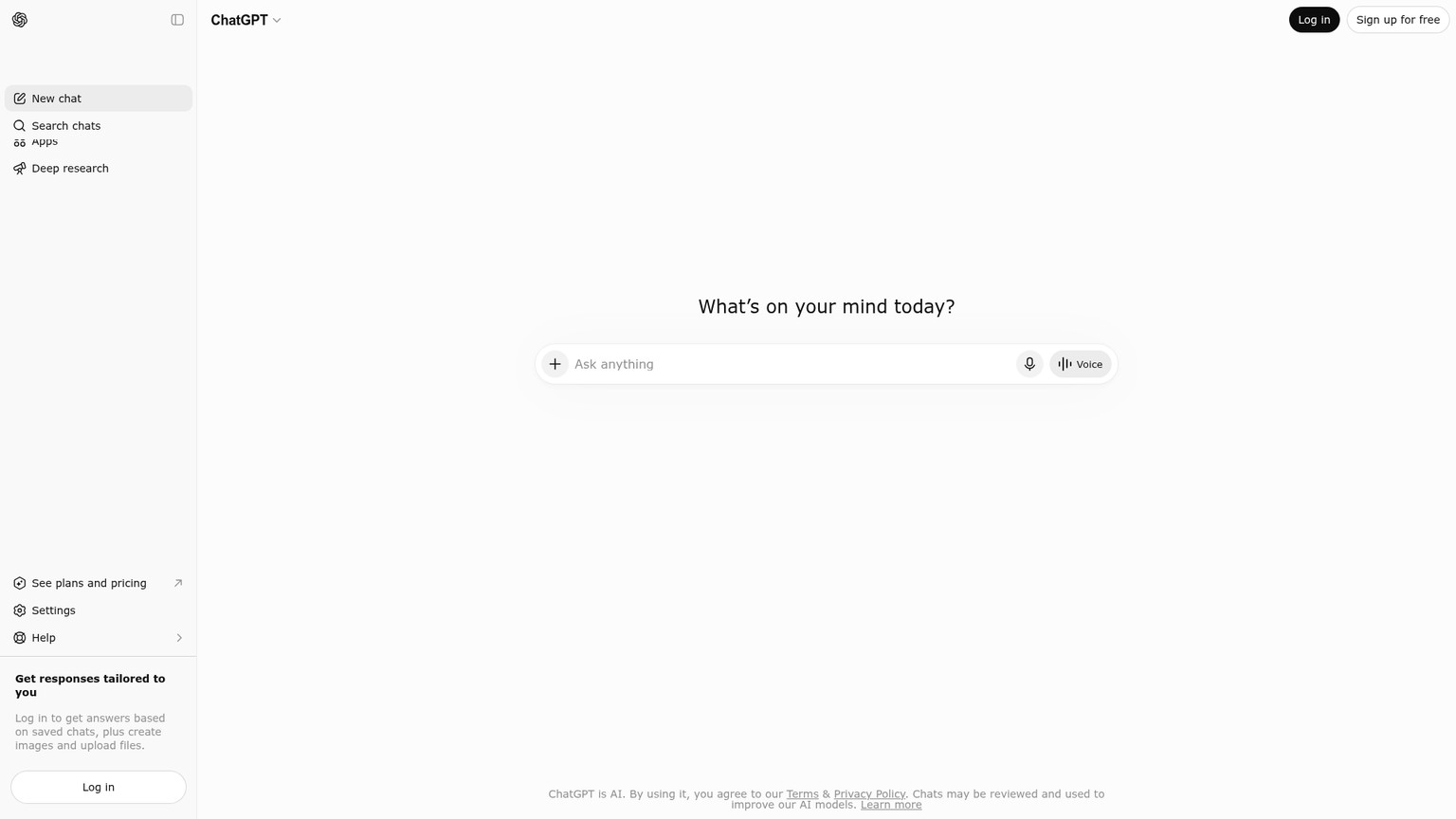
What it does well is breadth. The current flagship is GPT-5.5, and the same subscription covers writing, analysis, image generation, deep research, custom GPTs, and the agent that ties them together. For a founder who wants one tool that does eighty percent of knowledge work competently, this is it. Concretely: a solo operator can have agent mode pull a week of competitor pricing changes, draft the summary email, and format it, in one pass, for the cost of a streaming subscription.
Where it falls short: ChatGPT's agent is cautious and slow by design. It pauses to confirm, it will not push through a long unattended job the way Manus will, and the truly heavy compute (GPT-5.5 Pro near-unlimited, the 1M-token context window, Sora) sits behind the $200 Pro tier.
Price: Free; Plus $20/mo (agent mode, deep research); Pro $100/mo (5x quota) or $200/mo (GPT-5.5 Pro, 1M context, Sora). Pick it if you want one capable generalist agent. Skip it if your core job is autonomous coding or fully unattended multi-step runs.
Claude: the one that reasons and ships code
Claude is the agent to choose when the work is code or careful reasoning, and the detail that decides it is pricing: Anthropic's $20 Pro plan now includes Claude Code, its terminal-native coding agent, at no extra cost. Claude Code is a function that runs in your shell, reads your whole repo, makes changes across many files, runs the tests itself, and fixes what it broke.
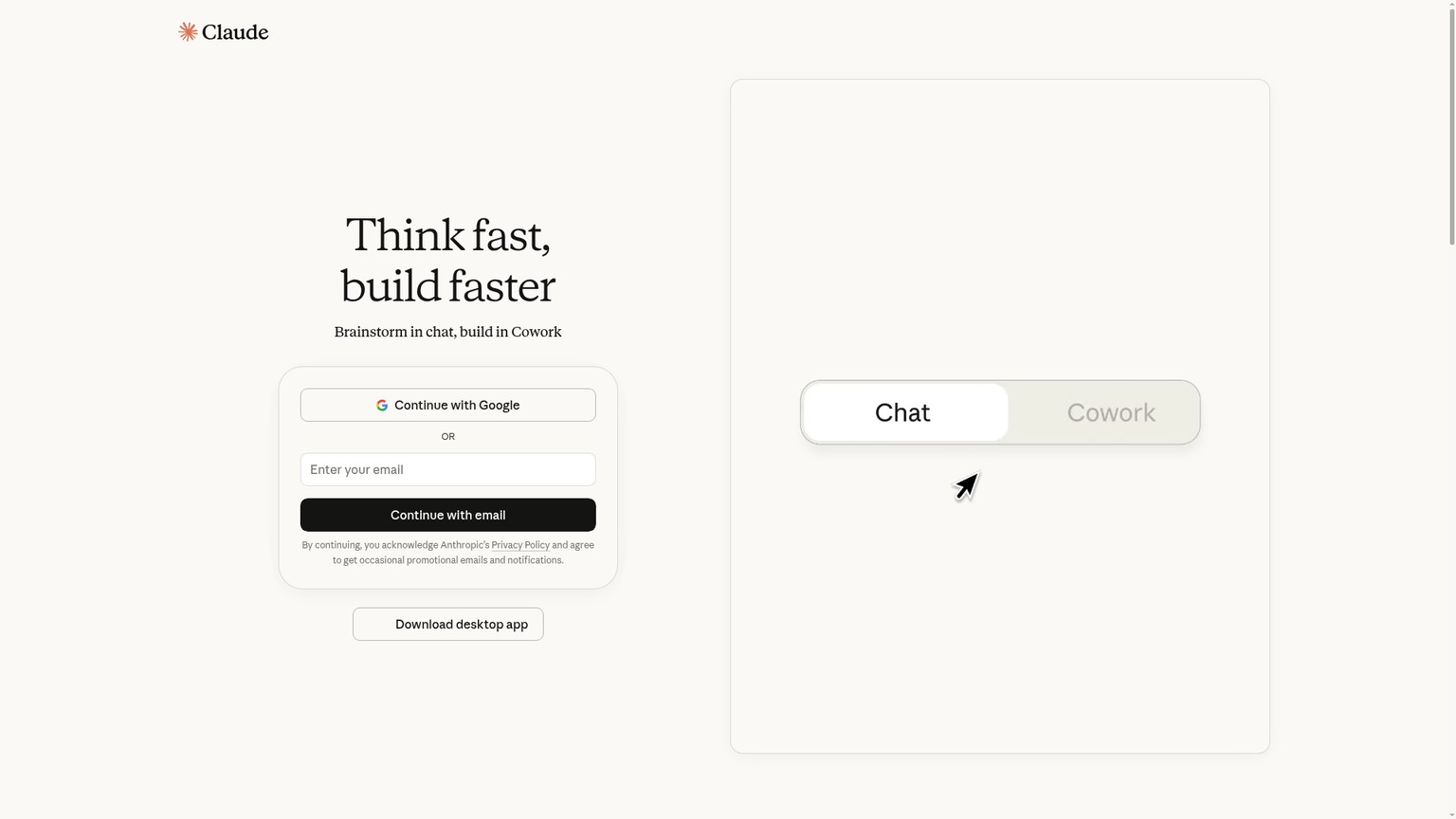
The current model is Claude Opus 4.8, which shipped in late May 2026 with agentic upgrades aimed squarely at long, tool-using tasks. In practice that means Claude holds a complex problem in its head longer than its rivals: a mid-market CTO handing it a flaky test suite gets a methodical, step-by-step fix rather than a confident wrong guess. For analysis and long-document work, the same trait shows up as fewer hallucinated facts.
Where it falls short: Claude has fewer consumer-grade connectors and integrations than ChatGPT or Gemini. It is a reasoning and building tool first, not a hub wired into your inbox and calendar. If you want an agent that books meetings and triages email, Claude is not built for that.
Price: Free; Pro $20/mo (includes Claude Code); Max from $100/mo. Pick it if you write code or need the most reliable reasoning. Skip it if you mostly need an assistant plugged into everyday consumer apps.
Gemini: the agent wired into the Google you already use
Gemini wins for anyone who lives in Google Workspace, because its agent and Deep Research run directly across the Gmail, Docs, Drive, and Calendar you already use, with no integration work. Ask it to find every contract renewal in your inbox and draft the reminders, and it works from your real data rather than a copy you paste in.

The shipping flagship today is Gemini 3.1 Pro, with Gemini 3.5 Pro (a 2-million-token context window and a "Deep Think" reasoning mode) rolling out through June 2026. The 2-million-token context is the practical headline: that is how much text the model can hold at once, roughly several long books, which is why Gemini is strong at "read this entire data room and tell me what matters."
Where it falls short, and this is the catch: the full Gemini Agent is gated to the Ultra plan and, at launch, to US English only. The everyday Gemini is excellent, but the most autonomous agent behavior is not yet evenly available.
Price: AI Plus $7.99/mo; AI Pro $19.99/mo (full Deep Research); AI Ultra $99.99/mo (Gemini Agent, Deep Think) up to a $200/mo top tier. Pick it if your work and data already live in Google. Skip it if you need the most autonomous agent available everywhere today.
Manus: the purest "set it and forget it" agent
Manus is the agent for genuinely hands-off work, the one you assign a multi-hour task and leave alone, and it now does so as part of Meta, which acquired the company in a deal worth around two billion dollars. Where ChatGPT pauses to check in, Manus is built to plan a long task, spin up its own cloud computer, browse, write code, and assemble the deliverable end to end with minimal prompting along the way.
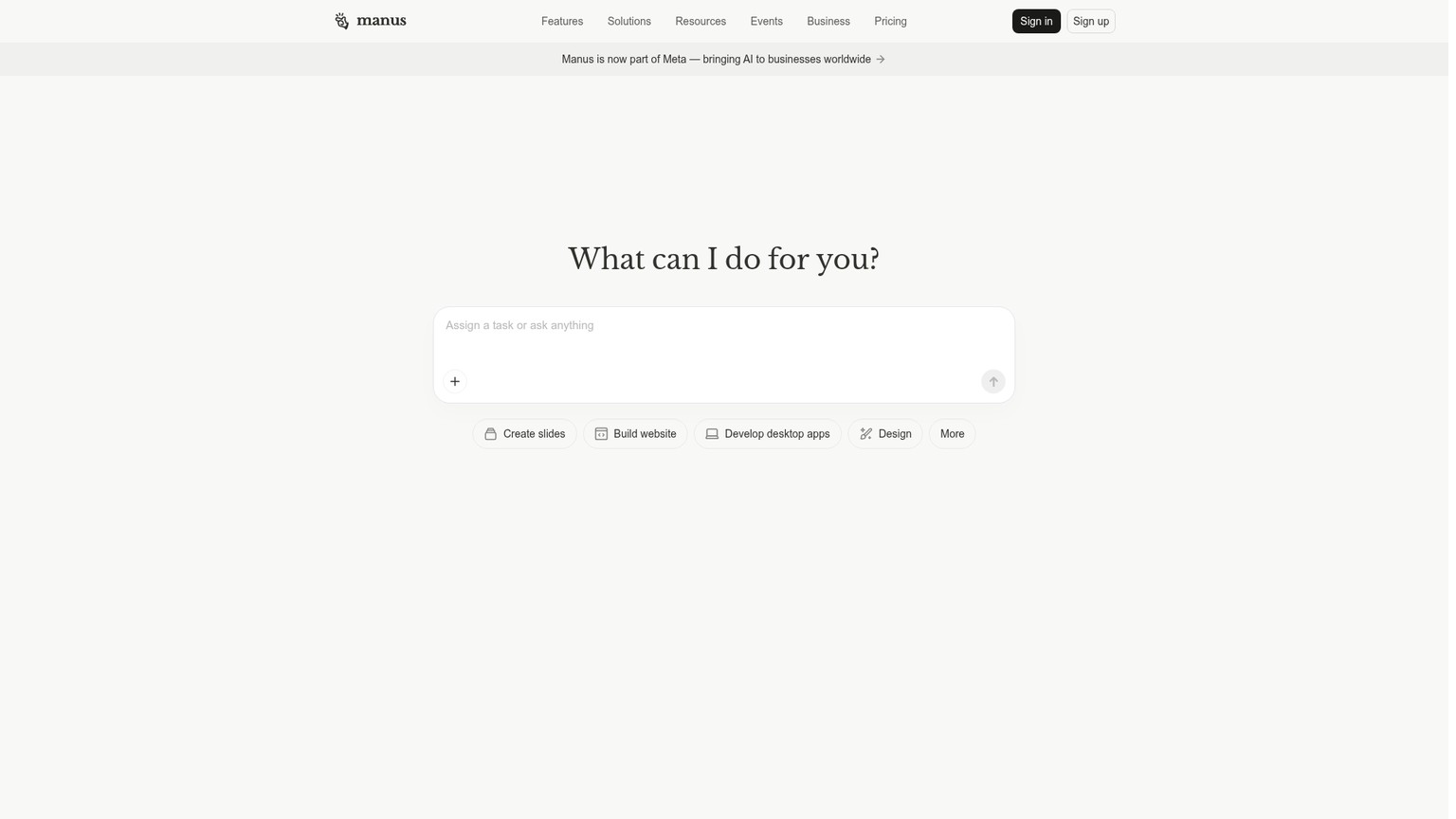
The concrete use case: hand Manus "build me a competitive teardown of these eight products as a slide deck," and it will research each, structure the argument, and produce the slides, running for as long as the job needs. For a funded founder who wants to delegate a whole research project rather than supervise each step, that autonomy is the entire value.
Where it falls short: Manus runs on credits, and complex jobs burn them fast. The Free tier (300 daily refresh credits, up to five concurrent tasks) is a real trial but not a workhorse, and a heavy week can chew through a paid plan's monthly allotment quickly. Budget for the credit math before you commit.
Price: Free (300 daily credits); Standard $20/mo (4,000 credits); Plus $40/mo (8,000 credits); Pro $200/mo (40,000 credits); annual billing saves about 17%. Pick it if you want maximum autonomy on long tasks. Skip it if you need predictable flat-rate costs or tight step-by-step control.
Perplexity Comet: the research agent that lives in your browser
Perplexity's Comet is the research agent that acts inside your browser instead of in a separate chat window, and as of late 2025 the browser itself is free for everyone. Comet is an agentic browser: it can read the tabs you have open, summarize a page, navigate the web on your behalf, and pull together a researched answer with sources, all without leaving the page you are on.

For a senior operator doing market or vendor research, this is the natural home for that work: ask Comet to compare the five tabs you have open, or to research a company and act on what it finds, and it works in context rather than asking you to copy-paste. The free tier ships the headline features intact: agentic search, page summarization, voice mode, and Deep Research from inside the browser.
Where it falls short: Comet is research-shaped. It is superb at finding, comparing, and summarizing, and it is not the tool you reach for to write a large codebase or run a complex back-office workflow. It is an agent for knowledge work, not for building software or automating operations.
Price: Comet browser free for everyone (Comet Plus $5/mo for premium publisher content); Perplexity Pro $20/mo; Max $200/mo (background assistant). Pick it if your work is research and you want it in your browser. Skip it if you need a builder or an operations automator.
Lindy and Gumloop: agents that run your back office
Lindy and Gumloop are the two agents a non-engineer can actually set up to run real operations, and they split by how much you want to pay versus how polished you want it. Both let you build agents without code; the difference is Lindy sells finished "AI employees" while Gumloop sells the cheapest capable canvas to assemble workflows yourself.
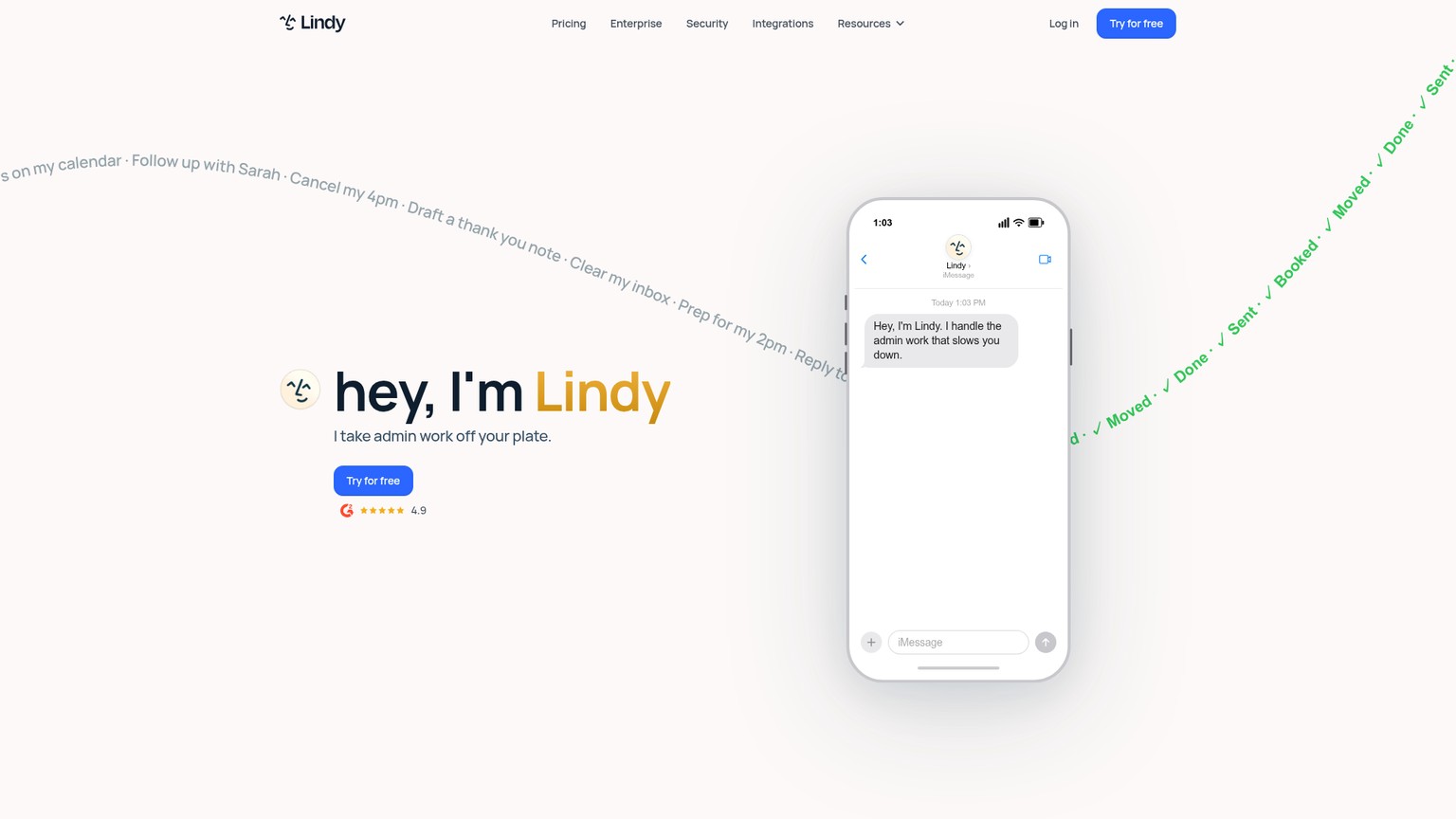
Lindy is built for the non-technical user who wants an AI employee rather than a tool: spin up an agent that triages your inbox, schedules meetings, or drafts outreach, from a library of templates and 4,000-plus integrations. It is privacy-first, with GDPR, HIPAA, and SOC 2 compliance, which matters if you are in healthcare, legal, or finance and cannot put client data through a consumer chatbot. A 12-person services firm can put a support-triage agent live in an afternoon.
Gumloop, fresh off a $50M Series B led by Benchmark, is the pick when budget leads. Its drag-and-drop canvas builds custom AI workflows, and its free tier is genuinely useful: 5,000 credits a month, five concurrent agent interactions, and unlimited agents. For an ops or marketing team that wants to automate a few recurring jobs without a platform contract, the $37 Pro plan is the cheapest serious option here.
Where both fall short: these are not assign-and-walk-away agents like Manus. They reward setup time. You are designing a workflow once so it runs reliably forever, which is the right trade for repeatable back-office tasks and the wrong one for a single ad-hoc job.
Price: Lindy Free / $49.99 / Pro $99.99 / $199.99 per month. Gumloop Free / Pro from $37 / Enterprise custom. Pick Lindy if you want a compliant, ready-made AI employee; pick Gumloop if you want the cheapest flexible automation. Skip both if you need one-off autonomy rather than repeatable workflows.
Devin: the autonomous software engineer
Devin is the agent built to own software work end to end, and the news in 2026 is that it is finally affordable: Cognition dropped the entry price to $20 a month, down from a model that used to start in the hundreds. Devin takes a ticket, writes the code across files, runs the tests, and opens the pull request, operating as a junior engineer you assign work to rather than a copilot you steer keystroke by keystroke.
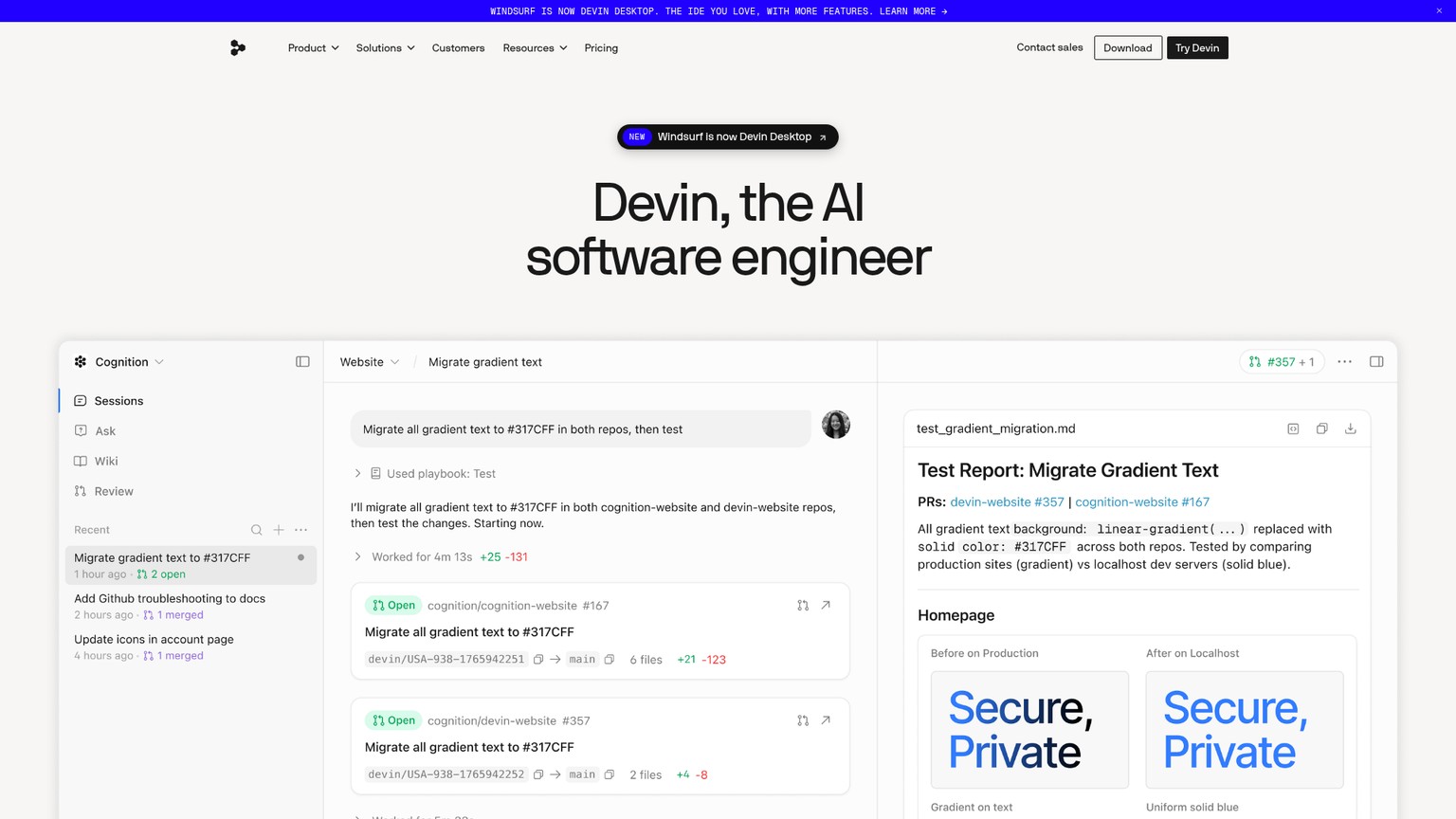
The current model is SWE 1.6, and the $20 Core plan includes it plus leading open-source models and access to Devin Cloud, where its agents run. The fit is narrow but real: hand Devin the well-scoped, repetitive engineering tickets (dependency bumps, small features, test coverage) that clog a backlog, and it clears them while your senior engineers do the hard design work. A team paying $80 a month plus $40 per developer seat can route grunt work to Devin instead of burning headcount on it.
Where it falls short: Devin still needs supervision on anything genuinely hard. Give it an ambiguous or architecturally significant task and it can confidently go wrong, so it pays off on well-defined work and frustrates on open-ended problems. For a broader head-to-head of coding agents, see the best AI coding agents comparison.
Price: Free; Core $20/mo (SWE 1.6, Devin Cloud); Max $200/mo; Team $80/mo plus $40 per dev seat. Pick it if you want to offload well-scoped engineering tickets. Skip it if your work is ambiguous or needs heavy human judgment per task.
For enterprise: the platforms IT will actually approve
If the decision is being made for a whole organization rather than yourself, the answer shifts from consumer agents to governed platforms, because procurement and security will not sign off on individual $20 subscriptions. The names that come up in enterprise evaluations are UiPath (process orchestration at scale), Microsoft Copilot Studio (agents inside the Microsoft 365 stack most companies already run), Google Gemini Enterprise (a unified agent platform with an open development kit), and OpenAI Frontier (launched February 2026 to deploy fleets of agents, with early adopters like Uber and State Farm).
The trade is control for convenience: these cost more and take real implementation work, but they give you audit logs, data-residency guarantees, single sign-on, and the contractual assurances that your data is not training someone's model. If you are wiring agents into core business systems, this is the tier to evaluate, and it is genuinely a build decision, which the agent platforms guide covers in depth.
How to actually choose
Match your situation to the pick, then apply the one rule that overrides the table. Start here:
The corollary: do not buy more than one to start. The frontier models are close enough that a second subscription rarely pays back. Run one agent for a month, find where it actually fails you, and only then add a specialist for that gap.
Which is the #1 AI agent right now?
There is no single number one, and the honest answer depends on the job. For general work ChatGPT is the best default, for code it is Claude, for fully hands-off multi-step tasks it is Manus, and for Google-native work it is Gemini. Anyone naming one universal winner is ignoring the use case.
Is ChatGPT the best AI agent?
ChatGPT is the best default agent for most people, because agent mode is now in the $20 plan and it does the widest range of work competently. It is not the best at autonomous coding (Claude and Devin lead there) or at long unattended runs (Manus leads there).
What are the 'big 4' AI agents?
In practice the big four are ChatGPT, Claude, Gemini, and increasingly Manus. The first three are the frontier-lab assistants with agent modes; Manus is the breakout independent agent, now part of Meta, known for the most autonomous end-to-end execution.
What is the best AI agent for a small business?
For most small businesses, Lindy is the best fit for no-code AI employees that handle inbox, scheduling, and outreach, while Gumloop is the cheapest way to automate a handful of recurring workflows. If you mainly need a smart generalist, ChatGPT Plus at $20 covers a lot on its own.
Are AI agents free?
Several have genuinely useful free tiers: Perplexity Comet is free for everyone, Gumloop's free plan runs real automations, and Manus gives 300 daily credits. But the dependable autonomy in the big agents starts at around $20 a month, which is still the price of one streaming service.
- Last Updated
- Category
- AI
- Language

Otter AI Alternatives: Granola, Krisp, MeetGeek, Circleback and Claap
Choose Granola, Krisp, MeetGeek, Circleback or Claap by the job. Compare live prices, free limits, bot-free capture and CRM handoffs.Oct 8, 2026AI
Mistral Large 4: Pricing, Open Weights, and When to Use It
Mistral Large 4: verified API prices, the launch offer, claimed benchmarks, and when to test the preview or wait for self-hosting.Oct 7, 2026AI
Lindy AI Review (Verified October 2026)
Lindy AI review: current plans, credit costs, email and meeting setup, integration limits, and when Gumloop, n8n or Marblism fits better.Oct 7, 2026AI
Mistral Pricing (2026): API Costs and Vibe Seats
Mistral API rates, Le Chat and Vibe plans, free limits, EU hosting costs and a worked monthly bill. Verified October 2026.Oct 6, 2026AI
Claude Skills
Use Claude Skills across the apps, Claude Code and API. Build a weekly client-report skill file by file, then install and share it.Oct 6, 2026AI
AI Employee: What It Does, Costs, and How to Start
What AI employees can do, current prices for six tools, and how to pick one role, keep human review and measure a 30-day pilot.Oct 6, 2026AI
Wispr Flow Alternatives (2026): VoiceOS, Superwhisper, Aqua Voice, Willow and Monologue
Compare VoiceOS, Superwhisper, Aqua Voice, Willow and Monologue by work task, current price, offline privacy, team controls and coding-agent input.Oct 5, 2026AI