Best AI Model Right Now (2026): The Frontier Models, Ranked by Score and Price
The frontier AI models ranked by the Artificial Analysis Intelligence Index and real API price: Claude Fable 5, Opus 4.8, GPT-5.5, Gemini, Grok.
Published Updated
 By Omid Saffari




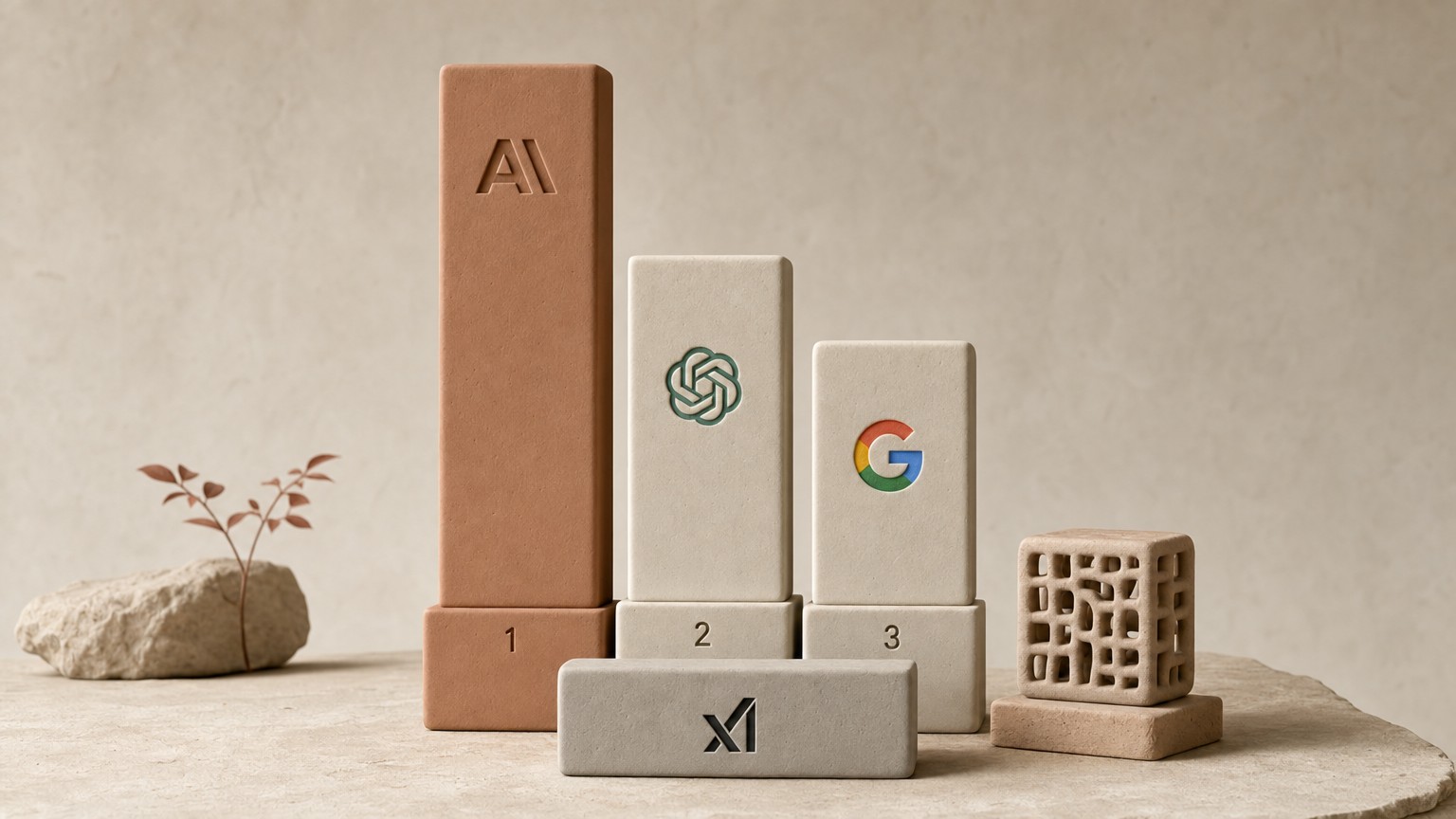
There is no single best AI model, and the leaderboard everyone quotes proves it. Claude Fable 5 tops the independent rankings, GPT-5.5 and Gemini trade the next spots, and Grok costs a fraction of all of them. The model you should actually run depends on one thing: what you are paying it to do.
The best AI model right now, in one table
By the Artificial Analysis Intelligence Index, the independent benchmark that aggregates nine hard evaluations into one capability score, Claude Fable 5 is the highest-scoring model available, at 60 out of a field of 73. Claude Opus 4.8 (56) and OpenAI's GPT-5.5 (55) sit right behind it. But the highest score is not the same as the right model. Fable 5 charges $50 per million output tokens, double Opus 4.8 for a four-point gain. So the honest verdict splits by job:
- Best raw capability: Claude Fable 5, if you genuinely need the ceiling and will pay for it.
- Best model most people should actually run: Claude Opus 4.8. Near the top on capability, half the output price of Fable 5.
- Best for ecosystem and tooling: GPT-5.5, if you live inside OpenAI's stack.
- Cheapest frontier-grade model: Grok 4.3, at $2.50 per million output tokens.
- Best free option: Gemini 3.5 Flash has a real free tier and a strong score; GLM-5.2 is the strongest model you can self-host for nothing.
Exact index numbers are shown where Artificial Analysis publishes them; the rest rank in the band noted. Prices are each vendor's own list API pricing, standard tier, pulled this week.
How "best" is actually measured
A single benchmark is easy to game and easy to cherry-pick, which is why a model can "lead" three different rankings that disagree. The Artificial Analysis Intelligence Index sidesteps that by blending nine separate tests into one number: graduate-level science questions (GPQA Diamond), a brutal general-knowledge exam (Humanity's Last Exam), real coding and terminal tasks (SciCode, Terminal-Bench), agentic and long-context work, and more. A model has to be broadly strong to score well, not just tuned for one leaderboard.
That matters for you because it filters out marketing. When a vendor says its model is "state of the art," it usually means on one chart. The composite tells you which models are genuinely good at everything, and the answer in mid-2026 is a tight pack of four at the top with everyone else a clear step behind.
Claude Fable 5: the highest score, and who it is wrong for
Claude Fable 5 is Anthropic's frontier model and the single highest-scoring model on the independent index, at 60. It is the one to reach for when the task is genuinely hard: dense technical reasoning, long multi-step analysis, work where a subtle mistake is expensive. On the hardest evaluations in the index, it holds the top spot more consistently than anything else on the market.
The catch is the price. At $10 per million input tokens and $50 per million output, Fable 5 is the most expensive mainstream model here by a wide margin: double Opus 4.8 on output, and more than ten times Grok 4.3. For a worked example, a research agent that reads long documents and writes long answers can easily burn a million output tokens a day. On Fable 5 that is $50 a day; on Opus 4.8 it is $25; on Grok 4.3 it is $2.50. The four-point capability gain over Opus 4.8 is real, but for most workloads it does not justify doubling the bill.
Claude Opus 4.8: the model most people should actually run
Claude Opus 4.8 is the value pick at the top of the market, and for most teams it is the right default. It scores 56 on the index, second only to Fable 5, and it leads specifically on coding, reasoning, and agentic work, the tasks where these models earn their keep. At $5 per million input and $25 per million output, it costs half what Fable 5 does for a difference most users will never notice.
Here is the concrete case. A 12-person team shipping one product wants a model that can hold a large codebase in context, plan a refactor, and execute it without losing the thread. Opus 4.8 does that at the top of the field, and it is the model powering most of the serious coding agents people rely on day to day. You pay a premium over the mid-tier, but you get frontier coding without Fable 5's output bill. If your work is mostly software, this is almost certainly your model. For the full coding-specific breakdown, see the best AI model for coding ranking.
If your volume is high and your tasks are easier, drop to Claude Sonnet 4.6 at $3 input and $15 output. It keeps Claude's writing quality and instruction-following at roughly half Opus 4.8's price, which makes it the right tool for summarization, drafting, and the thousands of small calls a production app makes.
GPT-5.5: the ecosystem tax
GPT-5.5 is OpenAI's flagship and scores 55 on the index, a single point below Opus 4.8. As a raw model it is excellent and almost interchangeable with Opus at the top. What you are really buying with GPT-5.5 is the ecosystem around it: the widest set of integrations, plugins, the most third-party tools that assume an OpenAI key, and the deepest pool of developers who already know the API.
That ecosystem has a price. GPT-5.5 lists at $5 input and $30 output per million tokens, which makes it more expensive on output than Opus 4.8 ($25) while scoring a touch lower. There are escape hatches: the Batch API runs at half price ($2.50 in, $15 out) if you can tolerate asynchronous, non-urgent jobs, and GPT-5.4 at $2.50 input and $15 output is a strong, cheaper step down. But on a like-for-like, real-time basis, you pay a small premium over Claude for the convenience of OpenAI's gravity. If your stack already runs on OpenAI, that convenience is real and worth it. If you are choosing fresh, it is not the value leader.
Gemini 3.1 Pro and 3.5 Flash: Google's range and the free tier
Gemini is Google's answer, and its real strength is range: a genuinely free tier at the bottom and strong multimodal handling (text, image, audio, video) across the line. Gemini 3.5 Flash is the standout, scoring inside the top 10 while listing at just $1.50 input and $9 output per million tokens, with a free API tier for getting started. It outscores the larger Gemini 3.1 Pro on the composite index, which is unusual: here the faster, cheaper model is also the smarter one.
Gemini 3.1 Pro Preview sits a little lower on the index but adds long-context muscle at $2 input and $12 output (up to 200k-token prompts; pricing roughly doubles above that). The picture for you: if you are price-sensitive or building something multimodal, Gemini 3.5 Flash is one of the best value-per-capability buys on this list, and the free tier means you can prototype for nothing. A solo builder testing an idea over a weekend can ship the whole thing on Gemini's free quota before paying a cent. Where Google still trails is the very top of the reasoning and coding charts, where Claude and GPT-5.5 hold the lead.
Grok 4.3: the cheap frontier model with a catch
Grok 4.3 is xAI's newest flagship, and its headline is price: $1.25 per million input tokens and $2.50 per million output, with a 1-million-token context window. That is roughly one-twentieth of Fable 5's output cost. xAI also positions it as leading the industry on non-hallucination rate and agentic tool calling, and it supports both reasoning and non-reasoning modes from the same model.
The catch is the composite score. Grok 4.3 lands mid-pack on the Intelligence Index, well below the Claude and GPT leaders and below Google's Gemini line. So the trade is explicit: you give up a real slice of top-end reasoning to cut your token bill by an order of magnitude. For high-volume work where each individual answer does not need to be the smartest in the room, classification, routing, bulk extraction, first-draft generation, Grok 4.3 is one of the best dollar-for-dollar buys available. For the hardest reasoning, it is not the model you want.
- Cheapest frontier-grade model here, by a wide margin
- 1M-token context window for long inputs
- Strong on tool calling and factual reliability per xAI
- Mid-pack on the composite intelligence index
- Outclassed on the hardest reasoning and coding tasks
- Smaller third-party ecosystem than OpenAI or Anthropic
GLM-5.2 and the open-weight frontier
If you want to own your model rather than rent it, the open-weight frontier has closed the gap further than most people realize. GLM-5.2, from Zhipu, scores 51 on the Intelligence Index, the highest of any open-weight model, and it ranks ahead of Google's Gemini Flash and Pro on that composite. Behind it, MiniMax-M3 and DeepSeek V4 Pro both score 44. These are models you can download, run on your own hardware, and use with no per-token fee and no data leaving your control.
The reason this matters is cost and control at scale. A company making millions of model calls a month, or one with strict data-residency rules, hits a wall with metered APIs: the bill grows with usage forever, and every request ships data to a third party. Self-hosting an open-weight model flips that to a fixed infrastructure cost and keeps the data in house. The trade is that you run the servers, handle the scaling, and sit a step below the very top on capability. For a deeper look at the full open-weight field and the licensing traps, see the best open-source LLMs breakdown.
Which model should you actually pick
The right model is set by your situation, not by the top of the leaderboard. Match yourself to a row:
The one rule that decides it
The single axis that settles the choice is this: how much does a wrong answer cost you? When a mistake is expensive (legal analysis, production code, research you will act on), pay for the top of the index and run Fable 5 or Opus 4.8. When a mistake is cheap and you make a lot of calls (drafts, summaries, classification, routing), the smartest model is a waste of money and Grok 4.3, Gemini 3.5 Flash, or Sonnet 4.6 win on value. Almost every real decision about which AI model to use is really a decision about that one number.
What is the best AI model right now?
By the independent Artificial Analysis Intelligence Index, Claude Fable 5 is the highest-scoring model at 60, followed by Claude Opus 4.8 (56) and GPT-5.5 (55). The best value at the top is Opus 4.8, which costs half what Fable 5 does per output token for a four-point difference.
What is the best free AI model?
Gemini 3.5 Flash has a genuine free API tier and ranks inside the top 10 on the intelligence index. If you want a model you can self-host for nothing, GLM-5.2 is the strongest open-weight option, scoring higher than Google's paid Gemini models on the composite.
What is the best AI model for coding?
Claude leads coding and agentic work, and Claude Opus 4.8 is the common pick for serious software, with GPT-5.5 close behind. For the cheapest credible coding model, Grok's coding variant or GLM-5.2 self-hosted are worth testing.
What is the best AI model for research and writing?
GPT-5.5 and Gemini 3.1 Pro are strong for research breadth and multimodal inputs, while Claude (Opus 4.8 or Fable 5) is widely preferred for long-form writing quality and following detailed instructions.
Is the most expensive model always the best?
No. Claude Fable 5 has the highest score and the highest price, but Opus 4.8 scores nearly as high for half the output cost, and Grok 4.3 delivers frontier-grade output at a tenth of Fable 5's price. Match the model to how much a wrong answer costs, not to the price tag.
Want the full map of which AI tool fits which job, without the hype? Get the AI tools map for business owners, free.
Get the AI tools map for business owners
A plain-English guide to which AI models and tools actually fit which job, updated as the frontier moves. Free to subscribers.
- Last Updated
- Category
- AI
- Language

Otter AI Alternatives: Granola, Krisp, MeetGeek, Circleback and Claap
Choose Granola, Krisp, MeetGeek, Circleback or Claap by the job. Compare live prices, free limits, bot-free capture and CRM handoffs.Oct 8, 2026AI
Mistral Large 4: Pricing, Open Weights, and When to Use It
Mistral Large 4: verified API prices, the launch offer, claimed benchmarks, and when to test the preview or wait for self-hosting.Oct 7, 2026AI
Lindy AI Review (Verified October 2026)
Lindy AI review: current plans, credit costs, email and meeting setup, integration limits, and when Gumloop, n8n or Marblism fits better.Oct 7, 2026AI
Mistral Pricing (2026): API Costs and Vibe Seats
Mistral API rates, Le Chat and Vibe plans, free limits, EU hosting costs and a worked monthly bill. Verified October 2026.Oct 6, 2026AI
Claude Skills
Use Claude Skills across the apps, Claude Code and API. Build a weekly client-report skill file by file, then install and share it.Oct 6, 2026AI
AI Employee: What It Does, Costs, and How to Start
What AI employees can do, current prices for six tools, and how to pick one role, keep human review and measure a 30-day pilot.Oct 6, 2026AI
Wispr Flow Alternatives (2026): VoiceOS, Superwhisper, Aqua Voice, Willow and Monologue
Compare VoiceOS, Superwhisper, Aqua Voice, Willow and Monologue by work task, current price, offline privacy, team controls and coding-agent input.Oct 5, 2026AI