Real Estate Listing AI
A costed AI listing workflow for agents: copy, staging, floor plans, seller reports, contract handoff, compliance, and the human checks that stay.
Published
 By Omid Saffari


For a solo agent carrying four live listings, the useful AI stack is not seven subscriptions: it is one checked property record, a $36 listing workspace, and a human approval gate before anything reaches the MLS. At vendor prices current on August 30, 2026, the known recurring stack is $95.96 for four accepted deals a month, before variable floor-plan orders.
Who this is for
This playbook is for a solo real estate agent or a two-person team with about four live listings, an MLS account, email, calendar, phone, and a basic CRM already in place. Your Tuesday starts with seller notes, measurements, disclosures, and a photographer's folder; it ends with an MLS draft, a property page, social assets, buyer questions, a seller update, and perhaps a signed offer that creates a new set of dates.
The stack is useful when you are still copying the same property facts into each of those jobs. It is not a reason to replace a brokerage-mandated CRM, transaction platform, or MLS workflow. If your broker already provides an approved listing suite, map the process below onto that suite before adding another account.
The operating rule is simple: AI may transform a checked fact, but it may not create a property fact. Bedrooms, baths, dimensions, school information, permitted improvements, legal descriptions, HOA terms, taxes, appliances, offer instructions, and disclosure details come from an approved source and a responsible person. Once those facts are stable, software can turn them into several useful forms without asking you to rebuild the listing every time.

Start with one verified listing record
ListingAI is the sensible default for this playbook because it keeps the description, website, social content, video, staging, and seller report attached to one listing instead of scattering them across blank chat threads. Its Professional plan is $36 per month, while Essential is $19 if you do not need full staging or CMA access.
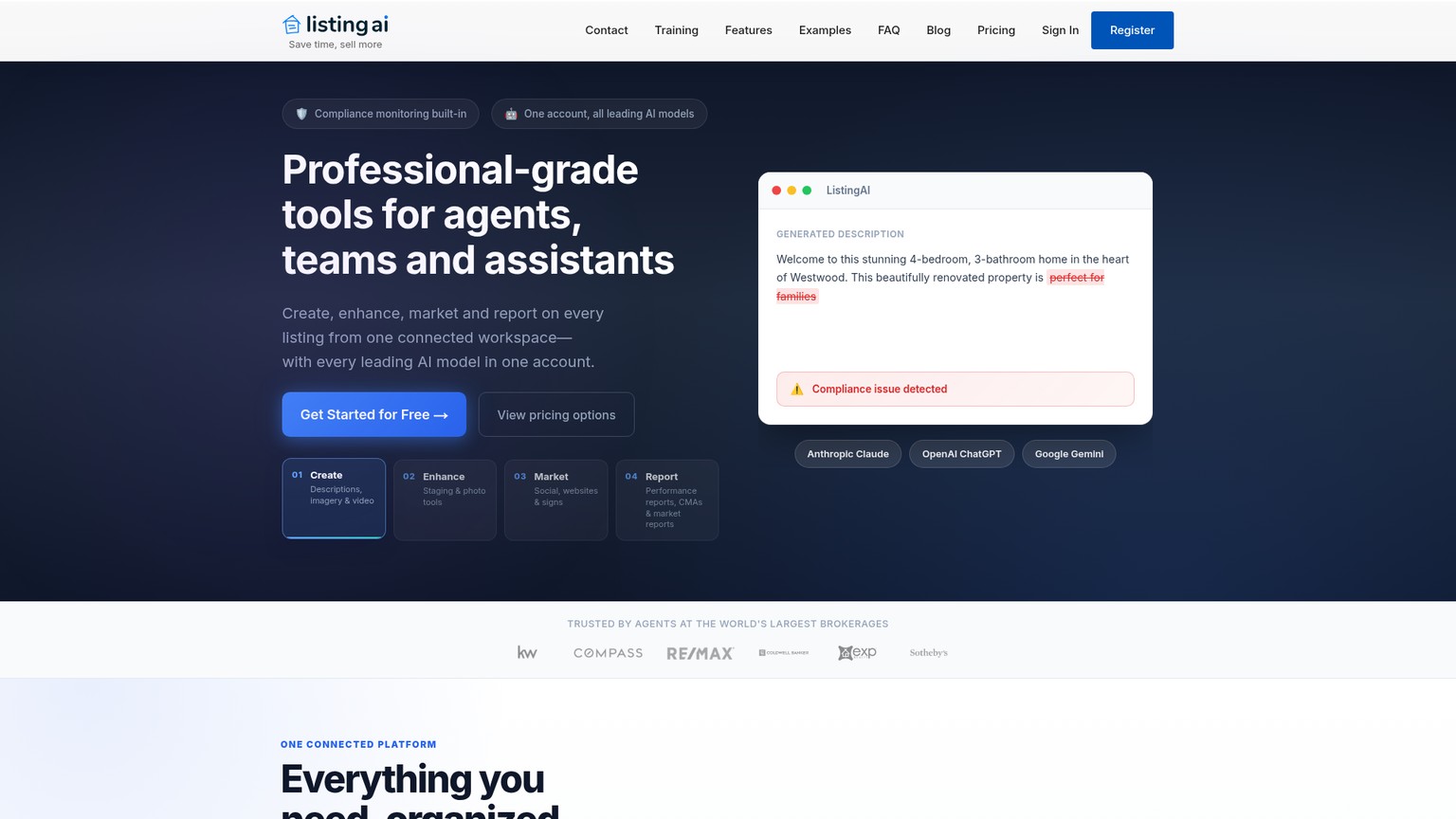
Create the record before asking for copy. That record is the control point for every later check.
Enter only sourced facts
Copy the property details from the seller-approved intake, measurement source, disclosures, and MLS-ready fields. Leave a field blank when the source is missing instead of asking AI to infer it from a photo.
Separate fact from positioning
Keep objective facts in one block and marketing choices in another. "South-facing balcony" may be a fact; "perfect for young families" is positioning with a Fair Housing problem and does not belong in the fact block.
Assign an approver
Name the person who checks the record before any asset is copied or published. On a solo practice, that is you using the seller intake and brokerage checklist; on a small team, it can be the listing coordinator.
At four listings, Professional still costs $36 for the month because the plan includes unlimited listings. The wall is not volume. It is error propagation: one wrong square-footage field can appear in the description, video, site, social caption, and seller report before anyone notices.
Workflow 1: Draft the description, then run the Fair Housing check
ListingAI can turn the checked record into an MLS description without a handcrafted prompt, and its compliance monitor flags potential Fair Housing language and suggests alternatives. That makes it a useful first reader, not the person who approves the ad.
Start with three constraints: the MLS character limit, the facts that must appear, and the claims that require a source. Generate one factual draft. Then run a second pass that removes buyer-persona language, unsupported superlatives, and anything that implies a preference for who should live there.
The Fair Housing Act covers housing discrimination and advertising involving race, color, national origin, religion, sex, familial status, and disability. A compliance feature can catch common phrasing, but it cannot know every state rule, local custom, brokerage policy, or the context created by an image and caption together.
Use this approval sequence:
- Compare every factual claim with the source record.
- Search the draft for a person, family type, religion, disability, nationality, or other protected-class implication.
- Check that neighborhood and amenity language describes the property or a verifiable public fact, not the kind of resident the copy is trying to attract.
- Read the final version beside the disclosure package and photo set before pasting it into the MLS.
The monthly cost is included in ListingAI Essential at $19 or Professional at $36. For this four-listing operator, pay for Professional only if you will use its staging, CMA, or market-report tools; copy alone does not justify the higher tier.
The wall: a polished sentence can still be false, discriminatory, or materially incomplete. Do not automate the final MLS submission, and do not treat the tool's compliance result as legal approval.
Workflow 2: Stage possibility without rewriting reality
ListingAI Professional already includes 300 virtual-staging credits, so use the listing workspace you are paying for before adding a specialist. At this four-listing volume, a second staging subscription adds cost and another approval surface without removing the human image check.
The verified credit math is enough for this operator. ListingAI charges 1 credit to generate an image edit and 2 more to accept it, so each kept image costs at least 3 credits. Four listings with five accepted staged images each use a minimum of 60 credits, comfortably inside Professional's 300-credit allowance even before allowing for rejected generations.
Choose rooms with a clear job
Stage only the rooms where furniture helps a buyer understand scale or use. Keep the original photo beside every generated version from the first edit onward.
Lock the physical structure
Tell the tool to preserve walls, doors, windows, flooring, fixtures, ceiling lines, views, and room proportions. Change movable furniture and decor, not the property.
Review at inspection zoom
Compare edges, reflections, window views, outlets, built-ins, flooring transitions, and any area hidden in the original. If the generated image invents a permanent feature or conceals a defect, reject it.
Disclose before upload
Keep the unaltered original and label the staged or enhanced image according to your state, brokerage, and MLS rules. Do this in the file name and workflow record even when the portal only requires a caption.
General realistic image generators optimize for a convincing picture. Listing staging has a stricter job: show a possibility while preserving the truth of the room.
NAR's August 17, 2026 guidance draws the practical line around defects, permanent features, room scale, landscaping, and views. It also describes California's original-image disclosure requirement and NorthstarMLS's labeling rule as current examples, not one nationwide standard. Your local rule decides the upload, but keeping the original and labeling the change is the safe operational default.
The wall: visual plausibility is not property accuracy. Do not automate the choice to remove an object when it might conceal damage, and never publish a generated room without a person comparing it with the original.
Workflow 3: Add a floor plan buyers can check
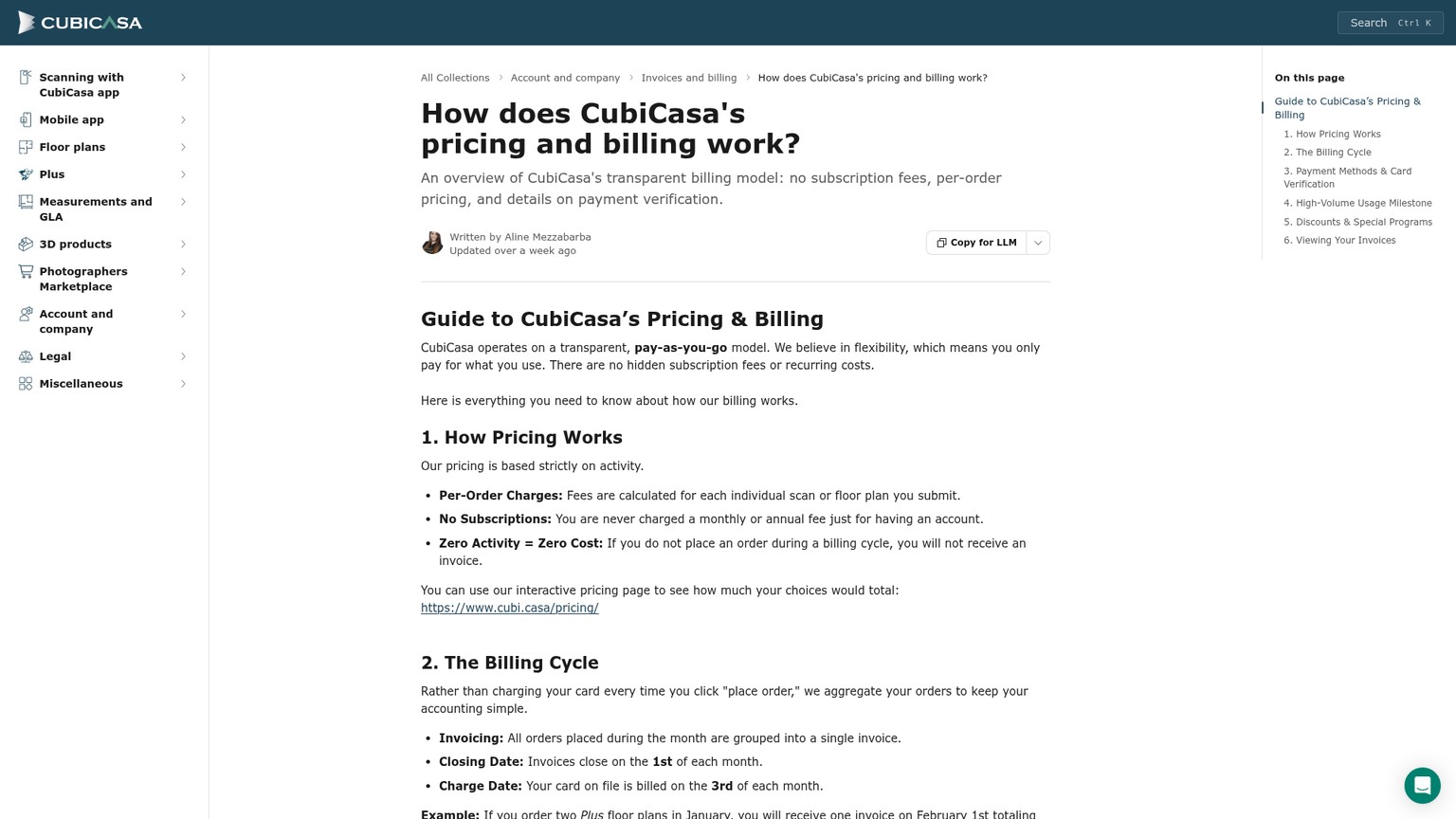
CubiCasa is the low-friction floor-plan step: its current billing guide states there is no subscription fee and charges are calculated per order. The public billing guide does not list a fixed US per-order amount, so the monthly cost must stay marked as variable until your account shows the quote.
The setup does not need a developer. Walk the property with the CubiCasa mobile app, submit the scan, then inspect the returned room names, wall layout, door swings, dimensions, and total-area presentation against your trusted measurement source. Export the version your MLS accepts and keep the source scan with the listing record.
The payoff is buyer comprehension. A photo carousel can make adjacent rooms look unrelated; a floor plan shows how the spaces connect. That helps without inventing a lifestyle claim or modifying the property image.
There is no fixed subscription fee, while the monthly order total varies with use. Use the live in-account per-order amount in your listing budget rather than carrying an old web price into a seller proposal.
The wall: a generated floor plan is a marketing and orientation asset, not a survey, appraisal, legal description, or promise of exact area. Do not let its dimensions overwrite official records, and do not upload a branded plan where your MLS requires an unbranded asset.
Workflow 4: Turn the record into one launch pack
ListingAI earns its monthly fee when the same approved facts become a property page, social posts, Stories, and a short video without four separate copy jobs. Essential includes the website, social content, and unlimited Standard Motion videos; Professional adds 25 cinematic-scene credits each month.
Build a small approved message bank before generating assets:
- One factual property summary.
- Three differentiators that can be seen or sourced.
- One showing instruction.
- One disclosure line for any altered image.
- One approved contact route.
Generate the channel versions from that bank. Review the property website on a phone, compare social captions with the MLS copy, and watch the video with sound off so a missing label or invented visual does not hide behind music.
At four listings with six cinematic scenes each, the month uses 24 of the 25 Professional credits. A fifth comparable video would cross the included allowance, which is the point to switch that listing to Standard Motion, shorten the cinematic plan, or buy more credits. Do not buy more before the calendar creates the need.
The social planner can review, schedule, publish, and monitor Facebook and Instagram posts from the listing calendar. Leave automatic publication off for the first campaign. Once a template has passed your factual, image, disclosure, link, and contact checks, you can reuse the approval path without assuming the next property is identical.
The wall: format conversion can spread an approved sentence into the wrong context. A claim that is accurate beside a full MLS record may become misleading in a cropped image or a short scene, so the final check happens in each rendered channel.
Workflow 5: Send a seller update that reports observations
ListingAI's performance report is useful because it turns portal views, reported saves, and engagement trends into a seller-facing draft. Use it to organize evidence, not to manufacture a story about why the market responded.
Set the report up in three blocks:
- Observed: the metrics the portal or campaign reports.
- Changed: the actions you took, such as replacing the lead image or scheduling another open house.
- Decision: the question that needs the seller's input, if any.
The cost is included in both the $19 Essential and $36 Professional plans. For a weekly seller call, generate the draft from the current listing record and metrics, then add the local context yourself. A view count does not prove buyer intent, and a save does not prove that a price change caused it.
The wall: AI is good at turning a metric row into fluent prose, which is exactly why unsupported causation can sound credible. Do not automate price-reduction advice or send a report that you cannot reconcile with the portal and your own activity log.
Workflow 6: Hand the accepted offer into a checked timeline
ListedKit is the handoff tool after an offer becomes a signed contract: its Ava assistant reads contracts and inbox messages, extracts parties, dates, and contingencies, builds a timeline, syncs deadlines, and drafts replies for review. The current price is $14.99 per transaction credit, the first transaction is free, and there is no subscription.

At four accepted deals in a month, four credits cost $59.96. Added to ListingAI Professional, the known recurring total is $95.96 before any paid CubiCasa orders.
Use a broker-approved account and follow this sequence:
- Connect only the approved inbox or forwarding route.
- Upload the executed contract and relevant addenda.
- Compare every extracted party, amount, contingency, and date with the signed documents.
- Sync the calendar only after that comparison.
- Review every drafted message before it leaves the system.
ListedKit says it can read any US state's purchase agreement, including handwritten contracts, and that data is encrypted in transit and at rest. Those vendor statements do not replace your brokerage's vendor approval, retention policy, access control, or transaction coordinator.
The wall: an amendment can move a date that was correct yesterday, and a handwritten field can be legible to a person but ambiguous to software. The signed file remains authoritative. Do not automate legal interpretation, contingency advice, or outbound approval.
Workflow 7: Use a CMA draft, but keep the price decision human
ListingAI Professional includes US-only CMA reports based on public and county records. That can assemble a starting document, but it cannot see every renovation, concession, condition issue, private comp note, micro-location difference, or seller constraint that changes your judgment.
Run the draft only after the listing record is checked. Review the subject property first, then inspect every comparable, sale date, status, distance, property type, material adjustment, and source. Remove a comp you cannot defend, and write the reason for any adjustment in plain language before discussing a range with the seller.
The tool cost is already inside the $36 Professional plan. The setup effort is higher than listing copy because the consequence is higher: a persuasive description can be edited, while a bad pricing recommendation can distort the entire launch.
The wall: do not automate the final list price, negotiation position, offer advice, disclosure decision, or answer to a question that requires licensed judgment. AI may organize the evidence. The agent owns the recommendation.
The decision table
The smallest sensible starting point is ListingAI Professional plus usage-priced ListedKit only when a contract exists. Use ListingAI's included staging, and add CubiCasa only to listings where layout information improves the buyer's understanding.

The compliance and data note
An unapproved consumer chat window is not the place for identity documents, Social Security numbers, bank or lender files, access or alarm codes, lockbox details, private seller notes, unredacted contracts, client email threads, confidential negotiation instructions, or bulk MLS exports. Redaction helps, but it does not turn a prohibited data use into an approved one.
MLS data deserves a separate check because access does not automatically grant the right to reuse it in an AI system. NAR's July 15, 2026 Metro MLS case study describes a local policy requiring express written permission for AI processing or training. That is one MLS's rule, not a national standard, which is why your own MLS agreement and brokerage policy come first.
Use the least data needed for the job:
- A description tool needs approved property facts, not a buyer's financial file.
- A staging tool needs the listing photo, not the seller's identity or alarm code.
- A floor-plan tool needs the property scan, not the transaction correspondence.
- A contract assistant needs the executed file only inside a broker-approved account with the correct people granted access.
Persistent chat history can change the privacy boundary after the prompt is sent; this consumer-chat history privacy explainer shows why retention and account settings belong in the workflow decision, not in an afterthought.
For copy, the Fair Housing check stays mandatory even when a vendor offers a compliance monitor. For images, preserve the original, disclose the altered version, and follow the strictest applicable state, MLS, and brokerage rule. For contracts, verify every extraction against the signed document. None of these controls requires a developer; they require a named approver and a record of what was approved.
Your Monday plan
Pick one live listing
Choose a property with complete seller-approved facts and ordinary photos. Build the single source record, including a blank or question marker wherever the evidence is incomplete.
Draft one low-risk asset
Use ListingAI's free first listing or your approved brokerage tool to create the description. Run the compliance pass, then compare every sentence with the source record without publishing it.
Put one human gate in writing
Have the responsible agent or coordinator approve the factual draft, Fair Housing language, and any image label. Publish only that checked asset, record what failed, and buy a paid plan only after the repeatable workflow is clear.
Do not begin Monday by connecting every inbox or uploading every active file. One listing proves whether the source record, approval gate, and output format work inside your brokerage's rules.
Frequently asked questions
Is there a free AI tool that can create real estate listings?
Yes. ListingAI currently includes one complete listing on its free plan, with a description, website, social content, and video. Treat it as a pilot and move to a paid plan only after the checked workflow proves useful.
How can a real estate agent use AI?
Use it to transform verified property facts into channel-specific drafts, stage clearly labeled possibilities, build marketing assets, summarize observed performance, and extract a contract timeline. Keep pricing, material facts, disclosure, and send decisions with a licensed human.
Is there a ChatGPT for real estate agents?
Purpose-built listing workspaces provide the chat-like drafting layer plus a property record, listing assets, and compliance prompts. That extra context is more useful than starting every job in a blank general chat window.
Is there an AI CMA tool available for realtors?
ListingAI Professional includes US-only CMA reports based on public and county records. Treat the report as a starting draft, then reconcile the comps, adjustments, and local knowledge yourself.
What is the best AI tool to use for real estate?
The answer changes by bottleneck: use a listing workspace first, use its included staging, and add transaction intelligence only after a contract exists. Buying several overlapping tools before one workflow proves useful adds cost without removing the human checks.
Get the AI Business Workflow Audit Checklist
Turn one listing workflow into a scoped system with an owner, budget, data boundary, evidence check, and approval gate. Subscribe to get the checklist free.
- Published
- Category
- Playbooks
- Language

AI for Marketing Agencies
Run a seven-handoff AI delivery system for campaign drafts, approvals, and sourced client reports, with current costs for five and 20 clients.Sep 25, 2026Playbooks
AI for Consultants
A practical AI workflow for consulting discovery, cited research, spreadsheet analysis, proposals, and follow-up, with solo and five-person costs.Sep 25, 2026Playbooks
AI for Pilates Studios
A costed AI playbook for Pilates studio trial follow-up, attendance, waitlists, class capacity, weekly admin, and human review.Sep 12, 2026Playbooks
AI for Bookkeeping Client Onboarding
A costed onboarding workflow for bookkeeping firms, with portal setup, AI-drafted welcomes, human approval gates, and a three-step Monday plan.Sep 11, 2026Playbooks
AI Tools for Lawyers
Seven law-firm workflows with live tool prices, no-code setup steps, monthly cost math, data boundaries, and the human checks that stay.Sep 4, 2026Playbooks
AI for Property Managers
A costed AI playbook for tenant messages, maintenance, leasing, inspections, lease review, owner reports, and the human checks that stay.Sep 4, 2026Playbooks