Siri AI (Verified August 2026)
Siri AI costs $0 on eligible Apple hardware but remains a beta. See supported devices, exact pricing, privacy, limitations, alternatives, and verdict.
Published Updated
 By Omid Saffari


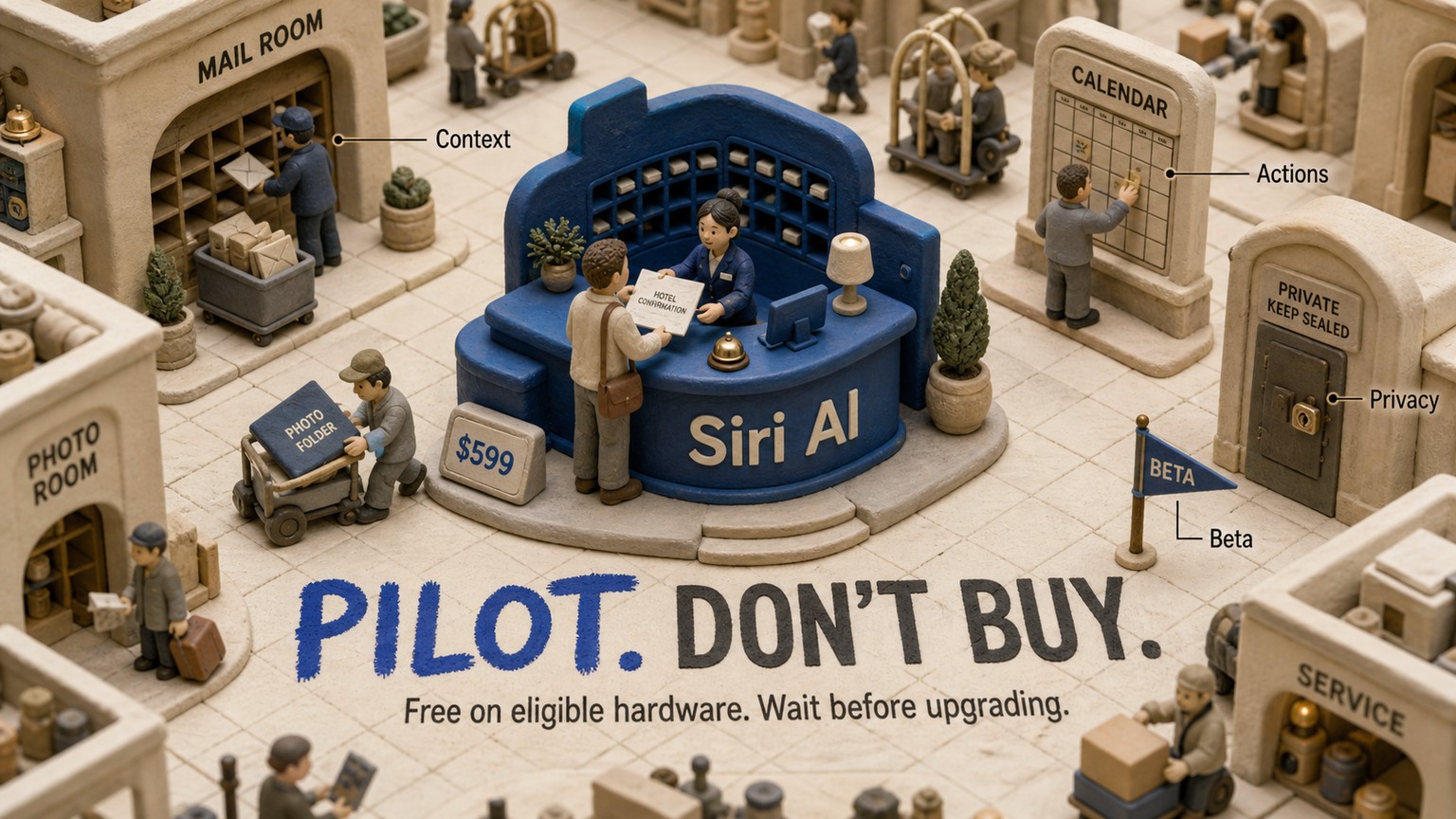
Siri AI adds no separate subscription to eligible Apple hardware, but the cheapest new iPhone Apple currently sells with access starts at $599. At a $60 hourly labor cost, that purchase needs to save 9 hours 59 minutes over its working life; existing-device owners should pilot it, while anyone buying hardware only for Siri AI should wait.
What Siri AI actually is
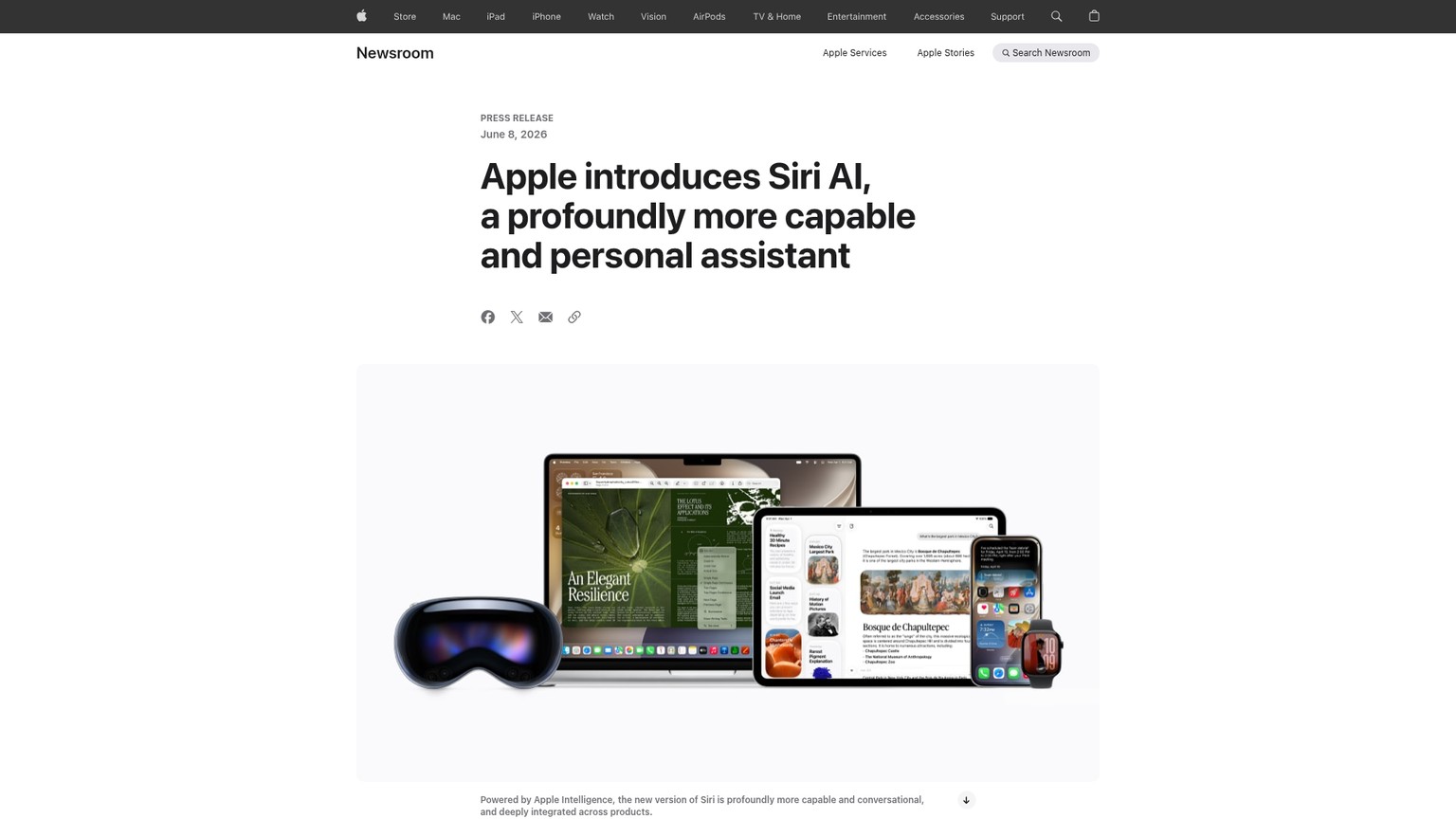
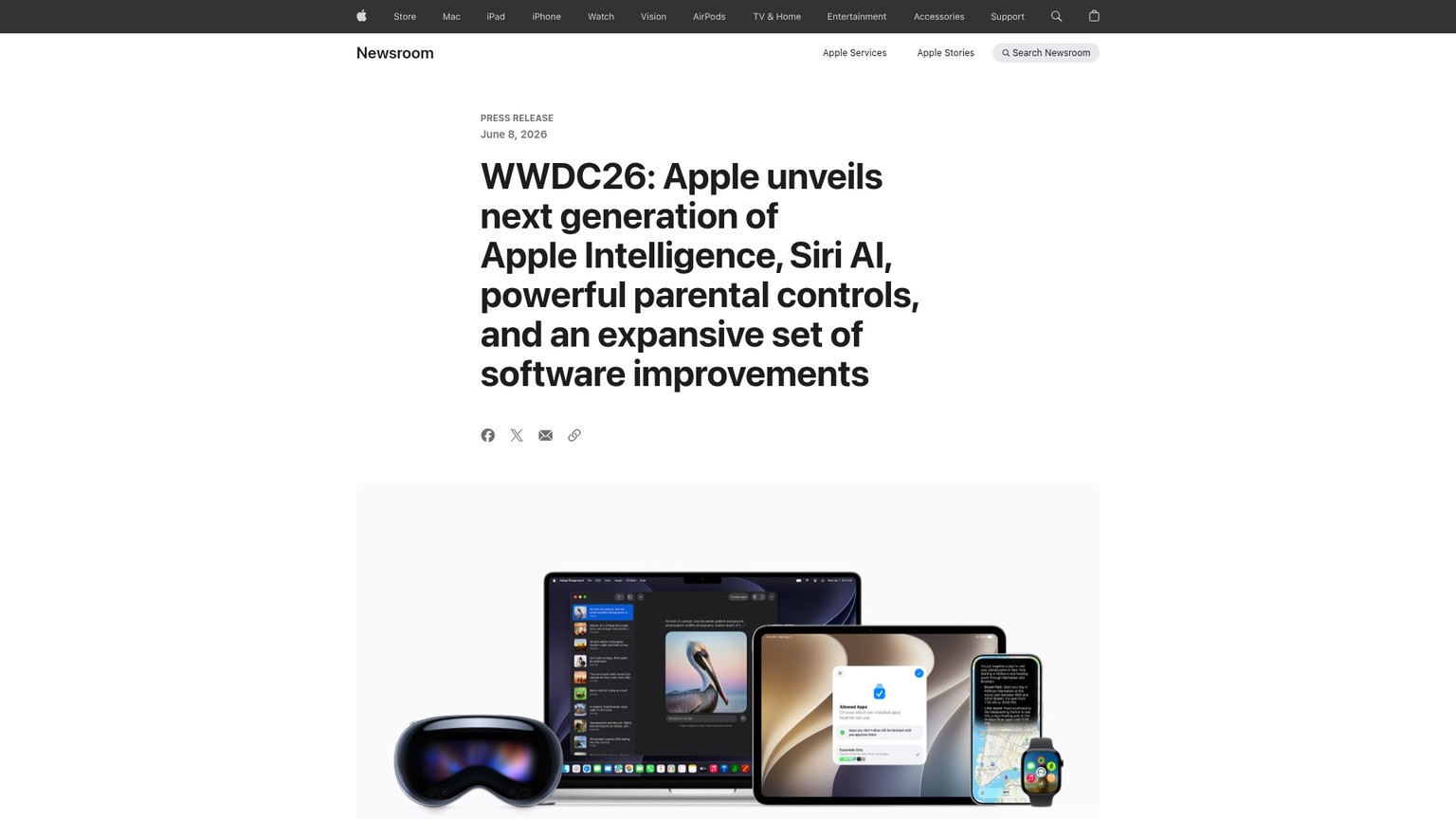
Siri AI is a system-level assistant inside Apple's 27-generation operating systems, not a web chatbot with an iPhone app attached. Apple Foundation Models handle language and reasoning, a system orchestrator connects the request to Spotlight and the App Toolbox, and App Intents, which are actions and content an app declares to the operating system, let compatible third-party apps participate. That design gives Siri AI its one defensible edge: it can use what is on the screen, retrieve personal context from Apple apps, and take an allowed next action without forcing you to copy the same information into another tool. It is also unfinished. Apple's live product page, verified on August 10, 2026, still says Siri AI is coming in English later this year, while its newsroom describes the user release as a beta.
Who Siri AI is for and who should skip it
Siri AI is for an Apple-heavy operator who already owns supported hardware and repeatedly loses time moving small pieces of context between Mail, Messages, Photos, Notes, Calendar, and the web. It is not the right primary assistant for a mixed-device team, a source-first researcher, or a company that needs stable automation and mature governance today.
The prices and product versions below were verified against the vendors' live pages on August 10, 2026.
The funded founder with an iPhone 17 Pro and a Mac can justify a beta pilot because the incremental software bill is zero. The same founder should not treat that as permission to cancel ChatGPT or Perplexity. Siri AI's value is reducing tiny handoffs inside Apple workflows. A research assistant's value is reasoning across files and sources. Those are adjacent jobs, not interchangeable subscriptions.
A mid-market CTO has a stricter rule. If the fleet includes Windows, Android, older iPhones, or regulated workflows, Siri AI can be an optional endpoint feature, not the shared AI layer. The device matrix, beta status, regional exclusions, and third-party integration requirements make a company-wide dependency premature.
Choose ChatGPT for broad team work
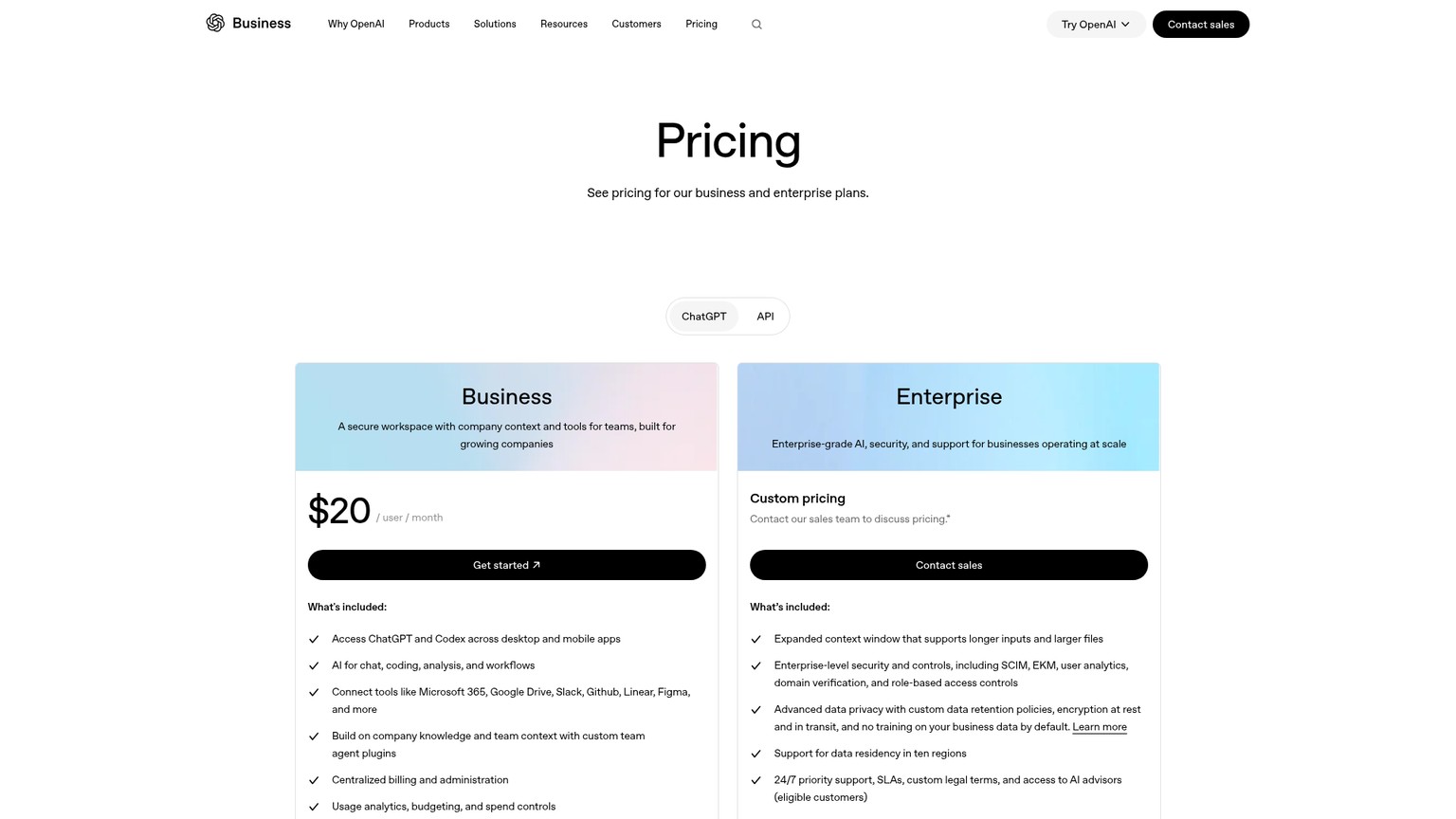
ChatGPT is the better alternative when a team needs one workspace for reasoning, files, research, coding, data analysis, and finished deliverables. Business costs $20 per user per month with annual billing or $25 monthly, requires at least two users, and does not train on business data by default. A 20-person annual workspace costs $4,800 a year. That buys a shared work surface and administration, not Siri's access to personal Apple context.
For a fuller plan decision, the current ChatGPT review separates the individual and team tiers. Pick it when the recurring outcome is a report, analysis, code change, spreadsheet, or multi-source decision rather than a device action.
Choose Gemini for Google-centered solo work
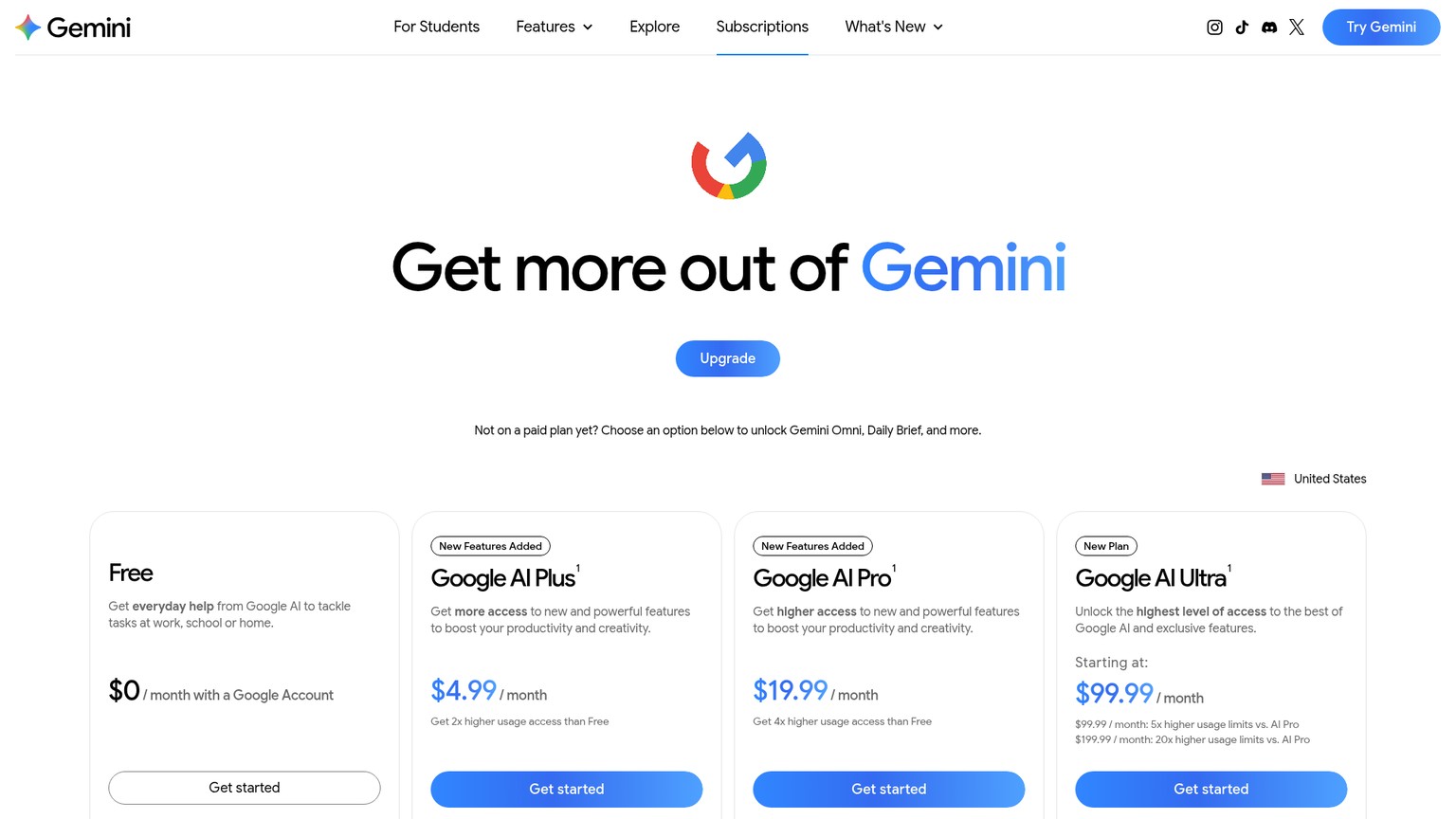
Gemini is the cleaner alternative for a solo operator whose source material already lives in Gmail, Docs, Drive, and Google Search. Google AI Pro costs $19.99 per month and currently names Gemini 3.1 Pro as its higher-capability model. Google's own page says these consumer AI plans require a personal Google Account and directs work-account buyers to Gemini Enterprise, so AI Pro is not a substitute for managed business procurement.
Choose Gemini when Google integration matters more than Apple context. Do not buy it merely because it is another assistant at roughly the same individual price as ChatGPT Plus.
Choose Perplexity when the source trail is the work
Perplexity is the better alternative when every useful answer must arrive with sources that a researcher can open and inspect. Enterprise Pro costs $40 per month or $400 per year per seat, and Perplexity says enterprise data is never used for model training. For 20 people, annual Enterprise Pro costs $8,000.
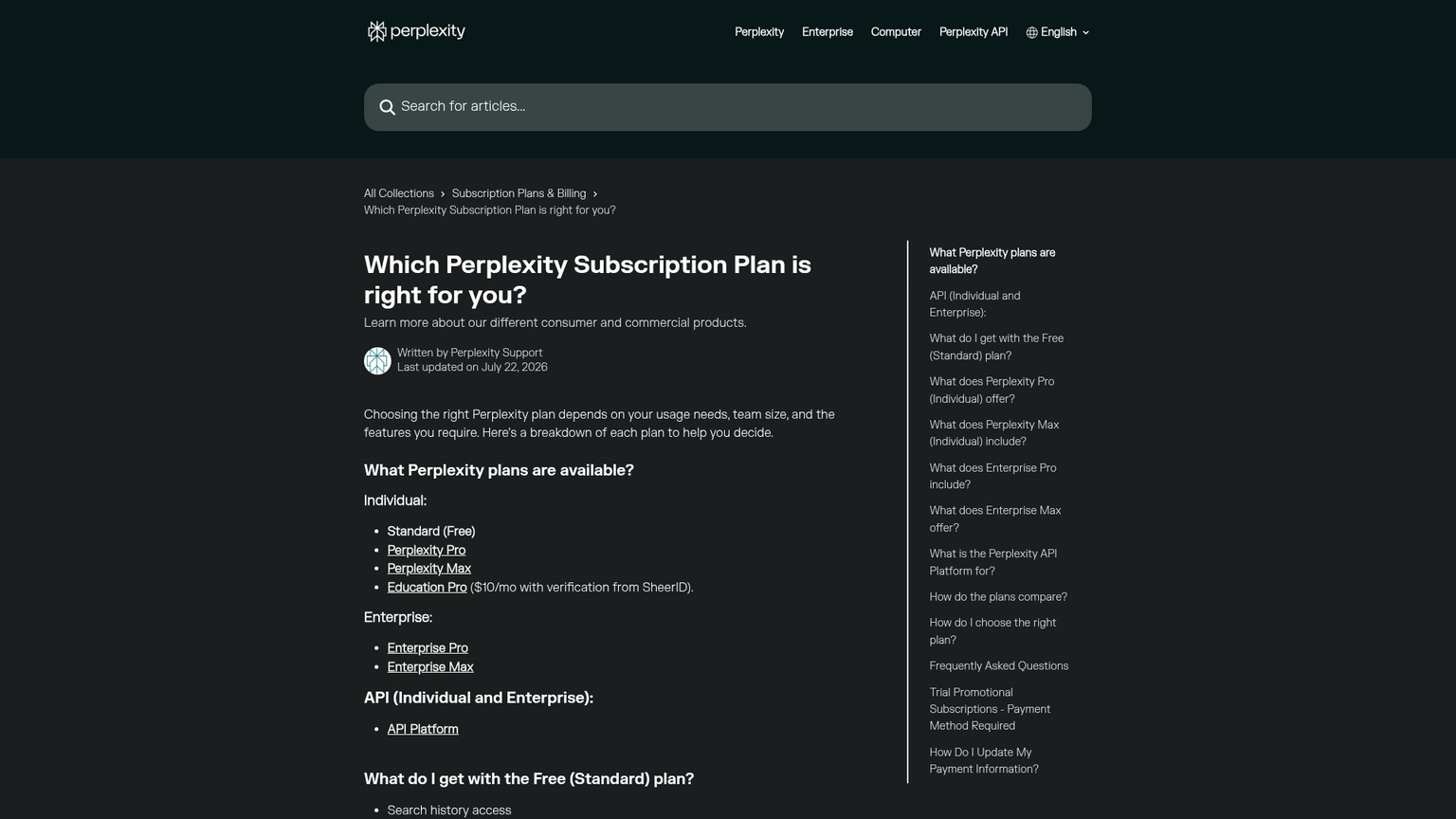
Siri AI can retrieve current web information, but Apple does not position it as a research workspace with a project source trail, team repository, or enterprise knowledge hub. The current Perplexity pricing guide covers the consumer and enterprise tradeoffs in more detail.
- No separate Siri AI subscription on eligible hardware.
- Personal context, onscreen awareness, and OS actions meet inside one assistant.
- Private Cloud Compute is designed around stateless processing and public verification.
- Apple provides a dedicated device-management switch for Siri AI on supervised devices.
- The current user release is still framed as a beta, not stable production software.
- The broad device list hides a smaller hardware subset for the strongest on-device model and dictation features.
- Third-party reach depends on developers implementing Apple's integration layers.
- Region, language, usage-limit, and management details are still incomplete.

Personal context is the capability that changes the workflow
Siri AI earns attention when a needed fact exists somewhere in your Apple data but you do not remember which app holds it. Apple says the assistant can search Messages, Mail, Photos, and other personal context to find a restaurant recommendation, an old hotel confirmation, or a set of trip photos.
Consider a senior operator leaving for a customer visit. The confirmation is buried in Mail, the address arrived in Messages, and a photo of the site entrance sits in Photos. The weak workflow is three searches, three app switches, and a manual summary. The Siri AI workflow is one request to retrieve the details, followed by a check of the source material before acting.
Ask for the specific artifact
Name the person, trip, order, or event and the artifact you need. “Find the hotel confirmation Alex sent last month” is more verifiable than “What is happening on my trip?”
Inspect the surfaced source
Open the message, email, or photo that supports the answer. Personal context reduces search effort; it does not remove the need to confirm a booking number, address, or deadline.
Request one next action
Ask Siri AI to draft the email, add the event, create a note, or prepare the reminder. Keep the action narrow enough that a wrong field is visible before it leaves the device.
The adoption test is not whether the response sounds conversational. It is whether Siri finds the right private artifact and completes the next action with fewer corrections than the existing search path. If the source has to be hunted manually after every answer, the workflow has not improved.
Onscreen awareness matters only when the next action works
Siri AI can refer to what is currently visible, then use a supported app action to do something with it. Apple gives the example of discussing a potluck message and adding a recipe to Notes. For a business user, the stronger pattern is screen, interpret, confirm, act.
Imagine a founder reading a customer complaint in a supported app. Siri can help identify the request on screen, draft a reply, and move the agreed follow-up into Mail, Notes, Calendar, or another integrated destination. The benefit is not generated prose. It is keeping the visible context attached to the action.
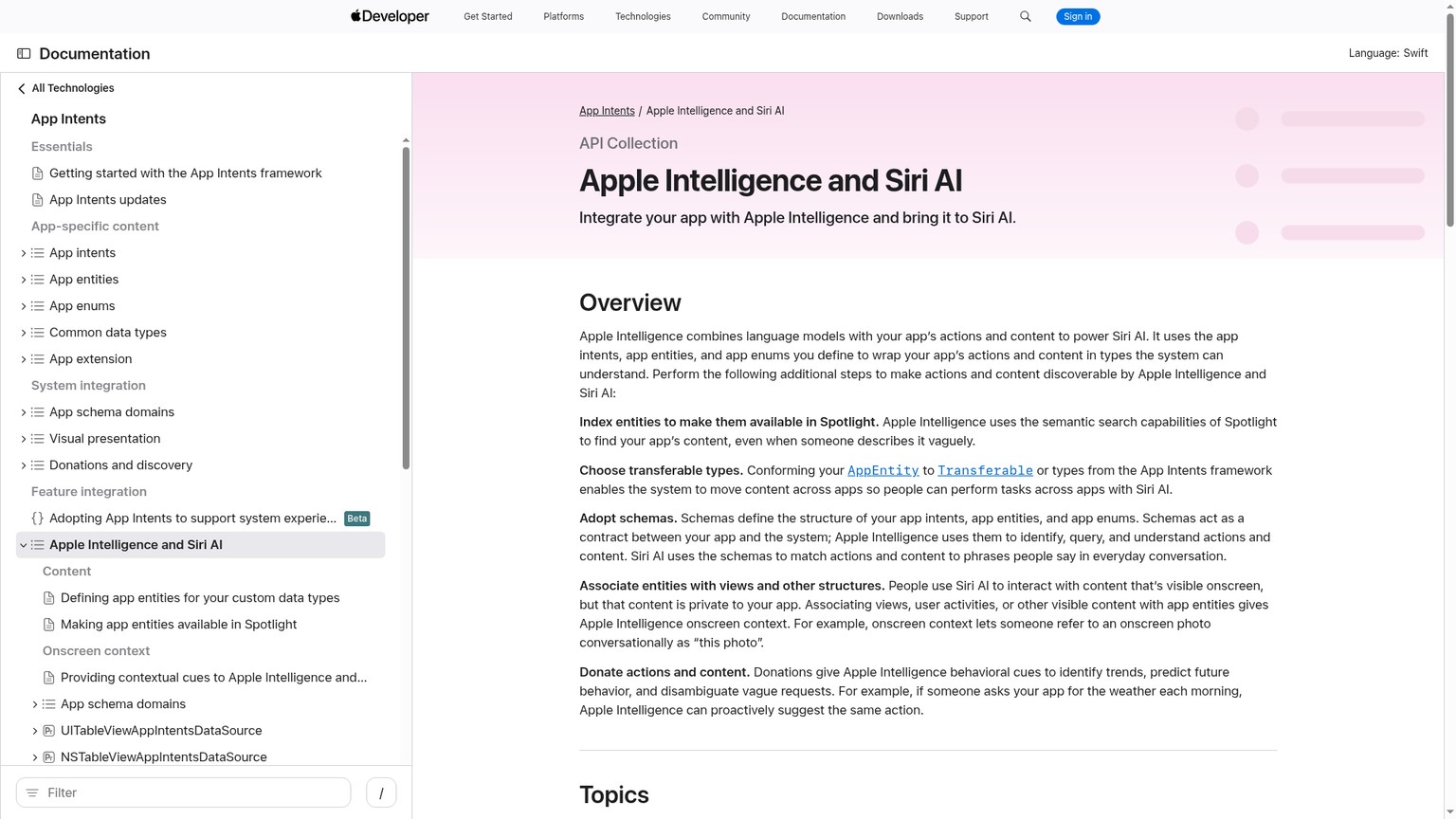
That promise stops at the integration boundary. Apple's developer documentation says third-party content needs Spotlight indexing, schemas, transferable types, associated views, and donated actions or content before Apple Intelligence can understand and use it. In plain language, an app must teach the operating system what its objects and actions mean. A feature demo in Mail does not prove that the same request works inside a niche CRM, project tracker, or field-service app.
For a solo technical builder, App Intents create an interesting path: a product can expose actions to Siri without building a separate conversational layer. For a buyer, that means vendor support matters. Ask whether the app has implemented current App Intents and Spotlight schemas, not whether it “works with Siri” in a generic sense.
Visual Intelligence and writing remove small handoffs
Siri AI combines camera or screenshot context with drafting and proofreading, which can collapse a chain of small tasks into one reviewed action. Apple brings Visual Intelligence to iPad screenshots and gives Mac users a keyboard shortcut for selecting onscreen content. Its writing layer can draft from scratch, offer feedback, and match a user's usual tone and punctuation in Mail and Messages.
A field operator can capture a label or screen, ask for an explanation, and turn the confirmed result into a service note. A founder can select a dense paragraph on Mac, ask for the decision and unresolved questions, then draft a short reply. A senior operator can dictate a rough update and use the writing layer to add punctuation and formatting before review.
These are useful compression points, not autonomous workflows. The visual answer must be checked against what is visibly present. The drafted message must be reviewed before it is sent. The best use cases are reversible: a note, a draft, a reminder, a search, or an event you can inspect. The worst first use cases are high-consequence actions where a silent error triggers payment, access, deletion, or an external commitment.
Privacy is a strong architecture, not a promise that nothing leaves the device
Siri AI's clearest advantage is that Apple controls the device, operating system, silicon, and cloud path together. Apple Intelligence first decides whether a request can run locally. When a larger model is needed, Apple says it sends only task-relevant data to Private Cloud Compute, where personal data is used for the request and is designed to become inaccessible after the response.
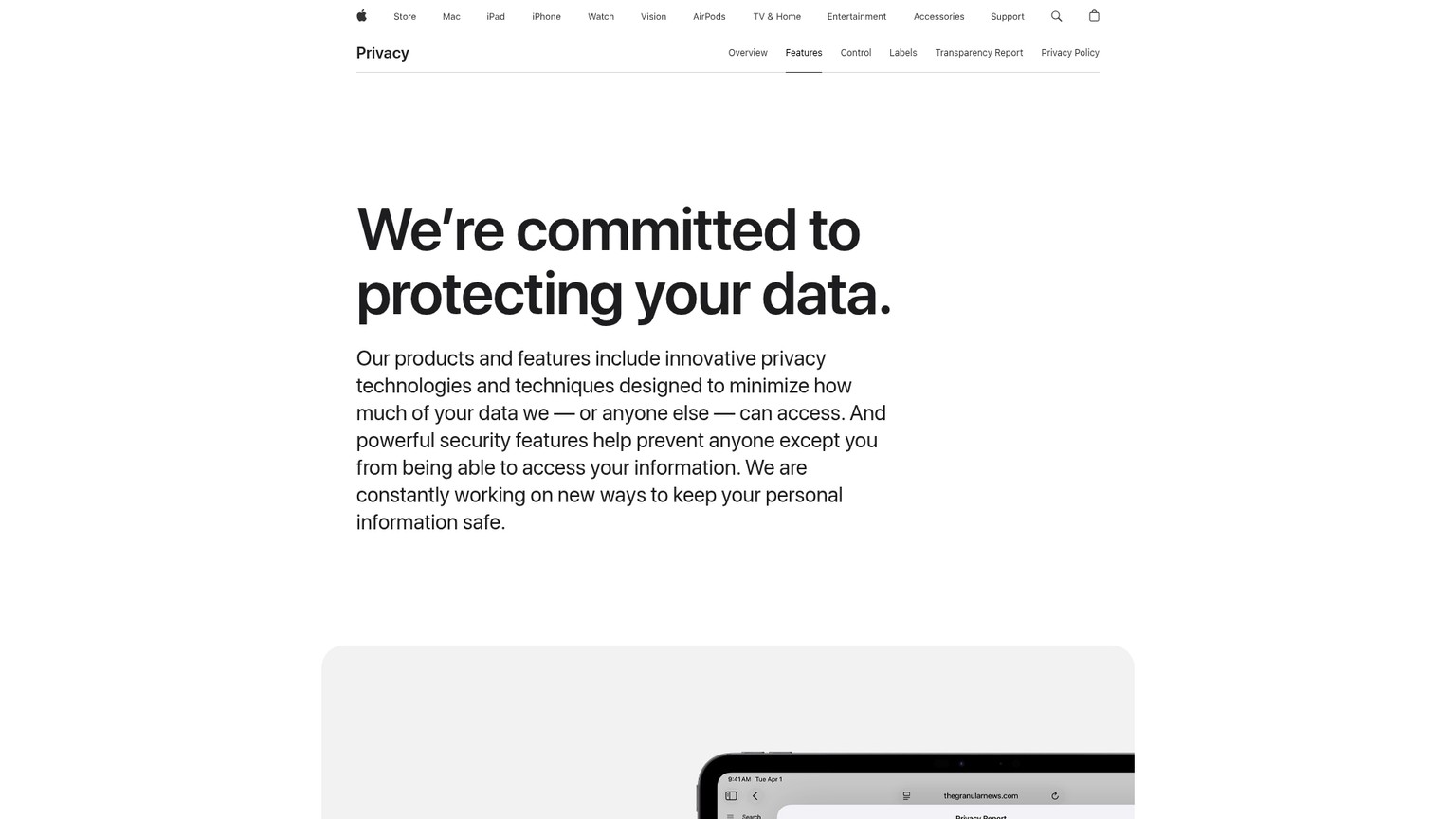
Private Cloud Compute removes privileged runtime access and publishes material that outside researchers can inspect. That is a more concrete control than a vague promise that a cloud model is private. It still does not make every Siri interaction local. Apple's privacy page says some voice, Spotlight, and Safari requests need server input. Those requests use random identifiers rather than the user's Apple Account, and location may be sent to improve accuracy.
Apple says request audio is processed on-device unless the user chooses to share it. Computer-generated transcripts can be used to improve Siri, while storage and review of audio samples is opt-in. The distinction matters for a privacy review: on-device audio processing, server-bound request data, optional audio sharing, iCloud-synced conversation history, and Private Cloud Compute are separate data paths.
For a legal, health, or financial team, “Apple says it is private” is not a deployment policy. Map the data class, confirm the device-management settings, decide whether external intelligence integrations are allowed, and test what appears in synced history. The safest pilot uses low-sensitivity tasks until the organization has approved the complete path.
Siri AI pricing is simple until hardware and iCloud enter
Siri AI has no published standalone subscription tier. Apple says the new operating-system features will ship as a free software update, so the separate service line is $0 when an employee already owns eligible hardware. The cost appears when the device, storage, support, rollout, or another AI assistant enters the workflow.
Eligible iPhone hardware starts at $599
Siri AI runs on iPhone 15 Pro models and iPhone 16 models or later. Apple's US shop currently lists these new-phone entry prices: iPhone 17e from $599, iPhone 16 and 16 Plus from $699, iPhone 17 from $799, iPhone Air from $999, and iPhone 17 Pro or Pro Max from $1,099.
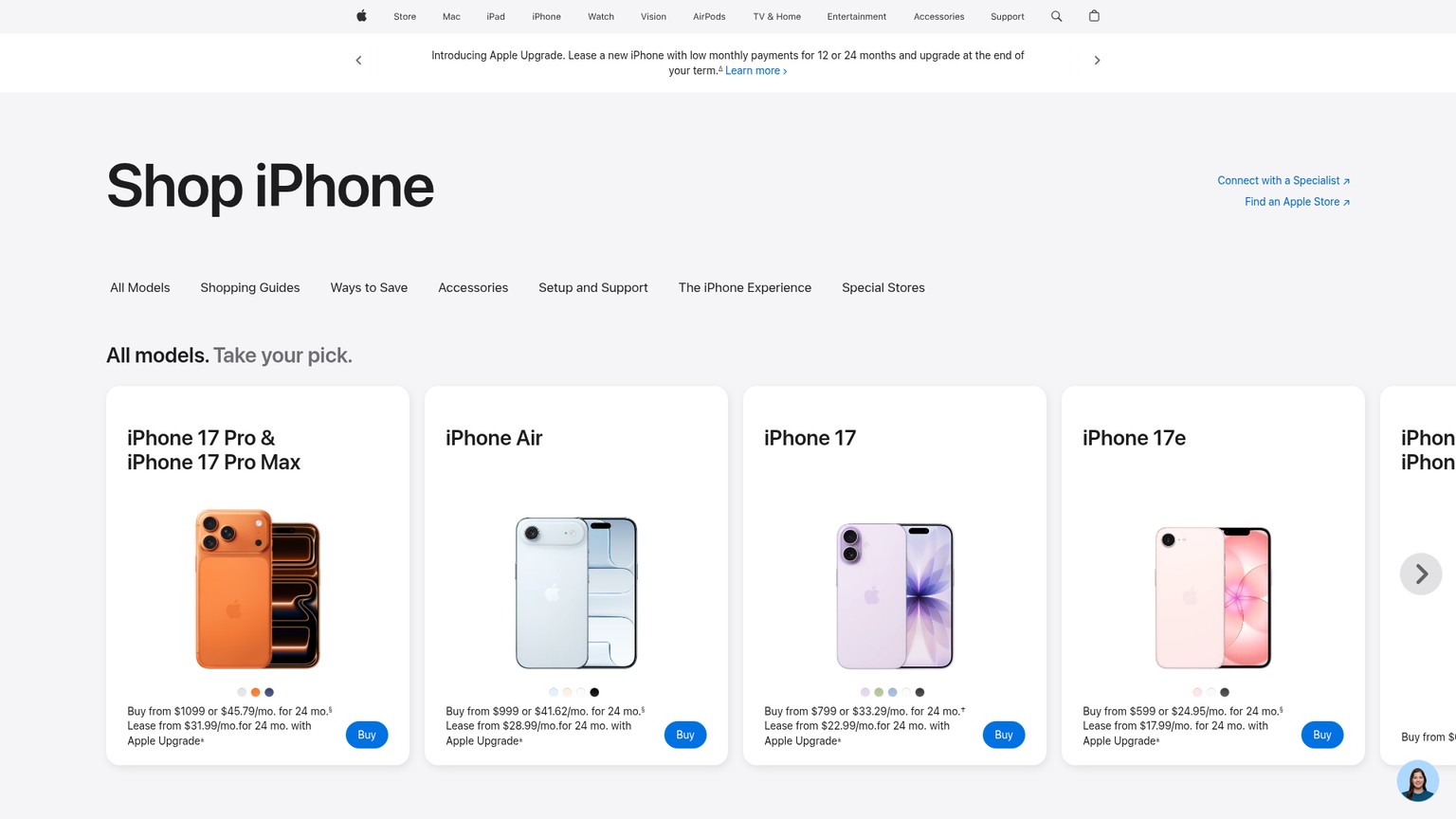
The $599 floor is the budget line for someone without eligible hardware. It is not the price of Siri AI. An existing iPhone 16 or supported Mac can make the pilot incremental cost zero. A company replacing working hardware only for the assistant is making a device purchase based on beta software.

iCloud+ is adjacent pricing, not a Siri subscription
Siri AI uses iCloud to sync conversation history, and Apple says some Apple Intelligence features, including image generation, have daily server-model limits. Apple also says most iCloud+ plans provide increased access. It does not publish a Siri AI task quota or a plan-by-plan entitlement matrix, so no buyer should infer that a larger storage plan guarantees a named Siri allowance.
The consequence for a budget owner is straightforward. Keep the existing research or team assistant if it owns a recurring outcome. Add Siri AI as a zero-seat-cost convenience layer on eligible devices. Do not use the absence of a Siri subscription to pretend the workflow, hardware, administration, and external models are free.
The limitations that decide the purchase
Siri AI is easy to overbuy because the most attractive capabilities are bundled into devices people already want. Six limitations should be resolved before it becomes a required workflow.
The release is still a beta
Apple's live product page says Siri AI is coming in English later in 2026, and the Siri announcement calls the user release a beta. The Apple Beta Software Program describes the operating systems as pre-release software and asks participants to submit feedback. A beta can be useful for discovery; it should not be the only path for a deadline, customer commitment, or regulated process.
Supported does not mean feature-complete
The broad baseline includes iPhone 16 models or later, iPhone 15 Pro models, M1-class iPads and Macs, Vision Pro, and specified watches paired with an eligible iPhone. Apple's most powerful on-device model, expressive voices, and more advanced dictation require a smaller subset: iPhone Air, iPhone 17 Pro models, an M4-or-later iPad with at least 12GB of unified memory, an M3-or-later Mac with at least 12GB, or Vision Pro M5.
That split is a procurement risk. Two employees can both have “supported Siri AI” and receive different local capability. A rollout inventory must record exact models and memory, not a yes/no Apple Intelligence column.
English and region rules narrow the fleet
Siri AI starts as an English beta. Apple says Mac and Vision Pro users in the EU can access it in a supported language, while iPhone, iPad, and Apple Watch access is initially unavailable there. Siri AI and the other new Apple Intelligence features are initially unavailable in China. A global company cannot write one rollout date into policy and assume it applies everywhere.
Third-party action coverage is not universal
Apple's first-party examples make the assistant look systemwide, but third-party content and actions depend on App Intents, Spotlight indexing, schemas, and associated views. A niche line-of-business app may expose none of them. The limitation is not theoretical: without the integration, Siri may discuss visible content yet fail to perform the next useful action.
Usage allowances are not specific enough to budget
Apple acknowledges daily limits for some server-backed Apple Intelligence features and says most iCloud+ plans increase access. It does not publish the exact Siri AI quota, reset window, or entitlement by iCloud+ tier on the reviewed pages. A workflow that depends on a high daily volume has no stable capacity number to procure against yet.
Enterprise control is available but still moving
Apple provides an AllowSiriAI device-management setting on iOS 27, iPadOS 27, macOS 27, and visionOS 27. Setting it to false disables Siri AI-specific features. Apple also documents enforcement limitations in initial 27.0 seeds and says additional management for Siri AI and Visual Intelligence will arrive in later betas.
Verdict: pilot Siri AI, do not buy for it yet
Siri AI is worth using on eligible hardware because its separate service cost is $0 and its combination of personal context, onscreen awareness, and OS actions is genuinely different from a browser chatbot. It is not worth a hardware purchase by itself while the user release remains a beta, the strongest local capabilities require newer devices, third-party coverage varies, and task limits are unpublished.
The explicit decision rule is:
- Adopt a pilot now if the user already owns eligible hardware, works mainly inside Apple apps, and has a low-risk workflow involving retrieval, drafting, reminders, notes, calendar actions, or visual context.
- Wait if the purchase requires new hardware, stable non-English support, EU mobile access, a high-volume allowance, or a third-party app that has not proved its Siri AI integration.
- Keep ChatGPT Business when the recurring output is team reasoning, files, code, analysis, or a finished deliverable with governance.
- Choose Gemini when the work is centered on a personal Google account and its applications.
- Choose Perplexity when cited web research is the outcome.
- Skip external AI for the workflow when the data class is not approved for any of these systems.
The Monday move is a measured $0 pilot, not a fleet purchase.
Inventory five eligible users
Pick five people who already have supported hardware. Record exact device models, operating systems, region, language, and whether the required third-party apps expose the needed actions.
Choose three reversible workflows
Use one personal-context retrieval, one onscreen-to-action task, and one visual or writing task. Avoid payments, deletions, access changes, and external commitments.
Measure for seven calendar days
Record completion, elapsed time, corrections, source checks, failed actions, and any privacy or management issue. Compare each run with the current manual baseline.
Fund only the proven path
Continue on existing hardware when the workflow is faster and at least as reliable. Do not upgrade devices or cancel another assistant until the measured saving clears the hardware or subscription threshold.
That is the $0 pilot: Siri AI must earn a budget line through measured work before an organization gives it one through hardware.
Frequently asked questions
How do I turn on Siri AI?
On an eligible device, install the appropriate pre-release or current software, turn on Apple Intelligence under Settings > Apple Intelligence & Siri, then enable Talk & Type to Siri. Apple's support guidance says the on-device models download after activation, work fastest while the device is on Wi-Fi and power, and require 7GB of device storage on iPhone, iPad, or Mac. Stable Siri AI availability is still scheduled for later in 2026.
Does Siri have AI?
Yes. Siri AI uses Apple Foundation Models on supported devices and Private Cloud Compute for requests that need larger server models. It also uses Spotlight, the App Toolbox, personal context, onscreen awareness, and compatible app actions to connect an answer with the operating system.
Is Siri now ChatGPT?
No. Siri AI is Apple's assistant and runs on Apple's models and system architecture. ChatGPT is a separate external intelligence integration available in supported Apple Intelligence experiences and regions; it does not become Siri's identity or replace Apple's local and Private Cloud Compute path.
Is Siri AI always listening?
Siri can listen for the “Siri” or “Hey Siri” wake phrase when that option is enabled. Apple says request audio is processed on-device unless the user chooses to share it. To prevent voice activation, place an iPhone face down or choose Off under Settings > Siri or Apple Intelligence & Siri > Talk to Siri or Talk & Type to Siri.
Which devices support Siri AI?
Apple lists iPhone 16 models or later, iPhone 15 Pro and Pro Max, iPad mini with A17 Pro, iPads with M1 or later, MacBook Neo with A18 Pro, Macs with M1 or later, Apple Vision Pro, and specified Apple Watch models paired with a nearby Apple Intelligence-enabled iPhone. Some advanced on-device features require a newer and smaller hardware subset.
When is the Siri AI release date?
Apple opened developer testing in June 2026 and offers the 27-generation operating systems through its beta programs. Its current product page still says Siri AI is coming in English later in 2026, and Apple describes the user release as a beta before the free fall software update.
Is Siri AI available in the EU?
Apple says Mac and Vision Pro users in the EU can use Siri AI when set to a supported language. It says Siri AI is initially unavailable on iPhone, iPad, and Apple Watch in the EU. Availability also varies by language, device, and local regulation.
Want a faster way to match each AI assistant to a recurring business outcome? Get the AI Tools Map for Business Owners.
- Last Updated
- Category
- AI
- Language

Marblism Review
Marblism's seven AI employees, current plans, shared-hour costs, dated public reviews and the jobs that still need human approval.Oct 9, 2026AI
Claude Haiku vs Sonnet
Haiku 5.5 vs Sonnet 5.5 for ticket classification, long summaries and coding subagents, with current API rates and three monthly budgets.Oct 8, 2026AI
Claude Haiku 5.5: Pricing and When to Switch
Claude Haiku 5.5 pricing, the 100K prompt threshold, and a monthly bill versus Haiku 4.5 and Sonnet 5.5. Which work should you move?Oct 8, 2026AI
Otter AI Alternatives: Granola, Krisp, MeetGeek, Circleback and Claap
Choose Granola, Krisp, MeetGeek, Circleback or Claap by the job. Compare live prices, free limits, bot-free capture and CRM handoffs.Oct 8, 2026AI
Mistral Large 4: Pricing, Open Weights, and When to Use It
Mistral Large 4: verified API prices, the launch offer, claimed benchmarks, and when to test the preview or wait for self-hosting.Oct 7, 2026AI
Lindy AI Review (Verified October 2026)
Lindy AI review: current plans, credit costs, email and meeting setup, integration limits, and when Gumloop, n8n or Marblism fits better.Oct 7, 2026AI
Mistral Pricing (2026): API Costs and Vibe Seats
Mistral API rates, Le Chat and Vibe plans, free limits, EU hosting costs and a worked monthly bill. Verified October 2026.Oct 6, 2026AI