Fifteen thousand pages, nine languages, one clean exit from WordPress.
Equedia Investment Research publishes The Equedia Letter, investment research read by hundreds of thousands of self-directed investors. I migrated the publication off WordPress: roughly 15,000 pages of archive moved onto a modern edge stack, then multiplied across nine languages, with the rankings of a legacy archive carried over intact.
- At a glance
- 2026
- Client
- Equedia Network Corporation
- Sector
- Investing media
- Year
- 2026
- Role
- Migration & platform

A national-scale archive, treated like an asset.
The Equedia Letter has been publishing for years, and its archive is the moat: thousands of long-form research letters that rank, get cited, and bring readers in. All of it sat on a WordPress install that was slow to load, risky to change, and impossible to internationalize properly.
The migration rebuilt the publication on a modern React stack with static, edge-served pages, then took it somewhere WordPress could never go: every page available in nine languages, each with correct alternate-language signals for search engines, from one content source.
- 15,000+
- pages migrated off WordPress
- 9
- languages on every page
- 800K+
- readers (Equedia's figure)
Move everything,break nothing, multiply by nine.
A financial publication's archive is years of accumulated search equity, and every one of its URLs is load-bearing. The job was to move roughly 15,000 pages without dropping a ranking, make the whole thing fast, and then serve every page in nine languages without turning the site into nine sites to maintain.
- Roughly 15,000 pages and their URLs to carry over safely
- Years of search rankings that could not be interrupted
- Nine languages without nine parallel codebases
- A finance audience with zero patience for slow pages
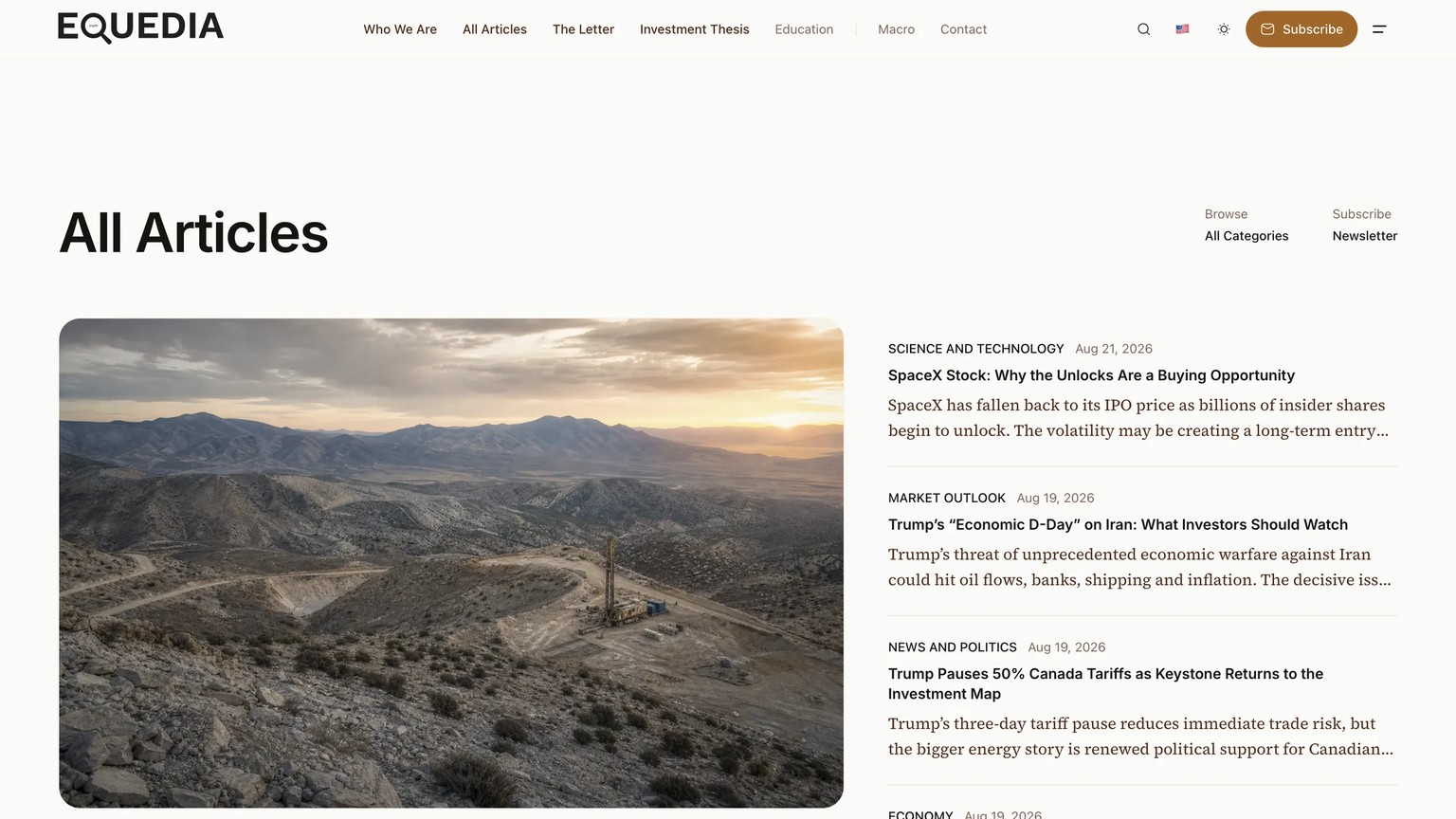

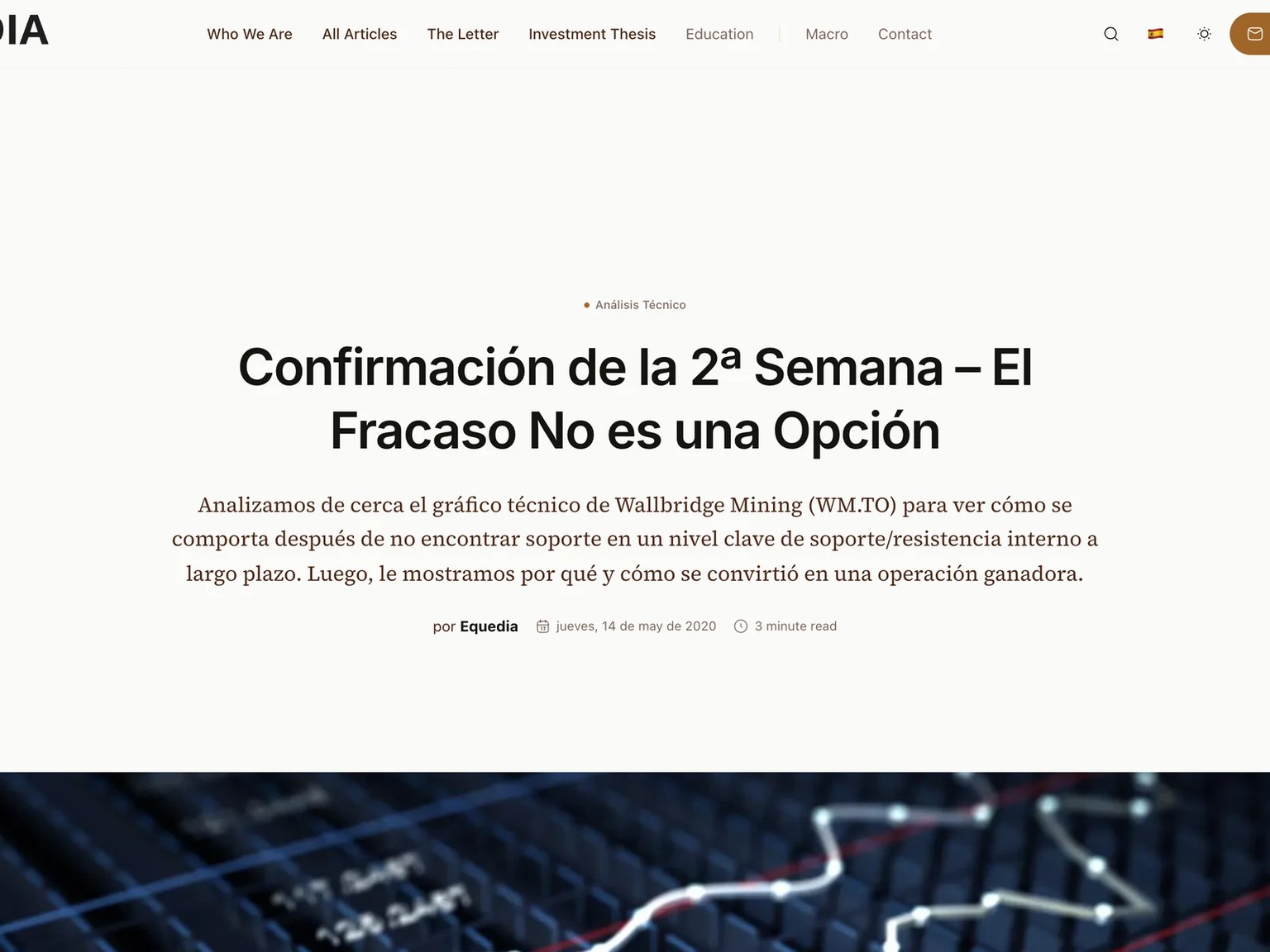
What I built,and how it came together.
The buildA structured migration onto an edge-served, nine-language stack.
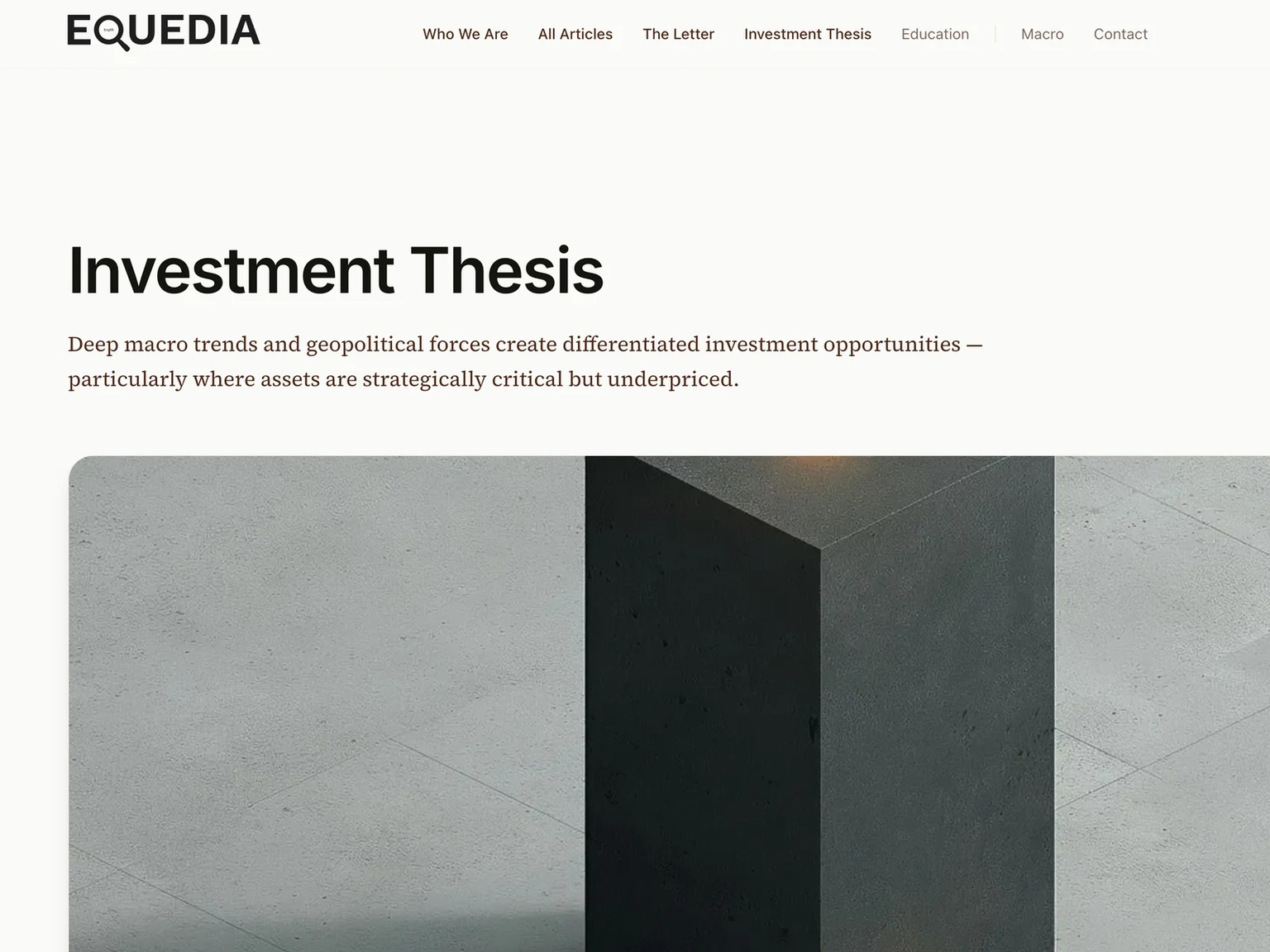
The WordPress archive was extracted into structured content, rebuilt on Next.js, and served statically from the edge, with the full URL map redirected and every page carrying its nine language alternates.
- Full archive extraction from WordPress into structured content
- Next.js rebuild with static, edge-served pages
- Nine locales on every URL with correct hreflang alternates
- Complete redirect map preserving the legacy URL space
- Sitemaps that declare every language variant to search engines
- 01Extract the archive
Thousands of letters and pages pulled out of WordPress into a clean, typed content structure.Content extraction · Structure · Media
- 02Rebuild the publication
A fast reader experience on Next.js: articles, categories, the letter, and capture, all statically served.Next.js build · Templates · Performance
- 03Multiply the languages
One content source rendered across nine locales, with alternate-language links on every page telling search engines exactly what maps to what.9 locales · hreflang · Localized sitemaps
- 04Protect the equity
The full legacy URL map redirected, verified, and monitored, so years of rankings survived the move.Redirect map · Verification · Launch
How 15,000 pages become 100,000without becoming unmanageable.
One source, nine renderings
The site does not maintain nine copies of anything. Each piece of content exists once, and the platform renders it per locale, so the English archive, the Chinese edition, and the Spanish edition are views of the same source. Fixing an article fixes it everywhere.
Search engines get a map
Every URL declares its alternates across all nine languages, and the sitemap carries the same declarations for the entire archive. Search engines see one coherent multilingual publication rather than duplicate content, which is the difference between nine editions ranking and nine editions competing with each other.
Static where it counts
The archive is served as static pages from the edge, so a decade-old letter loads as fast as this week's. WordPress's database round-trip per pageview, and the plugin surface that came with it, are simply gone.
The editorial layer
On top of the platform sits an AI-assisted editorial system tuned to the letter's own voice and its disclosure discipline: it drafts in the house style, translates technical mining and macro language for retail readers, and is hard-bounded to never invent a figure, a price, or a compensation fact.
The letter's voice, encoded
The editorial system was tuned on the letter's own archive: its cadence, its habit of translating drill results and monetary policy for retail readers, and its sign-off discipline. Drafts arrive sounding like the publication, not like a model.
Disclosure as a hard rule
A financial publication's disclosure block is a legal document. Compensation facts and ownership statements come only from the brief, are never invented, and are carried through every draft untouched.
The work
Visit equedia.comThe archive kept its rankingsand gained eight more markets.
Equedia now runs on infrastructure that matches its ambitions: the entire archive fast and stable, every page in nine languages, and a publication that can grow without WordPress deciding what is possible. The readership figure below is Equedia's own.







Start with a short call. Straight answer either way.
Tell me what you are trying to ship. We scope it, price it, and decide the right way in.
One letter, every Sunday.Working systems, not hot takes.
Weekly. No spam. Unsubscribe anytime.