ChatGPT for Word Cuts Document Copying Between Apps
Draft and revise inside Word with ChatGPT. Check add-in access, shared usage limits and a practical document-editing workflow.
Published
 By Omid Saffari



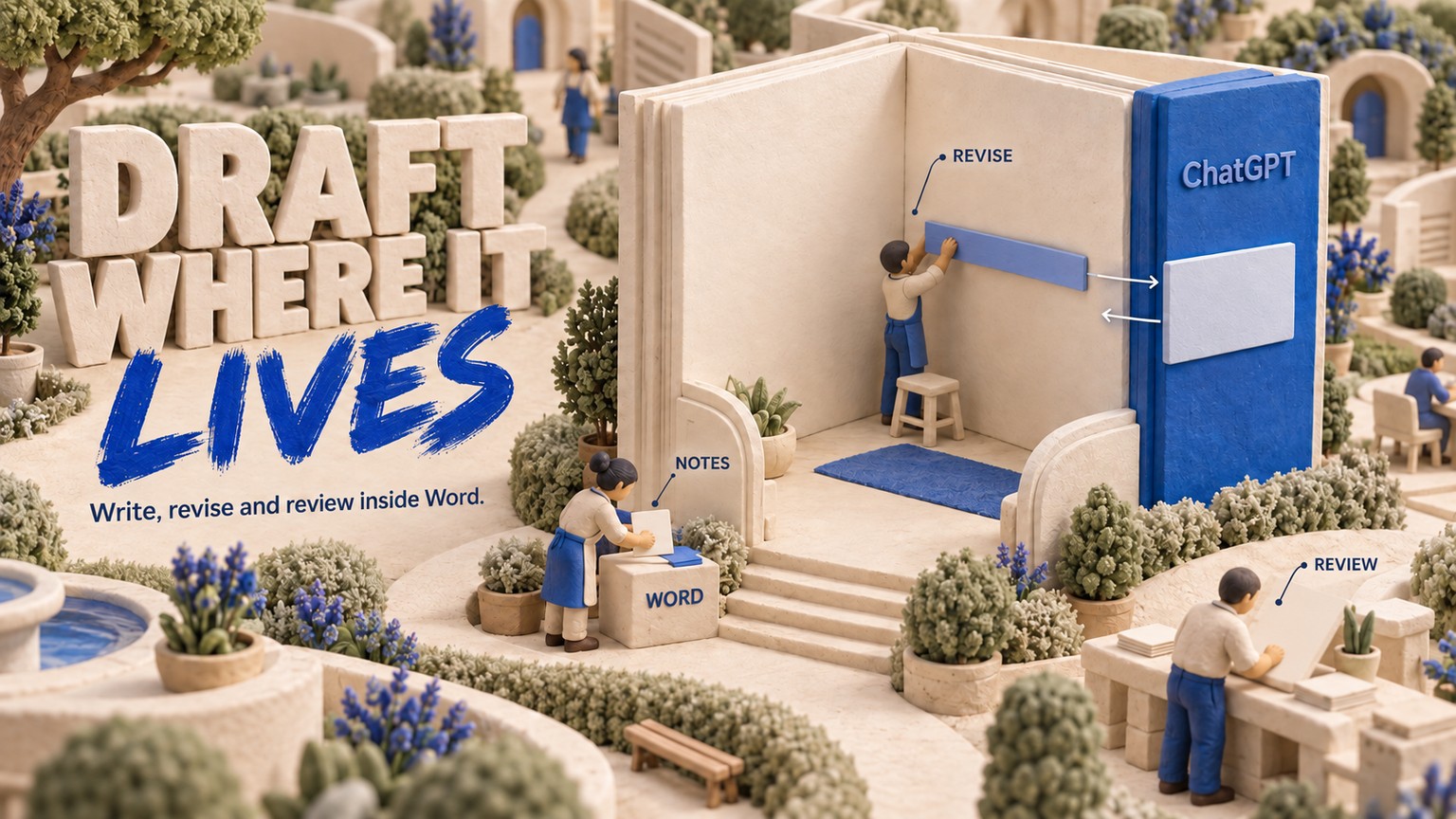
ChatGPT for Word cuts the copy, paste, reformat loop out of document work. Since September 17, 2026, you can draft from notes, summarize the open document, revise selected text, and adjust its structure from a sidebar inside Word.
The document stays where the work happens
Before this add-in, a common ChatGPT writing loop crossed two apps. You copied material out of Word, explained the job in ChatGPT, copied the response back, repaired the formatting, and repeated the trip for the next revision.
ChatGPT for Word moves that loop beside the document. Open the sidebar, give it notes or a request, and let it work against the file already open in Word. For a targeted edit, select the passage first. The selection becomes the boundary for the request.
That is the useful change. ChatGPT has not become the owner of the document. Word is still the working file, and you still own the review. The transfer between them is what disappears for supported jobs.
The September 17 release names four core actions: draft from notes, summarize a document, revise selected text, and adjust headings and formatting. The fuller ChatGPT for Word guide also covers reorganizing content, changing the audience, and finding unclear or inconsistent wording.
This is not a separate Word-only install. One ChatGPT Microsoft add-in covers Word, Excel, and PowerPoint.
Why fewer transfers matter
The business case is not that AI writes a document faster in every situation. OpenAI has not published that result. The case is that document owners can remove a repeated handoff and spend that time on the part that still needs a person: checking meaning, commitments, numbers, citations, and tone.
Think about a proposal with several review rounds. The old loop makes every round pay a transfer cost: find the passage, copy enough context, switch surfaces, paste the answer back, then restore anything the paste disturbed. The new loop can keep the source, the selected passage, the request, and the revision beside one another in Word.
The practical calculation is:
Workflow saving = transfer and cleanup time removed minus review and correction time added.
That final term matters. A revision that changes a price, weakens a commitment, or drops a defined term has not saved anything.

People who already write proposals, memos, reports, SOPs, and policies in Word gain the most. A Google Docs-only team is not affected. Neither is a team whose Microsoft or ChatGPT admin blocks the add-in.
What you can do inside Word
A solo consultant can build the first proposal draft
Start with meeting notes and the sections the proposal needs. Ask ChatGPT to turn that material into a draft with headings, then keep editing the result in the same Word file.
Use a bounded request:
Turn these notes into a client proposal. Use the headings Context, Scope, Deliverables, Assumptions, and Next Step. Do not add a price, date, result, or commitment that is not in the notes. Mark missing details with CHECK.
The payoff is a working draft without a second document to reconcile. The consultant still fills the gaps and approves every promise.
An agency account director can revise one risky section
Select the scope or timeline section and ask for a shorter executive version. Tell ChatGPT which names, dates, amounts, and defined terms must remain unchanged.
This is where selection-level editing earns its place. The request can operate on the passage that needs work instead of asking the model to rewrite the whole proposal. The payoff is a smaller review surface and less chance of unrelated wording moving.
An operations manager can clean an SOP
Ask ChatGPT to summarize the open procedure, find inconsistent terminology, and propose a clearer heading structure. Review the proposed structure before applying broad edits.
The payoff is not an automatic policy rewrite. It is a faster route to the places that need attention, while Word remains the source the team approves and distributes.
A marketing lead can adapt a draft for another audience
Select a product section and ask for a version aimed at customers, partners, or executives. Add a hard instruction to preserve verified facts and product terms.
The payoff is controlled adaptation inside the file that will ship. The lead can compare the revised passage with the surrounding document before accepting it.
Access has three separate gates
“Available on Free” describes the ChatGPT side. It does not give you Microsoft Word.
After installation, you sign in with the ChatGPT account attached to your plan. If you belong to an organization, select the right workspace as well.
For managed teams, both control planes matter. A Microsoft 365 admin must allow the add-in, and a ChatGPT workspace admin can turn ChatGPT for Word on or off. OpenAI says the feature becomes enabled by default on October 1, 2026, but an organization can still govern access.
The usage meter moved into the document workflow
Word does not get an isolated AI budget. Your plan limits apply, and Word draws from the shared allowance used by Codex and other premium features when your plan includes them. More Word editing can leave less included capacity for those other jobs.
On personal plans, included usage goes first. Purchased credits can continue eligible work after the limit when that option is available to the account. Free and Go use GPT-5.6 Luna in Word. Plus and Pro can use GPT-5.6 Luna, GPT-5.6 Terra, GPT-5.6 Sol, and GPT-6 Astra, with GPT-5.6 Sol selected by default.
The meter is based on input, cached input, and output tokens. Tokens are the small units of text and other content the model processes and produces. The formula is:
Metered use = input share + cached-input share + output share, each at the selected model's rate.
For GPT-5.6 Sol, the current rate is 100 credits per 1 million input tokens, 10 per 1 million cached-input tokens, and 500 per 1 million output tokens. Eligible Enterprise agreements billed in US dollars list the same model at $4.00, $0.40, and $20.00 for those three token groups. Your contract decides which rate card applies.
Business and Enterprise customers have one short launch window: GPT-5.6 Sol in Word is in a Word-only free preview from September 17 through September 30, 2026. That is a good time to collect a baseline, not a reason to assume the later cost is zero.
The shared-pool mechanics are covered in more depth in ChatGPT Deep Research Now Shares Your Work Budget. The Word-specific consequence is simple: document editing now competes for that capacity too.
A Word workflow you can actually run
Check both access layers
Confirm that you can use Word and acquire Marketplace add-ins with your Microsoft identity. On a managed account, ask whether Microsoft 365 and ChatGPT workspace controls both permit ChatGPT for Word.
Install and sign in
Open the ChatGPT listing in Microsoft Marketplace and select Get it now. Follow the install flow, open Word, launch ChatGPT from the ribbon, then sign in with the ChatGPT account and workspace that should pay for the usage.
Protect the source
Open one non-sensitive, repeatable document and save a copy before substantial edits. Keep the original facts, approved language, and review owner clear.
Draft from bounded material
Paste the notes or source text into the sidebar. Name the document type, audience, required sections, facts that must not change, and a marker for missing information. Do not ask the model to fill gaps from memory.
Revise the selection
Highlight only the passage that needs work. Ask for one change, such as shortening it for executives or making terminology consistent. State what must remain unchanged.
Format after the words hold
Once the content is correct, ask for headings, numbering, or basic formatting. Inspect tables, charts, footnotes, and complex layouts manually because those can still need repair.
Record the real cost
Check the relevant usage view before and after the pilot. Record the model, document type, task, usage change, transfer time removed, and review time added. That receipt is your per-document planning input.
The honest limits
The sidebar sees the open document. It cannot reach arbitrary local files on your computer, so material from another local file has to be pasted into the prompt or supplied through a supported app when your plan and permissions allow it.
Complex formatting, tables, and charts may still need manual adjustment. This makes the add-in a better fit for drafting and controlled revision than for blindly restyling a finished annual report.
Continuity is also narrower than it looks. Add-in chats do not sync with ChatGPT.com history. Memory is unavailable, and skills from ChatGPT do not automatically carry over. Plugins are not currently supported in Word.
Business, Enterprise, and Edu inputs and outputs are not used to train OpenAI models by default, but that does not replace access control, retention policy, or human review.
ChatGPT can still alter something you meant to preserve. Check every decision-carrying number, name, date, citation, promise, and defined term before the document leaves Word.
Who should act now
- Act this week if your team already moves proposals, memos, reports, or SOP sections between Word and ChatGPT. Pick one repeated document and measure the full loop.
- Wait if your admins have not approved the add-in, your documents cannot cross this data boundary, or your layout depends on complex tables, charts, and custom formatting.
- You are mostly unaffected if Word is not your source of truth, you only need occasional answers in ChatGPT, or your current structured workflow already avoids manual copying.
Your Monday move
Choose one document that recurs and has a clear reviewer. Save a copy, draft or revise one section through the Word sidebar, then compare the result with your current copy-and-paste route.
Record two things: the transfer and cleanup time removed, and the review and correction time added. Check the usage change on the same account. Keep the workflow only when the final document holds its facts and the combined work falls.
For one plain-English operating guide when AI workflow math changes, join the newsletter.
- Published
- Category
- Explained
- Language
How Much Does an AI Agent Cost? Three Monthly Bills, Explained
Compare packaged agents, no-code builders and model APIs, with current maker prices and three worked budgets for 1,000 support emails a month.Oct 7, 2026Explained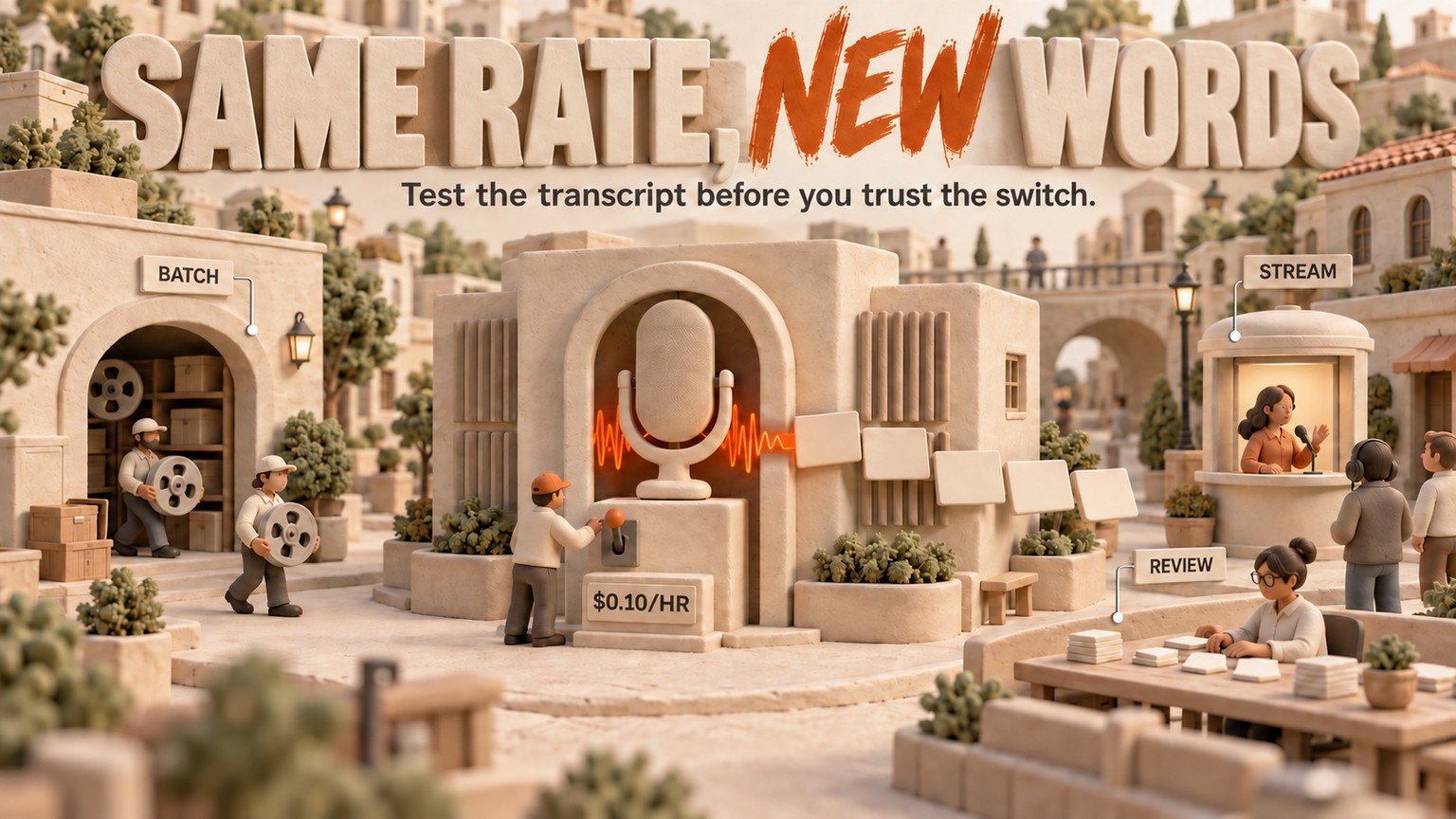
Grok Voice Transcribe 2.0 Keeps Batch Audio at $0.10/Hour
Grok Voice Transcribe 2.0 keeps batch and streaming rates unchanged. Check the default-model transition and test transcript quality before switching.Sep 20, 2026Explained
Cloudflare Lets You Debug a Failed Browser Job Before Rerunning
Cloudflare Browser Run now records more evidence for debugging. Learn what to inspect before rerunning a broken browser job.Sep 19, 2026Explained
v0 Can Now Reuse Your Private Component Library
v0 can now install private npm packages. See how to reuse your team's components and check the work still needed before shipping.Sep 19, 2026Explained
Claude Code Cuts Auto Mode Classifier Charges
Claude Code 2.1.278 removes classifier charges for eligible sessions. Check /status and gateway fallback before changing your agent budget.Sep 19, 2026Explained
Vercel Lets You Pay for Faster Builds One Deploy at a Time
Use Vercel Turbo for an urgent deployment while keeping routine build defaults. Compare the extra build cost with the time saved.Sep 18, 2026Explained
Antigravity Local Jobs Need an October 5 Migration
Keep Antigravity jobs running after October 5. Learn which integrations need new tool adapters and which only need the new agent ID.Sep 18, 2026Explained