The 8 Best ChatGPT Alternatives in 2026 (and Exactly When to Switch)
The 8 best ChatGPT alternatives in 2026, ranked by real strengths and prices, with the exact reason to switch: Claude, Gemini, Grok, Perplexity and more.
Published Updated
 By Omid Saffari



ChatGPT is the default, not the ceiling. If you have hit its message caps, wished for real citations, wanted a bigger free tier, or just want a second brain that thinks differently, the 2026 field has genuinely better options for specific jobs. Here are the eight worth switching to, and the exact reason you would pick each.
There is no single ChatGPT killer, and you probably should not replace ChatGPT so much as add the one tool that beats it at the job you do most. Claude thinks more carefully. Gemini gives away more for free. Perplexity shows its sources. Each of the eight below wins a specific fight. The trick is knowing which fight is yours.
The 8 best ChatGPT alternatives at a glance
Ranked by the reason you would actually switch. Prices are current as of July 2026; the flagship model is the best engine each service runs.
If you want the short version: for serious work, Claude is the strongest all-round alternative. For the best free experience, Gemini or DeepSeek. For anything where you need to trust the source, Perplexity. Everything after that is a matter of where you already live and what you care about most.
Why look past ChatGPT at all?
Because ChatGPT is a generalist, and a specialist beats a generalist at its own game. That is the whole case, and it shows up in five concrete frustrations.
The first is limits: even on Plus at $20/mo, ChatGPT meters how many messages of its best model you get in a five-hour window, and heavy days stall. The second is citations: ask ChatGPT a research question and you get a confident answer with no easy way to verify it, which is a problem the moment the stakes are real. The third is monoculture: you get OpenAI's house model and its particular style, and a second model often catches what the first missed. The fourth is price at scale: if you are making thousands of API calls, GPT-5.5 at $5 in and $30 out per million tokens is far from the cheapest way to get good output. The fifth is data and sovereignty: some teams simply cannot send everything to one US vendor.
You do not need to care about all five. You need to notice which one nags you, then pick the tool built to fix it.
Claude: the strongest alternative for serious work
Claude is the one to switch to when the quality of the output matters more than anything else, especially long-form writing, careful reasoning, and code. It runs on Claude Opus 4.8, which scores 88.6% on SWE-bench Verified (a 500-problem set of real GitHub issues that is the standard coding benchmark), the highest of any model here, and it is widely regarded as the most fluent writer among the frontier models.
Where Claude earns the switch is nuance. Give it a messy brief, a long document to reason over, or a subtle editing task, and it holds the thread and the tone better than most. For a concrete case, a founder drafting an investor update can hand Claude the raw quarter's numbers and a rough voice sample and get back something that reads like they wrote it on a good day, not like a template. Pricing mirrors ChatGPT: a free tier on a lighter model, Pro at $20/mo, and Max at $100/mo (5x usage) or $200/mo (20x) for heavy users. The honest catch is that Claude's free tier is stingier than Gemini's or DeepSeek's, so if free is the point, it is not your pick. Switch to Claude when you are paying anyway and you want the best thinking for the money.
Google Gemini: the best free tier and ecosystem pick
Google Gemini is the alternative to reach for when you want the most capable AI you can get without paying, or when your work already lives in Google Workspace. Its flagship, Gemini 3.1 Pro, scores 80.6% on SWE-bench Verified and is genuinely strong across text, image, video, and audio in one model.
The free tier is the headline. Where ChatGPT gates its best model, the Gemini app gives most people plenty on the free Flash model, and the paid Google AI plans add Gemini 3.1 Pro (Google moved the Pro model to paid-only in March 2026, so the free tier now runs Flash). The other reason to switch is integration: Gemini sits inside Gmail, Docs, and Sheets, so it can draft a reply from the thread you are reading or build a formula from the sheet you are in without a copy-paste dance. A mid-market operator whose whole company runs on Workspace gets an assistant that already knows where the work is. The weakness is consistency: Gemini can be brilliant on one prompt and oddly flat on the next, so it rewards a second try more than Claude does.
Perplexity: the best for research and cited answers
Perplexity is the switch to make the moment you need to trust and check what the AI tells you. It is built as an answer engine rather than a chatbot: every response pulls live sources from the web and shows inline citations you can click, which is exactly what ChatGPT makes hard.
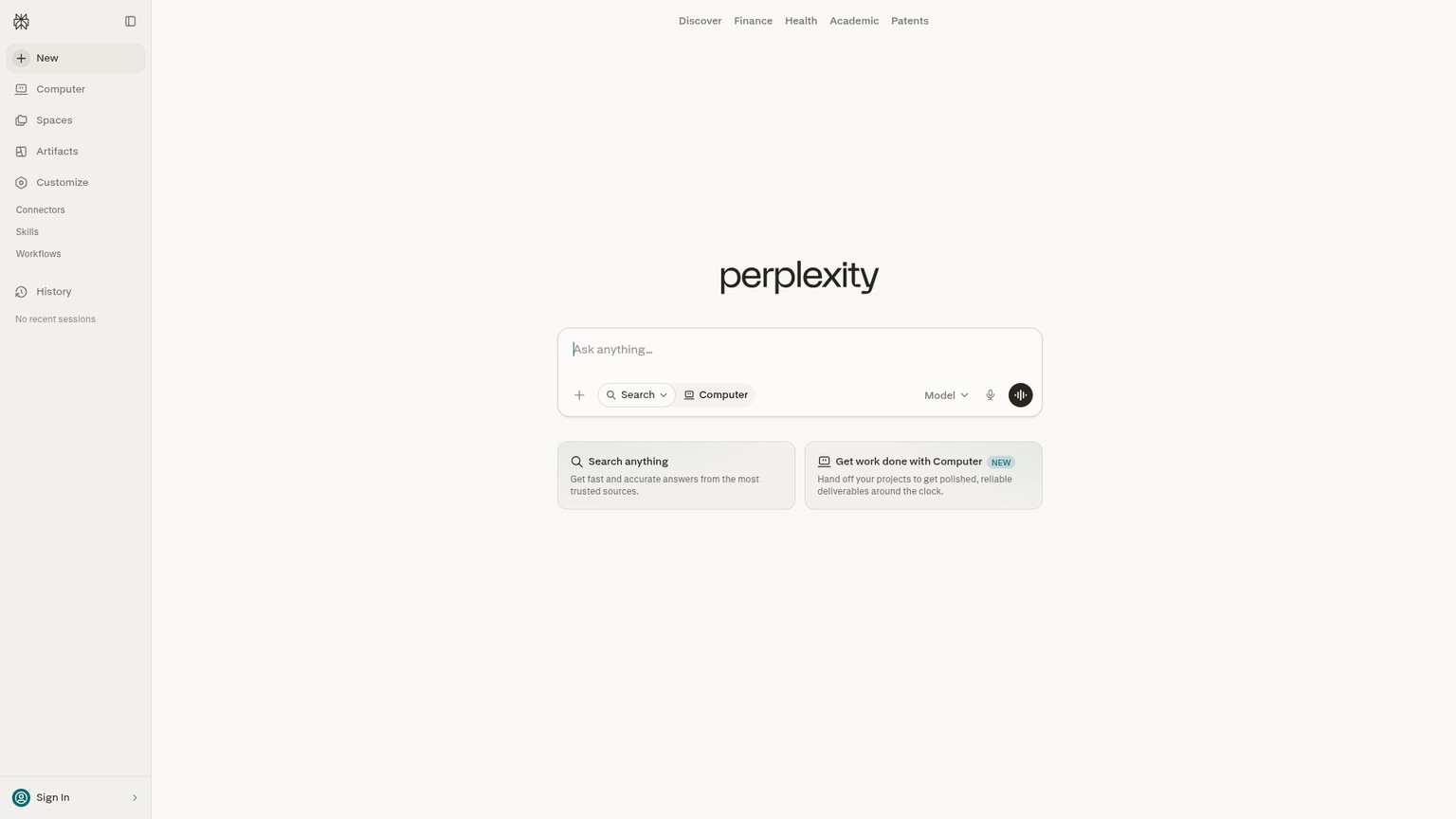
The design changes how you work. Instead of a confident paragraph you have to fact-check yourself, you get an answer with its receipts attached, which is the difference between "sounds right" and "is right" when you are making a decision on it. Perplexity Pro runs $20/mo and, notably, does not lock you to one model: it routes across GPT-5, Claude, Gemini, and Grok, so you get frontier reasoning and citations in one subscription. Picture a consultant sizing a new market: Perplexity can pull current figures with sources in one pass, where ChatGPT would hand back numbers you would then have to verify one by one. Its limit is that it is a research tool first, so for open-ended creative writing or long agentic tasks, a dedicated model like Claude is the better home.
Grok: the best for real-time and a looser tone
Grok is the alternative to pick when you need what is happening right now and a model that talks with fewer guardrails. Built by Elon Musk's xAI on the Grok 4 line (with a Thinking reasoning mode and a high-compute Heavy tier), it has native, real-time access to X, so it sees breaking conversation as it unfolds.
That real-time X feed is the genuine differentiator: for tracking a live event, a market reaction, or public sentiment on a launch, Grok is pulling from the firehose while other assistants lean on slower web indexes. Its DeepSearch mode is built for exactly this kind of live research. Pricing is unusually layered: a limited free tier, then the cheapest path is X Premium at $8/mo (an X subscription that includes Grok), with SuperGrok Lite at $10/mo, SuperGrok at $30/mo, and a SuperGrok Heavy tier at $300/mo for the small group running heavy reasoning. The trade-offs are real: the looser tone that some want is a liability for others, and tying your assistant to one social platform is a strategic choice, not a neutral one. Switch to Grok for real-time and personality; look elsewhere for careful, buttoned-up output.
DeepSeek: the best free-and-open, cheapest to run
DeepSeek is the switch for anyone who wants strong reasoning for as close to zero cost as it gets. Its DeepSeek V4 model shipped in April 2026, and the consumer app and website are free with no message caps, which alone undercuts every paid assistant here.
Two things make DeepSeek matter beyond the free ride. First, the API is the cheapest serious option on the market: V4 Flash costs $0.14 per million input tokens and $0.28 output, roughly a fortieth of ChatGPT's rate, so a developer building on top of an LLM can run real volume for pocket change. Second, its weights are open, so a team with privacy or control needs can self-host rather than send data anywhere. For a bootstrapped founder wiring AI into a product where every API call counts, this is the line item that makes the math work. The honest caveats: DeepSeek is a Chinese company, which is a data-governance consideration some enterprises cannot get past, and its answers on sensitive political topics are censored. For raw capability per dollar, nothing here touches it.
Mistral Le Chat: the best European and privacy option
Mistral Le Chat is the alternative to choose when you want a capable assistant hosted in Europe under EU rules. Built by French lab Mistral AI on its Large 3 model, it is the credible answer for teams that cannot or will not default to a US vendor.

Le Chat is genuinely usable on the free tier, which includes real frontier-model access, image generation, and a code interpreter, soft-capped around 25 messages a day. Paid Le Chat Pro is $14.99/mo, cheaper than ChatGPT Plus, with a Team tier at $24.99 per user and a student rate of $5.99. For a European company, an agency handling client data under GDPR, or anyone who wants open-weight models they could in principle run themselves, Mistral is the natural home. It is fast and clean, and its models are strong without topping the frontier leaderboards, which is the trade: you swap a little raw capability for jurisdiction, price, and openness.
Microsoft Copilot: the best if you live in Microsoft 365
Microsoft Copilot is the switch that makes sense when your entire workday already happens in Windows and Microsoft 365. It is free for anyone with a Microsoft account, runs on OpenAI's GPT models, and is woven directly into Word, Excel, Outlook, and Teams.
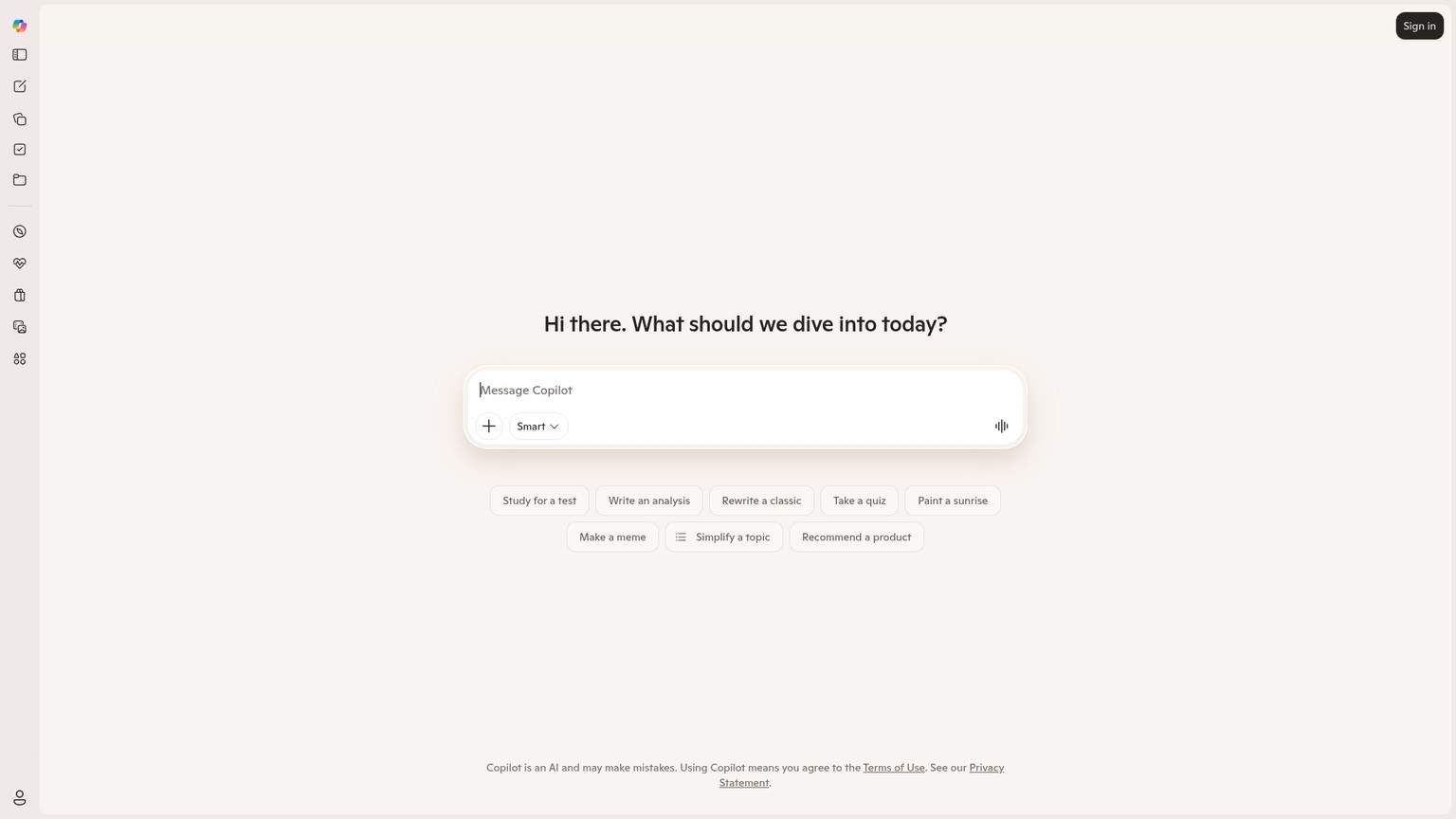
The reason to switch is proximity, not raw power. Copilot can summarize the Teams meeting you missed, draft the reply to the email you are staring at, or build the pivot table in the sheet you already have open, all without leaving the app. Because the consumer version is free and the paid capability comes bundled into Microsoft 365 subscriptions many companies already pay for, the effective cost for a Windows shop is often nothing extra. It is not the model to pick for the sharpest standalone reasoning, and it leans on the same OpenAI engines as ChatGPT, so it is less a different brain than a better-placed one. For an operator whose org is all-in on Microsoft, the integration wins the argument.
Meta AI: the best free, already-in-your-apps pick
Meta AI is the effortless alternative, because it is already sitting inside the apps you use to talk to everyone. It is free across WhatsApp, Instagram, and Messenger, and it pulls real-time web results with sources for everyday questions.
Its whole appeal is zero friction: no new app, no login, no subscription, just an assistant one tap away in a chat you already have open. For casual questions, quick drafts, and group-chat help, that convenience is the point, and for billions of people it is the first AI they will actually use. Be clear-eyed about the ceiling, though: Meta AI is built for casual and social use, not deep reasoning or professional output, so for anything that matters at work you will want one of the tools above. Switch to it for convenience, not for capability.
Which ChatGPT alternative should you pick?
Pick the one tool that beats ChatGPT at the job you do most, then keep ChatGPT for everything else. Here is the decision made concrete.
The decision rule, if you keep one line: switch for the one thing you do most, and let jurisdiction override features when the data is sensitive. A writer or founder who lives in prose should be on Claude. A researcher should be on Perplexity. A developer counting API cost should be on DeepSeek. A Workspace or Microsoft 365 company should use the assistant already inside its tools. The mistake is treating this as an all-or-nothing switch: the winning move in 2026 is usually ChatGPT plus one specialist, not ChatGPT replaced. For the model-by-model ranking underneath these assistants, see the best AI model right now, and for the closest head-to-head, Claude vs ChatGPT.
Which AI is better than ChatGPT?
It depends on the job. For deep writing and reasoning, Claude Opus 4.8 edges ahead (88.6% on SWE-bench Verified, the top score here). For research with sources you can check, Perplexity is better. For a bigger free tier, Gemini and DeepSeek both beat ChatGPT. No single tool is "better" at everything; each wins a specific fight.
What can I replace ChatGPT with for free?
Google Gemini has a generous free tier, DeepSeek is free with no message caps, Mistral Le Chat is free up to about 25 messages a day, and Microsoft Copilot is free with any Microsoft account. For most everyday use, Gemini and DeepSeek are the strongest free replacements.
Who is the biggest rival of ChatGPT?
Google Gemini is the biggest rival by reach, thanks to Google's distribution across billions of accounts, and Anthropic's Claude is the biggest rival by raw capability. Together they are the two most direct competitors to ChatGPT in 2026.
Is Grok better than ChatGPT?
For real-time information from X and a less filtered, more conversational tone, Grok is better. For general depth, ecosystem, and consistency, ChatGPT and Claude are stronger. Grok's edge is live data and personality, not careful all-round output.
What is the best ChatGPT alternative for research?
Perplexity, without much contest. It is built as an answer engine that pulls live web sources and shows inline citations, so you can verify every claim, which is exactly what open-ended ChatGPT answers make difficult.
The best AI model right now in 2026
The model-by-model ranking that powers these assistants: Opus 4.8, GPT-5.5, Gemini 3.1 Pro, Grok, and DeepSeek V4 compared on capability and cost.
- Last Updated
- Category
- AI
- Language

Reflection AI Beam: What It Means for Coding and Agents
Reflection AI Beam explained: October release plans, vendor benchmark claims, beta access and whether builders should wait before switching models.Oct 10, 2026AI
Claude for Google Workspace
How to install and deploy Claude in Docs, Sheets and Slides, control edits, and test the paid-plan beta with three practical team workflows.Oct 10, 2026AI
Claude Dashboards
Set up Claude Dashboards beta, inspect SQL and refresh timestamps, check a sales metric, and decide when to keep your BI tool.Oct 10, 2026AI
Granola AI Review
Granola reviewed for business meetings: bot-free notes, current pricing, templates, recipes, consent, platform limits and who should choose an alternative.Oct 10, 2026AI
Fyxer Review
Fyxer reviewed through current pricing, help docs and public feedback: inbox sorting, drafts, meetings, privacy and who should pay for Pro or Team.Oct 9, 2026AI
GPT 6 Explained: Models, Release Dates, Access, and Prices
GPT-6 Astra, Sol, 6.1 Sol and Luna explained: release dates, ChatGPT plan access, Work and Codex availability, and verified API costs.Oct 9, 2026AI
Is ChatGPT Free? What You Get for $0
Yes. See what ChatGPT Free includes, its work limits, ads, account access, and when the $8 Go or $20 Plus plan is worth paying for.Oct 9, 2026AI