Claude Code Auto Mode
Claude Code Auto Mode becomes the default for Pro, Max, and Team on August 14. Here is how it works, where it fails, and what to build.
Published
 By Omid Saffari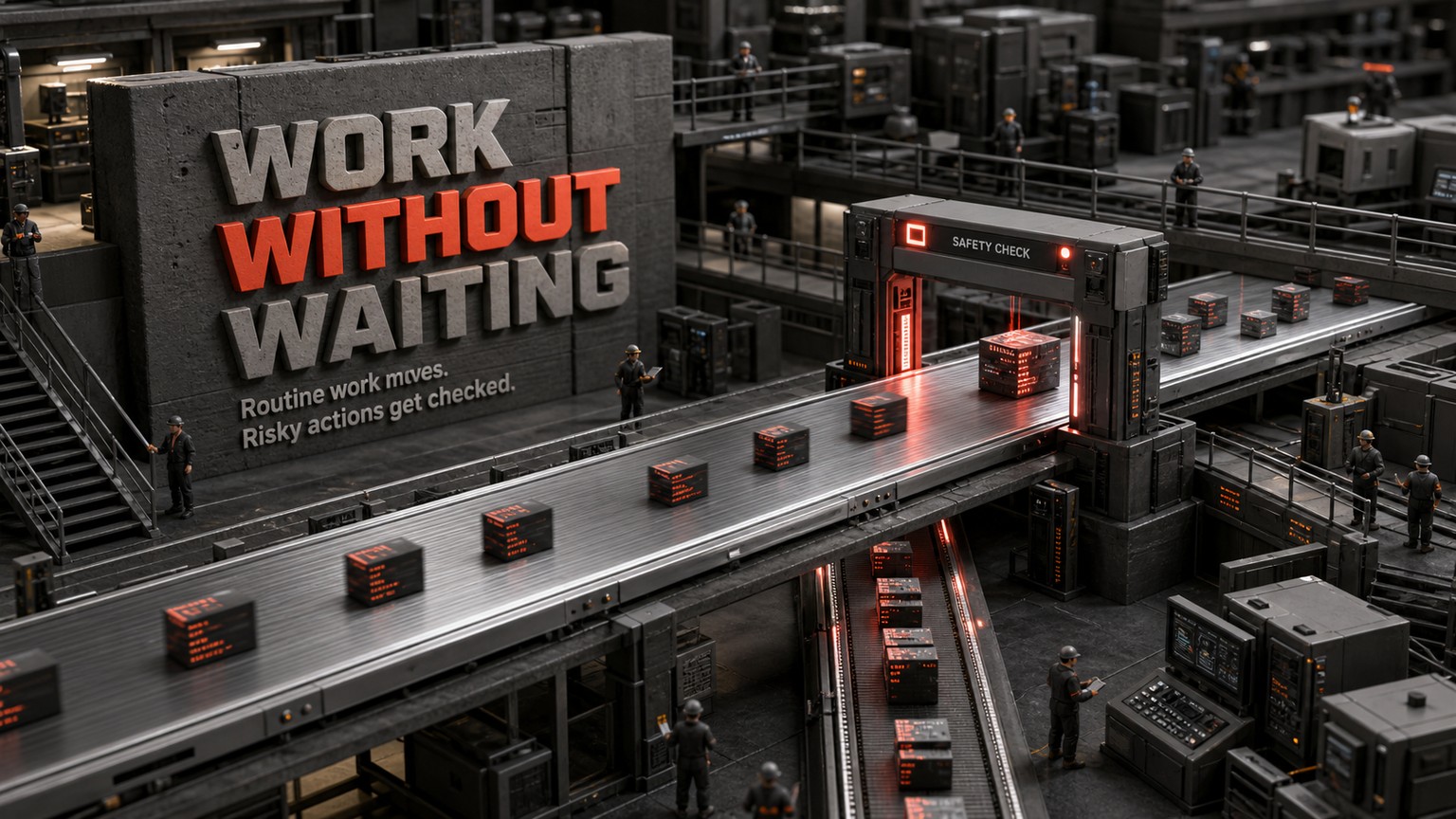
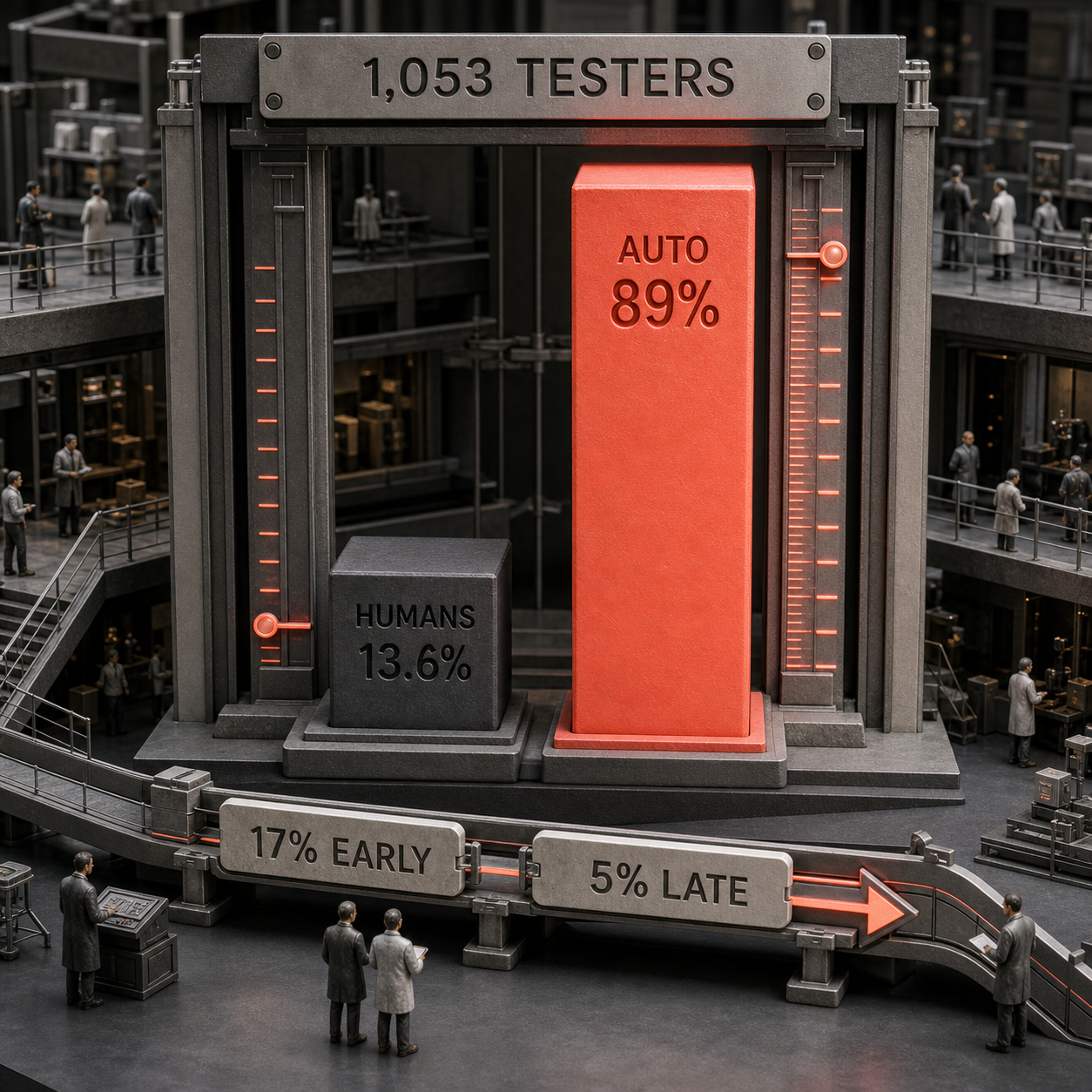
Claude Code can make routine permission decisions for itself, so a long coding task does not stop every few minutes for another approval. Starting August 14, 2026, auto mode becomes the default for new Pro, Max, and Team sessions. The reason is blunt: Claude Code users approve 97% of permission prompts, and in Anthropic's 1,053-person controlled test, people caught 13.6% of dangerous commands while auto mode caught 89%. That makes auto mode a better default for ordinary repository work, not a license to leave it alone with production.
What Claude Code auto mode actually changes
Auto mode replaces most routine permission popups with a separate safety decision. A classifier, meaning a model whose narrow job is to judge whether an action should run, checks risky tool calls against your request and your environment before execution.
It is the middle option between stopping for approvals and removing the gates:
Auto mode is not the same as full access. It keeps a gate, but moves the first decision from a tired developer clicking “approve” to a purpose-built classifier. That distinction matters most in hour-long sessions, where approval prompts tend to become muscle memory.
Current Claude Code documentation lists auto mode as available across all plans when the selected model, provider, and organization policy support it. The August 14 change is narrower: it makes auto the starting mode for new Pro, Max, and Team sessions. Enterprise, API, and third-party cloud deployments remain opt-in for now.

How one action moves through auto mode
Most repository work follows one of three paths.
- Safe tools go straight through. File reads, search, code navigation, and other built-in read-only operations can run without a classifier call.
- In-project edits use the local fast path. Writes and edits inside the working repository proceed because they are reviewable in version control.
- Actions with real downside reach the classifier. Shell commands, web fetches, external integrations, subagent launches, out-of-project filesystem work, and other riskier actions are evaluated before they run.
The classifier itself uses two passes. The first is a quick yes-or-no filter tuned to notice danger. Only flagged actions reach a second reasoning pass, which cuts down unnecessary blocks. Think of it like an airport: ordinary passengers follow the regular lane, a fast scanner spots anomalies, and only those cases go to secondary inspection.
A second defense watches what Claude reads. A server-side prompt-injection probe scans file contents, web pages, shell output, and external tool responses for hostile instructions before that material enters Claude's context. The action classifier then sees the user's messages and the tool call Claude wants to make, but not Claude's own explanation or the raw tool output. That separation makes it harder for a malicious webpage to talk both the worker and its reviewer into the same bad action.
You can enter auto mode with Shift+Tab, choose Auto in a supported app, or start a terminal session with claude --permission-mode auto. To make it your user-level default before August 14, put this in ~/.claude/settings.json:
{
  "permissions": {
    "defaultMode": "auto"
  }
}
Claude Code ignores that setting in project-local settings, so a repository cannot grant itself auto mode. If you already chose another personal default, Anthropic says you may see a one-time switch prompt. A pinned default, including one managed by an organization, stays in place.
The safety result is strong, and it has limits
Auto mode beat habitual human approval by a wide margin in Anthropic's controlled study. Among 1,053 paid professional testers, people stopped 143 dangerous commands, or 13.6%. Auto mode stopped 937, or 89%. Humans caught about 17% early in a session, then only about 5% after 50 or more earlier prompts. Auto mode's block rate stayed flat.
The production signal points the same way. In sessions flagged for safety review, serious unintended harm appeared in 6.3% of manually approved sessions and 2.4% of auto mode sessions. Anthropic also reports that Team and Enterprise adopters using auto mode ship about 25% more pull requests.
Those numbers do not make the classifier infallible. Anthropic's earlier pipeline evaluation measured a 17% false-negative rate on 52 real overeager actions. A false negative is a dangerous action the classifier lets through. The same pipeline produced a 0.4% false-positive rate on 10,000 ordinary internal tool calls and a 5.7% false-negative rate on 1,000 synthetic exfiltration attempts.
These datasets test different things, so the percentages should not be blended into one score. The practical conclusion is simpler: auto mode is safer than an average person reflexively approving prompts, but careful human review can still beat it on high-stakes work.
By default, the classifier is designed to stop production deploys and migrations, mass cloud deletion, force pushes, destructive infrastructure commands, sensitive-data transfers, permission changes, and irreversible destruction of files that existed before the session. After three consecutive blocks or twenty blocks in one session, Claude Code falls back to manual approval.
Who profits most: seven practical uses
The biggest winners are teams with repetitive, repository-scoped work and tests that can tell Claude when it is wrong. Auto mode removes waiting time. Tests, code review, and a narrow task supply the control.
1. Product teams maintaining large page fleets
A merchandising team responsible for hundreds of localized pages could give Claude a defined component change, let it update the relevant files, run visual and unit checks, fix failures, and prepare a pull request. The payoff is not skipping review. It is receiving one finished change set instead of babysitting every file edit and command. Anthropic describes a similar build-and-verify loop at Adobe across more than 90 countries and 30 languages.
2. Platform teams running code migrations
A platform engineer moving a monorepo from a deprecated library could ask Claude to find each use, apply the documented replacement, run the affected test suites, and group failures by cause. The work is repetitive, easy to diff, and expensive to interrupt. Auto mode can keep the migration moving while the engineer reviews the final patch and the exceptions.
3. QA teams repairing failed test suites
A QA lead could feed a failed CI run into a tightly scoped branch and ask Claude to reproduce each failure, identify whether code or test expectations changed, patch the likely cause, and rerun only the relevant checks. The payoff is a smaller queue of diagnosed failures, not blind trust in every fix.
4. Product squads turning settled specs into pull requests
Once a feature has a clear acceptance test, a squad could let Claude trace the affected code, implement the change, add tests, and write a pull-request summary. Humans still decide whether the behavior matches the product intent. Auto mode removes the approval clicks between those steps.
5. Machine-learning teams running overnight experiment loops
An ML team could queue a bounded evaluation task at the end of the day, let Claude change experiment code, run approved evaluations, compare metrics, and return candidate pull requests by morning. The environment has to be explicit. Shared clusters, production data, and broad deletion rights should stay outside the trust boundary unless an administrator deliberately configures them.
6. Internal-tools teams clearing maintenance queues
An internal-tools group could turn low-risk issues such as dependency updates, form validation fixes, and small dashboard changes into isolated branches. Claude can edit, test, and document each change while a human owns prioritization and merge approval. This is where uninterrupted execution converts a long tail of ignored chores into reviewable work.
7. Solo founders prototyping inside one repository
A founder with a clear feature sketch could let Claude build the first pass, run the local app, fix obvious errors, and leave a concise change summary. The payoff is a coherent prototype session without dozens of prompts. The catch is equally clear: weak tests and vague product intent still produce polished-looking mistakes.
For the broader mechanics behind projects, context, and review, see How to Use Claude Code. If you are choosing the underlying tool rather than the permission mode, the current AI coding-agent comparison is the better starting point.
What you could build around it
The default switch creates a small software market around rollout, evidence, and review. The strongest opportunity is not another general coding agent. It is the control layer that helps a team adopt autonomous work without guessing at policy.
1. Auto Mode Rollout Console, the strongest opportunity
Build a policy and evidence console for platform and security teams. It would inventory trusted repositories, internal domains, cloud buckets, deployment targets, and sensitive data locations, then generate managed autoMode.environment, hard_deny, soft_deny, and allow entries while preserving Anthropic's $defaults.
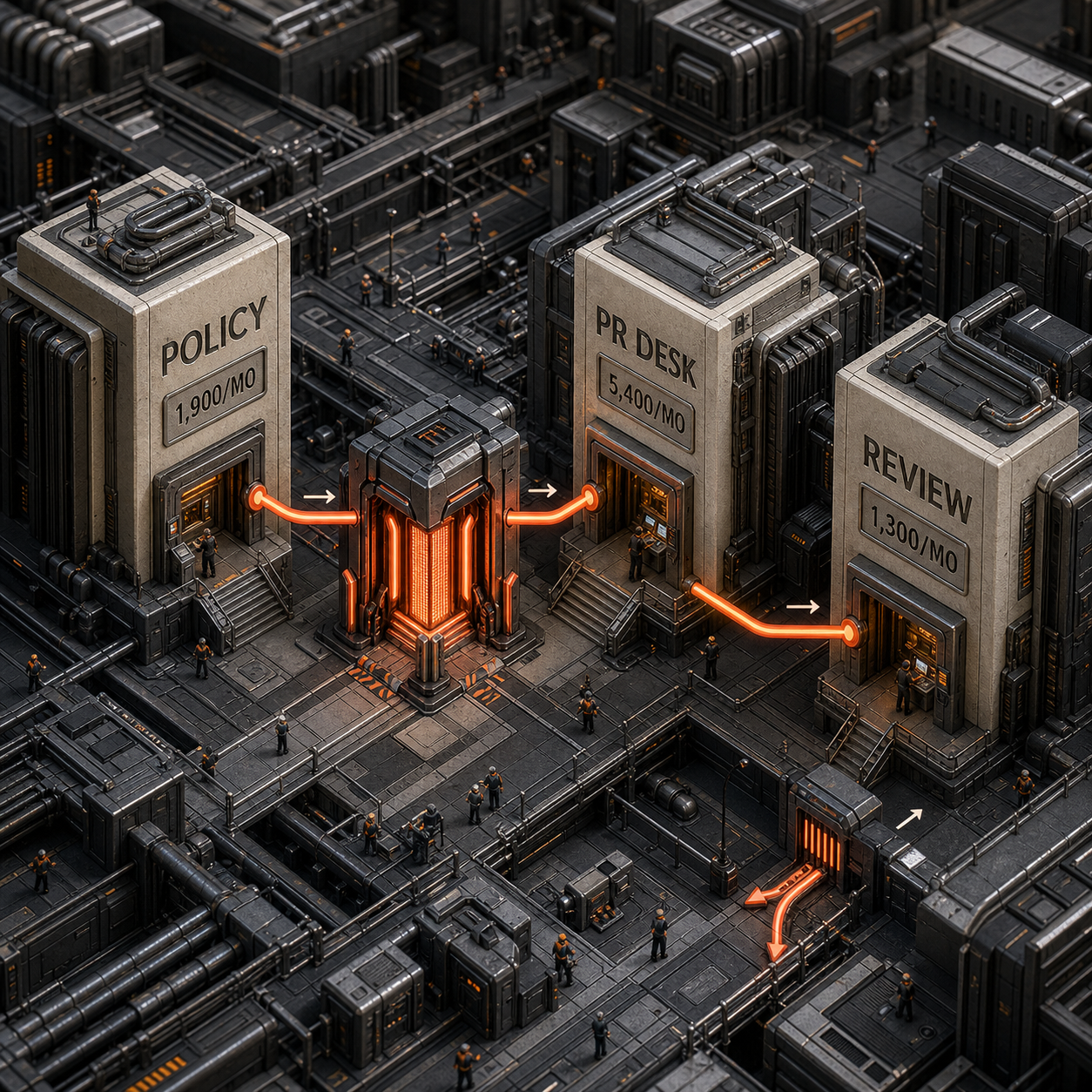
The timing and demand line up. “Claude Code auto mode” gets about 1,900 Google searches a month with keyword difficulty 0, while “AI powered coding agent” gets about 5,400. The capability becomes the default for three major plans on August 14, which turns an optional experiment into an immediate governance question.
The smallest sellable version could import a GitHub organization and a short infrastructure questionnaire, produce a reviewed settings file, run a library of safe and unsafe test actions, and collect PermissionDenied hook events into one dashboard. The useful output is evidence: what ran, what was blocked, which rule made the decision, and where the environment description is incomplete.
The catch is platform risk. Anthropic can add a better configuration interface. A durable product needs cross-agent policy, approval history, change review, and audit evidence, not a prettier JSON generator.
2. An overnight pull-request desk
Build a queue that turns well-specified maintenance tickets into isolated, tested pull requests. The buyer is an engineering manager with a backlog of migrations, dependency work, test repair, and small product changes that never wins daytime attention.
Demand is broad enough to matter: “AI powered coding agent” receives about 5,400 Google searches a month, and people ask AI assistants about “AI coding agent” roughly 188 times a month. Anthropic's own adoption data says auto mode users on Team and Enterprise ship about 25% more pull requests.
An MVP could connect an issue tracker, create one ephemeral worktree or container per ticket, launch Claude Code in auto mode, enforce a test command and time budget, then hand the resulting branch to a named reviewer. A useful first niche would be framework upgrades or flaky-test repair, where success is measurable.
The catch is task quality. A queue full of vague tickets creates a queue full of plausible but wrong pull requests. The product needs acceptance checks, spend limits, isolation, and a clean human handoff more than it needs clever prompting.
3. An independent evidence gate for agent-written code
Build a pull-request gate that verifies work produced by Claude Code and other agents before a human sees it. The buyer is a team whose code output has accelerated faster than its review capacity.
“AI code review” gets about 1,300 Google searches a month at a $63.85 CPC, and “AI powered code review platform” gets about 1,600 searches with a 3,173% yearly trend in this run. Existing products already prove a budget: CodeRabbit Pro lists at $24 per user per month billed annually, while Greptile Pro lists at $30 per seat per month.
The MVP could be a GitHub app that runs tests and static checks, maps the diff to acceptance criteria, flags missing evidence, and posts one review packet with the commands run and their results. It should review the agent's evidence trail, not merely ask a second model whether the code looks good.
The catch is competition. Code review is crowded, and Claude already has review products around it. A new entrant needs a sharp wedge such as regulated audit evidence, cross-agent provenance, or deep rules for one framework.
Limits and the honest take
Auto mode solves interruption fatigue. It does not solve ambiguous goals, weak tests, unsafe infrastructure design, or bad review culture.
Do not use it as the final authority for production migrations, account-wide permission changes, destructive infrastructure work, secret handling, or a merge where failure has a large blast radius. Those are exactly the actions its defaults are built to challenge, and Anthropic still recommends human review for high-stakes production changes.
Configuration can also create its own risk. Adding a narrow trusted destination may remove a false positive. Replacing hard_deny, soft_deny, or allow without the literal $defaults discards Anthropic's built-in list for that section. Teams should inspect the effective policy with claude auto-mode config, and they can use autoMode.classifyAllShell: true when every shell command should reach the classifier.
My take: auto mode is the right default for contained software work because people have already turned manual permission prompts into a ritual. The responsible operating model is auto execution inside a narrow environment, objective tests during the run, and human judgment at the boundary where code reaches customers or infrastructure.
Should I use Claude Code in auto mode?
Use it for long, well-scoped work inside a trusted repository when you have tests and will review the result. Keep manual oversight for production infrastructure, secrets, destructive actions, and ambiguous requests.
How do I turn on auto mode in Claude Code?
Press Shift+Tab until Auto appears, choose Auto from a supported app's mode selector, or start the CLI with claude --permission-mode auto. On August 14, 2026, it becomes the default for new Pro, Max, and Team sessions unless a personal or managed default stays in place.
What does auto mode do in Claude Code?
It lets routine actions run without approval prompts while a separate classifier checks riskier tool calls for destructive impact, scope escalation, unknown infrastructure, and behavior that may have been driven by hostile content.
Is Claude auto mode safe?
It reduces risk compared with habitual human approval in Anthropic's testing, but it does not guarantee safety. The classifier can miss dangerous actions, so high-stakes changes still need direct review.
Claude Code auto mode vs bypass permissions: what is the difference?
Auto mode keeps background safety checks and can block or reroute risky actions. Bypass permissions removes the permission gate and belongs only in isolated, disposable environments.
If you want a controlled agent workflow like this built for your engineering team, AI agent development is the right place to start.
- Published
- Category
- Build
- Language

Gumloop vs n8n (Verified October 2026)
Gumloop vs n8n: current pricing, credits vs executions, self-hosting and the same AI lead workflow, with a verdict for each builder.Oct 7, 2026Build
AI Agent Frameworks in 2026: LangGraph, CrewAI, OpenAI Agents SDK, Claude Agent SDK, Mastra and Google ADK (Compared)
Compare eight AI agent frameworks by language, state, MCP, approvals and current hosted prices. Pick the right runtime for production.Oct 7, 2026Build
Codex Cloud
Set up a reusable Codex Cloud environment, keep coding tasks running with your laptop off, steer from your phone, and choose cloud or local CLI.Oct 7, 2026Build
GitHub Copilot Pricing (2026): The Seat Is the Floor, Credits Are the Bill
GitHub Copilot plans, AI Credits, model rates, and three worked monthly bills. Choose Pro, Pro+, Max, Business, or Enterprise with spending limits.Oct 6, 2026Build
GitHub Copilot CLI
Install GitHub Copilot CLI, sign in, fix tests and open a PR. Current GitHub plans, AI credits, models, permissions, MCP and instructions.Oct 6, 2026Build
Best Web Scraping Tools in 2026: Firecrawl, Bright Data, Browse AI, and Context.dev (Compared)
Choose web scraping tools by the job: agent-ready pages, no-code monitoring, or collection at scale. Eight tools with verified prices and billing units.Oct 6, 2026Build
Agent Memory Explained: Context, Sessions, Stores and Costs
Agent memory explained for builders: context, sessions, long-term stores, files and skills, provider costs, and fixes for stale facts and user leaks.Oct 5, 2026Build