Beehiiv Review
Beehiiv reviewed for business newsletters: current pricing, growth, monetization, AI, MCP, analytics and the costs that change the buying decision.
Published
 By Omid Saffari



beehiiv is a strong choice for a business that treats its newsletter as a distribution channel: Lite displays $49 per month on yearly billing, with paid subscriptions and a 0% platform take. This beehiiv review recommends it for a founder building an audience around expertise, but puts Pro's branding requirement, acquisition costs, and the gap between subscriber engagement and customer revenue into the buying decision.
Verified on 10 October 2026 against beehiiv's live pricing, feature pages and support documentation. This is a documented-feature and cost analysis, not a hands-on sending, deliverability or revenue test. The verdict turns on audience acquisition, the path to revenue, workflow control and total operating cost. All beehiiv plan prices below come from its live pricing page.
What beehiiv is
beehiiv combines newsletter publishing, a website, subscriber management and ways to earn from an audience. For a B2B software founder, that can mean publishing useful industry analysis, collecting readers and directing the right people toward the product. For a research business, the publication itself can be the paid product. The attraction is keeping publishing and audience growth together; the business still has to supply expertise, a relevant offer and a way to identify customers.
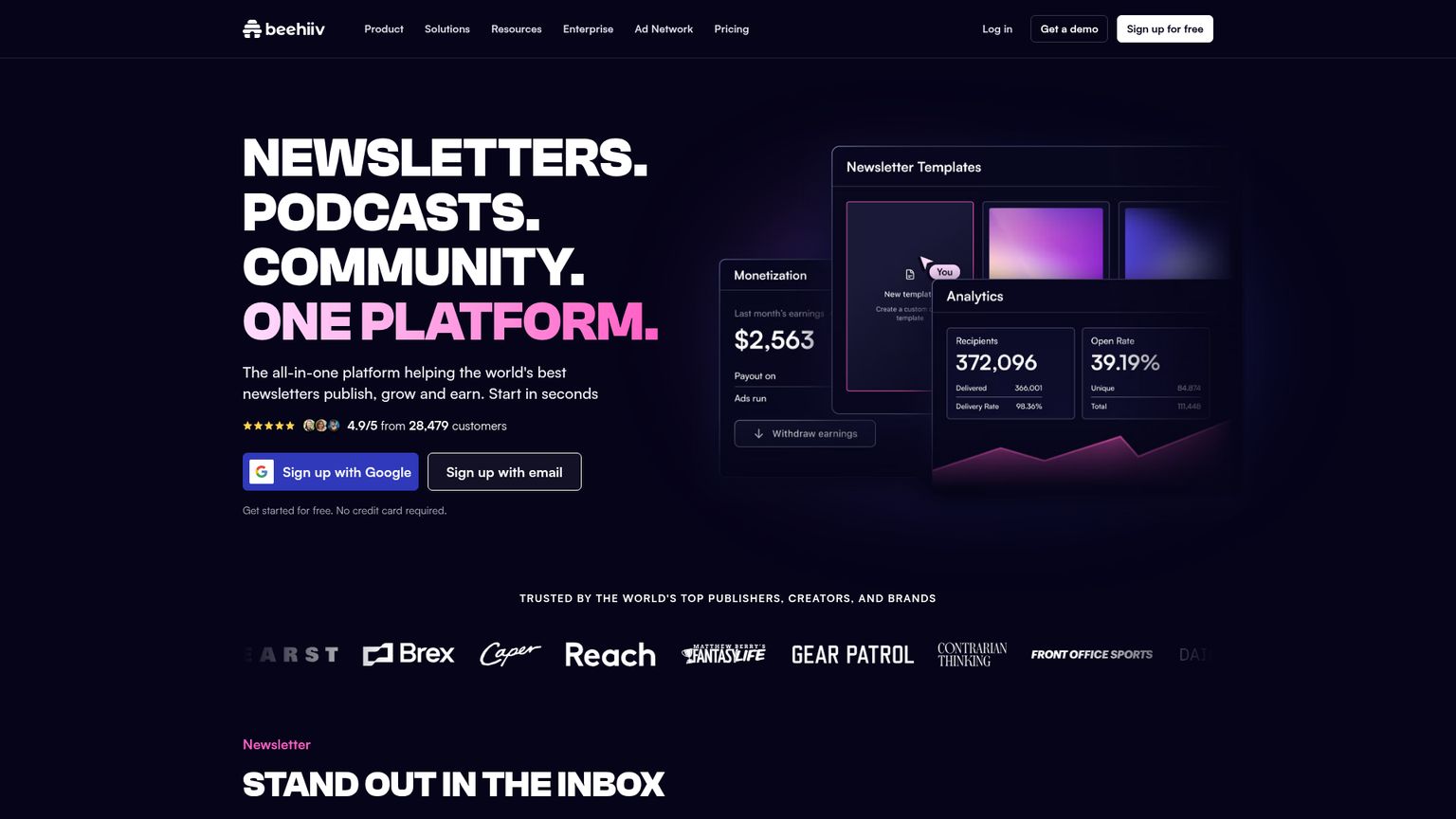
Beehiiv alternatives: who should choose it and who should skip
beehiiv fits a business with a repeatable editorial proposition and a clear reason for readers to become customers. A founder publishing a useful operations briefing or a product company educating its market has a stronger fit than a company choosing software before deciding what it will send.
The buying question is which workflow matters most. These are starting points, not equivalent bundles or quotes for the same audience size.
Choose beehiiv when a growing publication is central to how the business earns trust. A founder can justify it through product demand, retained customers or paid research; advertising does not have to be the model.
Beehiiv vs ConvertKit: choose Kit for the purchase journey
Kit, formerly ConvertKit, is the stronger shortlist when the difficult part is what happens after a reader clicks or buys. Its Visual Automations builder supports branches based on clicks, purchases and engagement, with conditional paths into email sequences. A training company can use that structure to nurture prospects while directing purchasers toward onboarding. That is a concrete reason to consider Kit, which is a partner, rather than picking it because of the partnership. Kit automation features.
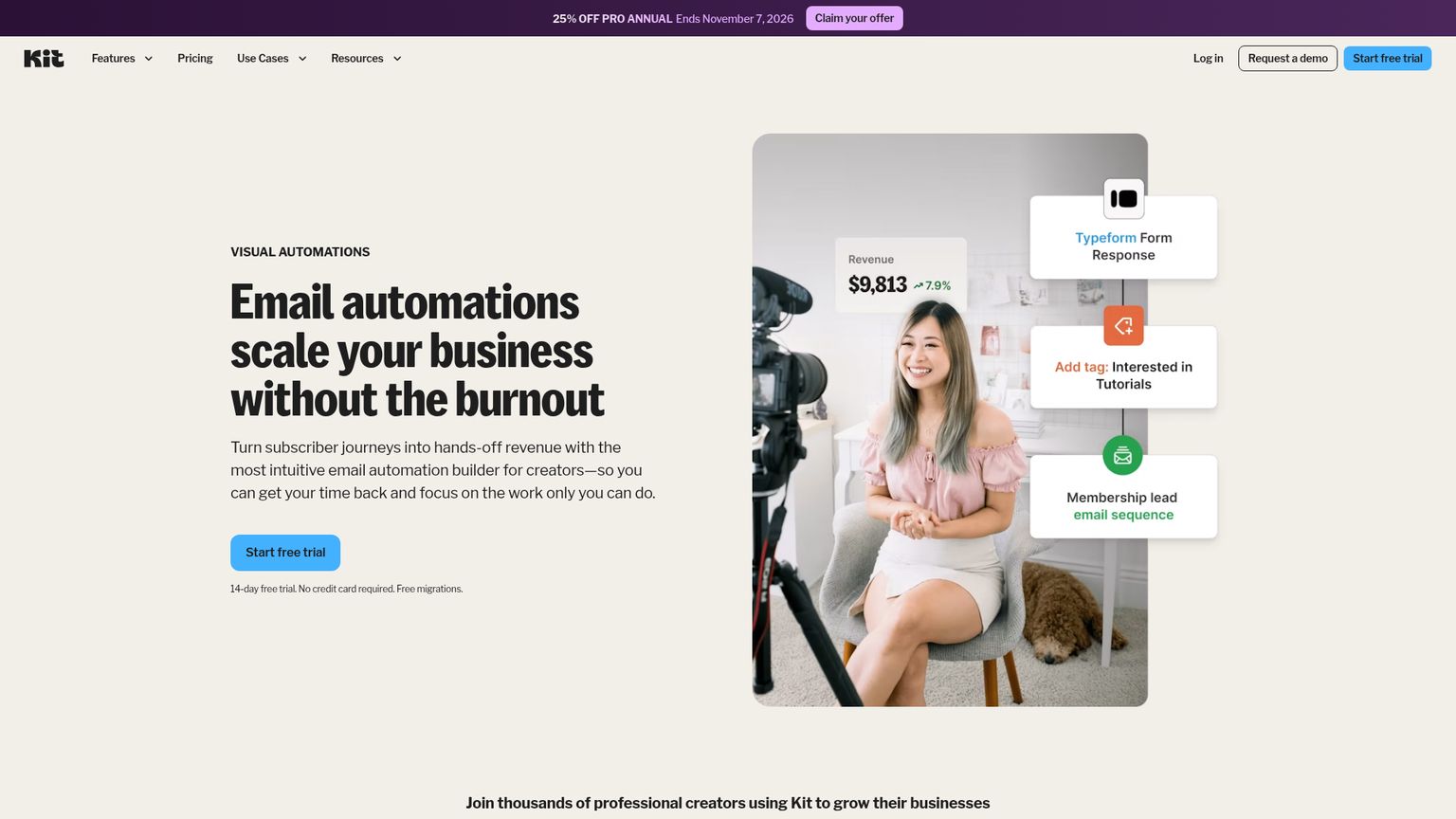
Kit's limitation is that the attractive Free plan does not include the unlimited Visual Automations and sequences listed for Creator. At 1,000 subscribers, the page displays $33 per month but specifies $390 billed yearly, equivalent to $32.50 per month. Use the invoice amount when budgeting, and reprice for your list. Choose it for a sales journey that needs those branches; skip the switch if beehiiv already handles the newsletter workflow you need. Kit pricing.
Beehiiv vs Mailchimp: choose by the marketing job
Mailchimp belongs on the shortlist when you need to evaluate email alongside SMS and broader marketing automation. Its pricing comparison lists marketing automation flows on paid plans and SMS as an add-on. A product business with several campaign types should compare those requirements before centering its entire customer communication system on a publication. Mailchimp plan comparison.
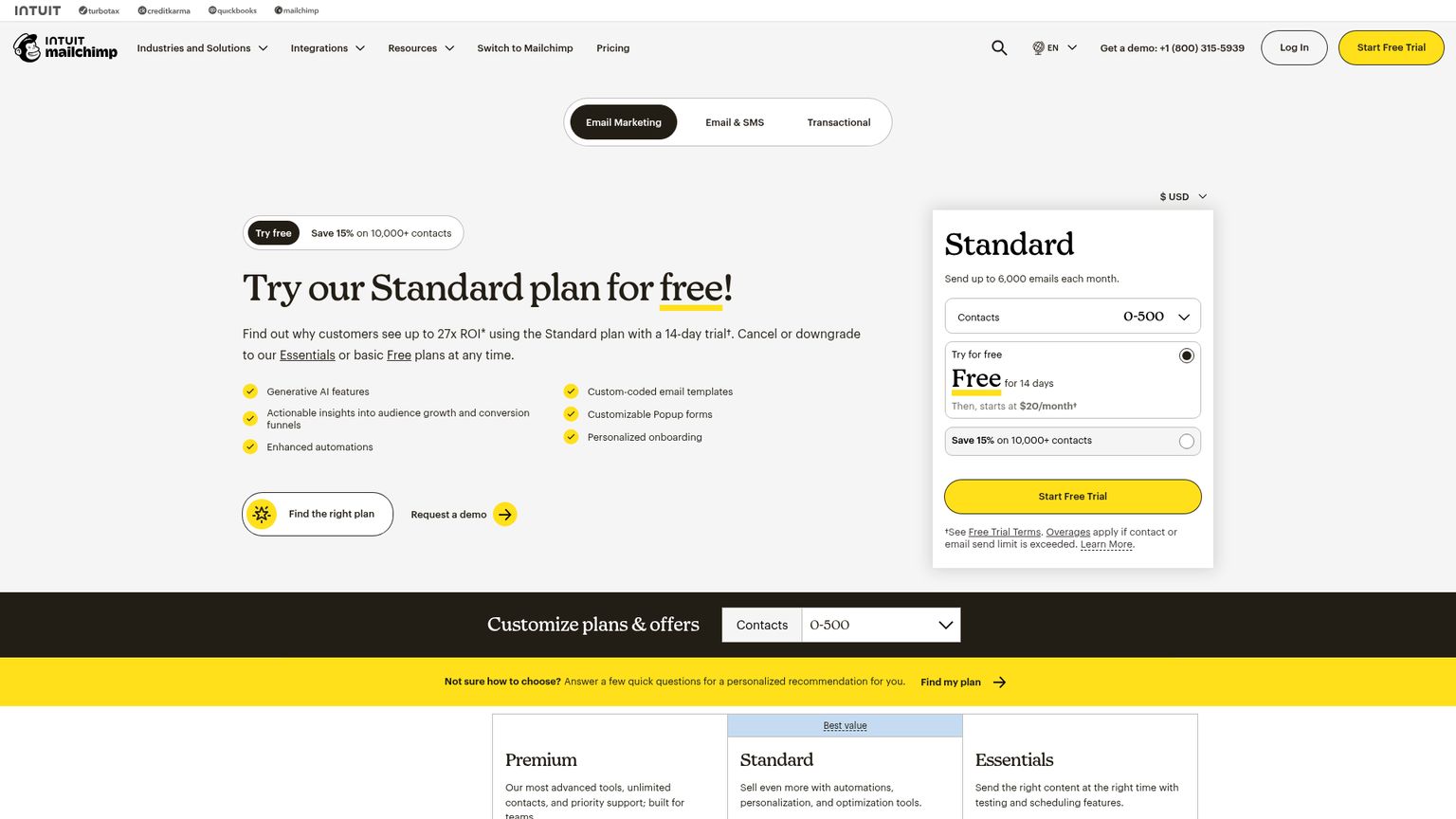
Mailchimp is a weaker free option for a growing newsletter: its Free plan permits up to 250 contacts, with a maximum of 500 sends per month or 250 per day. Paid overages and separately purchased SMS credits require their own budget. Skip it if those broader marketing functions do not solve a requirement you have; adding them is not a reason to abandon a good newsletter workflow.
For a broader shortlist, see best newsletter platforms for creators, applying the business-fit test above to each option.
Growth tools: acquire the right future customers
beehiiv makes distribution easier, but subscriber quality determines whether that distribution pays. Its current Recommendations hub combines free cross-promotion and paid acquisition, previously called Boosts. Free recommendations are available on every plan; paid recommendations are available on Lite and Pro. You can review partners, set acquisition terms and track subscriber verification. Recommendations features.
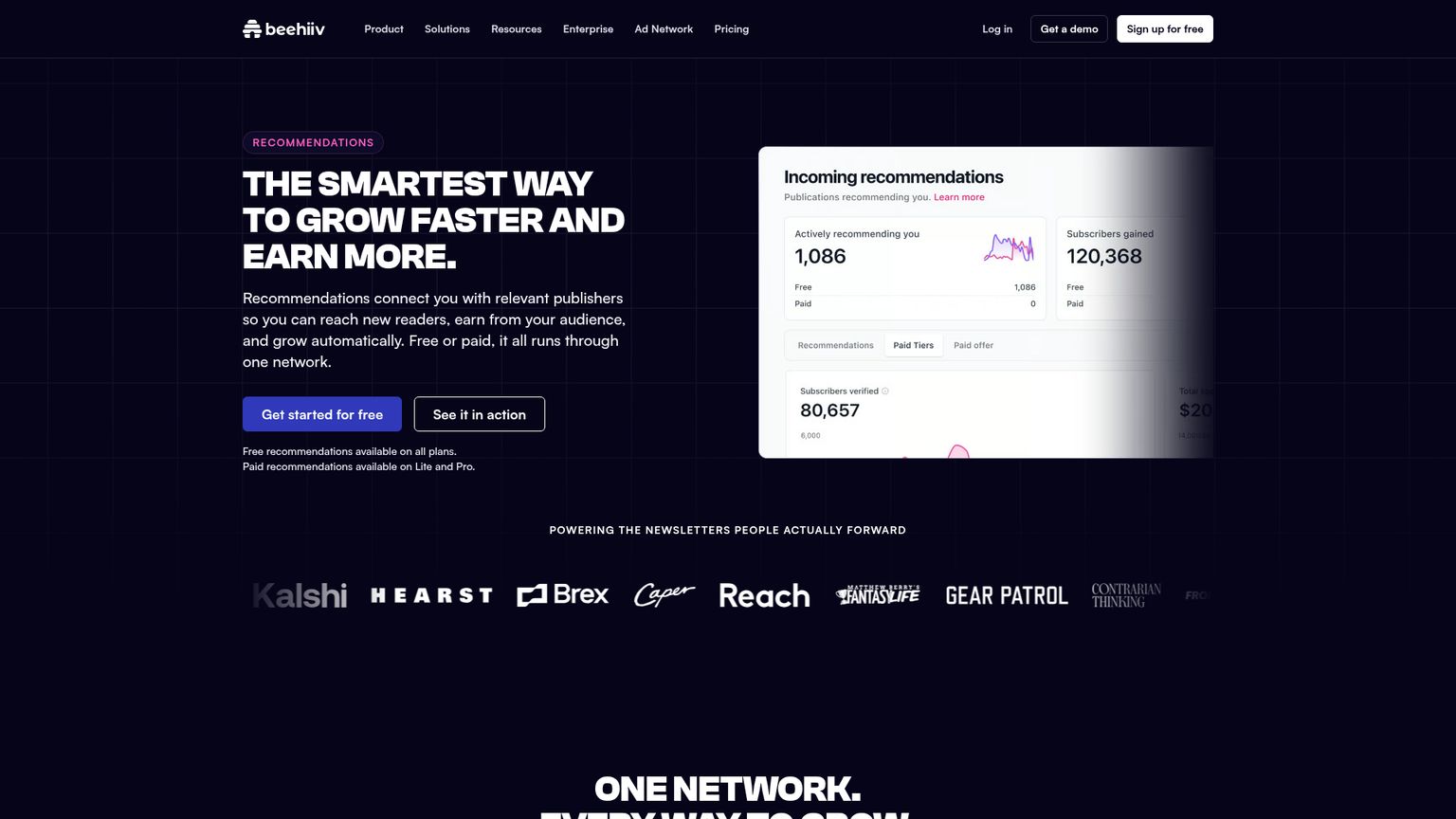
For a B2B SaaS newsletter, start with publishers read by the people who could buy your product. A large general business audience may generate more signups than a specialist operations publication while producing fewer relevant prospects. The platform's verified subscriber is an acquisition event; your business qualification rule is a separate test.
Use a definition you can apply consistently: a reader works in the target industry, has the relevant responsibility, and engages with the problem your product solves. That definition prevents a low signup cost from disguising an expensive customer acquisition channel.
A paid recommendation workflow for a B2B operator
The practical workflow is to set a capped experiment and review the people it brings, rather than treating list size as the result.
Choose an audience and a business outcome
For an operations-software company, define the intended reader and the action worth measuring, such as a qualified demo request. Decide which industries or roles would make a signup irrelevant before spending.
Set the acquisition terms in Recommendations
Use the Grow area to review Recommendations. For a paid offer, set the price, audience and budget, and inspect publisher fit. beehiiv documents niche and geography targeting, partner approval and subscriber verification; those controls support the experiment but do not establish buying intent.
Separate acquired readers from qualified readers
Review the source cohort, meaning readers acquired through the same channel during the same period. Apply the business qualification rule, then follow their meaningful clicks, inquiries and purchases. Compare channels over a consistent observation period.
Consider an illustrative $300 acquisition test that brings 150 readers. The cost is $2 per reader. If only 30 meet the business's qualification rule, the relevant cost is $10 per qualified reader. Neither figure is a beehiiv performance forecast; the difference comes entirely from the denominator you choose.

At that point, evaluate the qualified readers' eventual contribution to the business. A founder selling a high-value service might accept that acquisition cost. A low-margin product may not. beehiiv supplies distribution controls; it does not determine the economics of your offer.
Referral rewards need an operating budget
beehiiv's referral program lets existing readers earn rewards for introducing others. It supports milestones, individual referral links and digital or physical rewards. The product page also makes a useful distinction: digital reward distribution is automated, while physical or custom rewards may require manual fulfillment. Referral program documentation.
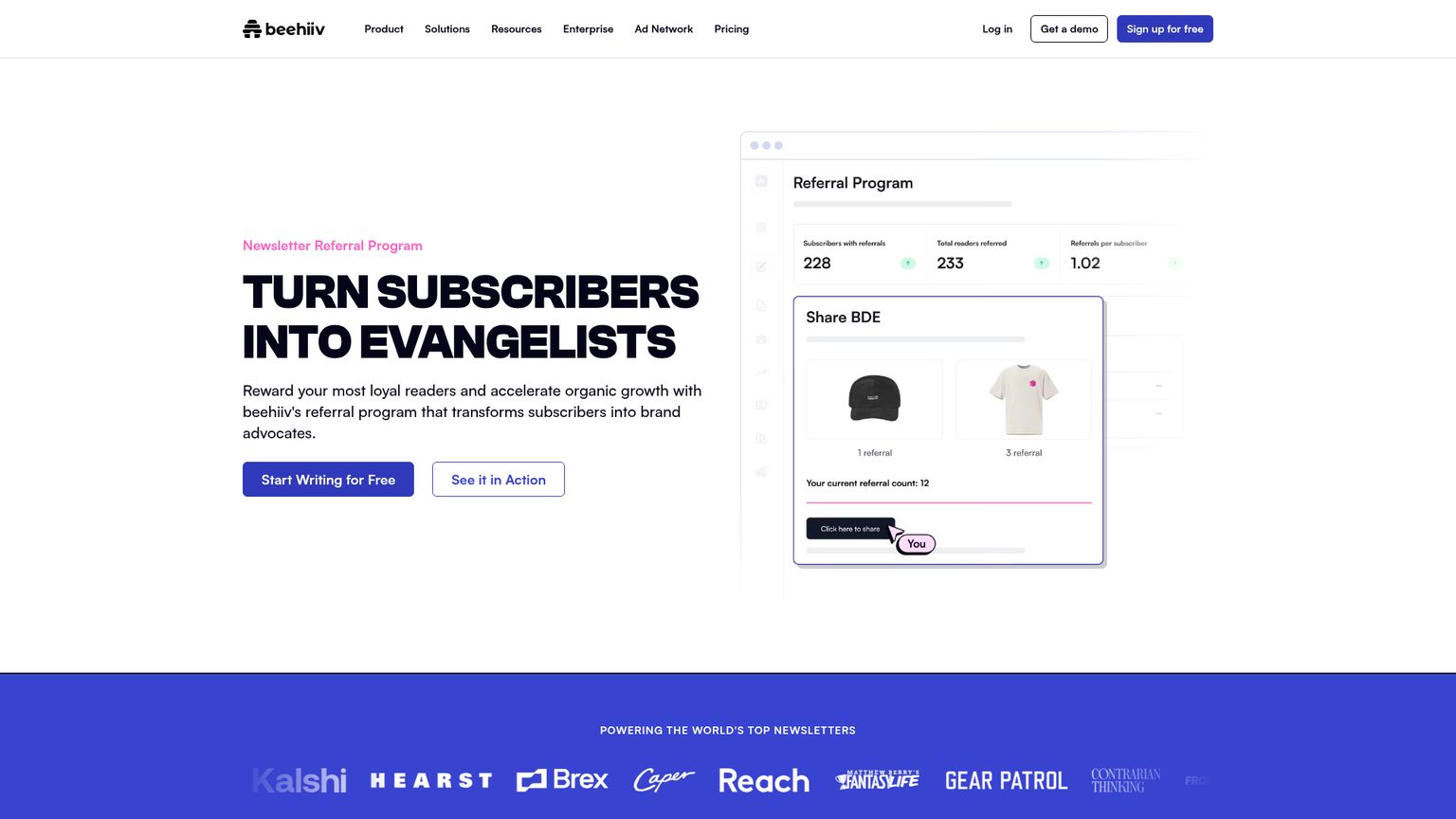
For a consulting business, a relevant downloadable worksheet can reinforce the newsletter's purpose. A generic merchandise giveaway can attract people interested in the reward rather than the service. Count the time to produce the asset, answer questions and fulfill anything promised. A built-in referral feature does not make the reward free.
The documented editor action is to type /referral program to insert the referral block. Before announcing it, check that the promised reward is ready and the milestone can be fulfilled reliably. The program should deepen the business relationship, not become a separate administrative job.
Beehiiv newsletter templates: keep the editorial job small
beehiiv's newsletter editor provides templates, brand colors and typography, plus AI assistance for brainstorming and editing. It also supports exporting subscribers and combining the newsletter with a website. Those are useful publishing basics for a founder who needs a dependable place to build an audience. Newsletter features.
A customer newsletter should use a consistent structure: one useful explanation, a concrete application and an appropriate next action. A prospect briefing might instead connect a market development to a business decision. Different audiences need different editorial promises even when the template looks similar.
Review the email and web versions before sending. Check links, the reply destination and whether the next action is clear. A website and polished template make publishing possible; neither proves that a page will rank in search or that a reader will buy.
Monetization: choose the revenue model before the feature
beehiiv offers several ways to earn, but the best one for a product business may be selling its own product. Paid subscriptions, advertising and digital products are options, not obligations. A founder should decide what the newsletter is supposed to contribute before adding a paywall or sponsor slot.
Paid subscriptions suit information people buy repeatedly
beehiiv supports paid subscription tiers, content paywalls and Stripe payment processing. A specialist research business could publish a free briefing that demonstrates expertise and charge for deeper analysis. A SaaS company might keep the same information free because product adoption is worth more than subscription revenue. Paid subscription features.
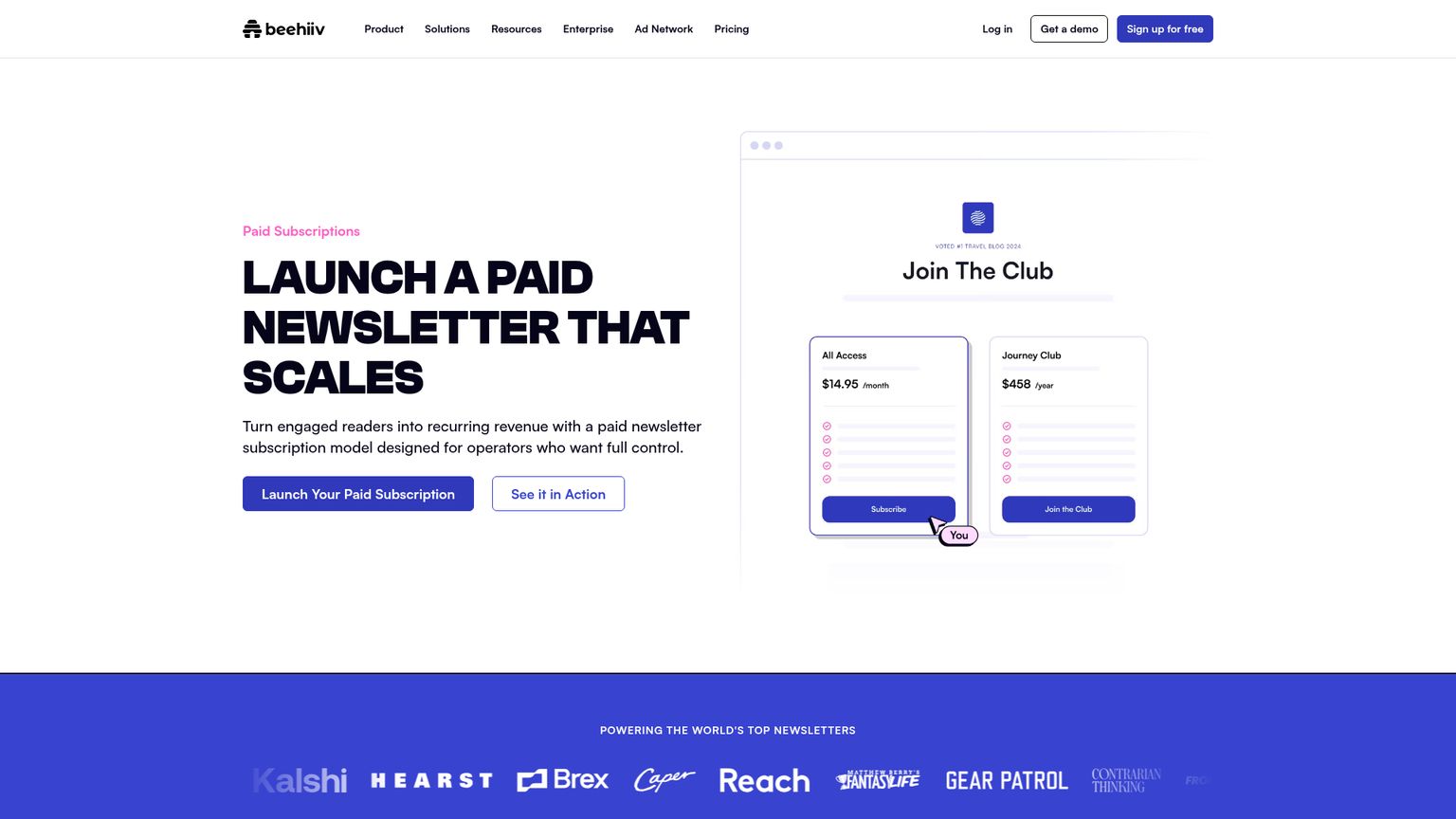
The crucial fee distinction is 0% beehiiv take rate on paid subscriptions, not zero cost to operate. beehiiv's pricing FAQ states a Stripe processing baseline of 2.9% plus $0.30 per transaction. The software subscription and business expenses remain separate; actual payment costs depend on the applicable processing terms. beehiiv pricing and fee FAQ.
Here is a deliberately small, hypothetical model. If 100 readers each pay $10 monthly, gross subscription revenue is $1,000. Under the stated processing baseline, fees total $59. Allocate the displayed $49 annual-plan monthly equivalent for Lite and $892 remains before content production, acquisition, refunds, taxes and other expenses. This is retained revenue after the modeled costs, not profit or an expected result.

At the same hypothetical $10 price, each successful monthly payment contributes $9.41 before software and other expenses. Six paying readers cover the displayed Lite monthly equivalent; eleven cover Pro's. That modest software threshold says nothing about whether the publication pays for the writer or acquisition budget.
Advertising should be incremental income, not the plan's justification
beehiiv's Ad Network is available to Lite and above for publications actively sending. Publishers can choose offers. Payouts may be based on unique opens or verified unique clicks, and the offer's estimated payout is not guaranteed. Ad Network details.
The pricing cards display “Avg. $39/mo.” That is beehiiv's own average, not a promise to your business. The figure does not establish the result for a new B2B list, your niche or your sending schedule. Do not subtract it from the subscription price when approving the budget. Source of the average.
Even if a business happened to earn that amount, it would leave $10 of the displayed Lite monthly equivalent, or $56 of Pro's, uncovered before other costs. More fundamentally, the sponsor uses reader attention that could otherwise support your own product or service.
An industry briefing with suitable sponsors may benefit from that extra revenue. A product onboarding newsletter should have a much higher bar: a small advertising payment is a poor trade if the placement distracts from customer activation or undermines trust. Rejecting an unsuitable offer is part of the business model.
Selling your own offer changes the scorecard
For a service business, track qualified conversations and the contribution from resulting customers. For a product company, look at adoption, purchases or retention associated with the newsletter audience. These are proposed evaluation methods, not claims that beehiiv automatically attributes every external sale.
If a hypothetical new customer contributes $200 after the direct cost of the sale, one additional customer covers either displayed paid plan's monthly software allocation. It still has to cover newsletter production and acquisition. A credible budget records all of those costs rather than celebrating that the software bill was recovered.
AI and MCP: preparation speeds up, publishing stays with you
beehiiv's AI offering is useful when it works with your account's context. There are two distinct surfaces to evaluate: beehiiv Agent inside the platform and MCP, the connection that lets an external AI tool work with account data. Neither should be purchased on an assumed time saving.
Agent works inside the publication's context
beehiiv Agent can use posts, subscribers, segments, automations and analytics to help analyze performance, build segments, draft campaigns and prepare workflows. The practical advantage is reducing the need to assemble that context manually. beehiiv Agent.

A B2B growth lead could ask it to compare the topics associated with meaningful engagement, identify a relevant subscriber group and prepare a follow-up draft. The operator should then inspect the proposed segment and the evidence behind the recommendation. An explanation of why something happened is a hypothesis until the underlying records support it.
Use a narrow task for the first evaluation. Preparing a draft for a clearly defined segment is easier to assess than asking an agent to grow the business. Check whether it selects the intended audience, preserves the company's claims accurately and produces something worth editing.
MCP connects external AI, with a firm publishing boundary
beehiiv MCP uses Model Context Protocol, a standard for connecting AI tools to software, to expose account data and supported actions to a compatible assistant. Current support documentation says Free has read-only access; write actions require a paid plan. Those actions include creating and editing post drafts, managing segments and building automation workflows. Current MCP documentation.
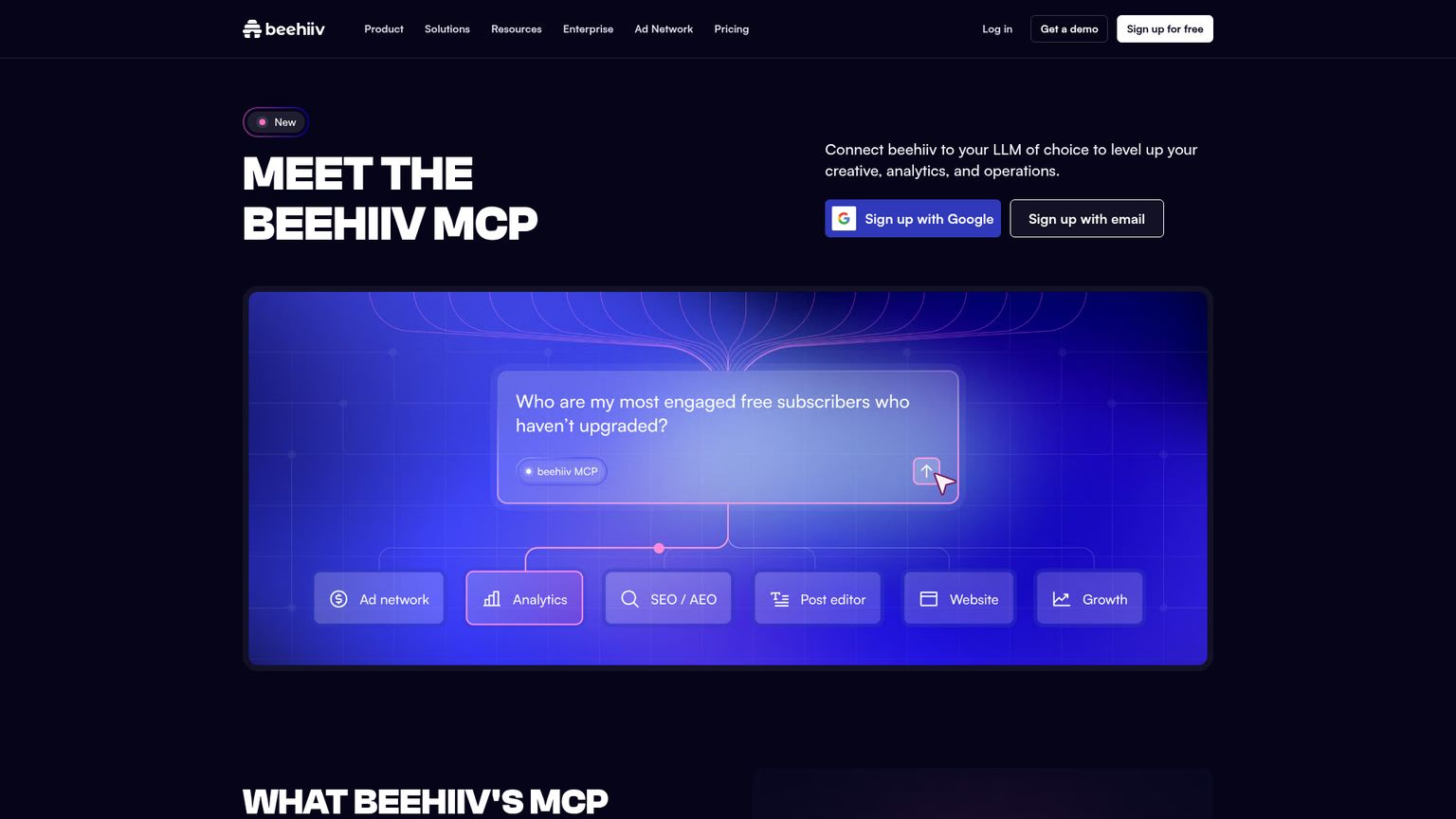
The boundary is specific: MCP cannot publish or schedule posts, activate automations, or access Stripe billing and payment data. Drafts and workflows can be prepared through the connection, but the final publishing and activation actions stay in the beehiiv app. Paid write access does not include those final actions. Write-access announcement.
For a founder already using an AI assistant, this supports a practical preparation workflow:
Connect the account through beehiiv's guide
Open Settings and choose MCP from the left panel. Select the AI client and follow its connection guide. Access follows the beehiiv user's workspace permissions, so evaluate the connection using the role intended for the work.
Ask for analysis and a draft with explicit boundaries
For example, ask the assistant to summarize engagement with a defined set of product-education posts and prepare a follow-up draft. Specify the intended audience, evidence it may use and claims it must not infer. Review the selected records and resulting content.
Finish the send in beehiiv
Inspect the draft, recipient selection, links and design inside the app. Publish or schedule there. If the task prepared an automation, review it and activate it in the app as well.
That boundary matters when estimating labor. A process that prepares content still needs someone to approve recipients and send it. A prompt asking for a revenue report also cannot supply Stripe payment data that the connector does not expose.
Price AI against demonstrated time saved
Suppose an operator publishes four issues per month and, after checking output quality, finds that assistance saves 30 minutes per issue. That would be two hours. At an assumed $60 hourly opportunity cost, the capacity is worth $120 monthly. This is an evaluation scenario, not a measured beehiiv result or a cash saving.
The calculation only matters if the time is actually recovered and used well. Include any external AI subscription in the comparison. The pricing page describes Pro's AI credit level as HIGH without a numeric allowance in the retrieved detail; that wording is not a usable workload estimate. Confirm the allowance and what consumes it before committing to an AI-heavy process.
Analytics: follow acquisition through to business revenue
beehiiv can help identify which acquisition sources produce engaged readers; customer revenue still needs a business-level check. Its analytics covers subscriber growth, engagement and monetization reporting. The Subscribers Report adds source comparisons and filtering by channel, source, medium and UTM campaign, the tags used to identify a marketing campaign. Analytics features.
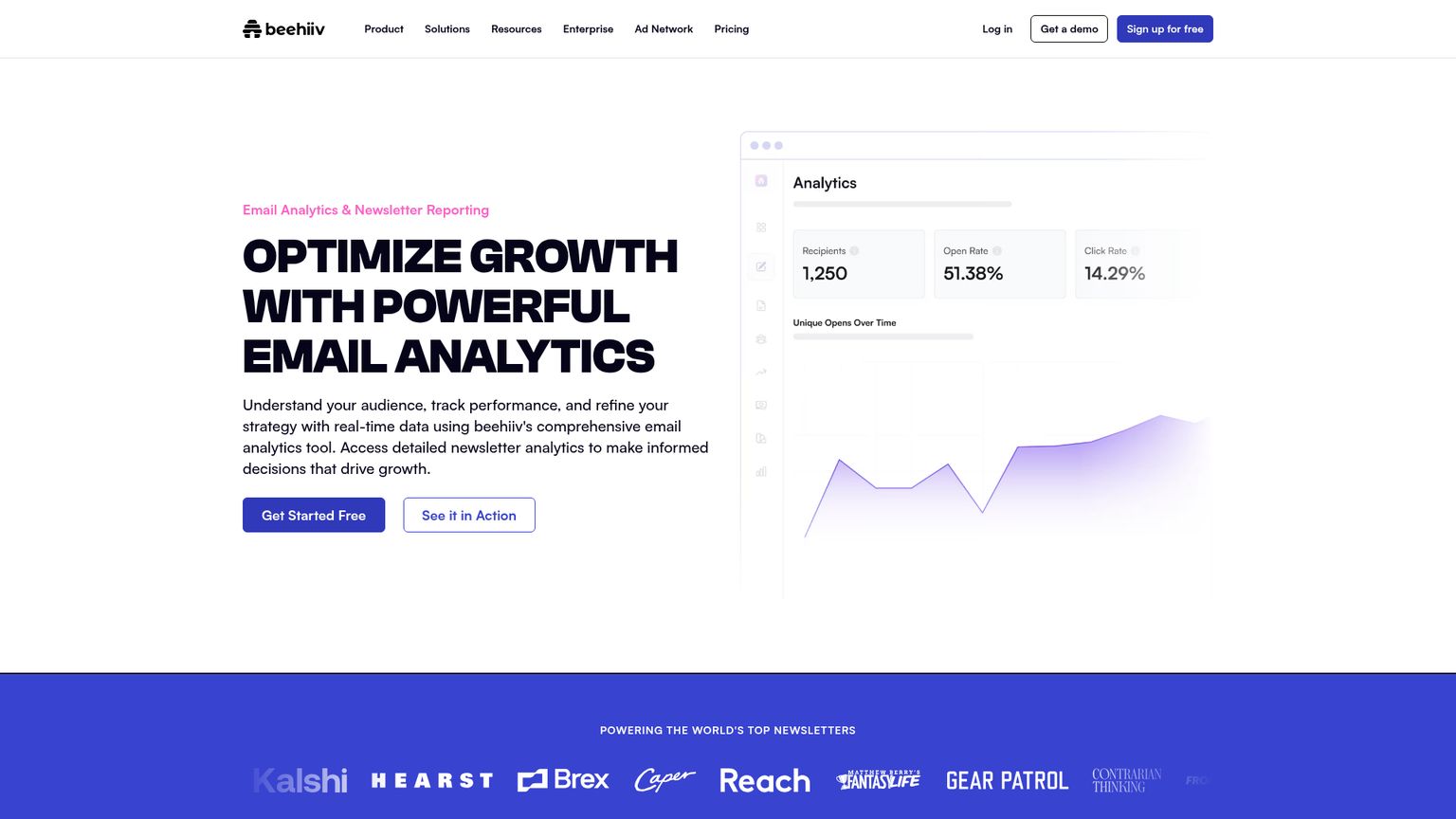
For a B2B founder, a useful review begins at Subscribers > Subscribers report. Compare acquisition sources using a consistent period. Inspect verified clicks, unsubscribes and, where paid subscriptions are enabled, upgrade rates. The report can show whether a source produces active readers or simply increases the count. Subscribers Report guide.
Verified Clicks helps filter automated activity such as security software testing email links. That makes it more useful than treating every raw click as human interest, but it still does not certify that the reader is a buyer. Use the metric for engagement, then verify the next action separately. Verified Clicks explanation.
A software company should reconcile those cohorts with its customer relationship management system or product records. Preserve campaign identifiers on the route to a demo or signup. Compare qualified inquiries and subsequent customers alongside newsletter engagement. If the connection cannot be made reliably, report engagement and sales separately instead of claiming attribution the data cannot support.
That distinction matters for a B2B business with a long buying process. If readers become customers much later, plan the historical reporting you need before choosing Free. The support page lists the deeper Subscribers Report for paid plans; the live pricing table remains the source for each plan's lookback. A basic report being present does not mean a full history is available.
Beehiiv pricing: all four current plans
beehiiv's live page displays Free at $0, Lite at $49 per month on yearly billing, Pro at $95 per month on yearly billing, and Enterprise at a custom price. The page has a Monthly control, but it does not show verifiable month-to-month amounts in the pricing content checked for this review. No monthly figures are estimated here. Pricing verified 10 October 2026.
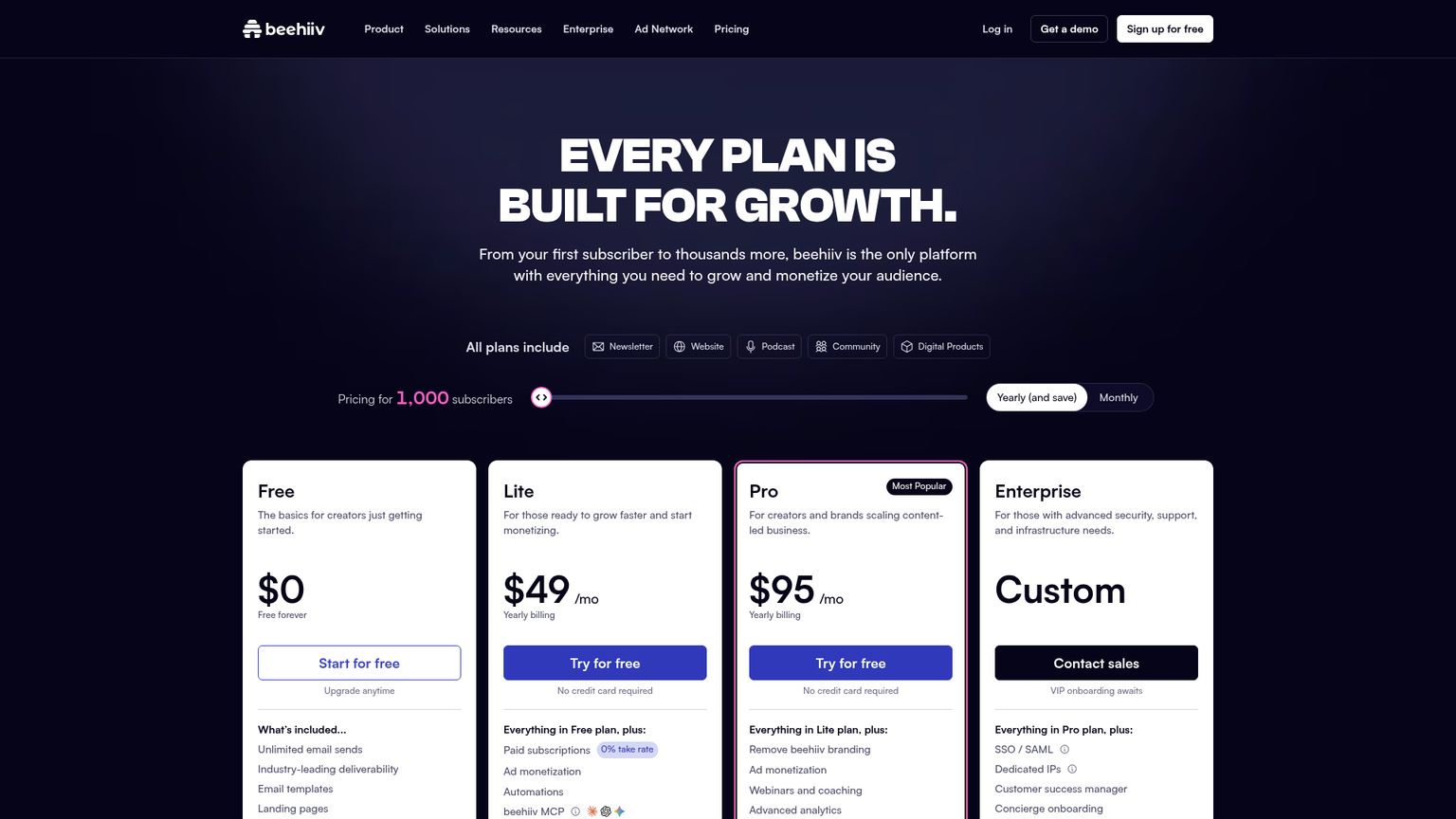
These are the page's displayed prices and plan ceilings. A ceiling describes capacity; it should not be treated as a personalized quote for every list size. Confirm the amount presented for your audience and billing selection before purchase. All rows above are from beehiiv's pricing comparison.
Free's limits go beyond paid subscriptions and ads. It retains beehiiv branding, has one team seat and one guest author, permits one publication and limits analytics history to 30 days. It does include campaign analytics and subscriber metrics; calling it a plan with no analytics would be wrong. Templates, landing pages, free recommendations, API and integrations are listed among its features.
Lite buys the paid publishing workflow. Its card adds paid subscriptions, ad monetization, automations, MCP, polls and A/B testing. It permits three publications and three guest authors, alongside its two seats. Remember the MCP distinction: the help center documents Free read access, while creating and editing through MCP requires a paid plan.
Pro is the brand and operating-capacity decision. It adds branding removal, advanced analytics, webhooks, Dynamic Content and priority support, plus the larger team and history allowances. Webhooks are notifications sent to another system when an event happens. If your integration depends on them, use the listed Pro entitlement rather than assuming the Free API listing covers every integration mechanism.
Enterprise is a requirements-based quote. Its additions include SSO/SAML for centralized sign-in, dedicated IPs, a customer success manager and concierge onboarding. A procurement requirement can decide that choice before audience size does.
Multiplying the displayed annual-billing rates gives $588 a year for Lite and $1,140 for Pro. The difference is $552 annually, or $46 per month equivalent. These calculations use the displayed rates, not an inferred month-to-month tariff. The site's beehiiv pricing guide covers the broader billing decision; use the vendor-verified figures in this review for the snapshot above.
Limitations that can change the buying decision
beehiiv's most consequential limits are the ones that change the plan or leave work outside the platform. For a founder budgeting a customer newsletter, these deserve more weight than the number of features on a card.
Branding removal requires Pro. Paying for Lite does not remove beehiiv branding. If a product's customer-facing publication must use only the company's branding, evaluate the displayed $95 annual-plan monthly equivalent from the start. The $49 entry price does not meet that requirement.
Free's history is short for a long sales cycle. Thirty days of analytics lookback is a weak foundation for evaluating a prospect who buys much later. Lite extends the window to 12 months; Pro removes that lookback limit. Decide the reporting period around the business question rather than accepting the default view.
A third team seat exceeds Lite's allowance. A founder and editor fit its two seats; adding an analyst or operator with full team access exceeds that limit. Guest authors have their own allowance and should not be assumed to replace team seats. Check the role each person needs before budgeting collaboration at the entry price.
MCP is not an unattended publishing system. It can prepare supported content and workflows, but cannot finish publication, scheduling or automation activation. It also cannot retrieve Stripe payment records. That is a material limitation for a founder imagining a single assistant running both the publication and its revenue reporting.
AI credits are not a workload guarantee. A credit category described as HIGH does not tell you how many useful tasks a recurring workflow can complete. Until the allowance and consumption rules are clear for the account, there is no defensible cost per AI task to calculate.
Growth features create costs beyond software. Paid recommendations require acquisition spend. Referral rewards can need production and fulfillment. Advertising consumes reader attention. Payment processing reduces subscription receipts. None of those costs is erased by the 0% paid-subscription take rate.
Engagement analytics does not settle customer attribution. The reader who clicks is not automatically the account that purchases. A B2B company still needs a disciplined connection to its sales or product records. If that work is the primary requirement, evaluate the wider marketing setup before treating beehiiv as the whole system.
Beehiiv review verdict: buy for a measurable workflow
Choose beehiiv when the newsletter is an ongoing business distribution channel and you can name the route from reader to revenue. Its combination of publishing, recommendations, monetization and account-aware AI is compelling for that job. The paid plan earns its place when a required capability or capacity limit justifies the invoice.
Start with Free if its subscriber, seat, history and branding limits meet the work. Choose Lite when you need the paid publishing or automation workflow and can accept its branding. Choose Pro when branding removal, more team access, longer history or a listed advanced feature is required. Seek an Enterprise quote for enterprise requirements.
Choose Kit instead when purchase-sensitive nurture journeys are the main challenge. Evaluate Mailchimp when broader marketing functions, including SMS, matter more than a publication-centered workflow. A business should not migrate a working customer communication system merely because a newsletter platform has an attractive growth feature.
The Monday move is to choose one business audience and one outcome, prepare a representative issue and its follow-up, and inspect the reporting path. Price the plan that supports that exact workflow. If the business cannot identify what it will measure beyond subscriber count, delay paid acquisition until it can.
Frequently asked questions
What are the downsides of Mailchimp?
For a newsletter buyer, the relevant limitations are contact and send caps, paid overages and separately purchased SMS credits. Its Free plan allows up to 250 contacts and a maximum of 500 sends monthly or 250 daily. Those constraints are documented on Mailchimp's pricing page; compare the broader marketing features against the extra cost you would incur.
How much does beehiiv cost?
The live page checked on 10 October 2026 displays Free $0, Lite $49 per month on yearly billing, Pro $95 per month on yearly billing, and Enterprise custom. Subscriber ceilings are 2,500, 100,000, 250,000 and custom respectively. It does not show verifiable month-to-month price amounts in the checked content. beehiiv pricing.
Is beehiiv trustworthy?
beehiiv publishes documentation for subscriber export, account permissions and its publishing workflow. That supports evaluating it as a business platform, but this review did not audit its security or measure deliverability. Before moving a customer publication, verify your export, permissions, recipient selection and representative send workflow against the business's requirements.
Can you make money on beehiiv?
Yes, the platform supports paid subscriptions, advertising and digital products, while a free business newsletter can generate demand for your own offer. That describes available revenue paths, not an earnings prediction. The pricing page's ad figure, Avg. $39/mo, is beehiiv's own average and does not promise your result. Acquisition, production, processing and software costs still matter.
Is beehiiv better than Substack?
beehiiv is worth comparing when you want its publishing and growth workflow with a fixed software subscription. Substack, a publishing and subscription platform, charges no software fee for free publishing and takes 10% of paid subscription revenue, plus payment fees. The choice depends on revenue and workflow, not list size alone. See Substack's fee explanation and beehiiv vs Substack.
What is beehiiv used for?
For a business, beehiiv can publish an industry briefing, educate a product's customers, distribute paid research or build an audience around professional expertise. It combines newsletter and website publishing with subscriber growth, monetization and reporting. The business decides which outcome the publication should produce.
Is beehiiv better than Mailchimp?
For a newsletter-led growth workflow, beehiiv is the more focused shortlist. Mailchimp deserves evaluation when the business also needs broader marketing campaigns and SMS. Compare the actual workflow, contact and sending limits, paid feature gates and any additional tools needed; neither product wins every customer communication task.
Is a newsletter business profitable?
It can be, but receipts are not profit. Subtract software, payment processing, acquisition, content production and other operating expenses from revenue. For a product-led newsletter, evaluate the contribution from attributable customers rather than pretending that every subscriber has a known monetary value. The worked examples above are hypothetical, not benchmarks.
Can ChatGPT write a newsletter?
A compatible AI assistant connected through beehiiv MCP can help prepare content; paid MCP access supports creating and editing drafts in the account. Current beehiiv documentation requires publishing or scheduling posts in the app. Account context does not remove the need to check factual claims, brand voice, links and recipients. MCP capabilities and limits.
Is beehiiv free?
Yes. Free costs $0 for up to 2,500 subscribers and includes unlimited email sends. Its limits include one team seat, one publication, 30 days of analytics lookback and retained beehiiv branding. Choose it when those limits support the business workflow, rather than assuming a free account includes every paid capability. Free plan details.
Use the AI Business Workflow Audit Checklist to identify which newsletter workflow deserves a paid tool and what outcome will justify it.
- Published
- Category
- Growth
- Language

Trainual Review
Trainual review for SOPs and onboarding: AI drafting, knowledge search, read-only MCP, quote-only plans, implementation and who should skip it.Oct 10, 2026Growth
SocialBee Review
SocialBee review of evergreen scheduling, AI Copilot and client workspaces, with all six plans, add-on costs, and Buffer and Later comparisons.Oct 10, 2026Growth
SurveyMonkey Pricing: Plans, Response Caps and Annual Bills
SurveyMonkey prices, response caps and AI limits, with annual bills for one person and three-seat teams. See when overages change the best plan.Oct 10, 2026Growth
ActiveCampaign Alternatives: GetResponse, Kit and More
Compare ActiveCampaign alternatives at 2,500, 10,000 and 25,000 contacts, with vendor prices, workflow trade-offs and a migration checklist.Oct 9, 2026Growth
CallRail Alternatives: WhatConverts and More Compared
Compare six CallRail alternatives by vendor pricing, usage fees, AI and reporting. Includes WhatConverts cost math and a pre-switch checklist.Oct 9, 2026Growth
Monday.com Pricing: Seat Buckets and the Yearly Bill
Calculate monday.com Work Management costs for 5, 12 and 40 people, including seat buckets, annual vs monthly billing and AI credit charges.Oct 9, 2026Growth
Beehiiv Pricing: Annual Costs by List Size
Beehiiv pricing verified October 2026: annual bills at 1k, 10k, 50k and 100k subscribers, plan features, October changes and paid newsletter fees.Oct 9, 2026Growth