Runpod Pricing (2026): Pods or Serverless by Paid Time
Calculate Runpod pricing for Pods, Serverless, storage and production inference, with a dated H100 worksheet and a billable-time break-even.
Published
 By Omid Saffari

Runpod pricing for a production H100 starts at $2.89 per hour on a Secure Cloud Pod or $4.79 per billable worker-hour on Serverless, before storage. Serverless wins only while startup, execution, retries and idle time stay below 60.33% of the Pod's running window; above that, keep the GPU.
Runpod pricing at a glance
Runpod is usage-priced infrastructure, not a monthly SaaS plan. The practical choice is whether to pay for a dedicated Pod while it runs, pay for Serverless workers only while they are alive, or buy quoted capacity for a sustained workload.
Prices below were verified against Runpod's live pricing page on 25 September 2026. That page is dated 13 September 2026. The console still controls availability and the final rate for a chosen GPU, cloud tier and region.

Runpod has no conventional monthly-to-annual toggle. Pods are on demand, a Pod Savings Plan prepays 3 or 6 months, and Reserved Clusters publish terms through 12 months and beyond but require a quote. There is also no conventional overage line: compute and storage keep metering until a workload stops, a balance hits zero, or the default account-wide $80/hour spend limit intervenes. Runpod says support can raise that limit.
Runpod GPU pricing for Pods
Pod rates favor dedicated instances once a model needs long, predictable GPU residency. You control the container and keep a dedicated GPU while the Pod runs; the trade is that quiet minutes still count.
The current Pod catalog publishes these hourly rates, all billed by the second:
- 80GB and larger: B300 $7.89, B200 $6.79, H200 $4.59, RTX Pro 6000 $2.09, H100 NVL $3.19, H100 PCIe $2.89, H100 SXM $3.49, A100 PCIe $1.59 and A100 SXM $1.59.
- 48GB: Pro 6000 MIG $1.09, L40S $1.09, RTX 6000 Ada $0.84, A40 $0.49, L40 $0.82 and RTX A6000 $0.53.
- 24GB to 32GB: RTX 5090 $0.99, Pro 6000 MIG 24GB $0.59, L4 $0.49, RTX 3090 $0.50, RTX 4090 $0.74 and RTX A5000 $0.27.
Those are catalog prices, not a promise that a card is available in every location. Select the GPU, cloud tier and region in the console before freezing a budget.
Community Cloud or Secure Cloud
Secure Cloud is the production default. Runpod describes it as single-tenant hardware in T3/T4 data centers and positions it for production or regulated data. Community Cloud draws on vetted third-party capacity and is better treated as a cheaper pool for experiments and jobs that can resume.
For H100 PCIe, the live H100 comparison block shows $1.99/hour on Community Cloud and $2.89/hour on Secure Cloud. That $0.90 gap saves $90 across 100 GPU-hours, but it is not a free discount. A customer-facing agent with a delivery promise should not trade away the production tier merely to save $0.90 per hour.
There is a vendor-page inconsistency worth knowing. The current H100 page headline and comparison block agree with the main pricing page at $2.89/hour for Secure Cloud, but a lower FAQ on that same page still says $2.39/hour. Use $2.89 until the console shows otherwise.
Savings Plans are the commitment option for a Pod. They require 3 or 6 months upfront, cover GPU compute only, exclude storage, have fixed expiration dates and are non-refundable. Stop a Pod and the plan can move to the next deployment of the same GPU type. That is useful for a stable fleet, but it is a poor fit for a team still changing cards or traffic shape.
Runpod Serverless pricing: pay for worker time, not requests
Serverless is cheaper than an always-on Pod only when workers spend enough time at zero. The invoice follows worker life, not successful API calls, so cold starts, model loading, failed attempts and idle timeout belong in the budget.
Runpod offers two worker types:
- Flex workers scale to zero and use the published per-second rate.
- Active workers stay running 24/7 for consistent traffic and low latency. Runpod's billing docs say discounts are available through a sales inquiry; they do not promise a fixed percentage.
Do not budget H100 Flex at $4.18/hour or assume every Active worker receives 30% off. The current H100 Flex rate is $4.79/hour, and the Active rate depends on the quote. An older fixed percentage can make the wrong architecture look cheaper before a single request arrives.
Runpod serverless GPU rate card
The current Flex catalog has 13 price classes:
- Large-memory: B300 $9.98/hour, B200 $8.64, H200 $5.93, RTX 6000 Pro $3.49, H100 $4.79 and A100 $2.72.
- 48GB and 32GB: L40/L40S/6000 Ada/MIG 48GB $1.75, A6000/A40 $1.22, RTX 5090 $1.58 and RTX PRO 4500 Blackwell $1.15.
- 24GB and 16GB: RTX 4090 $1.10, L4/A5000/3090/MIG 24GB $0.69 and A4000/A4500/RTX 4000/RTX 2000 $0.58.
The class is based on the worker GPU, not the model name or request. A 24GB worker handling a tiny request is still a $0.69/hour worker while it is alive. An H100 handling a failed request still consumes the seconds it ran.
The billable clock has three parts:
- Startup: initialize the container and load the model into GPU memory.
- Execution: process the request, including work that later fails.
- Idle timeout: keep the worker alive after work finishes in case another request arrives. The documented default is 5 seconds.
The number of workers multiplies all three phases. Every worker that loads the model adds its own startup time before execution begins. Autoscaling can save idle capacity, but aggressive scaling can also repeat startup cost across workers.
Runpod cost worksheet: 100 hours, 730 hours and successful requests
This Runpod cost model is reproducible, not a claim about measured throughput. Replace each assumption with saved billing and request logs before approving production spend.
The dated base case uses:
- GPU: one NVIDIA H100.
- Pod: Secure Cloud H100 PCIe at $2.89/hour.
- Serverless: one H100 Flex worker at $4.79/hour.
- Region: US assumption; the global catalog rate is used, and the selected console region must be checked for stock and price.
- Storage: one 100GB standard network volume held for one month at $7.
- Request model: 20 startup seconds per traffic window, 2 execution seconds per attempt, the documented 5-second idle timeout, 2% failed attempts and 100 successful requests per window.
- Pod request baseline: one production Pod kept up for the 730-hour month so it can answer at any time.
The request rows make the traffic-shape consequence visible. They do not say an H100 needs 2 seconds for your model. They say that if the workload needs 2 seconds per attempt and arrives in groups of 100, then one thousand successful requests cost this much.
For 1,000 successes, divide by 98% success to get 1,021 attempts after rounding up. The worker spends 200 seconds starting across 10 windows, 2,042 seconds executing and 50 seconds idling. Total: 2,292 billable seconds, or $3.05 of H100 compute.
For 10,000 successes, the same method produces 10,205 attempts, 2,000 startup seconds, 20,410 execution seconds and 500 idle seconds. Total: 22,910 billable seconds, or $30.48 of compute.
Storage stays separate. Adding the 100GB standard network volume produces $10.05 and $37.48 for the month, but that volume can serve other traffic too. Do not bury it inside an invented per-request rate.
Sensitivity: traffic cadence changes the answer
A faster base image and warmer traffic pattern can lower the compute result. With 5 startup seconds, 1 execution second, no failures, a 5-second idle period and 100 successes per window, the modeled compute is $1.46 for 1,000 successes and $14.64 for 10,000.
The opposite pattern is expensive. If every attempt arrives after scale-to-zero and triggers its own 20-second startup, 2-second execution and 5-second idle period, the modeled compute rises to $36.68 for 1,000 successes and $366.61 for 10,000.
That range is why requests are the wrong raw billing unit. Requests become useful only after you attach observed worker-seconds, failure rate and concurrency.
The Pods versus Serverless break-even is billable seconds
The compute-only break-even for the base H100 is exact: divide the $2.89 Secure Pod rate by the $4.79 Serverless rate. The result is 60.33%.
For any observation window:
Serverless wins when billable worker seconds < window seconds × 2.89 / 4.79.
Across a 100-hour service window, Serverless must stay below 60.33 billable worker-hours to beat the $289 Pod. Across a 730-hour month, it must stay below 440.44 billable worker-hours to beat $2,109.70. Identical storage cancels from the comparison; different storage choices do not.

Community Cloud changes the arithmetic, not the risk. At $1.99/hour for an H100 PCIe, its compute-only crossover against $4.79 Serverless is 41.54%, or 303.28 billable hours in a 730-hour month. That lower line is relevant to restartable work. It is not a reason to move sensitive customer traffic onto third-party capacity.
An Active-worker quote can move the line again. Until Runpod gives you the rate in writing, there is no honest number to insert. A fixed 30% assumption is not a quote.
Runpod storage pricing: stopped does not mean free
Runpod's Pod storage documentation has three standard behaviors, and confusing them can turn a stopped Pod into a larger storage bill.
- Container disk: $0.10/GB/month while running. It is not charged when stopped because the data is erased.
- Volume disk: $0.10/GB/month while running and $0.20/GB/month while stopped. A retained 100GB volume therefore moves from $10 to $20 per month after the Pod stops.
- Standard network volume: $0.07/GB/month below 1TB and $0.05/GB/month above 1TB, whether compute is running or stopped.
- High-performance network storage: the main pricing page lists $0.14/GB/month, while the storage docs say the exact rate varies by data center. Treat the console as final.

The Runpod storage cost also affects placement. Network volumes are available to Pods only in Secure Cloud. They must be chosen during deployment and cannot later be attached or detached without deleting the Pod. On Serverless, a volume is tied to a data center, which can reduce GPU availability. Multiple volumes can spread placement, but Runpod says they do not sync automatically.
For model weights shared by elastic workers, a network volume can avoid repeated downloads. For a disposable experiment, a container disk can be cheaper. For a stopped Pod that must retain its local workspace, the volume disk is the expensive surprise.
Runpod alternatives: normalize one paid H100 hour
Alternatives should be compared on the same paid accelerator time before platform features enter the decision. At 100 paid H100 GPU-hours, current vendor rates produce these compute charges:
- Runpod Secure Cloud Pod: $289 for H100 PCIe.
- Lambda: $329 for a one-GPU H100 PCIe instance. Lambda's instance page includes 1TiB SSD in that configuration and says applicable sales tax, VAT or GST is extra.
- Modal: $394.92 in H100 SXM5 GPU charges from $0.001097 per second, before its separate CPU and memory charges. Modal Starter includes $30 per month in free credit.
- Runpod Serverless: $479 if all 100 worker-hours are billable.
- AWS: $519.10 for one H100 p5.4xlarge Capacity Block in US East, based on $5.191 per accelerator-hour. AWS charges the reservation fee upfront, so this is not an on-demand Serverless equivalent.
This normalization is deliberately narrow. Modal uses H100 SXM5, Runpod and Lambda rows use H100 PCIe, AWS sells a scheduled Capacity Block, and bundled CPU, memory, storage, orchestration and availability differ. The list answers the accelerator-rate question without pretending the services are interchangeable.
Runpod vs Vast.ai
A fixed comparison with Vast.ai cannot be reduced to one durable H100 number. Vast.ai says its marketplace prices change with supply and demand, updates its live table hourly, calls the cheapest rentable offer the "from" rate and reports a separate median. Runpod publishes a catalog rate and divides capacity into Community and Secure tiers.
Choose Vast.ai when you can query live offers, filter reliability and move work when supply shifts. Choose Runpod when a stable published rate, a Secure tier and the path from Pod to Serverless matter more than catching the cheapest listing at one moment.
If the real alternative is a managed inference API, compare the operational work as well as GPU time. The Together AI pricing breakdown is a useful counterweight to a self-hosted GPU bill.
Who should choose what
Choose Secure Cloud Pods for a customer-facing AI agent or document-processing service that keeps one GPU useful for most of the day. The Pod rate is lower, storage placement is clearer and a warm model avoids repeated startup. The wall is idle capacity: every quiet minute is paid.
Choose Serverless Flex for a feature with long quiet periods, bursty campaigns, scheduled batches or uncertain launch traffic. It can scale to zero, but startup, retry and idle seconds must stay below the crossover. The wall is repeated worker life, especially when a large model loads slowly or autoscaling fans out too aggressively.
Choose Active workers only after latency requirements and measured traffic justify a sales conversation. They stay up 24/7. Without a written quote, there is no reliable discount to model.
Choose Community Cloud Pods for experiments, evaluation and restartable batch work. Skip them for regulated data or a production endpoint whose availability is part of the product promise.
Choose Instant or Reserved Clusters for genuine multi-GPU work, not as a default inference upgrade. Instant Clusters publish A100 and H200 prices and scale to 64 GPUs; several other GPU types and every Reserved Cluster term require sales.
Before choosing hardware, settle the model and ownership decision. The private-agent model guide helps size the model, while managed versus self-hosted coding agents frames the operational trade.
- Per-second billing on Pods and Serverless, with no ingress or egress fee.
- A path from inexpensive Pods to scale-to-zero inference and multi-GPU clusters.
- Published catalog rates across consumer, data-center and Blackwell GPUs.
- Secure and Community capacity let restartable work and production work use different risk budgets.
- The same official H100 page contains a stale Secure Cloud FAQ price.
- Active-worker discounts are quote-only, so a central production rate cannot be modeled publicly.
- Volume disk costs twice as much while a Pod is stopped.
- Network-volume placement can narrow Serverless GPU availability, and volumes do not sync automatically.
- Availability and final regional pricing still require a console check.
Your Monday move is to replace assumptions with one representative week of evidence.
Fix the workload boundary
Choose one model, GPU class, cloud tier and region. Do not compare a Community H100 with a Secure H100 or mix H100 and A100 throughput.
Log every billable phase
Capture worker start, model-ready, request start, request finish and worker stop timestamps. Record worker count and failed attempts beside successful requests.
Separate storage states
List container, volume and network storage in GB. Price the running and stopped periods separately instead of labeling all retained data "storage."
Apply the crossover
Add startup, execution, retry and idle worker-seconds. Compare the total with 60.33% of the Secure Pod window, then replace $2.89 and $4.79 with the console and quoted rates you can actually buy.
Runpod pricing FAQ
What's cheaper than Runpod?
Vast.ai or another marketplace can post a lower live offer, and Modal's current H100 GPU charge is lower than fully billed Runpod H100 Serverless. Runpod Community Cloud can also undercut Secure Cloud. The cheaper bill still depends on worker idle time, storage, reliability and what the service includes.
Is Runpod worth it?
Runpod is worth it when you need your own container, model and GPU with per-second billing. Skip it when a managed model API costs less than operating images, scaling, monitoring and retries yourself, or when your existing cloud commitments matter more than the GPU sticker price.
Is Runpod better than AWS?
Runpod is simpler and cheaper in this normalized single-H100 example: $2.89 per Secure Pod hour versus $5.191 per H100 accelerator-hour for an AWS p5.4xlarge Capacity Block in US East. AWS can still be the better system choice when the workload depends on its networking, data services, governance or committed spend.
Is Runpod free?
No blanket free compute tier appears on the live pricing page. You add funds and pay for metered resources. Eligible startups and some partner programs can receive credits, but those are conditional programs rather than a permanent free plan.
How expensive is Runpod?
The current published Pod catalog used here runs from $0.27/hour for RTX A5000 to $7.89/hour for B300. Serverless runs from $0.58/hour for the 16GB class to $9.98/hour for B300. Storage and the worker-time pattern sit on top.
What is the cheapest GPU rental option?
For Runpod's current published Pod table, RTX A5000 is the lowest listed rate at $0.27/hour. A marketplace may show a lower temporary offer, but availability, host reliability, bandwidth and storage can reverse the apparent saving.
Is renting a GPU profitable?
It can be, but the rental rate cannot answer the question alone. Gross profit per successful outcome must exceed compute, storage, failed attempts, idle capacity, monitoring and engineering. Use the successful-request worksheet with your observed revenue and logs.
What is the cheapest GPU available right now?
Runpod's live catalog lists RTX A5000 at $0.27/hour, but the cheapest deployable GPU depends on current stock in the selected tier and region. Confirm the offer in the console immediately before launch.
How much does it cost to rent an NVIDIA GPU?
On Runpod's current Pod catalog, the range used here is $0.27 to $7.89 per GPU-hour. A Secure Cloud H100 PCIe is $2.89/hour, while H100 Serverless is $4.79 per billable worker-hour.
How do Runpod free credits work?
The Runpod Startup Program says accepted Starter members receive $1,000 in one-time credits. Growth members commit $50,000 upfront and receive a $25,000 bonus, for $75,000 total under a 12-month agreement with no credit reload.
Does Runpod offer a student discount?
No public student-specific discount appeared on the live pricing, documentation or Startup Program pages checked on 25 September 2026. Students should budget the self-service rates or apply to a qualifying credit program rather than assume an education price.
What is Runpod's refund policy?
Runpod's terms say service fees are generally non-refundable and canceled subscriptions receive no prorated refund for the current term. Pod Savings Plans are also explicitly non-refundable.
Has Runpod pricing changed?
The current H100 Serverless price is $4.79/hour. Older published material still shows $4.18, and Runpod's own 10 August rate table shows $4.55, but no official change log found in this verification gives a precise effective date. Use the dated live rate.
Get the AI Business Workflow Audit Checklist and the operator newsletter.
- Published
- Category
- Build
- Language

LLM as a Judge: Reliable Daily Evals for Agents
Build a reliable LLM judge with example prompts, human calibration, bias checks and daily evals using Promptfoo, DeepEval, Langfuse or LangSmith.Oct 15, 2026Build
KV Cache Explained: Prefill, Decode and Prompt Caching
Understand KV cache in LLM inference, prefill vs decode, memory growth and prompt caching across Anthropic, OpenAI, Google and vLLM.Oct 15, 2026Build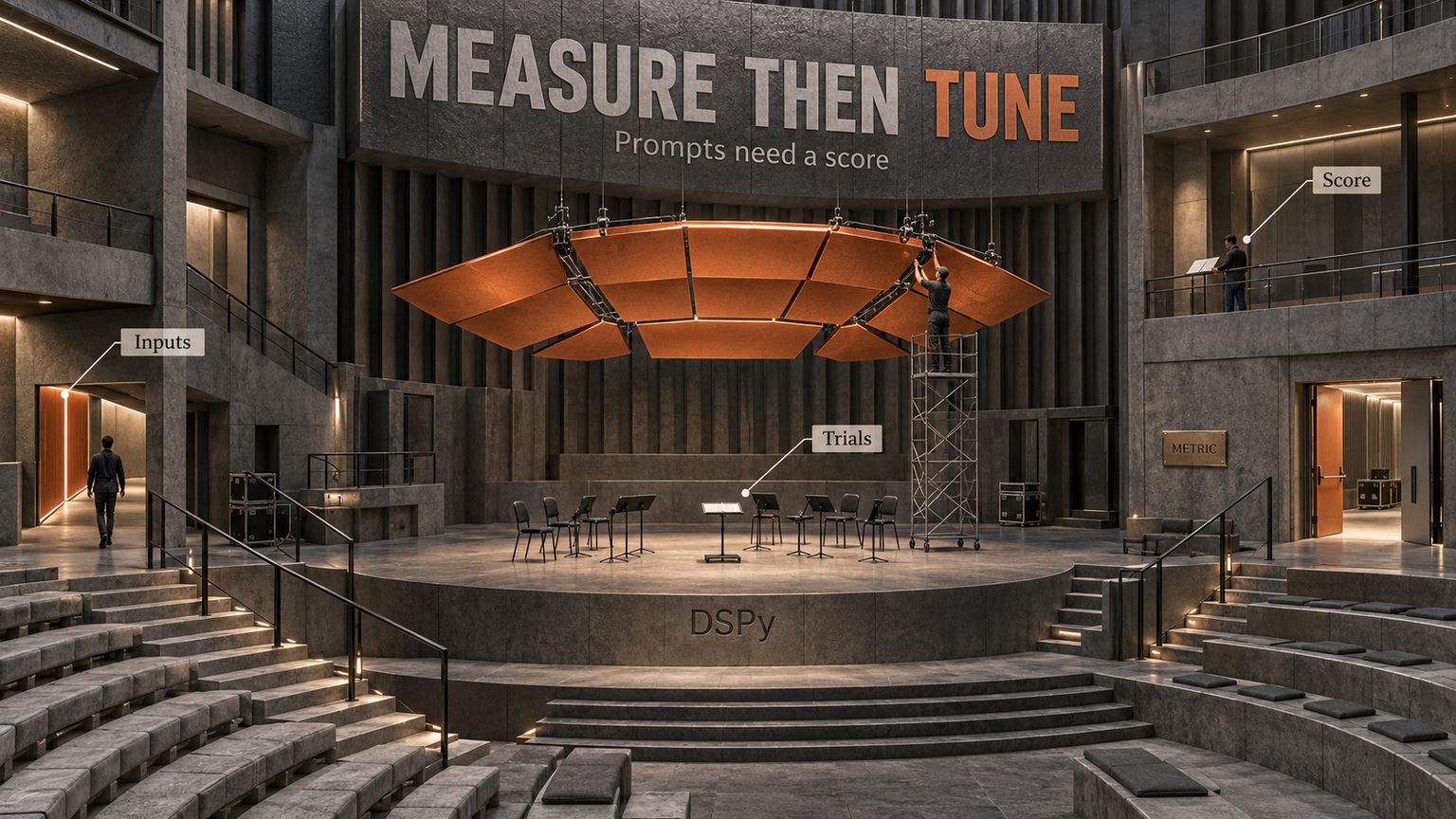
DSPy Explained: Signatures, Modules and Prompt Optimization
Understand DSPy signatures, modules and optimizers, try the current docs example, and decide when measured prompt optimization is worth the work.Oct 15, 2026Build
Agent Skills: How One Folder Works Across AI Tools
Agent Skills explained: the SKILL.md standard, verified tool support, a portable weekly-report example, context overhead and security boundaries.Oct 15, 2026Build
Best Embedding Models in 2026: Gemini, OpenAI, Voyage, Cohere, Qwen and BGE Compared
Compare Gemini, OpenAI, Voyage, Cohere and open embedding models by retrieval fit, languages, deployment and migration work.Oct 15, 2026Build
LangSmith vs Langfuse
Compare LangSmith and Langfuse for tracing, evaluations, datasets, prompts and self-hosting. Choose by framework fit and operational ownership.Oct 14, 2026Build
OpenAI AgentKit: Shutdown Dates and Migration Guide
What survives AgentKit, what shuts down, and how to migrate Agent Builder, ChatKit backends, evals, and prompt objects before the 2026 deadlines.Oct 14, 2026Build